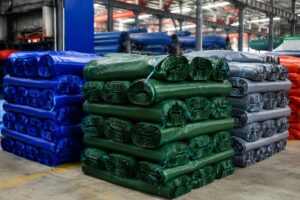
Cost-Effective Canopy Fabric Wholesale Supplier for Pakistan Outdoor Retailers
Higher GSM does not guarantee survival in Pakistan’s heat.
True cost-effectiveness for Pakistani retailers is not defined by the lowest unit price, but by selecting fabrics with specific UV stabilizers and silicone coatings that withstand extreme surface temperatures. This prevents premature cracking and costly replacements. Sourcing from a reliable Cost-Effective Canopy Fabric Wholesale Supplier for Pakistan Outdoor Retailers requires prioritizing chemical composition over mere weight specifications.
I still remember the silence on the other end of the line when a Karachi-based client called me back after his first container arrived. He had ordered standard 440gsm PE tarpaulins, assuming the weight was sufficient for his beachside vendor stalls. Within two months, the fabric had turned brittle and cracked under the relentless sun. The issue was not the thickness; it was the lack of adequate UV stabilization for surface temperatures that regularly exceed ambient readings by a significant margin. That incident shifted my entire approach to sourcing for South Asian markets. Instead of quoting based on weight alone, I now start every conversation by asking about the specific exposure conditions and expected lifespan. [NEED_CITE: impact of surface temperature on polymer degradation rates]
This guide breaks down the technical specifications that actually matter for durability in Pakistan’s climate, helping you avoid common procurement pitfalls.
Why Do Standard Canopy Fabrics Fail in Pakistan’s Climate?
Standard polyethylene formulations are not engineered for sustained exposure to extreme ultraviolet radiation and high thermal stress.
In many regions, a standard waterproof coating is considered sufficient. However, in Pakistan, the combination of intense UV index levels and high ambient heat creates a destructive environment for untreated plastics. The primary failure mode is not tearing from wind, but photodegradation. When UV rays penetrate the fabric without adequate stabilizers, they break the polymer chains, leading to loss of tensile strength and eventual brittleness. [NEED_CITE: mechanisms of photodegradation in polyolefins]
A common misconception is that "waterproof" equals "durable." Waterproofing prevents liquid penetration, but it does not stop molecular breakdown from solar radiation. Without heat-resistant anti-aging agents, the waterproof layers can delaminate or become porous as the base material shrinks and cracks. This is particularly evident in coastal areas like Karachi, where salt spray can accelerate the degradation of poorly stabilized materials.
I have observed that fabrics lacking proper UV masterbatch integration often show signs of fading within weeks, followed by micro-cracks along the fold lines. These cracks expand rapidly during the hot afternoon hours when the fabric expands and contracts. For a retailer, this means customer complaints and returns shortly after sale, damaging brand reputation far more than the initial savings on a cheaper fabric.
Understanding this chemical vulnerability is the first step toward selecting a Cost-Effective Canopy Fabric Wholesale Supplier for Pakistan Outdoor Retailers who prioritizes material science over basic manufacturing.
What Specifications Define a "Cost-Effective" Fabric for Retailers?
Cost-effectiveness is determined by the lifespan-to-price ratio, driven by coating type and UV additive concentration.
When evaluating options, buyers often focus solely on GSM (grams per square meter). While weight contributes to physical robustness, it is the quality of the coating and the additives that determine longevity in high-heat environments. A lighter fabric with superior UV stabilization can outlast a heavier, untreated one.
The following table compares common fabric configurations based on their suitability for Pakistan’s climate:
| Specification | Standard PE Coating | Double-Sided Silicone Coating | PVC Laminated Fabric |
|---|---|---|---|
| UV Resistance | Basic / Vulnerable | Robust / Resistant | Moderate / Standard |
| Heat Stability | Low / Prone to Softening | High / Maintains Integrity | Moderate / Can Become Sticky |
| Waterproofing | Good initially | Excellent / Long-lasting | Excellent |
| Flexibility in Heat | Becomes Brittle | Remains Flexible | Moderate Flexibility |
| Cost Profile | Lowest Initial Cost | Higher Initial Cost | Mid-Range |
[NEED_CITE: comparative performance of coating types under accelerated weathering tests]
For outdoor retailers, the double-sided silicone-coated option often presents the best value despite the higher upfront cost. It resists the buildup of surface heat and maintains flexibility, preventing the cracking seen in standard PE. Jinxiang offers custom coating options that allow retailers to balance these properties. By adjusting the formulation, we can provide fabrics that meet specific durability requirements without forcing buyers into overly expensive premium tiers.
A Lahore event rental company once faced high replacement costs due to frequent tearing and fading of their tents. By switching to a customized silicone-coated fabric with enhanced UV protection, they extended the service life of their inventory significantly. The initial investment was higher, but the reduction in replacement frequency resulted in substantial long-term savings. This illustrates why working with a Cost-Effective Canopy Fabric Wholesale Supplier for Pakistan Outdoor Retailers involves looking beyond the price tag.
How to Verify Quality Before Placing Bulk Orders?
Verification requires requesting specific lab test reports and conducting physical sample tests focused on tensile strength and UV resistance.
Relying on supplier claims without documentation is a significant risk. Professional manufacturers should be able to provide test reports from recognized laboratories that verify UV resistance and tensile strength. These documents offer objective data on how the fabric performs under simulated weathering conditions. [NEED_CITE: importance of ISO/ASTM standards for textile testing]
When reviewing samples, do not just check for water repellency. Perform a simple tear test to assess the fabric’s strength. More importantly, expose the sample to direct sunlight for a period of time to observe any immediate changes in color or texture. While this is not a substitute for lab testing, it can reveal obvious deficiencies in material quality.
Key certifications to look for include those related to fire retardancy and UV stability. In Pakistan, where outdoor setups are often close to cooking areas or used in dense urban environments, fire safety is an additional critical factor. Ensuring the fabric meets relevant safety standards protects both the retailer and the end-user.
I always advise clients to request small batch samples before committing to full container loads. This allows for real-world testing in the specific local environment. For instance, an Islamabad agricultural shelter builder tested our samples under actual field conditions before placing a large order. This step confirmed the fabric’s ability to withstand the local climate, providing confidence in the bulk purchase.
Engaging with a Cost-Effective Canopy Fabric Wholesale Supplier for Pakistan Outdoor Retailers who transparently shares these verification documents builds trust and ensures product reliability.
Sourcing Strategies: Balancing MOQ, Customization, and Landed Cost
Strategic sourcing involves leveraging factory-direct flexibility for mixed SKUs to optimize inventory and reduce waste.
One of the challenges for retailers is managing inventory diversity while maintaining cost efficiency. Ordering full container loads of a single specification can lead to overstocking and cash flow issues. Conversely, small orders often come with prohibitive shipping costs. The solution lies in finding suppliers who offer flexible Minimum Order Quantities (MOQs) and support mixed SKU containers.
Jinxiang supports this approach by allowing customization of sizes and colors within reasonable limits. This flexibility enables retailers to cater to diverse customer needs without tying up capital in slow-moving stock. For example, a retailer might need a mix of standard sizes for general use and custom dimensions for specific commercial clients. By consolidating these into a single shipment, they can achieve better freight efficiency.
Calculating the landed cost is essential. This includes the product price, freight, insurance, and any applicable duties. Comparing this total cost against local sourcing options helps determine the true economic benefit. While local sourcing may offer faster delivery, it often comes with higher unit prices and limited customization options. Importing directly allows for greater control over specifications and potentially lower overall costs.
By adopting a strategic approach to MOQ and customization, retailers can work effectively with a Cost-Effective Canopy Fabric Wholesale Supplier for Pakistan Outdoor Retailers to enhance their competitive edge.
Conclusion
Durability in Pakistan’s climate demands specific material science, not just heavy fabric.
Selecting the right canopy fabric requires understanding the interplay between UV stabilization, coating technology, and thermal resistance. By focusing on these technical specifications and verifying quality through rigorous testing, retailers can avoid the hidden costs of premature failure. Partnering with a knowledgeable Cost-Effective Canopy Fabric Wholesale Supplier for Pakistan Outdoor Retailers ensures access to products that deliver true long-term value.