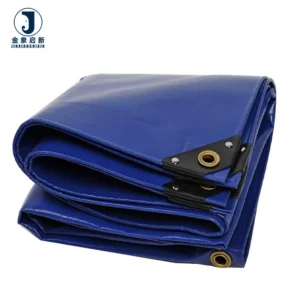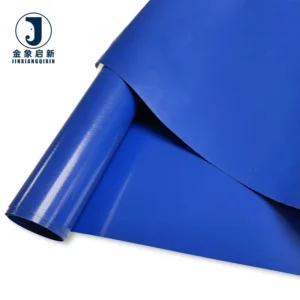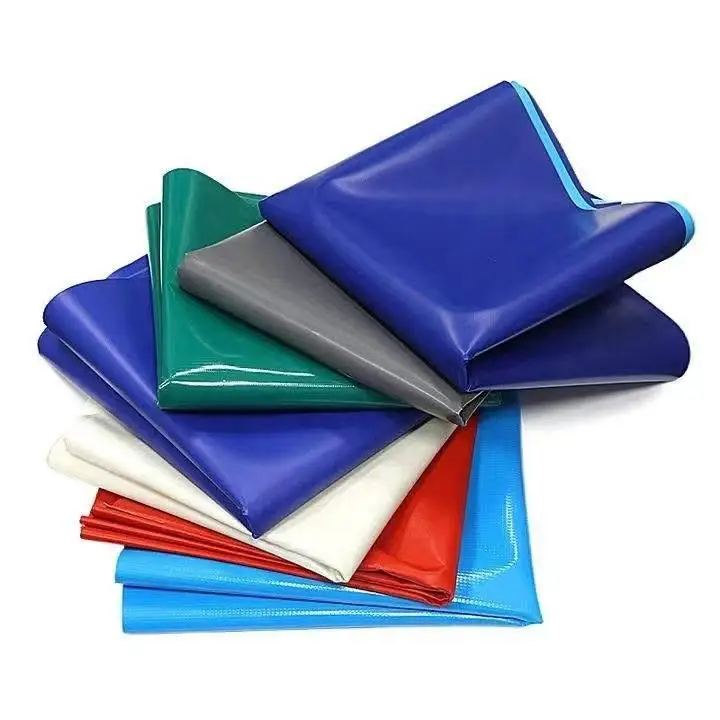
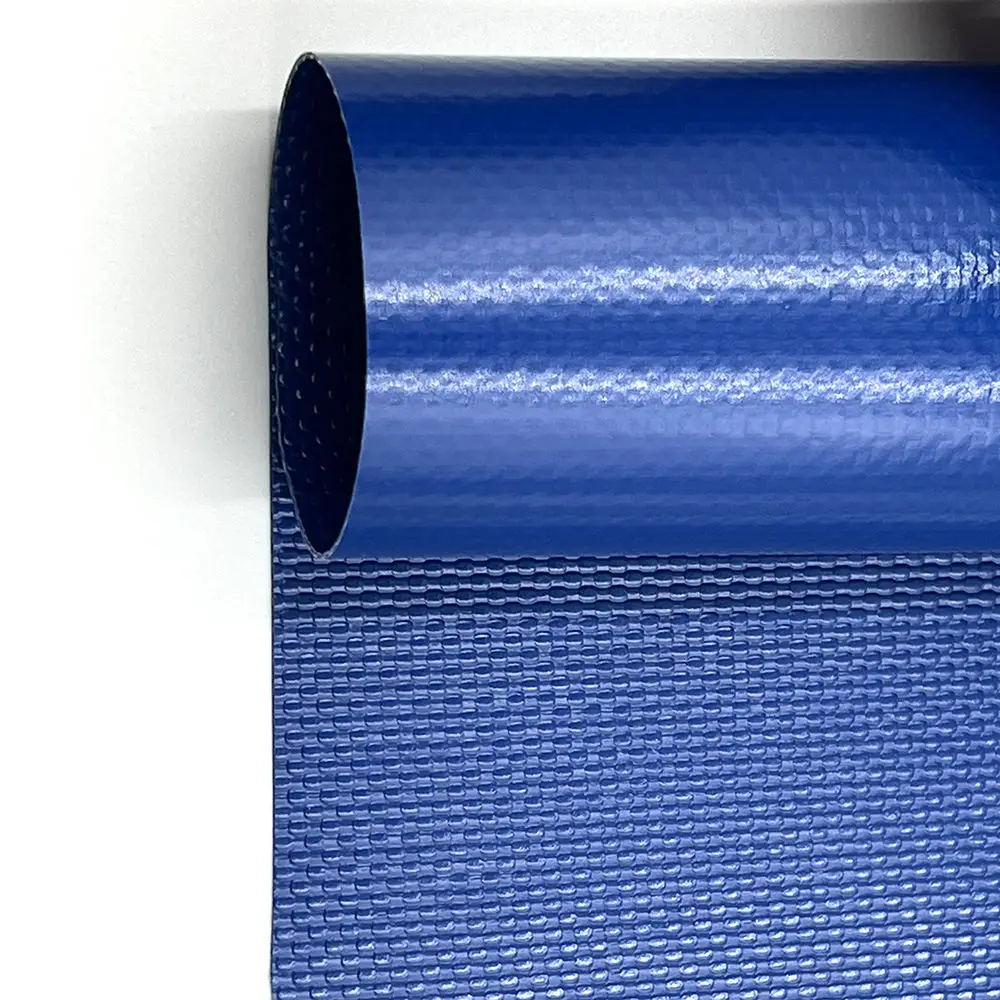
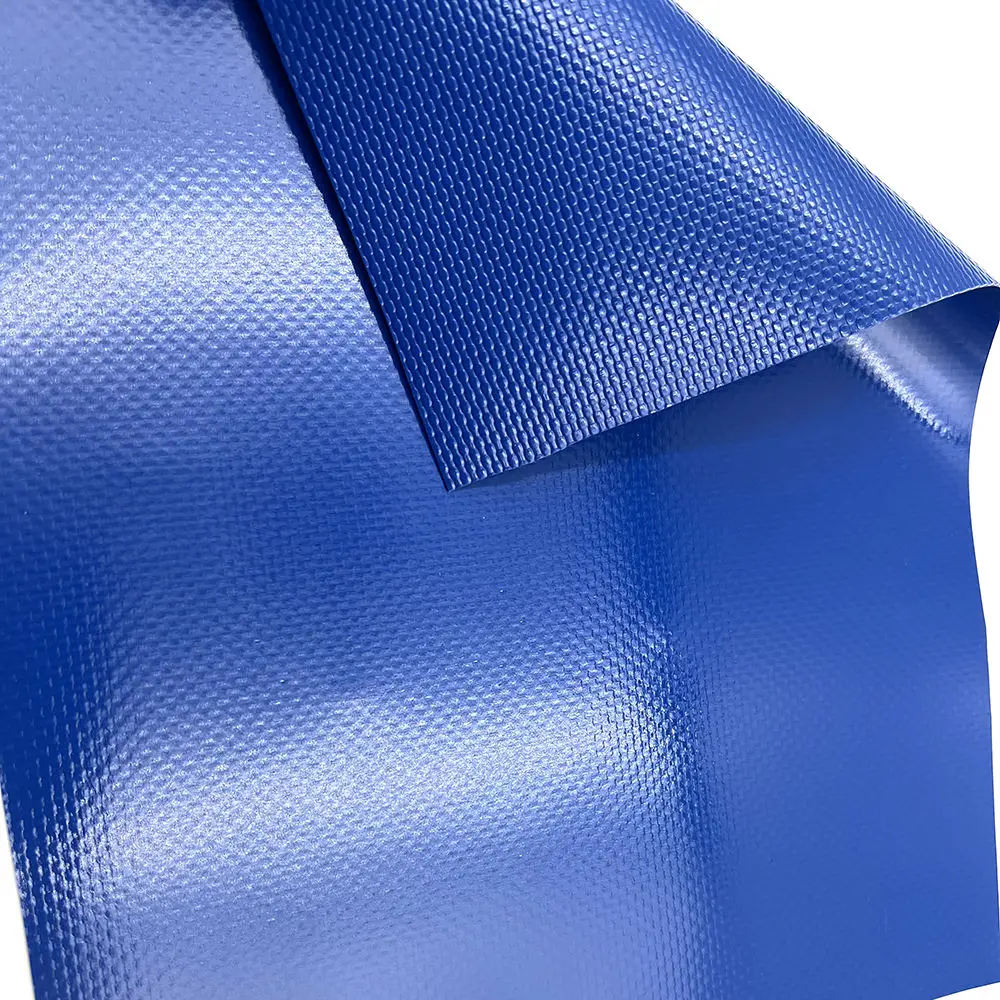
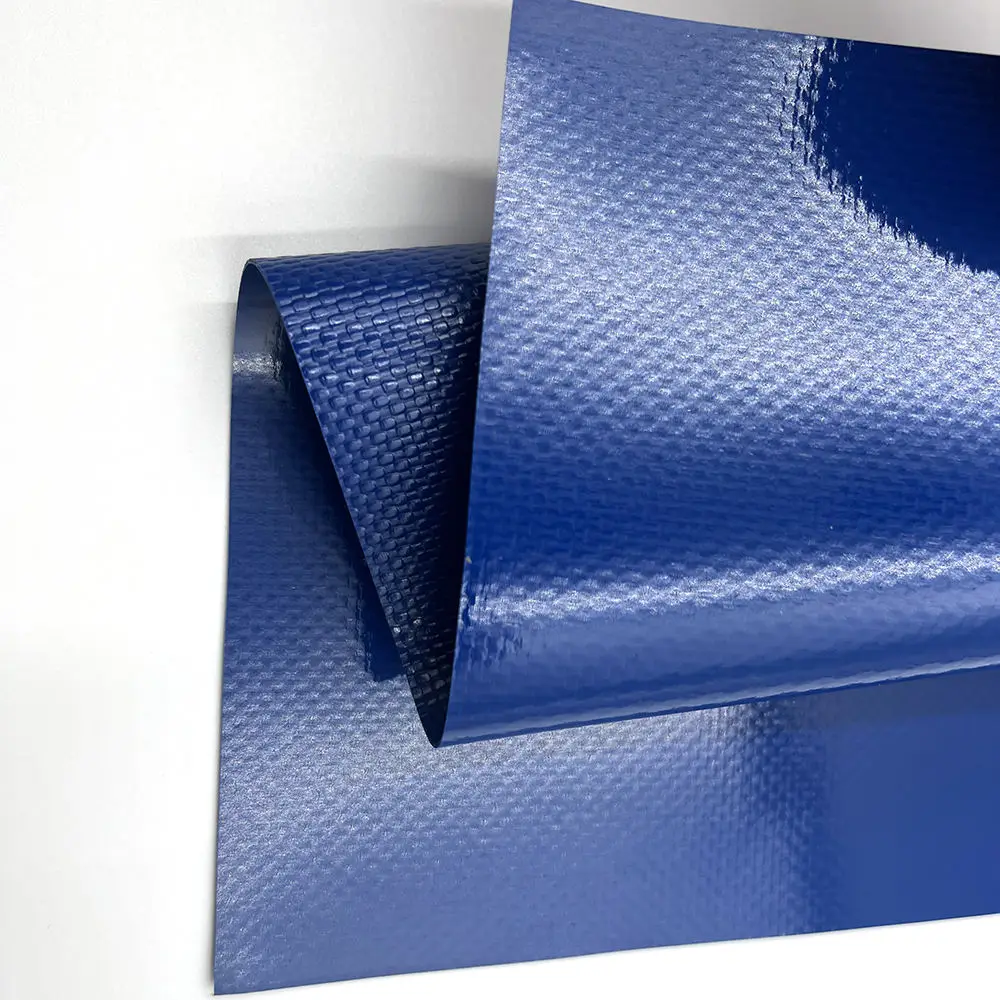
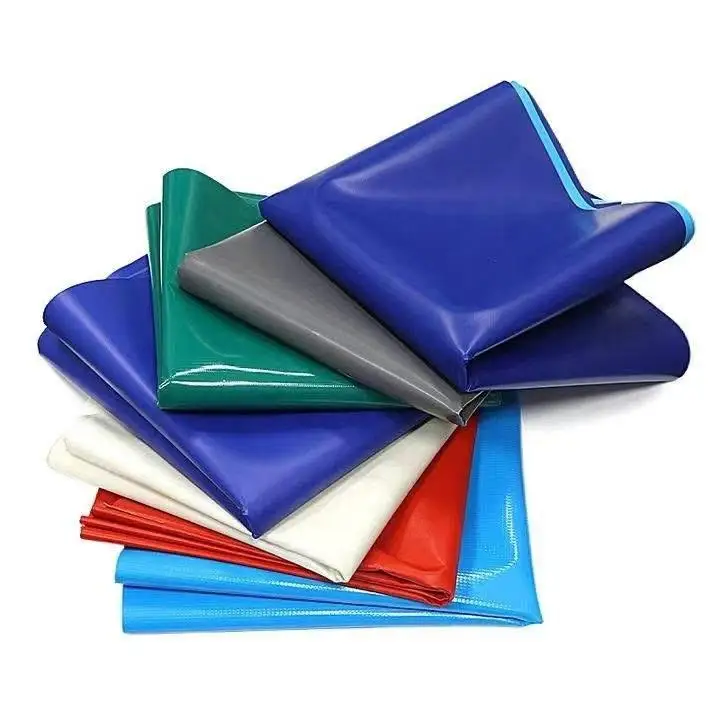
Blue PVC Knife Coated Tarpaulin Roll — waterproof, UV resistant, fire retardant fabric with high flexibility and cold-crack resistance for truck covers and tensile structures.
- Knife coating process ensures strong adhesion and superior peel strength at welded seams
- HF, hot air and sewing compatible for versatile fabrication
- Self-cleaning surface reduces maintenance on installed covers
Supported by dedicated QA/QC with 100% pre-shipment inspection on every roll.
Description
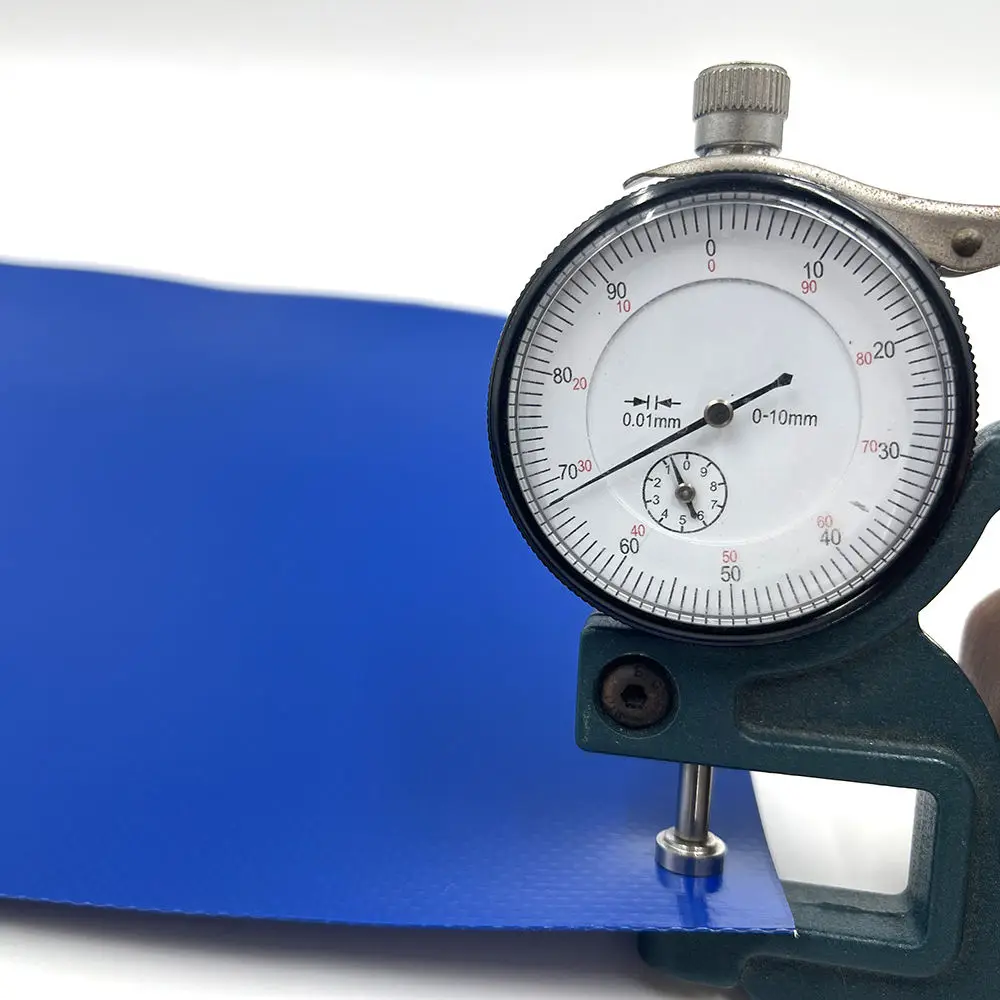
Verified Coating Weight Control — Every roll of blue PVC knife coated tarpaulin is backed by a material specification sheet and 100% pre-shipment inspection, ensuring the GSM you approve is the GSM that arrives at your fabrication floor.
Technical Specifications
| Parameter | Value |
|---|---|
| Product Type | PVC Knife Coated Tarpaulin Roll |
| Coating Method | Knife Coated |
| Coating Material | PVC |
| Color | Blue |
| Welding Options | High Frequency (HF) / Hot Air / Sewing |
| Surface Finish | Self-cleaning surface |
| Key Features | Waterproof, Anti-mildew, Oil & Stain Resistant, Acid & Alkali Resistant, High Temperature and Cold Resistant, Highly Flexible |
| Flame Retardant | Available in flame retardant grades — confirm the grade required for your market |
| UV Treatment | UV resistant options available — confirm the test basis for your regional compliance |
Application Suitability
| Application | Exposure & Requirement |
|---|---|
| Tensile and stadium architectural structures | Sustained wind loading, weld integrity at stress points, colour consistency across large-format panels |
| Portable storage buildings and airport hangars | Prolonged UV exposure, thermal expansion and contraction, resistance to ponding water |
| Shade systems and awning installations | Colour uniformity across adjacent panels, self-cleaning surface for reduced maintenance access |
| Truck and trailer cover fabrication | Road abrasion, constant flexing at tie-down points, weld strength at seams under load movement |
What "Custom PVC Knife Coated Tarpaulin" Really Means on the Dock
The quoted weight must match the roll that arrives, not just the sample you approved.
When buyers survey options before specifying, the first question is rarely about tensile strength — it is whether the GSM stated on the quotation will hold up when the roll is weighed on the warehouse floor. I have seen fabricators receive rolls that feel noticeably lighter than the sample panel they signed off on, and by the time the material is cut and welded into a tensile canopy, the cost of discovering that discrepancy has already multiplied [NEED_CITE: tensile and tear test methods for coated fabrics per ISO 1421]. The gap between a quoted specification and a delivered product is where project margins disappear, and it is why every PVC Knife Coated Tarpaulin manufacturer custom order should ship with per-roll weight verification rather than a blanket batch average.
Full-Range Roll Stock with Verified Batch Consistency
This blue PVC knife coated tarpaulin roll is produced on three dedicated coating lines, allowing a PVC Knife Coated Tarpaulin manufacturer custom capability that covers stock widths, custom colours, and pattern-printed runs without switching between facilities. The knife coating process applies PVC directly onto the base fabric under controlled blade tension, which builds adhesion between the coating and the yarn — a critical factor when the finished membrane is tensioned across a tensile frame or welded into a truck side curtain.
Weldability Across HF, Hot Air, and Sewing Construction
Fabricators working with tensile membranes and truck covers need predictable weld behaviour, and this PVC knife coated tarpaulin roll supports high-frequency, hot-air, and sewing assembly methods. The self-cleaning surface finish is formulated to accept heat without excessive residue build-up on welding electrodes, reducing downtime on long panel runs. For buyers specifying PVC knife coated tarpaulin, confirming weld peel strength at your production parameters before committing to a full container load is standard practice [NEED_CITE: peel adhesion testing for coated technical textiles].
How Knife Coating and Base Fabric Interact to Define Performance
The knife coating method forces PVC paste into the interstices of the base fabric under blade pressure, creating a mechanical lock between coating and yarn that directly influences peel strength at the weld line. This is why a knife coated construction typically delivers higher peel resistance than a laminated or calendered alternative of the same nominal weight — the coating is not sitting on top of the weave, it is embedded within it. The anti-mildew formulation addresses prolonged outdoor exposure where condensation and organic debris accumulate on shade structures and storage covers, while the self-cleaning surface reduces the frequency of manual washing on large-format architectural installations. Acid and alkali resistance broadens the material’s suitability for industrial environments where chemical exposure is part of the operating condition. Oil and stain resistance further supports truck cover applications where diesel splash and road grime are routine contact hazards.
The Hidden Cost of Skipping Pre-Shipment Weight Verification
When a fabricator cuts into a roll and finds the GSM lighter than specified, the weld parameters already dialled in for a heavier grade may now be excessive — burning through a thinner coating at the seam and creating a failure point that appears weeks after installation. On tensile structures, this often manifests as seam separation at the highest stress node, where the membrane flexes under wind load, and the repair cost far exceeds the material saving [NEED_CITE: field failure analysis of coated fabric membrane structures]. For truck cover manufacturers, a lighter-than-specified roll may pass initial QC but fail at the tie-down reinforcement zone after a season of road vibration and UV cycling. Colour variation between rolls in the same order compounds the problem on shade systems, where adjacent panels installed side by side reveal a visible shade difference that triggers a full section replacement.
Why Fabricators Source This PVC Knife Coated Tarpaulin Here
The 10-person R&D team develops custom colour matches, width adjustments, and sample panels within days, allowing you to verify weight, hue, and weld behaviour before releasing production. Three full coating lines and 36 sets of professional equipment provide the capacity to fulfil multi-container orders without splitting a single production run across facilities, which directly supports colour consistency across every roll in your shipment. Dedicated QA/QC at every production stage — not just final inspection — catches coating weight drift and colour deviation before the roll leaves the line. Material specification sheets ship with every order, stating GSM, base fabric, coating type, and colour reference for your incoming inspection records. Sample development is available for custom requirements so you can approve the exact roll that will be produced, not a generic swatch from a different batch.
Documentation & Verification
- Material specification sheet stating GSM, base fabric, PVC coating method, and blue colour reference per roll
- UV resistance and flame retardant test reports supplied for applicable grades — request before order confirmation
- 100% pre-shipment inspection record included in the dispatch documentation pack
- ISO and CE certificates available as part of the compliance file for your market entry
- Roll-by-roll packing list for batch traceability and incoming weight verification
Fabrication, Handling & Storage
- Set HF welding parameters on a sample offcut of this knife coated PVC before running full panels to avoid coating burn-through
- Hot air welding at the seams should account for the self-cleaning surface layer to achieve consistent peel strength
- Store rolls upright on their cores to prevent flat spots that create visible creases when the blue PVC is tensioned
- Clean the self-cleaning surface with mild detergent only — solvent-based cleaners can degrade the anti-mildew formulation
- Allow cold-stored rolls to acclimatise before unrolling to prevent cracking at low temperatures during handling
Specifying Your Blue PVC Knife Coated Tarpaulin Order
To move from surveying options to a firm specification, provide your target application, the exposure conditions your finished product will face, and any flame retardant or UV test standards your end market requires. Confirm whether you need stock widths or a custom roll width to minimise off-cuts, and state your colour reference or Pantone if standard blue does not match your project brief. Request a sample roll in your specified GSM for weld testing and visual approval before production release.
Frequently Asked Questions
Q: How is GSM verified on arrival and what happens if roll weight deviates from the quotation?
A: Each roll ships with a specification sheet stating the target GSM. On receipt, weigh a measured offcut and compare against the stated value. If deviation falls outside the agreed tolerance, contact us with the inspection record and the affected roll numbers for resolution before cutting into production.
Q: Which flame retardant grades can be supplied and with what test reports?
A: Flame retardant grades are available depending on your market requirements — confirm whether your project specifies M2, B1 per DIN 4102, NFPA 701, or another standard. The applicable test report ships with the documentation pack when a flame retardant grade is specified at order confirmation.
Q: How do you control colour consistency across multiple rolls in a single order?
A: Production runs for a single order are kept on the same coating line with the same PVC batch and colour formula. The 100% pre-shipment inspection includes a visual colour check against the approved reference, and any roll outside the tolerance range is held before packing.
Q: What HF, hot air, and sewing welding parameters are recommended for this knife coated fabric?
A: Parameters vary by machine type and production speed. We recommend requesting a sample offcut in your specified GSM to dial in your HF electrode pressure, hot air temperature, and sewing thread specification before committing to a full production run on your shop floor.
Related products
-
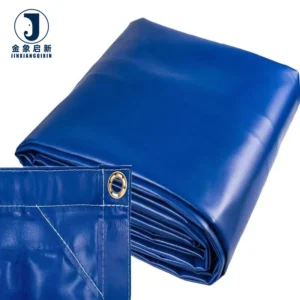
Custom Reinforced Edges Rip-Stop Rubberized PVC Tarpaulin Industry Covering Vinyl Coated Polyester Tarps for Trucks
¥8.00 Select options This product has multiple variants. The options may be chosen on the product page -
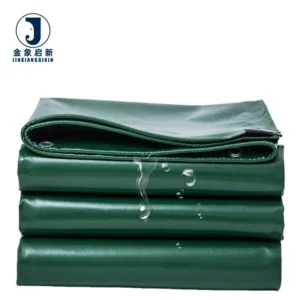
PVC Tarpaulin Industry Fabric PVC Tarpaulin 620gsm for Fish Pond Factory Swimming Pools Cover PE Tarpaulin
¥0.90 Select options This product has multiple variants. The options may be chosen on the product page -
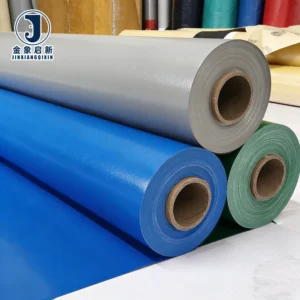
Tarp Factory 610gsm 650gsm 800gsm Awnings Tent PVC Coated Fabric Waterproof Bache Lona PVC Tarpaulin Roll
¥1.45 Select options This product has multiple variants. The options may be chosen on the product page -
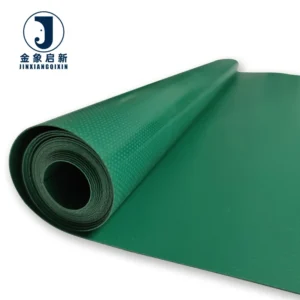
Wholesale Pricehigh Quality Outdoor Waterproof Tarp Customized Pvc Tarpaulin Roll
¥1.20 Add to cart