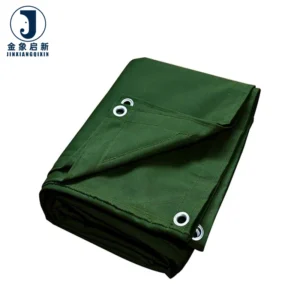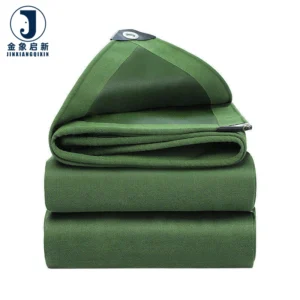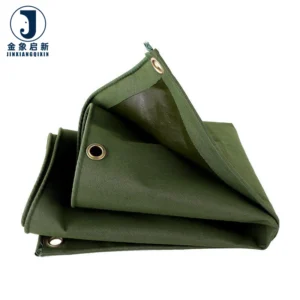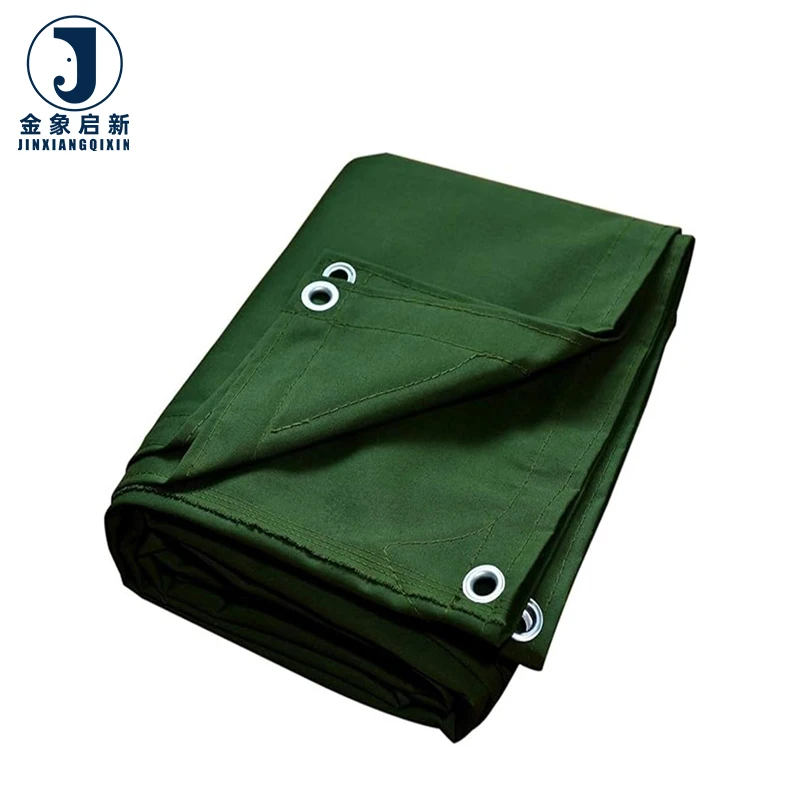
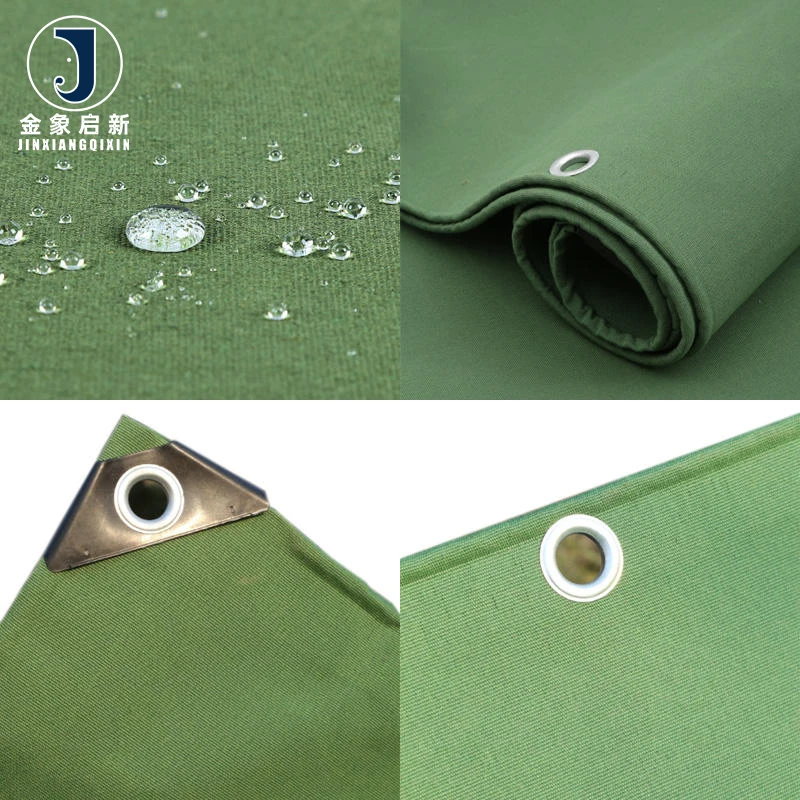
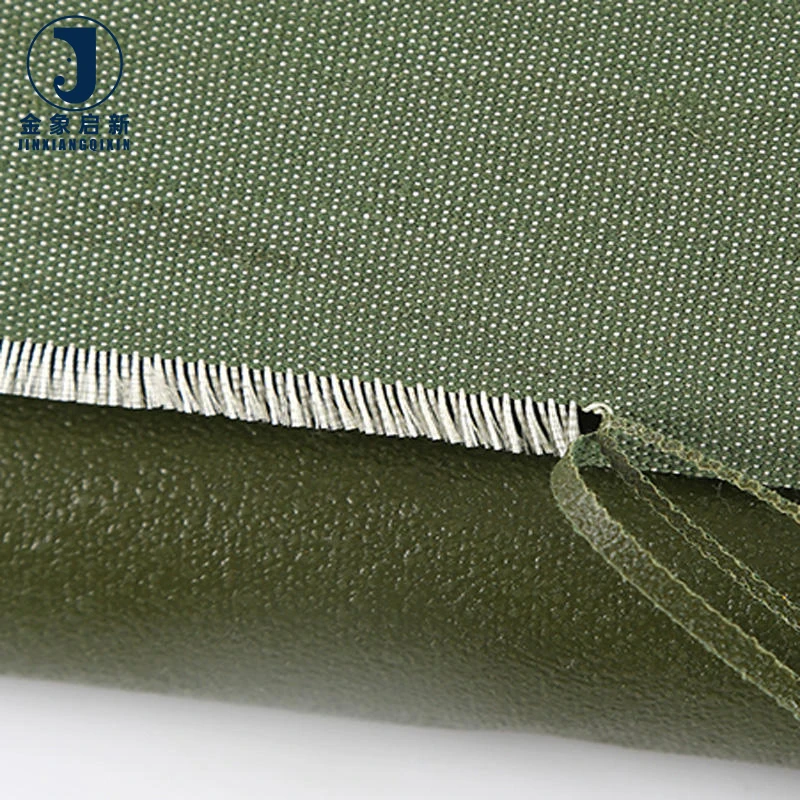
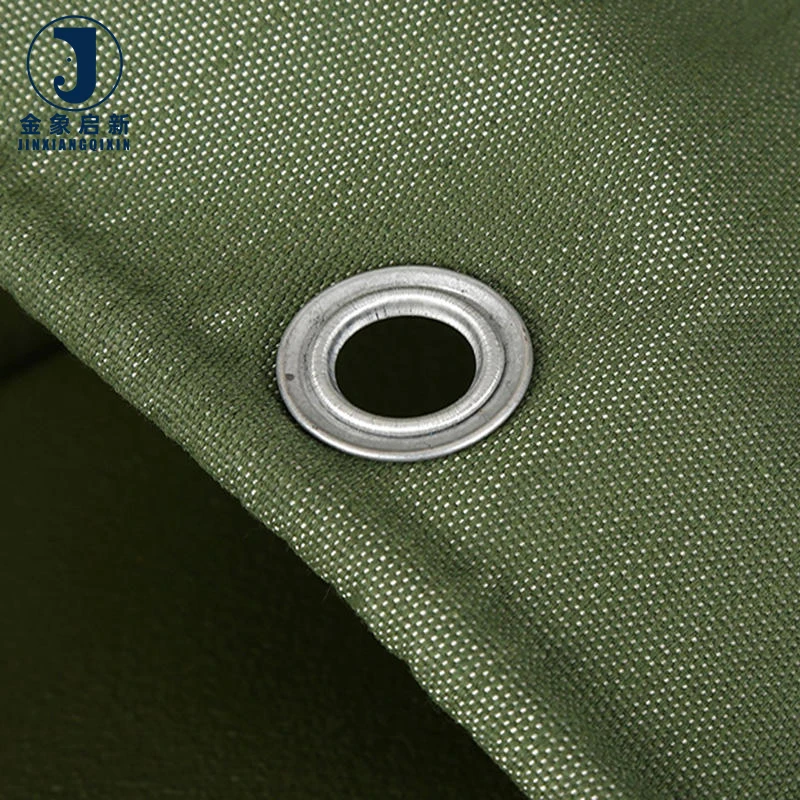
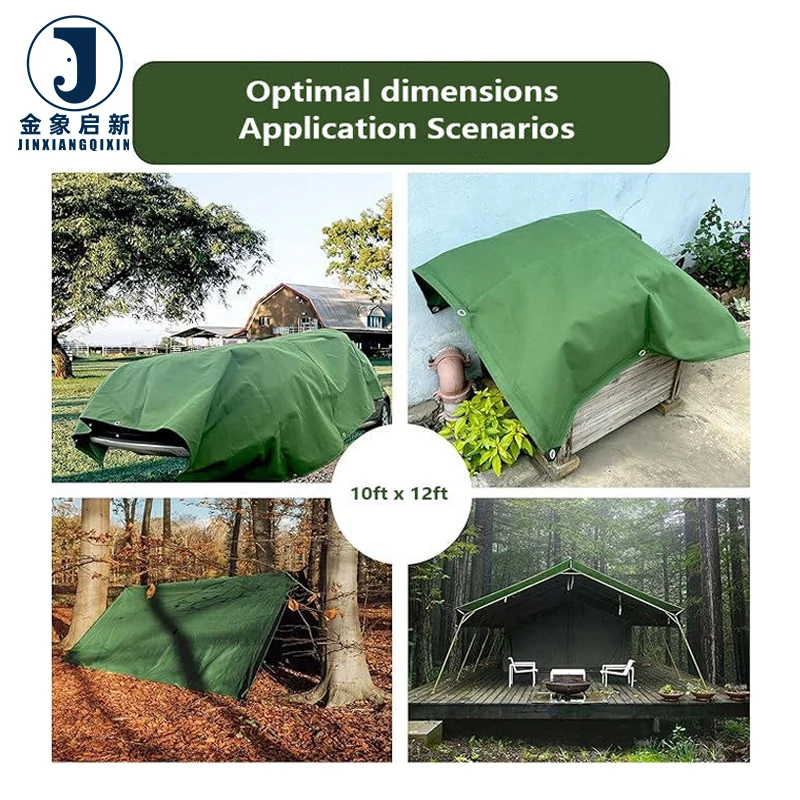
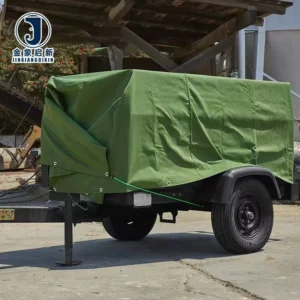
Heavy Duty Woven PVC Laminated Canvas Tarpaulin — 600gsm, 0.5–0.7mm thickness, 2m roll width with rust-proof aluminum eyelets every 1 meter and welded rope-reinforced seams.
- Polyester cotton base fabric with PVC laminated coating delivers balanced tensile strength and flex resistance for truck covers, construction wraps and outdoor equipment protection
- Eyelet spacing and hem reinforcement engineered to withstand load flex points without seam failure
Backed by 36 sets of professional coating equipment and 100% pre-shipment inspection across every roll.
Description
Proven Coating Consistency — Every roll of this heavy-duty polyester canvas tarpaulin undergoes in-process weight and adhesion checks across three dedicated production lines before shipment.
Technical Specifications
| Parameter | Value |
|---|---|
| Product Type | PVC Tarpaulin |
| Base Fabric | Polyester cotton industrial textile with 8-12 strands of fine cotton yarn |
| Weight | 600gsm |
| Thickness Options | 0.5mm / 0.6mm / 0.7mm (confirm grade required) |
| Roll Width | 2m |
| Roll Length | 100m |
| Color | Army Green Camouflage / Custom |
| Edge Reinforcement | Rust-proof aluminum eyelets at 1-meter intervals along corners and hem |
| Hem Construction | Folded and sewn hems with poly rope insert, welded seams |
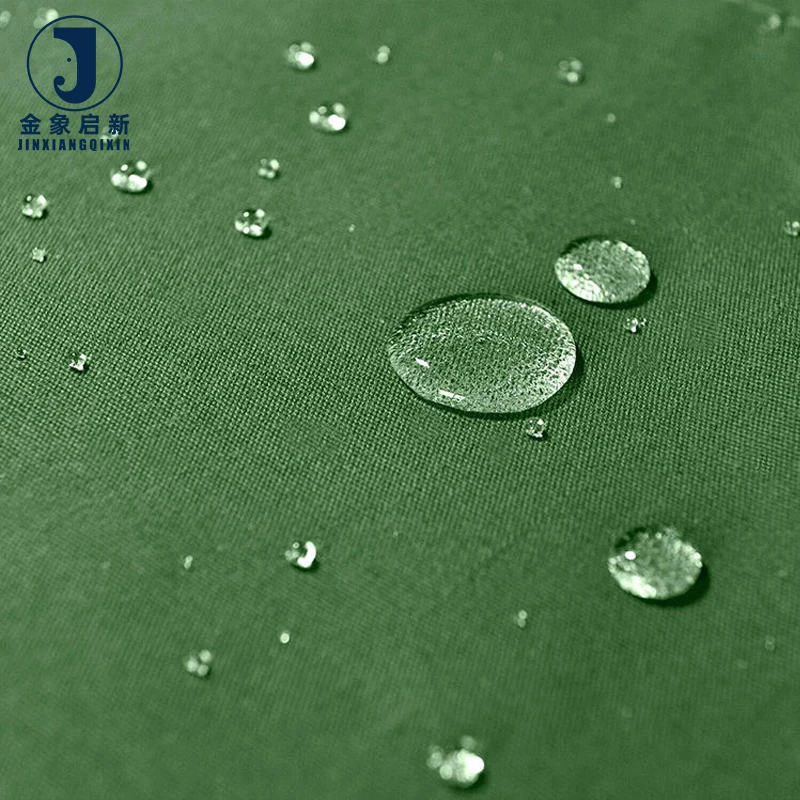
| Waterproof | Yes |
| UV Treatment | Available — test basis not stated in source, confirm grade for your market |
| Flame Retardant | Available in flame retardant grades — confirm the grade required for your market |
| Certifications | ISO, CE |
Application Suitability
| Application | Exposure & Requirement |
|---|---|
| Truck and trailer flatbed covers | Constant tie-down tension, road abrasion at flex points, wind-driven rain, UV exposure during long-haul transit |
| Construction site equipment covers | Puncture from sharp tools and aggregate, prolonged sun exposure, dust and moisture ingress prevention |
| Tent and temporary shelter panels | Repeated assembly and teardown stress, weather cycling, structural seam loading |
| Open-air cargo and asphalt covers | Heavy load compression, temperature fluctuation, chemical contact from bitumen residues |
Why Quoted GSM Rarely Matches What Arrives on the Dock
Verify weight before you commit to a full container — documentation beats assumption.
Buyers who source custom heavy duty polyester canvas tarpaulin often discover that the material on arrival feels noticeably lighter than the 600gsm stated on the quotation. This discrepancy rarely shows up until the fabric is unrolled and handled on-site, by which point return logistics are impractical. The root cause is usually a coating weight that varies from the specification, or a base fabric substitution made during production without notification. [NEED_CITE: ISO test methods for coated fabric weight determination]
How Polyester-Cotton Base Fabric Changes the Performance Profile
The polyester-cotton woven base in this Custom Heavy Duty Polyester Canvas Tarpaulin delivers a balance between the dimensional stability of synthetic yarn and the natural drape of cotton. Unlike pure polyester scrim used in standard PVC tarpaulins, the blended yarn structure distributes load across a wider weave intersection, which matters when tie-down straps concentrate force on a small area of a truck cover. The 8-12 strand cotton yarn component also contributes to abrasion resistance at contact points where the fabric rubs against cargo edges during transit.
Seam and Hem Construction Under Repeated Load
A truck cover fails most often at the hem, not in the body of the fabric, because that is where the tie-down load transfers into the material. This Custom Heavy Duty Polyester Canvas Tarpaulin addresses that failure mode with poly rope inserted into folded and sewn hems, spreading the point load along the rope’s length rather than letting it concentrate on a single stitch line. Welded seams run alongside the sewn construction to prevent moisture ingress through needle holes. Aluminum eyelets are placed at 1-meter intervals along both hems and corners, matching the typical strap spacing on flatbed trailers. [NEED_CITE: seam peel strength testing for coated fabrics per ISO 1421]
Reading the Specification Beyond Weight
The 600gsm figure tells you how much material is present per square meter, but it does not isolate how that weight is distributed between base fabric and coating. A heavier coating layer increases waterproofing and abrasion resistance but adds stiffness, which matters when the fabric must drape over irregular cargo shapes. The three available thickness options — 0.5mm, 0.6mm, and 0.7mm — correspond to different coating build-ups on the same woven base, giving you a choice between flexibility and surface durability depending on the application. Roll stock at 2m width suits most flatbed trailer covers with minimal lateral seaming, while custom cut-to-size panels eliminate on-site fabrication waste. The Army Green Camouflage color option provides a standard stock choice, but custom colors are available — confirming the Pantone or RAL reference before production ensures roll-to-roll consistency across a multi-roll order.
The Hidden Cost of Specifying on Price Alone
When procurement decisions rest on unit price without locking the material specification, the consequences surface in the field. A canvas tarpaulin that is lighter than agreed will tear at eyelet points under tie-down tension, leaving cargo exposed mid-transit. Color variation between rolls in the same shipment becomes visible when two panels are installed side by side on a single structure, forcing a choice between accepting the mismatch or replacing the entire batch. [NEED_CITE: common causes of tarpaulin field failure in transport applications] Flame retardant treatment claimed without a supporting test report can result in failed site inspections on construction or mining projects, where the safety officer requires documented compliance before allowing the cover onto the work area.
What the Production Floor Actually Delivers
Coating weight and adhesion are controlled through three full production lines with dedicated process monitoring at each stage. A 10-person R&D team develops custom samples within days, covering color matching, cut sizing, and eyelet layout before production commits. Every roll of Custom Heavy Duty Polyester Canvas Tarpaulin passes through a 100% pre-shipment inspection where weight, color, and hem integrity are checked against the specification sheet. The facility holds ISO and CE certification, and the documentation package travels with your shipment so that receiving inspection on your dock has the data it needs.
Documentation & Verification
- Material specification sheet stating exact GSM, base fabric composition, and coating weight for this polyester canvas tarpaulin
- Pre-shipment inspection record with per-roll weight and visual check before dispatch
- Color reference confirmation against Pantone or RAL standard for custom color orders
- UV and flame retardant test reports supplied where applicable grades are specified
- Roll packing list with individual roll dimensions and net weight for container planning
Fabrication, Handling & Storage
- Heat welding parameters depend on the selected thickness grade — confirm temperature and dwell time for the 0.5mm, 0.6mm, or 0.7mm option ordered
- Aluminum eyelets at 1-meter spacing align with standard tie-down configurations on flatbed trailers and cargo beds
- Store rolls upright on pallets to prevent permanent crease marks across the 2m roll width
- Avoid dragging cut panels over sharp aggregate surfaces during installation to protect the PVC coating layer
- Clean with mild detergent only — solvent-based cleaners may degrade the silicone-type surface coating
What to Include in Your Inquiry
Provide the intended application and exposure conditions so the correct thickness and treatment grade can be matched to your project. Specify whether you need roll stock at 2m by 100m or finished cut-to-size panels with defined eyelet placement. If your market requires flame retardant or UV treatment, state the compliance standard your end user or site inspector will demand at delivery.
Frequently Asked Questions
Q: How is GSM verified on arrival and what documentation supports the quoted weight?
A: Each roll is weighed and recorded during pre-shipment inspection, and the results are documented in the inspection report that ships with your order. The material specification sheet states the exact GSM, base fabric, and coating weight agreed at quotation stage. If your receiving team needs to re-verify, the documented reference values allow direct comparison on your dock.
Q: What UV treatment test basis applies to this canvas tarpaulin for outdoor exposure?
A: UV treatment is available for this product family, but the specific test standard and exposure rating depend on the grade selected for your order. We recommend stating the UV performance requirement or relevant standard for your market when requesting a quotation so the correct treatment and supporting test documentation can be supplied with shipment.
Q: How are custom widths, lengths and cut sizes handled in terms of lead time?
A: Standard roll stock ships at 2m by 100m, while custom cut sizes and non-standard widths require a production run against your approved sample. The R&D team develops a sample for your confirmation before bulk production begins, and the lead time is confirmed at quotation stage based on the complexity of your cutting, eyelet, and hem requirements.
Q: Can batch color consistency be guaranteed across multiple rolls in a single order?
A: Color is locked against an agreed Pantone or RAL reference before production begins, and in-process quality checks compare each roll against that reference during manufacturing. The pre-shipment inspection includes a visual color consistency check across all rolls in the order to identify and replace any roll that falls outside the agreed tolerance before dispatch.
Q: What eyelet spacing and hem reinforcement options are available for truck cover applications?
A: Standard configuration includes rust-proof aluminum eyelets at 1-meter intervals along hems and corners, with poly rope inserted into folded and sewn hems. Custom eyelet spacing, additional corner reinforcement patches, and alternative hem constructions can be specified during the sample approval stage to match your tie-down system and trailer hardware layout.
Related products
-
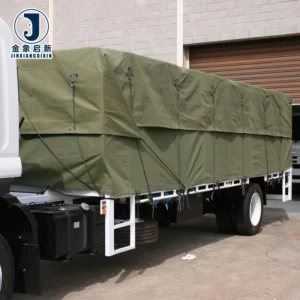
Heavy Duty Waterproof PVC Coated Abrasion-Resistant Very Heavyweight Asphalt Truck Cover Cotton Canvas Tarpaulin
¥10.29 Add to cart -
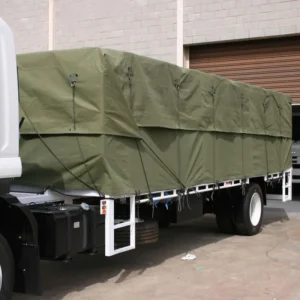
Custom PVC Coated Tarpaulin for Truck Trailer – Full Range
Read more -
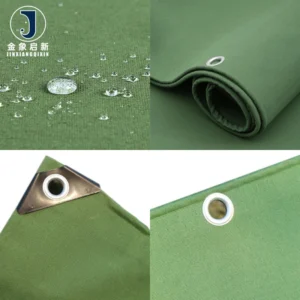
13oz 10ftx12ft Woven Plain Heavy Duty Canvas Tarpaulin with Rustproof Grommets for Canopy Tent Roof Camping Woodpile
¥10.59 Add to cart -
Very Heavyweight Heavy Duty Heat Resistant PVC Laminated Woven Canvas Tarpaulin Waterproof Tent Fabric for Accessories
¥195.00 Add to cart