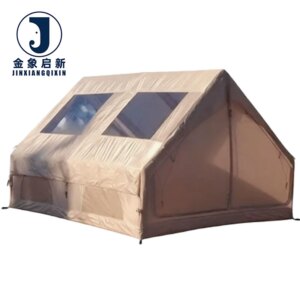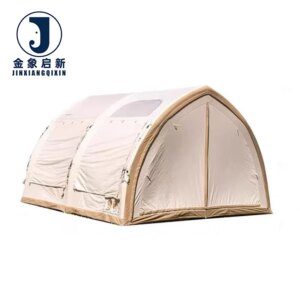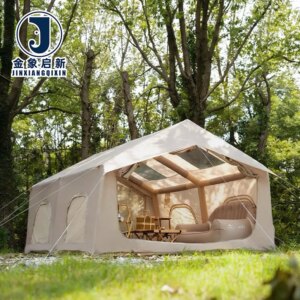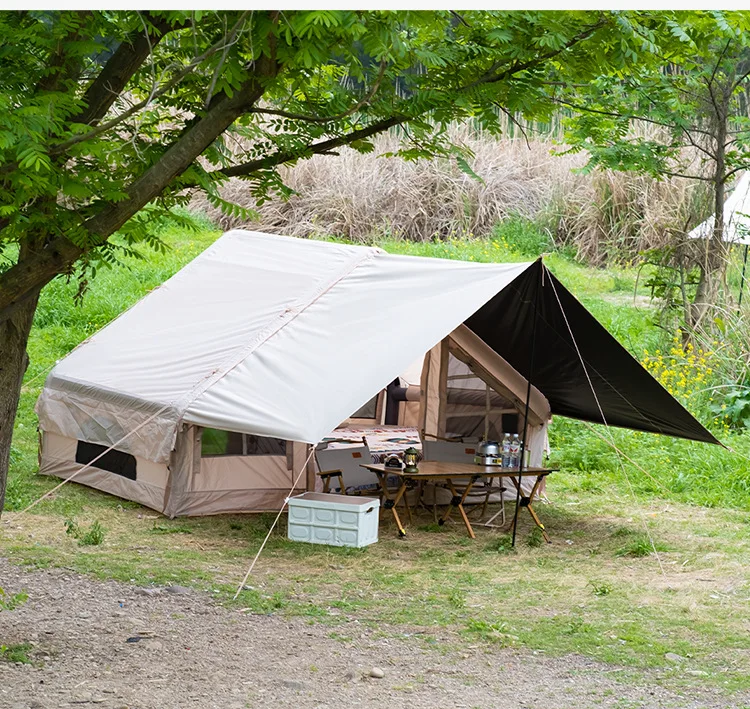
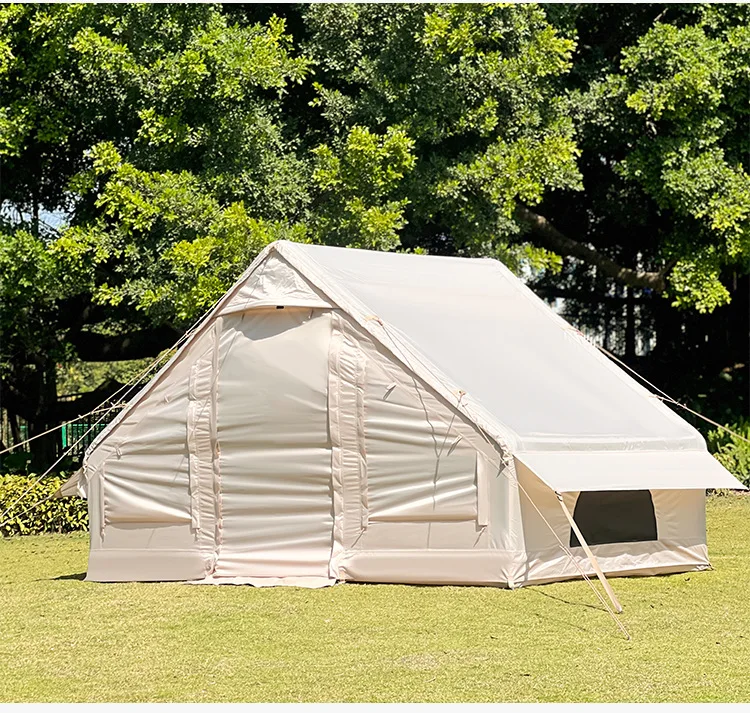
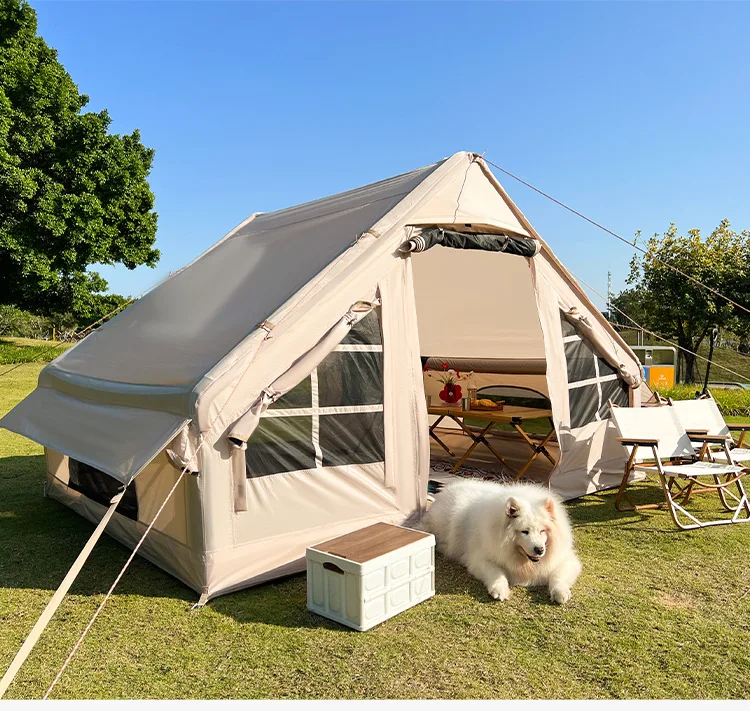
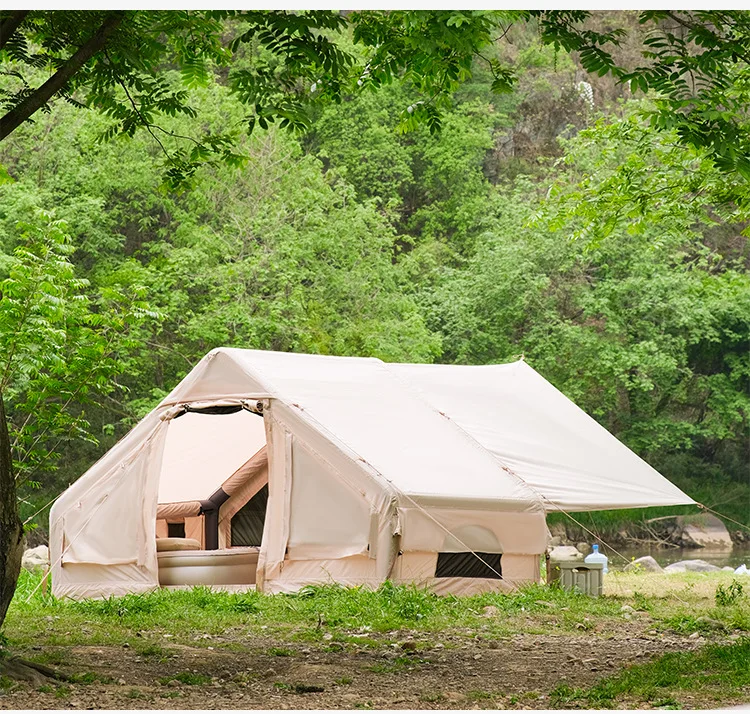
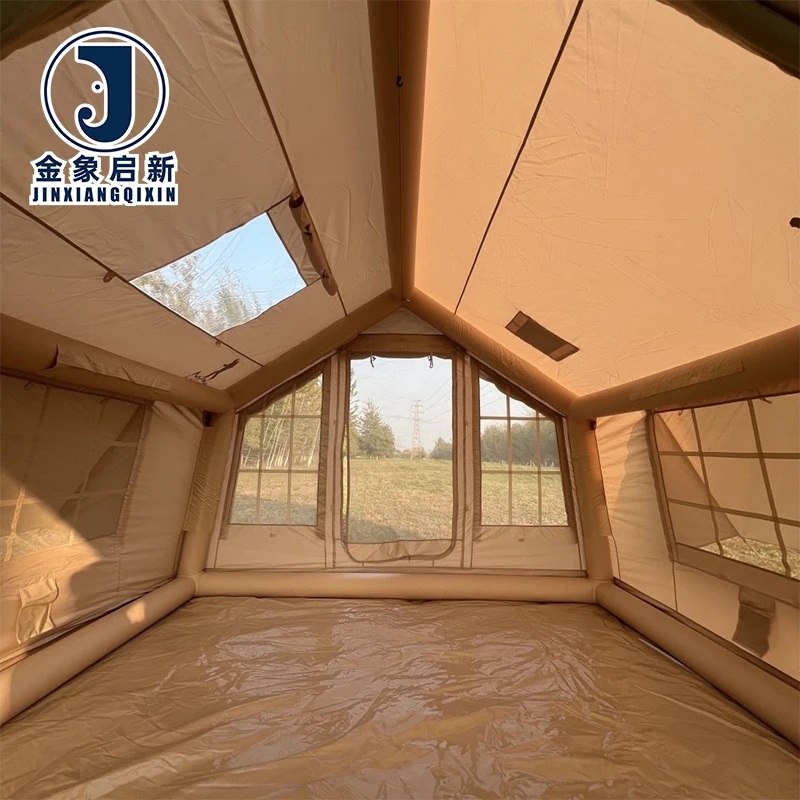
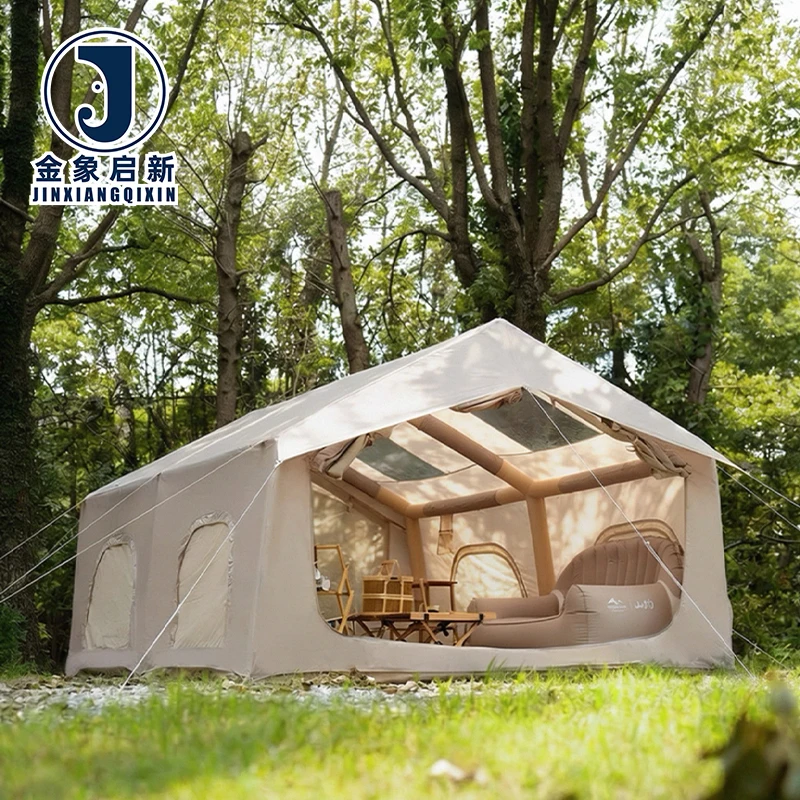
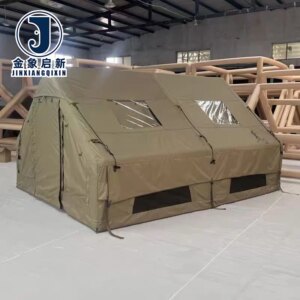
Inflatable PVC Waterproof Camping Tent — waterproof, UV resistant, and tear resistant for outdoor deployment
- Built from PVC tarpaulin with heat-welded seams matching fabric strength at flex points, reducing failure risk under load and wind stress
- Full-process QA with 12-point pressure and leakage testing before dispatch, ensuring airtight integrity across every unit
Backed by 3 full production lines and 36 sets of equipment, plus a 10-person R&D team handling custom sizing, color, and logo printing from design to delivery.
Description
Inflatable PVC Tent — Nearly 30 years of PVC coated fabric expertise channeled into inflatable tent structures, with full OEM/ODM capability from raw material coating through to finished assembly.
Technical Specifications
| Parameter | Value |
|---|---|
| Product Type | Inflatable Tent |
| Core Material | PVC Tarpaulin |
| Product Forms | Inflatable Camping Tent |
| Key Performance | Waterproof, UV Resistant (test basis not stated), Tear Resistant |
| Capacity | 2-3 Person |
| Season Rating | Four-Season |
| Deployment Method | Quick Automatic Opening (Inflatable) |
| Customization Service | OEM & ODM — sample customization, pattern printing, custom dimensions, color matching, logo printing, reinforced stress points, ventilation/access modification |
| Quality Control | 12-point pressure and leakage test before shipment; full-process QA&QC |
| Certifications | ISO 9001, ISO 14001, ISO 45001, CE |
Application Suitability
| Application | Exposure & Requirement |
|---|---|
| Temporary site offices for construction projects | Wind flex, rain, UV exposure, repeated inflation and deflation cycles |
| Mobile storage shelters for outdoor equipment | Abrasion from stored machinery, moisture ingress prevention, ground contact |
| Rapid-deployment facilities for event management | Quick setup under time pressure, crowd-visible color consistency, structural stability in variable weather |
| Portable weather-resistant storage for logistics operations | Road-side dust and debris exposure, frequent relocation, tie-down stress at anchor points |
| Industrial site accommodations | Extended outdoor deployment, thermal variation, fire safety compliance requirements |
| Mining and construction site shelters | Heavy particulate exposure, high-wind environments, compliance with site safety regulations |
Why Material Claims Fail When Tents Meet Real Job Sites
A tent is only as reliable as the coating adhesion and seam integrity behind the fabric specification sheet.
Purchasing an inflatable PVC tent often starts with a data sheet listing waterproof and tear-resistant performance. The problem surfaces months into deployment when seams delaminate under repeated inflation pressure or when UV degradation turns the fabric brittle at fold lines. Generic suppliers frequently quote a material grade without the test documentation to back it up, leaving buyers to discover performance gaps on site rather than in the factory. [NEED_CITE: test methods for coated fabrics per ISO 1421]
From Coated Roll to Assembled Shelter Under One Roof
The inflatable PVC tent you receive depends entirely on what happens between the coating line and the final pressure test. Our process keeps raw PVC tarpaulin production and finished tent assembly within the same facility, eliminating the handoff gaps that cause specification drift. When a single operation controls coating weight, fabric inspection, cutting, heat welding, and final inflation testing, the Inflatable PVC Tent manufacturer custom specifications on the quotation match the unit that arrives at your site.
Customization That Survives Beyond the Sample Stage
Developing a sample that performs well in controlled conditions is straightforward; maintaining that same build quality across a batch of 500+ units is where most suppliers falter. Our 10-person R&D team handles dimension changes, color matching, logo printing, and ventilation modifications with the same coating batch controls applied to stock production. Every custom inflatable tent order runs through the identical 12-point pressure and leakage test protocol, whether it is a standard camping configuration or a fully modified site shelter with reinforced stress points. [NEED_CITE: batch consistency controls in PVC coated fabric manufacturing]
Reading the Specification Sheet Beyond the Surface Claims
Waterproof performance in PVC tarpaulin is determined not just by the coating material but by how thoroughly the PVC penetrates the base fabric weave during manufacturing. Incomplete penetration leaves micro-channels that allow moisture to migrate through under sustained pressure — a failure mode invisible during quick water-bead demonstrations but obvious after weeks of rain exposure. Tear resistance correlates more closely with base fabric denier and weave density than with total fabric weight, which is why two tents at similar GSM can show vastly different tear propagation behavior when a puncture starts at an anchor point. UV resistance requires confirmed treatment chemistry and documented testing; without a stated test basis, buyers should request the specific test standard applicable to their deployment environment and confirm the grade required for their market. Heat-welded seams must be matched to the coating formulation — a welding temperature suited to one PVC compound can degrade an adjacent compound, causing the seam to fail before the fabric body does.
The Cost of Specification Shortcuts in Inflatable Structures
A tent that loses air pressure within hours of inflation traces back to either coating porosity or seam leakage — both problems that originate in material and process decisions made well before assembly. When the PVC coating weight is lower than the application demands, the fabric flexes more than engineered at stress points, accelerating crack formation along fold lines. [NEED_CITE: coating adhesion failure mechanisms in inflatable PVC structures] Color inconsistency between units in the same order becomes visible the moment multiple tents are deployed side by side at an event or construction site, forcing replacement of entire batches rather than individual units. Reinforcement patches applied without proper surface preparation delaminate during the first high-wind event, leaving the anchor point exposed.
Production Controls That Match the Quotation
Our 9,180 m² facility houses 3 full production lines and 36 sets of processing equipment, giving us capacity to run custom inflatable tent orders without compromising the coating consistency that stock production requires. The 10-person R&D team develops samples within days for custom dimensions, colors, and access modifications, letting buyers validate fit and function before committing to production volume. Every unit undergoes a 12-point pressure and leakage test before shipment — not a sampling protocol, but inspection of each assembled tent. QA and QC staff monitor incoming raw material, in-process coating weight, cutting accuracy, and heat-weld integrity at stages where defects can still be corrected rather than merely documented after the fact. [NEED_CITE: quality control standards for inflatable PVC tent manufacturing]
Documentation & Verification
- Material specification sheet stating PVC coating type, base fabric construction, and color reference per order
- UV and performance test reports provided where specific grades are confirmed and applicable
- 12-point pressure and leakage inspection record included with each shipment batch
- ISO 9001, ISO 14001, ISO 45001, and CE certificates available for compliance documentation
- Pre-shipment inspection photos and roll packing list sent for buyer approval before dispatch
- Certificate of origin and customs documentation prepared for international inflatable tent orders
Fabrication, Handling & Storage
- Heat welding parameters must match the PVC tarpaulin coating formulation to prevent seam delamination at stress points
- Reinforced stress points require surface preparation compatible with the PVC coating chemistry before patch application
- Store rolled tents in dry, ventilated conditions to prevent plasticizer migration and coating adhesion loss
- Avoid sharp fold creases during transport — PVC tarpaulin develops permanent weak lines at repeated bend points
- Use PVC-compatible cleaners only; solvent-based products degrade the coating surface and reduce waterproof integrity
- Field repairs require the same PVC compound as the original coating to maintain weld adhesion at the patch boundary
Moving from Inquiry to Confirmed Order
To specify the right inflatable PVC tent for your application, provide the deployment environment details including expected wind exposure, temperature range, and duration of outdoor placement. Share any site-specific fire safety or compliance requirements so we can confirm whether available flame retardant grades meet your local regulations. Indicate the quantities, color preferences, and whether you need pattern printing or logo placement on the tent exterior. Let us know if a pre-production sample is required to validate dimensions and access modifications before the full order enters production.
Frequently Asked Questions
Q: What customization options are available for inflatable tents?
A: We support custom dimensions, color matching, logo printing, pattern printing, reinforced stress points, and ventilation or access modifications. Our 10-person R&D team develops each variation, and samples are produced within 7-10 days for buyer approval before bulk production begins. All custom units pass the same 12-point pressure and leakage test as standard configurations.
Q: How is waterproof and pressure integrity verified before shipment?
A: Every assembled inflatable tent undergoes a 12-point pressure and leakage test that checks seam integrity, valve function, and coating porosity under sustained inflation. Inspection records documenting each unit’s test results are included with the shipment. Pre-shipment photos and documentation are provided for buyer review and approval before final dispatch.
Q: What certifications does the manufacturing facility and product hold?
A: The facility operates under ISO 9001, ISO 14001, and ISO 45001 management systems and holds CE certification. These certifications cover the full production process from PVC coating through finished tent assembly. Specific fire safety or additional compliance certifications depend on the grades selected and should be confirmed during the inquiry stage.
Q: What is the sample approval process and lead time before bulk production?
A: Custom samples are developed within 7-10 days based on your dimension, color, and feature specifications. Once the sample is approved, production lead time is typically 15-20 days depending on order volume and customization complexity. Monthly production capacity supports orders of 500+ units with consistent quality across the batch.
Q: How are reinforced stress points and seam durability ensured for repeated inflation cycles?
A: Reinforcement patches are applied using PVC compounds matched to the base tarpaulin coating, with surface preparation and heat welding parameters set for the specific material combination. This prevents the common failure mode where patches or seams delaminate before the surrounding fabric degrades, maintaining structural integrity through repeated inflation and deflation cycles.
Related products
-
خيمة تخييم قابلة للنفخ من مادة PVC، مقاومة للماء والأشعة فوق البنفسجية، لجميع الفصول، فتح تلقائي سريع، قابلة للتخصيص، تتسع لـ 2-3 أشخاص
Read more -
Inflatable Four-season Camping Tent-PVC Coated Waterproof Eco-Friendly Quick Inflation CE Certified ODM/OEM Accepted
Read more -
Outdoor Waterproof Inflatable Tent for Camping Portable Air Camping Tent Shelter
Read more -
Waterproof Inflatable Camping Tent Outdoor Easy Setup Air Tent for Camping
Read more