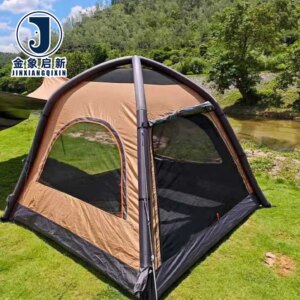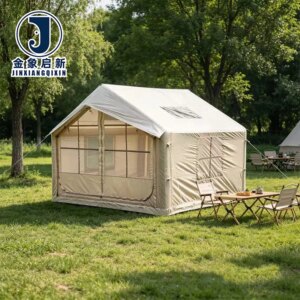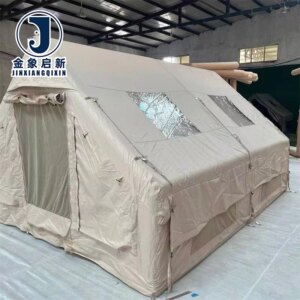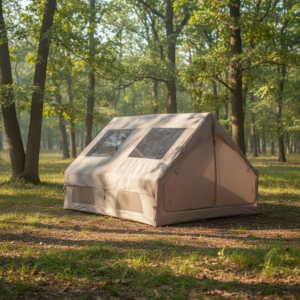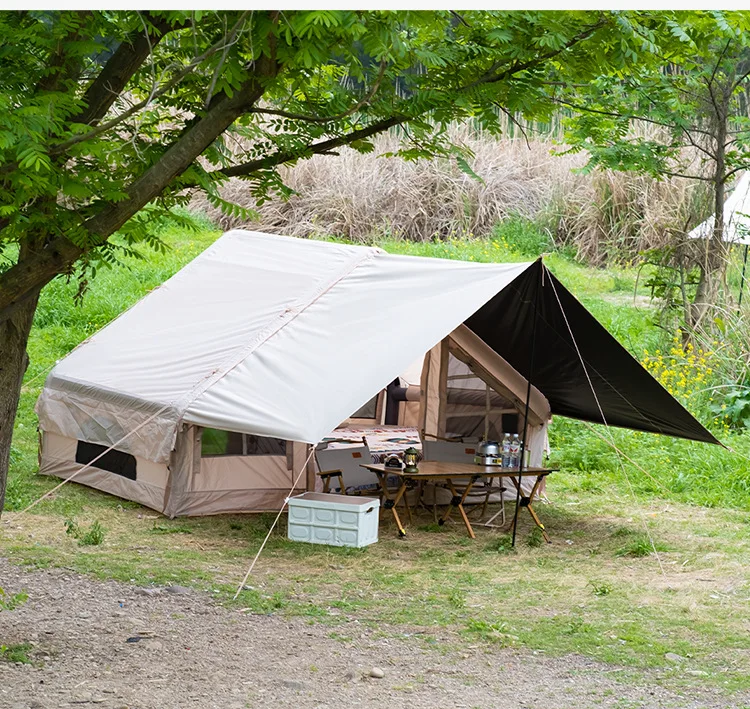
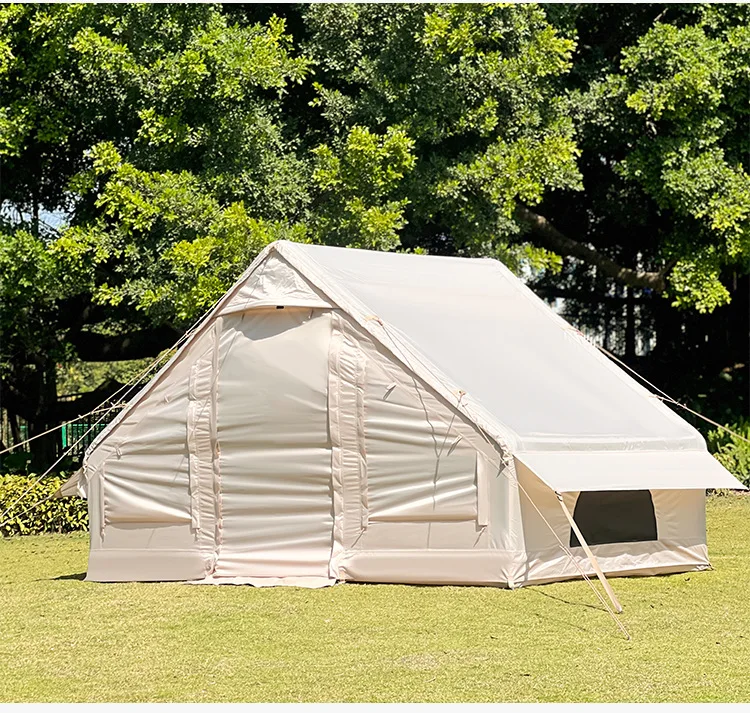
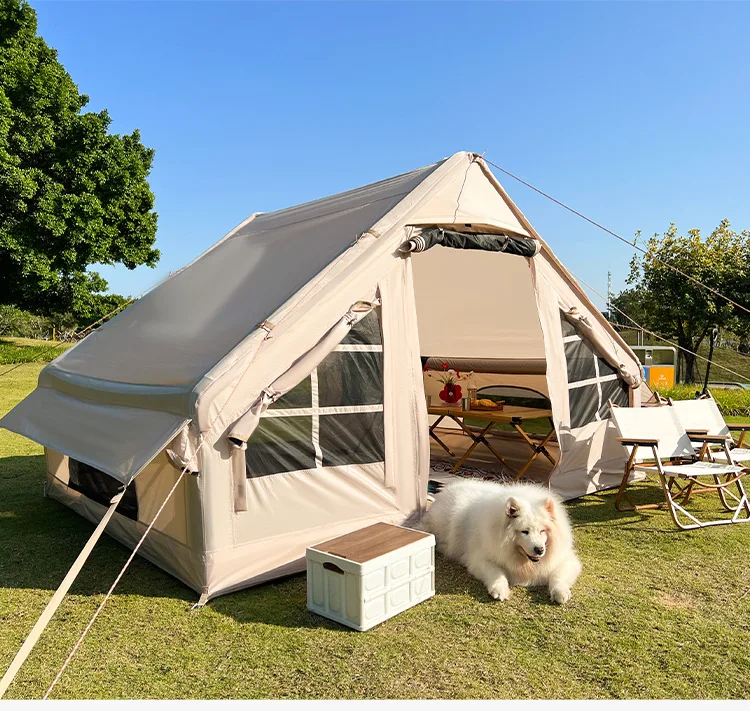
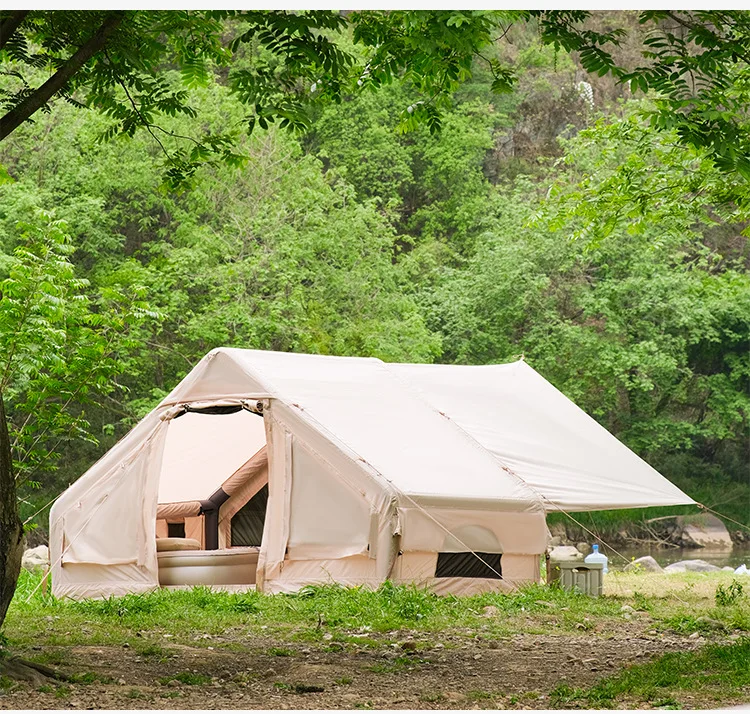
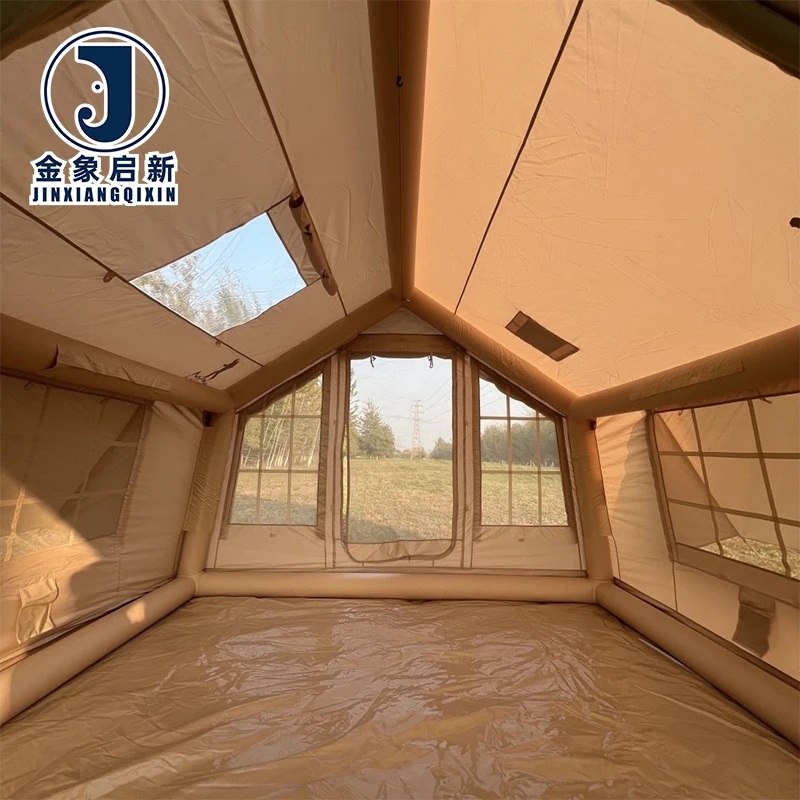
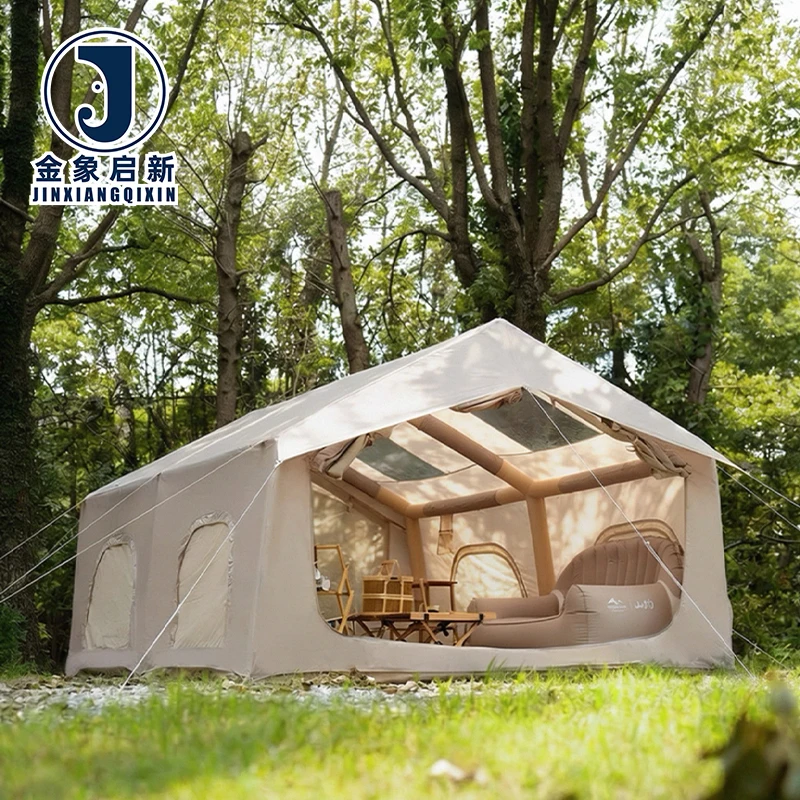
Inflatable Tent for Camping — PVC tarpaulin construction, waterproof and UV resistant, wind rated up to 50km/h. Full OEM & ODM customization with pattern printing and reinforced stress points.
- Four-season durability with tear-resistant coated fabric for extended outdoor deployment
- 12-point pressure and leakage testing on every unit before dispatch
- Backed by nearly 30 years of PVC coated fabric expertise, 3 full production lines, and dedicated QA/QC with 100% pre-shipment inspection
Description
Deep Process Control Over Coated Fabric — Every inflatable tent leaving our line is built on nearly 30 years of PVC tarpaulin expertise, with a 10-technician R&D team developing custom samples within days and three full production lines ensuring on-time bulk delivery.
Technical Specifications
| Parameter | Value |
|---|---|
| Product Type | Inflatable Tent |
| Core Material | PVC Tarpaulin |
| Key Features | Waterproof, UV Resistant, Tear Resistant |
| Wind Resistance | up to 50 km/h |
| Service Life (outdoor industrial environments) | 3-5 years |
| Product Forms | Inflatable Camping Tent |
| Capacity | 2-3 Person |
| Customization Service | OEM & ODM (sample customization, pattern printing) |
| Monthly Production Capacity | 500+ units |
| Sample Lead Time | 7-10 days |
| Standard Lead Time | 15-20 days after sample approval |
| Quality Control | 12-point pressure and leakage tests before dispatch |
| Certifications | ISO9001, ISO14001, ISO45001, CE |
Application Suitability
| Application | Exposure & Requirement |
|---|---|
| Temporary site offices for construction projects | Continuous UV exposure, wind loads, dust ingress, rapid assembly and teardown cycles |
| Mobile storage shelters for outdoor equipment | Water ingress, temperature fluctuation, abrasion from equipment movement |
| Rapid-deployment facilities for event management | Aesthetic finish, quick inflation, structural stability under variable weather |
| Logistics portable weather-resistant storage | Rain, UV degradation, frequent relocation, ground moisture contact |
Why Generic Tents Fail Within a Season and Cost You More
An inflatable tent specified without verifying material composition and structural design often degrades or collapses before the project finishes, turning a budget saving into a replacement expense.
I have watched buyers order PVC inflatable tents based on a catalogue photo, only to find the walls sagging under their own weight after a week in direct sun. The coating was too thin to hold the inflation pressure, and the seam welds split at the flex points where the structure bends most during inflation and deflation. When that happens mid-project, you are not just replacing a tent — you are rescheduling crews, renting interim cover, and explaining delays to a client who trusted your specification. [NEED_CITE: common failure modes in inflatable membrane structures under sustained UV and thermal cycling]
What the PVC Tarpaulin Base Actually Has to Handle
The inflatable tent operates as a pressurised membrane, which means the PVC tarpaulin is under constant tension from the moment it is inflated until it is deflated. That continuous stress is compounded by UV exposure during the day and thermal contraction at night. A material that lacks sufficient tear resistance will propagate small punctures into long splits along the seam lines, especially at the corners where inflation pressure concentrates.
Customisation Beyond Colour Matching
Full customisation for an inflatable tent goes well beyond choosing a colour. Dimensions must account for the inflation ratio so the tent reaches its intended shape without over-stretching the fabric. Reinforced stress points at valve mounts and anchor lines prevent the most common failure locations. Ventilation modifications need to maintain internal pressure while providing airflow. Pattern printing must use inks that bond to the PVC coating without cracking when the structure flexes during inflation cycles. [NEED_CITE: adhesion requirements for printed inks on flexible PVC coated surfaces]
Reading the Specs That Actually Matter
Waterproof, UV resistant, and tear resistant are stated as key performance attributes, but what matters is how these properties interact under real deployment conditions. A PVC tarpaulin that is fully waterproof at the panel level can still fail if the welded seams are not tested under sustained pressure — which is why every unit undergoes 12-point pressure and leakage testing before dispatch. The 50 km/h wind resistance rating reflects structural behaviour under lateral load, meaning the inflation system and anchor points must be matched to that threshold. Capacity of 2-3 persons determines internal volume, which in turn sets the inflation pressure and fabric tension the material must sustain.
The Hidden Cost of Skipping Sample Approval
Buyers who skip the 7-10 day sample development phase to save time often pay far more on the back end. A batch of inflatable tents produced without a confirmed sample can arrive with colour variation between units, incorrect inflation geometry, or seam welds that fail during the first pressure test on site. Our 15-20 day standard lead time after sample approval exists because the sample phase catches these issues before mass production commits the entire order to a single specification. When I review a rejected batch, it is almost always traceable to a specification that was assumed rather than verified in sample form. [NEED_CITE: pre-production sample verification protocols for custom membrane structures]
Why Buyers Source Inflatable Tents Through This Facility
The 10-technician R&D team handles material selection, pattern printing, and custom sizing from initial enquiry through sample approval, so you are not passing specifications through multiple intermediaries.
Three full production lines and 36 sets of professional processing equipment support the 500+ unit monthly capacity, meaning custom orders do not get pushed behind stock production runs.
The 12-point pressure and leakage test protocol on every unit before dispatch catches inflation failures at the factory rather than on your project site.
OEM and ODM sample customisation with pattern printing is supported by a team that has spent nearly 30 years focused exclusively on PVC coated fabric.
ISO9001, ISO14001, ISO45001, and CE certifications are included with every shipment, providing the compliance documentation your procurement process requires.
Documentation & Verification
- Material specification sheet confirming PVC tarpaulin composition, waterproof and UV resistant treatment details
- ISO9001, ISO14001, ISO45001, and CE certificates included as standard with every order
- Pre-shipment inspection record with photos showing 12-point pressure and leakage test results
- Packing list detailing unit count, dimensions, and weight per carton for customs clearance
- Certificate of origin available for duty reduction in applicable trade agreements
Fabrication, Handling & Storage
- Weld PVC tarpaulin seams using hot air at temperatures matched to the coating formulation to prevent delamination
- Inflate each unit partially before final seam inspection to identify pressure leaks at stress points
- Store rolled inflatable tents upright on pallets to prevent permanent creasing of the PVC coating
- Avoid dragging units across abrasive ground surfaces during deployment to protect the waterproof coating layer
- Clean with mild detergent and soft brush — solvent-based cleaners can degrade the UV resistant treatment
- Repair minor punctures with PVC-compatible adhesive patches applied to a clean, dry surface
What to Include in Your Enquiry
Send your intended deployment environment, expected duration of continuous inflation, and any site-specific wind or weather exposure data. If your market requires specific fire classification or compliance documentation, state the standard you need verified. For custom dimensions or pattern printing, include dimensional drawings or reference images so the R&D team can assess inflation geometry and print placement during the sample phase.
Frequently Asked Questions
Q: What customization options are available for the inflatable tent?
A: Dimensions, colour matching, logo and pattern printing, reinforced stress points at valve and anchor locations, and ventilation modifications are all configurable. The sample development phase confirms inflation geometry and print adhesion before mass production begins. OEM and ODM orders are supported with full design-to-delivery capability.
Q: What certifications does the inflatable tent carry?
A: Every shipment includes ISO9001, ISO14001, ISO45001, and CE certification documentation. These cover quality management, environmental management, occupational health and safety, and product safety compliance. Additional test reports can be arranged for specific market requirements during the enquiry stage.
Q: Can I receive a sample before committing to a bulk order?
A: Yes. Sample development takes 7-10 days and covers material selection, custom sizing, colour matching, and pattern printing. The approved sample sets the production specification for the entire order, ensuring batch consistency across all units.
Q: What is the delivery time for customized inflatable tent orders?
A: Standard lead time is 15-20 days after sample approval. This covers production, in-process quality checks, and the 12-point pressure and leakage test on every unit before dispatch. Complex customisations or large-volume orders may require extended timelines confirmed at quotation stage.
Q: What documentation and test reports come with each shipment?
A: Each order ships with a material specification sheet, certification documents, a pre-shipment inspection record with pressure test results, a detailed packing list, and a certificate of origin where applicable. This documentation package supports customs clearance and compliance verification in your destination market.
Related products
-
خيمة قابلة للنفخ لأربعة مواسم طبقة واحدة >3000 مم مقاومة للماء ومقاومة للرياح فتح تلقائي سريع قماش PVC صديق للبيئة
Read more -
Inflatable Camping Tent Waterproof Outdoor Air Tent for Camping Inflatable Tent Shelter
Read more -
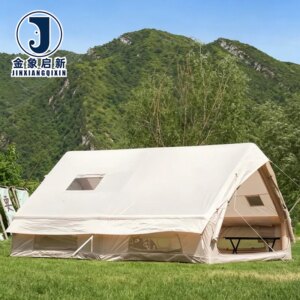
Inflatable Camping Tent PVC Four-Season Waterproof Outdoor Air Tent with Quick Automatic Opening for 2-3 Person
Read more -
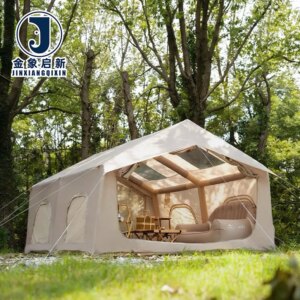
High Quality Four-Season Inflatable Tent for Camping Durable PVC Waterproof All-Weather Resistance Quick Automatic Opening
Read more