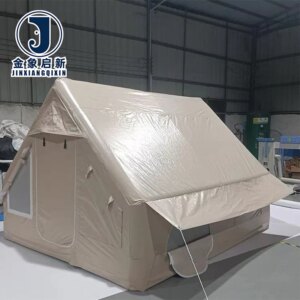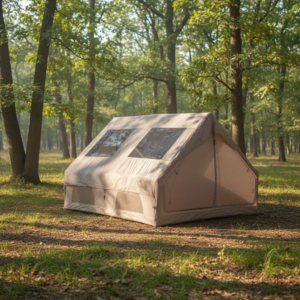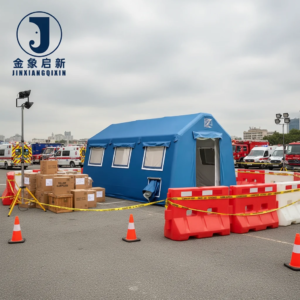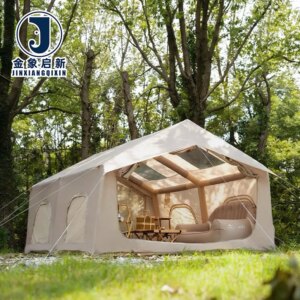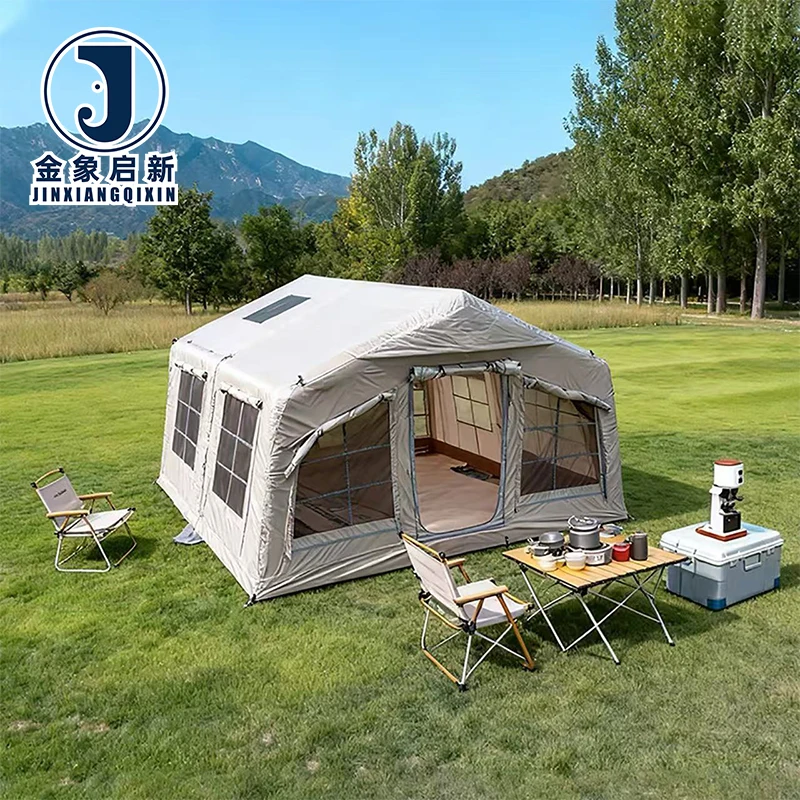
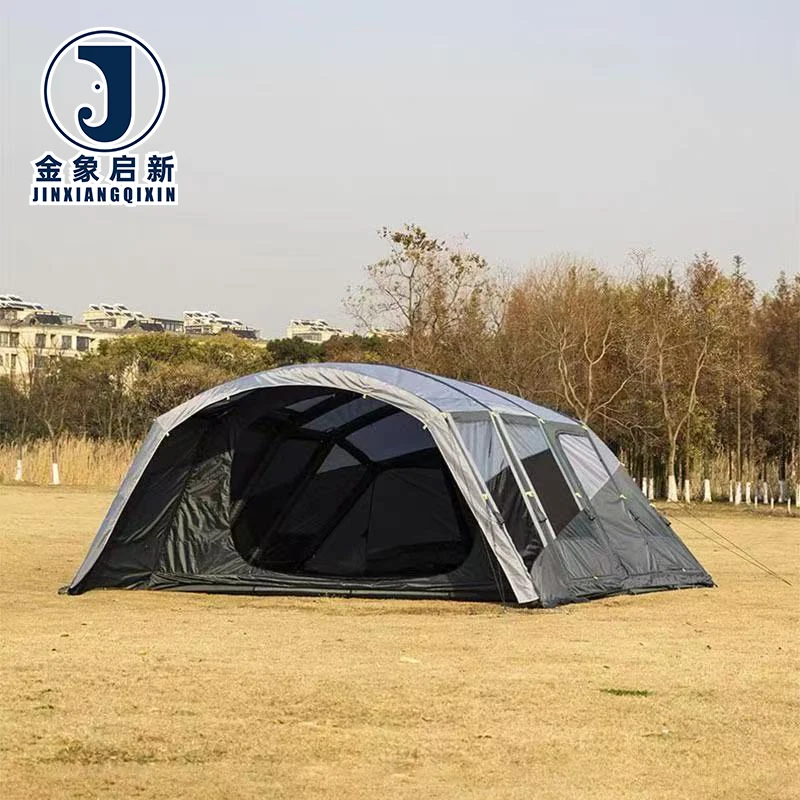
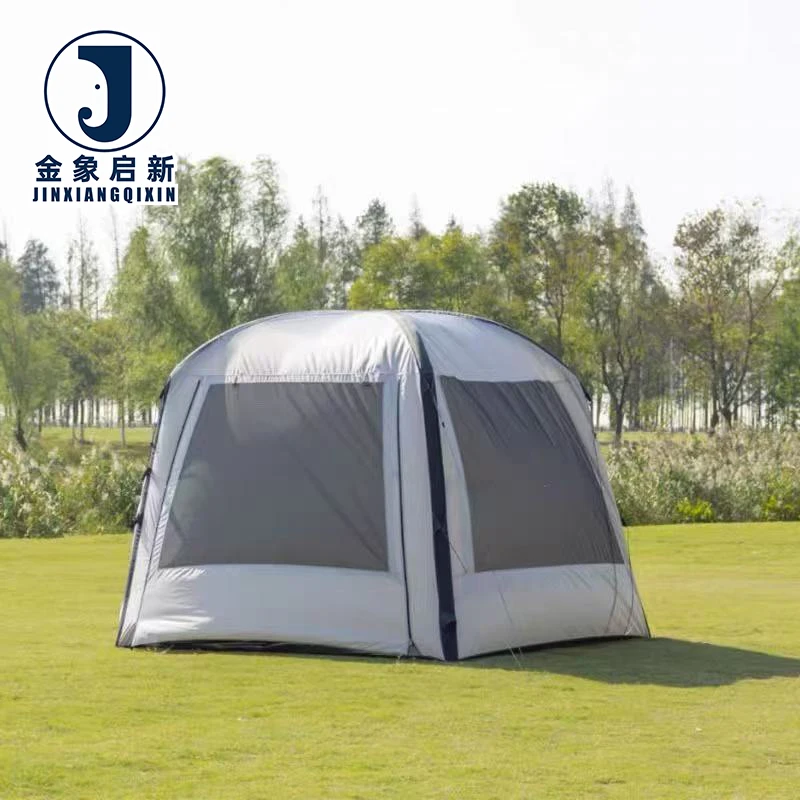
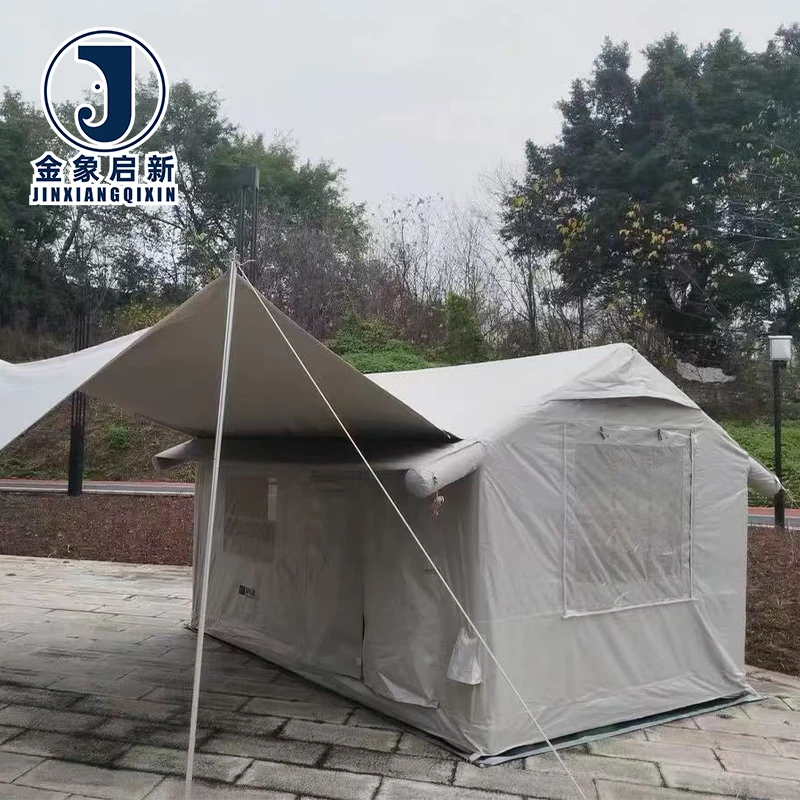
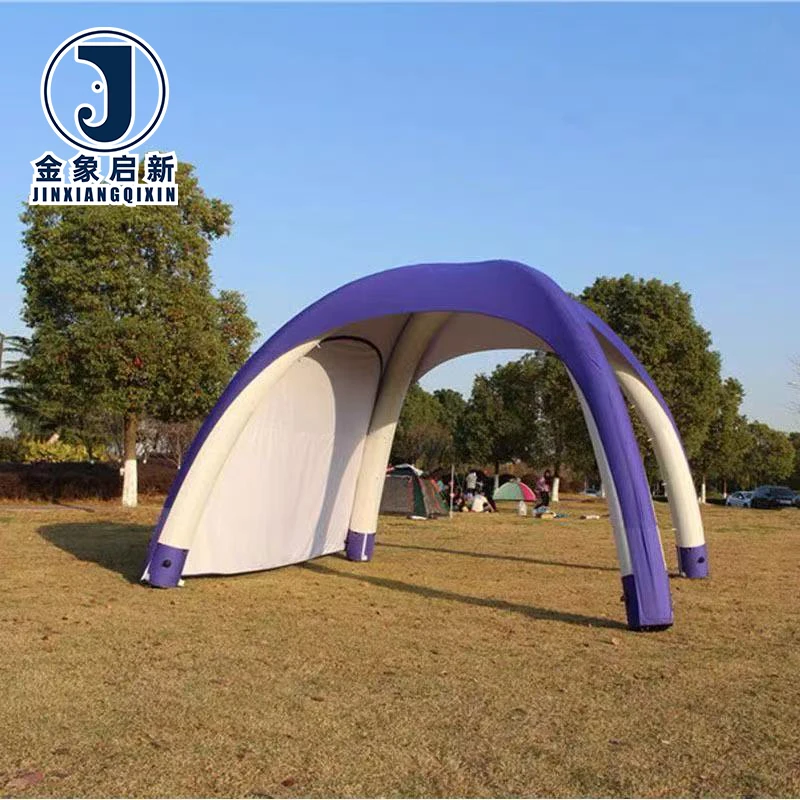
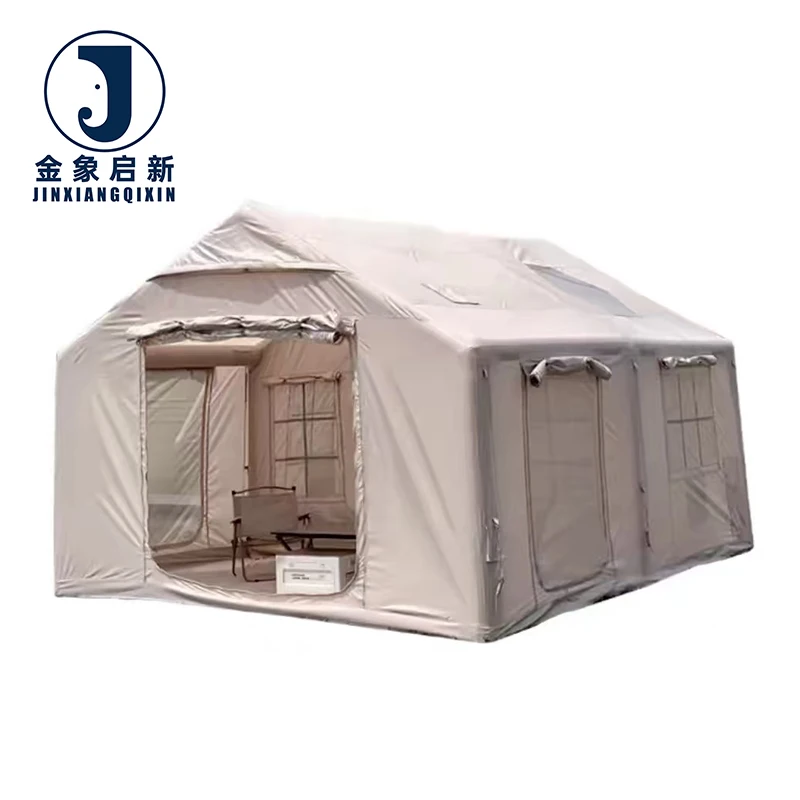
Large Family Inflatable Tent — PVC tarpaulin construction with waterproof, windproof performance and quick automatic opening for commercial deployment.
- Engineered for glamping operators, event companies, and industrial contractors requiring rapid-deployment temporary shelters
- Coating weight and adhesion controlled across production runs to maintain uniform airtightness and seam integrity at frame flex points
- Full OEM/ODM capability with pattern printing and custom sizing validated against site-specific dimensions
Backed by 30 years of coated fabric expertise, 100% pre-shipment inspection, and samples developed within days for design validation.
Description
Deep Process Control Over Coated Fabric — nearly 30 years focused on PVC coating weight and adhesion ensures every custom inflatable tent leaves the facility with verified material integrity.
Technical Specifications
| Parameter | Value |
|---|---|
| Product Type | Inflatable Tent |
| Core Material | PVC tarpaulin |
| Product Category | PVC tent |
| Product Forms | Inflatable structure |
| Key Performance | Waterproof, windproof, quick automatic opening |
| Season Rating | 4 Season |
| Customization Service | OEM & ODM (sample customization, pattern printing) |
| Production Facility Area | 9,180 m² |
| Production Lines | 3 full production lines |
| Processing Equipment | 36 sets of professional processing equipment |
| R&D Team Scale | 10 technicians |
| Quality Control System | Strict full-process quality inspection with dedicated QA & QC staff on site |
| Flame Retardant | Available in flame retardant grades — confirm the grade required for your market |
| UV Treatment | Available with anti-UV treatment — test basis to be confirmed per order |
| Standards | ISO 9001, ISO 14001, ISO 45001, CE |
Application Suitability
| Application | Exposure & Requirement |
|---|---|
| Glamping and seasonal tourism sites | Year-round weather exposure, wind loading on inflated frames, guest comfort and safety compliance |
| Event hosting and outdoor exhibitions | Rapid deployment and teardown, repeated inflation cycles, crowd safety regulations |
| Emergency response staging areas | Quick automatic opening under time pressure, windproof shelter in unpredictable conditions |
| Industrial temporary shelters | Remote site exposure, equipment protection, compliance with site safety standards |
What "Waterproof" Means Without Verified Coating Adhesion
A waterproof claim without coating adhesion data tells you nothing about how the inflatable tent performs after repeated inflation cycles.
Commercial operators ordering inflatable tents in volume often receive material that passes an initial water test but delaminates at the weld seams after a season of use. The coating may be thick enough to bead water on the surface, yet poorly bonded to the base fabric. When the inflatable frame flexes under wind load, the coating separates from the weave at stress concentrations. [NEED_CITE: coating adhesion test methods for PVC tarpaulin per ISO 2411]. As an Inflatable Tent manufacturer, we address this by controlling coating weight and adhesion at every production stage rather than relying on a single end-test.
Coating Weight and Adhesion Control for Inflatable Frames
The structural integrity of an inflatable tent depends entirely on the air-holding seams. Unlike a static cover, the inflated frame is under constant internal pressure, and every weld line carries that load continuously. Our production process monitors coating weight across the full width of each roll, ensuring that the material feeding into the weld zone has consistent thickness and surface chemistry. This uniformity is what allows heat-welded seams to achieve reliable bond strength across the entire joint, rather than failing at thin spots in the coating.
Batch-to-Batch Consistency Across Multiple Tent Orders
When a glamping operator expands capacity and orders a second batch of inflatable tents months later, colour drift or coating weight variation between production runs creates a visible mismatch on site. Our Inflatable Tent manufacturer facility runs three full production lines with 36 sets of professional processing equipment, allowing us to hold tight process parameters across separate production dates. [NEED_CITE: batch consistency requirements for coated fabric in commercial structures]. The 10-technician R&D team develops and archives colour and coating references for every custom order, so reorders match the original specification.
Reading the Specification Sheet Beyond Surface Claims
GSM (grams per square metre) is frequently quoted as the single indicator of fabric quality, but for inflatable tent applications, the relationship between base fabric denier, weave density, and coating weight matters far more than total weight alone. A high GSM achieved through heavy coating with a light base fabric may resist abrasion on the surface but lack the tensile strength to resist tearing when the inflated frame is dragged across rough ground. Conversely, a tightly woven base fabric with moderate coating weight delivers better tear propagation resistance and lighter overall structure weight, which matters for transport and rapid deployment. The coating method — whether knife-over-roll, calendering, or lamination — determines peel strength at the weld zone, which directly governs how well the seams hold under internal pressure.
The Hidden Cost of Specification Mismatches
A tent that arrives lighter than the quoted GSM puts the commercial operator in a difficult position: the structure may deploy and look correct, but the material lacks the agreed coating weight to maintain long-term waterproofing and UV stability. Flame-retardant grades claimed without a test report create a compliance gap that surfaces only when the local fire inspector asks for documentation. [NEED_CITE: fire safety documentation requirements for temporary commercial structures]. Colour variation between rolls in the same order becomes visible the moment two tents are erected side by side at a glamping site, undermining the professional appearance the operator paid for. Weld failures at flex points are the most costly, because they occur after the tent is in use with guests inside.
Why Source Inflatable Tents Through This Facility
Deep process control over PVC coating weight and adhesion means the material entering the weld zone is consistent, which is the foundation of reliable inflatable seams. Three full production lines and 36 sets of professional equipment support bulk inflatable tent orders with dependable on-time delivery, even for custom sizing and pattern printing runs. The 10-person R&D team handles material selection, custom sizing, and sample development within days, allowing buyers to validate design and print accuracy before committing to full production. Dedicated QA and QC staff conduct inspections at every production stage, with 100% pre-shipment inspection including pressure testing for airtightness and structural integrity. Full documentation — from material specification sheets to ISO and CE certificates — ships with every order, closing the verification gap that leaves many buyers exposed.
Documentation & Verification
- Material specification sheet stating base fabric, coating type, and weight for each inflatable tent order
- UV and flame retardant test reports provided where applicable to the grade specified
- Pre-shipment inspection record including pressure test results for airtightness verification
- ISO 9001, ISO 14001, ISO 45001, and CE certificates included with shipment documentation
- Certificate of origin and customs support documents prepared for cross-border delivery
Fabrication, Handling & Storage
- Heat-weld seams using temperature and dwell time settings matched to the PVC tarpaulin coating weight for consistent bond strength
- Inflate and pressure-test each completed tent structure before folding to confirm airtightness at all welded joints
- Store rolled inflatable tent fabric upright in a dry, shaded environment to prevent permanent creasing in the PVC coating
- Avoid dragging the PVC tarpaulin surface across abrasive ground during deployment to protect the coating layer
- Use mild, non-solvent cleaners on the PVC surface to preserve coating integrity and any applied UV treatment
Preparing Your Inflatable Tent Inquiry
Provide the intended application and deployment environment — whether a permanent glamping installation, a touring event circuit, or an emergency staging role — along with any fire safety or compliance standards your local jurisdiction requires. Specify the number of units, target dimensions, and whether you need finished inflatable tent structures or fabric rolls for your own fabrication. Include colour references, pattern printing artwork, or branding requirements so the R&D team can develop a sample for your approval before full production begins.
Frequently Asked Questions
Q: How do I verify the PVC tarpaulin material weight and coating quality when the inflatable tent arrives?
A: Request the pre-shipment inspection record that documents the measured weight per square metre against the agreed specification. Our QA team tests coating adhesion and weight at multiple points across each roll before fabrication. On arrival, you can cross-check a cut sample against the material specification sheet included with your shipment documentation.
Q: What test documentation supports waterproof and flame retardant claims for commercial inflatable tent use?
A: Where flame retardant grades are specified, we supply test reports referencing the applicable standard for your market. Waterproof performance is verified through coating adhesion and integrity testing during production. Confirm the fire safety classification your local authority requires so we can match the correct treatment grade and documentation to your inflatable tent order.
Q: How does the custom sizing, pattern printing, and sample approval process work before full production?
A: The R&D team develops a sample based on your dimensional drawings, colour references, and print artwork. You review the physical sample for sizing accuracy, print quality, and material feel. Once approved, the sample parameters are locked into production, and the full run is manufactured to that validated specification with in-process QA checks throughout.
Q: What lead time and minimum order apply to customized inflatable tent designs?
A: Lead times depend on the complexity of custom sizing, colour matching, and pattern printing requirements, with typical multi-week timelines for fully custom designs. Minimum order quantities vary by specification. Provide your target dimensions, quantity, and customization details during inquiry so we can confirm the schedule before you commit to production.
Q: How should inflatable tent fabric be stored and maintained for long-term commercial use?
A: Store deflated and folded tents in a dry, shaded location away from direct sunlight and sharp objects. Clean the PVC tarpaulin surface with mild, non-solvent detergents to avoid damaging the coating or any applied UV treatment. Inspect welded seams periodically for signs of stress, particularly at flex points where the inflatable frame bends most during inflation cycles.
Related products
-
Premium Four-season Inflatable Tents for Camping Easy-to-Use Spacious Portable Waterproof Outdoor Tent Quick
Read more -
خيمة قابلة للنفخ فاخرة للتخييم الفاخر في الهواء الطلق، خيمة هوائية مقاومة للماء مع مضخة
Read more -
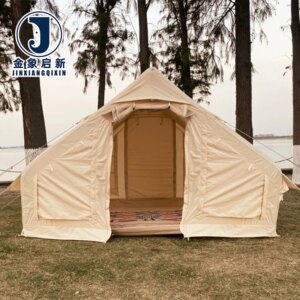
خيمة قابلة للنفخ لأربعة مواسم طبقة واحدة >3000 مم مقاومة للماء ومقاومة للرياح فتح تلقائي سريع قماش PVC صديق للبيئة
Read more -
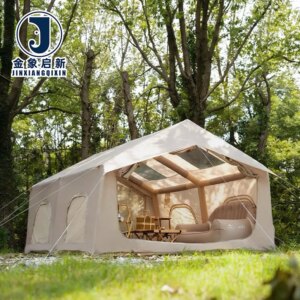
Inflatable Tent Family Size Four-Season Quick Automatic Opening Waterproof 2-8 Person Factory Direct Sale
Read more