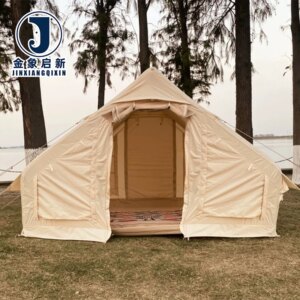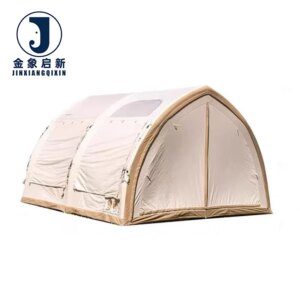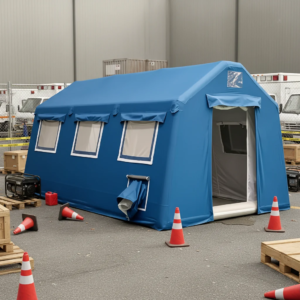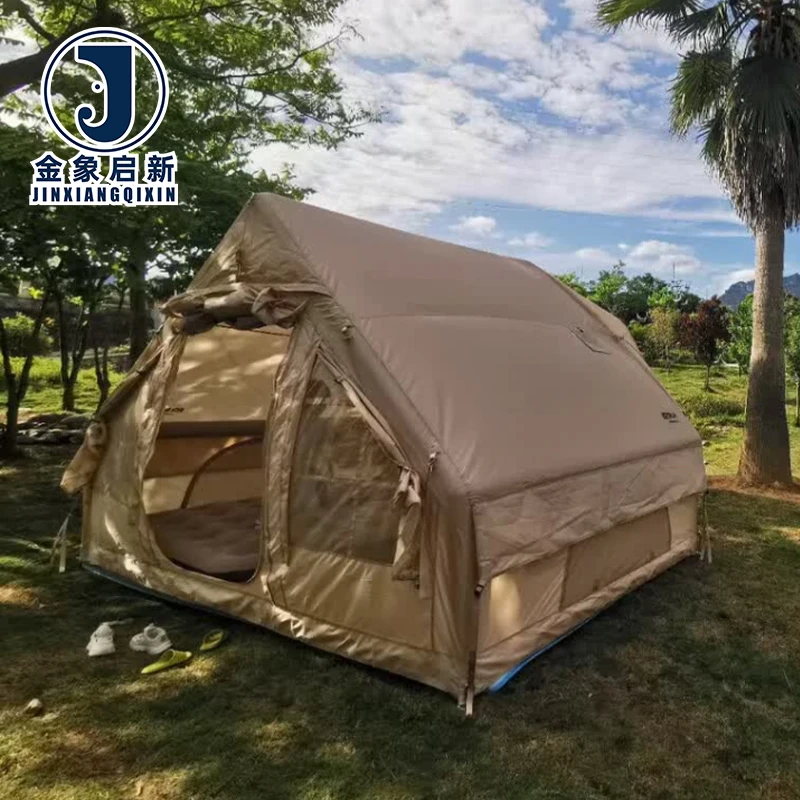
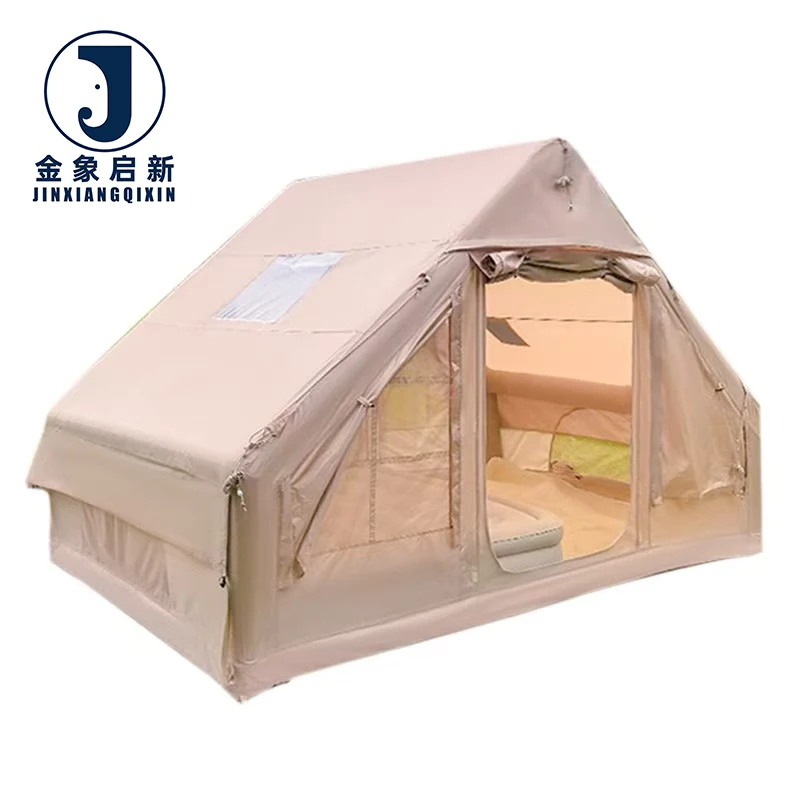
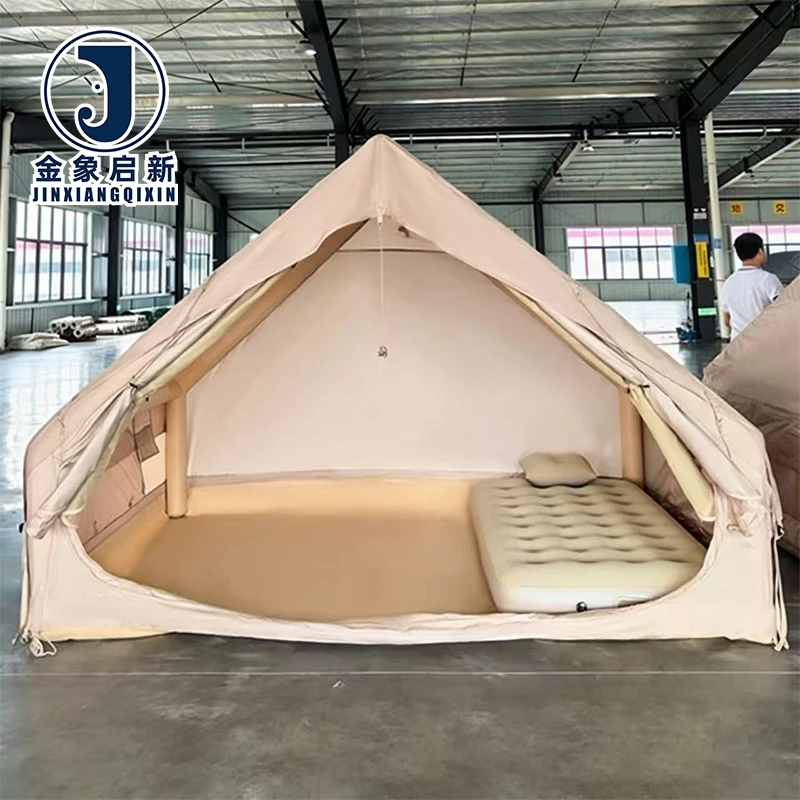
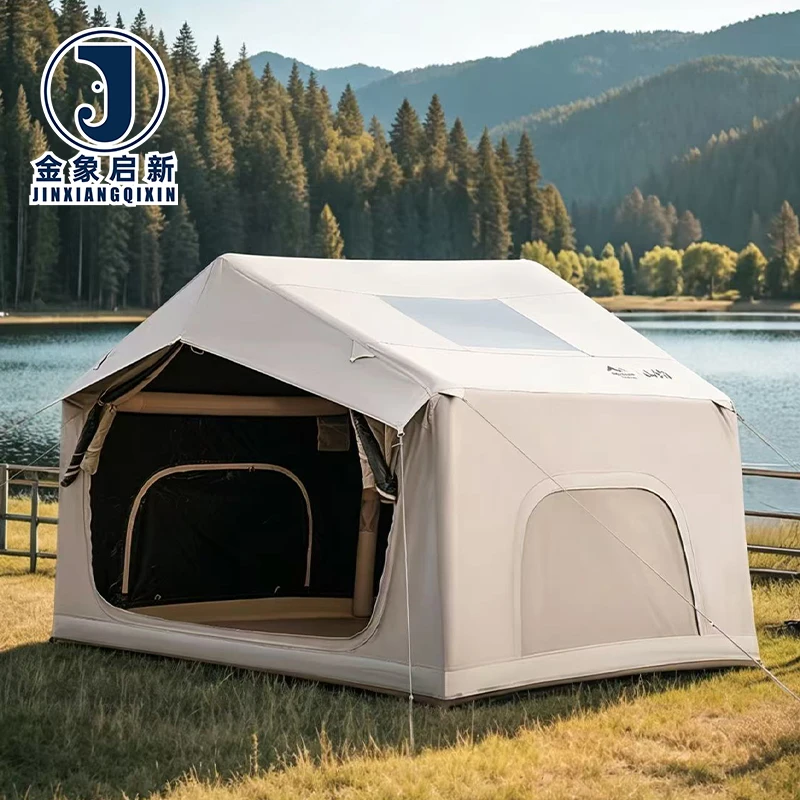
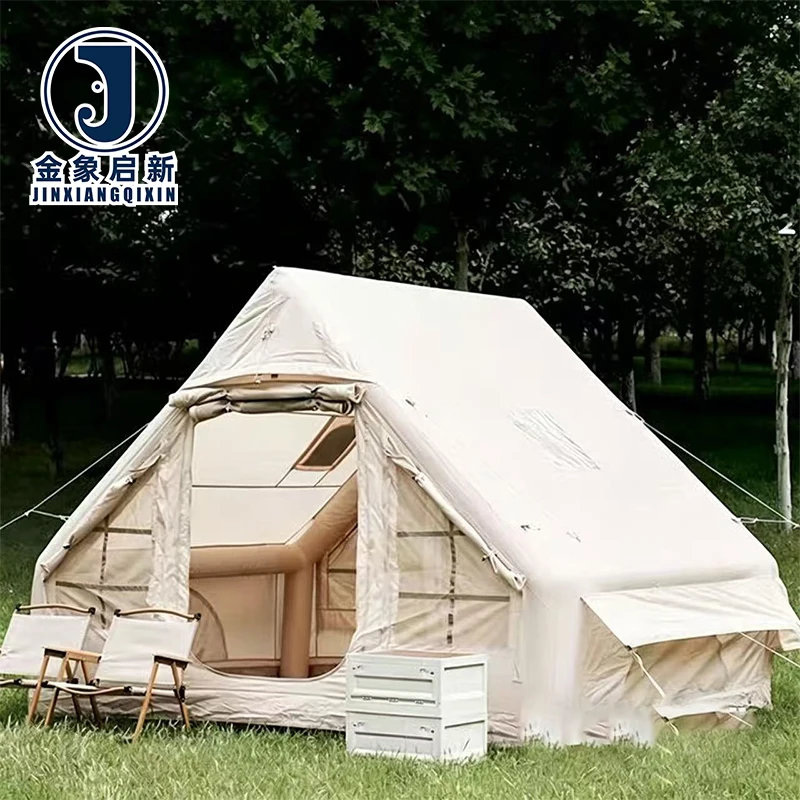
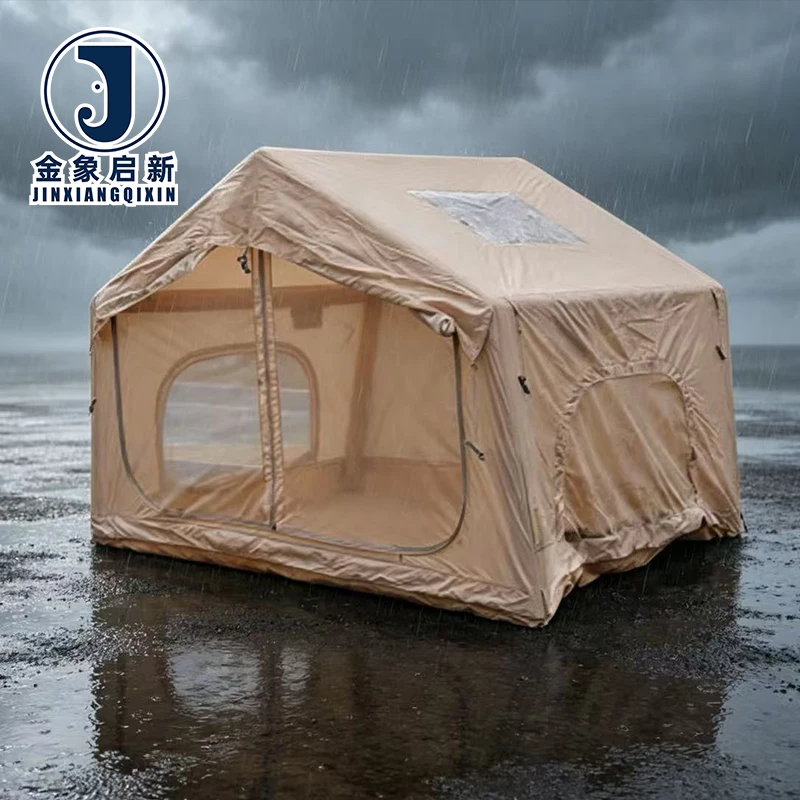
4 Season Inflatable Tent, 8-10 Person, PVC Tarpaulin — waterproof, UV-resistant, and tear-resistant air tent for commercial outdoor shelter applications.
- Engineered for equipment manufacturers and event facility operators requiring consistent fabric quality, with PVC tarpaulin construction balancing tensile strength and heat-weldability for reliable inflatable structure performance.
- Sample customization and pattern printing available to match your product specifications.
Production backed by 3 full lines and 36 equipment sets, with 100% pre-shipment inspection and samples developed within days for your evaluation.
Description
Proven Coating Process Control — Nearly 30 years of PVC tarpaulin coating expertise ensures every roll of inflatable tent fabric meets the stated GSM, base fabric density, and coating adhesion required for reliable inflation cycles.
Technical Specifications
| Parameter | Value |
|---|---|
| Product Type | Inflatable Tent |
| Core Material | PVC Tarpaulin |
| Capacity | 8-10 Person |
| Season Rating | 4 Season |
| Waterproof Performance | Fully waterproof coated construction |
| UV-Resistant Treatment | Available (test basis not stated — request report by order number) |
| Tear-Resistant Property | Engineered for repeated setup and breakdown cycles |
| Customization Service | OEM & ODM including sample customization and pattern printing |
| Production Lines | 3 full production lines |
| Processing Equipment | 36 sets of professional equipment |
| R&D Team Scale | 10 technicians |
| Quality Control System | Full-process inspection with dedicated QA & QC staff |
| Standards | ISO9001, ISO14001, ISO45001, CE |
Application Suitability
| Application | Exposure & Requirement |
|---|---|
| Commercial inflatable camping tent manufacturing | Repeated inflation and deflation cycles, flex stress at seam joints, abrasion from ground contact during setup |
| Large-scale outdoor event temporary shelters | Prolonged UV exposure, wind loading on inflated structures, crowd-adjacent wear and incidental contact |
| Professional expedition equipment production | Extreme temperature fluctuation, high-altitude UV intensity, requirement for reliable waterproof envelope under load |
| Industrial-grade family camping gear | Multi-season deployment including winter rain and summer heat, portability demands, consumer expectation of durability |
Why Inconsistent Coating Weight Undermines Inflatable Tent Integrity
Verified GSM at dispatch prevents the structural failures that emerge only after the tent reaches the end user.
When an inflatable tent manufacturer specifies a particular PVC tarpaulin grade, the assumption is that every roll arriving at the factory floor carries the same coating weight and base fabric density. In practice, batches that arrive lighter than the quotation stated create air chambers that flex beyond their engineered limits, accelerating fatigue at welded seams. The failure rarely appears during the manufacturer’s own quality check — it surfaces weeks later in the field, when the inflatable beams soften under sustained load [NEED_CITE: tensile and tear test methods for coated fabrics per ISO 1421]. For brands distributing through retail channels, this translates directly into warranty claims and reputational damage. Sourcing an Inflatable Tent Fabric manufacturer that inspects every roll before dispatch, rather than sampling selectively, shifts that risk away from your production line.
Matching PVC Tarpaulin Properties to Inflatable Chamber Demands
Inflatable tents place unusual demands on coated fabric. Each air beam must hold internal pressure across temperature swings that cause the PVC to expand and contract, testing both the coating adhesion and the base fabric weave integrity. The custom inflatable tent material must resist puncture from ground debris during setup while remaining flexible enough to fold repeatedly without crease damage. Our PVC tarpaulin core is selected and coated to balance these competing requirements, with tear resistance engineered into the base fabric structure rather than relying on coating thickness alone.
Weld Line Behaviour Under Cyclic Inflation Loading
Every inflation cycle subjects the welded seams to stress that the parent fabric does not experience. The heat-affected zone at each weld can become the weakest point if the coating formulation is not compatible with the welding temperature and dwell time used by the fabricator. This is why our material selection process involves close collaboration with the equipment manufacturer’s production team, confirming that the PVC formulation supports the specific welding method in use [NEED_CITE: weld peel strength testing for PVC coated fabrics]. A fabric that performs well in flat-sheet tension tests may behave differently once formed into pressurised tubes, and this distinction informs our OEM and ODM sample development.
Interpreting the Specification Sheet Beyond Stated GSM
The weight of a PVC tarpaulin, stated in GSM, reflects the combined mass of the base fabric and the coating applied to it. However, two fabrics of identical GSM can perform very differently depending on how that weight is distributed. A heavier base fabric with a thinner coating will generally offer higher tensile and tear strength but may sacrifice some surface abrasion resistance. Conversely, a lighter base with a thicker coating may feel substantial but can delaminate under cyclic stress. For inflatable tent applications, the ratio of base fabric denier to coating weight directly determines how the air beam behaves under sustained internal pressure. Understanding this relationship — rather than selecting on GSM alone — is what separates a tent that holds pressure through a storm from one that gradually sags. UV-resistant grades are available for prolonged outdoor deployment; confirm the specific test standard required for your target market before placing your order.
The Hidden Cost of Batch-to-Batch Colour Drift in Tent Production
A consistent colour across every roll in a production run is essential when multiple inflatable tent panels are assembled side by side. Colour variation between batches may not be visible when inspecting individual rolls, but becomes immediately apparent once the tent is inflated and the panels are viewed together in natural light. For commercial outdoor equipment manufacturers producing branded product lines, this inconsistency can halt assembly, force panel re-sorting, and delay shipment schedules [NEED_CITE: colour consistency measurement standards for coated textiles]. The cost of rework — labour, wasted material, and missed delivery windows — typically exceeds the price difference between a controlled and an uncontrolled supply. Dedicated QA and QC staff checking colour reference against the approved standard at each production stage is the structural safeguard against this outcome.
Why Procurement Teams Specify This Fabric Source
Nearly 30 years focused exclusively on PVC coated fabric provides the process depth needed to control coating weight and adhesion consistently across inflatable tent fabric production runs. Three full production lines and 36 sets of professional equipment deliver the volume capacity required for commercial tent manufacturing without sacrificing the batch-to-batch consistency that automated cutting and welding lines demand. The 10-person R&D team handles material selection, pattern printing, and custom sizing specific to your inflatable chamber geometry, developing samples within days rather than weeks. A 100 percent pre-shipment inspection protocol, backed by dedicated QA and QC staff at every production stage, means the fabric arriving at your factory matches the specification agreed at order confirmation.
Documentation & Verification
- Material specification sheet stating GSM, base fabric, and coating details for each inflatable tent fabric batch
- UV-resistance test report provided upon request with applicable order number
- Pre-shipment inspection record confirming 100 percent roll inspection before dispatch
- ISO9001, ISO14001, ISO45001, and CE certificates included for compliance documentation
- Roll packing list with weight and dimension data for each shipment
Fabrication, Handling & Storage
- Confirm welding temperature and dwell time against the specific PVC coating formulation before full production runs
- Allow fabric to acclimatise to workshop temperature before unrolling to avoid crease memory in cold-conditioned PVC tarpaulin
- Store rolls upright on padded racking to prevent flat-spot deformation of the coated surface
- Use compatible PVC adhesive for field repairs on inflatable chambers, matching the coating chemistry of the base material
- Plan cutting layout to minimise weld joints across high-stress inflation zones of the tent structure
- Avoid stacking heavy items on stored rolls to prevent permanent coating impression marks
Request a Specification Recommendation
To move forward, share your inflatable tent chamber dimensions, the operating pressure range, and the climate conditions your end users will encounter most frequently. Let us know whether you require finished cut panels or roll stock, and specify any pattern printing or branding requirements for your product line. If your target market mandates a particular fire classification or UV-resistance standard, include that reference so we can confirm the applicable grade during sample development.
Frequently Asked Questions
Q: How do I verify GSM and coating weight on arrival for inflatable tent fabric?
A: We provide a material specification sheet stating GSM, base fabric, and coating details for every batch. Our QA and QC staff conduct 100 percent pre-shipment inspection, and weight verification records accompany each dispatch. Upon receipt, you can cross-check sample cuts against the stated specification using standard gravimetric testing methods.
Q: What UV-resistance test data is available for outdoor lifespan claims?
A: UV-resistant formulations are available across our inflatable tent fabric range. Test basis varies by grade, so we recommend requesting the specific test report by order number to ensure the data matches your target market’s regulatory or retail compliance requirements. Our team will confirm the applicable standard during the sample development stage.
Q: What OEM and ODM customisation options are available?
A: Full OEM and ODM support covers material selection, sample customisation, and pattern printing tailored to your inflatable tent design. Our 10-person R&D team develops samples within days, allowing you to validate chamber geometry, welding compatibility, and colour accuracy before committing to mass production volumes.
Q: How is batch-to-batch consistency ensured across roll orders?
A: Dedicated QA and QC staff inspect every production stage, from raw material verification through final coating weight checks. Each roll is inspected against the approved colour reference and specification sheet before packing, ensuring that repeat orders match the original sample your production line was set up to process.
Q: What documentation accompanies each shipment for market compliance?
A: Every dispatch includes the material specification sheet, pre-shipment inspection record, roll packing list, and applicable ISO9001, ISO14001, ISO45001, and CE certificates. For orders requiring UV or fire performance verification, the corresponding test report is provided alongside the shipment documentation to support your compliance submissions.
Related products
-
خيمة فاخرة قابلة للنفخ من PVC للتخييم الفاخر في الهواء الطلق مقاومة للماء مع تصميم سريع الفتح التلقائي قابل للطي لجميع الفصول ومضخة
Read more -
Inflatable Camping Tent Waterproof PVC Outdoor Air Tent Easy Setup Family Camping Shelter Four-Season >3000mm Waterproof Quick
Read more -
Inflatable Tent Four-Season Quick Automatic Opening PVC 3000mm Waterproof Foldable Eco-Friendly 2-3/3-4/6-8 Person Outdoor Use
Read more -
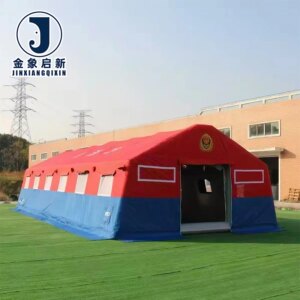
Inflatable PVC Camping Tent Four-Season Waterproof CE Certified Quick Automatic Opening 3000mm+ Factory Direct Sale
Read more