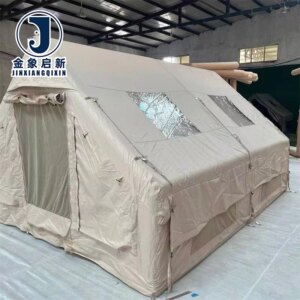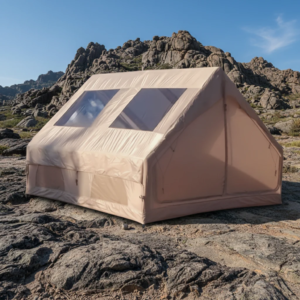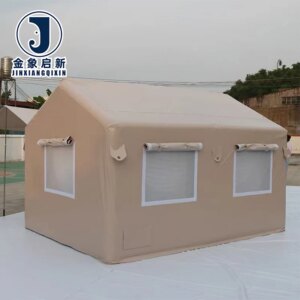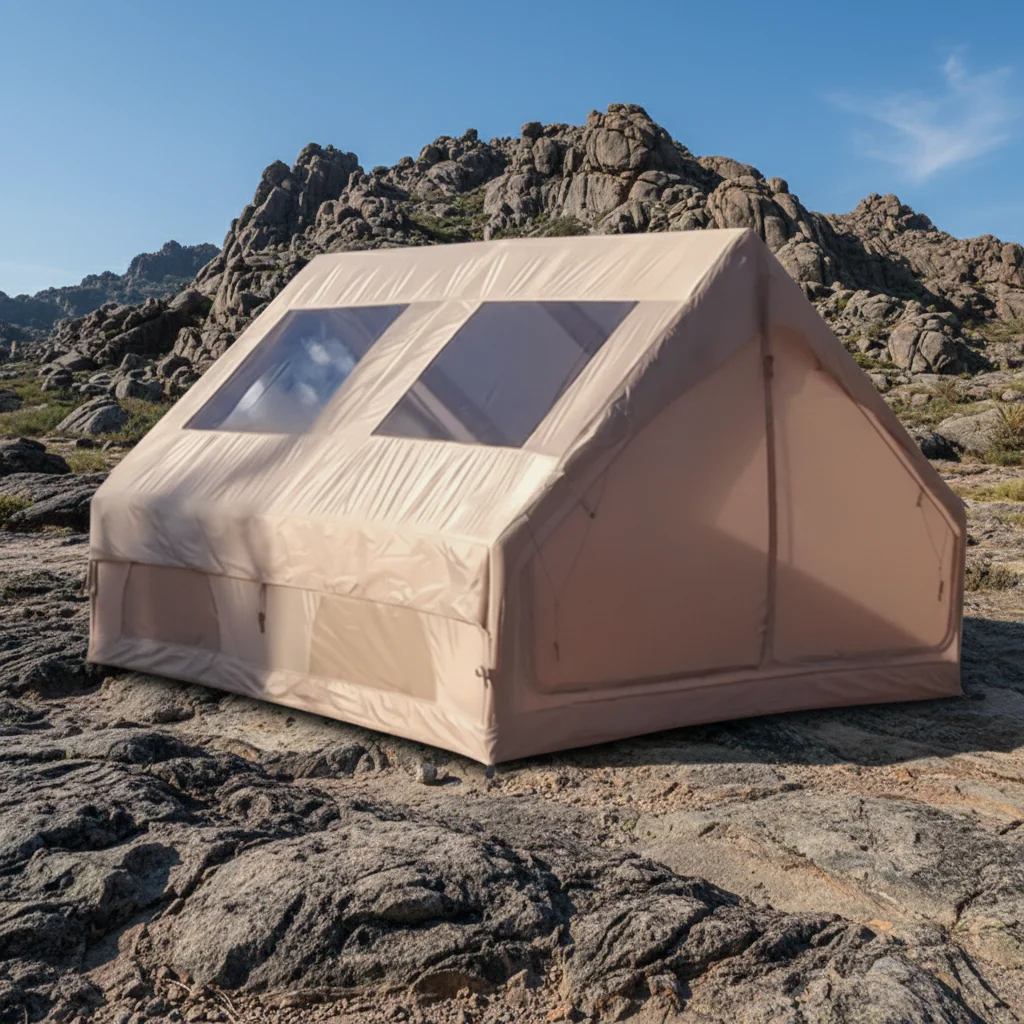
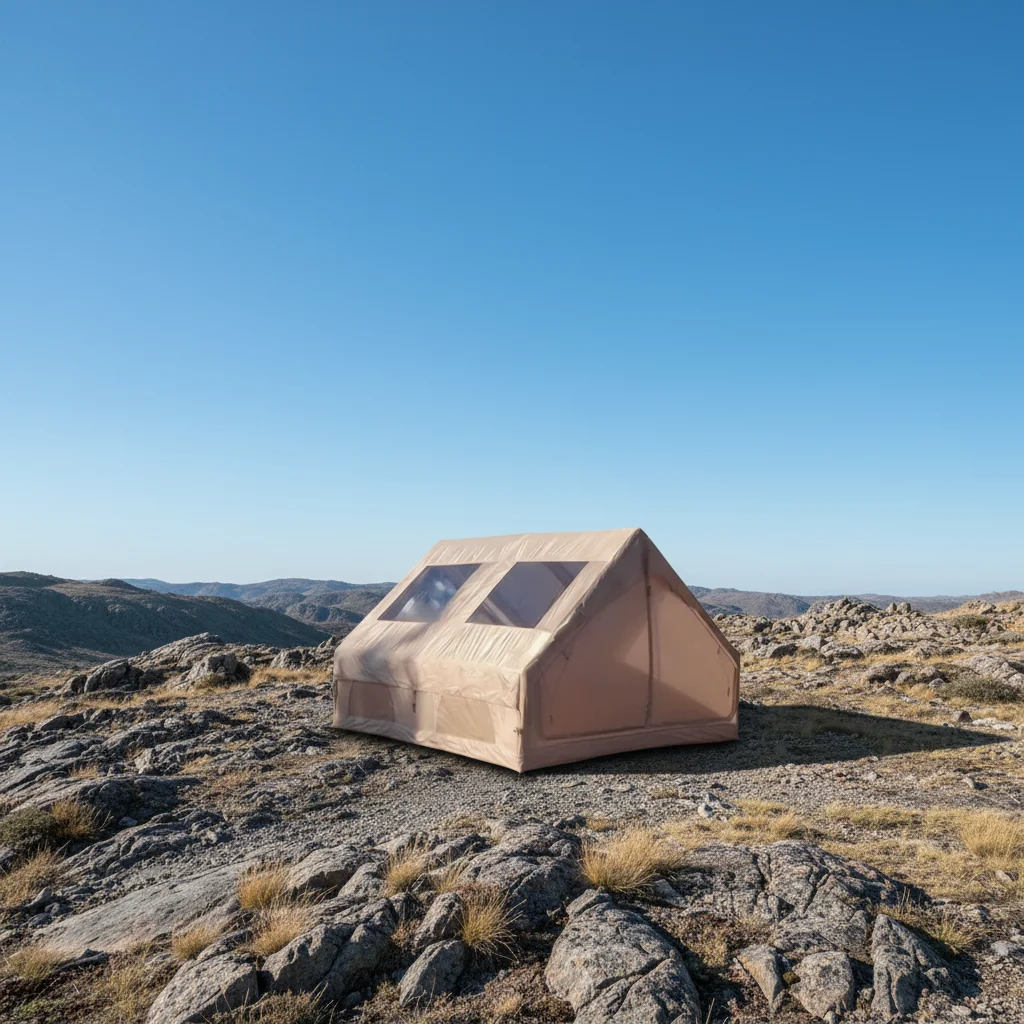
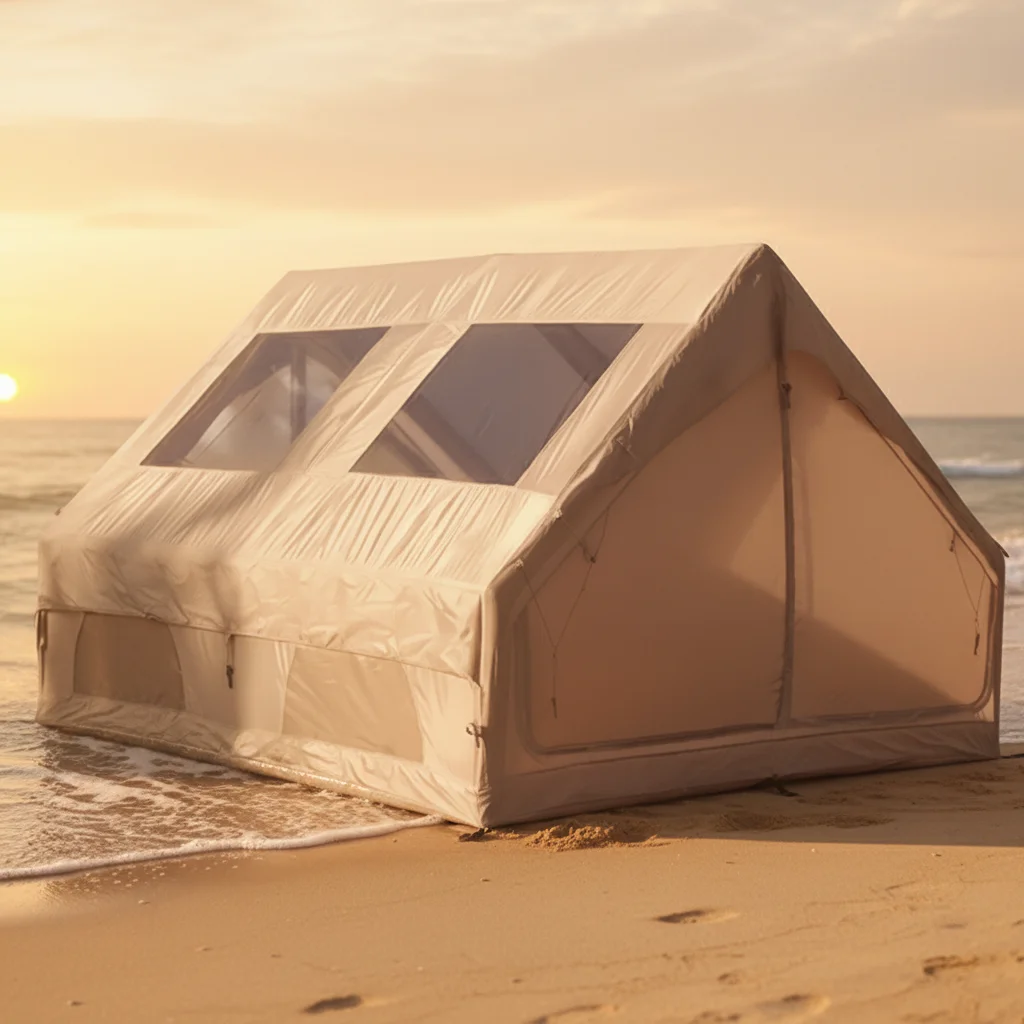
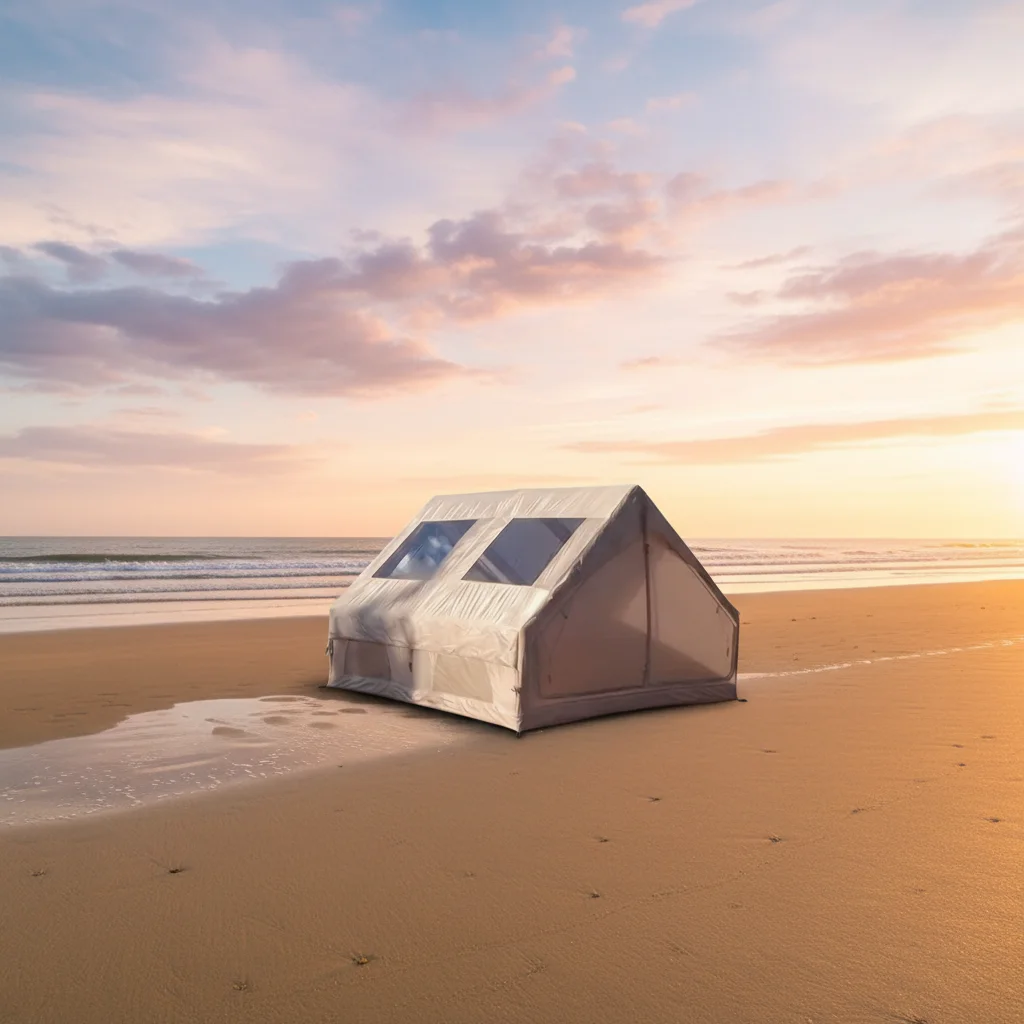
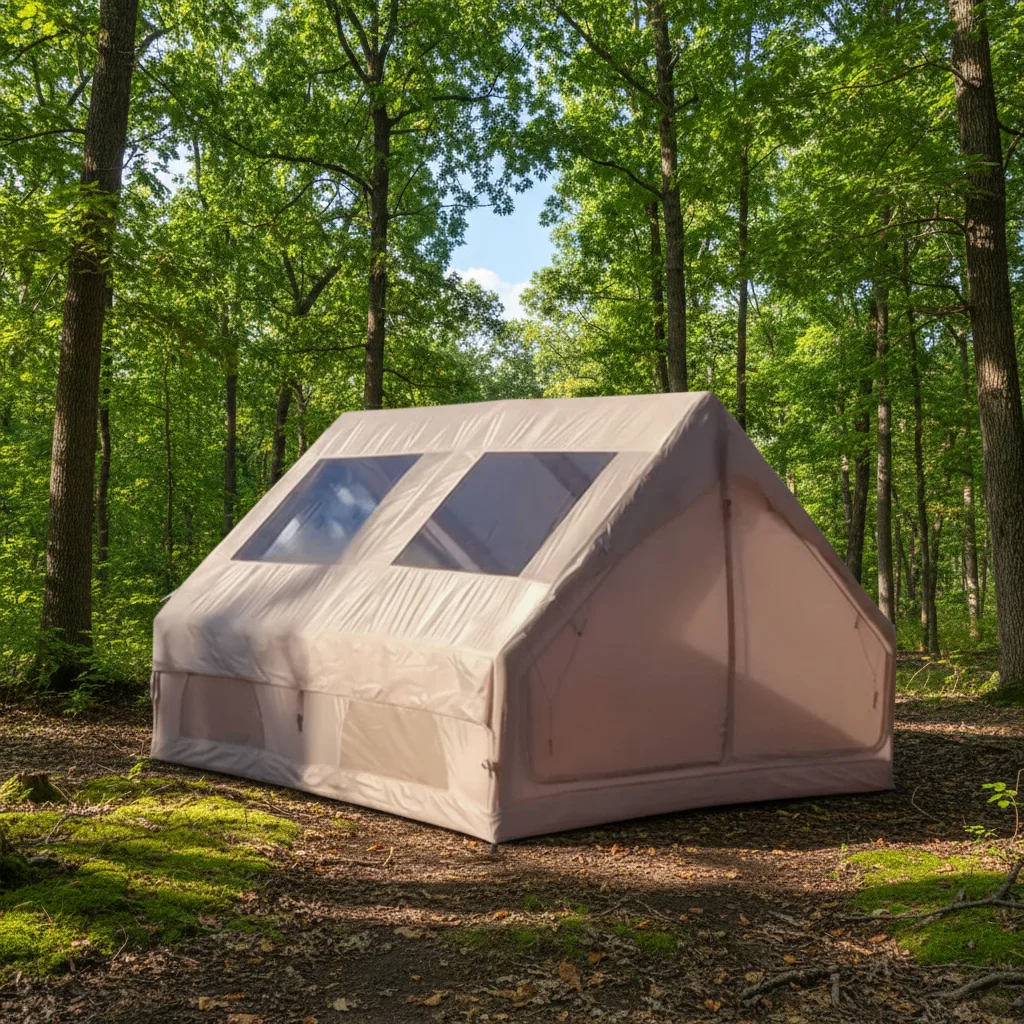
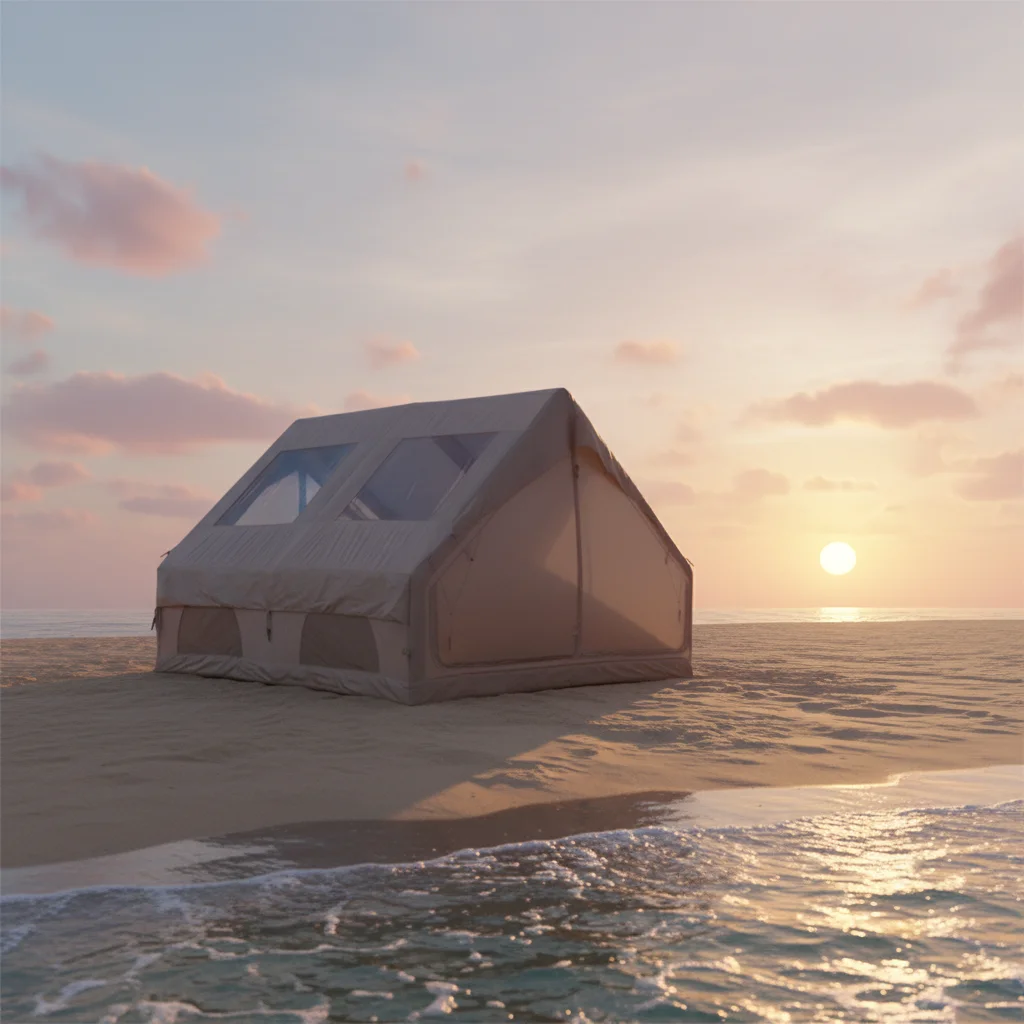
Four-Season Inflatable Tent for Camping, PVC Tarpaulin 0.6–1.2mm, ≥5000mm Waterproof — engineered for commercial outdoor operations with knife-coated fabric delivering ≥3000N/5cm tensile strength and UPF 50+ protection.
- 24-hour pressure retention tested inflation system with 100% compressed air leak testing
- Full OEM customization: Pantone color matching, pattern printing, custom dimensions, logo and valve modifications
- Single-layer construction at ≤8kg/m² for rapid automatic deployment in all-weather conditions
Supported by a 10-technician R&D team handling sample development and material selection within days.
Description
Deep Process Control Over Coated Fabric — nearly 30 years of PVC coating expertise applied to every roll of inflatable tent fabric, ensuring batch-to-batch consistency in weight, adhesion, and colour across full production runs.
Technical Specifications
| Parameter | Value |
|---|---|
| Product Type | Inflatable Tent |
| Core Material | PVC tarpaulin (knife-coated fabric) |
| Tensile Strength | ≥3000N/5cm (test basis not stated) |
| Tear Strength | ≥500N (test basis not stated) |
| Waterproof Rating | ≥5000mm water column |
| UV Protection | UPF 50+ (test basis not stated) |
| Fabric Thickness Range | 0.6mm to 1.2mm |
| Weight | ≤8kg/m² |
| Construction | Single layer |
| Inflation System | Quick automatic opening; 24-hour sustained pressure retention |
| Key Features | All-weather resistance, tear-resistant, waterproof |
| Standards | ISO 9001, ISO 14001, ISO 45001, CE |
Application Suitability
| Application | Exposure & Requirement |
|---|---|
| Commercial outdoor adventure operations | Repeated inflation/deflation cycles, variable weather, transport abrasion during relocation |
| Expedition outfitters in mountainous zones | High UV exposure, low-temperature flexibility demands, wind loading on inflated structure |
| Event organizers for outdoor promotional setups | Rapid deployment and teardown, public safety compliance, branded surface consistency |
| Guided tour operators in coastal environments | Salt spray, moisture saturation, sand abrasion at ground contact points |
| Adventure camp temporary shelters | Continuous seasonal deployment, UV exposure, structural integrity under occupant load |
Why Tensile and Tear Numbers Matter More Than Thickness Alone for Inflatable Tent Fabric
A thicker PVC panel does not automatically resist the cyclic stress of daily inflation and deflation.
Buyers sourcing inflatable tent fabric often default to thickness as a proxy for durability. In practice, a 0.9mm panel with weak yarn adhesion will delaminate at the weld line long before a properly coated 0.6mm fabric shows wear. The knife-coating process bonds the PVC compound directly into the base fabric weave, which is what determines whether the material holds pressure through hundreds of setup cycles. [NEED_CITE: tensile and tear test methods for coated fabrics per ISO 1421]
When I see warranty claims on inflatable structures, the failure point is almost always at a seam or valve penetration — not the body fabric. That tells me the material specification was selected without considering how the fabrication method interacts with the coating.
Knife-Coated Construction and What It Means for Inflatable Structures
The knife-coating method forces PVC compound into the interstices of the base fabric under controlled blade pressure, creating a mechanical bond between coating and yarn. For an inflatable tent manufacturer, this bond strength determines whether the fabric withstands repeated flexing at fold lines and stress concentrations around valve ports. This Inflatable Tent Fabric manufacturer controls coating weight and adhesion across its three full production lines, giving buyers predictable behaviour during heat welding and high-frequency joining.
Pressure Retention Testing Before Any Roll Leaves the Facility
Every batch undergoes 24-hour sustained pressure retention monitoring using compressed air and digital pressure gauges. This is not a sample check — it applies to production units before dispatch. For buyers running commercial outdoor adventure operations where a deflated tent means cancelled bookings, this step catches coating porosity and micro-leak paths that a visual inspection would miss. [NEED_CITE: inflation pressure testing protocols for PVC-coated inflatable structures]
How Thickness, Weave Density, and Coating Weight Interact in Practice
The 0.6mm to 1.2mm fabric thickness range covers distinct use cases. Thinner gauges in this range suit short-duration event structures where weight and pack-down size drive logistics cost. Heavier gauges serve expedition outfitters who need the inflatable tent to handle wind loading and ground contact abrasion over continuous seasonal use. Tensile strength at ≥3000N/5cm and tear strength at ≥500N provide a baseline, but these numbers only hold if the base fabric denier and weave density match the coating weight. A heavy coating on a light base fabric creates stiffness without proportional strength gain. The waterproof rating of ≥5000mm water column ensures the coating layer itself is continuous and free of pinholes — critical for coastal deployments where driven rain tests every seam.
What Happens When Material Specification Misses the Application
I have reviewed returned inflatable structures where the fabric was technically within specification but wrong for the use case. A lighter gauge deployed in a mountain environment cracked at fold lines after repeated cold-temperature packing. A batch with colour variation across rolls forced an event organizer to reject half the order when panels were placed side by side on the same structure. [NEED_CITE: batch colour consistency standards for coated fabrics in visible architectural applications]
Welded seams failing before the fabric body is a separate problem — it usually traces back to coating formulation incompatibility with the heat welding parameters the fabricator uses. When the coating softening point does not align with the welding temperature window, the joint becomes the weakest link.
Why Procurement Decisions Should Go Beyond the Quoted GSM
Our R&D team of 10 technicians works directly with buyers on valve system modifications, Pantone colour matching, and fabric thickness adjustments specific to the inflatable tent design. Three full production lines with 36 sets of processing equipment mean custom inflatable tent orders run on dedicated capacity, not squeezed between standard tarpaulin batches. The 12-point inspection process with 100% leak testing catches porosity and coating defects that would only surface after the buyer’s client inflates the tent on site. Samples are developed for custom requirements before production commitment, removing guesswork from bulk orders.
Documentation & Verification
- Material specification sheet stating GSM, base fabric type, coating method, and colour reference per roll
- Waterproof and UV performance test data included with batch documentation
- 24-hour pressure retention test record for each inspected inflatable unit
- ISO 9001, ISO 14001, ISO 45001, and CE certificate copies in every shipment
- Pre-shipment inspection record with dedicated QA/QC sign-off
Fabrication, Handling & Storage
- Heat welding temperature must match the knife-coated PVC formulation to prevent seam delamination
- Valve port reinforcement patches should extend beyond the stress concentration zone on 0.6mm to 1.2mm fabric
- Store rolls vertically on end caps to prevent permanent creasing in the coating layer
- Allow cold-stored rolls to acclimatise before unrolling to avoid low-temperature coating cracking
- Use PVC-compatible cleaners only — solvent-based products degrade the knife-coat surface bond
What We Need to Move Your Inquiry Forward
Provide the target deployment environment and expected setup frequency so we can recommend the appropriate fabric thickness within the 0.6mm to 1.2mm range. If your market requires specific fire classification or UV performance documentation, state the standard you need met. Confirm whether you need rolls for your own fabrication line or finished inflatable tent units with custom dimensions and branding.
Frequently Asked Questions
Q: What is the minimum order for custom inflatable tent fabric in non-standard colours?
A: Custom Pantone colour matching is available through our R&D team. Minimum quantities depend on the specific colour and fabric thickness selected. We develop samples first so you can verify the shade and coating finish before committing to a production run. Contact us with your target colour reference and annual volume for a specific minimum.
Q: Can you match Pantone colours consistently across multiple production batches?
A: Our 10-technician R&D team manages colour formulation against Pantone references with batch-to-batch verification. Each production run includes colour comparison against the approved sample under standardised lighting. This prevents the visible variation that forces buyers to reject panels when installed side by side on the same inflatable structure.
Q: Is flame retardant fabric available for inflatable tents, and which grades do you offer?
A: Flame retardant grades are available — confirm the grade required for your target market before ordering. Different regions enforce different fire classification standards for temporary structures. Provide your compliance requirement and we will supply the corresponding test documentation with the shipment.
Q: How do I choose between 0.6mm and 1.2mm fabric thickness for my inflatable tent application?
A: Thinner gauges suit event structures where pack-down weight and rapid deployment matter most. Heavier gauges serve expedition and adventure camp operators who need wind load resistance and abrasion durability over continuous seasonal use. Share your deployment scenario and setup frequency, and our R&D team will recommend the appropriate thickness.
Q: What is the sample development timeline for custom inflatable tent specifications?
A: Samples for custom dimensions, valve modifications, or Pantone colour matching are developed for buyer approval before production begins. This ensures the material, coating finish, and fabrication compatibility meet your requirements. Confirm your specific customisation needs so we can provide a realistic development schedule.
Related products
-
خيمة قابلة للنفخ فاخرة للتخييم الفاخر في الهواء الطلق، خيمة هوائية مقاومة للماء مع مضخة
Read more -
Inflatable PVC Camping Tent Four-Season Waterproof CE Certified Quick Automatic Opening 3000mm+ Factory Direct Sale
Read more -
Inflatable Tent Family Size Four-Season Quick Automatic Opening Waterproof 2-8 Person Factory Direct Sale
Read more -
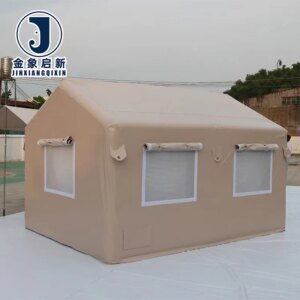
Inflatable Camping Tent PVC Waterproof Four-Season Outdoor Air Tent with Quick Automatic Opening for 3-4 Person
Read more