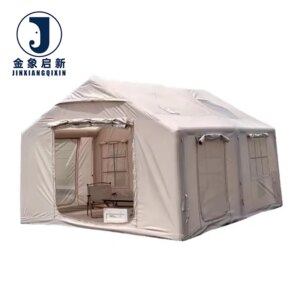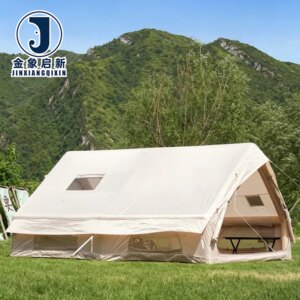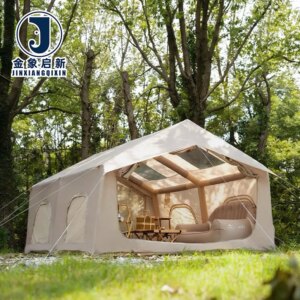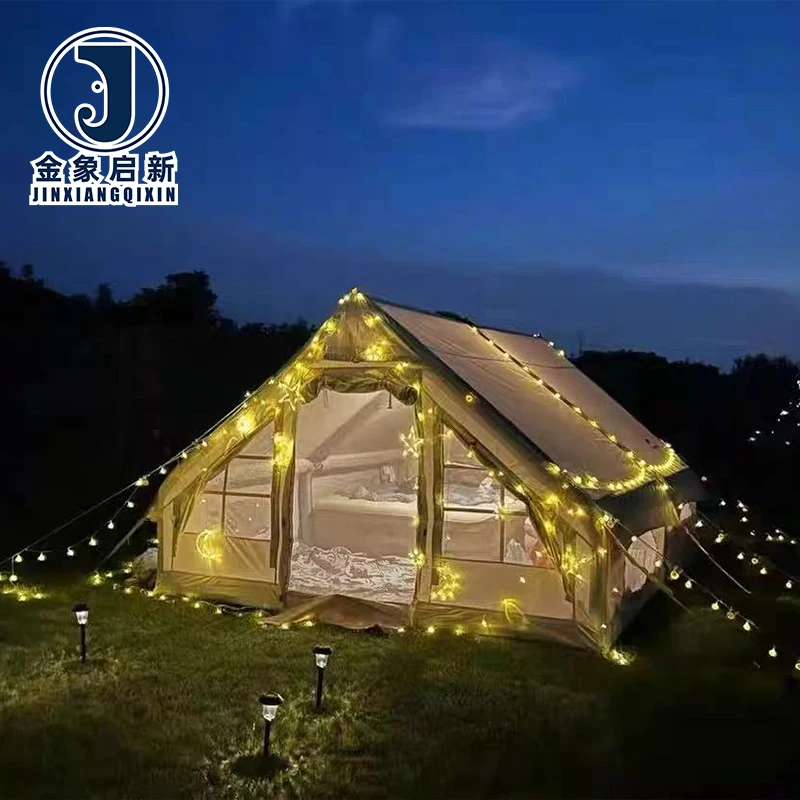
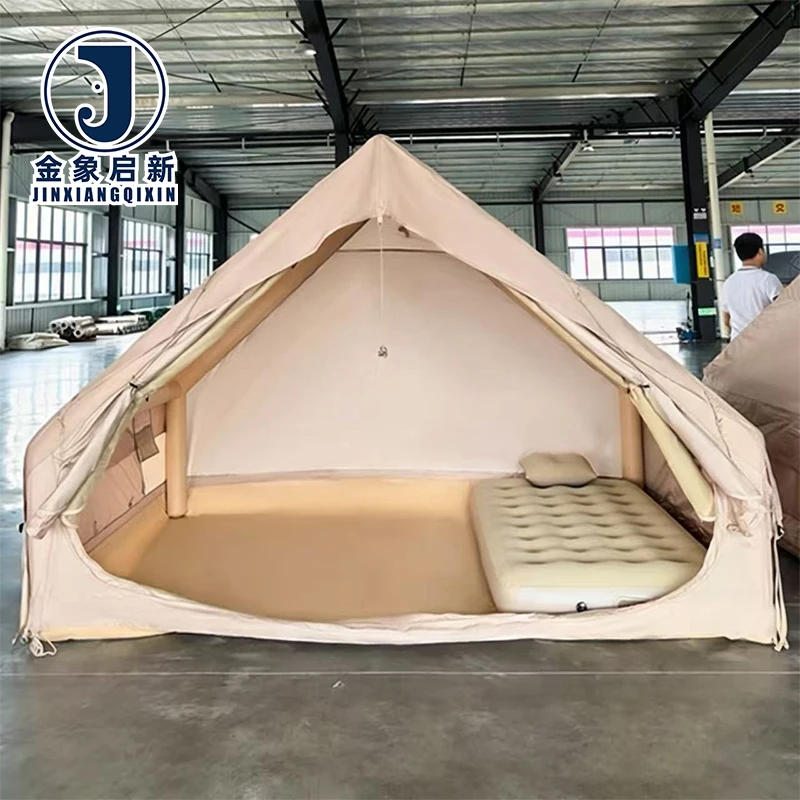
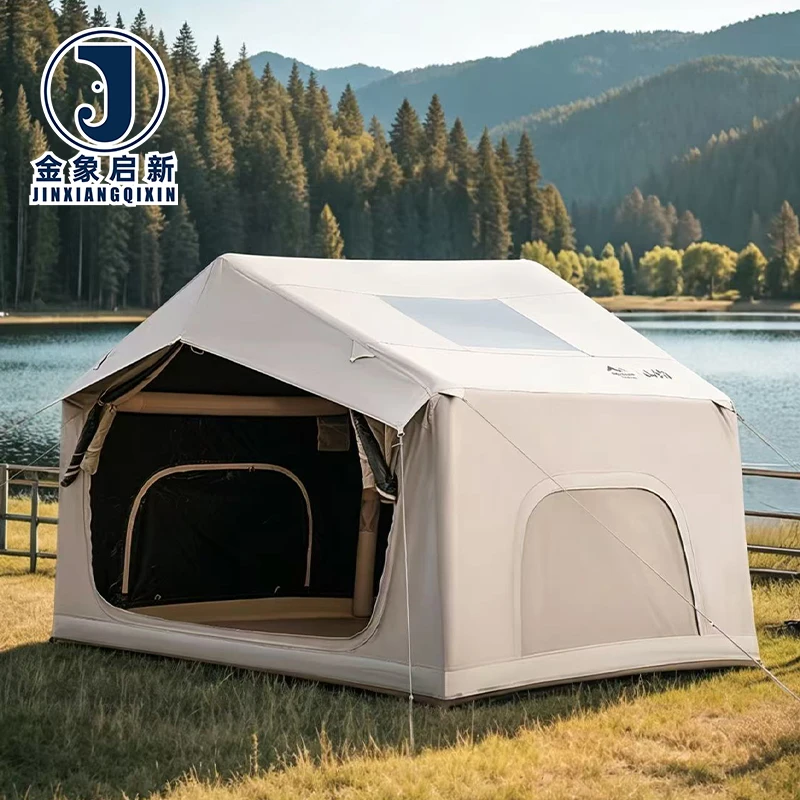
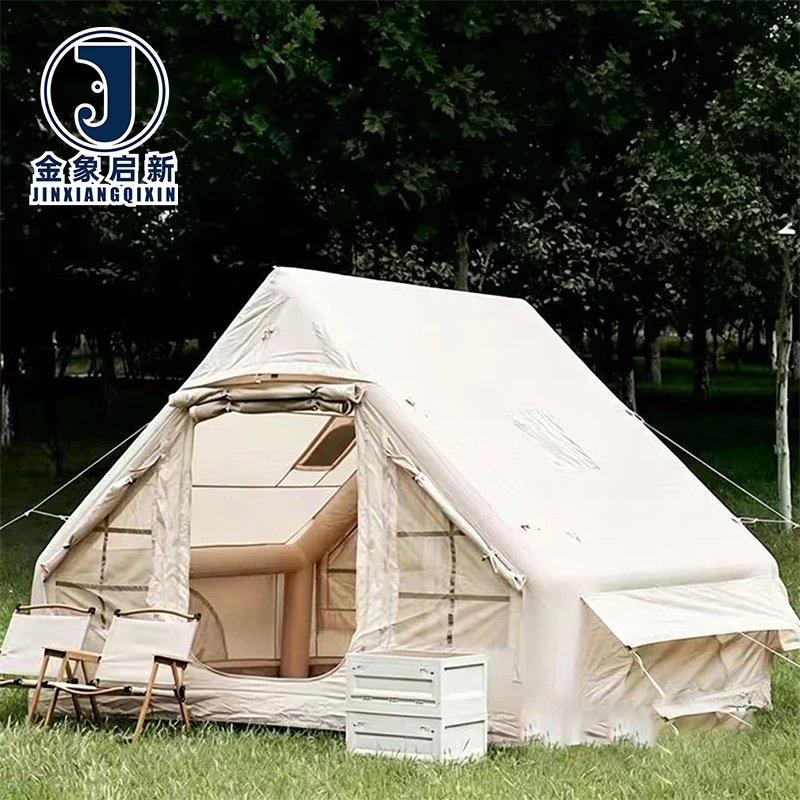
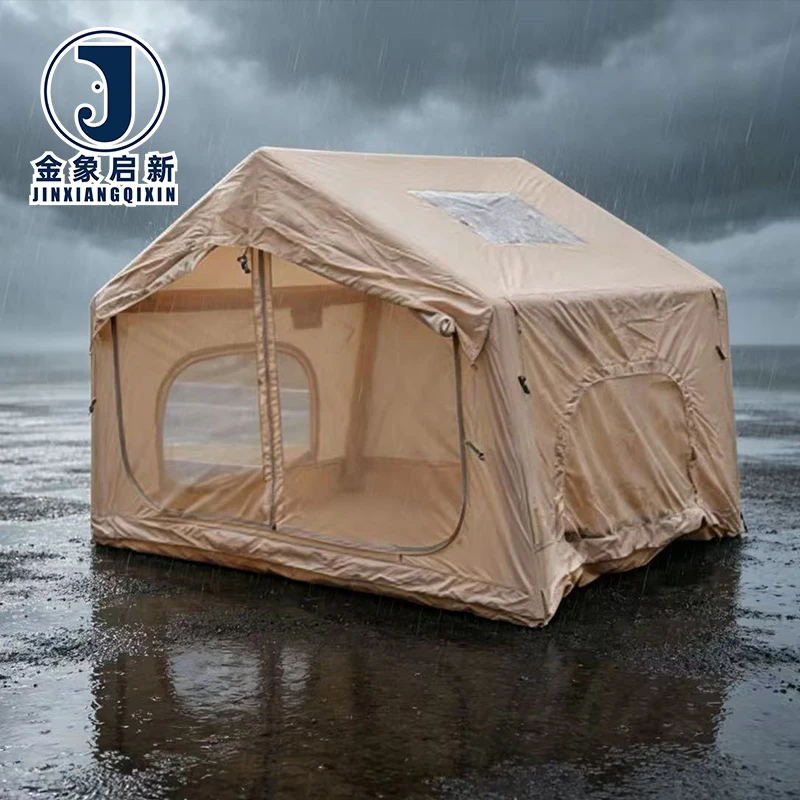
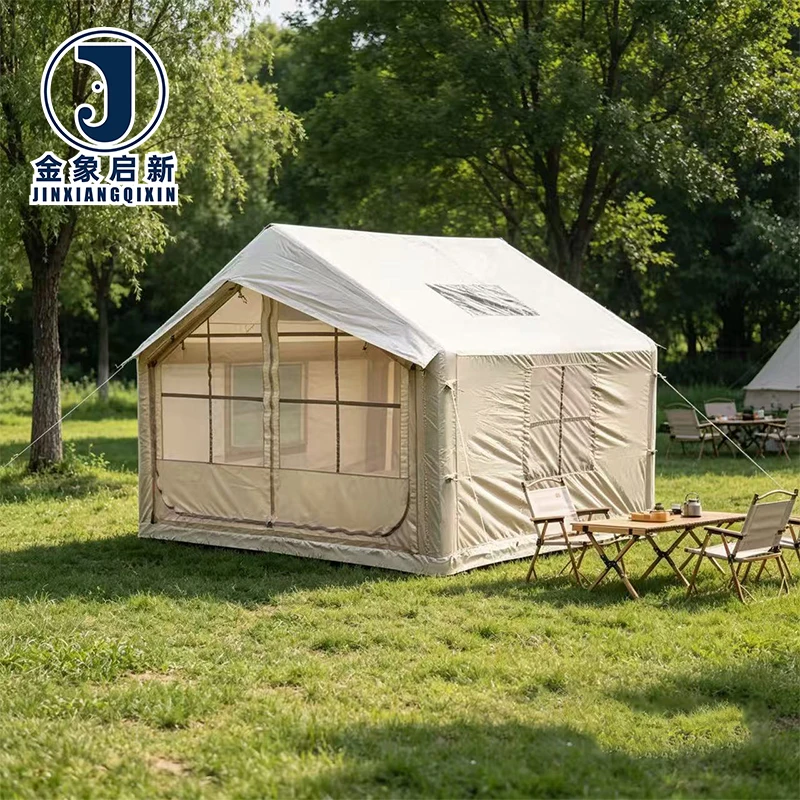
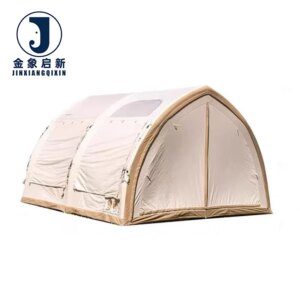
Inflatable Tent — PVC tarpaulin construction, waterproof and UV-resistant, 4-6 person capacity, four-season rated
- Single-layer inflatable structure with automatic opening for rapid field deployment
- Tear-resistant material engineered for repeated setup cycles across remote work environments
Coated fabric performance depends on base weave integrity and adhesion control — our 30-year process expertise ensures consistent coating weight and seam reliability at flex points where field shelters face the most stress.
Backed by dedicated QA/QC at every production stage, 100% pre-shipment inspection, and a 10-person R&D team supporting full customization from sample to bulk.
Description
Deep Process Control — our coating weight and adhesion protocols ensure every roll of inflatable tent fabric leaves the line within tolerance, verified before it reaches your fabrication floor.
Technical Specifications
| Parameter | Value |
|---|---|
| Product Type | Inflatable Tent |
| Core Material | PVC Tarpaulin |
| Product Forms | Inflatable structure, single layer construction |
| Key Performance | Waterproof, UV-resistant (test basis not stated), Tear-resistant |
| Season Rating | Four-Season |
| Capacity | 4-6 Person |
| Deployment | Automatic opening design |
| Customization | OEM & ODM, sample customization, pattern printing |
| Standards | ISO9001, ISO14001, ISO45001, CE |
Application Suitability
| Application | Exposure & Requirement |
|---|---|
| Temporary site offices | Daily ingress/egress abrasion, wind loading on inflatable beams, prolonged sun exposure |
| Equipment storage shelters | Moisture ingress prevention, UV degradation of stored assets, repeated inflation cycles |
| Field operation bases | Rapid deployment under time pressure, uneven ground contact, temperature swings |
| Construction and mining sites | Dust infiltration, heavy handling, transport vibration across rough terrain |
| Outdoor event management | Visual consistency across multiple units, frequent assembly and teardown cycles |
| Remote personnel accommodation | Thermal insulation demands, extended occupancy, weather sealing integrity |
Why Material Consistency Matters More Than a Single Test Certificate
A certificate confirms one sample passed; batch consistency confirms your entire order will perform identically in the field.
When procurement teams specify inflatable tent fabric, they often anchor decisions on a single data sheet or a test report from an initial sample. The reality on the ground is different. Rolls produced weeks apart can drift in coating weight, and that drift changes how the material behaves during heat welding, how it holds air pressure in structural beams, and how it responds to UV exposure over a season [NEED_CITE: coating weight variation and its impact on welded seam strength]. I have seen Inflatable Tent Fabric manufacturer custom orders arrive with rolls that looked identical on the pallet but welded at different temperatures, forcing the fabrication team to recalibrate mid-production. That kind of inconsistency does not show up on a certificate — it shows up on your factory floor as wasted labor and missed deadlines.
What Coating Adhesion Means for Inflatable Structures
Inflatable tents rely on air-holding beams that flex under load and rebound repeatedly. The bond between the PVC coating and the base fabric determines whether those beams delaminate at the fold points after a season of use. Our Inflatable Tent Fabric manufacturer custom production process controls coating adhesion at every stage, from base fabric preparation through final curing. When adhesion is weak, the coating lifts at stress concentrations — typically where the beam meets the ground sheet or where a valve is bonded — and the structure loses rigidity. That failure mode is not a tear; it is a separation that cannot be patched in the field.
How Four-Season Rating Translates to Material Selection
A four-season inflatable tent must perform in freezing starts and high-heat summer deployments. The PVC compound formulation determines the low-temperature flexibility threshold — the point at which the material becomes brittle and cracks when folded or inflated in cold conditions. At the same time, the surface must resist softening and blocking when stored in direct sun at high ambient temperatures. Our production team adjusts plasticiser ratios and stabiliser packages to balance these two boundaries, ensuring the Inflatable Tent Fabric manufacturer custom output remains workable across the temperature range your end users will encounter [NEED_CITE: PVC plasticiser migration and low-temperature embrittlement in coated fabrics].
Reading Beyond the Specification Sheet
The waterproof claim on a PVC tarpaulin is straightforward — a continuous coated surface with no needle holes blocks liquid water. What the sheet rarely tells you is how that waterproofing holds up after repeated folding, transport compression, and field abrasion. Tear resistance depends on the base fabric denier and weave density working together with the coating to stop a nick from propagating into a split. UV resistance, noted here without a stated test basis, should be confirmed against the specific exposure conditions of your target market before you commit to a production run. Available in UV-resistant grades — confirm the testing standard required for your region and application duration.
The Hidden Cost of Skipping Batch Verification
A buyer who accepts an entire container based on a pre-production sample assumes every roll matches. In practice, coating weight can drift between production runs, and that drift affects more than just weight. A lighter coat may weld faster but produce a weaker seam; a heavier coat may require higher heat and longer dwell time, slowing your fabrication line. Colour shift between batches is visible once two tents stand side by side at an event site [NEED_CITE: batch-to-batch colour variation in PVC coated fabric production]. The cost of discovering these issues after delivery is not just the material — it is the labor, the rework, the delayed shipment to your own customer, and the credibility damage that follows.
Why Sourcing Here Reduces Your Production Risk
Three full production lines and 36 sets of professional processing equipment give us the capacity to hold delivery dates without sacrificing process control. The 10-person R&D team handles your material selection, pattern printing requirements, and sample development before you commit to a full order. Dedicated QA and QC staff inspect at every production stage, with 100% pre-shipment inspection so that what leaves our dock matches what you approved. We produce samples within days for custom requirements, letting you verify weld behaviour, colour, and hand feel before bulk production starts. ISO9001, ISO14001, ISO45001 and CE documentation supports your cross-border procurement and compliance filing.
Documentation & Verification
- Batch-specific quality inspection reports detailing performance test results per roll
- ISO9001, ISO14001, ISO45001, and CE certificates for global procurement compliance
- Material specification sheets stating coating type, base fabric, and performance characteristics
- Pre-shipment inspection records confirming quantity, colour consistency, and surface quality
- Sample sign-off documentation binding custom orders to approved reference standards
Fabrication, Handling & Storage
- Heat welding parameters must be calibrated to the specific PVC coating thickness of each batch
- Store rolls upright on pallets to prevent permanent creasing in the coated surface
- Avoid folding inflated beams at the same point repeatedly to reduce coating fatigue
- Use PVC-compatible cleaners only; solvent-based products can degrade the coating bond
- Repair minor field damage with matching PVC patches and solvent cement rated for inflatable use
- Allow material to reach ambient temperature before unrolling in cold conditions to prevent cracking
What We Need to Quote Accurately
To move your inquiry forward, tell us the deployment environment your end users face — temperature range, expected UV exposure duration, and handling frequency. Specify whether you need rolls for your own fabrication line or finished inflatable structures, and share any pattern printing or branding requirements. Confirm the compliance standards your destination market requires so we can align the test documentation before production begins.
Frequently Asked Questions
Q: How is the waterproof rating of the inflatable tent fabric verified?
A: Waterproof performance is inherent in the continuous PVC coated construction, which eliminates needle holes and gaps. We verify coating continuity during production through visual and process inspection at each stage. For specific hydrostatic pressure testing required by your market, confirm the standard and we will arrange third-party testing on your batch before shipment.
Q: What UV treatment options are available, and what are the testing bases?
A: UV-resistant formulations are available for extended outdoor exposure. The specific test basis depends on your target market and expected service duration. We recommend you specify the UV testing standard relevant to your region — such as ISO 4892 or equivalent — so we can match the stabiliser package and provide documentation that supports your compliance requirements.
Q: Can custom sizes and patterns be produced with low minimum order quantities?
A: Our OEM and ODM service includes sample customization and pattern printing. Minimum order quantities depend on the complexity of your specification, including colour matching and print registration requirements. We develop samples within days so you can evaluate the result before committing to bulk. Contact us with your size and design files for a specific minimum and lead time assessment.
Q: How do you ensure color consistency across multiple rolls or batches?
A: Colour is controlled through reference standards established during sample approval. Every production run is checked against that approved reference at multiple inspection points. Our 100% pre-shipment inspection includes a side-by-side colour comparison across rolls in the same order to catch any drift before dispatch, reducing the risk of visible mismatch at the installation site.
Q: What documentation is provided for international shipping and compliance?
A: Each shipment includes material specification sheets, batch-specific quality inspection reports, packing lists, and certificates of origin. ISO9001, ISO14001, ISO45001 and CE certificates are available for your procurement file. For markets requiring additional test reports — such as fire classification or REACH compliance — specify the standard at inquiry stage so documentation is ready when your goods ship.
Related products
-
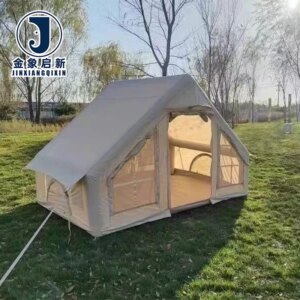
Outdoor Portable Camping Inflatable Tent Luxury All-Season Use Overnight Large Space Rainproof Insulated Quick Automatic Opening
Read more -
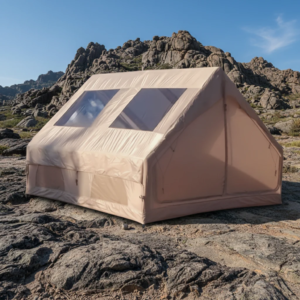
High Quality Four-Season Inflatable Tent for Camping Durable PVC Material All-Weather Resistance Quick Automatic Opening
Read more -
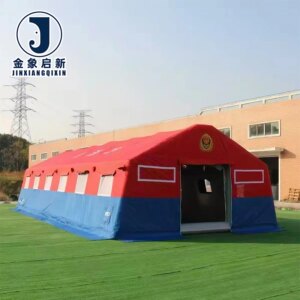
Inflatable PVC Camping Tent Four-Season Waterproof CE Certified Quick Automatic Opening 3000mm+ Factory Direct Sale
Read more -
Premium Four-season PVC Inflatable Tents for Camping Easy-to-Use Spacious Portable Waterproof Outdoor Tent with Pump
Read more