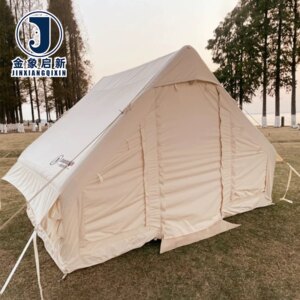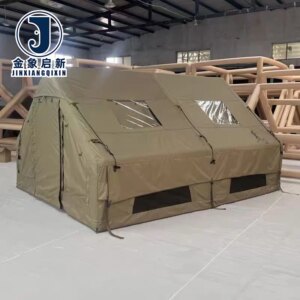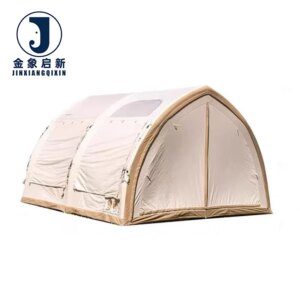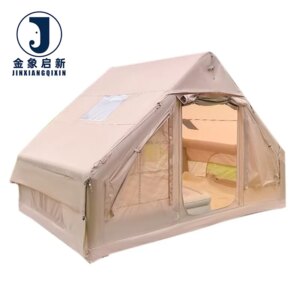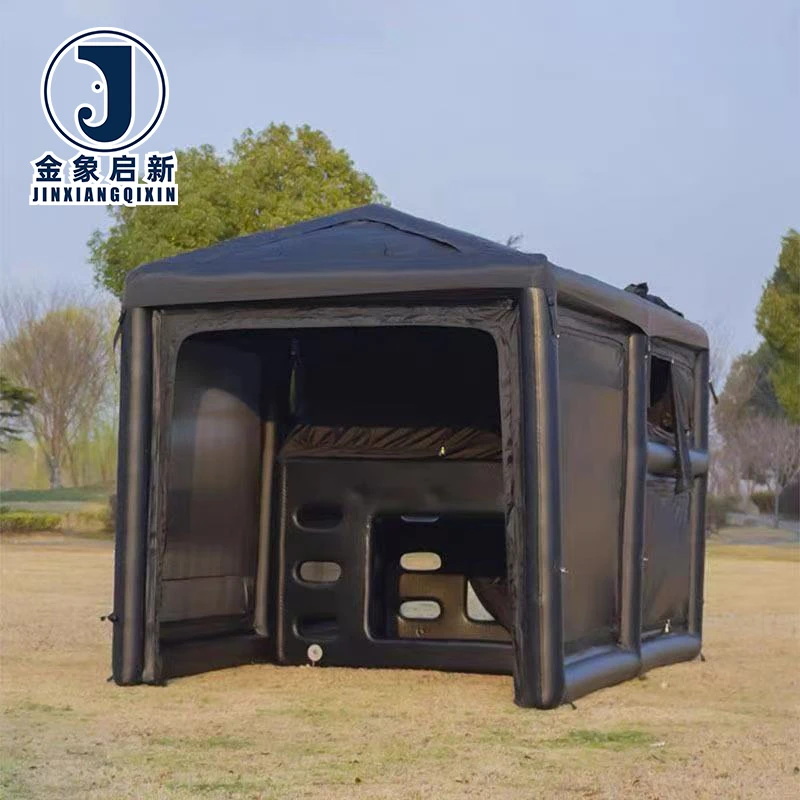
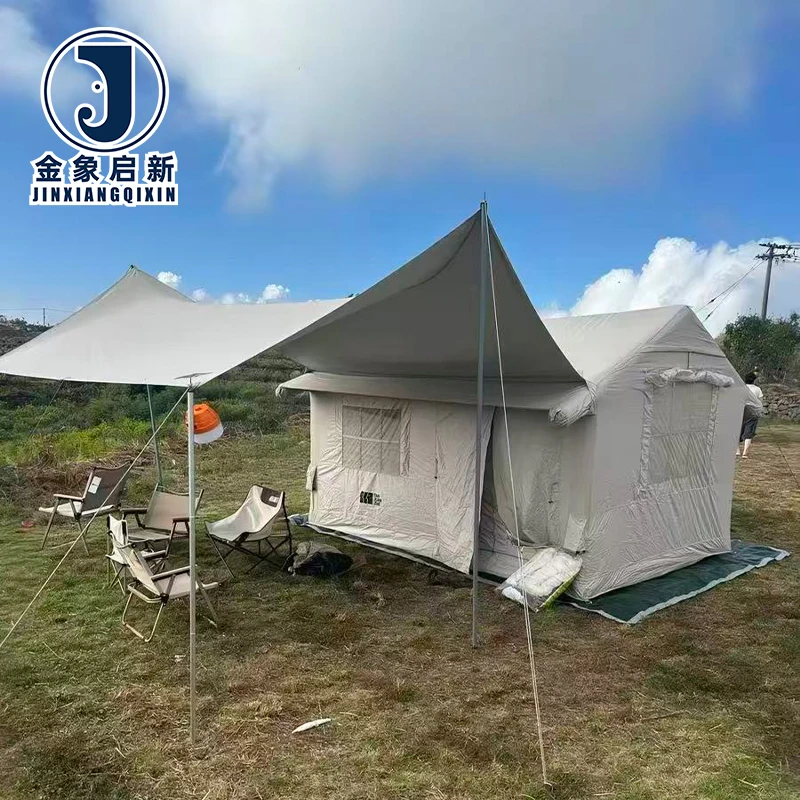
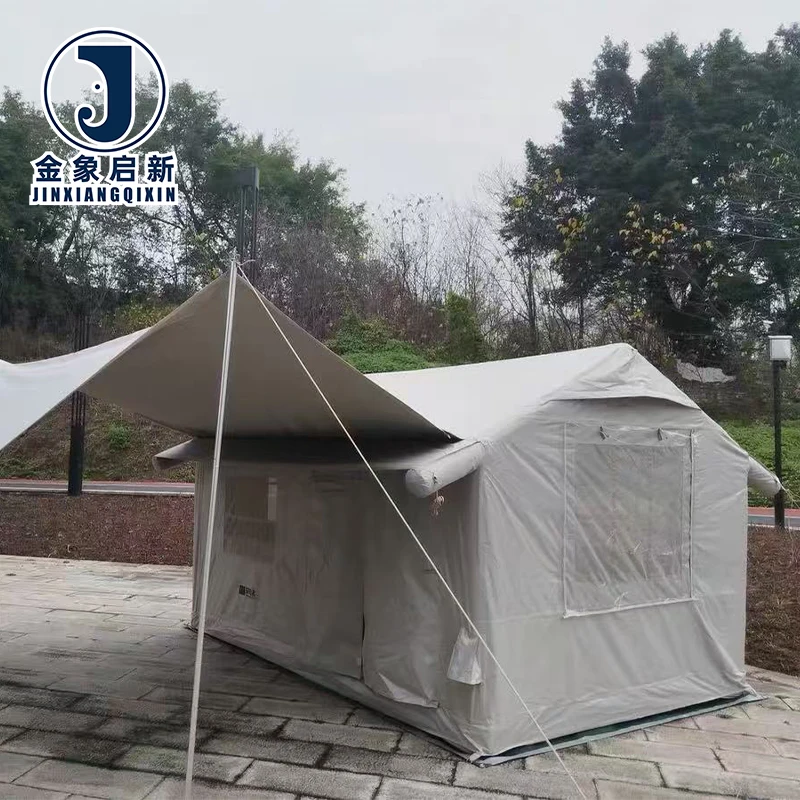
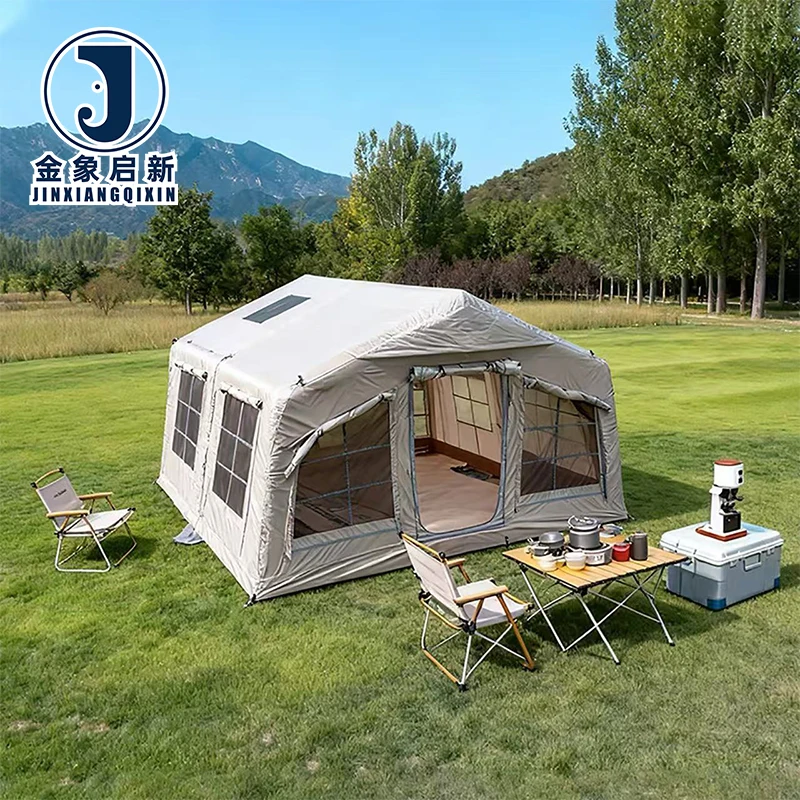
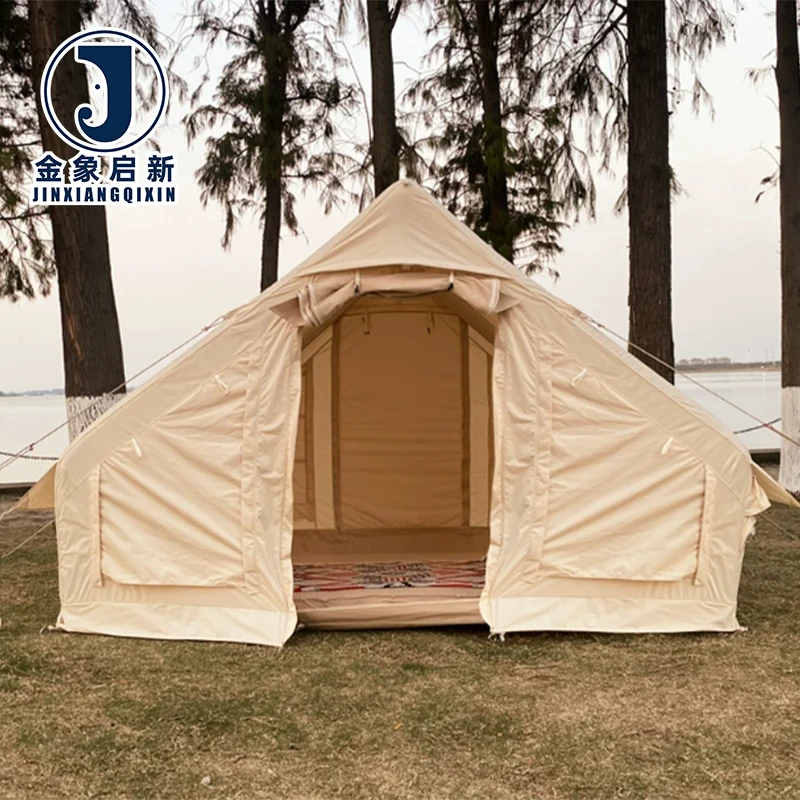
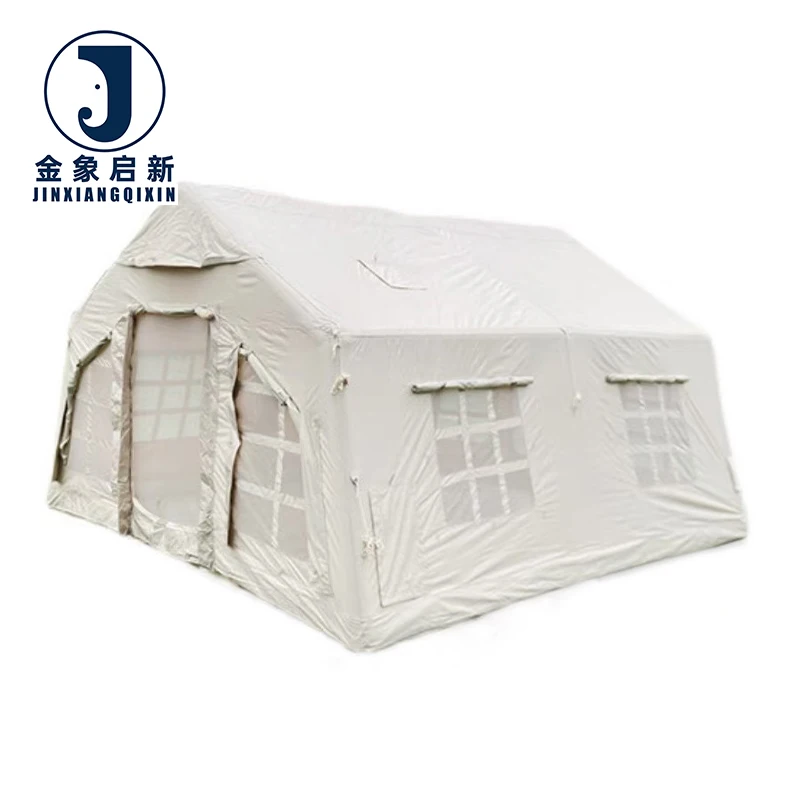
Premium Four-season Inflatable Tents — PVC tarpaulin structure with waterproof, UV-resistant, and fire-retardant treatment for rapid commercial deployment.
- Engineered for construction shelters, event logistics, and emergency command centers requiring four-season weather protection
- Coated fabric selection balances tensile strength with inflation pressure retention, ensuring structural stability across temperature variations
- Full OEM & ODM capability covering custom dimensions, pattern printing, and material specification
Supported by 3 full production lines with 100% pre-shipment inflation testing and batch-specific quality documentation.
Description
Complete Custom Tarpaulin Range — every inflatable tent fabric we run passes through dedicated QA checkpoints from coating to final roll, with full in-house pattern printing and sample development supporting your exact specification.
Technical Specifications
| Parameter | Value |
|---|---|
| Product Type | Inflatable Tent |
| Core Material | PVC tarpaulin |
| Waterproof | Fully waterproof coated construction |
| UV Resistance | Available in UV-resistant grades — confirm the grade required for your market |
| Fire Retardancy | Available in flame retardant grades — confirm the grade required for your market |
| Anti-static | Available in anti-static grades — confirm the grade required for your site |
| Tear Resistance | Tear-resistant coated fabric construction |
| Customization | OEM & ODM: sample customization, pattern printing, material selection, product design |
| Production Lines | 3 full production lines |
| Processing Equipment | 36 sets of professional processing equipment |
| R&D Team | 10 technicians |
| Certifications | ISO9001, ISO14001, ISO45001, CE |
Application Suitability
| Application | Exposure & Requirement |
|---|---|
| Construction site temporary shelter | Wind loading, dust ingress, UV exposure, frequent relocation and repacking |
| Outdoor event logistics | Rain exposure, crowd traffic abrasion, rapid setup and teardown cycles |
| Emergency response command centers | Extreme temperature swings, continuous inflation pressure, all-weather deployment |
| Mobile field stations | Remote site transport, repeated folding, long-term inflation pressure retention |
When Inflatable Structures Fail at the Seam, Not the Fabric
The weld line carries the entire inflation load, and its failure trace almost always points back to uncontrolled heat-sealing parameters rather than material weakness.
I spent years adjusting thermal curves for inflatable structures, and the pattern is consistent: a batch leaves the factory looking fine, arrives on site, inflates to working pressure, and within hours the seams begin to delaminate while the body fabric remains untouched. The root cause is rarely the PVC tarpaulin itself — it is the temperature profile applied during welding. [NEED_CITE: heat-sealing temperature profiles and seam strength retention in coated fabrics]. When the heat is too low, the coating does not fully fuse; too high, and the base fabric weakens at the bond line. We archive the thermal curve for every roll we produce, so when an inflatable tent leaves our floor, the seam integrity matches the inflation pressure requirement.
How PVC Tarpaulin Construction Supports Continuous Inflation Pressure
The inflatable tent depends on a PVC tarpaulin that holds internal air pressure across the entire structure without creeping or stretching at the joints. The coated fabric must resist both the static load of inflation and the dynamic stress of wind gusts pushing against the shell. Every roll we supply for inflatable structures is checked for coating adhesion before it reaches the welding station, because a separation between the base fabric and the coating layer becomes a leak path under pressure. This matters most at the valve mounting points and structural rib intersections where stress concentrates.
Batch Consistency Across Multi-Unit Inflatable Orders
When a project calls for several inflatable tents deployed side by side — at an event venue or across a construction corridor — visible variation between units undermines the professional appearance the buyer paid for. Colour drift between production runs is one of the most common complaints we hear from buyers who sourced from multiple suppliers. Our process controls the pigment loading and coating thickness within the same batch, so an inflatable tent ordered today matches the one ordered last quarter. [NEED_CITE: batch-to-batch colour consistency standards for PVC coated textiles]. This extends to the surface finish as well, ensuring uniform reflectivity and hand feel across every unit in the shipment.
Reading the Specs That Actually Matter for Inflatable Shelters
GSM alone does not tell you whether a PVC tarpaulin can handle the repeated stress cycles of an inflatable tent. A heavy coating applied over a loosely woven base fabric may show a high GSM figure but deliver poor tear propagation resistance — the tear starts small and then zips across the panel under inflation pressure. The base fabric denier and weave density determine how the load distributes across the yarn intersections. Coating method matters equally: knife-coated fabrics generally provide better coating-to-fabric adhesion than laminated alternatives, which translates directly to stronger heat-sealed seams. For inflatable applications where the seam is the structural weak point, this adhesion value is the spec to verify. Surface finish also plays a role — glossy surfaces shed dirt and water more readily in outdoor deployments, while matte finishes reduce glare at event sites and construction zones.
The Hidden Cost of Underspecifying Inflatable Tent Fabric
Choosing a lighter PVC tarpaulin to save on material cost per unit often shifts the expense downstream. A fabric that cannot hold the specified inflation pressure forces the end user to run compressors continuously, increasing fuel or electricity consumption at remote sites. Seams that delaminate after a few inflation cycles mean the inflatable tent must be deflated, patched, and retested — downtime that costs far more than the material savings. [NEED_CITE: seam failure rates in inflatable structures under cyclic pressure loading]. We have seen entire batches returned because the weld strength was specified as an afterthought, with the buyer focusing only on the face weight and colour. The repair cost and reputational damage exceeded the original order value.
Why Buyers Source Inflatable Tent Fabric From This Facility
Our coating process controls deliver verifiable adhesion values that support the thermal welding parameters inflatable structures demand. The 3 full production lines and 36 sets of processing equipment handle volume orders without splitting batches across different machines — your inflatable tent fabric stays on the same line from start to finish. The 10-technician R&D team develops material samples matched to your inflation pressure and structural geometry before production begins. Every roll undergoes inspection at multiple stages, with a full check before dispatch rather than a spot-check protocol. Sample turnaround runs in days, not weeks, so you can validate weld settings and inflation performance before committing to the production run.
Documentation & Verification
- Material specification sheet stating base fabric denier, weave density, and coating weight for each inflatable tent roll
- Test reports for UV and flame retardant grades where applicable, tied to the specific batch number
- ISO and CE certificates covering the production facility and quality management system
- Pre-shipment inspection record confirming coating adhesion, colour, and dimensional accuracy
- Roll packing list with individual roll weights and lengths for receiving verification
Fabrication, Handling & Storage
- Set thermal welding parameters using the archived temperature curve we provide per PVC tarpaulin roll batch
- Reinforce valve mounting points with additional PVC tarpaulin patches welded at controlled temperature to prevent leak paths
- Store rolls horizontally on padded racks to prevent creasing that weakens the coating at fold lines
- Allow inflatable tent fabric to acclimatize before cold-weather deployment to avoid coating stiffness and cracking
- Clean coated surfaces with pH-neutral detergents to preserve the surface finish and coating integrity
- Use PVC-compatible adhesive patches for field repairs on inflatable tent panels to maintain air retention
Specifying Your Inflatable Tent Project
To move from inquiry to sample, we need to understand the inflation pressure your structure operates at, the deployment climate, and any fire safety or anti-static requirements your site mandates. Share the target dimensions and whether you need finished units or fabric rolls for your own welding line. If pattern printing or specific colour matching is part of the brief, include reference samples or colour codes so we can develop a production match for your approval before the main run begins.
Frequently Asked Questions
Q: What customization options are available for inflatable tent projects?
A: We offer full OEM and ODM services covering material selection, dimension specification, pattern printing, and structural design support. Our R&D team of 10 technicians develops samples within days based on your inflation pressure, deployment environment, and aesthetic requirements. Each inflatable tent specification is matched to a dedicated thermal welding curve for consistent seam performance.
Q: Which certifications apply to inflatable tent fabric for industrial compliance?
A: Our production facility holds ISO9001, ISO14001, ISO45001, and CE certifications. For inflatable tents deployed on regulated sites, we provide material specification sheets and test reports tied to the production batch. Confirm the specific fire classification or anti-static standard required in your market so we can match the correct grade during material selection.
Q: How do you verify batch consistency across a multi-unit inflatable tent order?
A: Every roll in a production batch runs on the same line with controlled pigment loading and coating thickness. We conduct in-process quality checks and a full pre-shipment inspection covering colour, weight, and dimensional accuracy. This ensures every inflatable tent in a multi-unit shipment matches the approved sample in appearance and performance.
Q: What documentation ships with a commercial inflatable tent fabric order?
A: Each shipment includes a material specification sheet, applicable test reports for UV or flame retardant grades, ISO and CE certificates, a pre-shipment inspection record, and a detailed roll packing list. This documentation package supports your receiving inspection and site compliance filing without requiring follow-up requests.
Q: What are typical lead times for customized inflatable tent specifications?
A: Custom specifications involving non-standard colours, pattern printing, or specific flame retardant grades require dedicated production scheduling. Sample development typically completes within days, allowing you to validate material performance before the main production run. Confirm your required delivery window at inquiry stage so we can align the production slot accordingly.
Related products
-
Outdoor Portable Camping Inflatable Tent Luxury All-Season Use Overnight Large Space Rainproof Insulated Quick Automatic Opening
Read more -
خيمة فعاليات قابلة للنفخ لجميع الفصول، خارجية مقاومة للماء من مادة PVC، فتح تلقائي سريع، تتسع لـ 6-8 أشخاص، مع شعار مخصص
Read more -
خيمة قابلة للنفخ فاخرة للتخييم الفاخر في الهواء الطلق، خيمة هوائية مقاومة للماء مع مضخة
Read more -
Outdoor Waterproof Inflatable Tent for Camping Portable Air Camping Tent Shelter
Read more