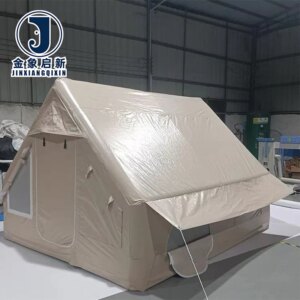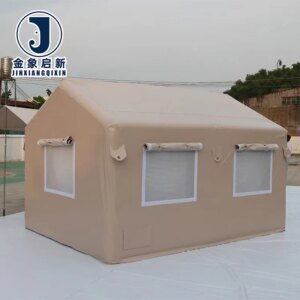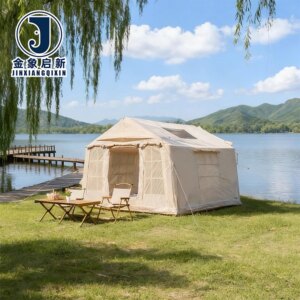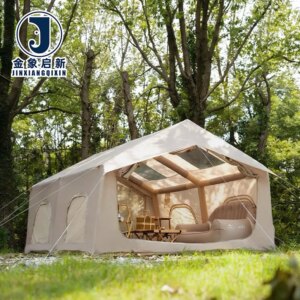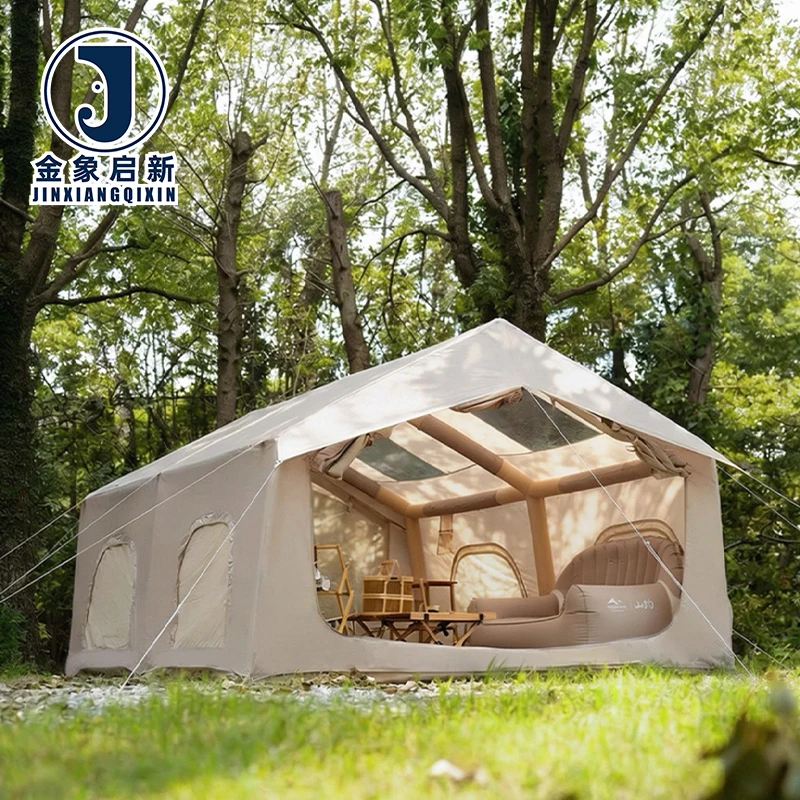
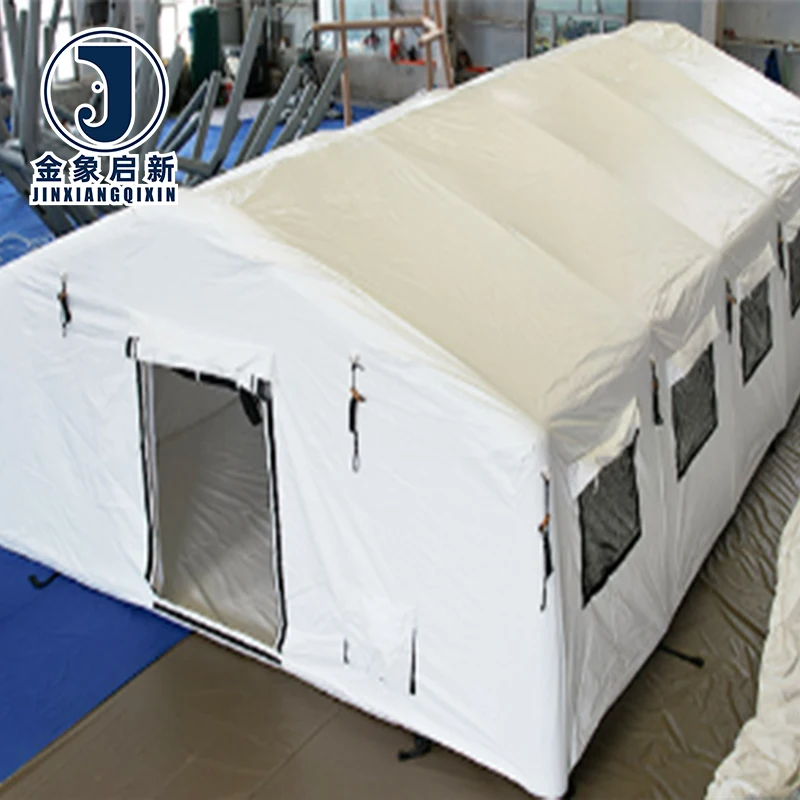
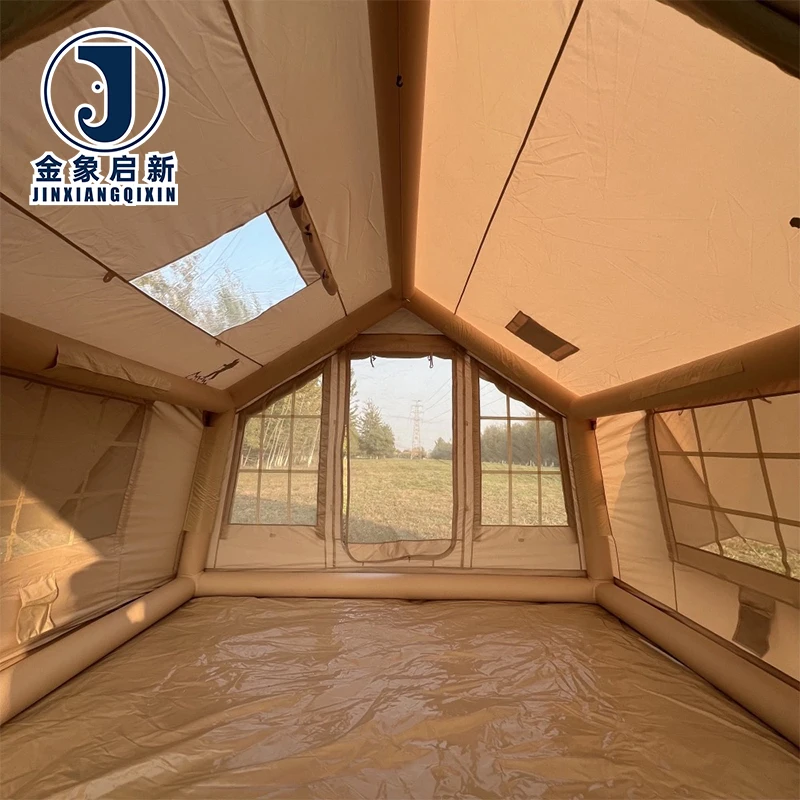
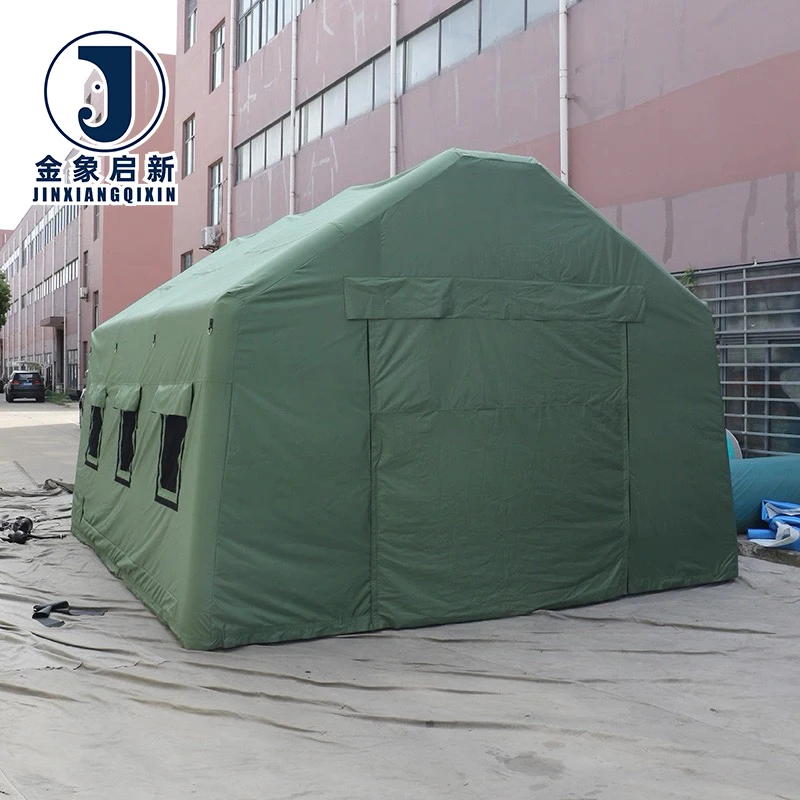
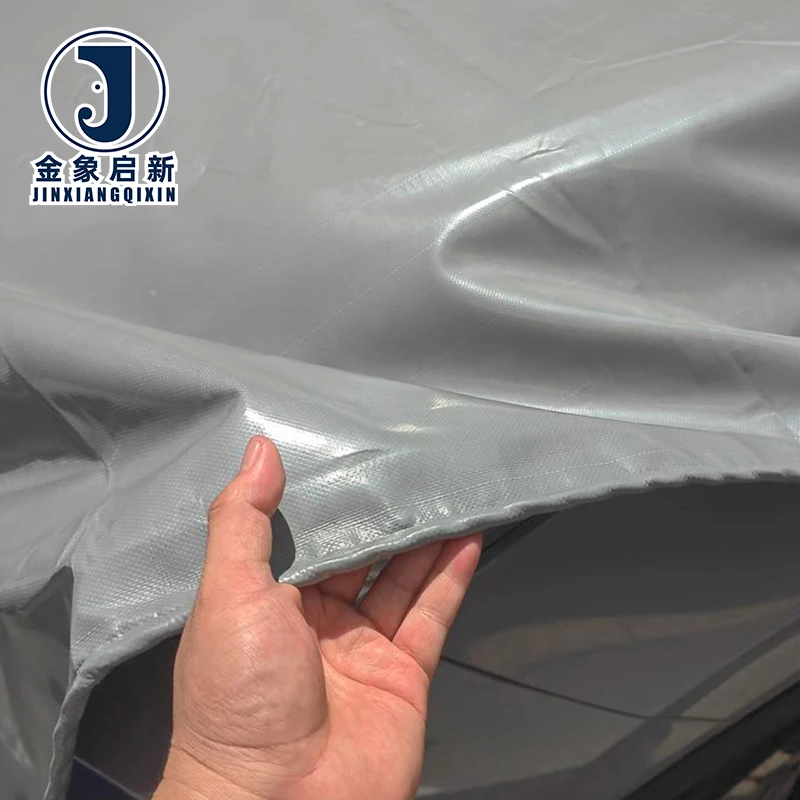
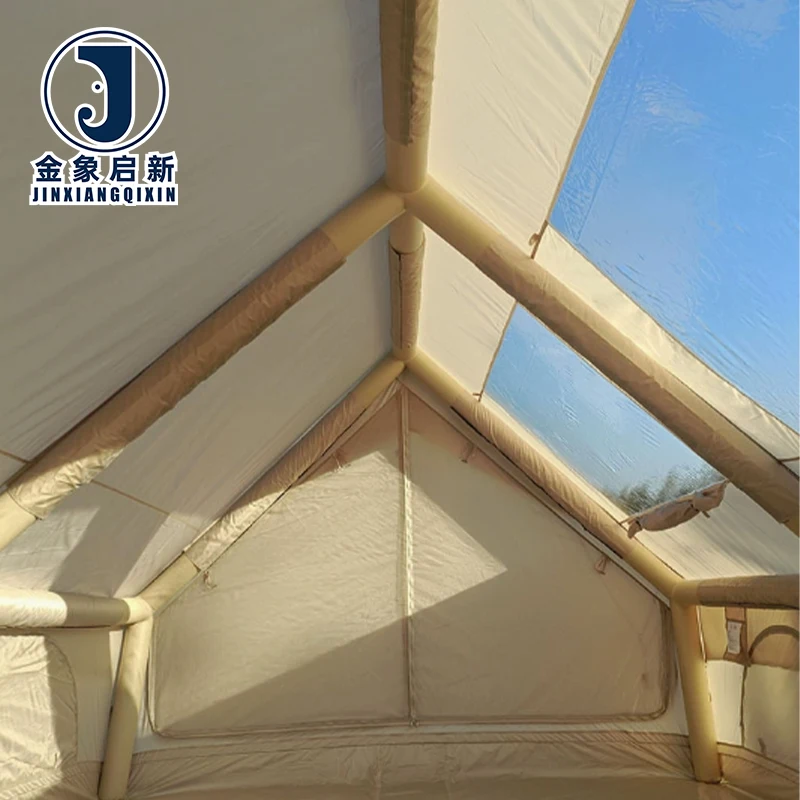
Inflatable Camping Tent — PVC tarpaulin with waterproof coating, UV-resistant treatment, and tear-resistant construction for commercial outdoor deployment.
Built for buyers covering moving loads across industrial sites. The base fabric density and coating adhesion are process-controlled to balance tensile strength against flex fatigue at high-stress seams, ensuring the inflatable frame holds pressure through repeated setup and teardown cycles.
- Quick inflatable setup minimizes on-site labor for construction shelters, logistics field stations, and event infrastructure
- Custom dimensions, pattern printing, and material thickness available via OEM & ODM
- Backed by 3 full production lines, 36 processing sets, and 100% pre-shipment inspection from a 28-year coated fabric specialist
Description
Batch Colour Consistency — dedicated QA/QC inspection at every production stage ensures roll-to-roll colour uniformity across your entire inflatable tent order, eliminating visible variation once sections are joined on site.
Technical Specifications
| Parameter | Value |
|---|---|
| Product Type | Inflatable Tent |
| Core Material | PVC Tarpaulin |
| Product Forms | Inflatable Camping Tent |
| Key Performance | Waterproof, UV-resistant (test basis not stated), Tear-resistant, Quick Setup |
| Customization Service | OEM & ODM (sample customization, pattern printing) |
| Production Facility Area | 9,180 square meters |
| Production Lines | 3 full production lines |
| Processing Equipment | 36 sets of professional processing equipment |
| R&D Team Scale | 10 technicians |
| Quality Control System | Strict full-process quality inspection with dedicated QA&QC staff |
| Certifications | ISO 9001, ISO 14001, ISO 45001, CE |
Application Suitability
| Application | Exposure & Requirement |
|---|---|
| Temporary site shelters for construction projects | Continuous outdoor weather exposure, wind loading on inflated structure, repeated inflation-deflation cycles, abrasion from ground contact |
| Equipment storage in logistics hubs | UV exposure during extended outdoor deployment, protection against rain and dust ingress, forklift proximity requiring tear resistance |
| Mobile field stations for industrial events | Rapid deployment and teardown, high foot traffic around entry points, branding and pattern printing visibility requirements |
| Commercial outdoor operations in various climatic conditions | Temperature fluctuation affecting PVC flexibility, prolonged solar exposure, wind-induced stress on welded seams and anchor points |
Why a Custom PVC Inflatable Tent Fabric Choice Determines Structural Longevity
The fabric specification defines how long the inflatable structure survives before seam failure, surface degradation, or colour inconsistency forces a premature replacement.
Many inflatable tent buyers select a supplier based on the finished shape and price, then discover that the PVC tarpaulin used in production does not match the quoted weight or treatment specification. The material arrives lighter than agreed, UV or flame-retardant claims appear without supporting test reports, and colour drift between rolls becomes visible once the tent sections are installed side by side [NEED_CITE: common buyer complaints regarding GSM verification and batch colour consistency in coated fabric procurement]. These failures are not isolated defects — they trace back to a sourcing process that did not lock down the fabric specification before production began.
One-Stop OEM and ODM Development from Material Selection to Finished Product
As an Inflatable Tent manufacturer, the production workflow begins with a detailed specification review rather than a generic catalogue match. The 10-technician R&D team evaluates the buyer’s dimensional requirements, exposure conditions, and compliance targets, then recommends a PVC tarpaulin grade and construction approach. Pre-production samples are developed within days for buyer approval, allowing pattern printing, window placement, and inflation port geometry to be verified before the full order enters production across the 36 sets of professional processing equipment.
Controlling Batch Consistency Across Multi-Unit Inflatable Tent Orders
When an order spans multiple inflatable units, colour drift between production batches becomes a visible defect the moment tents are deployed in proximity. The full-process quality inspection system tracks colour reference, coating weight, and surface finish at each stage, generating a pre-shipment inspection record that documents compliance against the original specification [NEED_CITE: quality control protocols for colour consistency in PVC coated fabric manufacturing]. This level of traceability matters for buyers supplying event infrastructure or construction site networks where uniform appearance across all deployed units is a contractual requirement.
Reading the Specification Sheet: What the Numbers Actually Control
The PVC tarpaulin specification determines performance through several interacting variables. Base fabric denier and weave density control tensile and tear strength — a higher denier warp yarn resists the longitudinal stress that inflation pressure applies to the seam lines. Coating weight and the coating method influence both waterproof integrity and the quality of heat-welded joins; a PVC layer that is too thin will fail at the weld before the base fabric tears. UV-resistant treatment requires a documented test basis to confirm suitability for the intended deployment climate, and buyers should request the applicable report rather than accept a generic claim. Glossy and matte finish options affect surface cleanability and the adhesion of printed graphics — matte surfaces generally hold pattern printing with less glare under direct sunlight, while glossy finishes wipe clean more readily in dusty site conditions.
The Hidden Cost of Specifying the Wrong PVC Grade for Inflatable Structures
An inflatable tent that looks identical on the quotation sheet can perform entirely differently once deployed, depending on whether the underlying PVC tarpaulin meets the actual load and exposure conditions. Underspecified coating weight leads to seam failure at the flex points where the structure bends under wind load — the weld line parts before the fabric itself shows wear [NEED_CITE: weld seam failure mechanics in inflated PVC structures under cyclic wind loading]. Unverified UV treatment allows surface chalking and embrittlement to set in during the first season of outdoor deployment, shortening service life well before the buyer’s planned replacement cycle. Batch colour variation, when not caught during pre-shipment inspection, forces the buyer to reject or rework units after they have already been delivered to site, compounding the original material cost with logistics and labour penalties.
Why Procurement Teams Source Inflatable Tent Fabric Through This Production Line
Nearly 30 years of coated fabric production has built deep process control over coating weight accuracy and base-to-coat adhesion, directly reducing the risk of delamination in inflatable applications. Three full production lines and 36 sets of professional processing equipment support bulk capacity without forcing buyers into extended lead times for custom width or colour runs. The 10-person R&D team handles material selection, pattern printing layout, and sample development in-house, keeping the specification dialogue between buyer and technician rather than routing it through intermediaries. Dedicated QA/QC staff conduct inspection at every production stage, not just final audit, which catches coating inconsistencies and colour drift before the rolls reach the cutting table. Sample development for custom inflatable tent requirements is completed within days, allowing buyers to verify hand feel, weld behaviour, and print registration before committing to the production run.
Documentation & Verification
- Material specification sheet stating PVC tarpaulin base fabric, coating type, and colour reference for every roll
- UV and flame-retardant test reports provided where applicable to verify treatment claims against documented standards
- 100% pre-shipment inspection record included with dispatch, confirming coating weight and dimensional compliance
- Roll packing list detailing batch number, colour reference, and net weight per unit for receiving verification
- Certificate of origin and customs documentation prepared for cross-border shipment of inflatable tent orders
Fabrication, Handling & Storage
- Heat-weld seams at temperatures matched to the specific PVC tarpaulin coating weight to prevent adhesive failure at inflation stress points
- Reinforce anchor points and inflation port surrounds with additional PVC patches to distribute load across the base fabric weave
- Store rolls upright on pallets in a covered area to prevent permanent creasing in the PVC coating layer
- Deploy inflatable structures above the manufacturer’s stated low-temperature threshold to avoid PVC embrittlement during inflation
- Clean surfaces with pH-neutral detergents compatible with the PVC coating to preserve UV-resistant treatment integrity
What to Include in Your Inflatable Tent Fabric Inquiry
Buyers evaluating a custom PVC inflatable tent fabric should provide the intended deployment environment, including typical wind exposure and climate conditions, along with any fire safety or regulatory requirements for the target market. Specify whether the order requires finished inflatable units or PVC tarpaulin fabric in roll form for in-house fabrication. Colour reference codes, pattern printing artwork, and required dimensions should be submitted early to allow sample development and approval before the production schedule is locked.
Frequently Asked Questions
Q: What customization options are available for inflatable tent dimensions, printing, and material grade?
A: The OEM and ODM service covers custom dimensions, PVC tarpaulin thickness and grade selection, and pattern printing with buyer-supplied artwork. The R&D team develops pre-production samples within days, allowing the buyer to approve material feel, weld quality, and print registration before mass production begins across the three full production lines.
Q: How is batch colour consistency controlled across a multi-unit inflatable tent order?
A: Colour reference is tracked at every production stage through the dedicated QA/QC inspection system. Each roll is checked against the approved colour standard before cutting, and a pre-shipment inspection record documents compliance. This prevents the visible colour variation that occurs when rolls from different batches are installed side by side on site.
Q: What certifications and test reports accompany the shipment for regulated market compliance?
A: Shipments include ISO 9001, ISO 14001, ISO 45001, and CE certificates. Where the inflatable tent specification includes UV-resistant or flame-retardant treatment, the applicable test report is provided to verify the claim. Buyers should confirm the specific grade required for their target market during the inquiry stage.
Q: What is the sample development process and lead time for custom inflatable tent specifications?
A: The 10-technician R&D team reviews the buyer’s application requirements and produces a pre-production sample covering the specified PVC tarpaulin grade, colour, and any pattern printing. Samples are typically developed within days, giving the buyer a physical reference for approval before the full order enters production on the 36 sets of processing equipment.
Q: How are welded seams inspected to prevent failure at high-stress flex points in inflatable structures?
A: Welded seams are inspected during the full-process QA/QC system, not only at final audit. Inspection covers weld temperature consistency, bond adhesion strength, and alignment accuracy at the flex points where inflation pressure and wind loading concentrate stress. Any seam that does not meet the internal standard is rejected before the inflatable tent progresses to the next production stage.
Related products
-
Inflatable Camping Tent Waterproof PVC Outdoor Air Tent Easy Setup Family Camping Shelter Four-Season >3000mm Waterproof Quick
Read more -
High Quality Four-Season Inflatable Tent for Camping Durable PVC Material All-Weather Resistance Quick Automatic Opening
Read more -
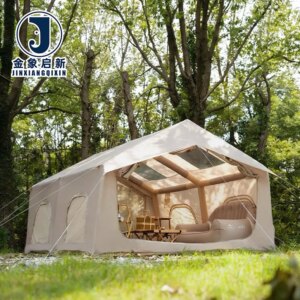
Camping Tent Inflatable UV Resistant Customizable Four-season Waterproof PVC Eco-Friendly Windproof Foldable Quick Automatic
Read more -
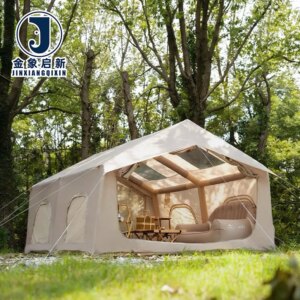
Inflatable Tent Family Size Four-Season Quick Automatic Opening Waterproof 2-8 Person Factory Direct Sale
Read more