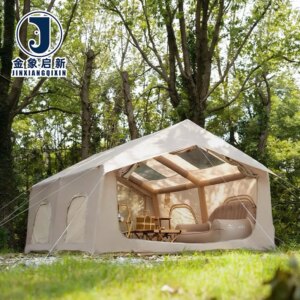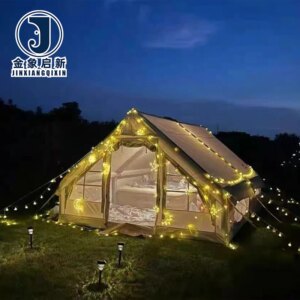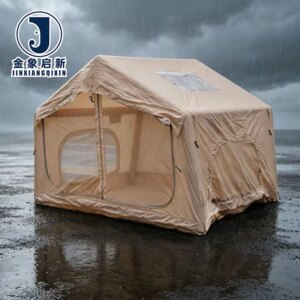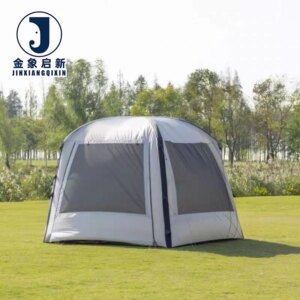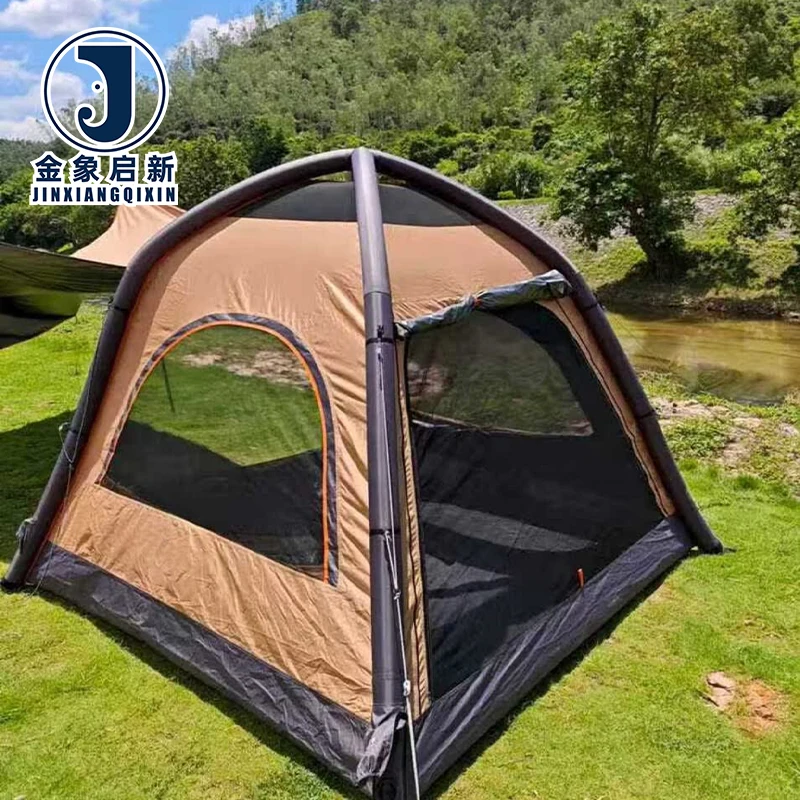
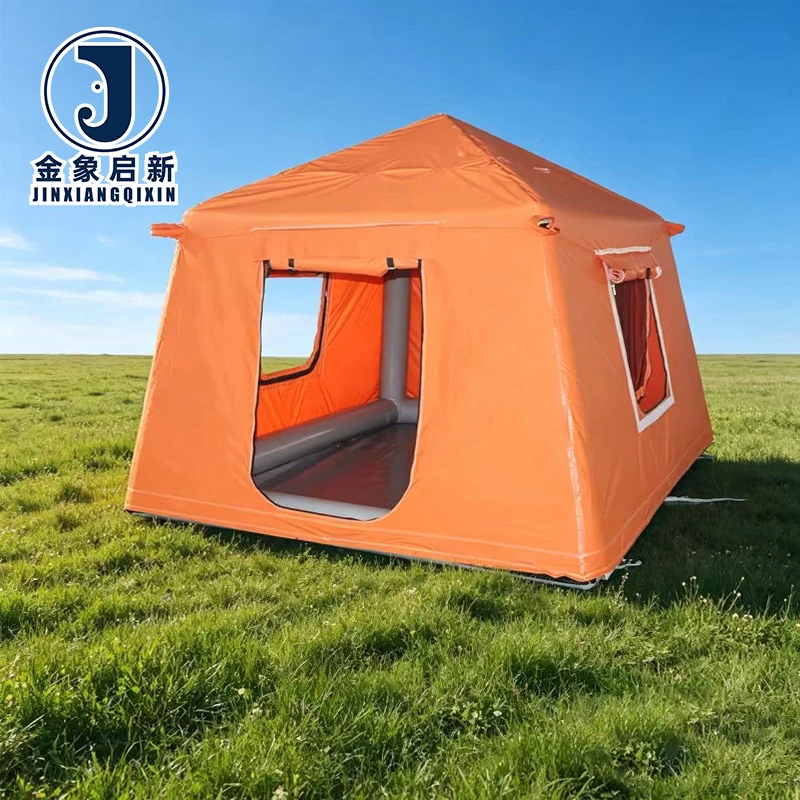
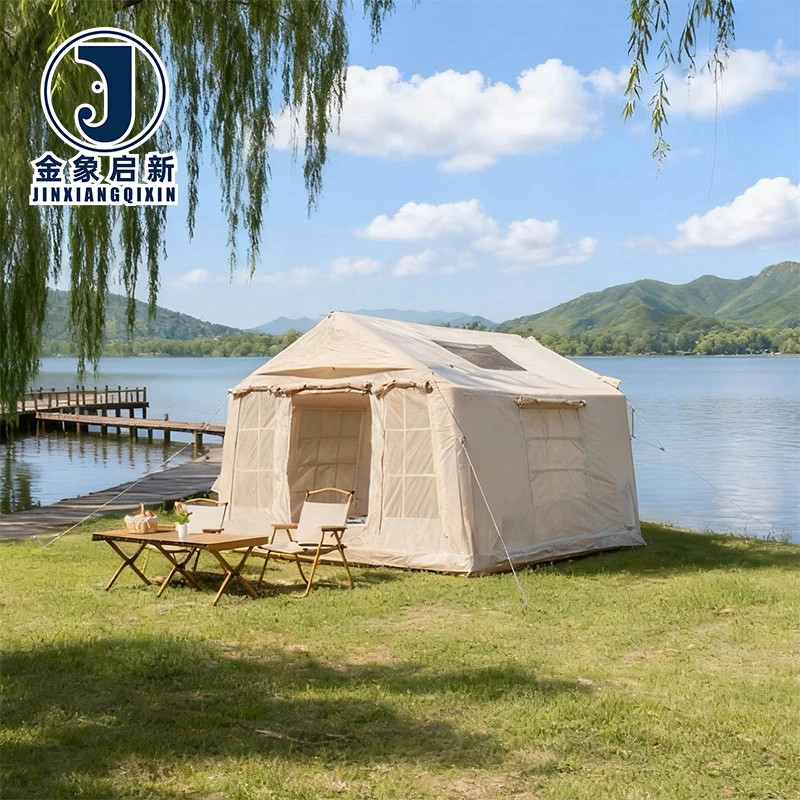
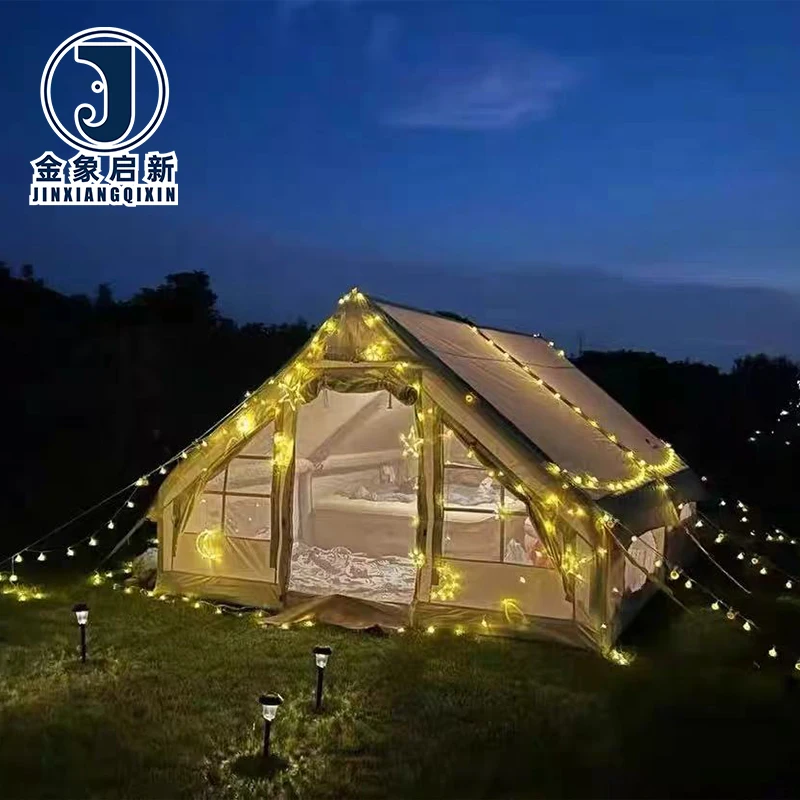
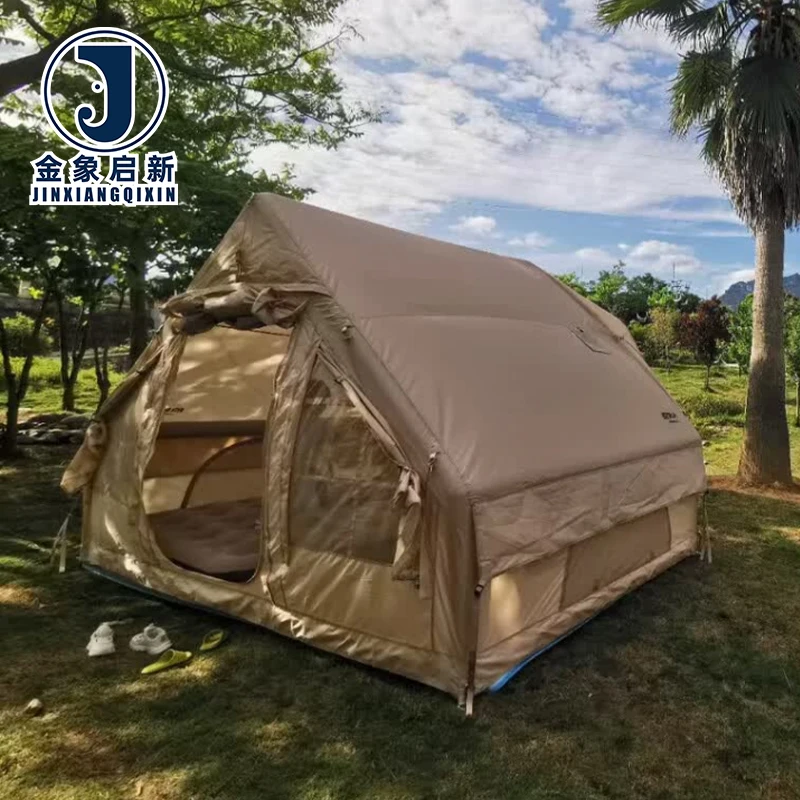
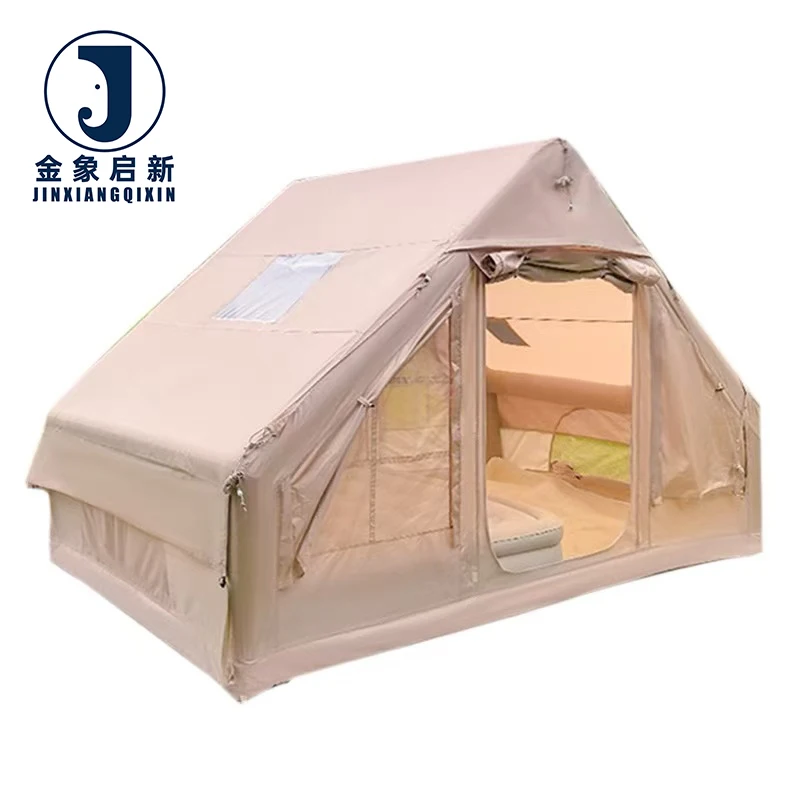
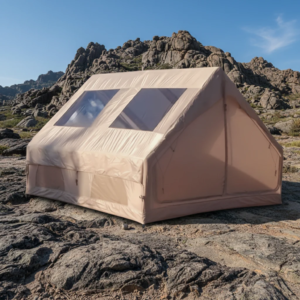
Heavy Duty Inflatable Tent for Camping, Waterproof 4 Season, 8-10 Person Capacity — rapid automatic opening with single-layer PVC tarpaulin construction, supporting full OEM & ODM customization for commercial shelter needs.
- Fire-retardant and anti-static treatment options with test reports, waterproof and UV-resistant for year-round deployment
- Custom sizing, pattern printing, and material selection handled by a 10-person R&D team with samples developed within days
- ISO and CE certified production with 100% pre-shipment inspection and batch-specific documentation for every order
Description
Proven Coating Expertise — Nearly 30 years of PVC coated fabric process control applied to inflatable tent production, ensuring coating adhesion and weight consistency across every batch.
Technical Specifications
| Parameter | Value |
|---|---|
| Product Type | Inflatable Tent |
| Core Material | PVC Tarpaulin |
| Capacity | 8-10 Person |
| Season Rating | 4 Season |
| Construction | Single layer |
| Deployment | Rapid automatic inflatable opening |
| Waterproof | Yes (grade not stated in source) |
| UV-resistant | Yes (test basis not stated in source) |
| Tear-resistant | Yes (test standard not stated in source) |
| Flame Retardant | Yes (grade not stated in source) |
| Anti-static | Yes (standard not stated in source) |
| Customization Service | OEM & ODM (sample customization, pattern printing, material selection, product design) |
| Standards & Certification | ISO9001, ISO14001, ISO45001, CE |
Application Suitability
| Application | Exposure & Requirement |
|---|---|
| Temporary site offices at construction projects | Continuous outdoor exposure, wind loading, dust ingress, requirement for rapid deployment and relocation |
| Outdoor event pavilions and exhibition shelters | High foot traffic, UV exposure over extended events, branding and visual presentation requirements |
| Mobile equipment storage facilities | Weather protection for sensitive equipment, security enclosure, resistance to mechanical contact |
| Emergency response shelters for industrial operations | Immediate inflation and deployment, fire safety compliance on regulated sites, all-season thermal performance |
Why Unverified Material Claims Create Compliance Risk on Commercial Sites
A tent is only as safe as the test report behind its fabric.
Commercial and industrial buyers sourcing an Inflatable Camping Tent manufacturer or custom inflatable tent frequently encounter suppliers who state flame retardant or anti-static properties without providing the underlying test documentation. When site safety officers or municipal inspectors request certification, the absence of a verifiable grade can halt operations, delay project timelines, and expose the procuring company to liability. We have seen entire event installations rejected at the final walkthrough because the fabric documentation did not match the fire safety classification required by the venue [NEED_CITE: fire classification requirements for temporary structures in commercial venues]. The cost is not merely the rejected shipment — it is the compressed timeline to source, produce, and deploy a compliant replacement while the site stands idle.
Full Customisation From Material Selection to Finished Shelter
Jinan Jinxiang approaches each inflatable tent project as a coated fabric application first. The base PVC tarpaulin is selected for its tensile and tear behaviour under inflation pressure, and the treatment package — whether fire retardant, anti-static, or UV stabilised — is specified to match the regulatory environment of the destination market. This Inflatable Camping Tent manufacturer or custom inflatable tent capability extends to dimensional adjustments, material thickness modification, and pattern printing, all developed through a dedicated 10-technician R&D team that produces samples within days for buyer approval before mass production begins.
Production Control Across Three Full Lines
Consistency across a commercial order of inflatable tents requires more than a single production run. Three full production lines and 36 sets of processing equipment allow parallel manufacturing with matched coating parameters, so that tents produced in week one and week four of the same order exhibit the same material hand, colour density, and weld behaviour. Each production stage carries dedicated QA/QC checkpoints, and every unit undergoes inspection before it leaves the facility. This level of process control is what separates a reliable bulk supplier from a workshop that can only guarantee quality on small batches [NEED_CITE: quality variance across production batches in coated fabric manufacturing].
How PVC Tarpaulin Construction Determines Field Performance
The single-layer PVC tarpaulin construction used in this inflatable tent balances structural rigidity with pack weight — a critical trade-off for commercial buyers who deploy shelters across multiple sites. The coating weight and base fabric denier work together to define how the material responds when the air beam is pressurised: a heavier coating fills the weave more completely, improving waterproof integrity and resistance to abrasion from ground contact, while the base fabric density governs how a puncture or cut propagates under tension. Surface finish — whether glossy or matte — influences both cleanability on dusty construction sites and the adhesion of printed branding for event applications. Fire retardant and anti-static treatments are integrated at the coating stage, meaning their effectiveness depends on the uniformity of the coating application rather than a post-production spray that can wear unevenly.
The Hidden Cost of Specifying on Price Alone
When a buyer selects an inflatable tent based on the lowest unit cost, the compromise typically appears in the coating formulation. Reduced PVC coating weight lowers material cost but leaves the base fabric more exposed to UV degradation and mechanical wear, meaning the tent may pass initial inspection but show surface chalking or seam delamination within a single season of commercial use. Colour inconsistency between production batches is another frequent outcome of cost-driven manufacturing — two tents erected side by side at an event can display visibly different shades, undermining the professional appearance the buyer intended [NEED_CITE: batch-to-batch colour variation in PVC coated fabrics]. Fire retardant treatments that are applied below the threshold required for the site’s safety classification represent the most consequential shortfall, as the failure is discovered only when documentation is audited.
Why Commercial Buyers Source This Inflatable Tent Here
Process control over PVC coating weight and adhesion has been refined across nearly 30 years of focused coated fabric production, giving buyers confidence that the material performance stated on the quotation matches the material received. Three full production lines with 36 sets of equipment support the volume requirements of fleet-scale or multi-site deployments without sacrificing lead time reliability. The 10-person R&D team handles everything from material selection to pattern printing, ensuring that custom specifications are developed and validated before production begins. A 100% pre-shipment inspection protocol covers every unit, and ISO 9001, ISO 14001, ISO 45001, and CE certifications are maintained to support cross-border compliance documentation.
Documentation & Verification
- Material specification sheet stating PVC tarpaulin grade, coating weight, and treatment parameters for each inflatable tent order
- Test reports for UV resistance and flame retardant properties provided where the specified grade has been confirmed
- Pre-shipment inspection record covering waterproof integrity, inflation performance, and dimensional accuracy per unit
- ISO 9001, ISO 14001, ISO 45001, and CE certificates included with every commercial shipment
- Certificate of origin and customs documentation prepared to match the destination country’s import requirements
Fabrication, Handling & Storage
- Heat welding parameters must be matched to the PVC tarpaulin coating weight to ensure seams hold under inflation pressure
- Store rolled tents in a dry, shaded environment to prevent UV exposure from degrading the coating before deployment
- Avoid folding the PVC tarpaulin at sharp angles during transport to prevent crease marks that weaken the coating layer
- Clean the tent surface with mild, non-solvent detergents to preserve any fire retardant or anti-static treatment applied to the coating
- Inspect air beam valves and seam welds before each inflation cycle, particularly after extended storage periods
- When repairing punctures, use PVC-compatible adhesive patches that match the coating formulation for a durable bond
What We Need to Quote Your Inflatable Tent Project
To provide an accurate specification and lead time, we need to understand your deployment environment and compliance requirements. Share the target market’s fire safety classification, the intended application and expected exposure conditions, and any dimensional or branding customisation you require. If you need sample validation before committing to a production run, specify the parameters you want tested so we can prioritise the sample development accordingly.
Frequently Asked Questions
Q: What flame retardant grade does the tent fabric meet for my target market?
A: The PVC tarpaulin used in this inflatable tent is available in flame retardant grades — confirm the specific grade required for your market, such as B1 per DIN 4102 or NFPA 701, and we will match the coating formulation and provide the corresponding test report with your shipment.
Q: How is the waterproof rating verified and what documentation is included?
A: Each inflatable tent undergoes waterproof integrity testing during the pre-shipment inspection. The inspection record documents the results, and the material specification sheet included with your order states the coating parameters that govern waterproof performance.
Q: What customisation options are available and how does sample approval work?
A: OEM and ODM services cover size adjustment, material thickness modification, pattern printing, and design elements. We produce a sample reflecting your confirmed specifications for approval before mass production, and the customised parameter records are maintained for traceability.
Q: How do you ensure colour and material consistency across large orders?
A: All three production lines operate under matched coating parameters, and dedicated QA/QC checkpoints at each stage monitor colour density and material properties. A batch-specific quality inspection report accompanies every shipment to verify consistency.
Q: What compliance documentation is provided for customs and regulatory purposes?
A: Every order ships with ISO 9001, ISO 14001, ISO 45001, and CE certificates, a material specification sheet, a pre-shipment inspection record, a certificate of origin, and any applicable test reports for fire retardant or anti-static treatments specified on your order.
Related products
-
خيمة قابلة للنفخ لأربعة مواسم طبقة واحدة >3000 مم مقاومة للماء ومقاومة للرياح فتح تلقائي سريع قماش PVC صديق للبيئة
Read more -
Camping Tent Inflatable UV Resistant Customizable Four-season Waterproof PVC Eco-Friendly Windproof Foldable Quick Automatic
Read more -
High Quality Four-Season Inflatable Tent for Camping Durable PVC Material All-Weather Resistance Quick Automatic Opening
Read more -
Camping Tent Inflatable UV Resistant Customizable Four-season Waterproof PVC Quick Automatic Opening 2-3 Person Outdoor
Read more