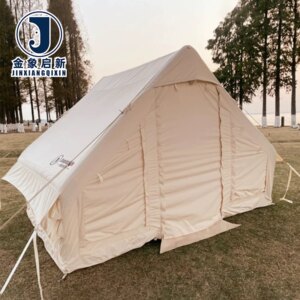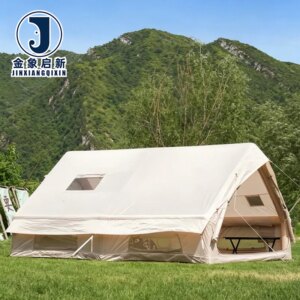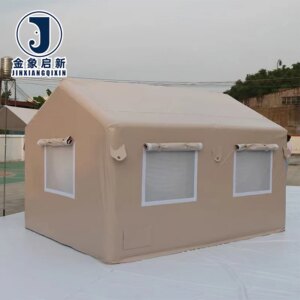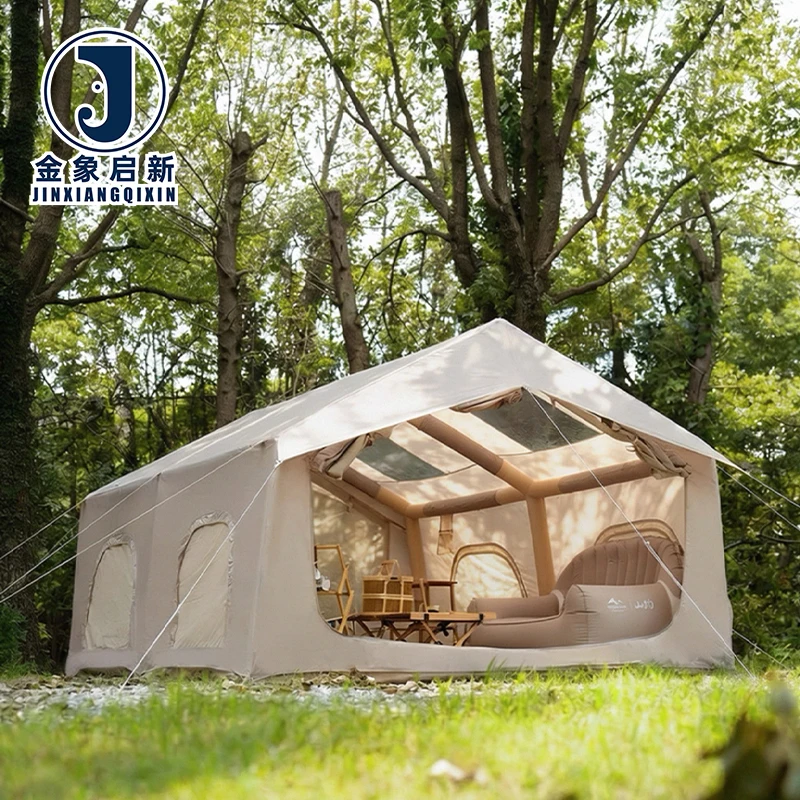
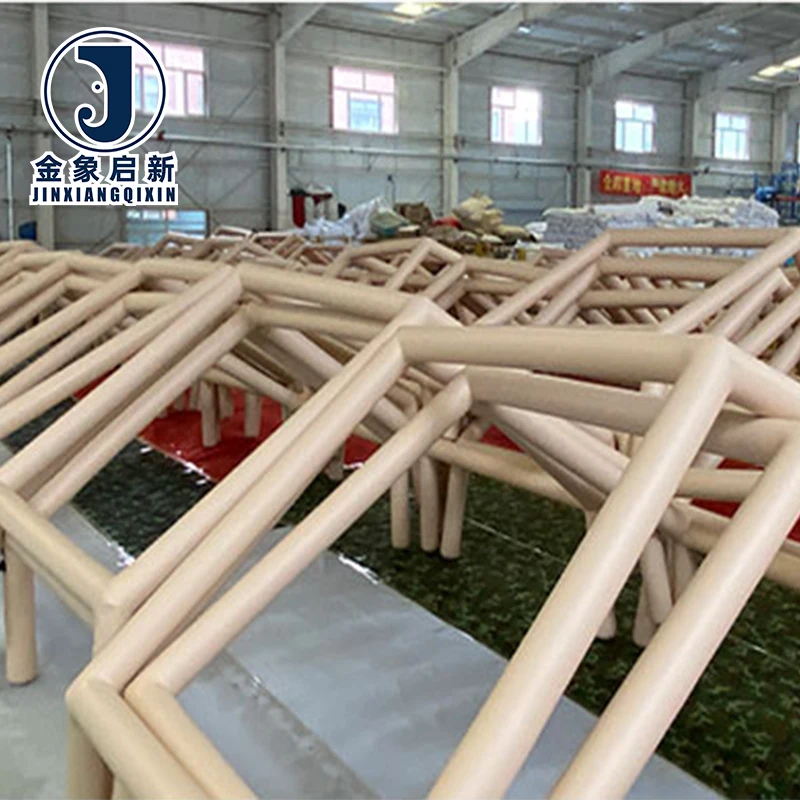
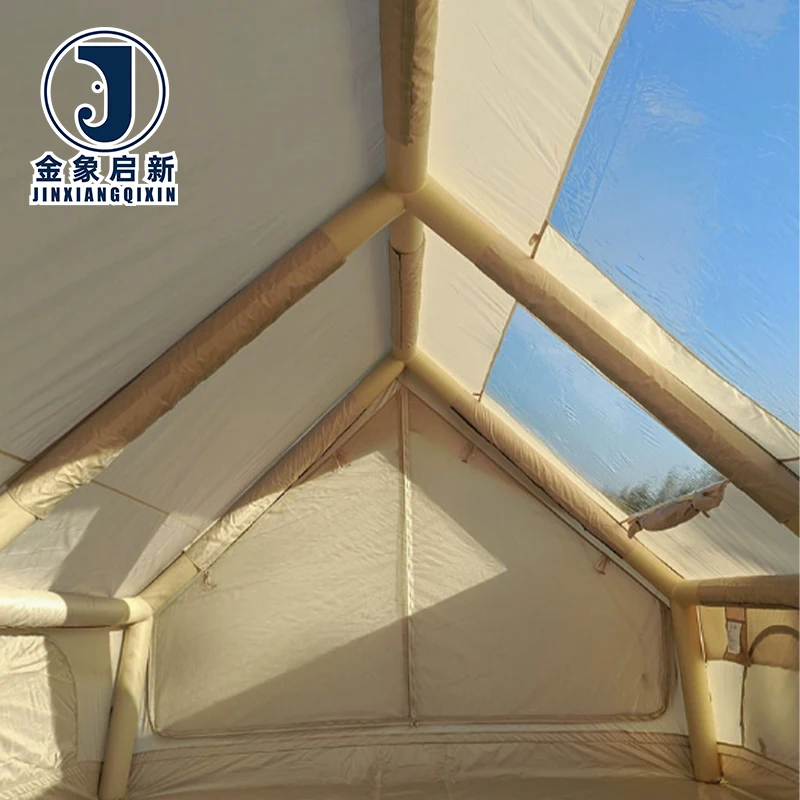
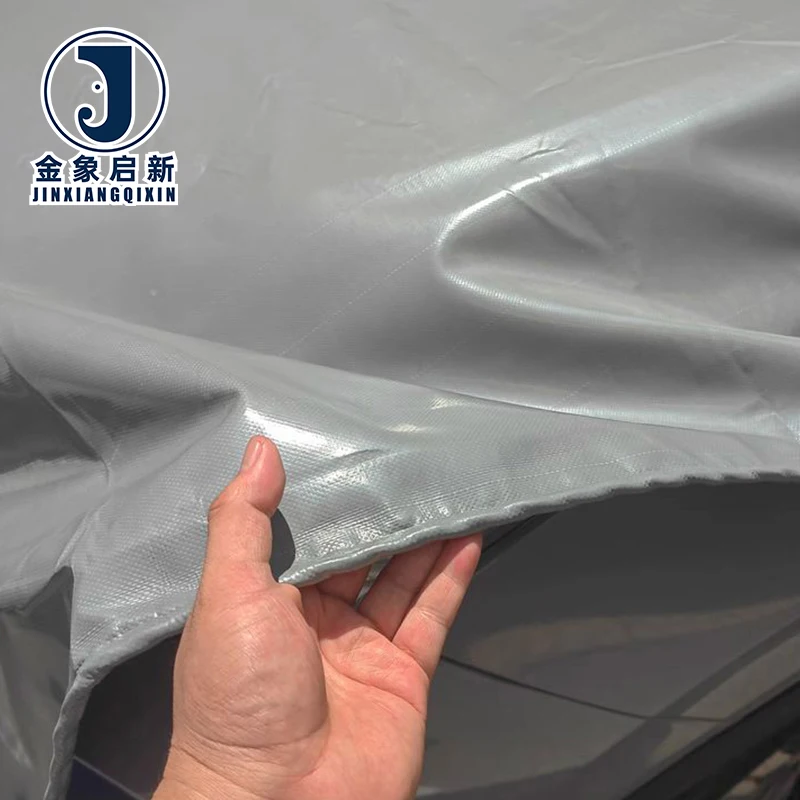
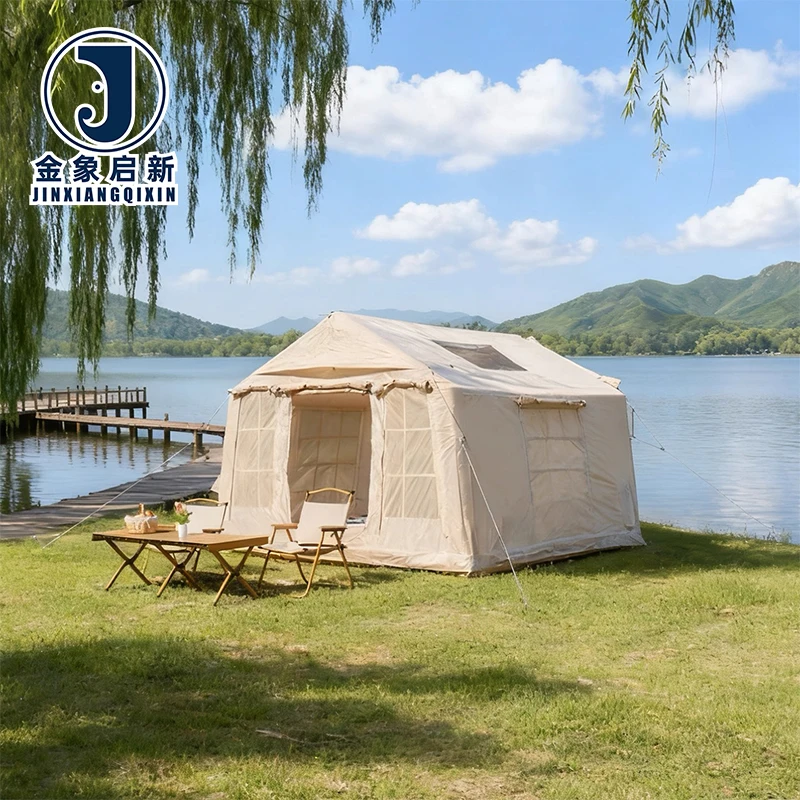
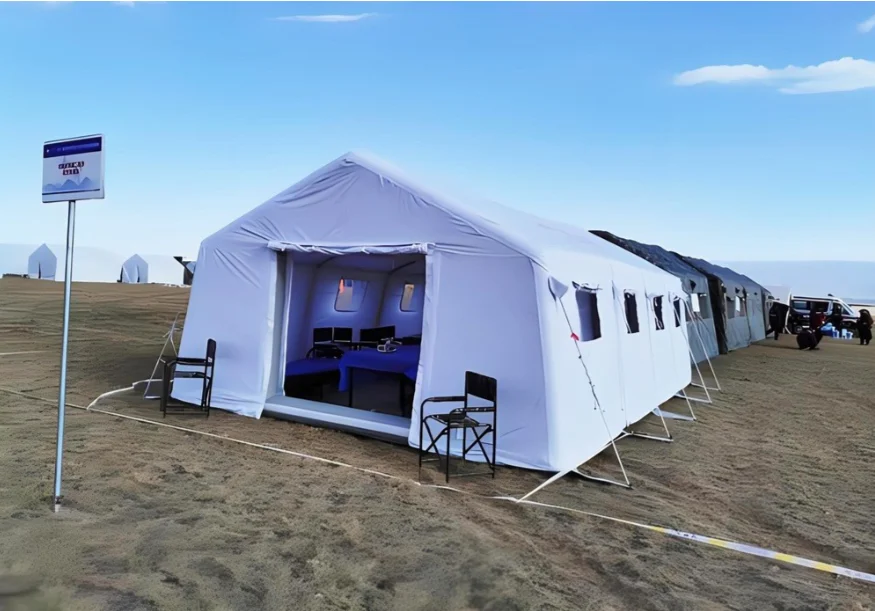
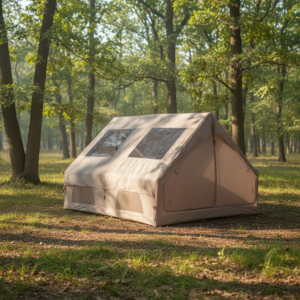
Inflatable Four-season Camping Tent — PVC coated fabric, waterproof, UV-resistant, tear-resistant, extended type structure with quick automatic opening.
- Single-layer design balances durability and portability for rapid site deployment
- OEM/ODM available with sample customization and pattern printing
Nearly 30 years of coated fabric expertise ensures reliable coating weight control, while 100% pre-shipment inspection guarantees batch consistency across every order.
Description
Deep Process Control Over Coating Weight and Adhesion — nearly 30 years focused on PVC coated fabric, applied here to an inflatable four-season camping tent where membrane integrity under inflation pressure demands consistent coating-to-substrate bonding across every production run.
Technical Specifications
| Parameter | Value |
|---|---|
| Product Type | Inflatable Tent |
| Core Material | PVC Coated Fabric |
| Key Performance | Waterproof, UV-resistant (test basis not stated), Tear-resistant |
| Product Form | Inflatable Four-season Camping Tent |
| Design Type | Extended type structure |
| Layer | Single layer |
| Feature | Quick automatic opening |
| Customization Service | OEM & ODM (Sample customization, Pattern printing) |
| Standards | ISO 9001, ISO 14001, ISO 45001, CE |
Application Suitability
| Application | Exposure & Requirement |
|---|---|
| Construction site temporary shelters | Wind loading, rain exposure, dust ingress, repeated inflation and deflation cycles |
| Outdoor event logistics storage | Rapid deployment, UV exposure, ground moisture, frequent relocation |
| Emergency preparedness facilities | All-weather reliability, fast setup under pressure, long-term storage readiness |
| Temporary workspace and equipment storage | Interior space volume, puncture resistance, sustained inflation stability |
Why Waterproof Claims Fail When the Tent Actually Gets Wet
Waterproof performance in an inflatable four-season camping tent depends on seam integrity and coating adhesion, not just the base fabric rating.
Many buyers specify waterproof PVC coated fabric and still experience leaks after the first heavy rain. The membrane stress in an inflatable camping tent manufacturer environment is concentrated at welded seams and valve junctions, where differential stretch between the coated fabric and the joint tape creates micro-channels [NEED_CITE: tensile and tear test methods for coated fabrics per ISO 1421]. A single-layer extended type structure amplifies this because every seam carries full inflation pressure. Requesting a pre-shipment inspection record that documents seam peel strength and a water column test on finished joints separates verified suppliers from those quoting on fabric weight alone.
How Quick Automatic Opening Changes the Fabric Requirement
An inflatable four-season camping tent with quick automatic opening places a specific demand on the PVC coated fabric: it must flex rapidly during inflation without developing stress whitening or micro-cracks at fold lines. The single-layer construction means the coating itself must tolerate repeated compression during storage and sudden expansion during deployment. Fabric stiffness that works for a static cover will cause premature failure in a quick-deployment inflatable structure.
Coating Adhesion Under Sustained Inflation Pressure
The PVC coated fabric in this inflatable camping tent aftermarket supplier context must maintain coating-to-substrate bond strength while holding internal air pressure across temperature swings. Thermal expansion of trapped air increases membrane tension, which transfers load to the coating interface. If adhesion is marginal, delamination begins at high-stress zones around seams and valve mounts [NEED_CITE: coating adhesion test methods for PVC coated technical textiles]. This is why batch-level peel strength testing matters for multi-unit orders.
Reading the Specification Sheet for an Inflatable Structure
The waterproof, UV-resistant, and tear-resistant claims on a PVC coated fabric spec sheet describe individual properties, but their interaction determines real field behaviour. Tear resistance in a single-layer inflatable tent is governed by the base fabric denier and weave density, while the coating contributes surface puncture protection and environmental shielding. UV resistance availability should be confirmed against the grade required for your market — not all UV treatments maintain effectiveness across the same exposure duration. Understanding which property dominates in your deployment scenario guides whether you prioritise base fabric specification or coating formulation when placing your order.
The Cost of Ignoring Batch-to-Batch Consistency
When an inflatable camping tent aftermarket supplier ships multiple units from different production batches, colour variation between tents becomes visible once they are erected side by side at a construction site or event venue. Beyond aesthetics, coating weight variation between batches affects inflation pressure requirements — a heavier-coated unit needs higher pressure to achieve the same structural rigidity, and mixed batches force operators to adjust each unit individually [NEED_CITE: coating weight verification standards for PVC tarpaulin]. This inconsistency is the reason pre-production sample approval and batch-level quality inspection exist.
Why Procurement Verification Starts Before Production
Three full production lines and 36 sets of professional processing equipment support volume output, but the deciding factor for an inflatable four-season camping tent order is whether the production run matches the approved sample. A 10-person R&D team handles material selection and sample development so that fabric specification, colour reference, and seam parameters are locked before bulk production begins. Dedicated QA and QC staff conduct full-process inspection rather than relying on end-of-line sampling, catching coating defects and seam inconsistencies during production rather than after packing [NEED_CITE: ISO 9001 quality management system requirements for manufacturing]. Pattern printing and size customisation are integrated into this workflow, meaning branding and dimensional changes are validated through the same inspection protocol as the base fabric.
Documentation & Verification
- Material specification sheet confirming PVC coated fabric weight, base fabric, and coating type
- UV-resistant test report provided where applicable to the grade specified in your order
- ISO 9001, ISO 14001, ISO 45001, and CE certificates included with shipment documentation
- Pre-shipment inspection record verifying batch consistency across all inflatable tent units
- Roll packing list detailing fabric batch numbers traceable to production records
Fabrication, Handling & Storage
- Heat welding parameters must match the PVC coated fabric coating thickness to avoid seam failure under inflation pressure
- Single-layer membrane should be stored flat or loosely rolled to prevent permanent crease marks in the coating
- Quick automatic opening mechanism requires valve seal inspection after extended storage periods before deployment
- Extended type structure panels should be unfolded on clean surfaces to avoid puncture damage to the single-layer membrane
- Cleaning with mild detergent only — solvent-based cleaners degrade the PVC coating surface and compromise waterproof performance
What to Include in Your Inflatable Tent Inquiry
Specify the deployment environment, expected inflation frequency, and whether units will be erected in high-wind or high-UV conditions so the correct PVC coated fabric grade is recommended. Confirm if pattern printing or colour matching to an existing brand reference is required, and whether sample approval is needed before authorising full production. Indicate the quantity range and whether all units must come from a single production batch for consistency.
Frequently Asked Questions
Q: What customization options are available for size, color, and pattern printing on inflatable tents?
A: Full OEM and ODM services are available including sample customization to your dimensions, pattern printing for branding, and colour matching. The 10-person R&D team develops samples within days for custom specifications. Production parameters are locked after sample approval to ensure the bulk order matches the verified prototype.
Q: How does the quick automatic opening system work and what accessories are required?
A: The quick automatic opening feature uses an inflation valve system integrated into the extended type structure. Accessories required depend on your deployment scenario — confirm whether you need manual pumps, electric blowers, or pressure regulators. The single-layer PVC coated fabric membrane is engineered to tolerate rapid inflation without stress whitening at fold lines.
Q: Can you provide test reports for waterproof and UV-resistant performance per batch?
A: Batch test reports for waterproof performance are provided with shipment documentation. UV-resistant test reports are available where applicable — confirm the grade required for your market and region at inquiry stage. Pre-shipment inspection records document coating weight verification and seam integrity testing for each production batch.
Q: What is the lead time for OEM and ODM orders and is sample approval required before production?
A: Custom orders require sample development and approval before bulk production is authorised, ensuring specification accuracy. Lead times vary based on order volume, customisation complexity, and current production scheduling. The three full production lines support bulk capacity while maintaining batch consistency through dedicated quality control at every stage.
Related products
-
Outdoor Waterproof Inflatable Tent for Camping Portable Air Camping Tent Shelter
Read more -
خيمة فعاليات قابلة للنفخ لجميع الفصول، خارجية مقاومة للماء من مادة PVC، فتح تلقائي سريع، تتسع لـ 6-8 أشخاص، مع شعار مخصص
Read more -
Premium Four-season Inflatable Tents for Camping Easy-to-Use Spacious Portable Waterproof Outdoor Tent Quick
Read more -
Inflatable Tent Four-Season Quick Automatic Opening PVC 3000mm Waterproof Foldable Eco-Friendly 2-3/3-4/6-8 Person Outdoor Use
Read more