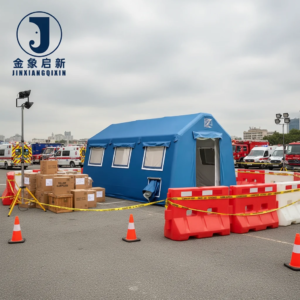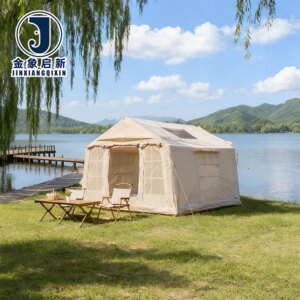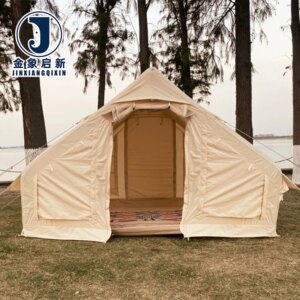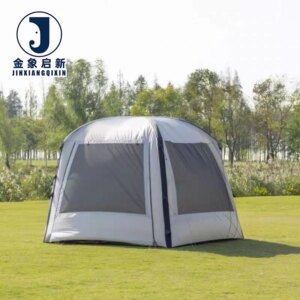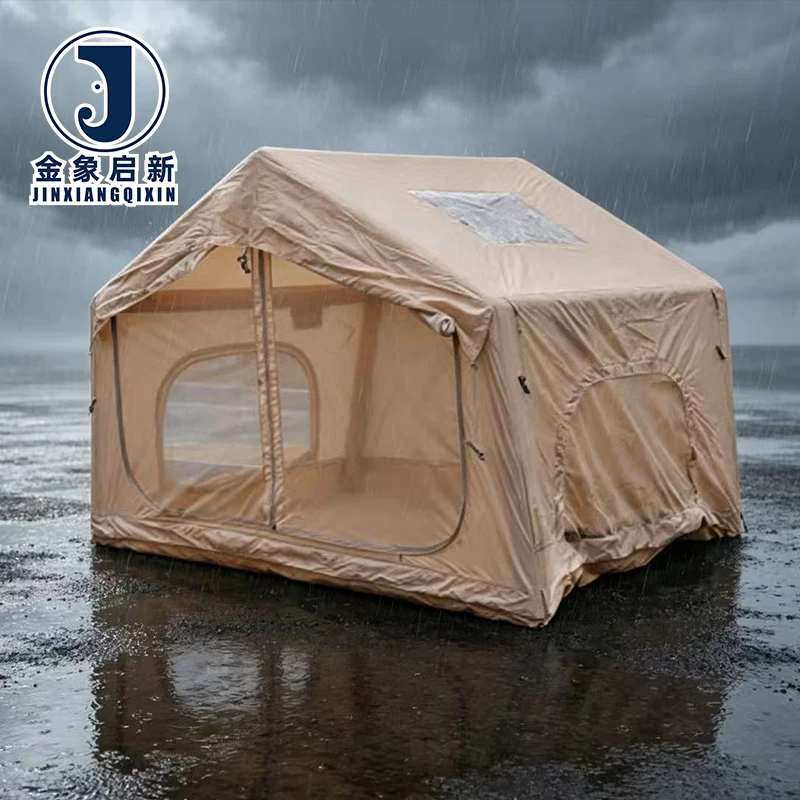
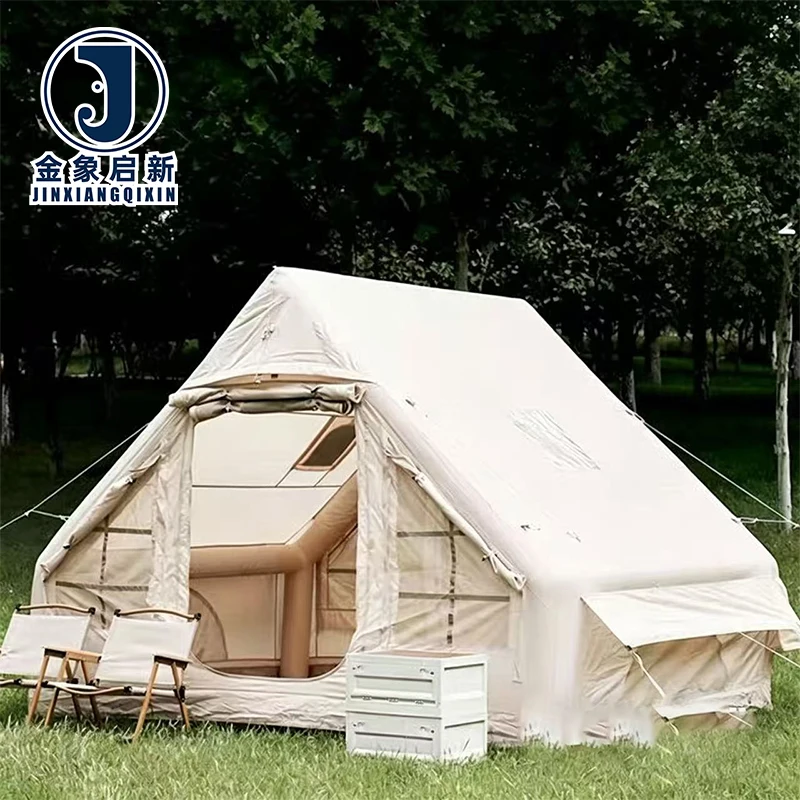
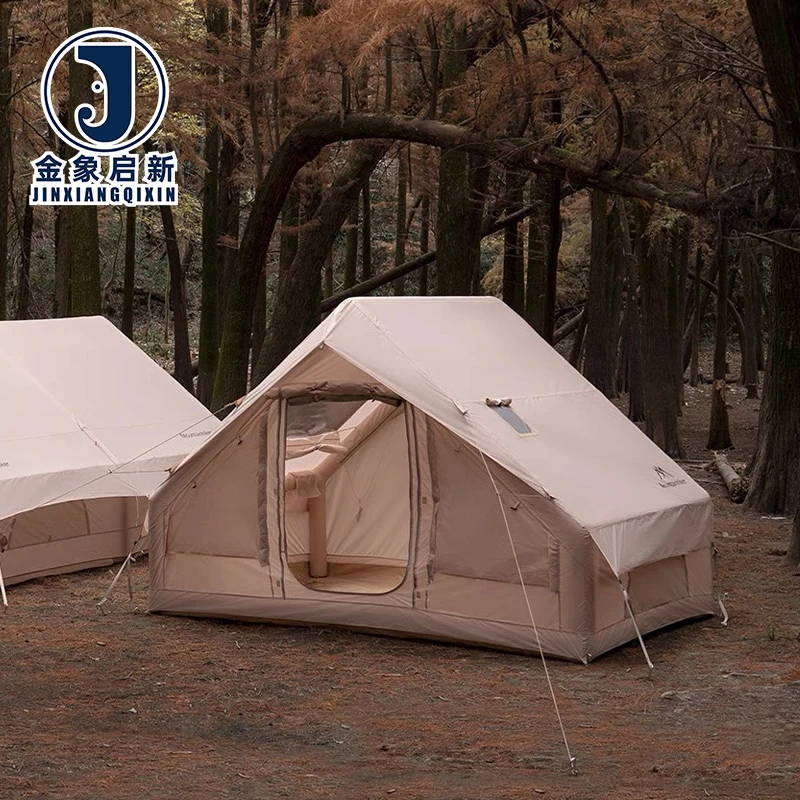
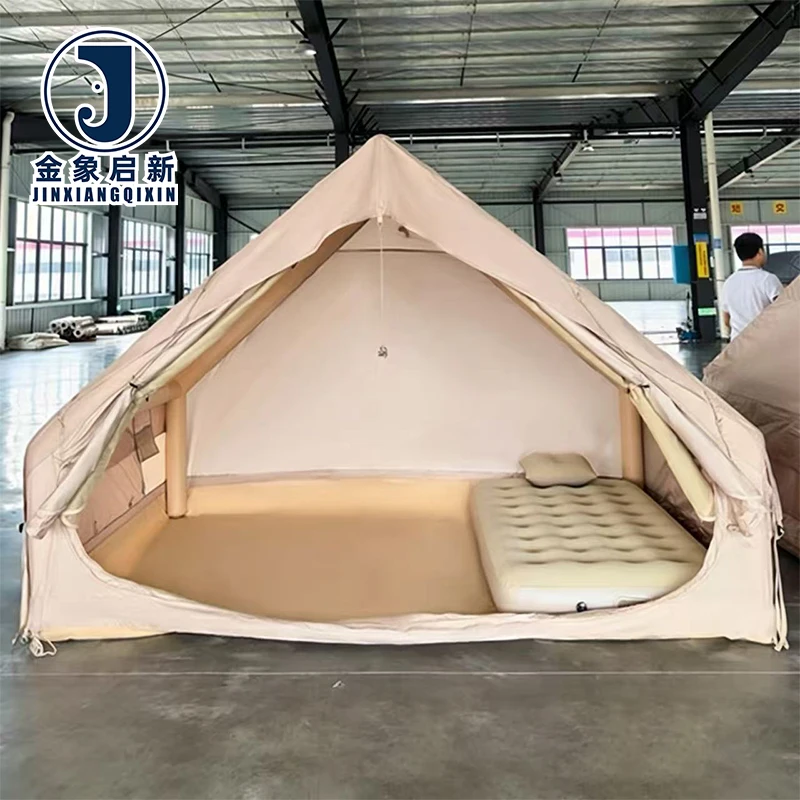
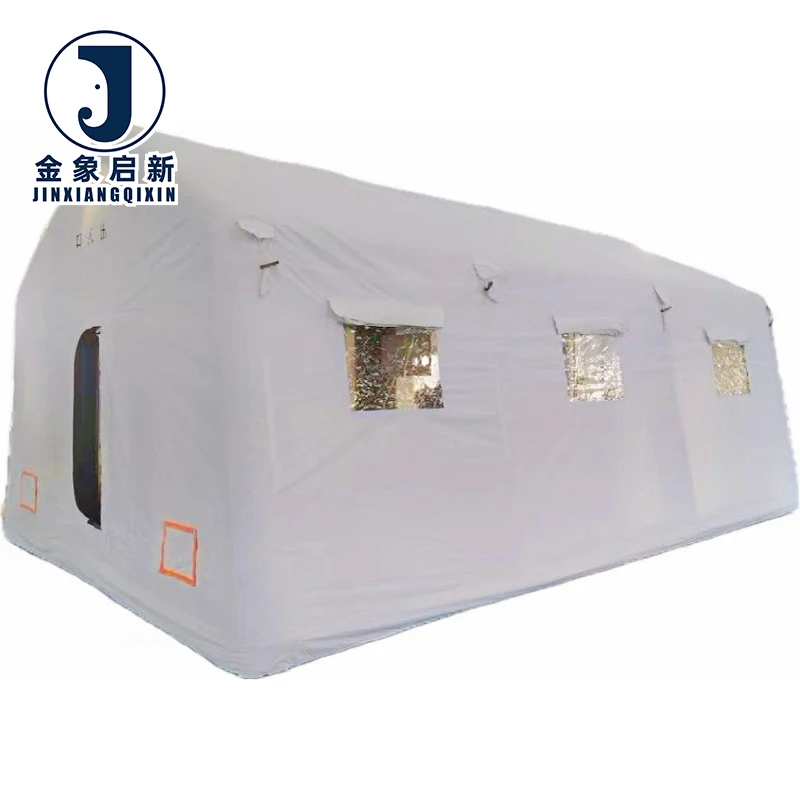
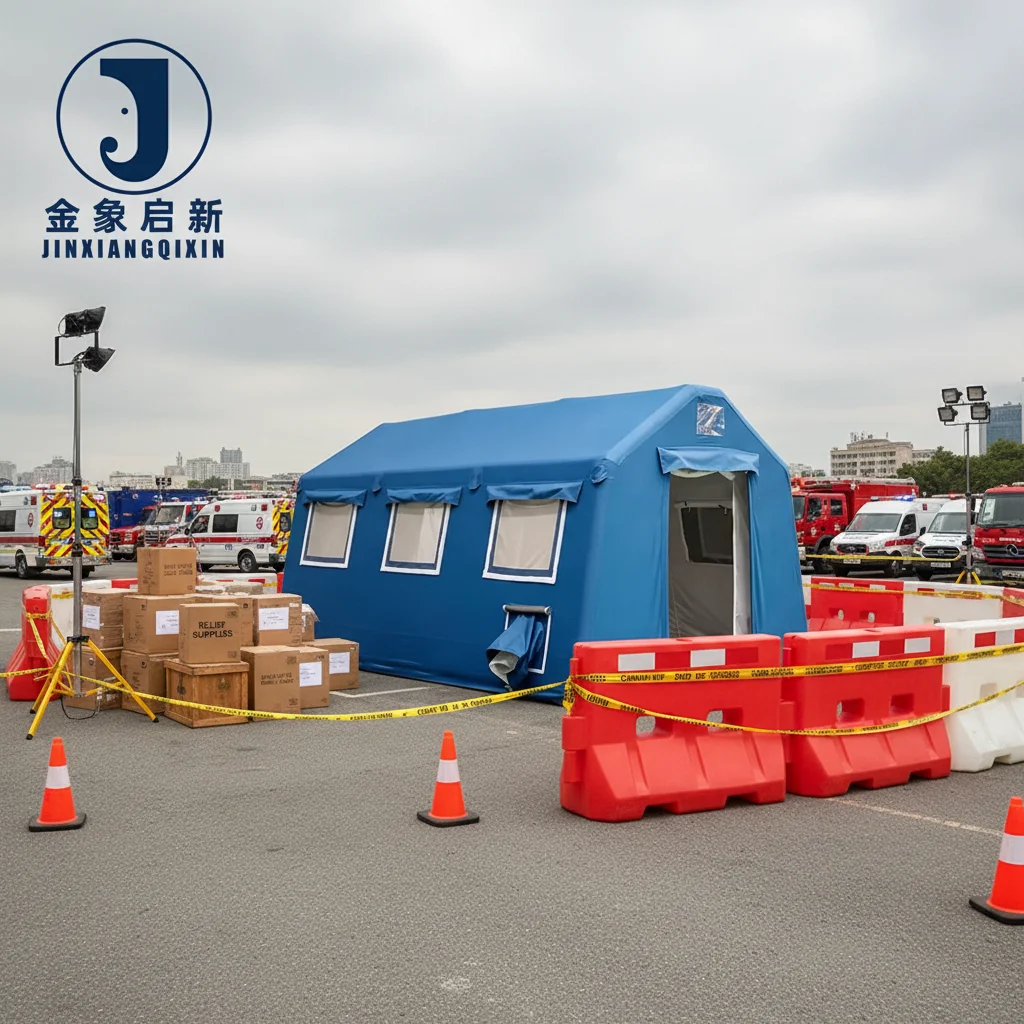
Inflatable Camping Tent Waterproof Outdoor Air Tent with waterproof, UV-resistant, and tear-resistant PVC fabric in single-layer construction.
- Coated fabric performance depends on base denier, weave density, and coating weight together — not just GSM alone
- Heat-welded seams require precise process control to prevent failure at the highest stress points in inflatable structures
- OEM & ODM support with sample customization and pattern printing available
Backed by nearly 30 years of coated fabric expertise, dedicated QA at every stage, and 100% pre-shipment inspection.
Description
Deep Process Control Over Coated Fabric — nearly 30 years of coating weight and adhesion expertise applied to every roll of inflatable tent fabric we produce.
Technical Specifications
| Parameter | Value |
|---|---|
| Product Type | Inflatable Tent |
| Core Material | Waterproof UV-Resistant PVC Fabric |
| Key Performance | Waterproof, UV-Resistant, Tear-Resistant |
| UV Treatment | UV-Resistant (test basis not stated) |
| Construction | Single Layer |
| Design | Extended Type, Four-Season |
| Feature | Quick Automatic Opening |
| Customization | OEM & ODM — sample customization, pattern printing |
| Production Lines | 3 full production lines |
| Processing Equipment | 36 sets of professional processing equipment |
| R&D Team | 10 technicians |
| Quality Control | Strict full-process inspection with dedicated QA & QC staff |
| Certifications | ISO9001, ISO14001, ISO45001, CE |
Application Suitability
| Application | Exposure & Requirement |
|---|---|
| Temporary site shelters for construction projects | Wind loading, rain exposure, repeated assembly and teardown cycles |
| Mobile storage facilities for logistics operations | Continuous outdoor weathering, forklift and equipment proximity, abrasion at ground contact |
| Emergency response units for disaster management | Rapid deployment, wet and muddy ground contact, UV exposure during extended outdoor staging |
| Component manufacturing for outdoor gear companies | Roll-to-roll colour and weight consistency, pattern printing adhesion, weld seam integrity |
| Commercial camping equipment manufacturing | Four-season weather exposure, lightweight portability balanced against tear resistance |
Why Colour Shift Between Rolls Wrecks an Inflatable Tent Production Run
Batch-to-batch colour consistency is controlled through in-process inspection at every coating stage, not left to a final visual check.
When you order multiple rolls of custom inflatable camping tent fabric for a production run, the expectation is that panels cut from different rolls will match once assembled. In practice, slight variations in pigment loading or coating temperature between batches can produce visible mismatches the moment two panels sit side by side on a finished shelter [NEED_CITE: colour tolerance standards for PVC coated textiles]. This forces rework, delays shipment to your customer, and erodes confidence in the supply chain. Our QA and QC staff inspect colour reference against the approved standard at each production stage, catching drift before it reaches the roll.
Coating Adhesion and the Weld Line Reality
Inflatable tent structures depend entirely on heat-welded seams holding air pressure under flex and load. If the PVC coating does not bond firmly to the base fabric, the weld zone becomes the first failure point — the coating delaminates before the fabric itself reaches its tear limit. Our three full production lines maintain controlled coating weight and curing conditions so that adhesion strength supports repeated inflation and deflation cycles without seam breakdown.
Pattern Printing That Survives Folding and Transport
For manufacturers branding their inflatable camping tent products, the printed pattern must survive tight packing, repeated setup, and outdoor UV exposure. Pattern printing is integrated into the production workflow rather than applied as an afterthought, so ink penetration and coating compatibility are verified during sample development. This prevents the common issue where printed logos crack or flake after the first season of field use.
Understanding the Spec Sheet Beyond the Headline Numbers
Waterproof performance in a single-layer PVC fabric depends on both the coating integrity and the base fabric density. A higher GSM reading alone does not guarantee better tear resistance if the base weave is loosely constructed — the coating fills gaps but cannot replace yarn strength [NEED_CITE: tensile and tear test methods for coated fabrics per ISO 1421]. UV-resistant treatment requires verification through test reports rather than supplier declarations, because the difference between surface-level treatment and through-coat stabilization determines how the fabric behaves after extended sun exposure. The single-layer construction of this inflatable tent fabric balances portability with durability, making it suitable for four-season camping shelter applications where weight matters but weather protection cannot be compromised.
What Happens When UV Claims Lack Test Backing
A fabric marketed as UV-resistant without a supporting test report leaves the buyer exposed. The inflatable shelter may perform well initially, then show chalking, embrittlement, or colour fade after a single season of direct sunlight [NEED_CITE: UV degradation mechanisms in plasticized PVC]. When the end user complains, the brand carrying your label absorbs the reputational damage. Requesting the test basis for any UV-resistant claim before committing to a bulk order protects both the manufacturer and the downstream customer from warranty disputes that trace back to an unverified material specification.
Production Depth That Supports Custom Orders Reliably
Our 9,180 m² facility runs 3 full production lines with 36 sets of professional processing equipment, giving us the capacity to handle bulk roll orders without sacrificing the attention each custom specification demands. The 10-person R&D team manages material selection and sample development within days, so OEM and ODM projects move from concept to approved sample without extended delays. Every roll undergoes 100% pre-shipment inspection with dedicated QA and QC staff, ensuring that the inflatable tent fabric arriving at your factory matches the approved specification. ISO9001, ISO14001, ISO45001, and CE certifications underpin the quality management system across all production stages.
Documentation & Verification
- Material specification sheet stating base fabric, coating type, and colour reference per batch
- UV-resistant test report available upon request to verify treatment claims for your market
- Pre-shipment inspection record confirming 100% inspection before dispatch
- ISO9001, ISO14001, ISO45001, and CE certificates supporting import compliance
- Roll packing list with batch traceability for each shipment
Fabrication, Handling & Storage
- Heat-weld parameters should be calibrated to the single-layer PVC coating weight to avoid scorching or incomplete bonding
- Store rolls upright on pallets in a shaded, ventilated area to prevent flat-spot deformation on the coating surface
- Avoid dragging rolls across abrasive surfaces during warehouse handling to protect the waterproof PVC face
- Unroll and allow fabric to relax at ambient temperature before cutting to reduce tension-induced distortion
- Use PVC-compatible cleaners only — solvents may soften the coating and compromise waterproof integrity
- Field repairs on minor punctures can be addressed with PVC patch kits matched to the coating formulation
Before You Request a Quote — What We Need to Know
To recommend the right inflatable tent fabric specification, share the intended shelter dimensions, expected wind and weather exposure, and whether you require pattern printing or solid colour. If your target market mandates specific UV or fire performance grades, provide the relevant standard so we can match the treatment and supply the corresponding test documentation. Let us know whether you need rolls for your own fabrication line or finished custom inflatable camping tent units, and we will structure the quotation accordingly.
Frequently Asked Questions
Q: How is UV resistance verified and what test basis supports the anti-UV claim?
A: UV-resistant treatment is applied during coating, but the specific test basis should be confirmed for your market requirements. We provide test reports upon request so you can verify that the treatment level meets the exposure conditions your inflatable tent will face. Confirm the grade required for your region before placing a bulk order.
Q: What customization options are available for dimensions, colour, and pattern printing?
A: We support OEM and ODM customization including sample development, pattern printing, and size adjustments. The 10-person R&D team handles material selection and prototype creation within days. Share your colour reference, print artwork, and dimensional requirements so we can develop a sample for your approval before production begins.
Q: How is batch-to-batch colour consistency controlled across rolls in a single order?
A: Dedicated QA and QC staff inspect colour reference at every production stage, not just at final packing. Each batch is checked against the approved standard, and any drift is corrected before the roll proceeds to the next stage. This in-process control prevents visible mismatches when panels from different rolls are assembled side by side.
Q: What documentation is provided per shipment for quality verification and customs compliance?
A: Each shipment includes a material specification sheet, pre-shipment inspection record, roll packing list with batch traceability, and ISO9001, ISO14001, ISO45001, and CE certificates. UV-resistant test reports are available upon request. Certificate of origin and customs documentation are provided to support smooth import clearance.
Q: How are samples developed and approved before mass production begins?
A: Submit your application requirements, target specifications, and any pattern or colour references. The R&D team develops a physical sample within days for your evaluation. Once you approve the sample for weight, colour, weld behaviour, and print quality, mass production proceeds under the same controlled conditions verified during sampling.
Related products
-
Camping Tent Inflatable UV Resistant Customizable Four-season Waterproof PVC Eco-Friendly Windproof Foldable Quick Automatic
Read more -
Inflatable Camping Tent Waterproof PVC Outdoor Air Tent Easy Setup Family Camping Shelter
Read more -
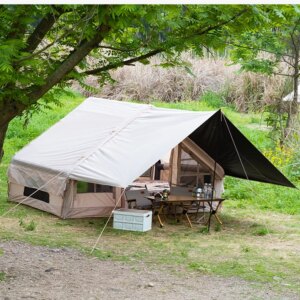
خيمة تخييم قابلة للنفخ من مادة PVC، مقاومة للماء والأشعة فوق البنفسجية، لجميع الفصول، فتح تلقائي سريع، قابلة للتخصيص، تتسع لـ 2-3 أشخاص
Read more -
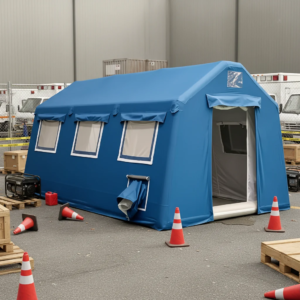
Outdoor Waterproof Inflatable Tent for Camping Portable Air Camping Tent Shelter
Read more