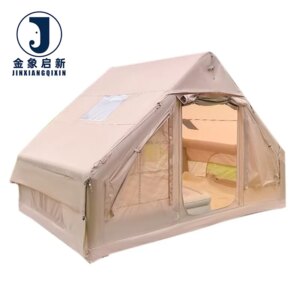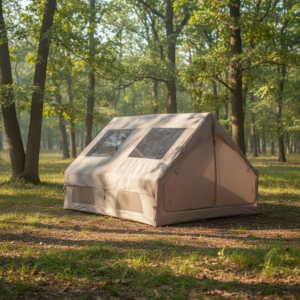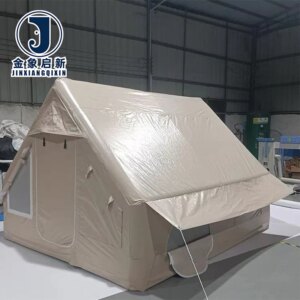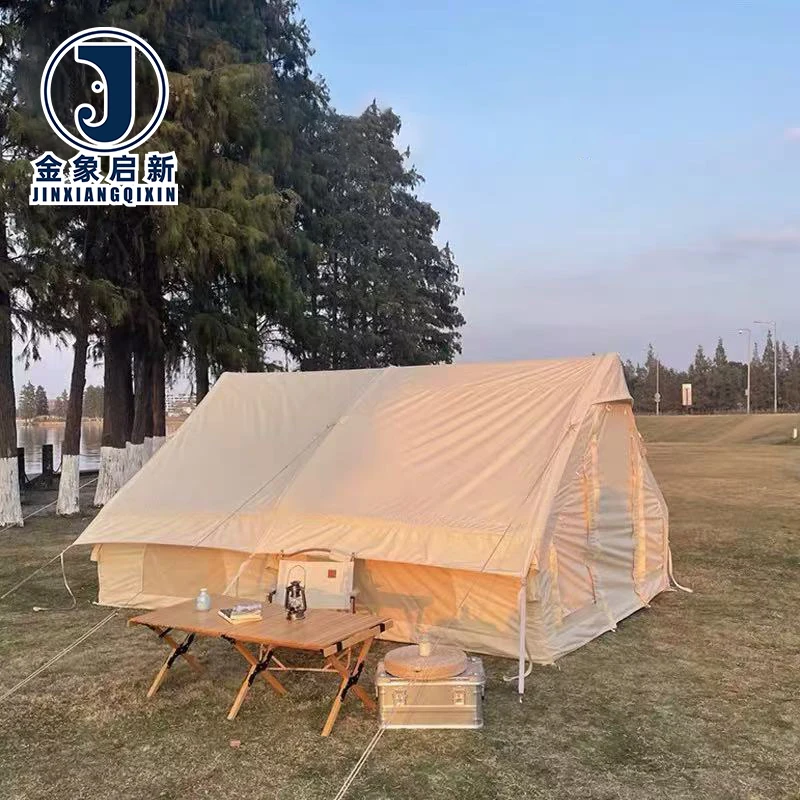
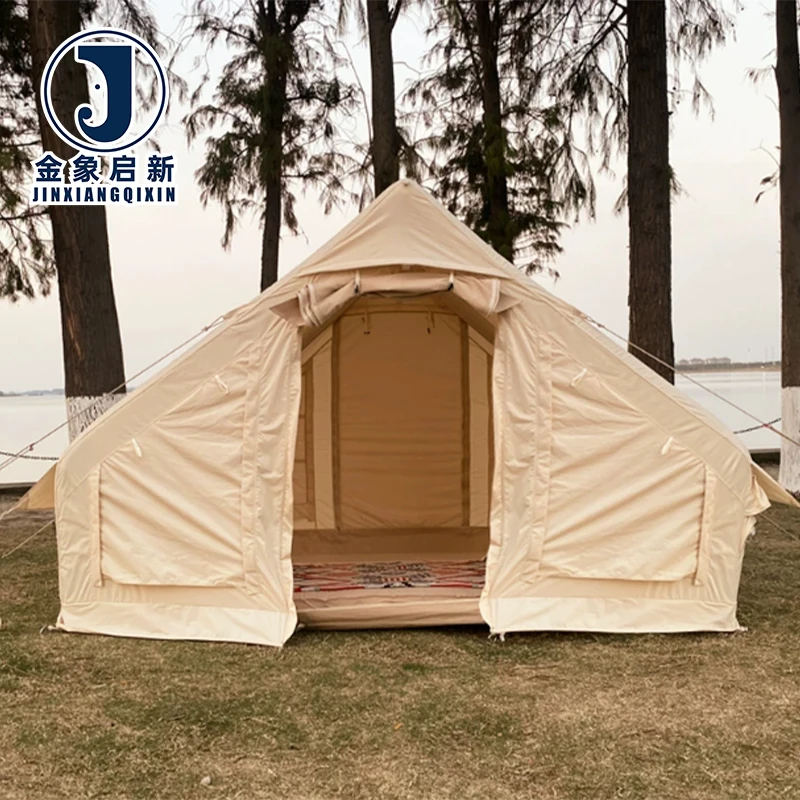
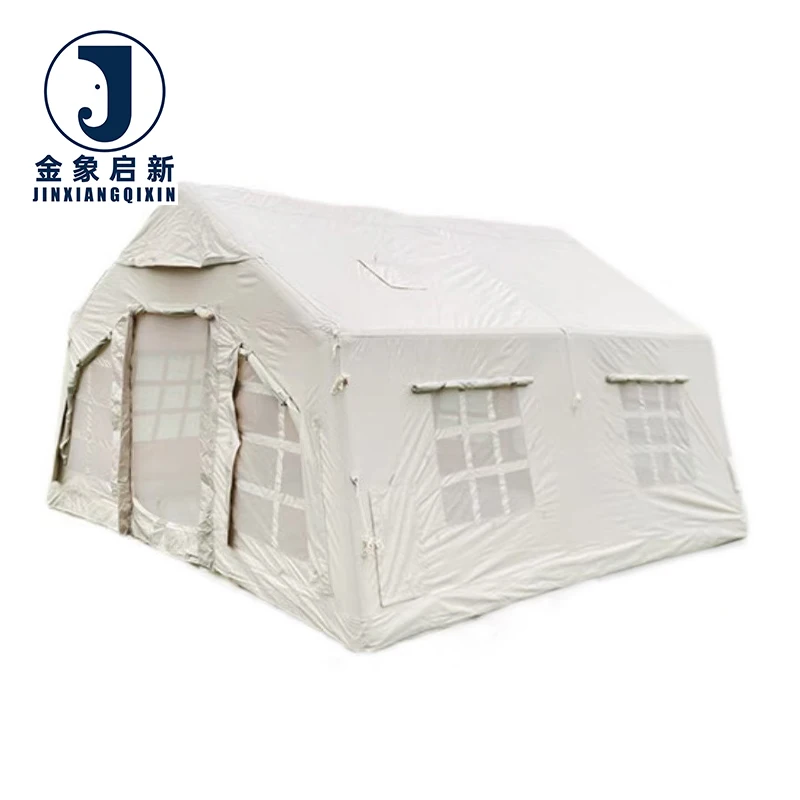
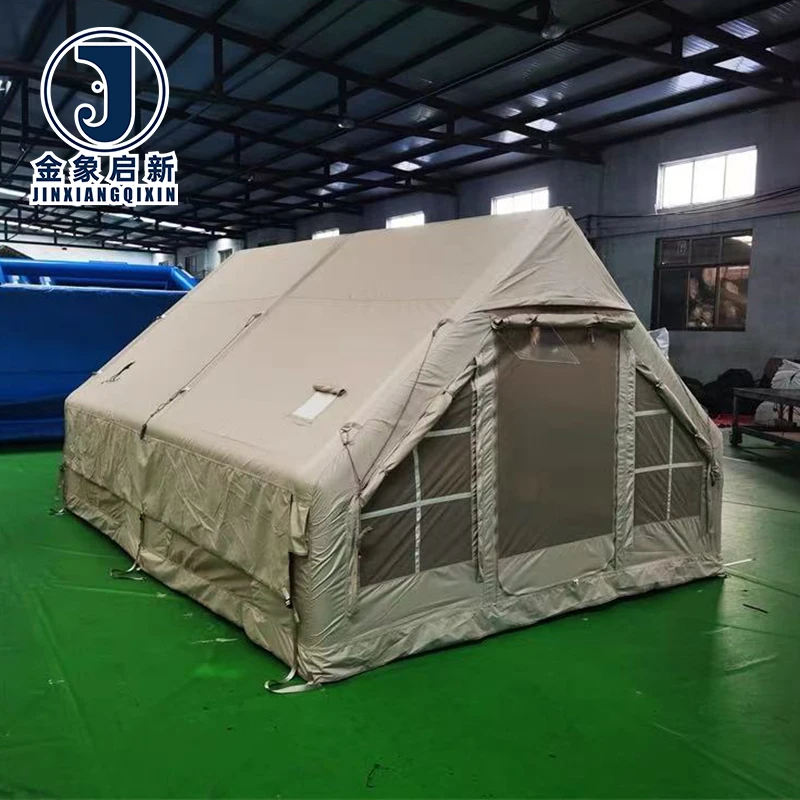
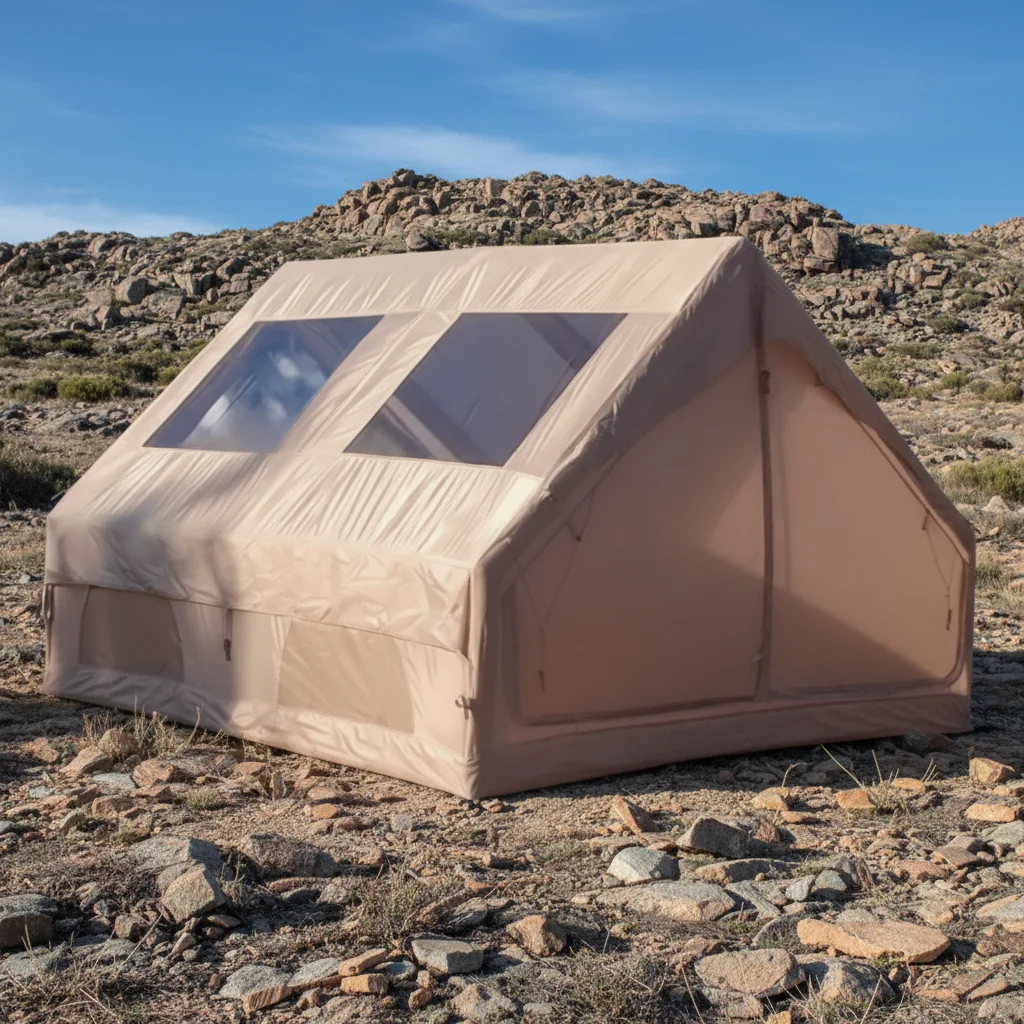
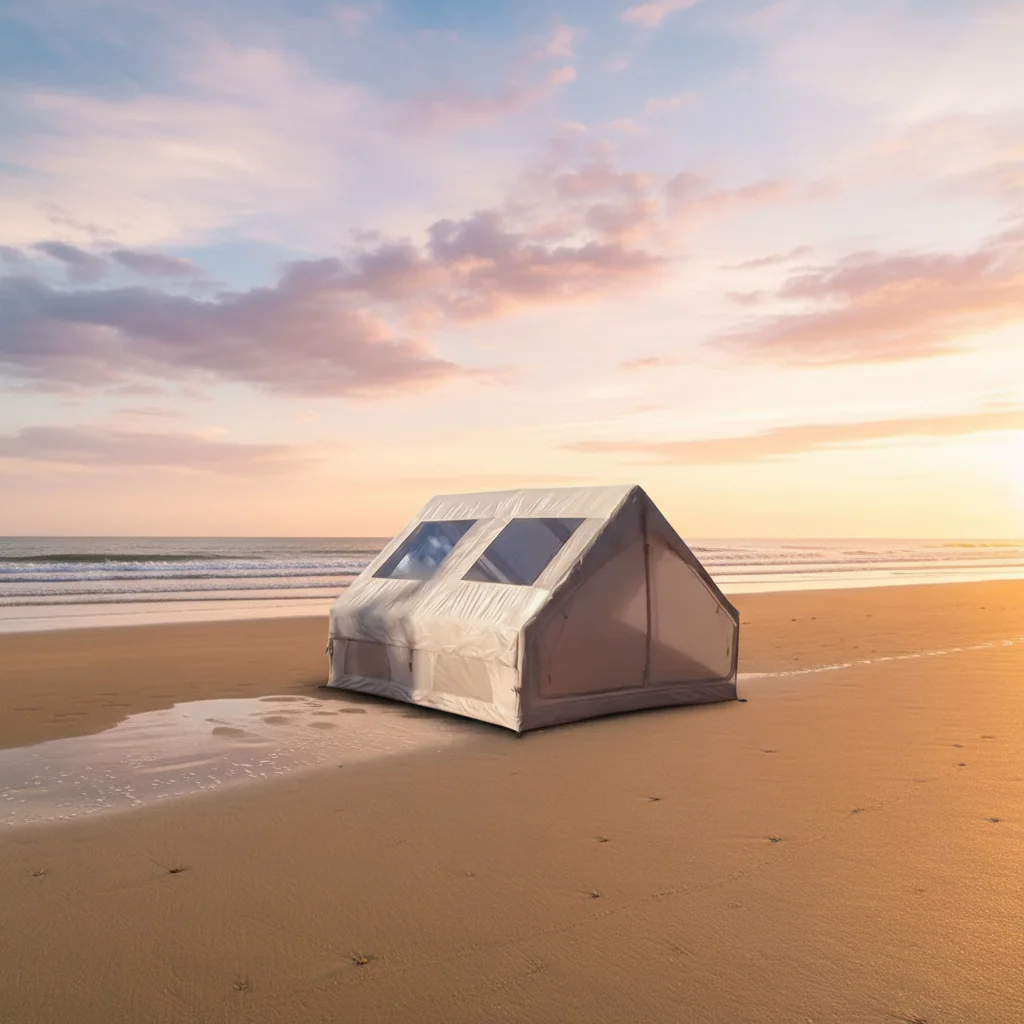
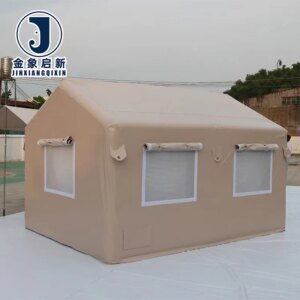
Waterproof PVC Four-Season Glamping Outdoor Camping House Tent with Quick Automatic Opening — inflatable tent for commercial glamping with waterproof, UV-resistant and fire-retardant (EN 13501-1) PVC tarpaulin fabric, quick automatic opening for efficient deployment.
Built for resort operators who need batch-consistent fabric weight and verified fire-retardant claims that pass compliance audits, not generic specs that fail on arrival.
- 10-person R&D team handling full OEM & ODM customization including size, color matching and pattern printing
- Three production lines with dedicated QA/QC at every stage and 100% pre-shipment inspection
- Samples developed within days for design and performance validation before mass production
Description
Process Control Over Coating Weight — Every roll of PVC tarpaulin leaving our Jinan facility passes a strict gram-per-square-meter check before it ever reaches the cutting table or weld line.
Technical Specifications
| Parameter | Value |
|---|---|
| Product Type | Inflatable Tent |
| Core Material | PVC Tarpaulin |
| Key Features | Waterproof, UV-resistant, Tear-resistant, Fire-retardant, Anti-static |
| Waterproof Rating | ≥10,000 mm hydrostatic head (source value — verify against manufacturer catalog) |
| UV Resistance | 5,000+ hours sunlight exposure (source value — verify against manufacturer catalog) |
| Fire-retardant Standard | EN 13501-1 (source value — verify against manufacturer catalog) |
| Tear Strength | 1,500 N/5 cm warp and weft (source value — verify against manufacturer catalog) |
| Wind Load Resistance | Up to Beaufort scale 8 (source value — verify against manufacturer catalog) |
| Production Lines | 3 full production lines |
| Processing Equipment | 36 sets |
| R&D Team | 10 technicians |
| Customization | OEM & ODM, sample customization, pattern printing |
| Certifications | ISO 9001, ISO 14001, ISO 45001, CE |
Application Suitability
| Application | Exposure & Requirement |
|---|---|
| Luxury glamping resorts | Permanent or semi-permanent installation, four-season weather cycles, guest comfort, fire compliance for commercial accommodation |
| Eco-tourism facilities | Prolonged outdoor siting, UV and moisture exposure, environmental sensitivity, rapid seasonal deployment and teardown |
| Event accommodation services | High-frequency setup and breakdown, transport abrasion, wind loading, batch consistency across multiple tent units |
| Commercial camping installations | Year-round weather protection, brand-specific visual identity, structural integrity under inflation pressure, regulatory fire classification |
Why Batch Consistency Matters More Than the Brochure Promises
Commercial glamping operators ordering multiple inflatable tents rarely worry about the first unit — the problem surfaces when the second and third rolls arrive in a different shade or weight. [NEED_CITE: batch-to-batch colour variation in PVC coated fabrics] Consistent coating weight and colour matching across every roll is what keeps a resort project on schedule.
I have watched a four-season camping project stall for weeks because three tents delivered in the same shipment showed visible colour differences once inflated side by side. The operator had already committed marketing photography and guest bookings. The entire batch was returned, and the season window closed. When you are specifying a Waterproof PVC Four-Season Glamping Inflatable Tent for a commercial site, the test report on the first sample means very little if the production run drifts away from it.
Coating Adhesion and the Weld Line Problem
The seam is almost always the first point of failure on an inflatable structure, not because the fabric is weak but because the coating did not bond cleanly to the base fabric. When the inflatable tent flexes under wind load or inflation pressure, the weld line concentrates stress that a poorly adhered coating cannot distribute. Our production lines apply controlled coating weight to both sides of the base fabric, and we verify adhesion through peel testing before the material reaches the fabrication stage.
For an aftermarket supplier delivering inflatable tents to commercial operators, this matters because field repairs on a welded seam in a remote glamping location are costly and damage guest confidence. The inflatable tent must hold its structural integrity through repeated inflation cycles and seasonal weather changes without the seam separating ahead of the fabric itself.
Fire Classification for Commercial Accommodation
Commercial glamping sites fall under hospitality fire safety regulations in most jurisdictions, and the inflatable tent fabric must carry a recognised classification. [NEED_CITE: EN 13501-1 fire classification for tensile membrane structures] The EN 13501-1 standard referenced in our specification provides a framework, but local building codes and insurance requirements may demand additional or alternative certification. Before placing a production order, confirm with your local authority or insurance provider exactly which fire classification your site requires, and request the corresponding test report for the specific batch being produced. This avoids the scenario where a completed resort fails its opening inspection because the documentation does not match the jurisdiction’s expectations.
Reading the Specification Sheet Beyond the Headline Number
Tear strength at 1,500 N/5 cm warp and weft indicates the force required to propagate a tear once the fabric is cut or punctured, but this value only holds if the base fabric density and the coating weight work together. A heavier coating on a loosely woven base can deliver high GSM figures while the actual tear resistance remains moderate because the yarns pull apart under load rather than sharing the stress.
The PVC coating method — whether knife-over-roll, dip, or calender — directly affects peel strength and therefore heat-weld performance. Knife-coated fabrics typically show better adhesion at the weld line because the coating penetrates the weave more thoroughly, giving the hot-air weld a stronger bond area. For an inflatable tent that relies on welded seams for its structural envelope, the coating method is as important as the stated weight.
Surface finish also plays a functional role. A glossy surface sheds water and dirt more readily but can show scuff marks from handling and transport, while a matte finish hides abrasion better and provides a more stable base for pattern printing and branding. The choice depends on whether the inflatable tent will be frequently relocated or installed as a semi-permanent structure.
The Hidden Cost of Cutting Corners on Material Verification
When the gram weight stated on the quotation does not match the delivered fabric, the consequences compound. A lighter coating means reduced waterproofing performance, lower abrasion resistance at contact points, and a shorter functional life under continuous UV exposure. [NEED_CITE: relationship between PVC coating weight and long-term weathering performance] For an inflatable tent deployed at a commercial glamping resort, this translates into premature replacement cycles, guest complaints about condensation or leaks, and reputational damage that no amount of discount can offset. Similarly, accepting a flame-retardant claim without verifying the test report against the relevant standard creates a compliance gap that may only be discovered during a regulatory audit or insurance inspection — long after the tents are installed and guests are booked.
What We Bring to This Product
Our three production lines and 36 sets of processing equipment give us the capacity to run large inflatable tent orders without splitting production across external workshops where quality control becomes inconsistent. The 10-person R&D team handles material selection, pattern printing development, and custom sizing from the initial sample through to production sign-off, so the specification you approve is the specification that ships. Every stage of production carries a dedicated QA/QC checkpoint — coating weight, colour consistency, seam integrity — and 100% inspection before dispatch means the material that arrives at your site matches the documentation we provide. We have spent nearly 30 years focused on coated fabric, and that process depth is what allows us to hold tolerances that protect your project timeline.
Documentation & Verification
- Material specification sheet confirming GSM, base fabric construction, and coating type for each roll
- Fire-retardant and UV test reports matched to the specific production batch
- ISO 9001, ISO 14001, ISO 45001, and CE certificates included with shipment documentation
- Pre-shipment inspection record covering coating weight, colour consistency, and seam integrity
- Roll packing list and certificate of origin for customs clearance
Fabrication, Handling & Storage
- Hot-air welding temperature and speed must be set to the specific PVC coating thickness to avoid cold welds or coating burn-through
- Inflated structure stress points at valve openings and anchor attachments require reinforced fabric patches bonded with compatible PVC adhesive
- Rolls should be stored upright on a flat surface away from direct sunlight to prevent flat-spot deformation of the coating
- Cold-weather handling below freezing requires gradual warming before unrolling to avoid coating cracking at fold lines
- Cleaning should use mild detergent without solvents that attack the plasticiser in the PVC coating surface
What to Include in Your Enquiry
To give you an accurate specification and lead time, tell us the intended site conditions — climate zone, typical wind exposure, and whether the inflatable tent will be permanent, seasonal, or event-based. Confirm the fire classification your local jurisdiction or insurer requires so we can match the correct test standard. Let us know if you need pattern printing, custom colour matching, or specific dimensional adjustments beyond the standard range, and whether you want finished tent structures or roll stock for your own fabrication.
Frequently Asked Questions
Q: What customization options are available for dimensions, color and branding?
A: We handle OEM and ODM requests covering size adjustments, custom colour matching to your reference, pattern printing, and logo application. Our 10-person R&D team develops pre-production samples so you can validate the design and material performance before we commit to full manufacturing. Lead times vary depending on the complexity of the custom specification.
Q: Does the tent meet fire-retardant standards required for commercial accommodation?
A: The PVC tarpaulin used in our inflatable tents is available with fire-retardant treatment referenced to EN 13501-1. Because commercial accommodation regulations differ by country and sometimes by municipality, we recommend confirming the exact classification your project requires before ordering so we supply the matching test report with your shipment.
Q: How is batch-to-batch color and material consistency ensured across large orders?
A: Each production run goes through dedicated QA checkpoints covering coating weight verification, colour matching against approved reference standards, and seam integrity testing. We conduct 100% pre-shipment inspection rather than statistical sampling, so every roll or finished unit is checked before packing and dispatch.
Q: What documentation is provided for international import compliance?
A: Shipments include a material specification sheet, batch-specific test reports for applicable performance claims, ISO and CE certificates, a detailed roll packing list, and a certificate of origin. This documentation set supports customs clearance and provides the compliance evidence your local authority or insurer may request.
Q: What is the sample approval and lead time process for customized orders?
A: Once we receive your application details and specification requirements, we develop a sample for your review and approval. Production begins only after you confirm the sample meets your standards. Typical lead times for custom orders run across multiple weeks depending on order volume and complexity, and we provide a confirmed schedule at the quotation stage.
Related products
-
Inflatable Camping Tent Waterproof Outdoor Air Tent for Camping Inflatable Tent Shelter
Read more -
خيمة فعاليات قابلة للنفخ لجميع الفصول، خارجية مقاومة للماء من مادة PVC، فتح تلقائي سريع، تتسع لـ 6-8 أشخاص، مع شعار مخصص
Read more -
خيمة قابلة للنفخ لأربعة مواسم طبقة واحدة >3000 مم مقاومة للماء ومقاومة للرياح فتح تلقائي سريع قماش PVC صديق للبيئة
Read more -
Inflatable Camping Tent PVC Waterproof Four-Season Outdoor Air Tent with Quick Automatic Opening for 3-4 Person
Read more