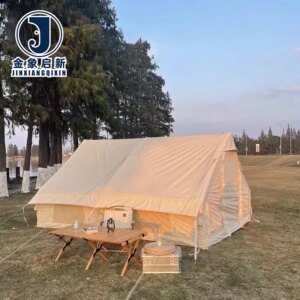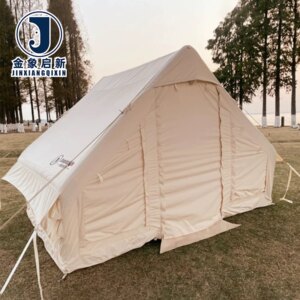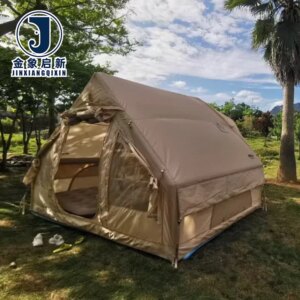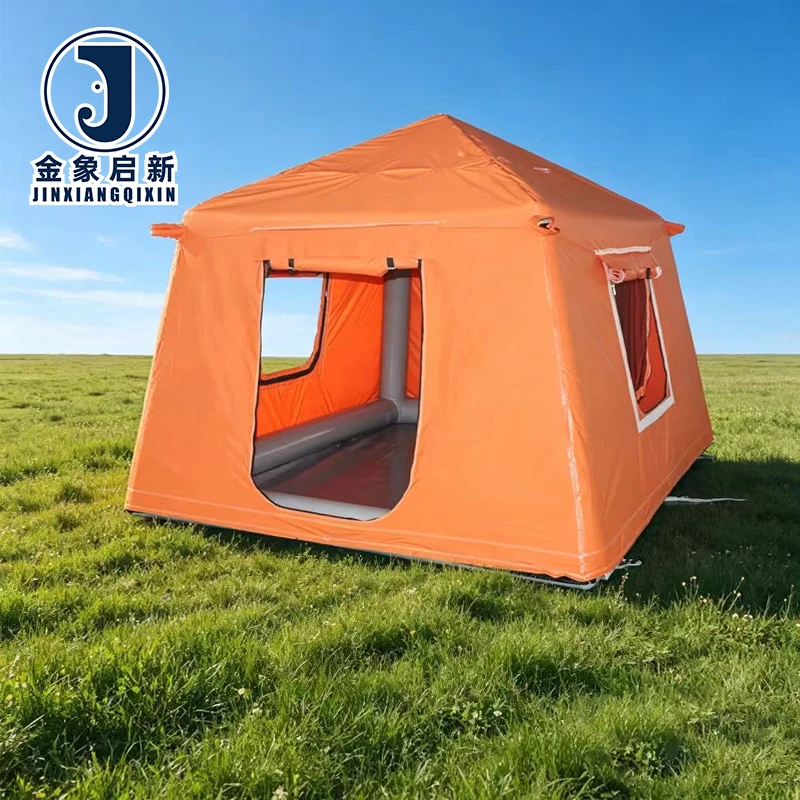
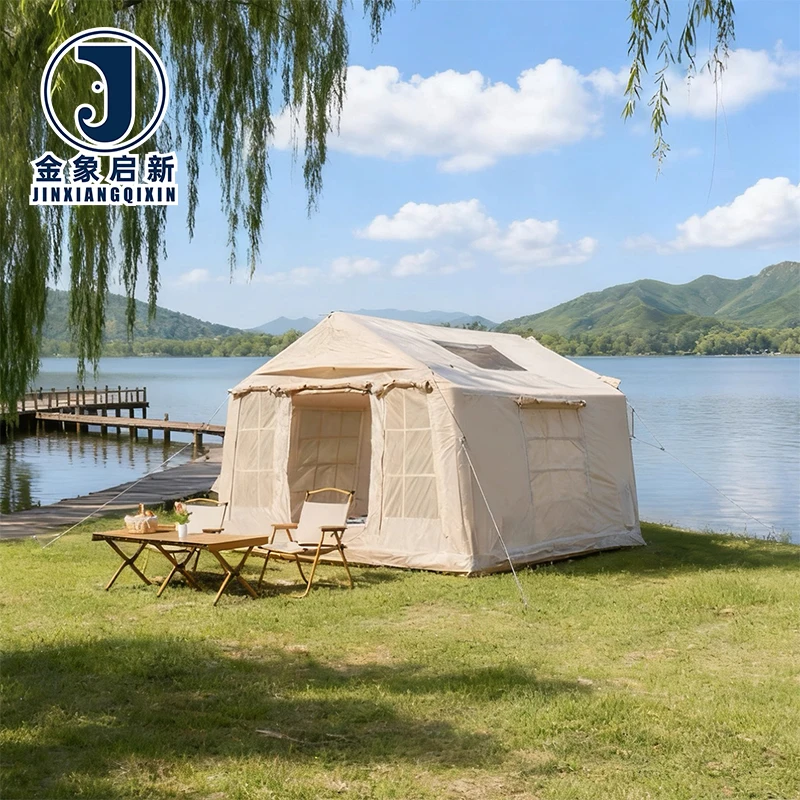
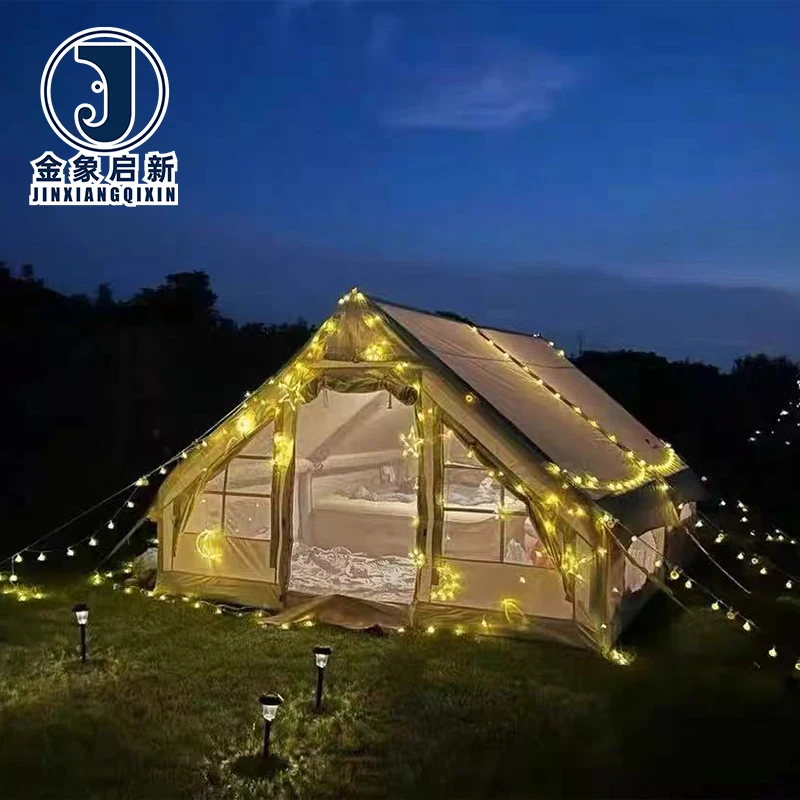
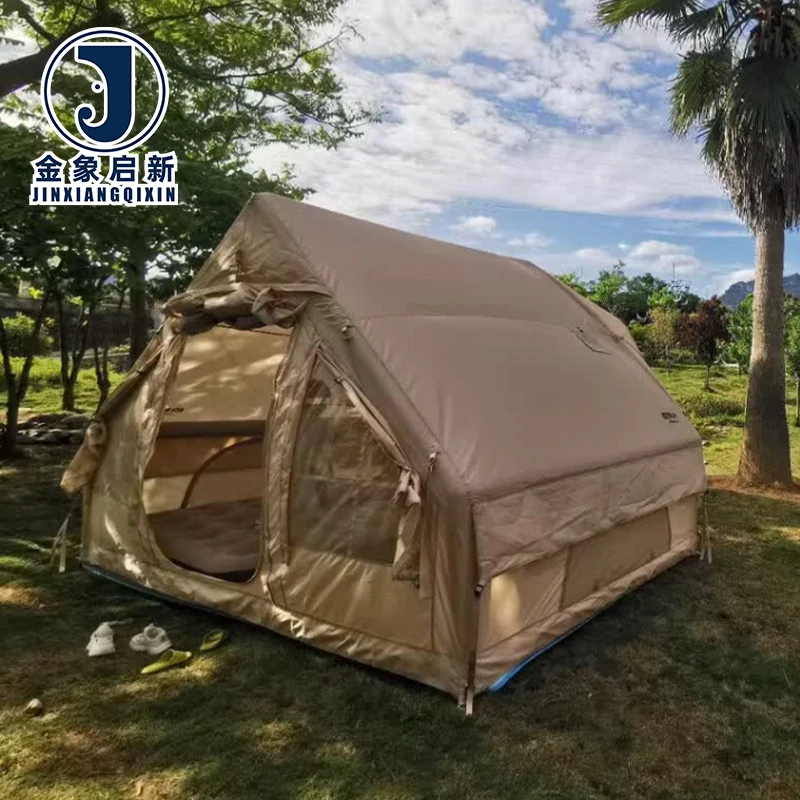
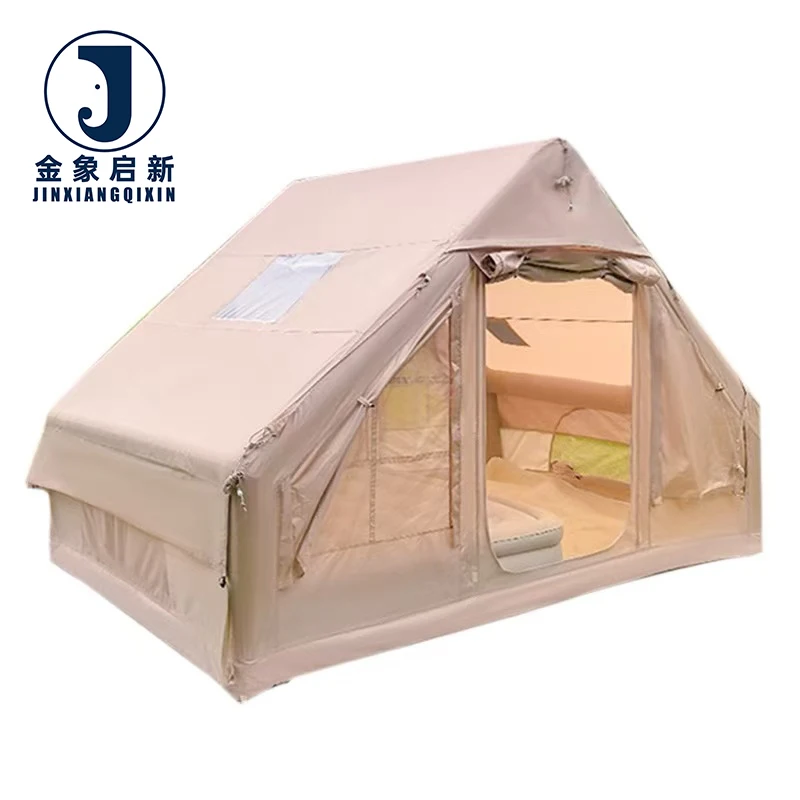
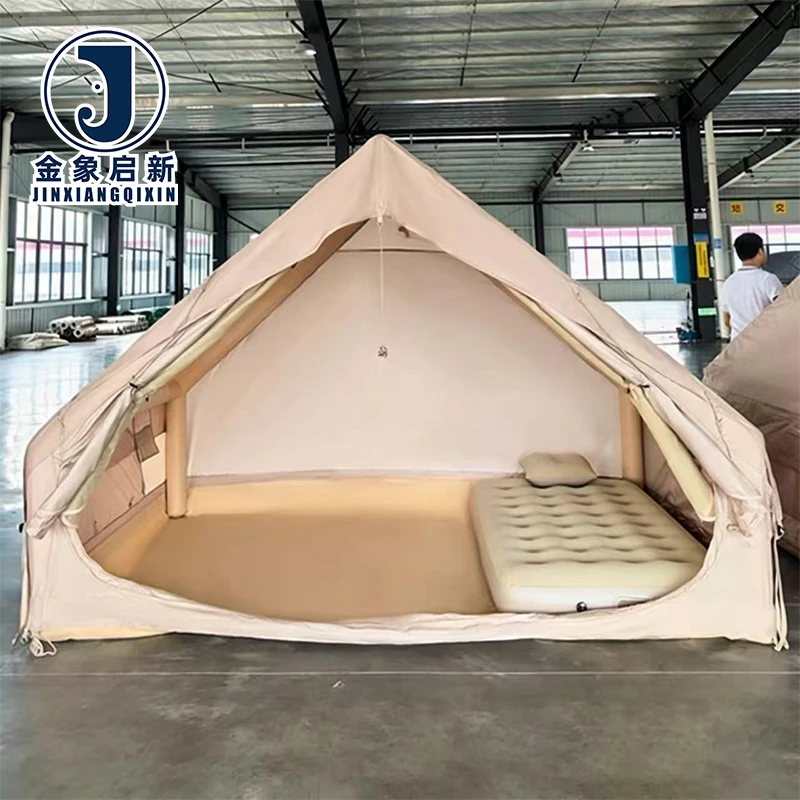
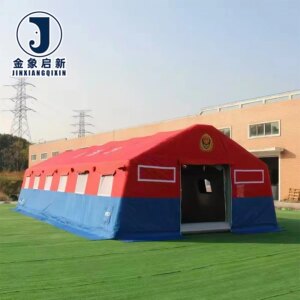
Portable Inflatable Camping Tent — 5-8 person capacity with quick automatic opening and 420D Oxford cloth construction, designed for outdoor camping and commercial deployments.
Engineered for rapid-deployment temporary shelters, this inflatable tent fabric delivers structural integrity under inflation pressure with welded seam construction. UV-resistant and waterproof treatment ensures reliable performance across outdoor event management, construction site accommodation, and emergency response applications.
- Supported by nearly 30 years of coated fabric expertise and dedicated QA/QC at every production stage
- Full customization from design to delivery with sample development within days
Description
Deep Coating Expertise — nearly 30 years of process control over coating weight and adhesion, ensuring inflatable tent structures maintain consistent airtightness and seam integrity across every production run.
Technical Specifications
Product Type | Inflatable Tent
| Parameter | Value |
|---|---|
| Core Material | 420D Oxford Cloth |
| Capacity | 5-8 Person |
| Key Features | Quick Automatic Opening, Portable |
| Tensile Strength | ≥300N/5cm (test basis not stated) |
| Water Pressure Resistance | ≥2000mm (test basis not stated) |
| Airtightness | ≤0.2bar pressure loss per 24 hours (test basis not stated) |
| UV Treatment | Anti-UV (test basis not stated) |
| Customization | OEM & ODM, sample customization, pattern printing |
| Quality Control | Full-process inspection with dedicated QA&QC staff |
| Certifications | ISO9001, ISO14001, ISO45001, CE |
Application Suitability
| Application | Exposure & Requirement |
|---|---|
| Outdoor event management | Repeated deployment and packing cycles, UV exposure, variable weather conditions |
| Temporary site accommodation | Extended outdoor exposure, wind loading, abrasion from ground contact |
| Mobile exhibition spaces | Frequent inflation and deflation, transport vibration, branding print durability |
| Emergency response shelters | Rapid deployment under adverse conditions, structural stability under inflation pressure |
| Team-based fieldwork | Multi-person occupancy load, sustained air pressure retention, waterproof integrity |
Why Seam Integrity Matters More Than Fabric Weight Alone
An inflatable tent lives or dies at its welded joints — not at the centre of the panel.
When sourcing an Inflatable Tent manufacturer, buyers often focus on GSM or denier count while overlooking how the welded seams behave under sustained inflation pressure. A tent may carry a strong base fabric specification, yet fail at the seam line after repeated flex cycles or temperature shifts. Field reports consistently show that air leakage and structural collapse originate at weld points where heat-sealing parameters were not matched to the coating chemistry [NEED_CITE: welded seam failure modes in coated fabric structures]. Without documented pressure testing protocols, there is no way to verify whether each unit holds air within acceptable loss thresholds before it reaches the site.
Full-Catalogue Custom Capability from Fabric to Finished Unit
As an Inflatable Tent manufacturer operating across the complete coated fabric range, we control every stage from material selection through to final inflated testing. The 420D Oxford Cloth base is paired with coating formulations selected for airtightness and weld compatibility, rather than chosen from a generic stock list. Our 10-person R&D team develops samples for custom sizing, colour matching, and pattern printing — ensuring branding and dimensional requirements are confirmed before bulk production begins. This vertical integration means buyers specifying an Inflatable Tent manufacturer for commercial or industrial projects receive units where fabric performance and structural construction are engineered together, not assembled from disconnected components.
Batch Consistency Across Commercial-Volume Orders
Repeat buyers face a familiar problem: the first sample performs well, but the fiftieth unit shows visible colour shift or reduced air retention. Maintaining roll-to-roll and unit-to-unit consistency requires process control at the coating stage, where weight and adhesion are monitored continuously rather than spot-checked [NEED_CITE: coating weight consistency standards for inflatable fabric structures]. With three full production lines and 36 sets of processing equipment, production scheduling accommodates batch grouping so that all units within a single order share the same material lot and coating run. Each unit then undergoes 100% inflated pressure testing before dispatch, providing documented verification rather than relying on抽样 sampling.
Understanding the 420D Oxford Cloth Specification
The 420D designation refers to the denier of the base fabric yarn, which influences tensile strength and puncture resistance at the structural level. When combined with a coated construction, the fabric develops water pressure resistance — stated here at ≥2000mm, though the test basis is not specified in the source documentation. For inflatable structures, the critical interaction is between the base fabric weave density and the coating adhesion: a tightly woven 420D substrate provides dimensional stability under inflation pressure, while the coating layer delivers airtightness and waterproof protection. Anti-UV treatment is noted as available, though the specific grade and test standard are not stated — buyers should confirm whether UV resistance is tested to a recognised protocol such as ISO 4892 or equivalent for their target market. The stated airtightness of ≤0.2bar pressure loss per 24 hours defines the acceptable leakage threshold for sustained inflation, a parameter that must be validated through full-unit pressure testing rather than fabric-level measurement alone.
The Hidden Cost of Unverified Airtightness Claims
Specifying an inflatable structure without confirmed pressure test data creates downstream risk that surfaces only after deployment. Units that lose pressure beyond acceptable thresholds require constant re-inflation, increasing labour costs and creating safety concerns in occupied shelters. When airtightness is claimed without a stated test method or acceptance criterion, there is no basis for comparing suppliers or rejecting non-conforming deliveries [NEED_CITE: pressure retention test methods for inflatable fabric structures]. Similarly, UV treatment listed without a grade or exposure hour rating provides no assurance that the fabric will resist degradation over the intended service period. Buyers procuring from an Inflatable Tent manufacturer should require batch-specific test reports showing actual pressure loss measurements, not generic compliance statements.
Why Procurement Teams Specify Jinxiang for Inflatable Structures
Material selection is handled by a dedicated R&D team that evaluates base fabric, coating chemistry, and welding parameters as an integrated system — not as separate purchasing decisions. Every production unit undergoes 100% inflated testing with documented pressure loss results before shipment, eliminating reliance on sampling plans that miss intermittent defects. Sample development for custom sizing, colour, and branding is completed within days, allowing buyers to validate fit and appearance before committing to bulk production. Full-process quality inspection with dedicated on-site QA and QC staff ensures that coating weight, seam integrity, and dimensional accuracy are verified at each production stage. ISO9001, ISO14001, ISO45001, and CE certifications provide the documentation framework required for international procurement and customs clearance.
Documentation & Verification
- Material specification sheet stating 420D Oxford Cloth base, coating type, and performance parameters
- Batch-specific pressure test report documenting airtightness results per unit
- UV and waterproof treatment test reports where applicable to order requirements
- ISO9001, ISO14001, ISO45001, and CE certificates included with shipment documentation
- Pre-shipment inspection record confirming 100% inflated testing completion
- Roll packing list and certificate of origin for customs clearance support
Fabrication, Handling & Storage
- Welded seams require heat-sealing parameters matched to the specific coating formulation on 420D Oxford Cloth
- Inflated units should be fully dried before packing to prevent coating adhesion degradation during storage
- Store rolled units in covered, ventilated areas away from direct sunlight to preserve anti-UV treatment effectiveness
- During cold-weather transport, allow units to acclimatise before inflation to avoid coating stiffness and micro-cracking
- Clean coated surfaces with mild detergent only — solvent-based cleaners may compromise the coating layer and airtightness
- Custom-printed branding areas require careful handling during folding to avoid surface abrasion on the printed coating
Specifying Your Inflatable Tent Requirements
To receive an accurate specification recommendation and sample, provide the intended application environment, required capacity, and any market-specific compliance standards for UV resistance or fire performance. Indicate whether you need finished units with custom sizing and pattern printing, or fabric supply for your own manufacturing. Confirm the order quantity and whether batch consistency documentation is required for your procurement process.
Frequently Asked Questions
Q: How is the inflatable structure’s airtightness verified before shipment?
A: Every unit undergoes 100% inflated pressure testing with documented results showing pressure loss within the ≤0.2bar per 24 hours threshold. Batch-specific test reports are included with shipment documentation, providing traceable verification rather than generic compliance statements.
Q: What customization options are available for size, color, and branding?
A: The 10-person R&D team handles custom sizing, colour matching, and pattern printing based on your specifications. Sample development is completed within days for approval before bulk production, ensuring dimensional accuracy and branding alignment across all units.
Q: How do you ensure batch-to-batch consistency across large orders?
A: All units within a single order are produced from the same material lot and coating run across three full production lines. Continuous process control monitors coating weight and adhesion, while 100% pre-shipment inspection verifies dimensional accuracy and pressure retention for every unit.
Q: What certifications and test reports are included with each shipment?
A: Shipments include material specification sheets, batch-specific pressure test reports, ISO9001/ISO14001/ISO45001/CE certificates, pre-shipment inspection records, packing lists, and certificates of origin. UV and waterproof test reports are provided where applicable to order requirements.
Q: What is the sample development and approval process for custom designs?
A: After receiving your specifications for size, colour, and branding, the R&D team develops samples within days for your review. Approved samples become the production benchmark, with all bulk units manufactured to match the confirmed sample’s material, dimensions, and print quality.
Related products
-
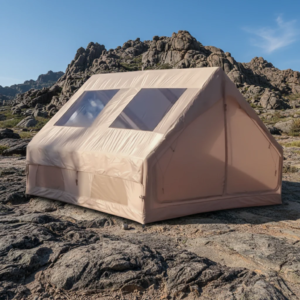
High Quality Four-Season Inflatable Tent for Camping Durable PVC Material All-Weather Resistance Quick Automatic Opening
Read more -
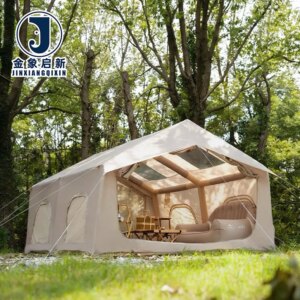
Inflatable Camping Tent Waterproof PVC Outdoor Air Tent Easy Setup Family Camping Shelter
Read more -
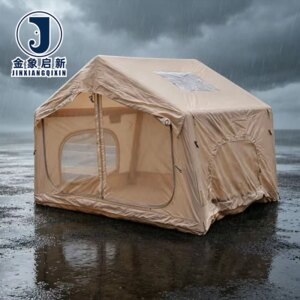
Inflatable Camping Tent Waterproof Outdoor Air Tent for Camping Inflatable Tent Shelter
Read more -
خيمة فاخرة قابلة للنفخ من PVC للتخييم الفاخر في الهواء الطلق مقاومة للماء مع تصميم سريع الفتح التلقائي قابل للطي لجميع الفصول ومضخة
Read more