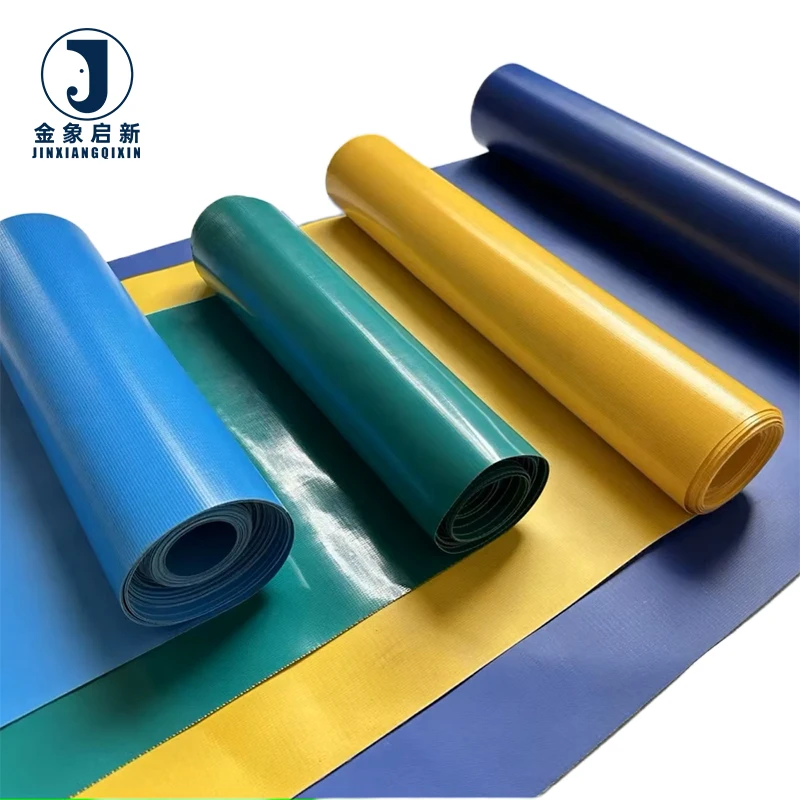
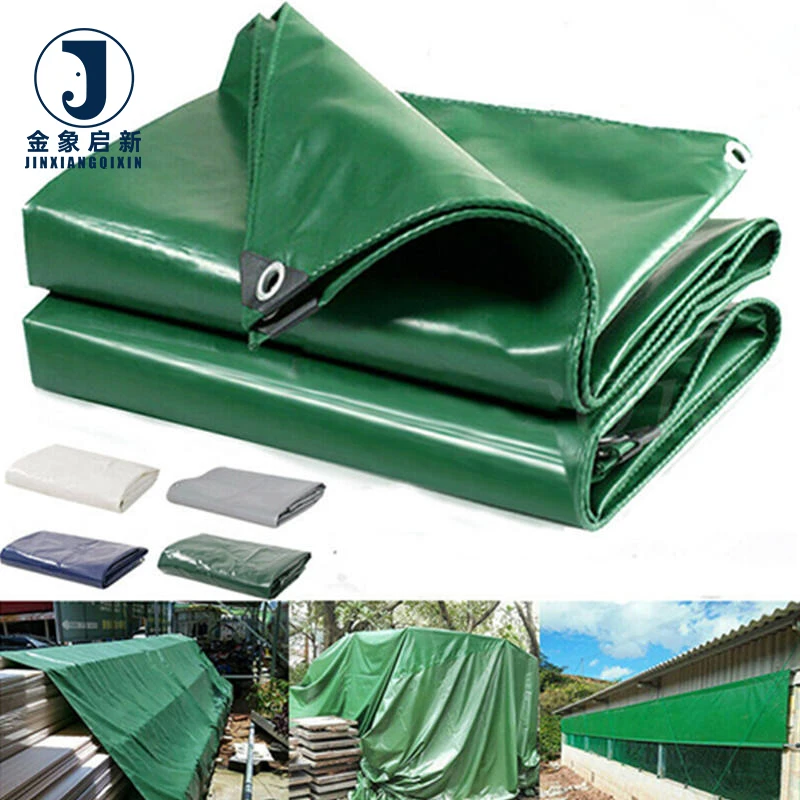
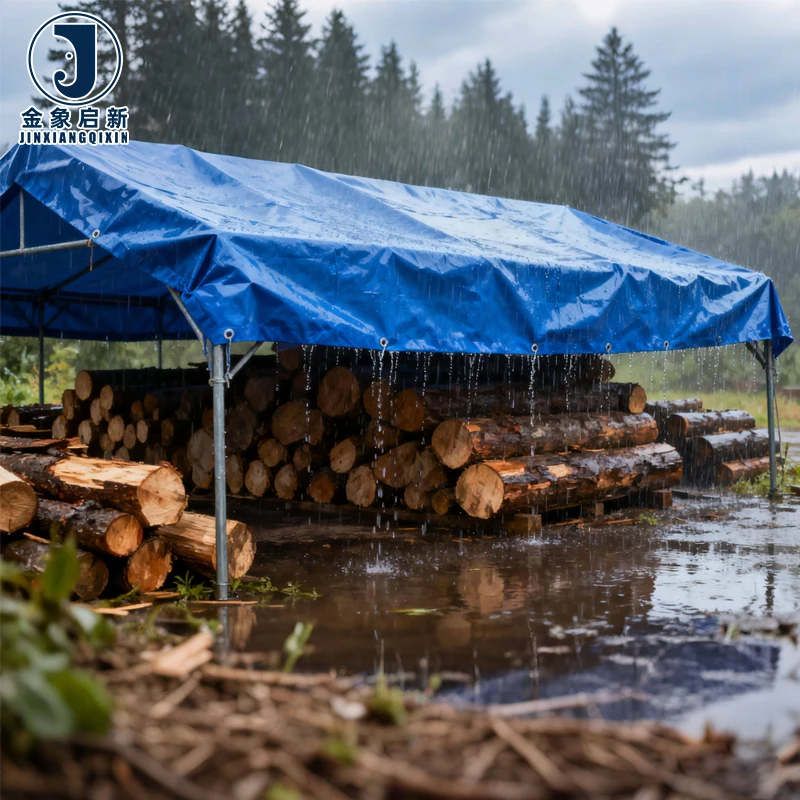
Waterproof Heavy Duty Coated Blackout Fish Pond Tarpaulin — PVC coated high-strength polyester mesh, 350–750gsm, 0.32–0.65mm thickness, hot-melt coating and laminated technology for lasting adhesion under constant submersion.
- Full GSM range matches pond depth and soil conditions; hot-melt coating ensures fabric-to-coat bond survives UV and water immersion
- Custom cut-to-size panels with heat-welded seams outlast the fabric at stress points; anti-UV, anti-mildew and cold crack treatments available with test documentation
Backed by 30 years of coated fabric process control, 100% pre-shipment inspection, and a 10-person R&D team handling custom sizing and sample development within days.
Description
Coated Fabric Process Control — 36 sets of professional coating and laminating equipment ensure every roll of PVC pond liner tarpaulin custom meets verified GSM, adhesion, and thickness standards before leaving the facility.
Technical Specifications
| Parameter | Value |
|---|---|
| Product Type | PVC Coated Tarpaulin / Pond Liner |
| Base Material | PVC + High-strength polyester mesh fabric |
| Coating Technology | Laminated technology & Hot-melt coating technology |
| Available Weight (GSM) | 350gsm / 420gsm / 500gsm / 550gsm / 600gsm / 750gsm |
| Available Thickness | 0.32mm / 0.35mm / 0.4mm / 0.45mm / 0.5mm / 0.65mm |
| Roll Width Options | 2m / 2.1m |
| Roll Length Options | 50m / 75m |
| Finish Product Size | Custom cut-to-size or inventory rolls |
| Available Colors | Blue / Red / Yellow / Light blue / Grey (custom colors available) |
| Key Features | Waterproof, anti-mildew, cold crack resistance, anti-static treatment available, UV treatment available (confirm grade required for your market), flame retardant treatment available (grade not stated — confirm requirement) |
| Printing Option | Custom printing available |
Application Suitability
| Application | Exposure & Requirement |
|---|---|
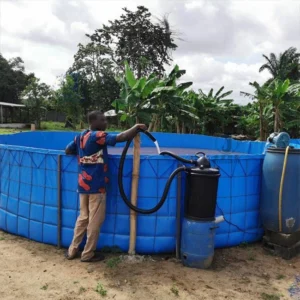
| Aquaculture fish and shrimp ponds | Permanent water submersion, soil chemistry contact, biological load, puncture risk from substrate |
| Agricultural water reservoirs and irrigation ponds | Continuous UV exposure, seasonal temperature cycling, mechanical stress from water volume |
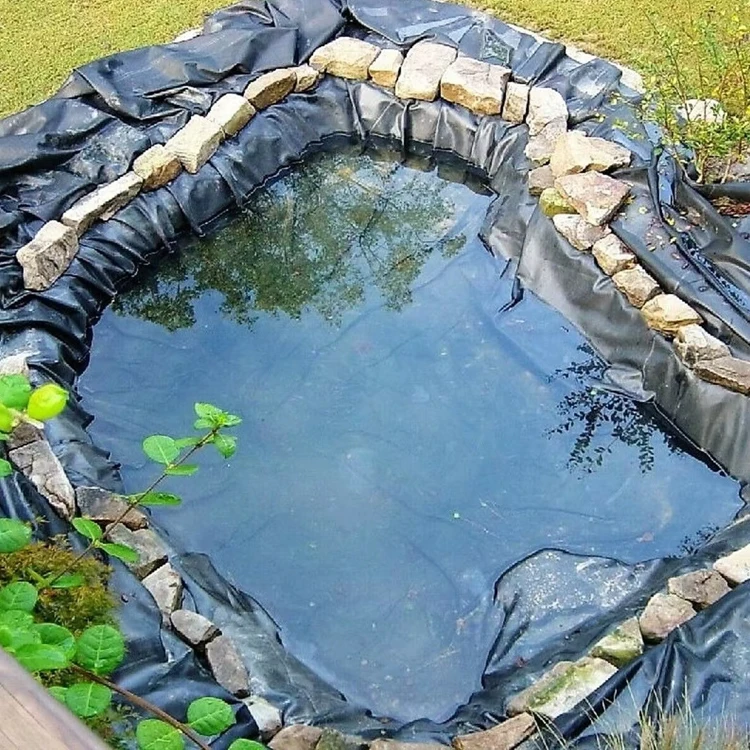
| Ornamental and landscape ponds | Visible surface finish requirements, custom irregular shapes, long-term water containment |
| Swimming pool liners and temporary water tanks | Heavy-duty waterproof barrier, chlorine or chemical exposure, structural load at depth |
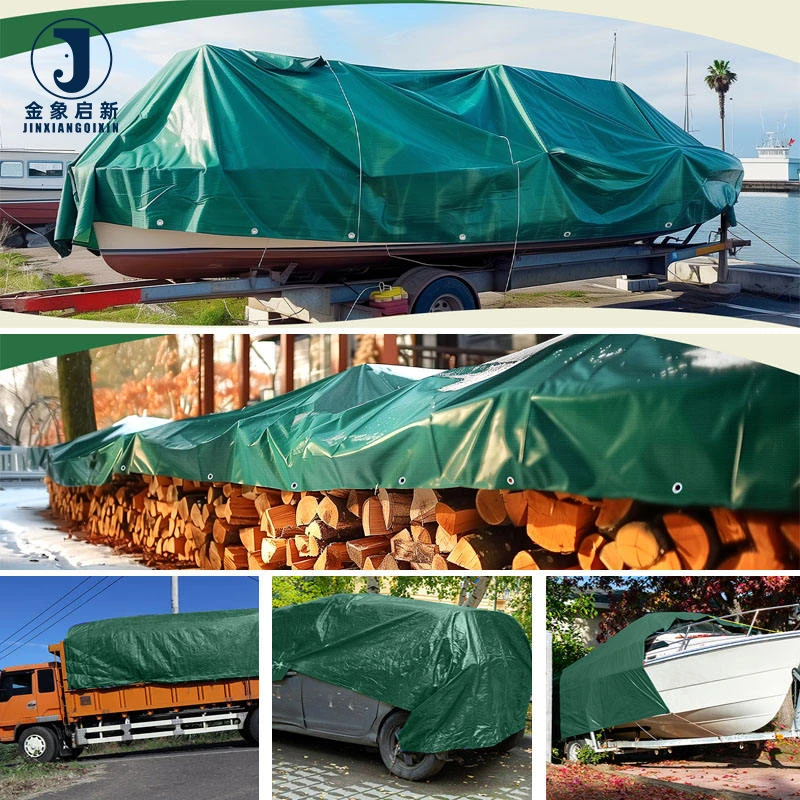
| Tent and inflatable structure covers | Roll stock by container load, batch color consistency across panels, welded seam integrity |
Why the GSM on Your Quotation Often Fails at the Pond Edge
A quoted GSM means nothing if the coating weight and base fabric denier are not verified roll by roll before dispatch.
Purchasing a waterproof fish pond tarpaulin manufacturer supply based on a single number invites disappointment. Material arrives lighter than agreed, seams split during the first fill cycle, and the liner degrades within a single season. The gap between what is stated on the invoice and what is measured on the receiving dock is where most pond containment failures originate. Buyers who skip the verification step absorb the full cost of liner replacement, water loss, and stock disruption [NEED_CITE: tensile and tear test methods for coated fabrics per ISO 1421].
Sizing the Liner to the Pond, Not the Other Way Around
Every pond presents a different combination of depth, soil profile, and mechanical exposure. A shallow nursery pond holding fry requires a different PVC pond liner tarpaulin custom specification than a three-meter-deep grow-out pond where hydrostatic pressure drives the liner into every substrate irregularity. The available GSM range from 350gsm through 750gsm, paired with thickness from 0.32mm to 0.65mm, allows the specification to be matched precisely to the containment challenge rather than forcing a single grade across every project.
Heat-Welded Seams That Outlast the Fabric at the Fold
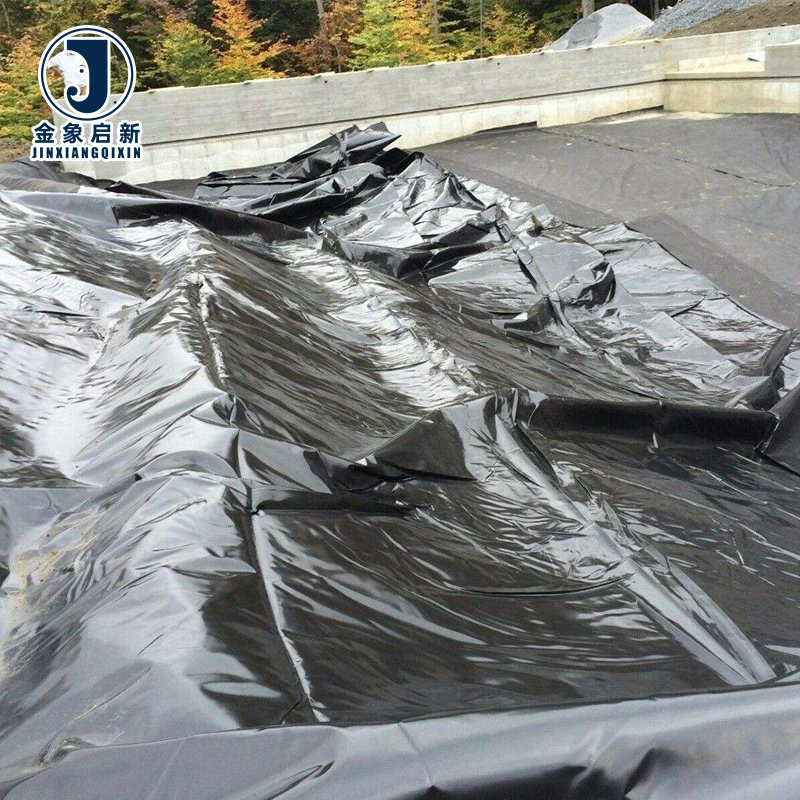
The most common failure point on any pond liner is not the field of the fabric but the welded seam where two panels join. Hot-melt coating and laminated technology ensures the PVC coating bonds fully into the polyester mesh, producing a homogeneous material that accepts heat welding without delamination. When seams are welded correctly, the join reaches the full tear strength of the base fabric, meaning the liner flexes and stretches as one piece rather than peeling apart at the overlap under water pressure [NEED_CITE: weld strength testing standards for coated technical textiles].
Reading the Specification Beyond the Weight Number
GSM alone describes mass per square meter but says nothing about how that mass is distributed between base fabric and coating. A 550gsm liner with a dense, high-tenacity polyester mesh and a thin coating will resist tearing far better than a 550gsm liner built on a loose weave buried under thick PVC. Laminated and hot-melt coating technology drives the PVC into the mesh interstices, improving peel strength and ensuring the coating does not separate under constant submersion. Thickness values from 0.32mm to 0.65mm give a second reference point: two liners at the same GSM can have different thicknesses depending on coating formulation and mesh density, and each combination behaves differently when folded, welded, and loaded with water. Anti-mildew treatment prevents biological attack on the coating surface, while cold crack resistance maintains flexibility in low-temperature climates where rigid PVC would fracture during winter drawdown.
The Real Cost of Skipping the Pre-Shipment Verification Step
A pond liner that arrives below the quoted GSM does not just underperform — it fails in ways that are expensive to remediate. Lightweight coating strips at the weld line during the first fill, leaving the operator to drain, patch, and refill the pond at significant cost. Batch color variation between rolls becomes visible once panels are installed side by side, forcing aesthetic compromises on ornamental projects or triggering rejection on commercial sites. UV treatment claimed without a supporting test report leaves the liner vulnerable to accelerated degradation, shortening the service interval and increasing total cost of ownership over successive pond cycles [NEED_CITE: accelerated weathering test standards for PVC coated fabrics].
What Consistent Process Control Delivers for Your Order
Deep process control over coating weight and adhesion, developed over nearly 30 years of focused coated fabric production, ensures every roll meets the specification sheet before it is packed. Three full production lines and 36 sets of professional equipment provide the bulk capacity to fulfil container-load orders with reliable on-time delivery. A 10-person R&D team handles material selection, custom sizing, pattern printing, and sample development, producing samples within days so you can verify the material in your own pond conditions before committing to a bulk order. Dedicated QA and QC at every production stage, with 100% inspection before shipment, closes the gap between quotation and delivery. ISO and CE certified production gives a documented quality framework behind every roll shipped.
Documentation & Verification
- Material specification sheet stating exact GSM, base fabric denier, and coating weight for the grade ordered
- Pre-shipment inspection record with verified coating weight measured against the quoted specification
- UV treatment test report where anti-UV grade is specified for the destination market
- Flame retardant test documentation confirming the grade required by local aquaculture or construction regulations
- Roll packing list with individual roll weights and dimensions for receiving verification
- Certificate of origin and customs documentation supporting international shipment clearance
Fabrication, Handling & Storage
- Heat-weld seams at temperatures matched to the selected GSM grade to prevent coating burn-through on lighter weights
- Reinforce hem folds with additional PVC strip on 600gsm and 750gsm grades where tie-down loads concentrate
- Store rolls horizontally on pallets in shade to prevent flat-spot deformation on the 2m and 2.1m widths
- Allow cold-stored rolls to reach ambient temperature before unrolling to protect the cold crack resistant coating
- Use PVC-compatible cleaners only to preserve the anti-mildew treatment on the coating surface
Preparing Your Specification for Quotation
Share the exact pond dimensions, depth profile, and substrate conditions so the correct GSM and thickness grade can be recommended. Specify whether you need roll stock or finished cut-to-size panels with welded seams and reinforced hems. Confirm any UV treatment grade, flame retardant classification, or color matching requirement your market or site regulations demand, and request a sample for on-site evaluation before placing the bulk order.
Frequently Asked Questions
Q: How is the GSM of the pond liner verified before shipment?
A: Every roll undergoes 100% pre-shipment inspection where actual coating weight and thickness are measured and recorded against the specification sheet. The inspection record accompanies your shipment, allowing you to cross-check the GSM on your receiving dock against the documented values before installation begins.
Q: Which GSM and thickness should I choose for my pond depth?
A: Shallow nursery ponds typically suit lighter grades such as 350gsm at 0.32mm, while deep grow-out ponds holding high water volumes require heavier grades like 600gsm or 750gsm at 0.5mm to 0.65mm. Share your pond dimensions and depth profile so the appropriate grade can be recommended based on hydrostatic load and substrate conditions.
Q: How are welded seams reinforced to prevent liner failure?
A: Hot-melt coating and laminated technology produces a homogeneous material that accepts heat welding without delamination. Seams are welded to achieve full tear strength of the base fabric, and high-stress areas at corners and outlets can be reinforced with additional PVC strips matched to the liner GSM.
Q: Can I order pond liners cut to irregular shapes?
A: Custom cut-to-size panels are fabricated to your exact pond dimensions, including irregular shapes, with heat-welded seams joining panels where the roll width is exceeded. Provide detailed dimensions and any hem or outlet requirements for a fabrication drawing before production begins.
Q: What documentation supports the UV treatment claim?
A: Where a specific anti-UV grade is requested, a test report documenting the treatment basis is provided with the shipment. Confirm the UV standard required by your market or project specification at the inquiry stage so the correct treatment grade and supporting documentation are included.
Related products
-
PVC Tarpaulin Roll for Fish Pond – Custom Made
Read more -
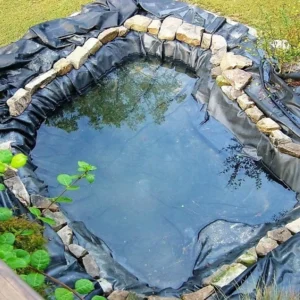
Custom Made PVC Fish Pond Liner for Aquaculture – Full Range
Read more -
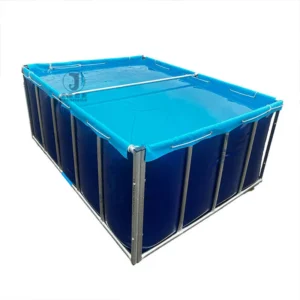
Coated PVC Laminated Tarpaulin Above Ground Swimming Pool Metal Frame High Tensile Foldable Tarp
¥1.00 Select options This product has multiple variants. The options may be chosen on the product page -
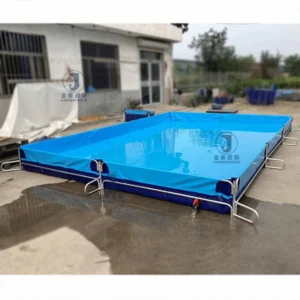
Anti-leaking Durable PVC Tarpaulin Fish Pond Liner Plastic Fish Ponds Foldable Aquaculture Pond Tanks for Fish
¥153.00 Add to cart