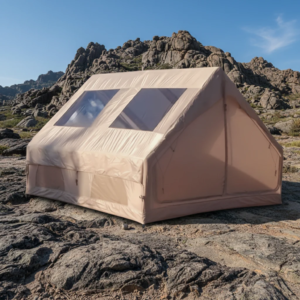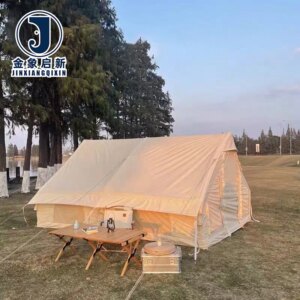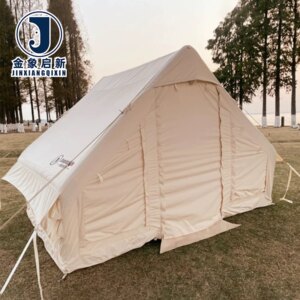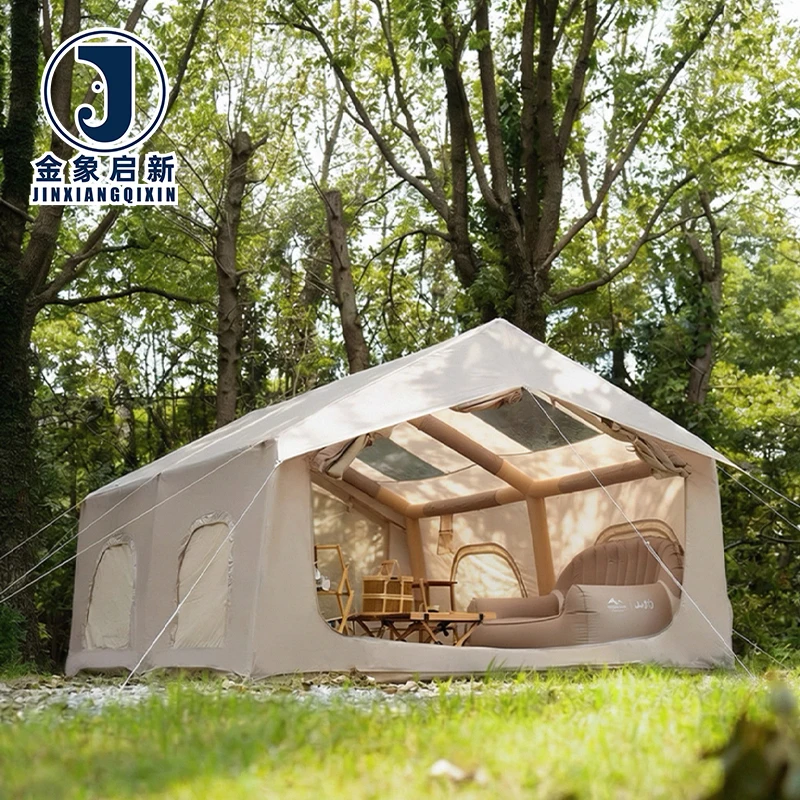
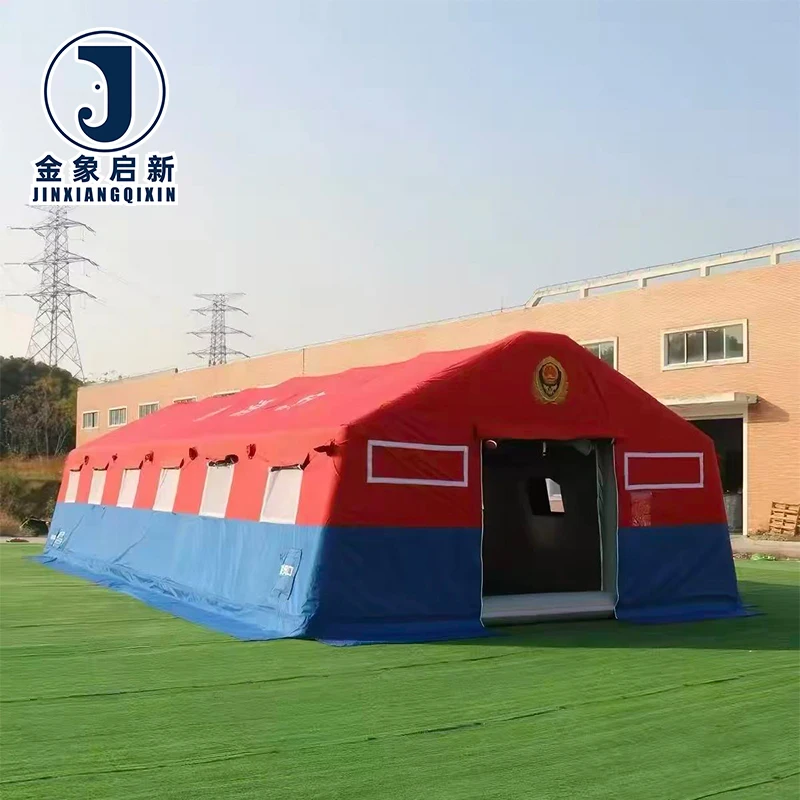
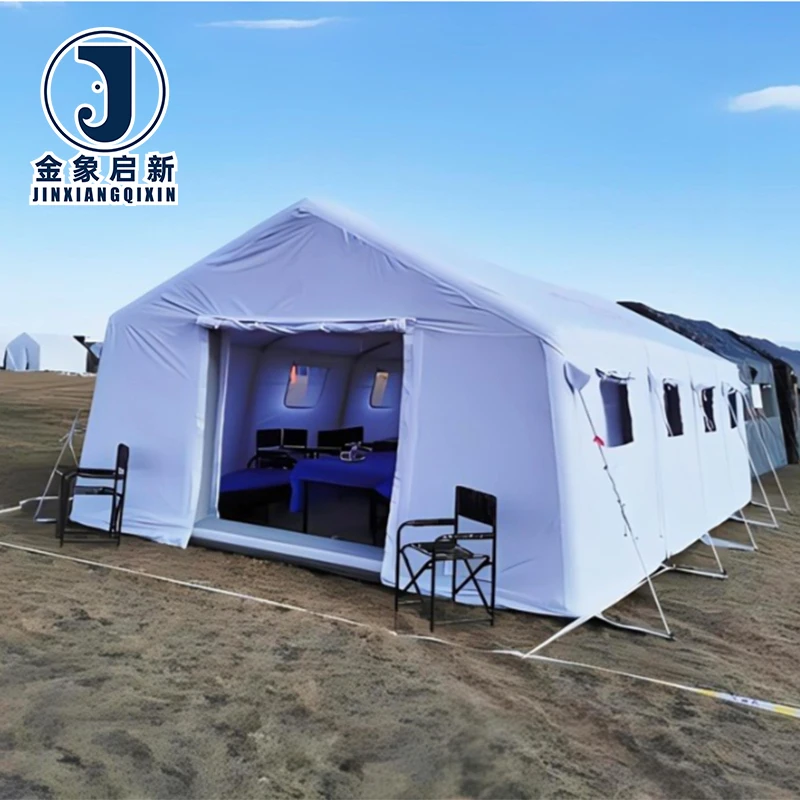
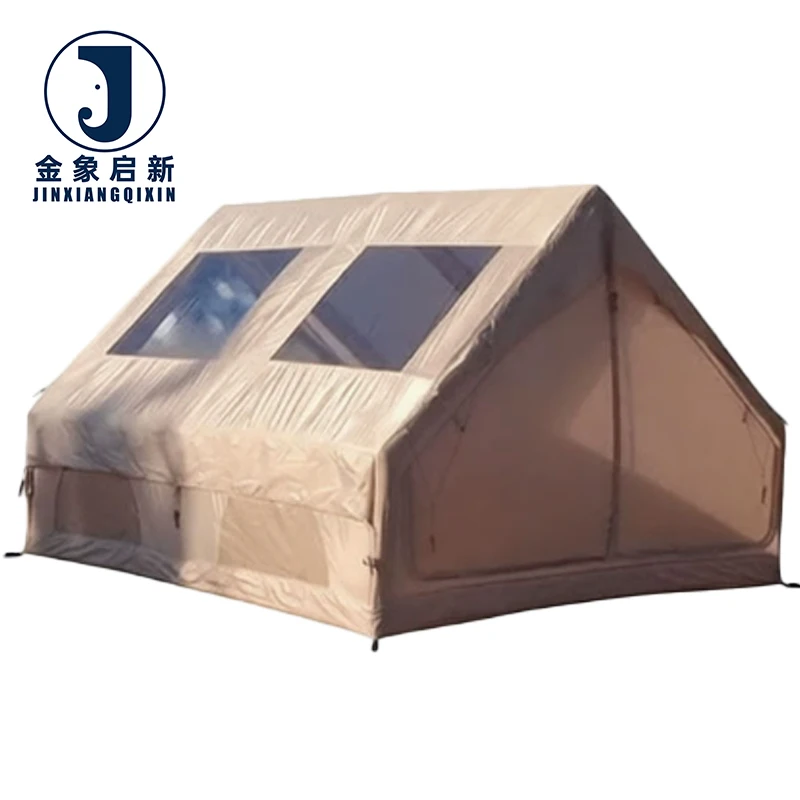
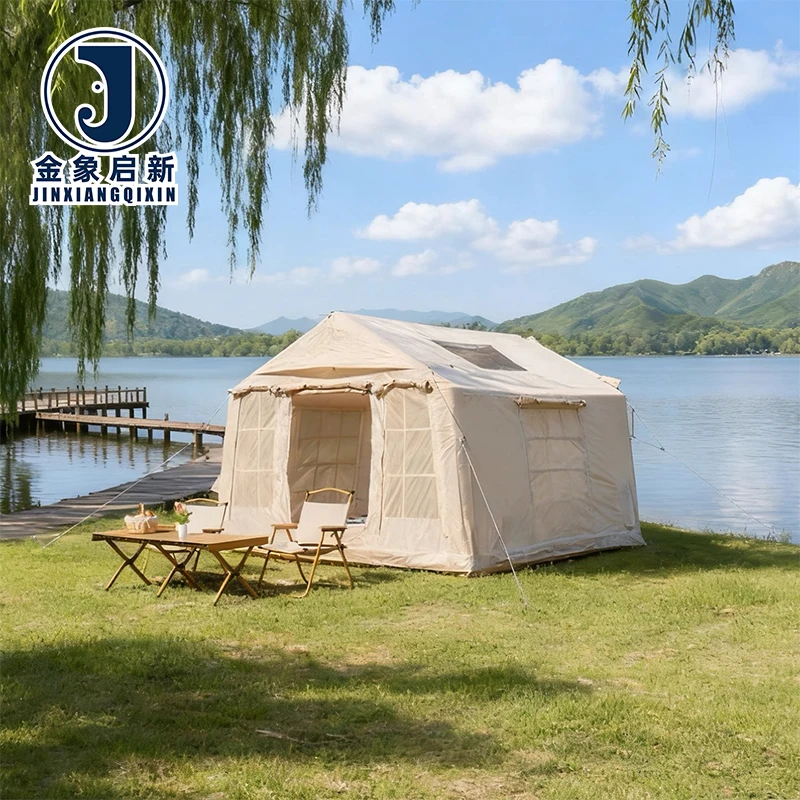
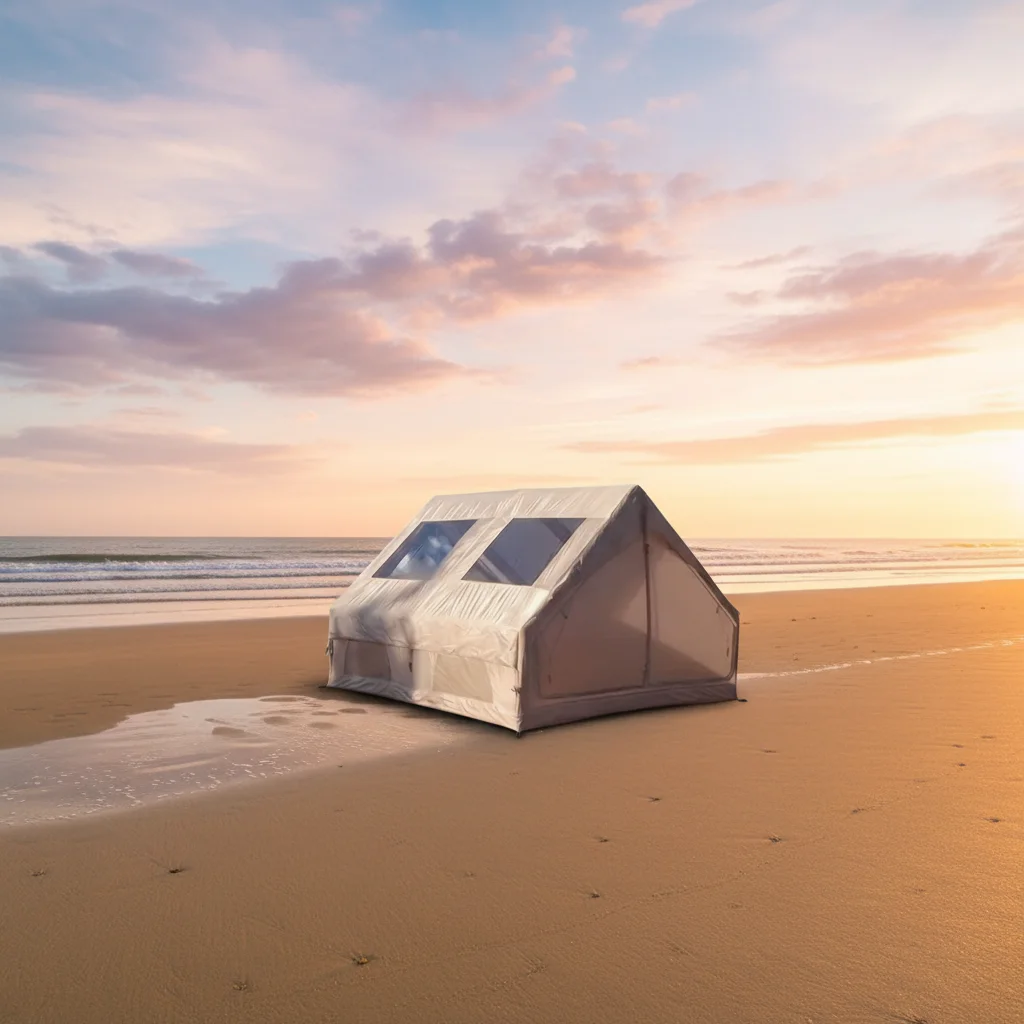
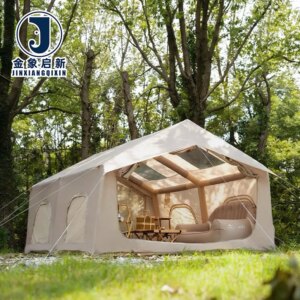
Inflatable Tent, PVC Tarpaulin, 2-3 Person, Four-Season Waterproof — UV-resistant and tear-resistant fabric for commercial outdoor gear brands and industrial site operators requiring verified performance across variable weather conditions.
- Material selection, custom sizing, and pattern printing supported from design through delivery
- Full material specification sheets accompany each batch
Three decades of coated fabric expertise ensure strict process control over coating weight and adhesion, with dedicated QA inspection at every production stage before shipment.
Description
Coated Fabric Process Control — Three full production lines with 36 sets of professional equipment ensure consistent PVC coating weight and adhesion across every inflatable tent fabric roll we produce.
Technical Specifications
| Parameter | Value |
|---|---|
| Product Type | Inflatable Tent |
| Core Material | PVC Tarpaulin |
| Capacity | 2-3 Person |
| Design | Four-season, Single Layer Construction |
| Key Features | Waterproof, UV-resistant, Tear-resistant |
| Customization | OEM & ODM — Material selection, Product design, Pattern printing |
| Standards | ISO9001, ISO14001, ISO45001, CE |
Application Suitability
| Application | Exposure & Requirement |
|---|---|
| Commercial outdoor gear manufacturing | Branded product lines requiring batch-consistent colour and verified material specs |
| Construction site temporary shelters | Wind loading, rain, dust ingress, repeated inflation and deflation cycles |
| Outdoor event facilities | Continuous UV exposure, crowd proximity, rapid setup and teardown demands |
| Industrial camping operations | Four-season temperature variation, abrasion from ground contact, long-term weathering |
Why Welded Seams Fail Before the Fabric Does on Inflatable Tents
Seam failure traces back to heat-bonding parameters that do not match the coating weight and base fabric density of the batch being processed.
When an Inflatable Tent aftermarket supplier ships fabric with a slightly different PVC formulation from one roll to the next, the welding temperature that worked on the sample no longer produces a full bond on production stock. The seam parts under inflation pressure while the surrounding fabric remains intact. I have seen heavy-grade coated rolls come back from the field with every failure concentrated at the heat-bonded joint [NEED_CITE: tensile and tear test methods for coated fabrics per ISO 1421]. The buyer then faces warranty claims that a simple in-process weld peel test could have prevented.
How Coating Weight and Base Fabric Interact Under Inflation Load
An inflatable tent structure places continuous tensile stress on every welded joint once the air beams are pressurised. The PVC tarpaulin base fabric used here is engineered to distribute that load across the weave rather than concentrating it at the seam line. When you source from an Inflatable Tent aftermarket supplier, the relationship between coating thickness and base fabric denier determines whether the weld penetrates fully into the coating layer without burning through to the yarn [NEED_CITE: DIN 4102 fire classification for building materials].
Four-Season Demands on Single Layer Inflatable Construction
A single-layer design removes the tolerance margin that a double-wall structure provides. Every square metre of PVC tarpaulin must handle waterproofing, UV resistance, and structural rigidity simultaneously. The four-season rating means the fabric encounters freezing stiffness in winter and thermal softening in summer, each condition altering how the welded seams behave under inflation pressure. Production QA at each stage catches coating weight drift before it reaches the welding station.
Reading the Specification Sheet Beyond the GSM Number
GSM alone tells you how much the fabric weighs, not how that weight is distributed between base yarn and PVC coating. A heavier base fabric with a thinner coating may weld more easily but sacrifice waterproof longevity. Conversely, a thick coating over a lighter weave delivers surface durability while the underlying yarn carries less tensile load [NEED_CITE: relationship between GSM composition and tensile performance in coated fabrics]. Tear resistance depends on both the denier of the yarn and the density of the weave pattern, which is why two fabrics at the same GSM can perform very differently when a puncture starts to propagate. Surface finish — glossy or matte — affects how dirt adheres and whether printed branding stays legible after repeated field use.
The Hidden Cost of Ignoring Batch-to-Batch Coating Consistency
When colour varies between rolls in the same order, the mismatch becomes visible the moment two panels are welded side by side on the production floor. The entire batch may need re-sorting or rejection, and the Inflatable Tent aftermarket supplier bears the delay cost. Coating weight inconsistency is less obvious but more damaging: a roll that arrives lighter than quoted produces welds that fail under pressure, while a heavier roll requires recalibrated heat settings that slow throughput. Either scenario erodes the buyer’s margin and delivery schedule [NEED_CITE: pre-shipment inspection standards for coated fabric rolls].
Why Commercial Buyers Source Inflatable Tent Fabric Here
Our 10-person R&D team handles material selection, pattern printing, and custom sizing directly — no intermediary translates your specification before it reaches the coating line. Three full production lines and 36 sets of professional equipment support bulk volume with on-time delivery across multiple simultaneous orders. Dedicated QA/QC inspection at every production stage means coating weight, colour match, and weld compatibility are verified before any roll leaves the facility. Samples for custom colour or printed patterns are developed within days, letting you validate material behaviour on your own welding equipment before committing to mass production. Nearly 30 years of focused coated fabric production gives us process control over coating adhesion that directly affects inflatable tent seam integrity.
Documentation & Verification
- Material specification sheet confirming GSM, base fabric denier, and coating weight for every inflatable tent fabric roll
- UV resistance test report supplied when UV-treated grades are specified
- Pre-shipment inspection record covering coating weight and colour consistency across the order
- Roll packing list detailing batch numbers for traceability back to the coating line
- ISO and CE certificates included with every international shipment
Fabrication, Handling & Storage
- Calibrate heat-bonding temperature to the specific PVC coating weight of each roll before welding inflatable tent seams
- Store rolls upright on pallets to prevent permanent creasing in the PVC tarpaulin coating layer
- Allow cold-stored rolls to reach ambient temperature before unrolling to avoid coating micro-cracking
- Use PVC-compatible cleaners only — solvent-based products degrade the coating surface finish
- Test weld peel strength on a sample cut from each new roll before running production panels
- Plan cutting layout to minimise transverse welds across high-stress inflation beam sections
What We Need to Quote Your Inflatable Tent Fabric Accurately
Share your target GSM range, preferred surface finish, and whether you require UV-resistant or flame-retardant treatment so we can match the correct PVC formulation. Tell us the annual volume and roll width you run on your welding line so we can align production scheduling. If you need custom colour or printed branding, a Pantone reference and artwork file lets us develop a sample within days for your evaluation.
Frequently Asked Questions
Q: What GSM and coating weight options are available for inflatable tent fabric?
A: We supply PVC tarpaulin across lightweight to heavy-duty GSM grades. The coating weight and base fabric denier are specified together on the material sheet so you can see exactly how the total GSM is distributed. Confirm the inflation pressure and structural load your tent design requires, and our R&D team will recommend the appropriate grade.
Q: Can you supply test reports for UV resistance and waterproof performance?
A: Yes. When UV-resistant treatment is specified, we provide a test report documenting the performance level. Waterproof integrity is inherent in the PVC coated construction and verified during pre-shipment inspection. Request the specific test documentation your market requires at the inquiry stage so it accompanies your shipment.
Q: What is the lead time and minimum order for custom colour or printed patterns?
A: Custom colour and pattern printing orders carry typical multi-week lead times depending on volume and complexity. Our 10-person R&D team develops samples within days for your approval before mass production begins. Share your Pantone reference and quantity requirement, and we will confirm the schedule.
Q: How do you ensure colour consistency across multiple rolls in the same order?
A: Every roll undergoes dedicated QA/QC inspection before shipment, including colour comparison against the approved reference. Batch numbers on the packing list allow full traceability to the coating line that produced each roll. Any deviation is caught at the facility, not on your production floor.
Related products
-
خيمة تخييم قابلة للنفخ من مادة PVC، مقاومة للماء والأشعة فوق البنفسجية، لجميع الفصول، فتح تلقائي سريع، قابلة للتخصيص، تتسع لـ 2-3 أشخاص
Read more -
Outdoor Waterproof Inflatable Tent for Camping Portable Air Camping Tent Shelter
Read more -
خيمة قابلة للنفخ لأربعة مواسم طبقة واحدة >3000 مم مقاومة للماء ومقاومة للرياح فتح تلقائي سريع قماش PVC صديق للبيئة
Read more -
High Quality Four-Season Inflatable Tent for Camping Durable PVC Waterproof All-Weather Resistance Quick Automatic Opening
Read more