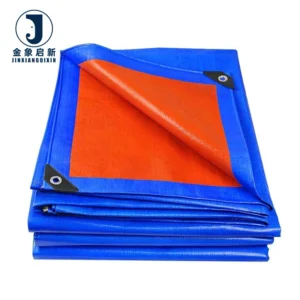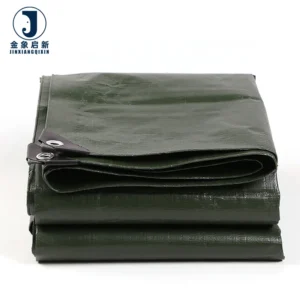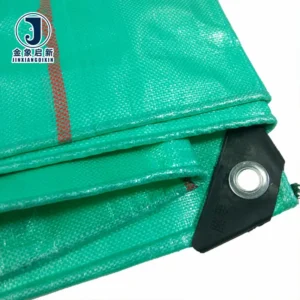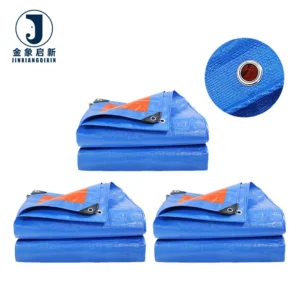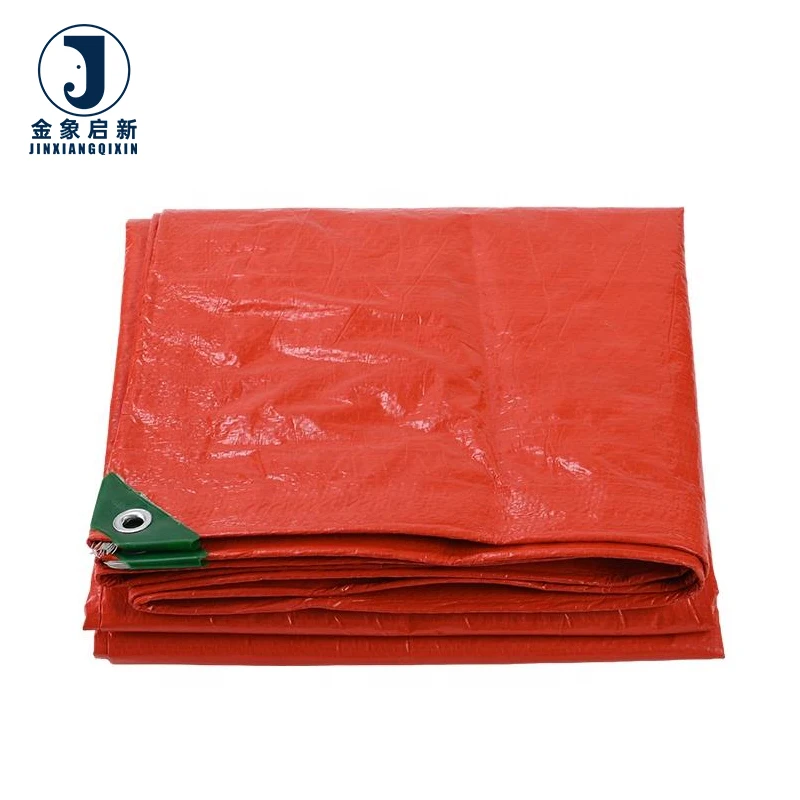
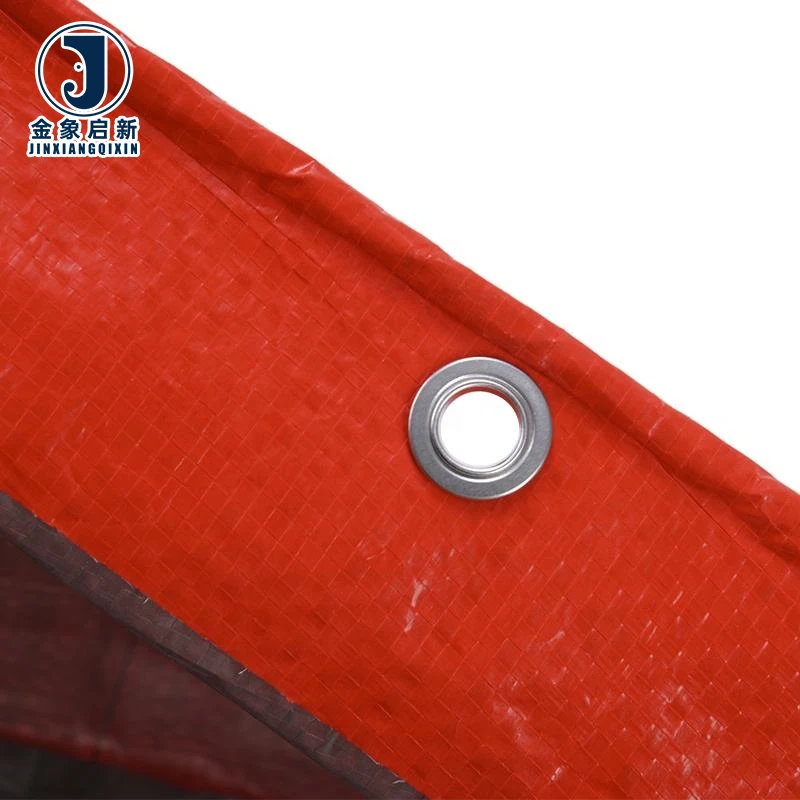
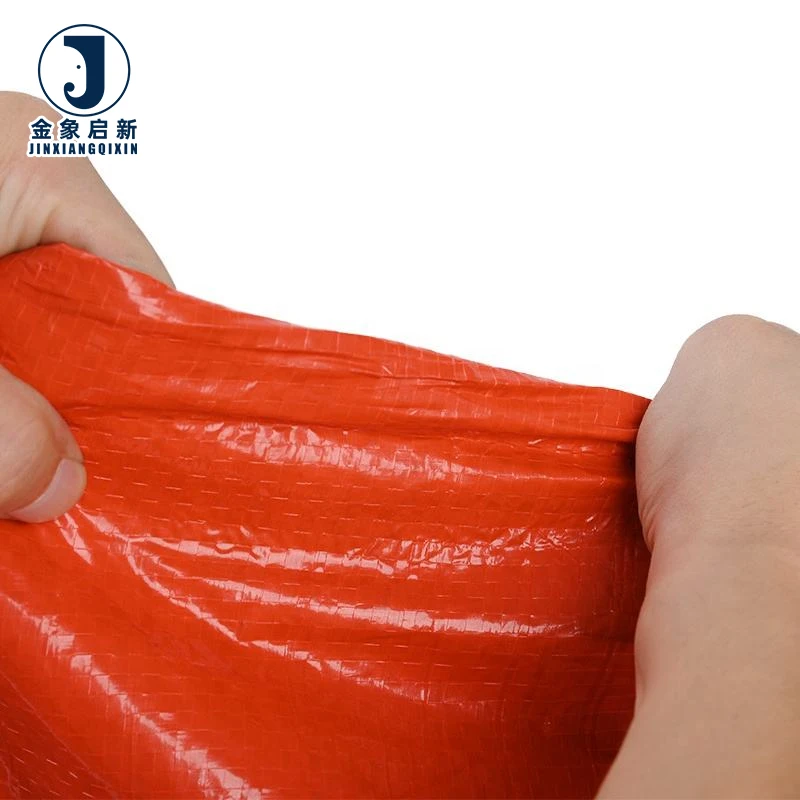
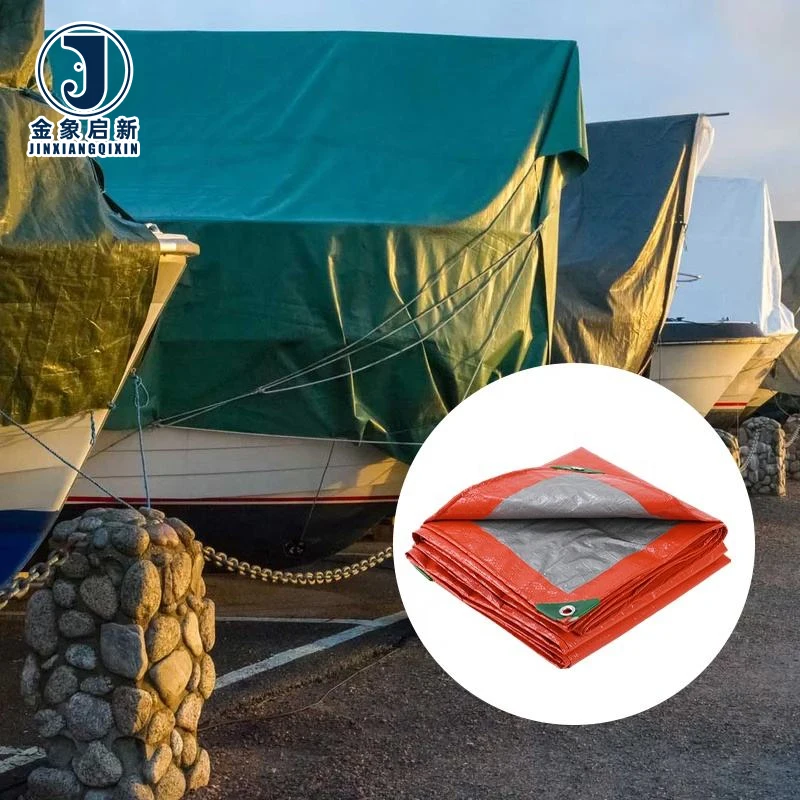
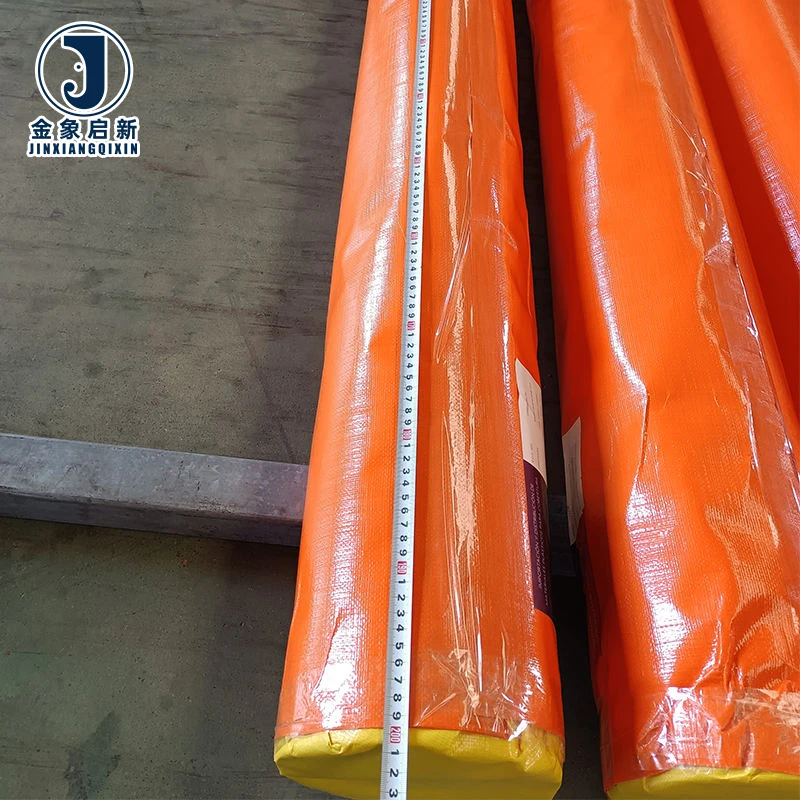
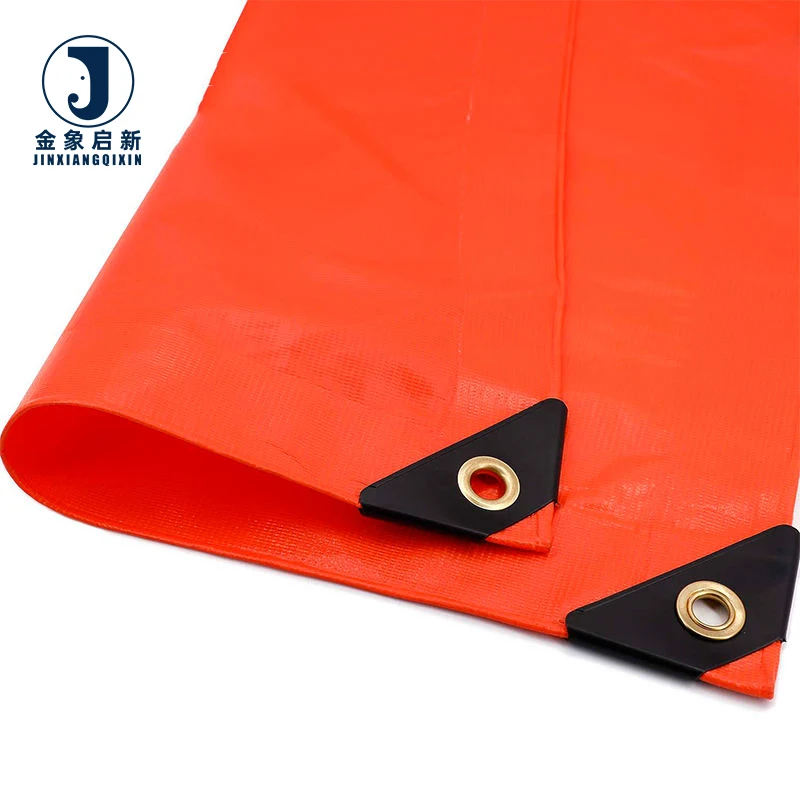
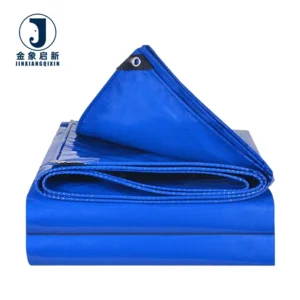
PE Tarpaulin for Truck & Trailer Cover, 40g~500g/m², Custom Size — double waterproof surfaces with reinforced corners and heat-sealed seams to prevent water ingress at panel joints. Three weight grades from lightweight 80-110 g/m² agricultural sheets to heavy-duty 160-240 g/m² transport covers let you match GSM and weave density precisely to load conditions and exposure, rather than over-specifying. – 36 sets of professional equipment and dedicated QA at every production stage ensure roll-to-roll consistency across your full order.
Description
Proven Process Control — Nearly three decades of coating experience ensures every PE tarpaulin roll meets exact GSM and weave density targets before it leaves the line.
Technical Specifications
| Parameter | Value |
|---|---|
| Product Type | PE Tarpaulin |
| Material | Polyethylene |
| Weight Range | 40 g/m² to 500 g/m² |
| Lightweight Grade Weight | 80-110 g/m² |
| Medium Grade Weight | 120-150 g/m² |
| Heavy-duty Grade Weight | 160-240 g/m² |
| Lightweight Grade Thickness | 0.18-0.22 mm |
| Medium Grade Thickness | 0.22-0.28 mm |
| Heavy-duty Grade Thickness | 0.30-0.35 mm |
| Weave Density (Item Thickness) | 5×5 to 20×20 |
| Lightweight Grade Knitting Density | 8×8 |
| Medium Grade Knitting Density | 10×10 |
| Heavy-duty Grade Knitting Density | 12×12 |
| Lightweight Grade Tensile Strength | Meridian 300-500 / Latitude 250-450 N/5cm |
| Medium Grade Tensile Strength | Meridian 500-800 / Latitude 400-700 N/5cm |
| Heavy-duty Grade Tensile Strength | Meridian 900-1200 / Latitude 700-1000 N/5cm |
| Water Resistance | Double waterproof surfaces, reinforced corner |
| Size | Custom size |
| Color | Custom color |
| Standards | ISO 14001, ISO 45001, CE |
| UV / Flame Retardant | Available in UV and flame retardant grades — confirm the specific grade or test standard required for your market |
Application Suitability
| Application | Exposure & Requirement |
|---|---|
| Truck & Trailer Load Cover | Road debris impact, constant wind flap, tie-down stress at corners and edges, UV exposure during transit |
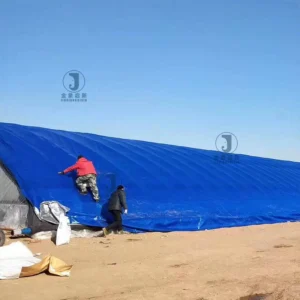
| Agricultural & Aquaculture Covering | Prolonged sun exposure, moisture contact, lightweight handling requirement for seasonal deployment |
| Warehouse & Construction Coverage | Abrasion from stacking and dragging, puncture risk from sharp material edges, weather protection |
| Equipment & Pallet Wrap | Dust ingress prevention, short-term weather exposure, repeated handling and folding |
Why a Generic PE Tarpaulin Fails on a Custom Trailer
A cover must be cut to the exact vehicle model, not a generic size range.
When sourcing a PE Tarpaulin aftermarket supplier, buyers often provide a standard length and width, only to find the finished cover cannot handle the specific geometry of a high-sided trailer or an extended wheelbase. I once supplied a logistics fleet with covers cut to what we thought were standard dimensions. The trailers turned out to be a high-side board variant; the corners could not be tensioned properly, the material bunched at the stress points, and the entire batch was returned. Since then, the first question I ask is the exact trailer model and side board height before any cutting begins [NEED_CITE: fleet tarpaulin fitment and dimensional verification].
Matching Weave Density to the Load Profile
Selecting the right PE Tarpaulin aftermarket supplier means looking beyond the surface and understanding how the internal knit structure supports the load. A lightweight 8×8 knit density handles static agricultural covers where the fabric simply drapes over a stockpile or pond. In contrast, a heavy-duty 12×12 knit density is necessary for transport covers where the material must resist the dynamic forces of highway wind and tie-down tension without distorting the weave.
Custom Dimensions Versus Stock Roll Cutting
The ability to produce custom sizes is what separates a true PE Tarpaulin aftermarket supplier from a standard roll distributor. Transport fleets operate diverse vehicle models, and a cover that fits a standard 13.6-metre curtain-sider will not fit a low-loader or a refrigerated unit with different roof profiles. Custom cutting ensures the fabric reaches the required anchor points without excessive overlap that adds weight or insufficient coverage that leaves the load exposed [NEED_CITE: dimensional tolerance standards for transport covers].
Decoding the Relationship Between GSM, Weave, and Tensile Strength
The weight of a PE tarpaulin, measured in GSM, is often used as a shortcut for quality, but it only tells part of the story. A 160 g/m² fabric with a 12×12 knit density will have a substantially different tensile profile than a 160 g/m² fabric with a looser 8×8 weave that achieves its weight through thicker coating alone. The knit density determines how the load is distributed across the warp and weft yarns. A tighter weave restricts tear propagation because the load transfers to adjacent yarns more efficiently, while a looser weave allows a puncture to spread rapidly. The double waterproof surfaces add environmental protection, but the mechanical strength originates from the base fabric construction and how the polyethylene coating penetrates and locks the weave structure together.
The Hidden Cost of Specifying the Wrong Weight Grade
Choosing a weight grade that is too light for the application does not just mean the cover wears out faster; it changes the failure mode entirely. A lightweight grade used on a transport trailer will not simply develop slow abrasion marks — it will tear at the reinforced corners where the tie-down straps concentrate force, because the base fabric lacks the tensile capacity to distribute that point load. Conversely, specifying a heavy-duty grade for a static warehouse cover adds unnecessary material cost and makes the cover difficult for warehouse staff to handle and fold daily. The mismatch between specification and application drives replacement cycles and operational frustration [NEED_CITE: tarpaulin failure analysis by application type].
Why Source This PE Tarpaulin Here
Three full production lines with 36 sets of professional equipment support consistent output across multiple weight grades, from lightweight 80 g/m² agricultural sheets to heavy-duty 240 g/m² transport covers. A dedicated 10-person R&D team handles material selection and custom sizing, developing samples within days rather than weeks so that fleet operators can verify fitment before committing to a production run. Every production stage carries dedicated QA/QC, with 100% inspection before shipment to confirm that the GSM on the roll matches the GSM on the quotation. The coating process is controlled in-house, which means the adhesion between the polyethylene coating and the base fabric is monitored at the point of manufacture rather than left to a third-party converter [NEED_CITE: in-house coating adhesion test methods for PE fabrics].
Documentation & Verification
- Material specification sheet stating the exact GSM, knit density, and polyethylene coating weight for each roll
- Test reports for UV stability or flame retardancy where specific grades have been requested and confirmed
- Pre-shipment inspection record documenting measured weight and dimensional accuracy per roll
- ISO 14001 and ISO 45001 certificates alongside CE marking documentation
- Roll packing list with individual roll weights and dimensions for customs and inventory reconciliation
Fabrication, Handling & Storage
- Heat-sealed seams on heavy-duty 160-240 g/m² grades require controlled temperature to maintain coating adhesion at panel joints.
- Reinforced corners must align with tie-down hardware to distribute strap load across the 12×12 knit structure.
- Store rolls horizontally on pallets to prevent permanent creasing in the 0.30-0.35 mm heavy-duty grades.
- Lightweight 80-110 g/m² sheets should be folded along existing crease lines to avoid cracking the polyethylene coating.
- Clean surfaces with mild detergent; avoid solvents that degrade the double waterproof coating layer.
- Allow custom-size covers to relax flat before first installation to eliminate shipping fold tension.
What to Include in Your Enquiry
To receive an accurate specification and lead time, share the intended application — whether it is a truck and trailer cover, a warehouse partition, or an agricultural sheet — along with the environmental conditions it will face. Provide exact dimensions or the vehicle model numbers if the covers are for a transport fleet. Specify the weight grade preference or the load conditions so that the correct knit density and GSM can be recommended. If your market requires UV stabilisation or a specific fire classification, state the standard your end user or local regulation demands.
Frequently Asked Questions
Q: How do I choose the right weight grade for my application?
A: Lightweight grades from 80-110 g/m² suit static covers for agriculture or temporary warehouse use. Medium grades from 120-150 g/m² handle general equipment protection. Heavy-duty grades from 160-240 g/m² are necessary for transport covers exposed to wind load and tie-down stress. Share your specific application so the correct knit density and GSM can be matched to the mechanical demands.
Q: Can the tarpaulin be produced in a custom size to fit my specific trailer model?
A: Yes. Custom sizes are produced based on exact vehicle dimensions or trailer model numbers rather than generic stock sizes. This ensures the cover reaches all anchor points and accommodates features such as high side boards or roof-mounted equipment. Provide the model details and we will develop a sample for fitment confirmation before bulk production.
Q: What treatments are available for UV protection or flame retardancy?
A: UV stabilisation and flame retardant treatments are available in various grades. The specific grade required depends on your local regulations and the exposure conditions of the end application. Confirm the standard or classification your market demands — such as a specific fire rating — so that the correct additive package is selected and a matching test report can be provided.
Q: How do you ensure color consistency across multiple rolls in one order?
A: Color consistency is controlled through in-process QA at the coating stage, with batch-matched pigment dosing across all rolls in a single order. A 100% pre-shipment inspection checks for shade variation between rolls. If your installation requires panels to sit side by side with no visible colour difference, state this requirement at the enquiry stage so that tighter colour tolerances are applied.
Q: What documentation is provided regarding material specifications and testing?
A: Each shipment includes a material specification sheet confirming GSM and knit density, a pre-shipment inspection record, a roll packing list, and certificates for ISO 14001, ISO 45001, and CE. Where UV or flame retardant grades have been specified, the corresponding test reports are included to verify the treatment level matches the agreed standard.
Related products
-
PE Coated Blackout Tarpaulin Poly Tarp with UV Protection Standard Size Fabric Sheet for Agriculture & Industrial Use
¥0.35 Select options This product has multiple variants. The options may be chosen on the product page -
JX Tear-Resistant PE Coated Polyethylene Eco-Friendly Tarpaulin Waterproof Blackout Organic with Eyelets
¥1.31 Select options This product has multiple variants. The options may be chosen on the product page -
Hot Selling Heavy Duty PVC Coated Tarpaulin Covers Waterproof Plastic for Truck Tent Outdoor
¥3.10 Select options This product has multiple variants. The options may be chosen on the product page -
Wholesale Organic Breathable PVC Waterproof Oilcloth Blackout Fabric Sun Protection Tarpaulin Outdoor Awning Industrial Tent
¥0.89 Select options This product has multiple variants. The options may be chosen on the product page