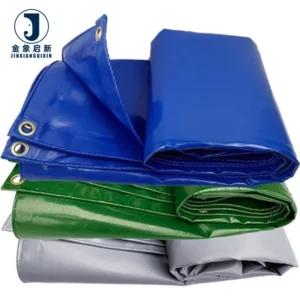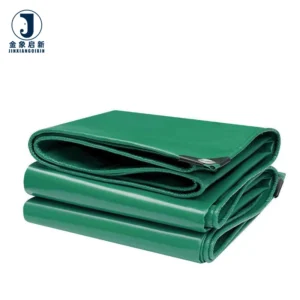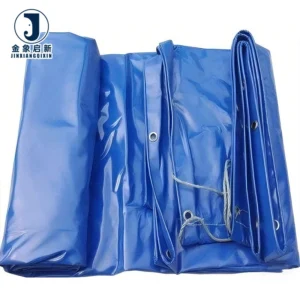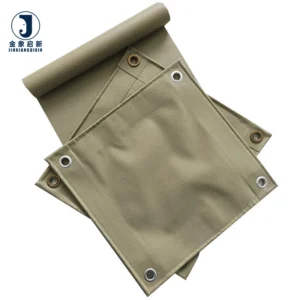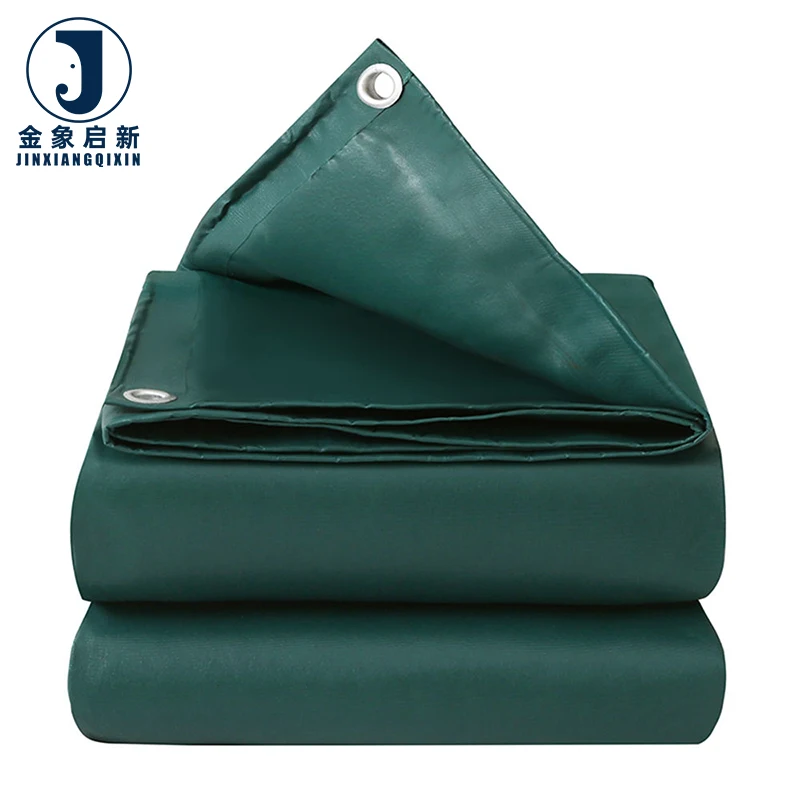
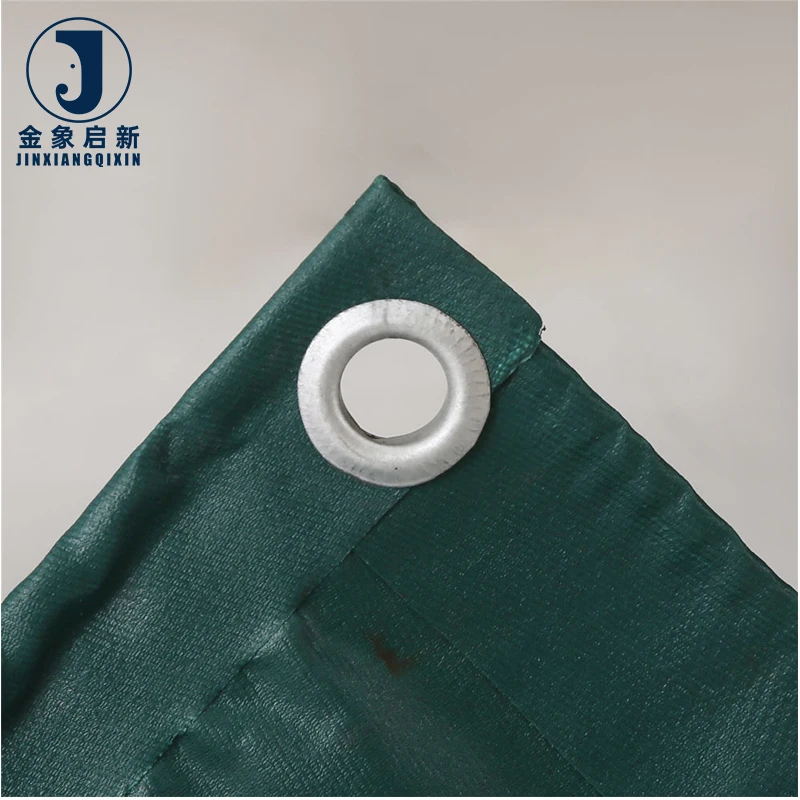

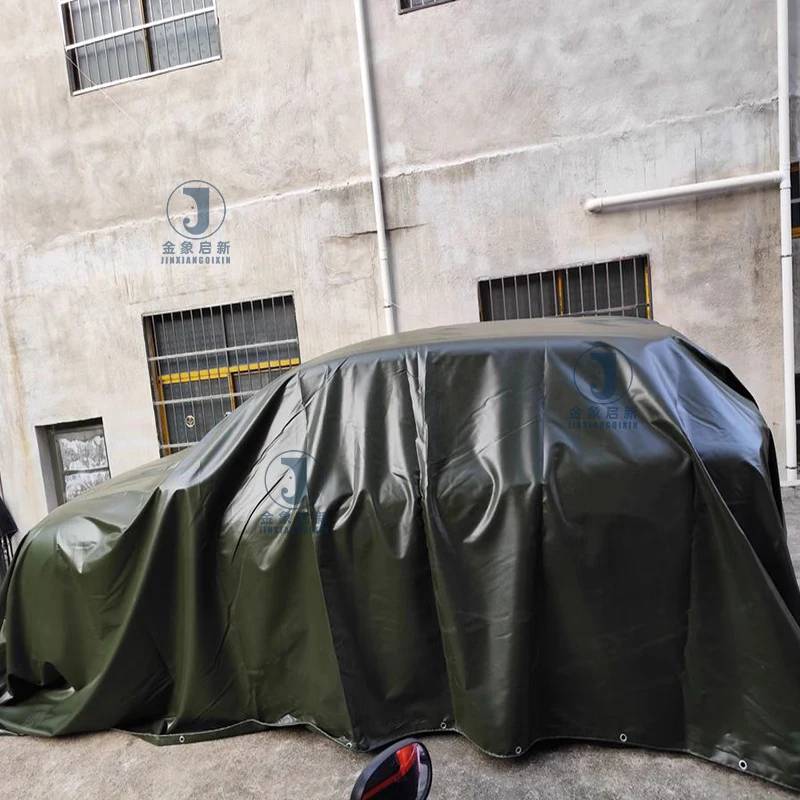
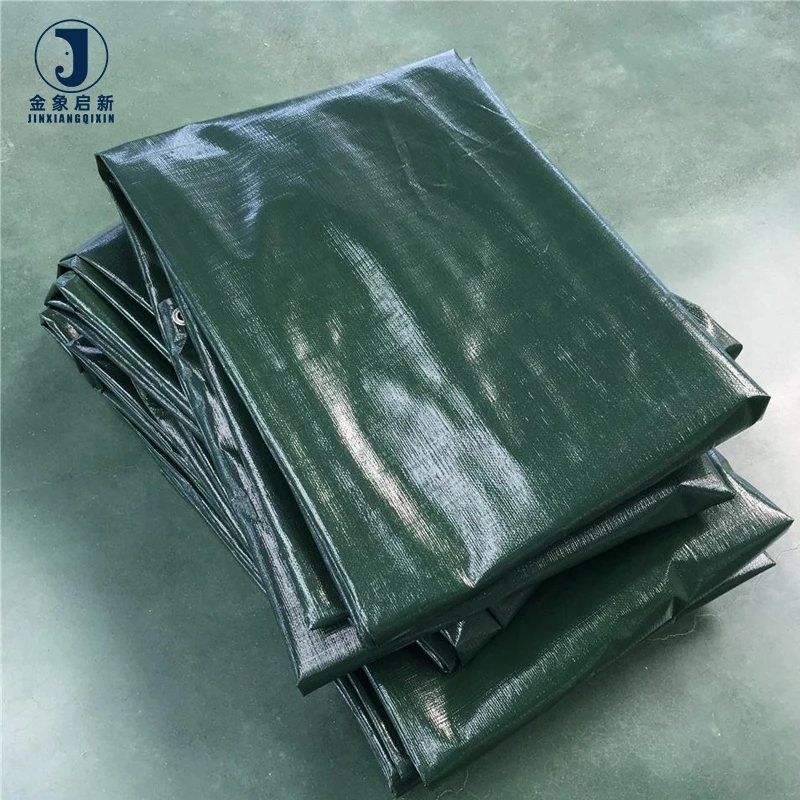
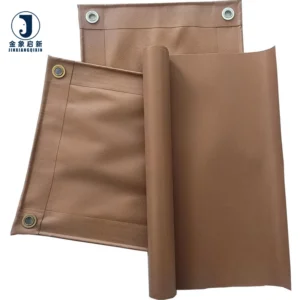
PVC Coated Blackout Tarpaulin for Truck Tent Cover — 350gsm to 750gsm, 0.32mm–0.65mm thickness, hot-melt coating on high-strength polyester mesh.
- Laminated and hot-melt coating options deliver strong adhesion and reliable welding at seams, critical where truck and tent loads flex most.
- Available with flame retardant, anti-static and anti-mildew treatments; color matched roll-to-roll within the same order.
Backed by 30 years of coated fabric process control, 100% pre-shipment inspection, and a dedicated QA team at every production stage.
Description
Coating Process Control — Every roll of PVC coated blackout tarpaulin is verified at the coating stage for exact GSM and adhesion strength, ensuring the weight specified is the weight delivered.
Technical Specifications
| Parameter | Value |
|---|---|
| Product Type | PVC Coated Blackout Tarpaulin |
| Material | PVC + High-strength polyester mesh fabric |
| Weight Options | 350gsm / 420gsm / 500gsm / 550gsm / 600gsm / 750gsm |
| Total Thickness Options | 0.32mm / 0.35mm / 0.4mm / 0.45mm / 0.5mm / 0.65mm |
| Roll Width Options | 2m / 2.1m |
| Roll Length Options | 75m / 50m |
| Color Options | Blue / Red / Yellow / Light blue / Grey (Customized) |
| Coating Method | Laminated technology & Hot-melt Coating technology |
| Key Features | Waterproof, Cold Crack Resistance, Anti-Mildew, Outstanding tearing strength for welding, Best color fastness |
| Special Treatments | Flame retardant, anti-static, anti-cold, anti-mildew, 3P (grades available upon request) |
Application Suitability
| Application | Exposure & Requirement |
|---|---|
| Truck Side Curtains & Trailer Covers | Constant mechanical flexing, highway wind load, road debris abrasion, UV and weather exposure |
| Construction Scaffolding Enclosure | Wind-driven rain, site dust, UV degradation, repeated installation and removal |
| Tent and Awning Fabric | Light-blocking requirement, structural tension, outdoor weather exposure, public safety compliance |
| Temporary Industrial Equipment Covers | Outdoor storage exposure, chemical splash risk, mechanical handling and forklift contact |
| Marine and Offshore Maintenance Covers | Salt spray, continuous moisture, high wind, UV intensity |
Why Stated Weight Does Not Guarantee On-Site Performance
A quoted GSM figure only matters when the coating adhesion and base fabric density match the specification sheet.
Buyers frequently report that tarpaulin rolls arrive lighter than the GSM stated on the original quotation, or that the material feels thinner at the edges than in the centre of the roll. This discrepancy usually traces back to inconsistent coating application or a lighter base fabric substituted during production. When the base mesh is underweight, the PVC coating carries more of the structural load than it was designed for, leading to premature tearing at stress points. [NEED_CITE: tensile and tear test methods for coated fabrics per ISO 1421]
Coating Technology and Seam Integrity
The laminated and hot-melt coating processes used for this PVC coated blackout tarpaulin create a mechanical bond between the PVC layer and the high-tenacity polyester mesh. This bond strength directly determines how well the fabric holds together at welded seams — the most common failure point on truck covers and tensioned structures. Hot-melt coating allows the PVC to penetrate the mesh interstices rather than sitting on the surface, which improves peel resistance during heat welding.
Batch Consistency Across Multi-Roll Orders
When a tent manufacturer or fleet operator orders multiple rolls for a single project, colour variation between rolls becomes visible once panels are installed side by side. This PVC coated blackout tarpaulin range addresses that risk through controlled pigment dosing and in-line colour verification during the coating run. Rolls allocated to a single order are matched against the confirmed colour reference before packing, reducing the chance of visible panel mismatches on finished structures. [NEED_CITE: colour fastness testing standards for coated textiles]
Reading the Specification Sheet Correctly
Weight in GSM alone does not define how a coated fabric will perform under load. The relationship between the polyester mesh denier, the weave density, and the coating thickness collectively determines tensile and tear behaviour. A 550gsm fabric with a dense base mesh and moderate coating may outperform a 600gsm fabric built on a loosely woven, heavily coated base. Laminated technology produces a smoother surface suited to printed graphics and clean visual finishes, while hot-melt coating prioritises peel strength at the weld line — the choice depends on whether the end use demands fabrication strength or surface quality. Roll width options of 2m and 2.1m influence cutting waste and the number of welded seams required for large covers; wider panels reduce seam count on truck side curtains and tent roofs, which directly affects structural reliability at flex points.
The Hidden Cost of Specification Mismatches
When flame retardant treatment is claimed on a quotation but no test report accompanies delivery, the material may fail site inspection on a construction project or public event venue, forcing removal and replacement at the buyer’s expense. Similarly, if cold crack resistance is specified for a northern climate application but the treatment grade is not confirmed, the fabric can become brittle and fracture at fold lines during winter installation. [NEED_CITE: DIN 4102 fire classification for building materials] These failures do not appear during sample review — they surface only when the full order is deployed in real conditions.
What Supports Reliability on Every Order
The 10-person R&D team handles material selection and sample development so custom colour, width, and finish requirements are confirmed before bulk production begins. Three full production lines and 36 sets of professional equipment maintain capacity for large-volume orders without sacrificing coating consistency. Dedicated quality control at every production stage — from base fabric inspection through coating, winding, and packing — catches defects before they reach the dispatch area. Pre-shipment inspection covers roll-by-roll weight and dimension verification, so the documented specification matches what arrives at the port. Samples for custom requirements are developed within days, allowing buyers to validate material and colour before committing to the full production run.
Documentation & Verification
- Material specification sheet stating exact GSM, base fabric denier, coating type, and confirmed colour reference for each order line
- Test report for flame retardant and UV-treated grades issued with the applicable batch — request before confirming order
- Pre-shipment inspection record documenting roll-by-roll weight and dimension verification against the purchase specification
- Certificate of origin and customs documentation prepared per destination country requirements
- Roll packing list with gross and net weights aligned to the commercial invoice and bill of lading
Fabrication, Handling & Storage
- Heat weld parameters should be adjusted to the specific GSM grade — 350gsm and 750gsm require different temperature and dwell settings
- Store rolls upright on pallets to prevent flat-spot deformation on the outer wrap layers, particularly on 2.1m wide stock
- Cut patterns should account for the 2m or 2.1m roll width to minimise offcuts and reduce welded seam count on large covers
- Use compatible PVC-based adhesives for field repairs to maintain coating bond integrity at patch edges
- Avoid dragging rolls on unprotected ground during warehouse handling to prevent abrasion to the outer coating surface
- Allow cold-stored rolls to reach ambient temperature before unrolling to prevent stress cracking in anti-cold treated grades
What to Include in Your Inquiry
Specify the end-use application and the environmental conditions the fabric will face — wind load, temperature range, chemical exposure, and whether public safety regulations apply at the installation site. Indicate the required GSM grade, roll width preference, colour reference, and whether you need raw rolls or finished cut-to-size panels with eyelets and reinforced hems. If flame retardant or anti-static certification is required for your market, state the standard and grade so the correct treatment is confirmed before sampling.
Frequently Asked Questions
Q: How is the GSM weight verified on each roll before dispatch?
A: Every roll is weighed individually during the pre-shipment inspection stage. The recorded weight is compared against the GSM stated in the material specification sheet for that order. Any roll falling outside the acceptable tolerance is flagged and replaced before packing. The inspection record accompanies the shipment documentation so you can cross-check on receipt.
Q: What flame retardant grades are available for blackout tarpaulin?
A: Flame retardant treatment is available in multiple grades depending on the destination market and application. The specific grade and corresponding test standard must be confirmed at the inquiry stage, as different regions require different classifications. A test report for the applicable grade is issued with the batch documentation upon request before order confirmation.
Q: How is colour consistency maintained across multiple rolls?
A: Pigment dosing is controlled during the coating run and rolls allocated to a single order are verified against the confirmed colour reference before packing. This PVC coated blackout tarpaulin is checked for batch-to-batch variation so that panels installed side by side show no visible mismatch. Sample approval before production locks in the target colour for the entire order.
Q: What custom sizes and formats can be ordered?
A: This PVC coated blackout tarpaulin is available in roll widths of 2m and 2.1m with standard roll lengths of 50m or 75m. Custom cut-to-size panels with welded hems and eyelets can also be produced. Finish product dimensions are confirmed against your drawings or trailer model specifications during the sampling stage.
Q: What documentation is included with each shipment?
A: Shipments include a material specification sheet, roll packing list, certificate of origin, and pre-shipment inspection record. Where applicable, test reports for flame retardant or UV treatments are provided. All documentation is prepared to match the commercial invoice and destination customs requirements.
Related products
-
Hotsale Custom China Supplier Super Strength Industrial Grade 680GSM RIPSTOP PVC Tarpaulin for Builders Roof Tarp and Sheeting
¥2.80 Add to cart -
630 Gsm Blue/Grey/Orange Pvc Tarpaulin Roll Pvc Tarpaulin Truck Tarpaulin Pvc Coated Tarpaulin
¥1.66 Add to cart -
Factory 12ftx20ft Construction Cold Weather Insulated Pe Tarps Poly Tarp Heavy Duty Concrete Curing Blanket Tarpaulin Roll Sheet
¥0.66 Add to cart -
Waterproof Custom 1000D 550GSM/900GSM Self Clean PVC Coated Tarpaulin for Truck. Tent. Roof Cover Flood Barrier
¥0.99 Select options This product has multiple variants. The options may be chosen on the product page