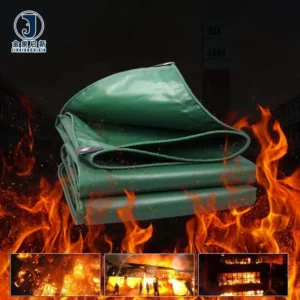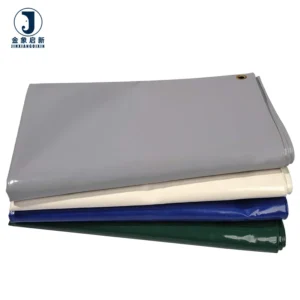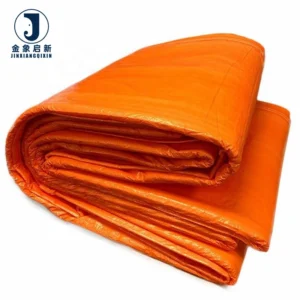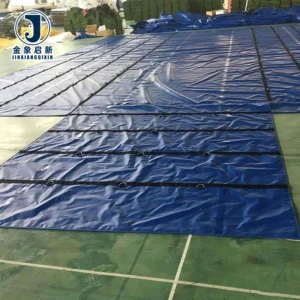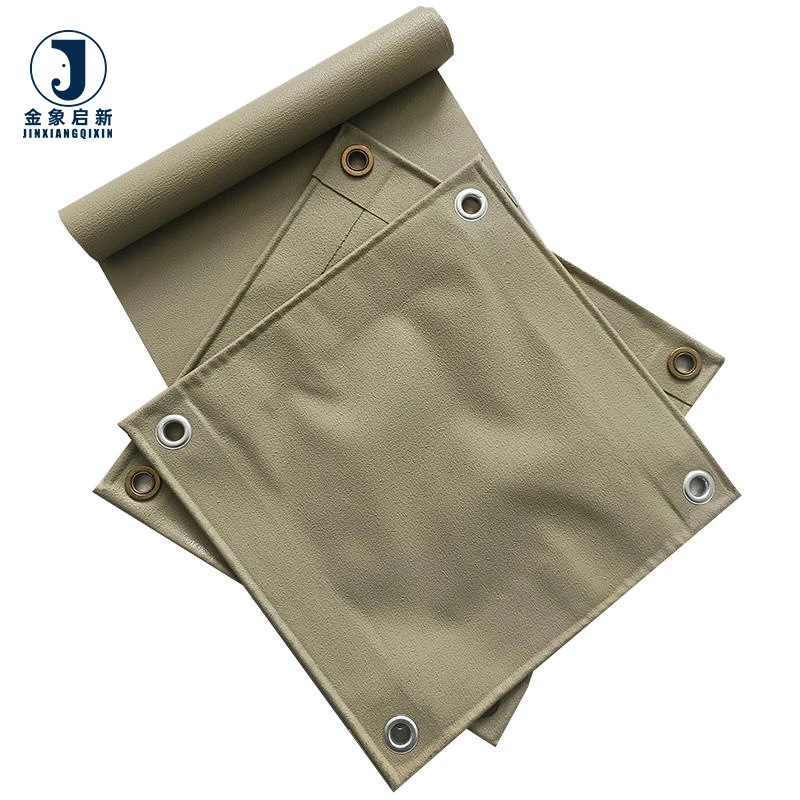
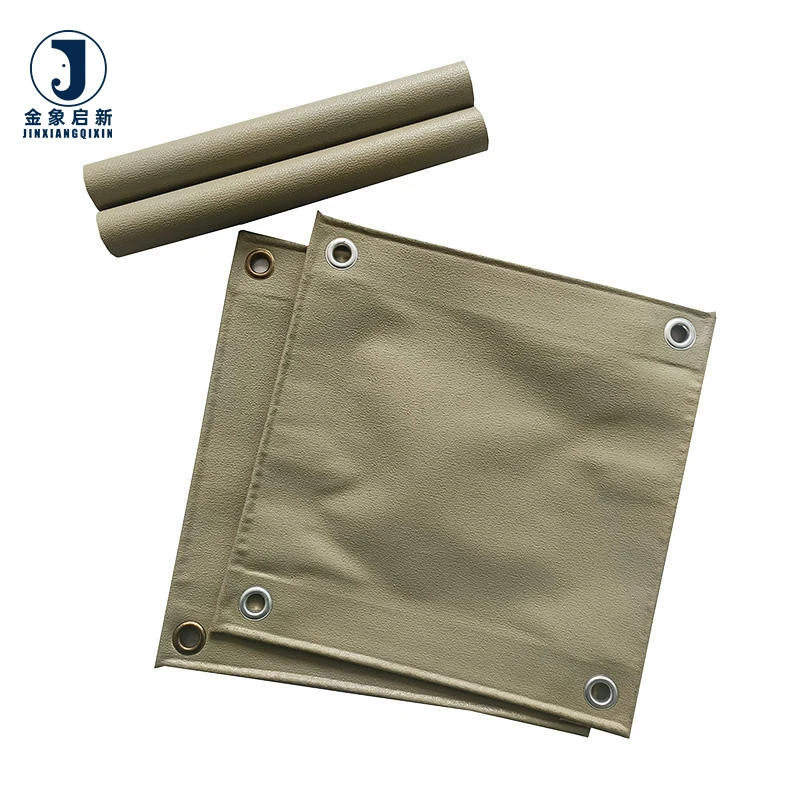
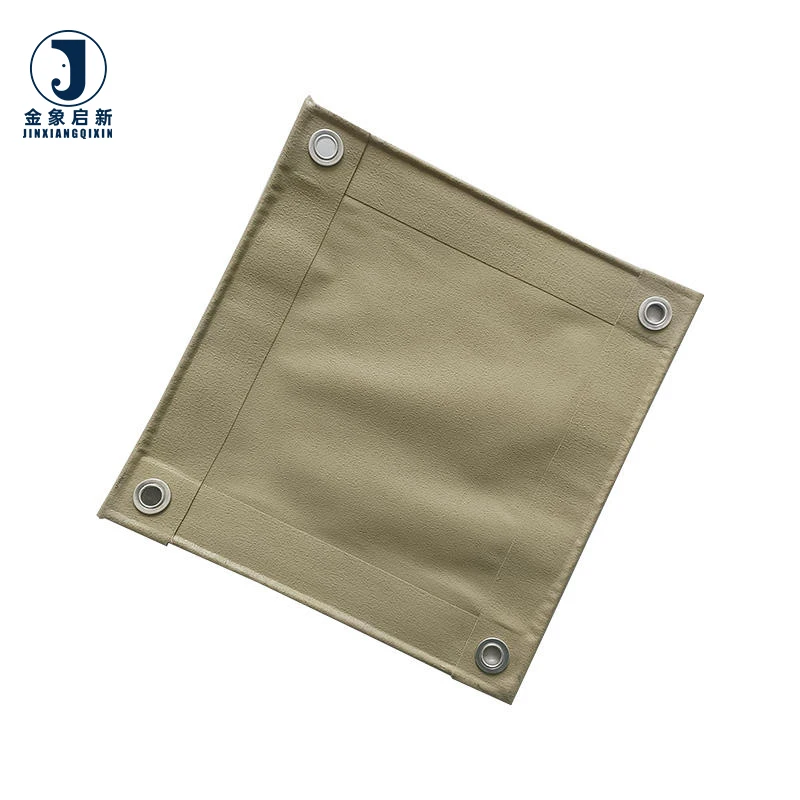
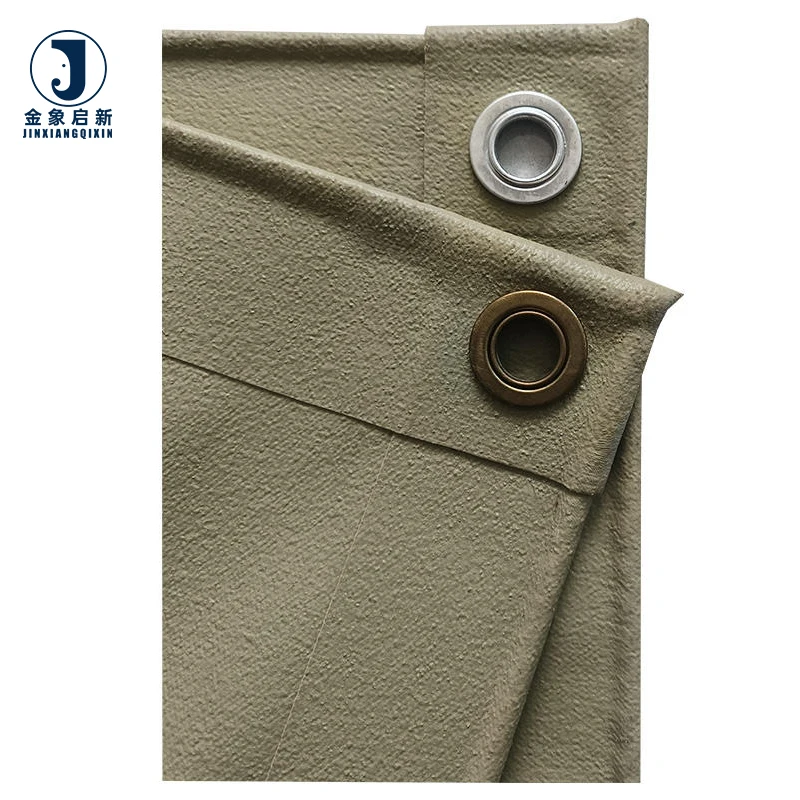
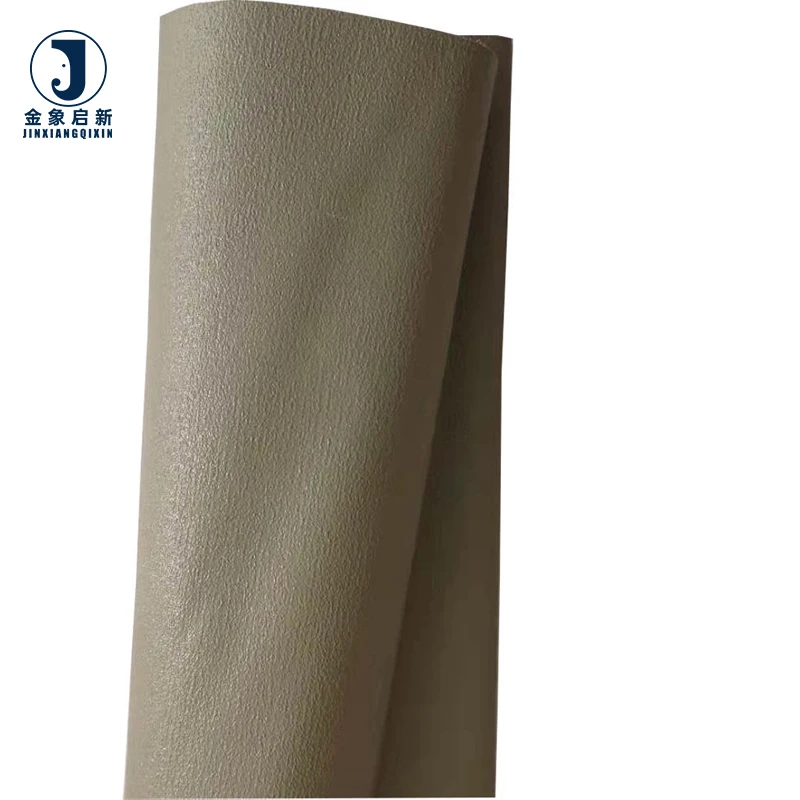
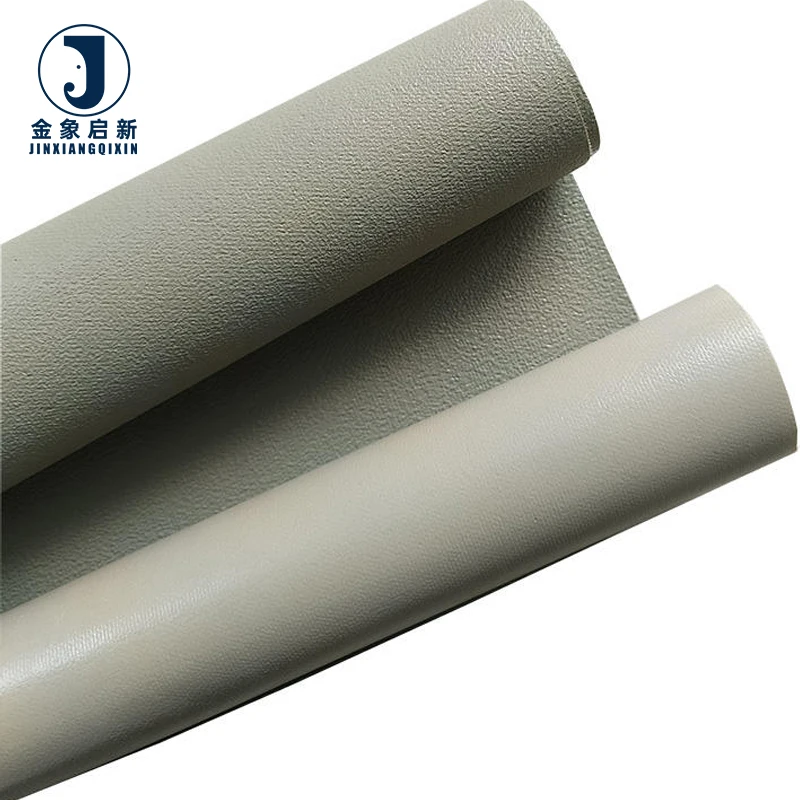
PVC Coated Tarpaulin Fabric — knife coated, waterproof, tear-resistant with anti-UV treatment for industrial and outdoor coverings.
- Knife coated construction on woven base fabric delivers reliable adhesion and peel strength at welded seams
- Anti-UV treated for extended outdoor exposure across truck covers, tents and equipment protection
- Custom width, length and colour matching with roll-to-roll batch consistency
Description
Process-Controlled Coating — Three dedicated production lines with 36 sets of professional equipment ensure every roll of PVC coated tarpaulin meets the stated weight and adhesion standard before it leaves the factory.
Technical Specifications
| Parameter | Value |
|---|---|
| Product Type | PVC Coated Tarpaulin Fabric |
| Weight | At least 450 g/m² (source value — verify against manufacturer catalog) |
| Base Fabric | Woven Fabric |
| Base Fabric Reference | 1000×1000 (source value — verify against manufacturer catalog) |
| Coating Material | PVC |
| Coating Method | Knife Coated |
| Waterproof | Yes — fully coated construction |
| UV Treatment | Anti-UV coated (test basis not stated in source) |
| Flame Retardant | Available in flame retardant grades — confirm the grade required for your market |
| Oilproof | Yes |
| Custom Size | Available |
| Roll Format | Supplied in roll |
| Available Options | Black back coated variant |
| Standards | ISO, CE (company-level certification) |
Application Suitability
| Application | Exposure & Requirement |
|---|---|
| Truck and trailer covers | Constant flexing at load points, road debris abrasion, sustained UV and rain exposure |
| Outdoor tent and awning structures | Long-term weather exposure, wind loading on seams, repeated assembly and teardown stress |
| Industrial equipment covers | Oil and chemical contact, puncture risk from sharp edges, outdoor storage conditions |
| Vehicle and structure protection | UV degradation over time, water ingress at seams, thermal expansion and contraction |
Why Stated GSM Rarely Matches What Arrives on the Dock
Weight verification at production and again at pre-shipment inspection — not only on the quotation — is what separates a reliable PVC coated tarpaulin fabric aftermarket supplier from one that ships light.
Buyers who specify coated fabric by weight expect the roll on their cutting table to match the number on the invoice. In practice, material often arrives lighter than agreed, sometimes by enough to affect tear performance at high-stress seams. This gap between quoted and actual GSM is one of the most common disputes in coated fabric procurement, and it rarely surfaces until the material is already installed or fabricated. [NEED_CITE: common specification drift in coated fabric procurement]
Knife Coating as a Construction Method for Industrial Covers
The knife coated process applies PVC directly onto the woven base fabric under controlled pressure and temperature, building a continuous film that bonds to the yarn structure rather than sitting on the surface. This method produces a fabric where the coating and base move together under tension, reducing the risk of delamination at flex points — the exact locations where truck covers and tent panels experience the most mechanical stress. For buyers sourcing PVC coated tarpaulin fabric by the roll, knife coating offers a balance between coating weight control and production consistency across long runs.
Treatment Options and What They Actually Require
Anti-UV treatment is listed as a feature of this fabric, but the test basis is not stated in the source documentation. Buyers operating in high-sun markets should request the specific UV test report that corresponds to their regional compliance requirements rather than relying on a quotation-level declaration. Similarly, flame retardant grades are available, and the appropriate grade depends on the end-use regulation — building codes, transport standards, and mining safety requirements each call for different classifications. Confirming the grade before production avoids costly re-ordering once the material reaches the job site. [NEED_CITE: flame retardant classification systems for coated textiles]
Reading the Spec Sheet Beyond the GSM Number
The stated weight of at least 450 g/m² places this fabric in a mid-range category, but GSM alone does not define how the material performs under load. The base fabric reference of 1000×1000 indicates the weave density in warp and weft yarns per unit area, and this density works together with coating weight to determine tear propagation resistance. A lighter fabric with a tight weave can outperform a heavier fabric with a loose weave in tear tests, which is why technical buyers evaluate both parameters as a system. The knife coated method also influences peel strength — the force required to separate the PVC film from the base fabric — which directly affects heat-welded seam durability. When fabricators weld panels together, the seam must carry load without the coating lifting from the yarns, and coating adhesion is where this succeeds or fails. Width and roll length options further influence fabrication planning: wider rolls reduce the number of welded seams needed for large covers, cutting both labor time and the total length of potential failure points in the finished product.
The Cost of Specification Drift After Installation
When colour varies between rolls in the same order, the difference becomes visible only after panels are installed side by side on a structure or vehicle — at which point the entire installation may need to be reworked. Similarly, when welded seams fail before the fabric itself does, the root cause often traces back to coating adhesion inconsistency or incorrect welding parameters for the specific material grade. Both failures are expensive not because the fabric is costly, but because the labor to remove and reinstall is substantial. Buyers who skip sample approval and pre-shipment inspection absorb this risk entirely. [NEED_CITE: coated fabric seam failure analysis methods]
Why Sourcing This Fabric Here Makes Sense for Roll Buyers
Coating weight and adhesion are controlled at every production stage across three dedicated lines, with a 10-person R&D team available to adjust formulation for specific application requirements. Pre-shipment inspection covers 100% of rolls before dispatch, verifying weight, colour consistency, and coating integrity against the purchase order specification. Samples are developed within days for custom width, colour, or treatment requirements, allowing buyers to confirm the material before committing to a full production run. Custom sizing, pattern printing, and branding options are handled in-house, maintaining batch consistency across an entire container load rather than outsourcing finishing steps to third parties.
Documentation & Verification
- Material specification sheet stating GSM, base fabric denier, and coating method for every roll shipped
- Weight verification per roll against the stated GSM before dispatch, recorded in inspection documentation
- Test reports for UV and flame retardant grades provided where applicable to the order specification
- Pre-shipment inspection record covering colour consistency, coating adhesion, and dimensional accuracy
- Roll packing list cross-referenced against container loading plan to confirm count and dimensions
Fabrication, Handling & Storage
- Heat-weld knife coated seams using temperature and dwell time matched to the PVC formulation and g/m² weight
- Store rolls upright on end cores to prevent flat-spotting and permanent creasing across the fabric width
- Allow cold-stored rolls to acclimatise before unrolling to avoid cracking the PVC coating at low temperature
- Use compatible PVC-based repair patches and solvent cements that bond to the knife coated surface
- Plan cutting layouts around available roll widths to minimise off-cuts and reduce welded seam count
What to Include in Your Inquiry
To receive an accurate specification recommendation, share the intended application and the environmental conditions the fabric will face — including UV exposure intensity, contact with oils or chemicals, and any flame retardant requirements specific to your market. Indicate whether you need rolls at standard widths or custom dimensions, and whether pattern printing or colour matching to a reference standard is required. If you are fabricating finished products such as truck covers or tents, specify whether you need raw roll stock or pre-cut panels with edge finishing.
Frequently Asked Questions
Q: How is GSM verified on arrival versus what is stated on the quotation?
A: Every roll undergoes weight verification during production and again at pre-shipment inspection. The inspection record included with your shipment documents the actual measured GSM per roll, so you can confirm the material matches the specification before it enters your workshop.
Q: Can anti-UV or flame retardant treatment be supported with a test report?
A: Yes — where these treatments are specified on your order, test reports are provided to document performance. The specific grade or test standard depends on your market requirements, so confirm the classification needed before production begins.
Q: How do you maintain colour consistency across multiple rolls in one order?
A: Colour matching is managed in-house across the full production run, with consistency checked during pre-shipment inspection. The inspection record documents colour verification so that all rolls in your order install side by side without visible variation.
Q: What custom widths, lengths, and printing options are available on this fabric?
A: Custom width, roll length, colour, double-side colour, and pattern printing are all produced in-house. Minimum quantities and lead times depend on the specific customisation requested — share your requirements for a detailed quotation.
Q: What documentation ships with each roll?
A: Each shipment includes a material specification sheet, pre-shipment inspection record, roll packing list, and certificate of origin. Test reports for UV or flame retardant grades are included where applicable to your order specification.
Related products
-
Pvc Coated Waterproof Tarpaulin Heavy Duty Tarp for Tent Roof Stocklot Lumber
¥1.60 Add to cart -
JX Fireproof 500gsm 600gsm Customizable PVC Tarpaulin Waterproof Truck Cargo Cover
¥0.79 Select options This product has multiple variants. The options may be chosen on the product page -
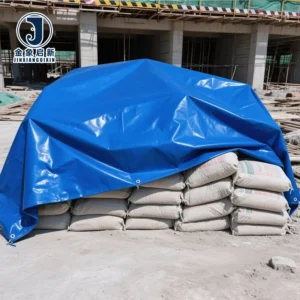
Wholesale Pvc Tarpaulin Wear-resistant Waterproof Multi-purpose Heat-resistant Tarpaulin
¥2.00 Add to cart -
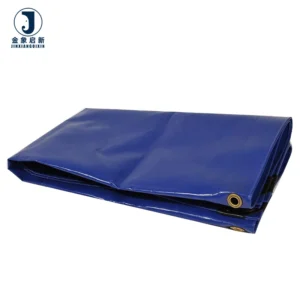
900GSM Heavy Duty PVC Coated Tarpaulin Panama Tarpaulin Curtains for Lorries
¥7.78 Add to cart