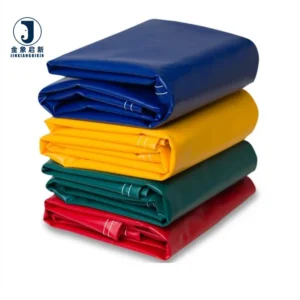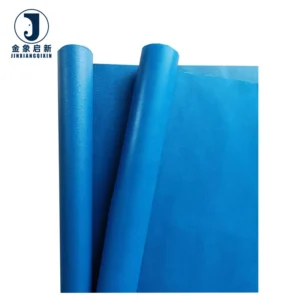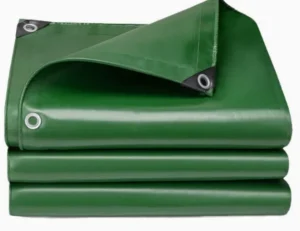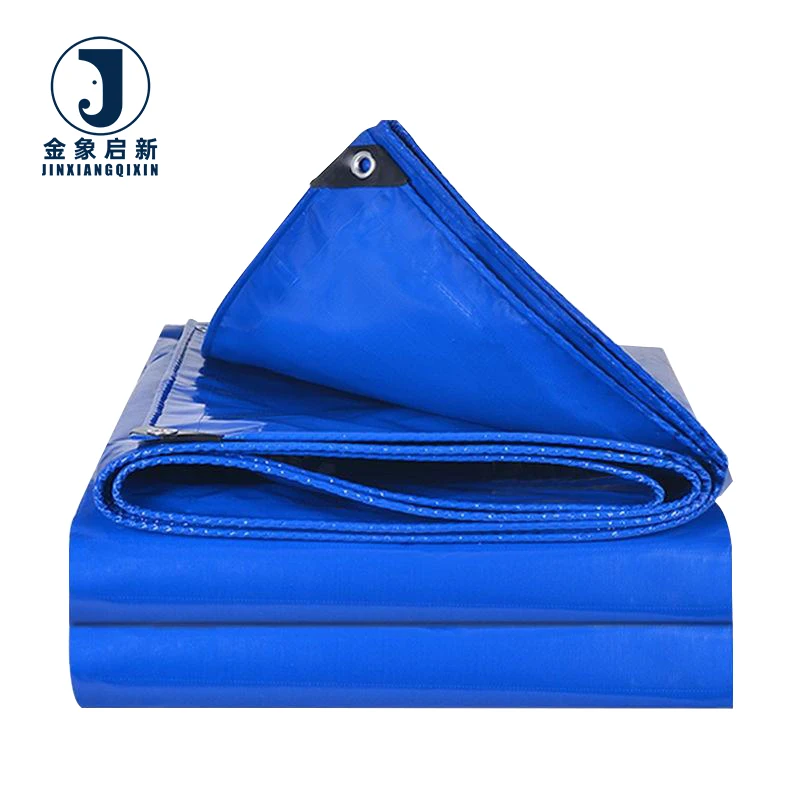
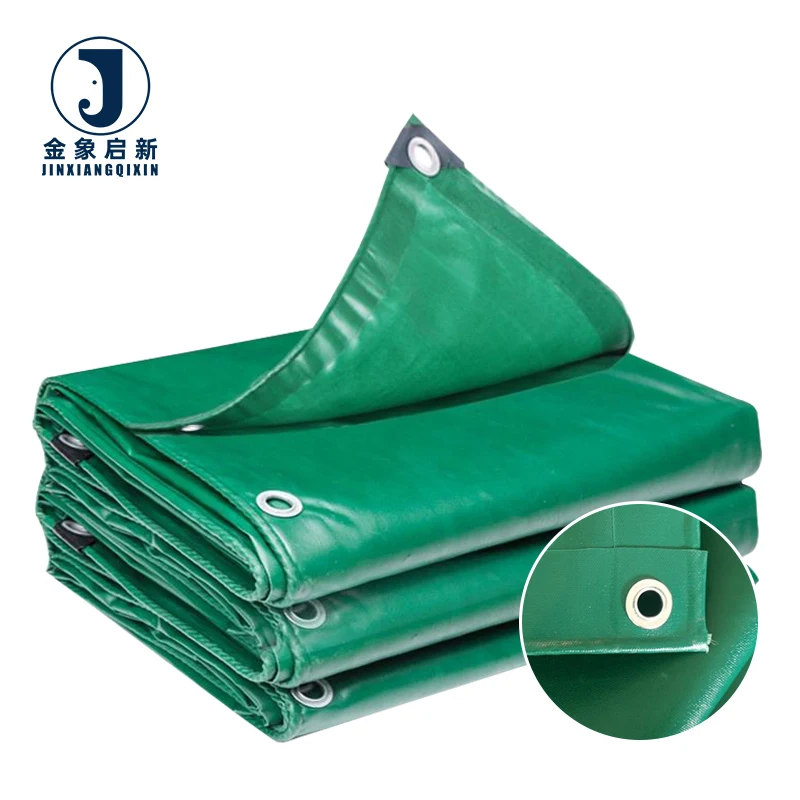
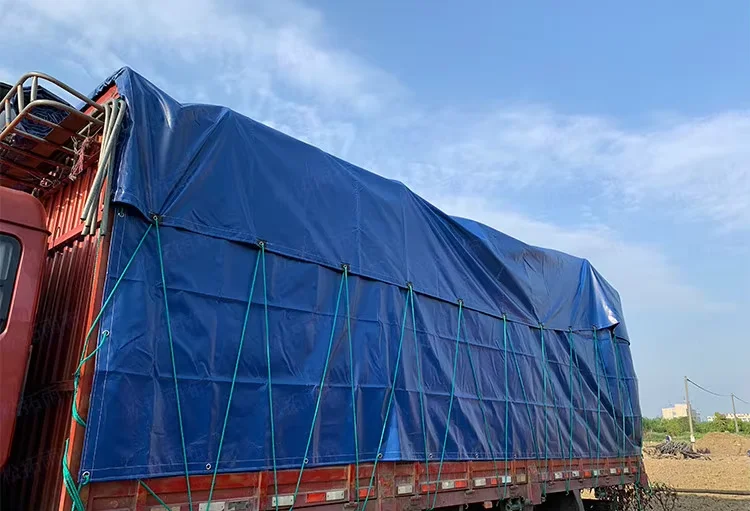
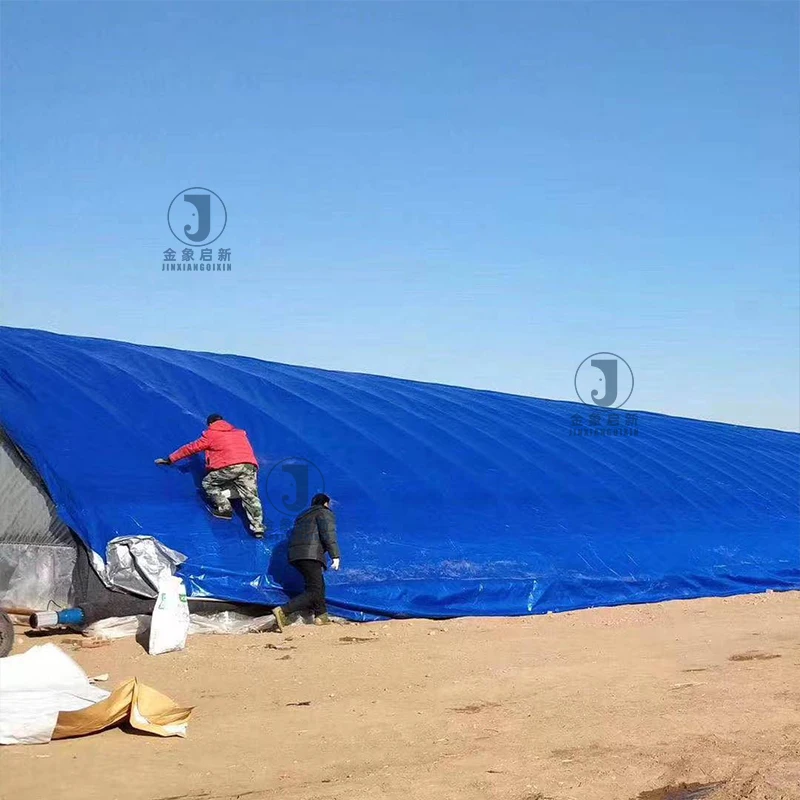
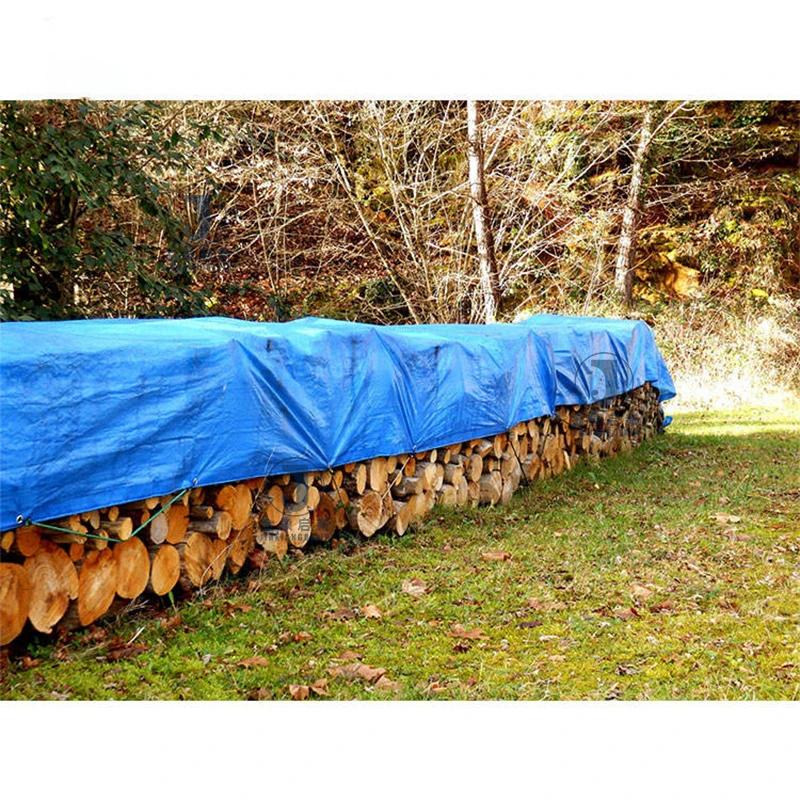
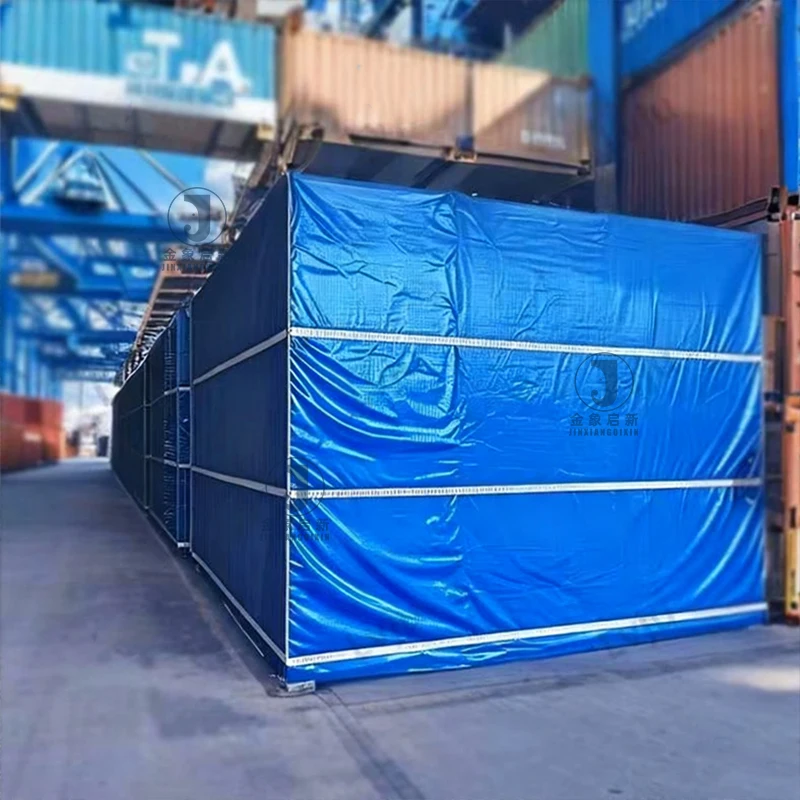
Fireproof Waterproof PVC Tarpaulin Truck Cargo Cover — 700gsm / 850gsm / 900gsm options in PVC coated canvas with flame retardant, anti-static, anti-cold, and anti-mildew treatments for transport and logistics covering.
- Engineered for truck cargo protection where fire safety compliance and long-term weather resistance are both required on the road.
- Multiple GSM grades let you match coating weight to your specific load flex and abrasion demands rather than over-specifying.
- Backed by nearly 30 years of coated fabric process control, 100% pre-shipment inspection, and full custom sizing to your trailer dimensions.
Description
Process-Controlled Coating — nearly 30 years focused on PVC coated fabric with deep process control over coating weight and adhesion across every production run.
Technical Specifications
| Parameter | Value |
|---|---|
| Product Type | PVC Coated Tarpaulin |
| Weight Options | 700 GSM / 850 GSM / 900 GSM |
| Coating Material | PVC |
| Base Fabric | PVC coated canvas |
| Waterproof Construction | Yes |
| Flame Retardant | Available in multiple grades — confirm the grade required for your market |
| Anti-Static | Available as treatment option (standard or surface resistance to be confirmed) |
| Anti-Cold | Available as treatment option (test basis to be confirmed) |
| Anti-Mildew | Available as treatment option |
| Weather Resistance | Suited to extended outdoor exposure |
| Key Features | High strength, waterproof, weather resistant |
Application Suitability
| Application | Exposure & Requirement |
|---|---|
| Truck cargo cover | Continuous road vibration, UV exposure, wind flap stress, rain and road spray |
| Side curtain systems for trailers | Repeated flexing at folds, tie-down abrasion, daily roll and unroll cycles |
| Transport fleet load protection | Long-haul weather extremes, loading dock contact, forklift edge pressure |
| Industrial equipment covering | Static outdoor storage, dust ingress prevention, moisture barrier requirement |
Why the Quoted GSM Is Only Half the Story for PVC Coated Tarpaulin
The weight on the spec sheet tells you nothing about how the fabric behaves at the weld line under real load.
A PVC coated tarpaulin custom order can arrive at the correct GSM yet still fail prematurely when the coating adhesion to the base fabric is inconsistent. Fleet operators routinely discover that the material passes a simple weight check but separates at the seam after weeks of flexing on a moving trailer. The issue is not the fibre or the PVC itself — it is whether the coating process maintained uniform penetration and bond strength across the full roll width [NEED_CITE: tensile and tear test methods for coated fabrics per ISO 1421]. Without in-process adhesion verification, two rolls from the same batch can perform differently at the points where the load flexes most.
Coating Adhesion and Weld Line Integrity
When fabricators heat-weld panels to form a truck cover, the seam strength depends entirely on how well the PVC coating bonds to the base yarn structure. A PVC truck tarpaulin manufacturer with controlled coating lines can maintain consistent penetration depth, ensuring the weld fuses coating to coating rather than peeling away from the substrate. This is the difference between a cover that lasts through seasons of highway use and one that splits at the first heavy wind load.
Matching Treatment Packages to Operating Environments
Different transport routes demand different protection profiles. A fleet running through cold northern corridors needs anti-cold treatment to prevent stiffening and cracking at low temperatures, while operators in humid tropical zones prioritise anti-mildew formulations. Flame retardant availability allows compliance with regional transport safety codes, though the specific grade must be confirmed against local requirements before ordering [NEED_CITE: flame retardant classification systems for transport textiles]. Anti-static treatment serves operations handling combustible powder or grain cargoes where surface charge accumulation poses a hazard.
Reading GSM in Context with Base Fabric Density
The relationship between GSM and actual strength is not linear. A 700 GSM fabric woven from high-denier yarns at tight weave density can outperform an 850 GSM material built on a loosely woven base with heavier coating applied to compensate. The coating adds weight but does not contribute proportionally to tear resistance — that property comes primarily from the base fabric construction. When evaluating PVC coated tarpaulin options, the buyer should request the base fabric denier and thread count alongside the total GSM to understand where the weight actually sits. The coating method also matters: knife-over-roll coating produces a stronger bond to the substrate than simple lamination, directly affecting how well the material holds up during fabrication and field use.
The Hidden Cost of Specifying on Weight Alone
Procurement teams that approve PVC coated tarpaulin orders based solely on quoted GSM frequently encounter downstream failures. A cover that passes weight inspection can still show colour variation between panels when installed side by side on the same trailer, forcing the fleet to replace an entire set rather than a single panel. Welded seams may fail before the fabric body does if the coating formulation was not matched to the welding temperature window used by the fabricator [NEED_CITE: hot air welding parameters for PVC coated polyester fabrics]. These problems surface after the cargo has already been exposed to weather, turning a material savings into a claims event and damaged customer relationships.
Production Capability Behind Every Roll
Three full production lines and 36 sets of professional equipment provide the capacity to deliver bulk PVC coated tarpaulin custom orders with consistent quality across every roll. A 10-person R&D team handles material selection, pattern development, and treatment formulation to match specific fleet requirements. Dedicated QA/QC runs at every production stage, with 100 percent inspection before any shipment leaves the facility. Custom sizing is developed from pattern-based templates rather than generic cut sheets, so the cover fits the specific trailer model it was ordered for. Samples are developed within days, allowing buyers to verify weight, hand feel, and treatment response before committing to full production volume.
Documentation & Verification
- Weight verification per roll against the stated GSM before dispatch
- Test reports for flame retardant grades where applicable to your market
- Pre-shipment inspection record covering coating adhesion and visual consistency
- Material specification sheet stating base fabric, coating type, and colour reference
- Roll packing list and certificate of origin for customs clearance
Fabrication, Handling & Storage
- Heat-weld seams at temperatures matched to the specific PVC coating formulation used on this 700–900 GSM range
- Reinforce eyelet zones with additional PVC patches to distribute tie-down load across the coated canvas base
- Store rolls upright on pallets to prevent permanent creasing in heavy-grade PVC coated material
- Allow cold-stored rolls to reach ambient temperature before unrolling to avoid coating crack at low flexibility
- Clean with mild detergent only — solvent-based cleaners can degrade the anti-mildew treatment surface layer
What We Need to Quote Accurately
Provide the trailer model or exact cover dimensions, the operating climate and any flame retardant or anti-static compliance requirements for your market, and the GSM grade you are targeting. If you need colour matching or printed branding, share the reference code and quantity so the production team can confirm lead time and minimum order. Specify whether you require finished covers with eyelets and reinforced hems or roll stock for your own fabrication line.
Frequently Asked Questions
Q: How is the GSM weight verified on arrival against what was quoted?
A: Every roll undergoes weight verification before dispatch, and the pre-shipment inspection record documents the actual GSM measured. On arrival, buyers can cross-check by cutting a measured sample from the roll edge and weighing it on a calibrated scale. Any discrepancy beyond the stated tolerance triggers a review with the production team to identify the source and arrange replacement.
Q: What flame retardant grades are available and how do I confirm compliance?
A: Flame retardant treatment is available in multiple grades suited to different regional transport and safety codes. Share the specific standard or classification your market requires — such as a national vehicle safety regulation or site safety specification — and the team will confirm which grade applies and provide the corresponding test report with the shipment documentation.
Q: What is the minimum order for custom truck cover dimensions?
A: Custom sizing based on specific trailer models is supported with minimums that vary by panel count and treatment complexity. For standard PVC coated tarpaulin custom orders in common GSM grades, the threshold is lower than for specialist treatment combinations. Request a quotation with your trailer dimensions and quantity to receive the applicable minimum and lead time.
Q: How do welded seams compare to stitching at high-flex points on truck covers?
A: Heat-welded seams create a continuous PVC bond that prevents water ingress and distributes stress evenly along the joint. At high-flex zones such as corners and tie-down points, welded seams generally outperform stitched panels because there are no needle holes to propagate tears. The welding temperature must match the coating formulation to achieve full bond strength without scorching the base fabric.
Q: What eyelet spacing and hem reinforcement options are available?
A: Eyelet spacing is set according to the tie-down system used by the fleet, with closer spacing recommended for side curtain applications experiencing constant wind load. Hem reinforcement uses folded PVC-coated canvas with additional welding or rope insertion to spread the load. Specify your tie-down hardware type and strap spacing so the cover is fabricated to match your existing fleet equipment.
Related products
-
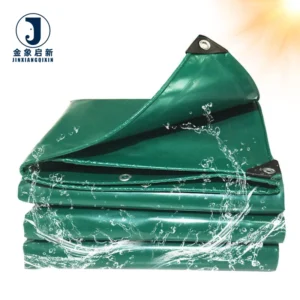
Waterproof Heavy Duty Tarpaulin Water Proof Cover Tarpaulin Manufacturer
¥1.48 Add to cart -
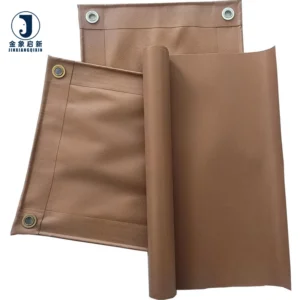
Waterproof Custom 1000D 550GSM/900GSM Self Clean PVC Coated Tarpaulin for Truck. Tent. Roof Cover Flood Barrier
¥0.99 Select options This product has multiple variants. The options may be chosen on the product page -
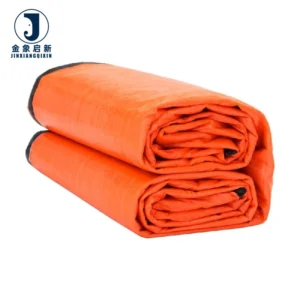
Factory 12ftx20ft Construction Cold Weather Insulated Pe Tarps Poly Tarp Heavy Duty Concrete Curing Blanket Tarpaulin Roll Sheet
¥0.66 Add to cart -
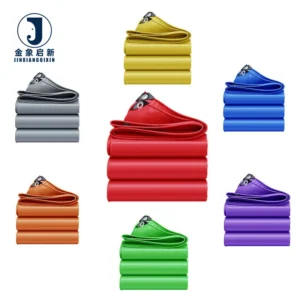
PVC-coated Waterproof Heavy-duty Vinyl Industrial Outdoor Reinforced Tarpaulins for Tents and Truck Covers
¥1.45 Add to cart