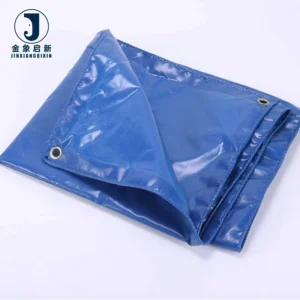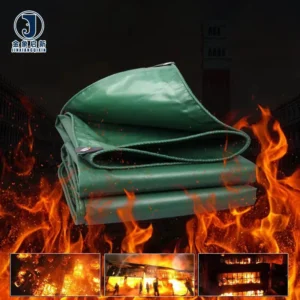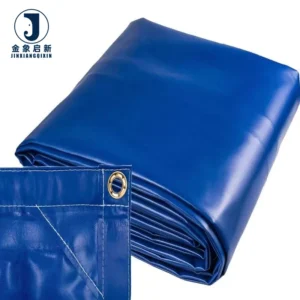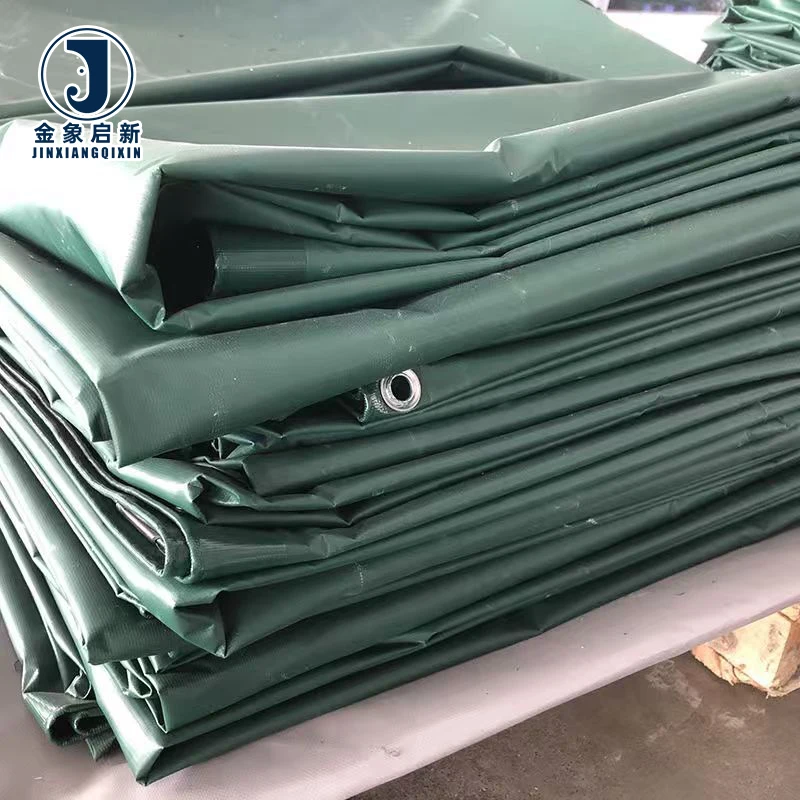
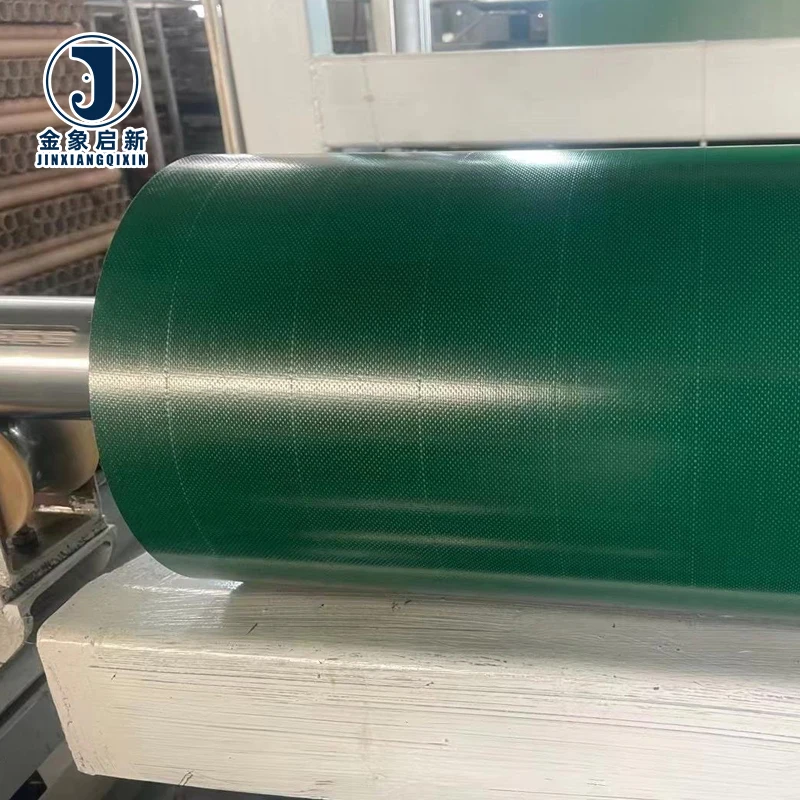
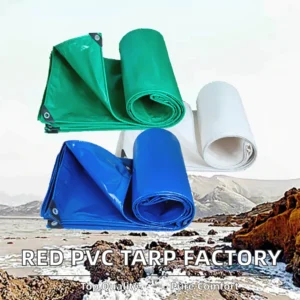
PVC Coated Tarpaulin for Truck Covers — 400-1500 g/m², 500D-2000D base fabric, hot melt coated for consistent adhesion across all grades.
- Medium to super-heavy grades matched to transport, construction and agricultural exposure
- Welded seam integrity reinforced at flex points where load movement concentrates stress
- UV, flame retardant and anti-static treatments available with test reports on request
Backed by dedicated QA/QC at every production stage, 100% inspection before shipment, and samples developed within days for custom requirements.
Description
Proven Fabric Consistency — Every roll is weighed and inspected at every production stage to confirm the stated GSM matches the delivered material, eliminating the mismatch between quotation and arrival.
Technical Specifications
| Parameter | Value |
|---|---|
| Product Type | PVC Coated Tarpaulin |
| Base Fabric | 100% high toughness polyester yarn |
| Coating Material | PVC |
| Coating Method | Lamination technology and hot melt coating technology |
| Weight Range | 400-500 / 700-1000 / 1100-1500 g/m² (grade dependent) |
| Total Thickness | 0.35-0.45 / 0.70-1.0 / 1.2-1.5 mm (grade dependent) |
| Base Fabric Denier | 500D / 1000D / 500D-2000D (grade dependent) |
| Tensile Strength (Warp) | 1500-3000 N/5cm (grade dependent) |
| Tensile Strength (Weft) | 1200-2800 N/5cm (grade dependent) |
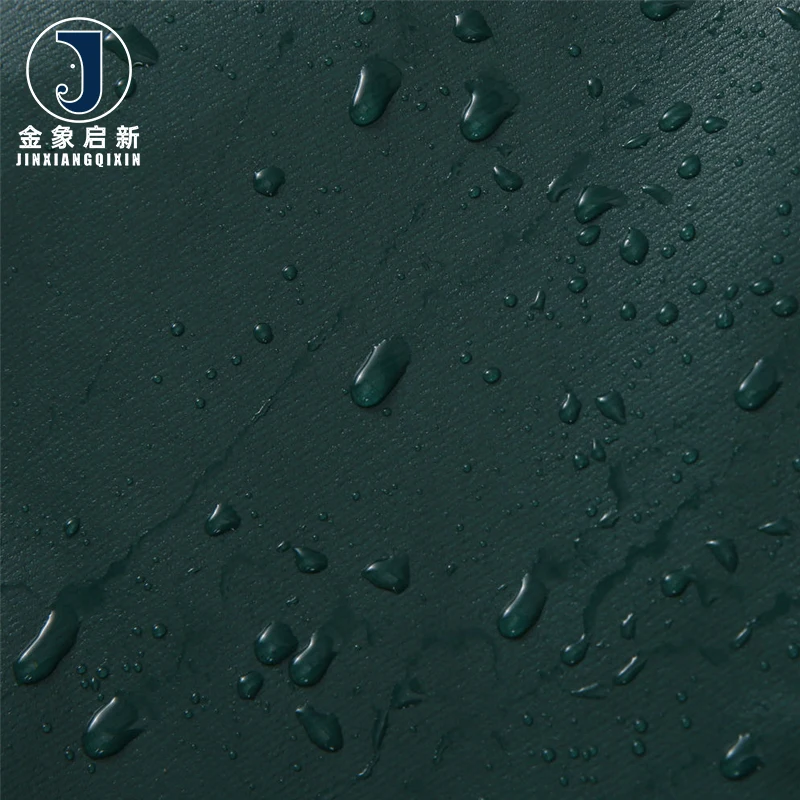
| Waterproof | Yes |
| Cold Resistant | Yes (grade not stated — confirm for target climate) |
| Anti-Mildew | Mold proof |
| Anti-Static | Available (standard not stated — confirm requirement) |
| Flame Retardant | Available as special treatment (grade not stated — confirm the grade required for your market) |
| UV Treatment | Available (test basis not stated — request test report) |
| Welding Tear Strength | Excellent (test standard not stated) |
| Color Fastness | Best (test standard not stated) |
| Key Features | Waterproof, cold resistant, mold proof, custom cut sizes available |
Application Suitability
| Application | Exposure & Requirement |
|---|---|
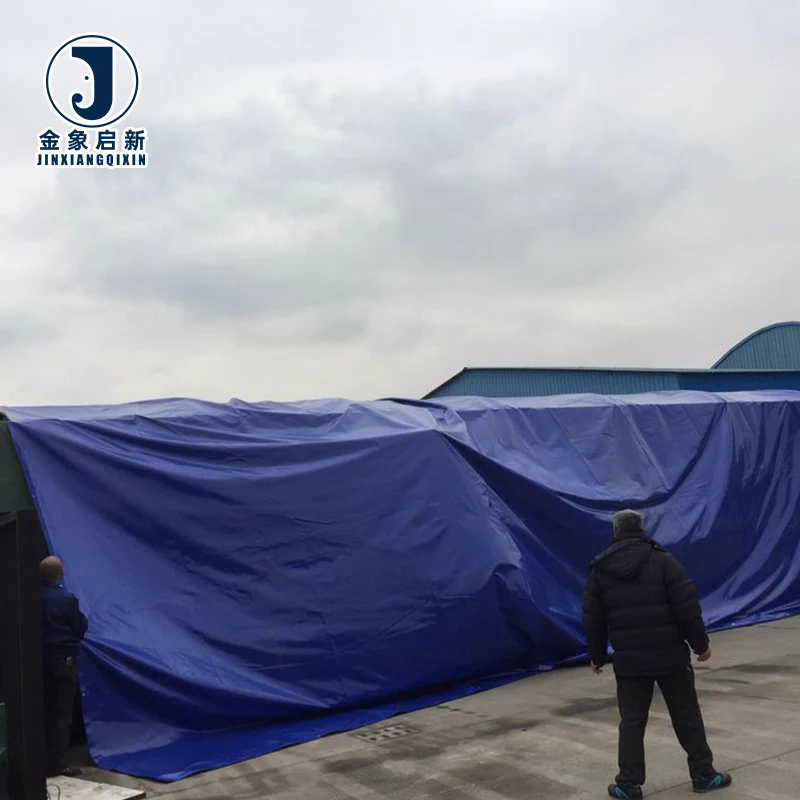
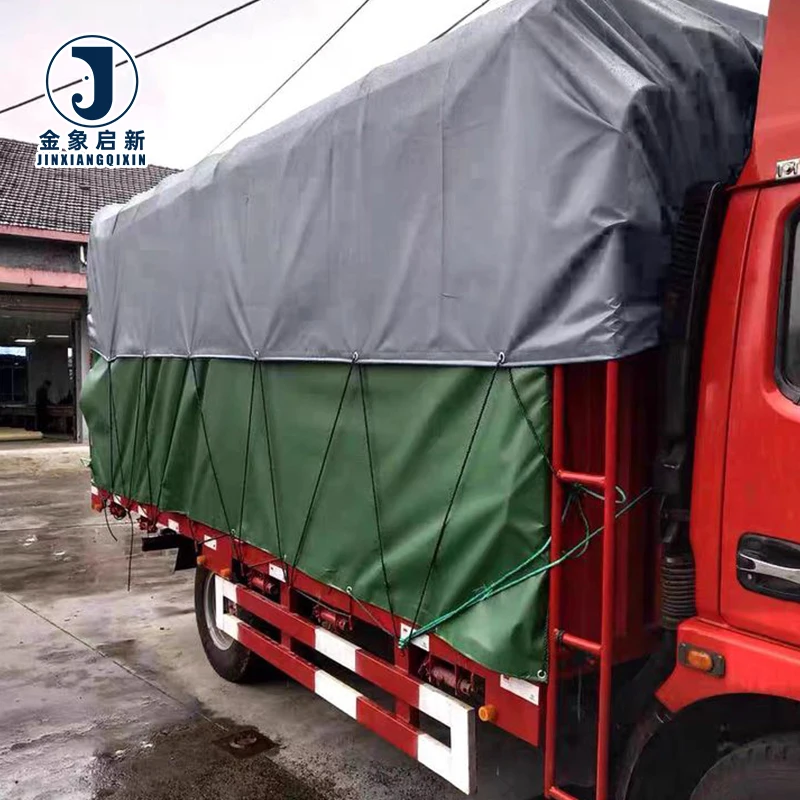
| Truck side curtain and trailer cover | Constant flexing at load points, road abrasion, wind-driven rain, UV exposure during long-haul transit |
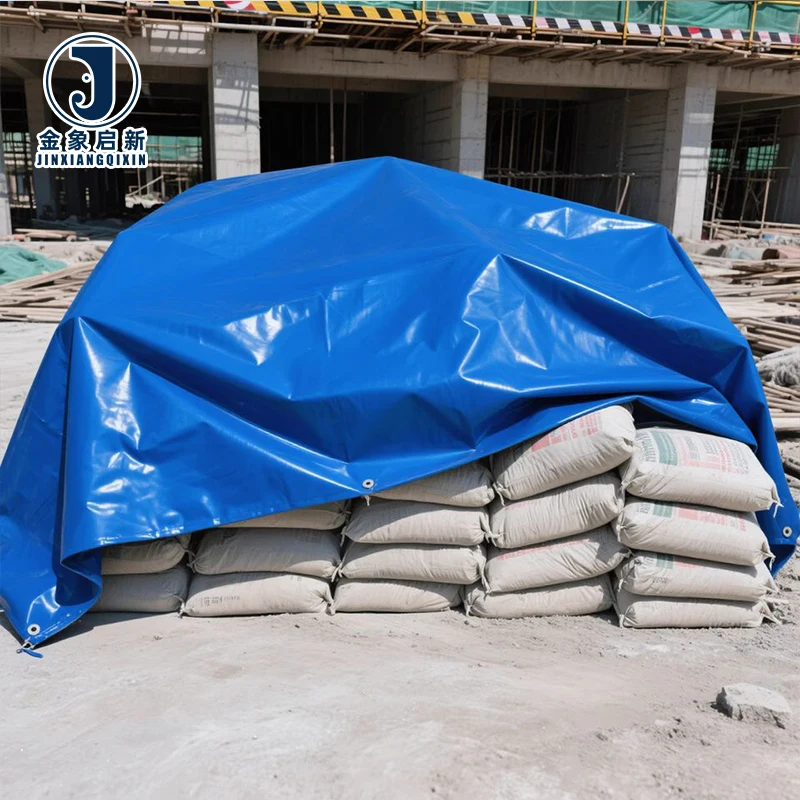
| Construction site equipment cover | Debris impact, standing water, repeated deployment and folding, UV from open-air storage |
| Farm machinery and hay bale cover | Moisture ingress risk, chemical exposure from fertilisers, seasonal UV load, puncture from sharp edges |
| Industrial pipe canopy and bulk material cover | Tensioned installation stress, sustained weathering, thermal expansion and contraction cycles |
Why Stated GSM Does Not Guarantee Tarpaulin Performance
Weight alone tells you nothing about how a PVC coated tarpaulin will hold up under a loaded trailer at highway speed.
Buyers routinely see a 650 GSM figure on the quotation and assume the material will perform accordingly. In practice, a lighter base fabric loaded with mineral filler can reach the same GSM as a properly constructed polyester weave yet tear at the first flex point. The PVC coated tarpaulin you specify must be evaluated on base fabric denier, weave density, and coating adhesion together — not on a single weight number. Transport fleets that have switched from generic covers to specified-grade fabric consistently report fewer seam failures and longer intervals between replacements. [NEED_CITE: tensile and tear test methods for coated fabrics per ISO 1421]
How Hot Melt Coating Secures the Base Fabric Bond
The lamination and hot melt coating technology used in this PVC coated tarpaulin range forces PVC into the polyester yarn interstices under heat and pressure, creating a mechanical and chemical bond that resists delamination during repeated folding. This matters most at the hem and weld line, where the coating must transfer load from the fabric to the reinforcement without peeling away. Cheaper paste-coated alternatives often show edge lift after a single season of flexing.
Grading the Range to Match the Load
The product family spans medium (400-500 g/m²) through heavy-duty (700-1000 g/m²) to super-heavy (1100-1500 g/m²) grades, each tied to a specific denier and tensile band. Fleet operators covering standard flatbed trailers typically specify the heavy-duty range, while tensioned structures and mining ventilation enclosures demand super-heavy grades for their higher warp strength. Choosing the correct grade at inquiry stage prevents both over-specification costs and under-performance in the field. [NEED_CITE: DIN EN ISO 527 tensile testing of plastics and coated fabrics]
Reading the Specification Sheet Before You Sign
A useful specification sheet lists base fabric denier, weave count per centimetre, coating weight separated from total GSM, and the test method behind each claimed property. When a PVC coated tarpaulin manufacturer provides only total weight and colour, the buyer has no basis for comparing two quotations that appear identical on paper. Requesting the full breakdown reveals whether the coating accounts for the majority of the weight — a sign of filler loading — or whether the base fabric carries the structural load as intended.
The Real Cost of a Misspecified Cover
A truck cover that is one grade too light does not fail gradually. The welded seam at the flex point — typically where the load shifts during braking — gives way first, and the resulting tear propagates along the weft within days. The fleet then faces cargo damage claims, emergency replacement orders at short notice, and the administrative cost of re-specifying across the entire vehicle roster. Colour variation between rolls in the same order compounds the problem when operators run mixed fleets and the mismatched panels are visible on the road. [NEED_CITE: failure analysis of coated fabric seams under cyclic loading]
What the Production Floor Does Differently
Dedicated QA/QC runs at every production stage rather than a single end-of-line check, catching GSM drift and coating thickness variation before the roll is wound. Three full production lines allow the mill to run custom widths and colours without merging small orders into large-batch schedules that delay dispatch. A 10-person R&D team develops samples within days when a buyer requests a specific cut size, colour, or treatment combination. Pre-shipment inspection covers 100% of finished rolls, with weight verification recorded against the purchase specification before packing. The hot melt coating process itself is tuned per denier to maintain adhesion without over-coating lighter base fabrics.
Documentation & Verification
- Material specification sheet confirming exact GSM, base fabric denier, and coating method per roll
- Test report for UV or flame-retardant grades where treatment is specified — request before production
- Weight verification record per roll against stated GSM before dispatch
- Certificate of origin and customs documentation for export shipments
- Roll packing list cross-referenced to purchase order line items
- ISO and CE certificates available as part of order documentation package
Fabrication, Handling & Storage
- Hot air welding parameters must match the PVC coating thickness grade to avoid scorching lighter-weight fabric
- Reinforced hem tape should be bonded at the same temperature as the base PVC coating for adhesion consistency
- Store rolls vertically on pallets to prevent flat-spot creases in heavier 1100-1500 g/m² grades
- Allow cold-stored rolls to reach ambient temperature before unrolling to prevent coating crack in cold-resistant grades
- Use only PVC-compatible cleaners — solvents can degrade the hot melt coating bond on the polyester base
What We Need From Your Inquiry
Share the vehicle model or equipment dimensions, the typical load type and transit conditions, and whether your market requires a specific flame-retardant or anti-static certification. If you need the PVC coated tarpaulin in cut sizes rather than roll stock, provide the finished panel dimensions and eyelet spacing so the pattern can be laid out for maximum yield. Colour references, printed branding requirements, and annual volume will determine whether the order runs on a dedicated line or fits into a scheduled production window.
Frequently Asked Questions
Q: How do I choose the right GSM grade for my truck or trailer cover?
A: Start with the load type and transit conditions. Flatbed trailers carrying construction materials typically need heavy-duty 700-1000 g/m² grades, while lighter equipment covers can use 400-500 g/m². We recommend sharing your vehicle model and route climate so we can match denier, coating weight, and treatment to the actual stress the PVC coated tarpaulin will face.
Q: Can I get a test report for UV or flame-retardant treatment before ordering?
A: Yes. Request the test report during the specification stage, before production begins. Available treatments carry different grades depending on the target market, and we need to confirm which standard applies to your application before the PVC coated tarpaulin enters production.
Q: How is colour consistency managed across multiple rolls in one order?
A: All rolls in a single order are produced from the same coating batch using a shared colour reference code. The pre-shipment inspection compares panels side by side under controlled lighting to flag any visible variation before dispatch, preventing mismatched panels once installed on a fleet.
Q: What information do you need to cut covers to specific trailer dimensions?
A: Provide the exact trailer model, body length, width, and height, plus the tie-down method used. Generic size charts leave gaps at the corners and excess fabric that flaps at speed. With precise dimensions, the PVC coated tarpaulin is cut, hemmed, and eyeleted to fit that specific vehicle without field modification.
Related products
-
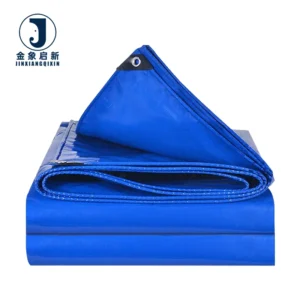
Pvc Plastic Canvas Strong Waterproof PVC Tarpaulin HDPE Coated Tarpaulin
¥1.80 Select options This product has multiple variants. The options may be chosen on the product page -
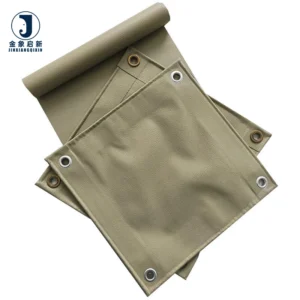
JX PVC Waterproof Fabric High-strength Sheeting for Industrial and Outdoor Coverings
¥1.90 Select options This product has multiple variants. The options may be chosen on the product page -
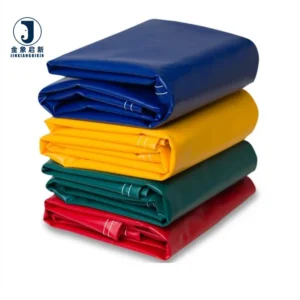
Heavy Duty Truck Tarpaulin 1000d Pvc Tarp Waterproof Pvc Canvas
¥1.20 Add to cart -
PVC Coated Tarpaulin PVC Fabric Tarpaulinheavy duty fire retardant waterproof pvc coated tarpaulin rolling pvc tarp
¥1.00 Select options This product has multiple variants. The options may be chosen on the product page