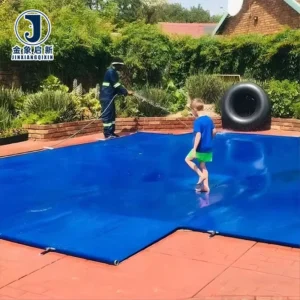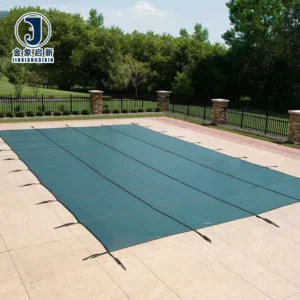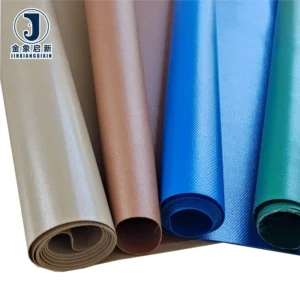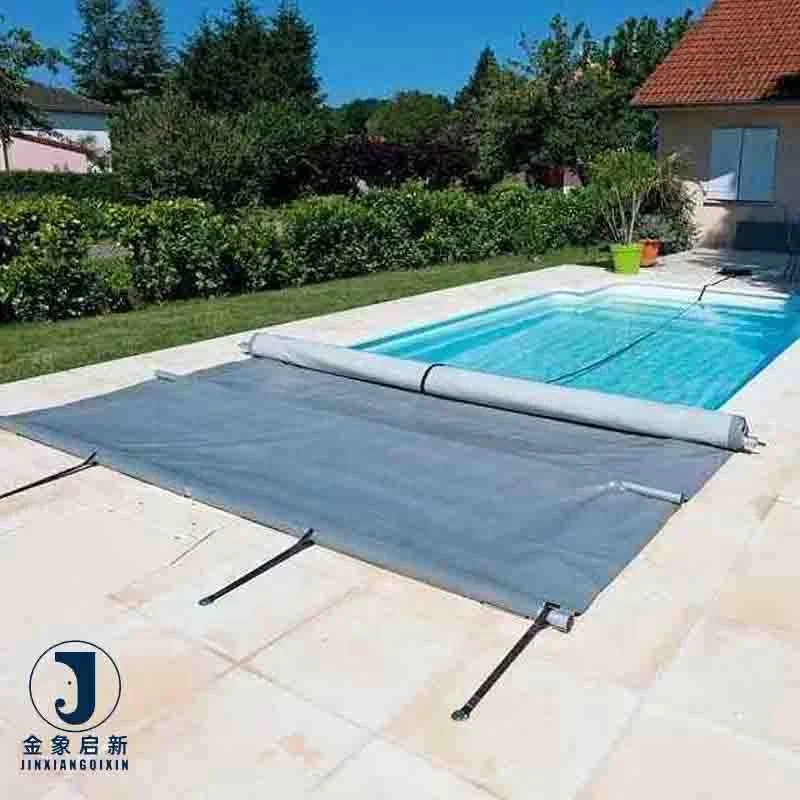
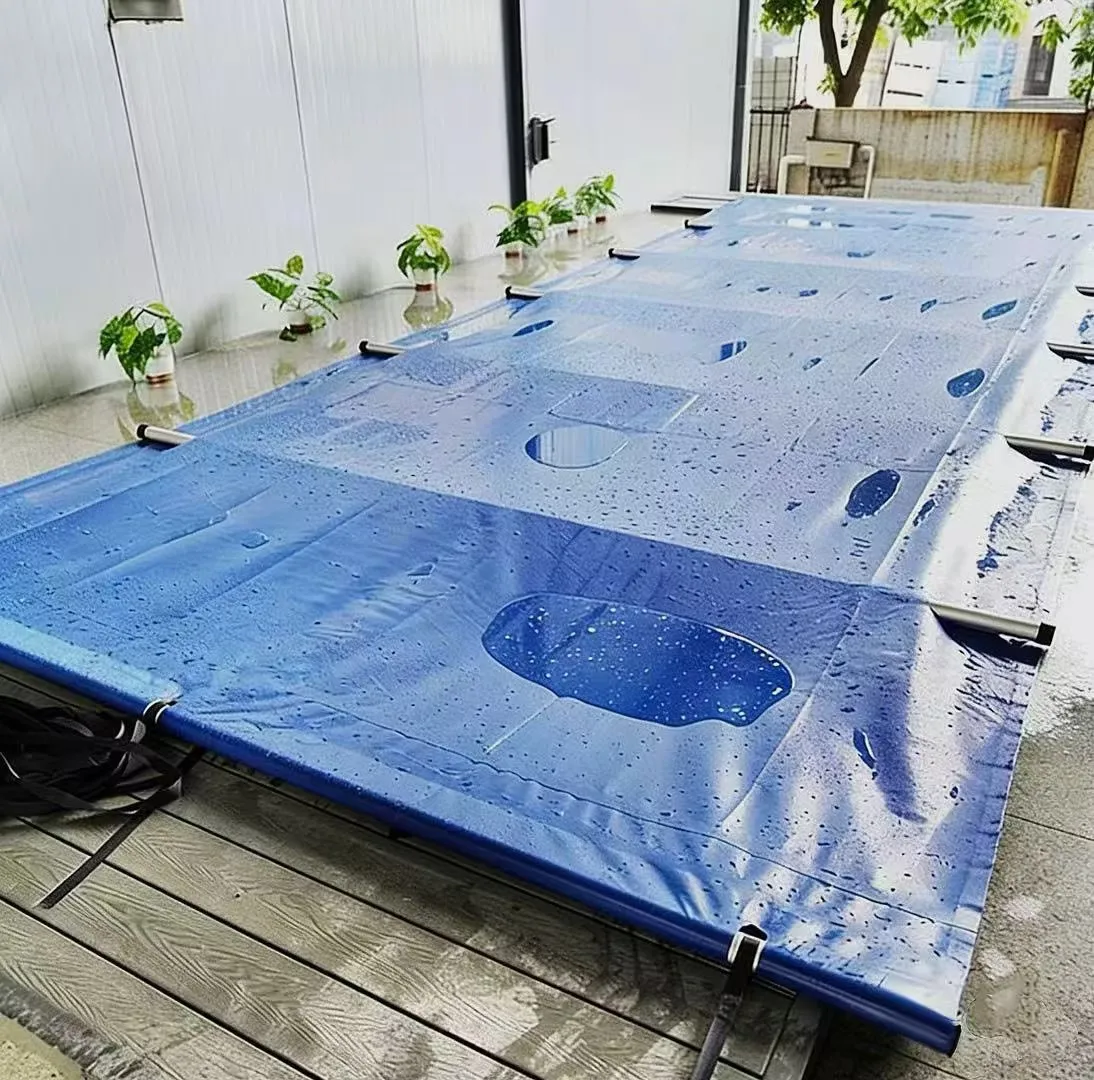
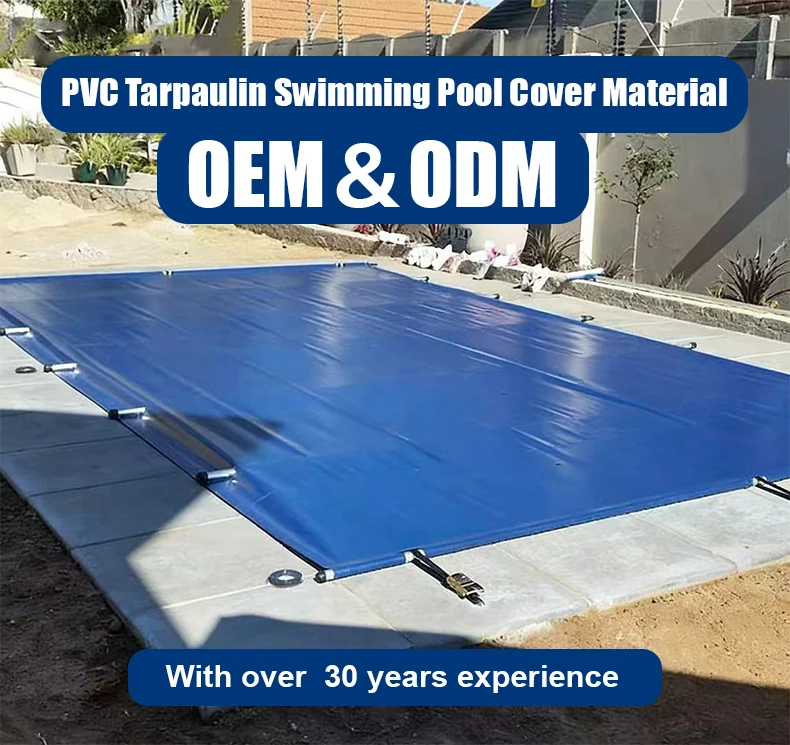
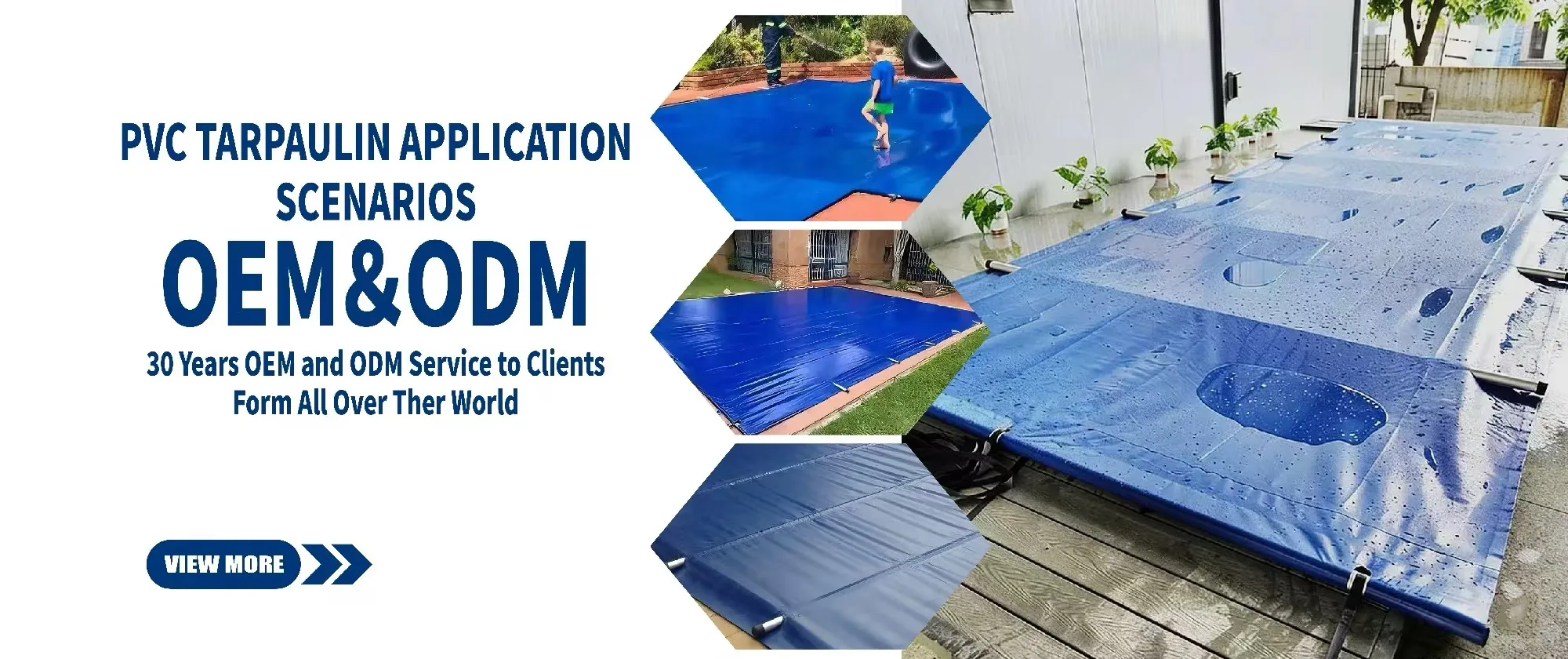
Backed by 30 years of coated fabric expertise, 100% pre-shipment inspection, and rapid sample development for non-standard pool dimensions.
Description
Coating Weight Integrity — every roll of PVC pool cover tarpaulin we ship is verified against the quoted GSM before dispatch, because underweight material is the most common reason pool covers fail early.
Technical Specifications
| Parameter | Value |
|---|---|
| Product Type | PVC Pool Cover |
| Material | PVC coated fabric |
| Waterproof Performance | 100% waterproof |
| UV Protection | UV resistant and anti-aging |
| Weather Resistance | Suitable for rain, wind, snow and extreme temperatures |
| Tear Resistance | High strength and tear resistant structure |
| Mildew Resistance | Anti-mildew surface treatment |
| Customization | Custom size and color available |
Application Suitability
| Application | Exposure & Requirement |
|---|---|
| Residential swimming pools | Constant UV exposure, seasonal debris loading, repeated installation and removal stress at tie-down points |
| Hotel and resort pool facilities | Commercial-grade appearance retention, frequent cleaning cycles, compliance with guest safety standards |
| Outdoor pools in variable climates | Freeze-thaw cycling, heavy rainfall pooling on cover surface, wind uplift during off-season storage |
Why Coating Weight Verification Matters for PVC Pool Cover Tarpaulin
A quoted GSM means nothing if the roll arriving at your dock weighs less than promised.
When a customer ordered UV-treated PVC pool cover tarpaulin at a specified coating weight and the delivered material came in lighter than agreed, the entire batch was rejected on site. The problem is not just a specification mismatch — lighter coating means less UV absorber in the compound, reduced waterproof integrity, and a shorter service life under direct sunlight. Buyers pay for a performance level and receive something that degrades faster than expected. [NEED_CITE: tensile and tear test methods for coated fabrics per ISO 1421]
Knife-Coated PVC Construction for Consistent Pool Cover Performance
The PVC pool cover tarpaulin we produce uses a knife-coated process, which applies a controlled layer of PVC compound onto the base fabric. This method delivers uniform coating thickness across the full width of the roll, ensuring that waterproof performance and tear resistance remain consistent from edge to edge. For pool covers, where standing water and constant moisture contact are the norm, any thin spot in the coating becomes a failure point.
UV-Resistant and Anti-Aging Treatment for Prolonged Sun Exposure
Pool covers sit under direct sunlight for months at a time, particularly during the off-season when the pool is closed. The UV-resistant formulation is integrated into the PVC compound during coating, not applied as a surface spray that wears off after the first season. The anti-aging stabilisers slow down plasticiser migration, which is the primary cause of cracking and brittleness in PVC pool covers that have been exposed to heat and ultraviolet radiation over multiple seasons. [NEED_CITE: UV stability testing standards for PVC coated fabrics]
How Coating Method and Base Fabric Interact
The tear resistance of a PVC pool cover depends on the interplay between the base fabric denier, the weave density, and the coating weight applied during lamination. A heavy coating on a low-density base fabric adds stiffness without proportional strength gains, while a light coating on a high-density weave leaves the yarns exposed to abrasion and moisture ingress. Knife coating allows the compound to penetrate the weave structure, creating mechanical adhesion that resists delamination when the cover is pulled taut across the pool frame or folded repeatedly during seasonal handling.
The Hidden Cost of Generic Sizing on Pool Covers
A PVC pool cover that does not match the exact dimensions of the pool creates gaps at the edges where debris and rainwater enter, defeating the purpose of the cover entirely. Generic cut sizes also concentrate stress at corners that do not align with the pool structure, leading to early tearing at those points. Custom sizing eliminates field trimming, reduces waste, and ensures that the cover sits flush against the pool perimeter with adequate overlap for secure anchoring. [NEED_CITE: coated fabric dimensional tolerance standards]
Why Fabrication and QC Discipline Reduce Field Failures
Every roll of PVC pool cover tarpaulin passes through in-process quality checks at each stage of the coating line, not just a final visual inspection before packing. Coating weight is measured against the specification, surface finish is verified for consistency, and the anti-mildew treatment is confirmed before the roll is cleared for shipment. The R&D team handles custom sizing and sample development so that buyers can verify fit and material behaviour before committing to a full production run. Pre-shipment inspection covers every roll, not a statistical sample.
Documentation & Verification
- Material specification sheet stating PVC coating type, base fabric, and confirmed GSM per roll
- UV-resistance and anti-aging test report available for the specific compound used
- Pre-shipment inspection record with measured coating weight against quoted values
- Certificate of origin and customs documentation for international pool cover shipments
- Roll packing list with individual roll weights and dimensions for receiving verification
Fabrication, Handling & Storage
- Heat-weld seams at manufacturer-recommended temperature to match the PVC compound on this pool cover material
- Reinforce all tie-down and grommet attachment points with extra PVC patches before field installation
- Store rolls upright on pallets to prevent permanent creasing across the coated surface
- Allow cold-stored PVC pool cover tarpaulin to reach ambient temperature before unrolling to avoid coating crack
- Use mild detergent and soft brush for cleaning to preserve the anti-mildew surface treatment
- Plan cutting layout to minimise offcuts and reduce the number of welded seams on large pool covers
What We Need From Your Enquiry
To quote accurately, share the exact pool dimensions including the overlap allowance you require at the edges. Specify the colour preference and whether you need the material supplied in rolls for your own fabrication or as finished cut-to-size covers. If your market requires specific UV-resistance or mildew-treatment certification, state the standard so we can match the compound formulation accordingly.
Frequently Asked Questions
Q: How long does the UV protection last on this PVC pool cover tarpaulin under direct sunlight?
A: The UV-resistant stabilisers are compounded into the PVC layer rather than applied as a surface coating, so protection persists as long as the coating remains intact. Actual service life depends on local solar intensity and seasonal exposure duration. Request the UV test report for the specific compound to verify expected performance in your climate zone.
Q: Can the PVC pool cover material be custom cut for irregular pool shapes?
A: Yes. The material can be cut and heat-welded to fit non-rectangular pools, including kidney-shaped and freeform designs. Provide a dimension drawing with all radii and edge lengths so the cutting pattern accounts for overlap and anchoring points without leaving unprotected gaps.
Q: What cleaning methods are safe for the anti-mildew treated surface?
A: Use a mild detergent with a soft brush or cloth. Avoid solvents, bleach-based cleaners, or high-pressure washing, as these can strip the anti-mildew treatment and damage the PVC coating. Rinse thoroughly with fresh water after cleaning to remove any detergent residue.
Q: How does this PVC material compare to standard polyethylene pool covers?
A: PVC coated fabric offers substantially higher tear resistance, better waterproof integrity under standing water, and superior resistance to UV degradation compared to polyethylene sheeting. The knife-coated construction also provides better dimensional stability, so the cover does not stretch or sag over the course of a season.
Q: What reinforcement options are available for high-stress tie-down points?
A: Additional PVC patches can be heat-welded at grommet locations and corner stress points before the cover is shipped. Specify the tie-down spacing and hardware type in your enquiry so reinforcement patches are sized and positioned to match your anchoring system.
Related products
-
PVC Laminated Waterproof Breathable Anti-UV Blackout Organic Plain Weft Swimming Pool Covers Tarpaulin Coated
¥1.78 Select options This product has multiple variants. The options may be chosen on the product page -
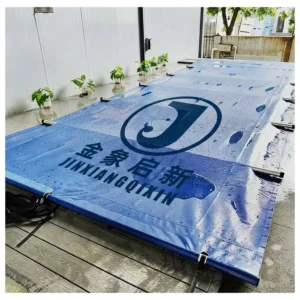
JX PVC Tarpaulin Swimming Pool Cover Material Knife Coated Fabric Waterproof UV-Resistant Windproof
¥13.00 Select options This product has multiple variants. The options may be chosen on the product page -
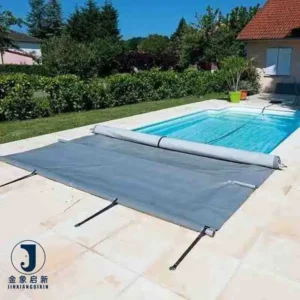
JX PVC Tarpaulin Swimming Pool Cover Material Knife Coated Fabric Waterproof UV-Resistant Windproof
¥13.00 Select options This product has multiple variants. The options may be chosen on the product page -
Custom PVC Tarpaulin Pool Cover – Manufacturer
Read more