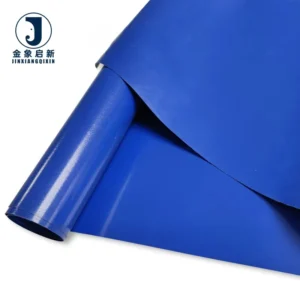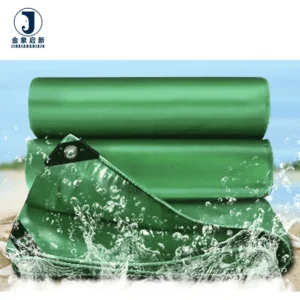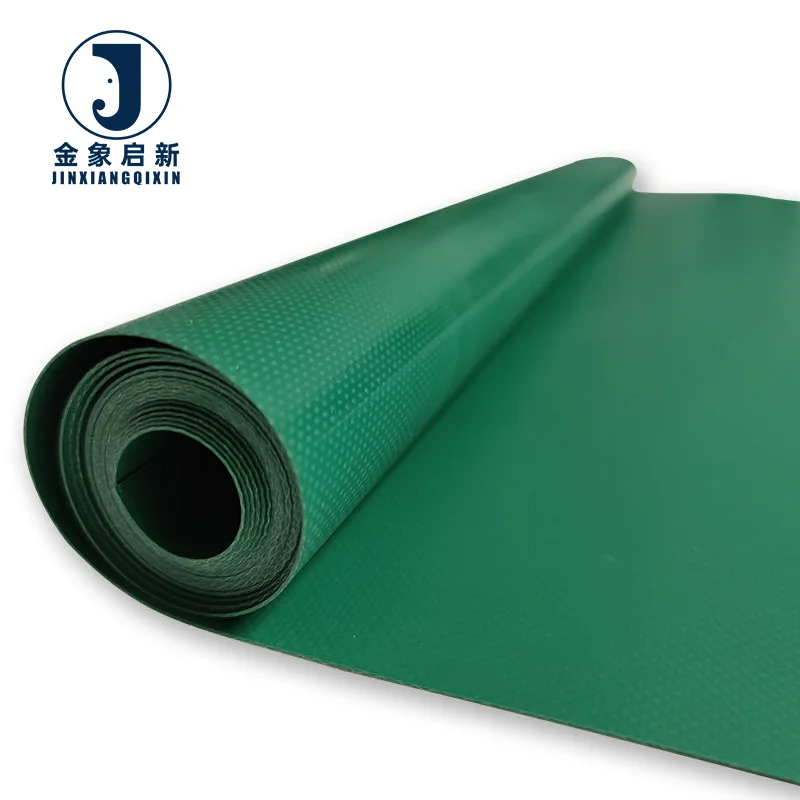
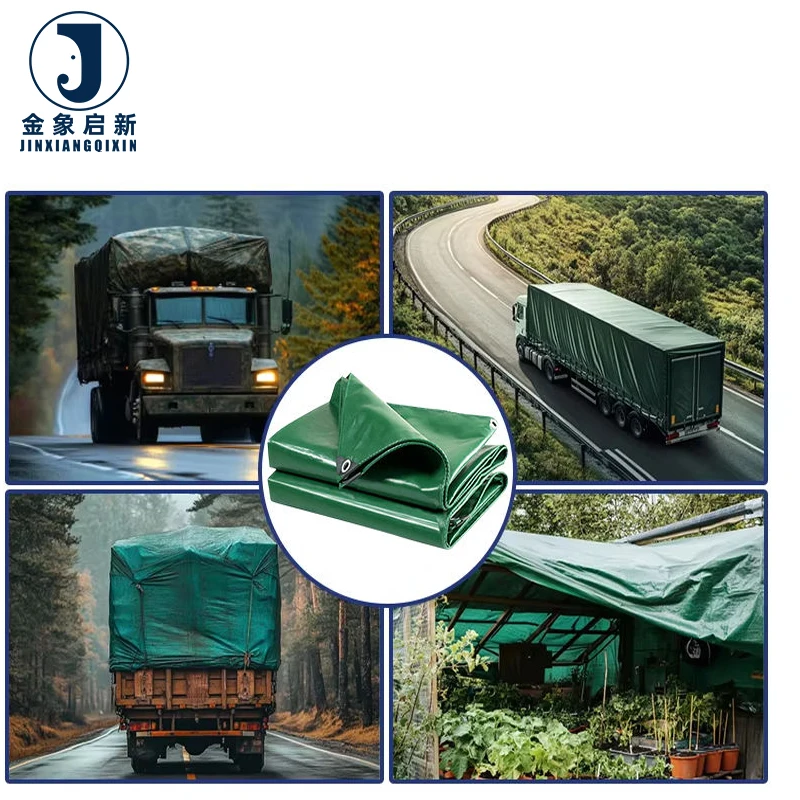
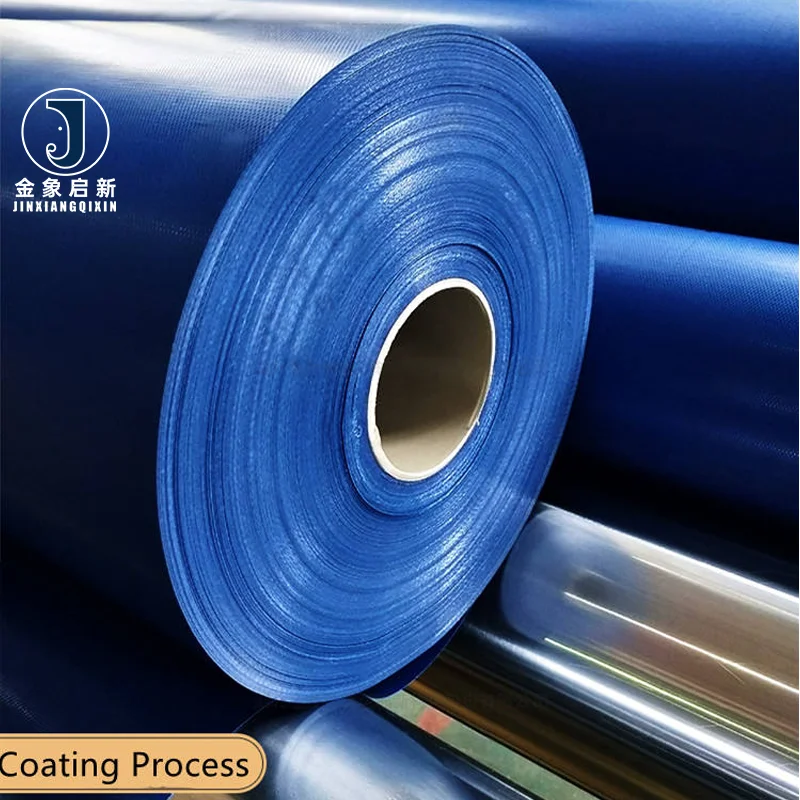
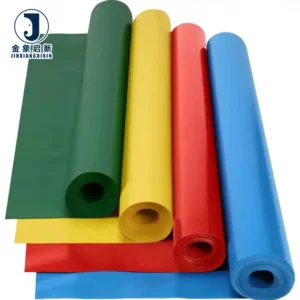
PVC Coated Tarpaulin Roll, 350–900 g/m², 500D×840D to 1000D×2000D Polyester Base — available in eight yarn-count tiers with double-sided PVC coating for smooth, leather-like finish and strong heat-seal performance.
- Full customisation on width, colour, pattern printing and eyelet spacing from a single production source
- UV-resistant and flame-retardant treatments available with supporting test documentation
- High-temperature heat-sealed edge wrapping with 5mm rope and 3cm aluminum alloy eyelets
Backed by nearly 30 years of coating process expertise, three full production lines, and 100% pre-shipment inspection for roll-to-roll consistency.
Description
Process-Controlled Coating Weight — Every PVC coated tarpaulin roll is produced with in-process QA checkpoints verifying GSM against the quoted grade, backed by 100% pre-shipment inspection so the material arriving at your dock matches the specification sheet.
Technical Specifications
| Parameter | Value |
|---|---|
| Product Type | PVC Coated Tarpaulin Roll |
| Base Fabric Denier | 500D×840D / 500D×1000D / 1000D×1000D / 1000D×1300D / 1300D×1300D / 1000D×2000D |
| Weight (GSM) | 350 / 400 / 420 / 500 / 600 / 650 / 750 / 900 g/m² |
| Total Thickness | 0.29 mm (400 GSM) / 0.32 mm (420 GSM) / 0.38 mm (500 GSM) / 0.44 mm (600 GSM) / 0.46 mm (650 GSM) / 0.55 mm (750 GSM) / 0.65 mm (900 GSM) |
| Coating Material | PVC & Polyester |
| Coating Method | Double-sided PVC coating |
| Mesh Count | 30×19 (350–420 GSM) / 20×20 (600–750 GSM) / 30×15 (900 GSM) |
| Tensile Strength (Warp/Weft) | 1650/1600 N (350 GSM) to 3900/3500 N (900 GSM) |
| Flame Retardant | Available in flame-retardant grades — confirm the grade required for your market |
| UV Treatment | Anti-UV treatment available — test basis not stated in source |
| Waterproof Rating | Water resistant / Waterproof |
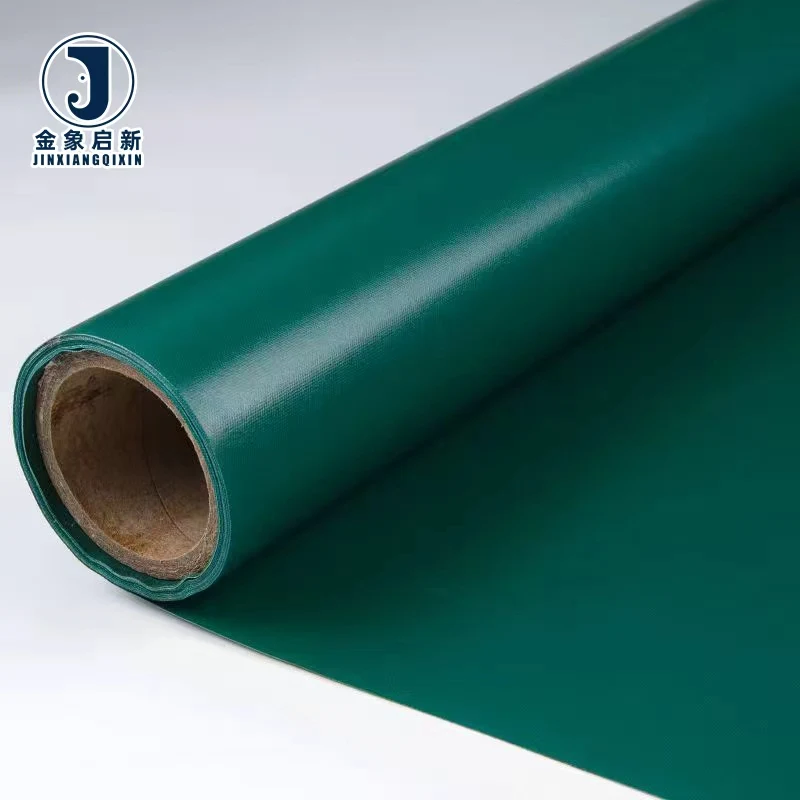
| Surface Finish | Smooth, soft surface with leather-like texture |
| Temperature Range | Brittle ≤ −50 to −60 °C / Softening ≥ 80 °C / Melting point 212 °C |
| Roll Width | 2 m – 2.1 m (varies by grade) |
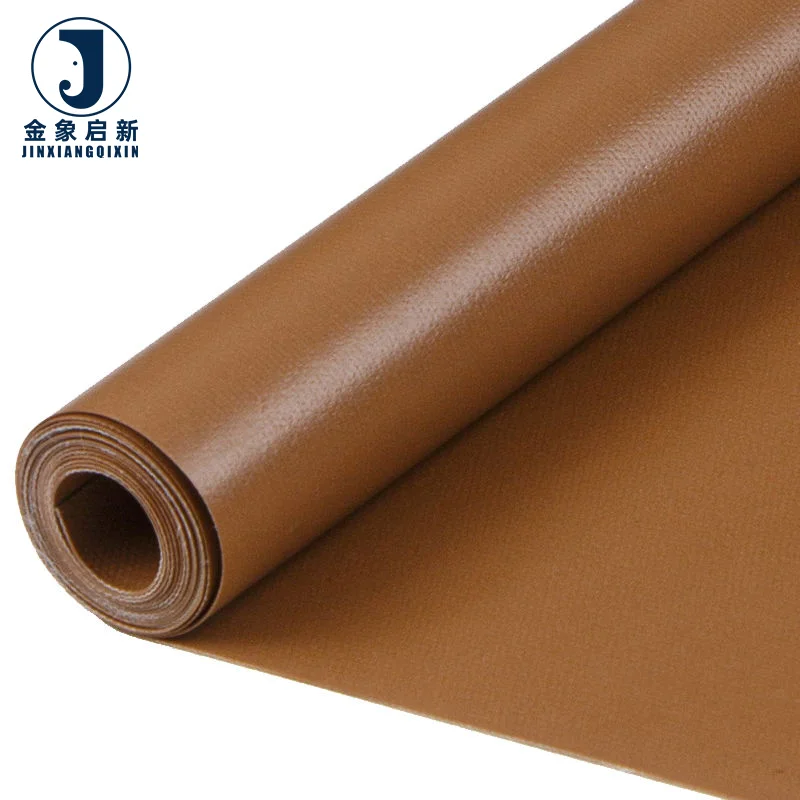
| Color | Customizable |
| Edge Finish | Heat-sealed seamless edge wrapping; 5 mm thick rope without splicing |
| Eyelets | 3 cm enlarged aluminum alloy buttonhole; reinforced corners on all sides |
| Printing | Custom brand and pattern printing available |
| Certification | ISO, CE |
Application Suitability
| Application | Exposure & Requirement |
|---|---|
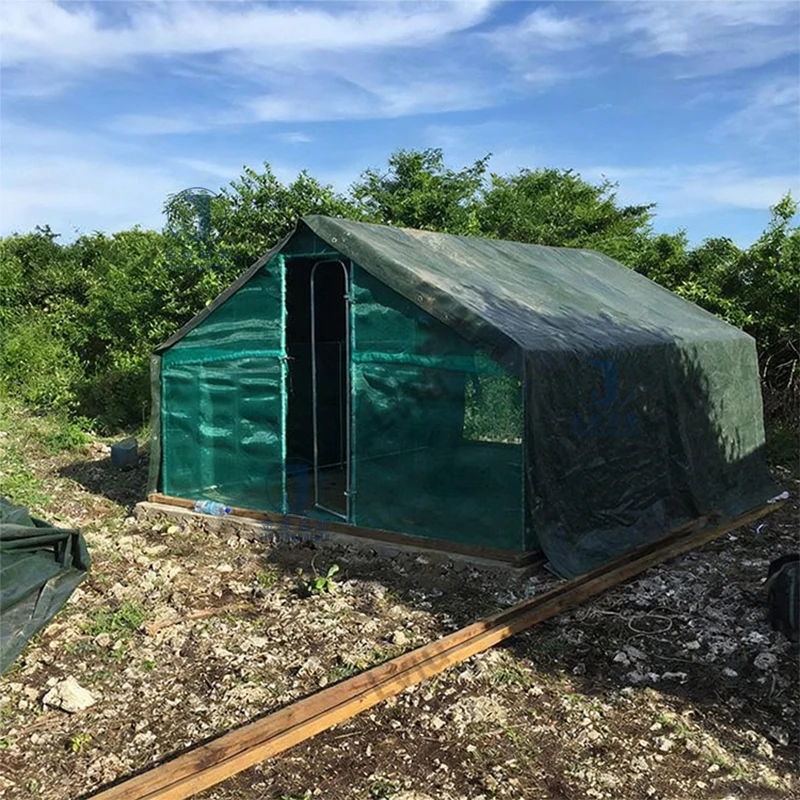
| Tent and awning fabrication | Repeated assembly and teardown, UV exposure, wind load on seams, colour matching across panels |
| Truck and trailer side curtains | Constant flexing at load points, road spray, abrasion against cargo, tie-down tension at eyelets |
| Inflatable and membrane structures | Air pressure holding, welded seam integrity, surface smoothness for heat-sealed joints |
| Equipment and machinery covers | Outdoor storage, dust and moisture ingress, repeated draping over sharp edges |
| Construction site enclosures | Wind-driven rain, scaffolding abrasion, flame-retardant compliance on active sites |
| Tarpaulin distribution and import | Batch-to-batch GSM and colour consistency across multiple rolls within a single container shipment |
Why the Roll You Receive Must Match the Roll You Quoted
A quoted GSM means nothing if the coating weight drifts between production runs.
When tarpaulin distributors source PVC coated tarpaulin roll stock from suppliers without in-process coating control, the material that arrives can feel noticeably lighter than the sample approved weeks earlier. The base fabric denier might be correct, but the PVC coating weight — which accounts for a significant share of the total GSM — varies from roll to roll. This inconsistency shows up as differences in hand feel, stiffness during fabrication, and ultimately tensile performance under load. Buyers who specify 650 GSM for heavy-duty truck covers but receive rolls closer to 600 GSM face early failures at flex points, and the cost of replacing fabricated covers far exceeds the material savings. [NEED_CITE: coating weight variation and its effect on tensile performance in PVC-coated polyester fabrics]
Coating Process Control Across the Full GSM Range
The PVC coated tarpaulin roll catalogue spans eight weight grades from 350 to 900 g/m², each matched to a specific base fabric denier and mesh count. A 350 GSM roll uses a 500D×840D base at 30×19 mesh for lightweight awning and tent panels, while the 900 GSM grade pairs a 1000D×2000D base at 30×15 mesh for heavy-duty covers that must resist high tie-down tension. The double-sided PVC coating produces a smooth, leather-like surface that accepts heat-sealed seams and custom pattern printing without surface preparation.
Roll-to-Roll Colour Consistency Within a Single Order
Distributors loading a container with multiple rolls in the same colour need those rolls to match when unrolled side by side at the end customer’s site. Colour variation between rolls in the same batch is one of the most frequent complaints in coated fabric sourcing. The production workflow includes dedicated QA checkpoints at the coating stage where colour reference is verified against the approved sample. Rolls that deviate from the target shade are pulled before they reach the packing stage, so the PVC coated tarpaulin roll stock you distribute carries a consistent appearance across the entire order. [NEED_CITE: colour consistency standards for coated fabrics in roll-form distribution]
How Denier, Mesh Count and Coating Weight Interact
Tensile strength in a coated fabric is not determined by GSM alone. The base fabric denier sets the ceiling — a 1000D×2000D yarn grid can carry substantially more load than a 500D×840D grid regardless of how much PVC is applied on top. Mesh count then controls how that yarn strength is distributed across the fabric plane: a tighter 30×19 weave at lower GSM can outperform a looser 20×20 weave at higher GSM in tear propagation resistance. The PVC coating adds waterproofing, surface durability and weldability, but its contribution to tensile strength is secondary to the polyester base. This is why the specification sheet lists denier, mesh count and GSM as a set rather than as independent figures — each parameter informs how the roll will behave during fabrication and in service.
What Happens When Specification Choices Miss the Mark
Ordering a 500 GSM roll for a truck side curtain application that demands repeated flexing and tie-down tension can result in the fabric cracking at fold lines within months, while a 900 GSM roll used for a lightweight garden cover adds unnecessary weight and cost without delivering proportional benefit. Flame-retardant grades specified for a construction site enclosure must match the local authority’s acceptance criteria — a roll described as "flame retardant" without a documented grade will fail inspection regardless of its actual performance. Similarly, ordering custom-width rolls without confirming the heat-seal parameters for that specific GSM can produce weld seams that delaminate before the fabric itself reaches its tensile limit. [NEED_CITE: weld seam failure modes in PVC-coated tarpaulin fabrication]
Why Buyers Source This Range Here
Three full production lines and 36 sets of professional equipment support bulk roll output with consistent coating weight across long runs. A 10-person R&D team develops custom-width, custom-colour and custom-print samples within days, so buyers can confirm appearance and fabrication behaviour before committing to a full container order. Dedicated QA/QC runs at every production stage — from base fabric inspection through coating application to final roll winding — with 100% inspection before any roll is packed for dispatch. Nearly 30 years of focused coated-fabric production means the process parameters for each GSM grade are established, not experimental. ISO and CE certified production supports export documentation requirements across North American, European and Asian markets.
Documentation & Verification
- Material specification sheet listing exact GSM, base fabric denier, coating weight and thickness for each roll grade ordered
- UV and flame-retardant test reports provided for applicable grades with documented test basis
- ISO and CE certificates included in the shipping documentation package
- Pre-shipment inspection record confirming GSM verification and colour consistency roll to roll
- Roll packing list with container loading details by roll count and weight for logistics planning
- Certificate of origin and customs support documentation for destination-country clearance
Fabrication, Handling & Storage
- Heat-seal temperature and dwell time must be matched to the specific GSM grade — the 0.55 mm coating on 750 GSM rolls requires different settings than the 0.29 mm on 400 GSM
- The 3 cm aluminum alloy eyelets and reinforced corner patches distribute tie-down load across a wider fabric area, reducing tear initiation at fixing points
- Store rolls upright on pallets in a dry environment; laying heavy-grade 900 GSM rolls flat for extended periods can create permanent creases in the PVC coating
- The smooth leather-like surface finish accepts solvent-based and UV-cured inks for custom brand printing — confirm ink compatibility with the PVC formulation before production
- When cutting panels from 2 m – 2.1 m wide rolls, plan the nesting layout to minimize off-cuts and reduce the number of heat-sealed splice seams in the finished cover
- Field repairs on double-sided PVC coated fabric respond well to hot-air welding with matching PVC repair tape, maintaining waterproof integrity at the patch boundary
Moving Forward With Your Specification
Provide your target GSM, base fabric denier preference, roll width and the intended end-use application so the correct grade can be recommended. If your market requires a specific flame-retardant or UV treatment standard, state the regulation or test method so the matching grade is confirmed with documentation. Share your colour reference, print artwork and annual volume estimate to receive a PVC coated tarpaulin roll quotation with realistic lead times and container loading details. Request a sample roll in your specified grade before authorizing full production.
Frequently Asked Questions
Q: How is GSM verified on each roll before shipment?
A: Each roll passes through dedicated QA checkpoints during the coating stage where coating weight is measured against the quoted GSM. Rolls that fall outside tolerance are pulled before packing. A pre-shipment inspection record is included in the documentation, confirming the weight of every roll in the order matches the material specification sheet.
Q: How do you control colour consistency across multiple rolls in one order?
A: Colour reference is checked at the coating stage against the approved sample for that order. Rolls showing visible deviation are removed from the batch before dispatch. The pre-shipment inspection includes a side-by-side colour comparison so rolls shipped in the same container match when unrolled together at the distribution point.
Q: What width and roll length options are available, and what is the minimum order?
A: Standard roll widths run from 2 m to 2.1 m depending on the GSM grade. Custom widths, colours and print patterns are available through the R&D team with samples developed within days. Contact the sales team with your required width and annual volume to confirm minimum order quantities and lead times for your specification.
Q: What test documentation comes with UV-treated and flame-retardant grades?
A: For grades specified with UV or flame-retardant treatment, test reports documenting the treatment performance are included with the shipment. The specific test basis and grade should be confirmed during the inquiry stage so the correct documentation is prepared. ISO and CE certificates are provided as part of the standard documentation package.
Q: How are rolls packed and loaded into containers for export?
A: Rolls are available in roll packing, bale packing or carton depending on the grade and buyer preference. A detailed packing list states roll count, individual roll weight and total container weight for logistics planning. The packing method is selected to protect the PVC coating surface from abrasion and creasing during ocean transit.
Related products
-
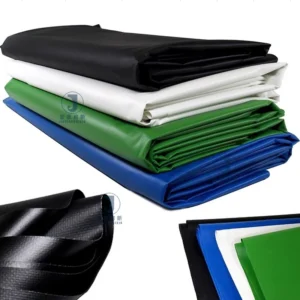
Best Quality 650gsm Waterproof Polyester Heavy Duty Bache PVC Tarpaulin Manufacturer
¥1.25 Select options This product has multiple variants. The options may be chosen on the product page -
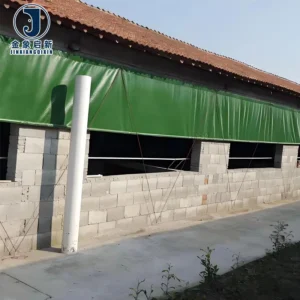
JX PVC Coated Tarpaulin/Cover for Farm Waterproof Warp Knitted Tent Pig Broiler Sheep Chicken Farm Plain Style
¥1.40 Add to cart -
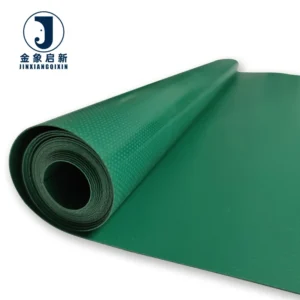
Wholesale Pricehigh Quality Outdoor Waterproof Tarp Customized Pvc Tarpaulin Roll
¥1.20 Add to cart -
PVC Tarpaulin Glossy 650GSM 1000D*1000D 23*23 1.50*50M/R for Multi-purpose Cover SAMPLE FREE
¥2.70 Add to cart