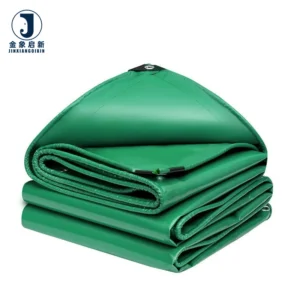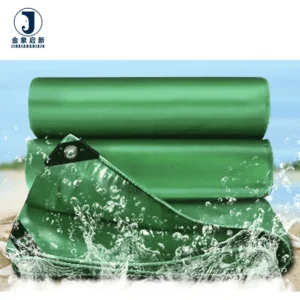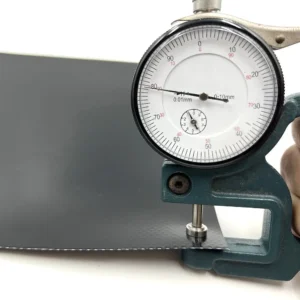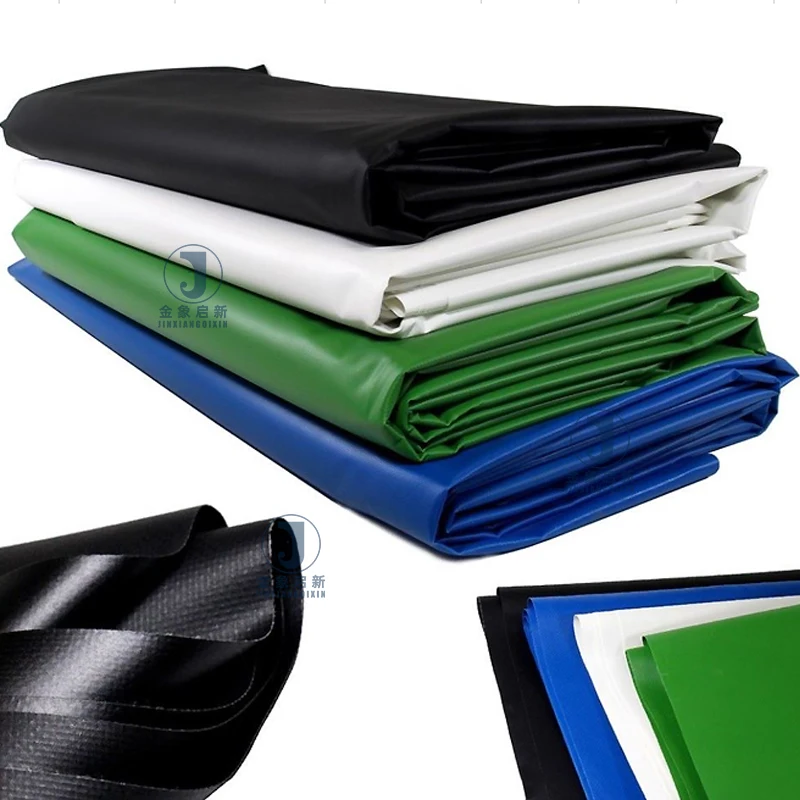
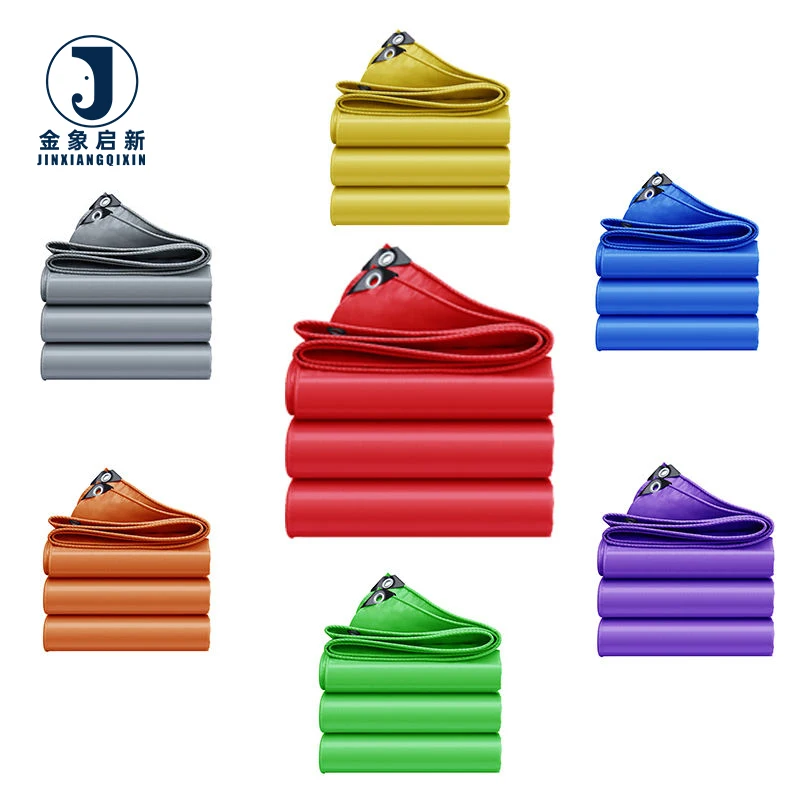
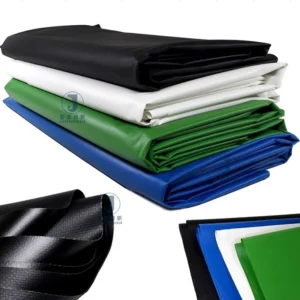
PVC Tarpaulin Roll — 100% high tenacity polyester base with PVC coating via laminated and hot-melt technology, offering outstanding tearing strength for welding and reliable adhesion at seam points.
- Coating weight and method directly impact peel strength and heat-weld performance; specifying the right technology avoids seam failure where loads flex most
- Flame retardant, anti-static, anti-cold, and anti-mildew treatments available to match project compliance requirements
- Roll width and length affect cutting yield and splice count on large covers and structures
Backed by nearly 30 years of coated fabric process control, 100% pre-shipment inspection, and full documentation including material specification sheets and test reports.
Description
Custom Coating Process Control — Deep expertise in PVC formulation and hot-melt lamination ensures adhesion strength that holds at flex and weld points, verified through 100% pre-shipment inspection on every roll.
Technical Specifications
| Parameter | Value |
|---|---|
| Product Type | PVC Coated Tarpaulin |
| Base Fabric | 100% high tenacity polyester yarns |
| Coating Material | PVC |
| Coating Method | Laminated technology / Hot-melt Coating technology |
| Waterproof | Yes |
| Cold Crack Resistance | Yes |
| Anti-Mildew | Yes |
| Anti-Static | Yes (surface resistance and standard not stated in source) |
| Flame Retardant | Available as special treatment (grade not stated in source) |
| Anti-Cold | Available as special treatment (grade not stated in source) |
| UV Treatment | Not stated in source |
| Color Fastness | Best color fastness (test basis not stated in source) |
| Tearing Strength for Welding | Outstanding (test standard not stated in source) |
| Adhesion Strength | Good (test standard not stated in source) |
| Key Features | Flame retardant, anti-static, anti-cold, anti-mildew treatments available; cold crack resistant; waterproof construction |
Application Suitability
| Application | Exposure & Requirement |
|---|---|
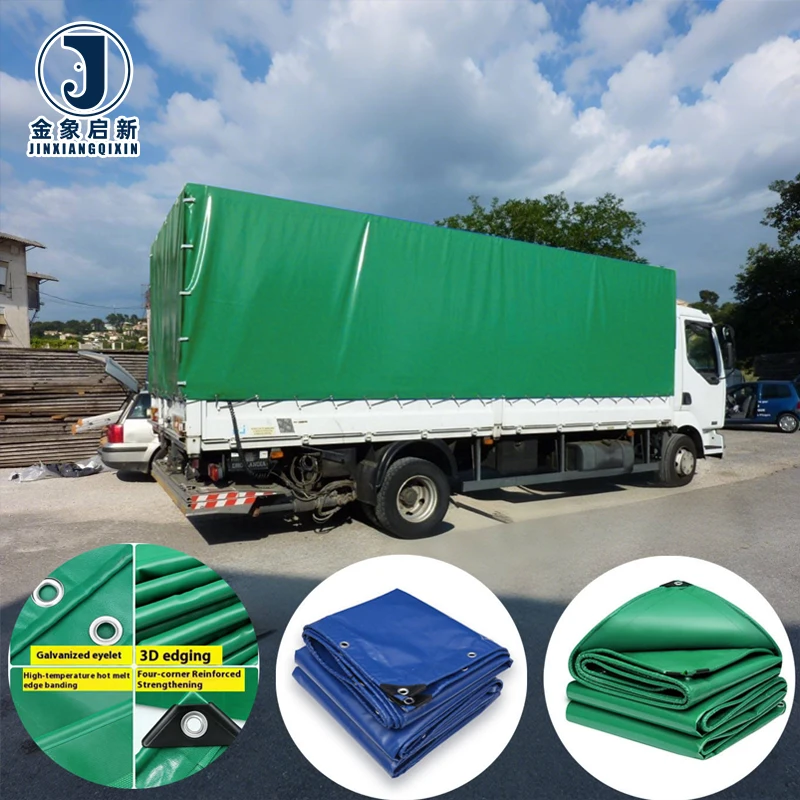
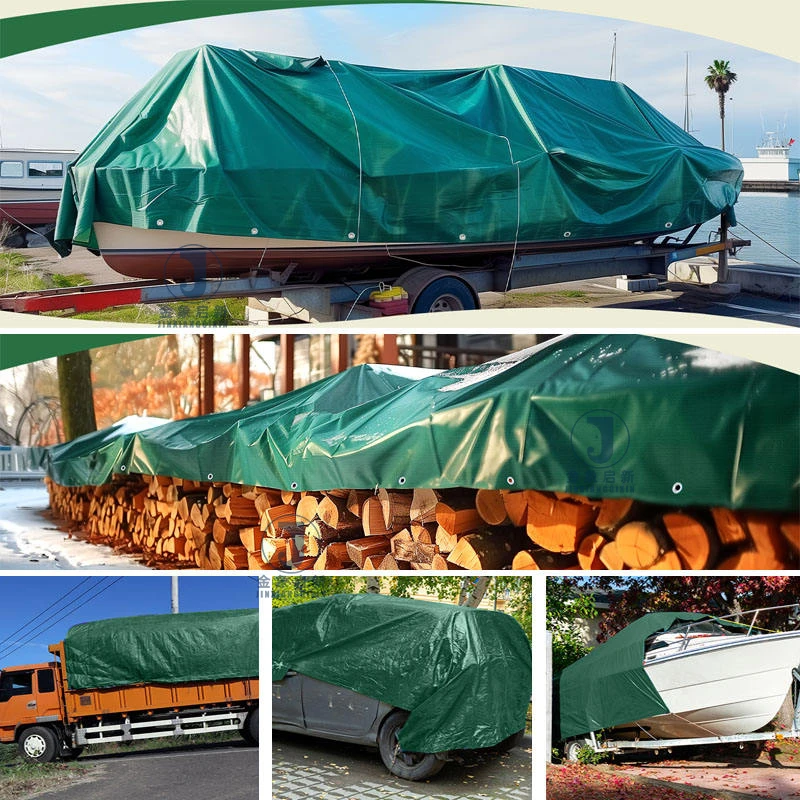
| Truck and trailer side curtains | Constant flexing at load points, road debris abrasion, prolonged sun and rain exposure |
| Industrial equipment covers | Weather exposure, dust ingress, repeated deployment and folding |
| Tent and awning structures | Wind load tension, UV degradation, seasonal packing and redeployment |
| Site and construction covers | Puncture from sharp materials, water pooling, UV and temperature fluctuation |
| Inflatable and membrane structures | Air pressure stress, seam integrity under tension, weather exposure |
Why Coating Adhesion Matters More Than GSM on the Quotation
A PVC coated tarpaulin custom manufacturer that controls both lamination and hot-melt coating in-house addresses the failure mode that generic weight-based sourcing misses: seams and edges breaking before the body fabric does.
Coating weight alone does not predict weld strength — adhesion between coating and base fabric determines whether the tarp survives flex cycles at stress points.
I have seen heavy-grade coated rolls fail at the weld line while lighter rolls with superior hot-melt adhesion held through years of truck side curtain service. The failure is not in the PVC film or the polyester weave in isolation; it occurs at the boundary where the two meet, particularly where the load flexes most and welded seams carry cyclic stress. [NEED_CITE: tensile and tear test methods for coated fabrics per ISO 1421] When the coating separates from the base yarn under repeated bending, the welded seam unravels regardless of how high the GSM reads on the scale. This is why process control over lamination temperature and coating penetration depth matters as much as the raw material input.
Lamination and Hot-Melt Coating for Structural Integrity
The laminated and hot-melt coating technologies used in this PVC coated tarpaulin create a bond between the PVC film and the high-tenacity polyester base that resists delamination under cyclic loading. Laminated coating applies pre-formed PVC film under heat and pressure, producing a uniform thickness across the roll. Hot-melt coating*dividual yarns into the coating matrix and improving tear propagation resistance at cut edges and weld lines.
Rip-Stop Construction at Reinforced Edges
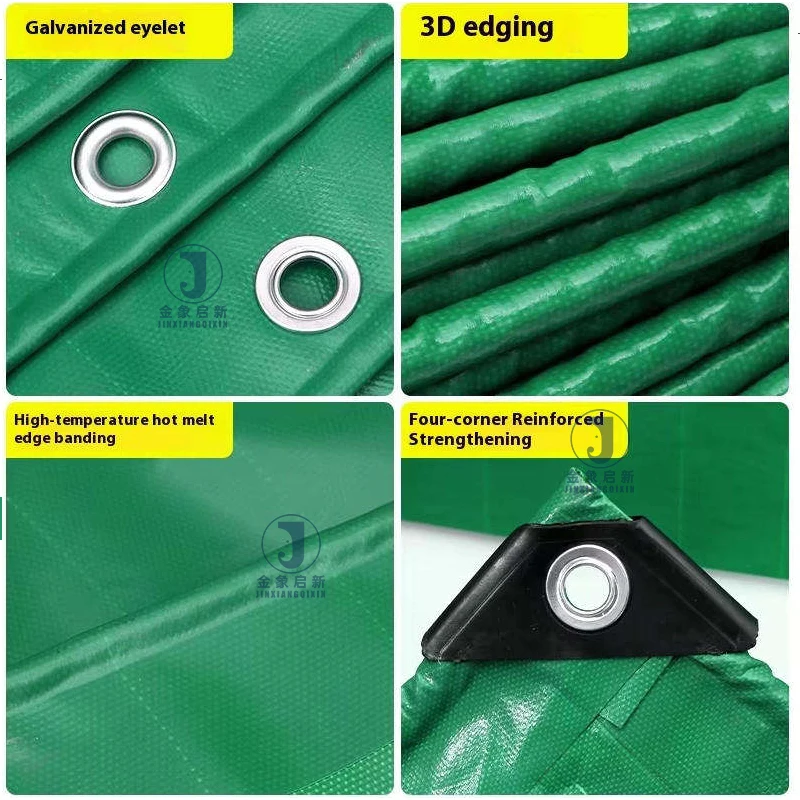
Reinforced edges with rip-stop construction interrupt tear propagation at the points where tie-down hardware, eyelets, and hem folds concentrate stress. In standard plain-weave PVC tarpaulin, a small cut or puncture at the edge can propagate across the full panel under wind load or transport vibration. The rip-stop base fabric structure places heavier yarns at regular intervals, creating a grid that arrests tear growth before it reaches the main panel. This construction is particularly relevant for truck cover applications where edge hems bear the full tie-down load.
Interpreting Treatment Specifications for Compliance
The available special treatments — flame retardant, anti-static, anti-cold, and anti-mildew — are applied during coating formulation rather than as surface after-treatments. [NEED_CITE: DIN 4102 fire classification for building materials] When your project specification calls for a particular flame retardant grade or anti-static surface resistance, the coating formulation is adjusted before production begins, and the test result is documented against the applicable standard. Confirming the grade required for your market before ordering ensures the roll arrives with the correct certification rather than a generic claim. Anti-mildew treatment is integrated into the PVC compound, preventing fungal growth on stored or deployed fabric in humid environments without affecting weldability or color.
How Base Fabric and Coating Method Interact
The tensile and tear performance of any PVC tarpaulin depends on the interaction between base fabric construction and coating penetration. A high denier polyester yarn with open weave allows deep coating penetration, improving adhesion but reducing drape flexibility. A tighter weave with finer yarns gives a smoother surface for printing and a stiffer hand feel, with coating adhesion concentrated at the yarn surface. Hot-melt coating technology bridges this trade-off by melting the PVC into the weave under controlled temperature and pressure, achieving adhesion depth comparable to knife-over-roll coating while maintaining the surface quality of laminated film. The result is a material where tearing strength at weld points reflects the combined contribution of yarn tenacity, weave density, and coating bond rather than any single factor in isolation.
The Cost of Specifying on Weight Alone
When procurement decisions rest solely on quoted GSM without verifying coating adhesion or base fabric denier, the consequences appear after the material enters service. Welded seams on truck curtains separate under road vibration, not because the PVC is too thin, but because the coating-to-yarn bond was insufficient for cyclic flex loading. Color inconsistency across rolls in the same order becomes visible only after installation, when adjacent panels show different shades under direct sunlight. [NEED_CITE: batch color consistency standards for coated fabrics] Flame retardant claims without supporting test reports lead to failed site inspections and rejected shipments, forcing emergency reorders at premium lead times. These are not material defects in the traditional sense — they are specification gaps where the quoted parameter did not match the performance requirement.
What This Manufacturing Process Delivers
Nearly 30 years of focused coated fabric production provides the process history to control coating weight distribution and adhesion consistently across long production runs. Three full production lines and 36 sets of professional equipment support bulk capacity without sacrificing the individual roll inspection that catches coating defects before packing. A 10-person R&D team handles material selection, custom sizing, and sample development, producing confirmation samples within days for custom color, width, or treatment requirements. Dedicated quality control at every production stage — from base fabric inspection through coating, winding, and packing — means each roll ships with a documented inspection record. [NEED_CITE: ISO and CE certification scope for PVC coated fabric manufacturing] Samples are developed for buyer approval before production commitment, reducing the risk of specification mismatch on the finished order.
Documentation & Verification
- Material specification sheet stating base fabric denier, coating method, and color reference per roll
- Test reports for flame retardant and anti-static grades supplied where applicable with the order
- Pre-shipment inspection record covering coating uniformity, edge reinforcement, and roll dimensions
- Roll packing list with weight, count, and identification for container loading verification
- Certificate of origin and customs documentation included with each dispatch
Fabrication, Handling & Storage
- Hot-air welding temperature should be calibrated to the specific PVC coating formulation used on this roll before full production runs
- Reinforced edges with rip-stop construction require heavier-duty eyelet setting tools to avoid crushing the reinforcement yarns
- Store rolls upright on end caps to prevent flat-spot deformation of the coating layer under self-weight
- Allow cold-stored rolls to reach ambient temperature before unrolling to avoid cold crack damage at the fold lines
- Use PVC-compatible cleaners only; solvent-based products can dissolve the plasticizer from the hot-melt coating surface
- Plan cutting layouts to maximize utilization from the roll width, accounting for weld seam allowances on joined panels
Requesting a Specification Match
To move from inquiry to confirmed sample, provide the application environment and the specific exposure conditions the finished product will face — whether that is transport flex cycles, outdoor weather, or industrial dust and chemical contact. Specify any flame retardant or anti-static grades required by your local regulations or site safety standards, along with the target market so the correct test standard is applied. Indicate whether you need roll stock in standard widths or custom dimensions, and whether color matching or printed branding is part of the project scope.
Frequently Asked Questions
Q: How do you verify GSM on arrival matches the quotation?
A: Every roll undergoes weight verification against the stated specification before dispatch, documented in the pre-shipment inspection record. The material specification sheet provided with your order states the target GSM alongside the base fabric denier and coating method, so you can cross-reference on receipt. If your contract requires third-party verification, we support inspection by your nominated agent at the factory before container loading.
Q: What flame retardant grades are available and which test standards do they meet?
A: Flame retardant treatment is available as a coating formulation option, with the specific grade matched to your market requirement. Standards such as DIN 4102, NFPA 701, and other regional classifications can be addressed — confirm which test standard your project specification calls for, and we will formulate and test accordingly. The supporting test report is included with shipment documentation for the applicable grade.
Q: How do you control color consistency across multiple rolls in the same order?
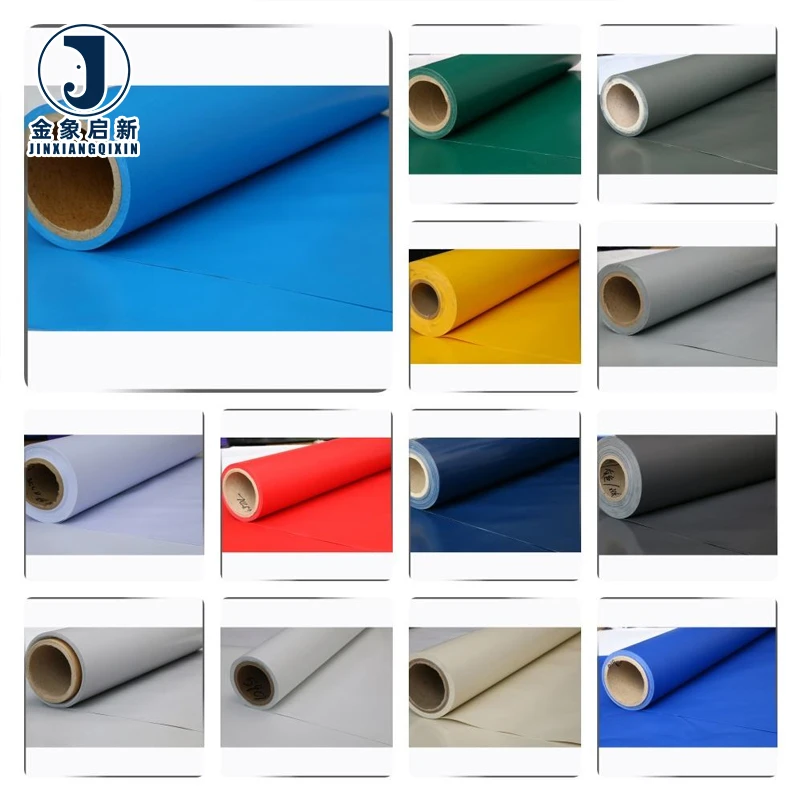
A: Color formulation is locked at the sample approval stage, and all rolls in a production run are coated from the same batch of PVC compound. The 100% pre-shipment inspection includes visual comparison of adjacent rolls under controlled lighting to catch shade variation before packing. For projects requiring strict color matching across multiple shipments, we retain a reference sample from each approved batch.
Q: What custom widths, lengths, and printing options are available?
A: Rolls can be produced in custom widths and lengths based on your cutting requirements and container loading plan. Pattern printing and branding are handled by the in-house R&D team, with samples developed for approval before the full run. Minimum order quantities and lead times depend on the specific width and color combination — provide your target dimensions and annual volume for a production plan.
Q: How are reinforced hems and edge treatments specified for industrial covers?
A: Edge reinforcement with rip-stop construction is built into the base fabric weave, providing tear resistance at stress points without adding a separate bonded strip. For applications requiring specific eyelet spacing, hem fold width, or additional reinforcement patches at high-load corners, provide the finished cover drawing or describe the tie-down configuration so the cutting and finishing specification matches your hardware.
Related products
-
Wholesale 650 Gsm Waterproof Outdoor Tarp Roll Pvc Coated Industrial Tarpaulin Roll for Tent
¥1.26 Select options This product has multiple variants. The options may be chosen on the product page -
Stock PVC Tarpaulin Fabric Rolls 500D*500D 18*17 Hot Selling Colors in Stock China Manufacture Wholesale Fabrics Best Price
¥1.26 Select options This product has multiple variants. The options may be chosen on the product page -
Factory Custom 9×11 Poultry Curtains Tarpaulin PVC Coated Waterproof and Anti-Static Tarp for Chicken Coop Farms
¥0.85 Add to cart -
Custom Reinforced Edges Rip-Stop Rubberized PVC Tarpaulin Industry Covering Vinyl Coated Polyester Tarps for Trucks
¥8.00 Select options This product has multiple variants. The options may be chosen on the product page