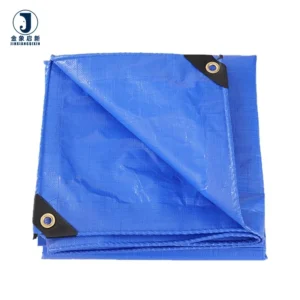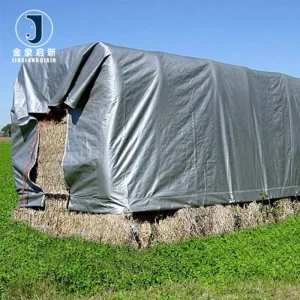
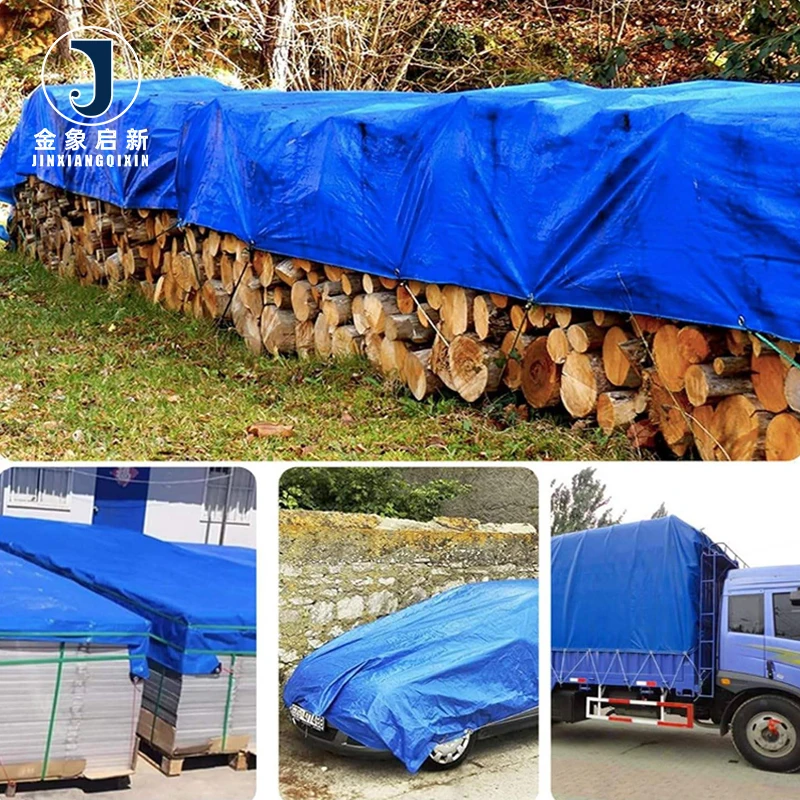
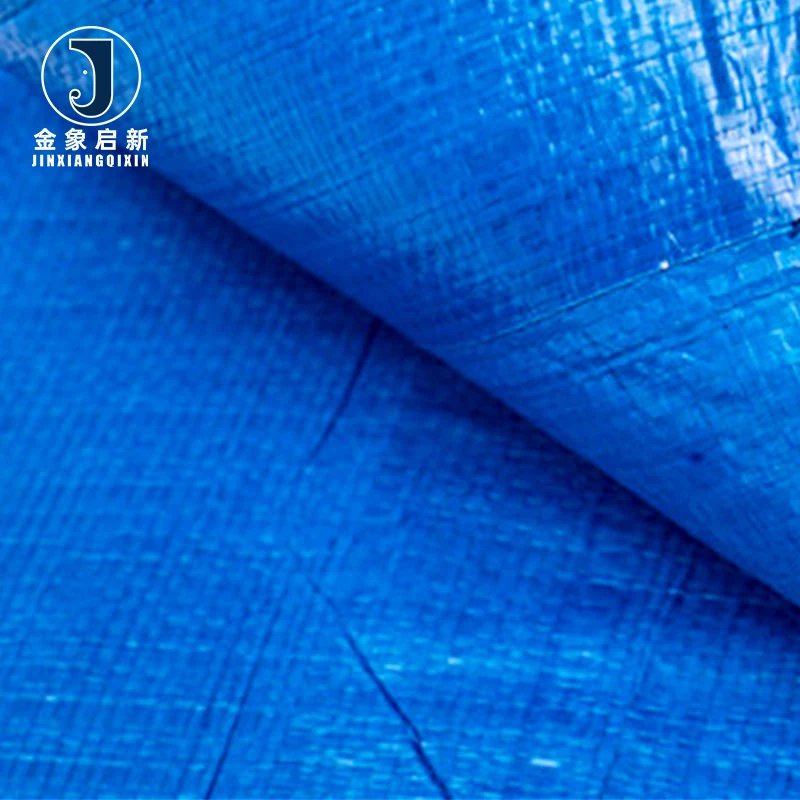
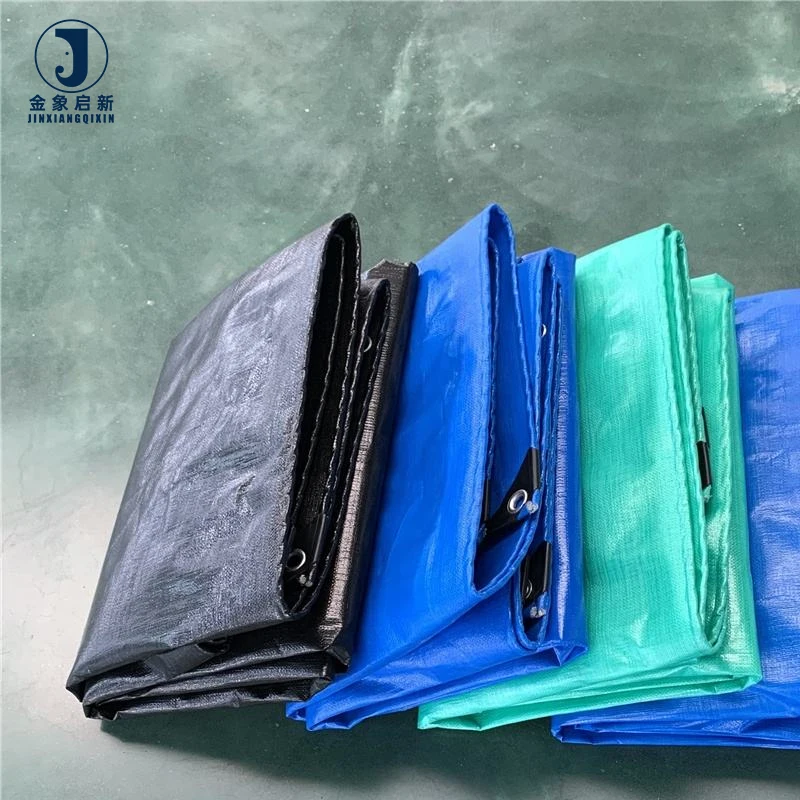
PE Tarpaulin with HDPE woven base and LDPE double-side lamination, 50-240 g/m², knitting density 8×8 / 10×10 / 12×12, UV treatment available, widths up to 6m — covers the complete range from lightweight agricultural sheets to heavy-duty transport covers.
- GSM and base density together determine tensile performance; lighter grades suit crop covers while heavier builds handle fleet and industrial use
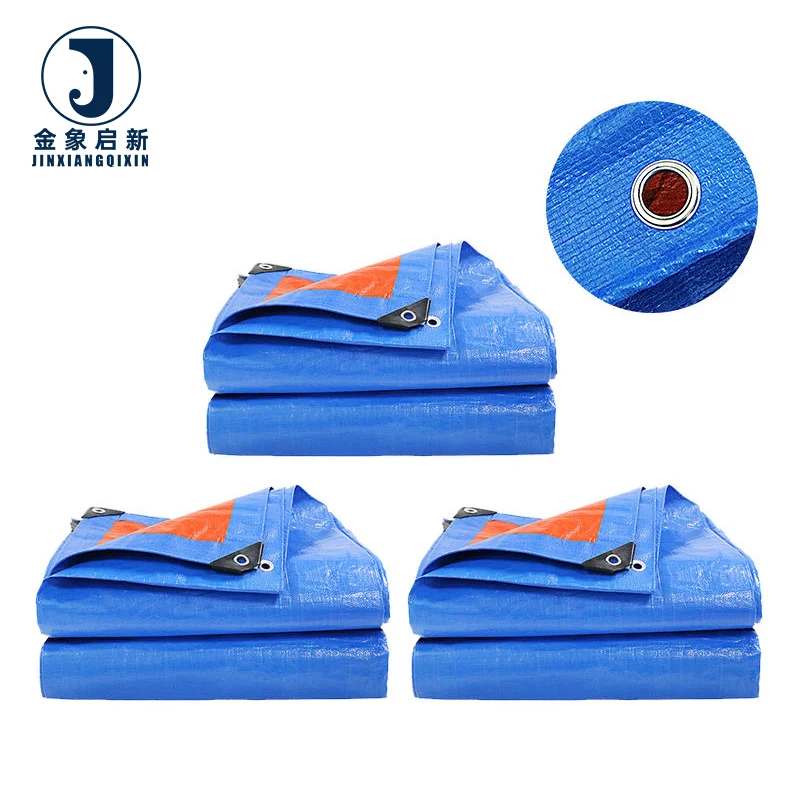
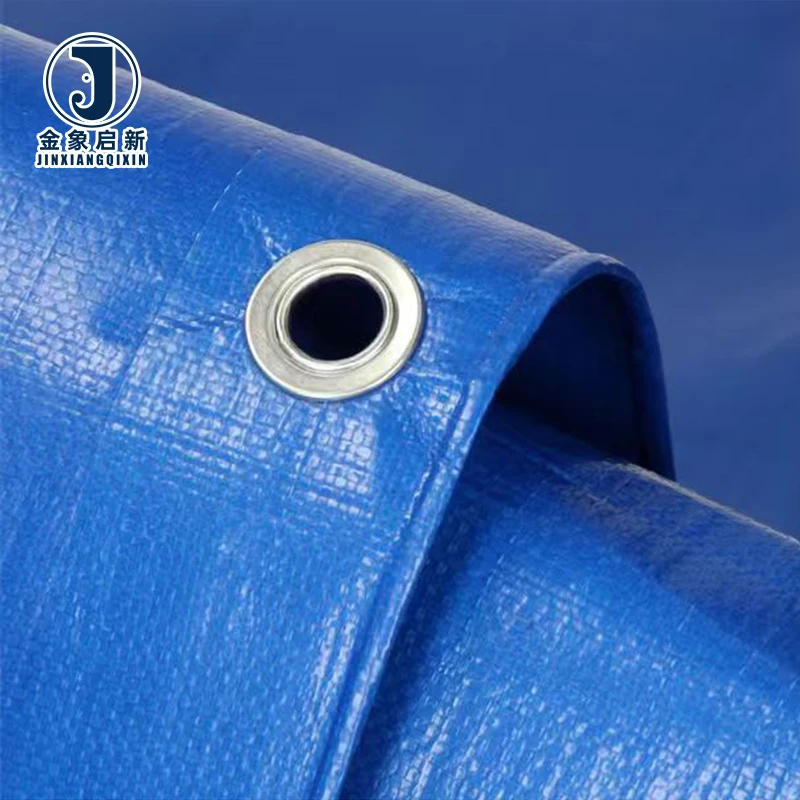
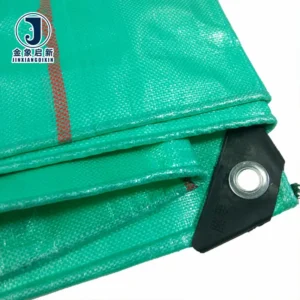
- PP rope hem, galvanized eyelets every 1m, and reinforced plastic corners ensure edge strength matches the fabric body
- Roll and finished sheet forms available with four-side heat-sealed reinforcement
Nearly 30 years of coated fabric process control, three production lines for reliable bulk delivery, and 100% pre-shipment inspection on every roll.
Description
Process Control Over Coating Weight — Our PE tarpaulin production applies LDPE lamination to both sides of an HDPE woven base under monitored temperature and pressure, ensuring consistent GSM from roll start to roll end.
Technical Specifications
| Parameter | Value |
|---|---|
| Product Type | PE Tarpaulin |
| Material | HDPE weaving with LDPE lamination on both sides |
| Coating Method | Laminated |
| Weight (GSM) | 50-240 g/m² |
| Total Thickness | 0.18-0.35mm (8-16mil) |
| Knitting Density | 8×8 / 10×10 / 12×12 |
| Tensile Strength (Meridian) | 300-1200 N/5cm (test basis not stated in source) |
| Tensile Strength (Latitude) | 250-1000 N/5cm (test basis not stated in source) |
| Width Options | 6ft, 8ft, 10ft, 12ft, 2m, 4m, 6m |
| Roll Length | 100 yards, 100 meters, or custom |
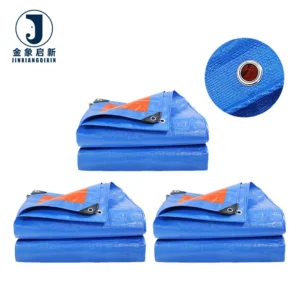
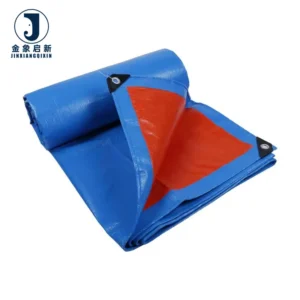
| Color Options | Blue, Blue/Orange, Green, Grey, Black, Clear, Grey/Green, Orange, or custom |
| Edge Reinforcement | PP rope in hem on all four edges |
| Eyelets | Galvanized, every 3ft or 1 meter interval |
| Corner Reinforcement | Reinforced plastic corners |
| Surface Treatment | UV treatment available (test basis not stated in source) |
| Key Features | Waterproof, washable, tear resistant, weather proof, sunproof, mildew proof, anti-aging |
| Product Forms | Tarpaulin rolls / Finished tarpaulin sheets |
| Certification | ISO, CE |
Application Suitability
| Application | Exposure & Requirement |
|---|---|
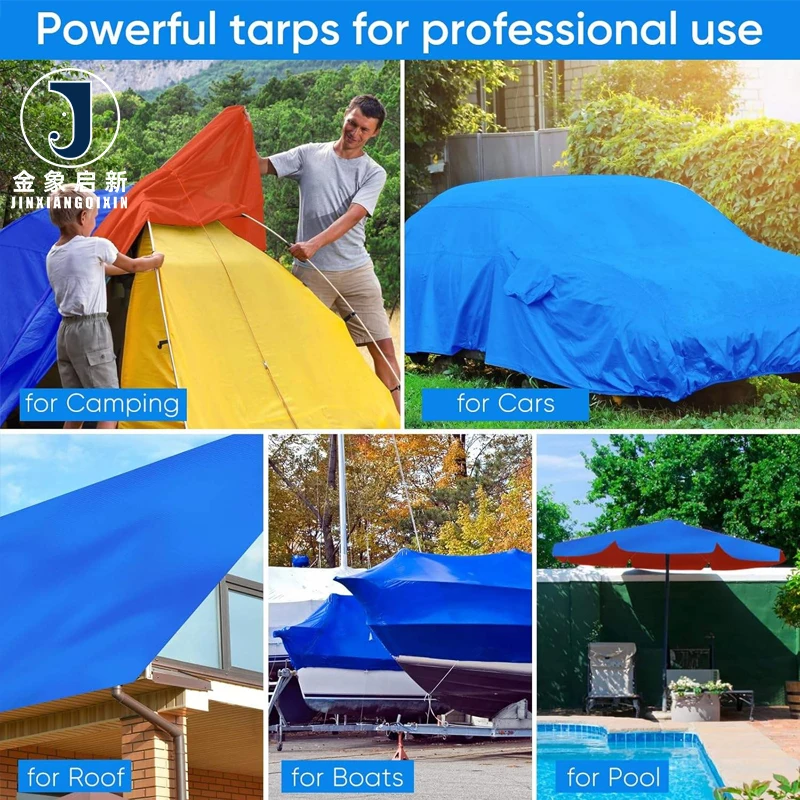
| Agricultural covering | Extended sunlight, moisture, wind load — requires UV treatment and waterproof lamination |
| Warehouse and yard coverage | Abrasion from loading, dust ingress — needs tear resistance and full waterproof seal |
| Truck tarpaulin for transport | Flexing at load points, road debris, rain — demands reinforced hems and high tensile strength |
| Industrial protective covering | Chemical splash, prolonged outdoor storage — requires consistent coating adhesion and mildew resistance |
| Lightweight covering cloth | Short-term event or seasonal use — benefits from lower GSM for handling ease |
Why PE Tarpaulin Procurement Fails When GSM Is the Only Buying Criterion
A quoted GSM figure means nothing without verified coating weight and base fabric density working together.
Buyers frequently receive PE tarpaulin that matches the paperwork on weight but tears at the first flex point because the base fabric mesh count does not support the application. A lightweight 8×8 weave laminated to reach a target GSM will behave differently under tension than a 12×12 heavy-duty weave at the same weight. [NEED_CITE: relationship between mesh density and tensile performance in HDPE woven fabrics]
When sourcing PE Tarpaulin manufacturer custom options, the specification sheet must break down base fabric denier, mesh count, and coating weight separately rather than presenting a single GSM total. Without this transparency, field failures trace back to material decisions that were never visible to the buyer at the point of purchase.
What the Three Weight Tiers Actually Cover
This PE Tarpaulin range spans lightweight grades around 50-110 g/m² through medium-duty 120-150 g/m² and heavy-duty 160-240 g/m², but the weight alone does not define capability. Lightweight grades with 8×8 mesh serve agricultural covering and short-term protection where easy handling matters. Medium grades with 10×10 mesh suit warehouse coverage and equipment wrapping. Heavy-duty grades with 12×12 mesh handle truck tarpaulin and industrial transport exposure where constant flexing and abrasion demand higher tensile values. A PE Tarpaulin manufacturer custom order should always specify the mesh count alongside the GSM to avoid mismatched expectations in the field.
How the Lamination Process Defines Field Behaviour
The HDPE woven base receives LDPE lamination on both sides, creating a sandwich structure where coating adhesion determines long-term waterproof integrity. When lamination temperature or pressure drifts during production, the LDPE layer can delaminate from the HDPE weave at stress points — particularly around eyelets and hem lines where the fabric flexes most. [NEED_CITE: adhesion failure modes in laminated PE tarpaulin under cyclic loading] The three full production lines allow tight control over these process variables, and the dedicated QA/QC stage inspects coating bond at each roll before it proceeds to cutting or dispatch.
Reading the Mesh Count Against the Tensile Figures
The knitting density — 8×8, 10×10, or 12×12 — directly governs how load distributes across the fabric. An 8×8 weave concentrates stress on fewer yarns per centimetre, which is acceptable when the covering sits static over a stockpile. A 12×12 weave spreads the same load across more intersection points, resisting tear propagation when a truck cover flexes at highway speed. The meridian tensile values range from 300 N/5cm at lightweight grades to 1200 N/5cm at heavy-duty grades, but these numbers only hold when the stated mesh count matches the base fabric actually in the roll. Buyers should request the knitting density alongside any tensile data to confirm alignment between specification and application.
The Hidden Cost of Batch-to-Batch Colour Drift Across Rolls
When a single order requires multiple rolls for a large site cover or a fleet of truck tarpaulins, colour variation between production batches becomes visible the moment the panels are installed side by side. This is not a cosmetic concern alone — colour drift often signals inconsistent LDPE lamination thickness, which in turn means uneven UV protection and variable waterproof performance across the same order. [NEED_CITE: correlation between pigment loading and coating consistency in PE tarpaulin rolls] Buyers who specify colour by reference without demanding a batch colour card approval step before shipment absorb this risk silently until the material is already on site.
Why Sourcing Here Reduces Specification Mismatch
Three full production lines and 36 sets of professional equipment support bulk PE tarpaulin orders without the long lead times that single-line facilities require. The 10-person R&D team handles custom width, colour matching, and eyelet spacing adjustments during the sample stage rather than forcing buyers into standard options. Every roll passes through 100% pre-shipment inspection where GSM, mesh count, and coating adhesion are checked against the material specification sheet — not sampled after the container is sealed. This process control means the PE Tarpaulin manufacturer custom capability delivers what was quoted, not what was cheapest to run that week.
Documentation & Verification
- Material specification sheet stating exact GSM, mesh count, base fabric denier, and LDPE coating weight per roll
- Weight verification record per roll measured before dispatch against the stated GSM
- UV treatment test report supplied where UV grades are specified in the order
- ISO and CE certificates included with shipment for customs and site compliance
- Certificate of origin and customs support documentation for export clearance
Fabrication, Handling & Storage
- Heat-seal laminated LDPE surfaces respond well to hot-air welding; match temperature to the stated GSM grade to avoid burn-through on lightweight sheets
- Galvanized eyelets at 3ft or 1m intervals require reinforcement patches behind the insertion point on grades below 120 g/m² to prevent pull-out under tension
- PP rope hem on all four edges distributes tie-down load; avoid point-loading a single eyelet when securing heavy truck covers
- Store rolls upright on pallets in dry conditions to prevent permanent crease marks through the LDPE lamination layer
- Finished tarpaulin sheets with reinforced plastic corners should be folded along the original crease lines to avoid cracking the corner reinforcement over time
Before You Request a Quote
Provide the application environment, expected exposure duration, and whether the covering will be static or subject to flexing and abrasion. Confirm if your site or market requires UV treatment documentation or specific fire classification. Specify the required width, roll length or finished sheet dimensions, eyelet spacing preference, and whether you need custom colour matching or printed branding across the order.
Frequently Asked Questions
Q: How do I determine the right GSM grade for my application?
A: Lightweight grades around 50-110 g/m² with 8×8 mesh suit agricultural covering and short-term protection. Medium grades at 120-150 g/m² with 10×10 mesh fit warehouse and equipment coverage. Heavy-duty grades at 160-240 g/m² with 12×12 mesh handle truck tarpaulin and industrial transport where flexing and abrasion are constant. Share your application details and we recommend the matched grade.
Q: What is the difference between ordering rolls versus finished tarpaulin sheets?
A: Rolls are supplied in 100-yard or 100-meter lengths with full width intact, suited to buyers who cut and fabricate locally. Finished sheets are cut to your dimensions with PP rope hems, galvanized eyelets, and plastic corner reinforcements already applied. Rolls carry lower minimums; finished sheets require confirmed cut sizes before production begins.
Q: Can colour and GSM be kept consistent across multiple rolls in one order?
A: Yes. All rolls within a single production run use the same LDPE pigment batch and pass through identical lamination parameters. We supply a batch colour card for approval before shipment and include per-roll GSM verification records so you can confirm weight consistency upon receipt.
Q: Is UV treatment verifiable and does it come with a test report?
A: UV treatment is available across all weight tiers upon specification at the inquiry stage. Where UV treatment is included, a test report accompanies the shipment documentation. Confirm your market requirements at the quotation stage so the correct treatment grade is applied and documented.
Q: What are the customisation options for width, length, and eyelet spacing?
A: Standard widths range from 6ft to 6m, with custom widths available subject to production line capability. Roll lengths can be adjusted beyond the standard 100-yard or 100-meter options. Eyelet spacing defaults to every 3ft or 1 meter but can be modified. Provide your exact requirements during inquiry for sample development and minimum confirmation.
Related products
-
Sunshade Awning Waterproof Cloth. 7X8 Waterproof Polyurethane Waterproof Cloth – Multi-purpose Cover Water tank Waterproof Cloth
¥0.18 Select options This product has multiple variants. The options may be chosen on the product page -
Multi-color & Size Waterproof Breathable Organic Blackout Coated PE Tarpaulin with UV Customizable Weft Knitted for Boys & Girls
¥0.21 Select options This product has multiple variants. The options may be chosen on the product page -
Woven Coated Plain Anti-UV Waterproof PE Tarpaulin Roll Customized for Car Outdoor Tent Awning Truck & Industrial Cover
¥0.29 Select options This product has multiple variants. The options may be chosen on the product page -
Waterproof PE Tarpaulin Fabric 100-300gsm Anti-Uv Outdoor Use for Boys & Girls Activity Ponds
¥0.31 Select options This product has multiple variants. The options may be chosen on the product page