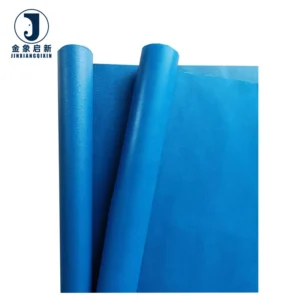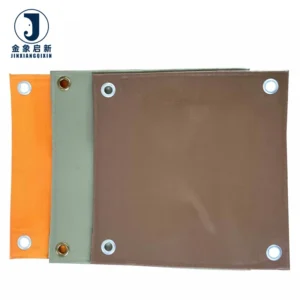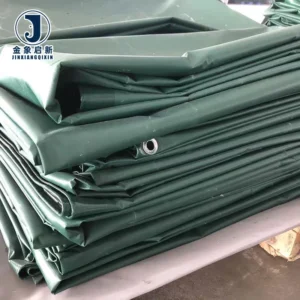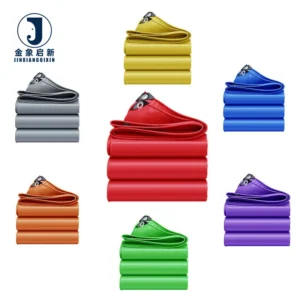
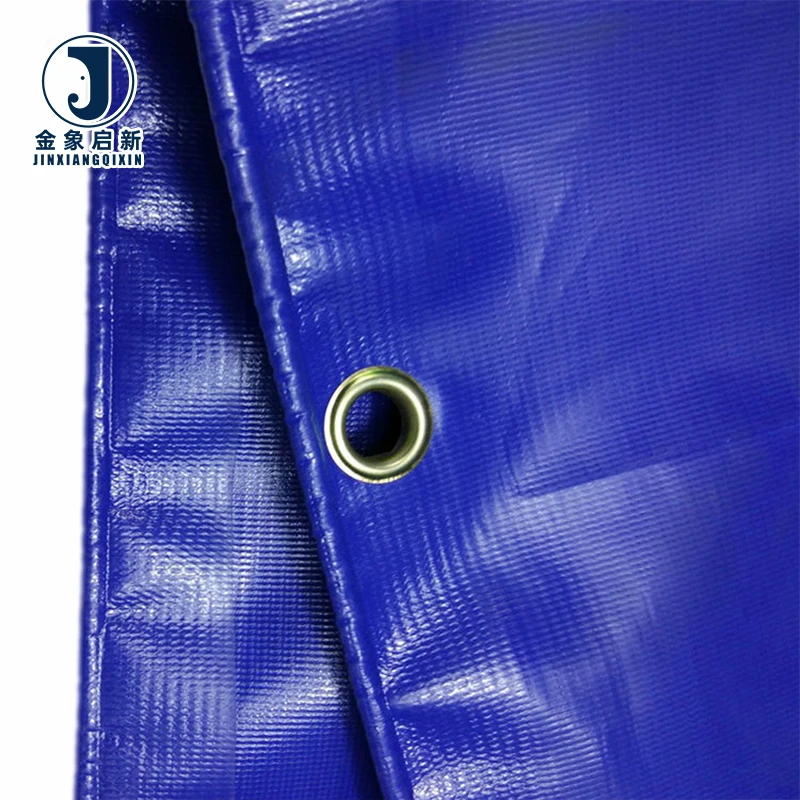
Fire Retardant PVC Tarpaulin Roll — 100% high toughness polyester yarn with PVC coating, 400–1500 g/m² weight range, lamination and hot melt coating technology
- Flame retardant to B1 Standard with test documentation supplied per shipment
- Three weight tiers (medium 400–500 g/m², heavy-duty 700–1000 g/m², super heavy 1100–1500 g/m²) for precise specification matching
- Full custom chain: width, length, color, eyelet placement, reinforced hems, and pattern printing handled in-house
Backed by nearly 30 years of coated fabric process control and 100% pre-shipment inspection across three dedicated production lines.
Description
Three Full Production Lines — every roll of fire retardant PVC tarpaulin is produced, weighed, and inspected against the agreed GSM before it leaves the facility, eliminating the gap between quotation and delivery.
Technical Specifications
| Parameter | Value |
|---|---|
| Product Type | PVC Coated Tarpaulin Roll |
| Material | 100% high toughness polyester yarn with PVC coating |
| Coating Technology | Lamination technology and hot melt coating technology |
| Weight Options | 400-500 g/m² (medium), 700-1000 g/m² (heavy-duty), 1100-1500 g/m² (super heavy) |
| Thickness | 0.35-0.45 mm (medium), 0.70-1.0 mm (heavy-duty), 1.2-1.5 mm (super heavy) |
| Base Fabric Denier | 500D (medium), 1000D (heavy-duty), 500D-2000D (super heavy) |
| Tensile Strength | Longitude 1500-2000 / Latitude 1200-1800 N/5cm (medium); Meridian 2000-2500 / Latitude 1800-2200 N/5cm (heavy-duty); Warp 2500-3000 / Weft 2200-2800 N/5cm (super heavy) |
| Flame Retardant Grade | B1 (test standard to be confirmed per target market) |
| Key Features | Waterproof, cold resistant cracking, anti-mildew, anti-static treatment available, excellent welding tear strength, good color fastness |
| Outdoor Durability | Suited to extended outdoor exposure |
| Standards | ISO, CE |
Application Suitability
| Application | Exposure & Requirement |
|---|---|
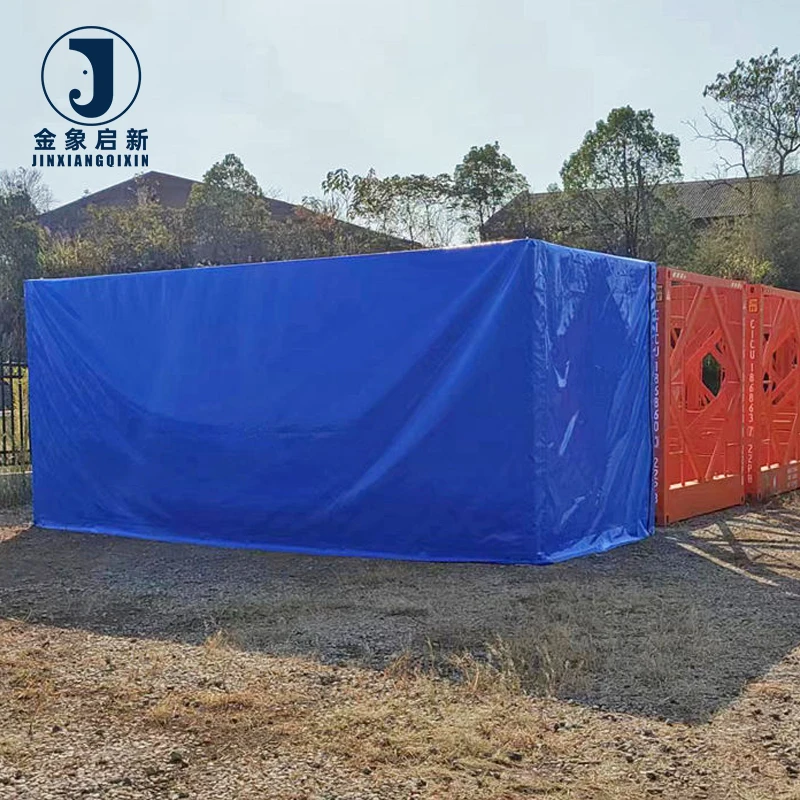
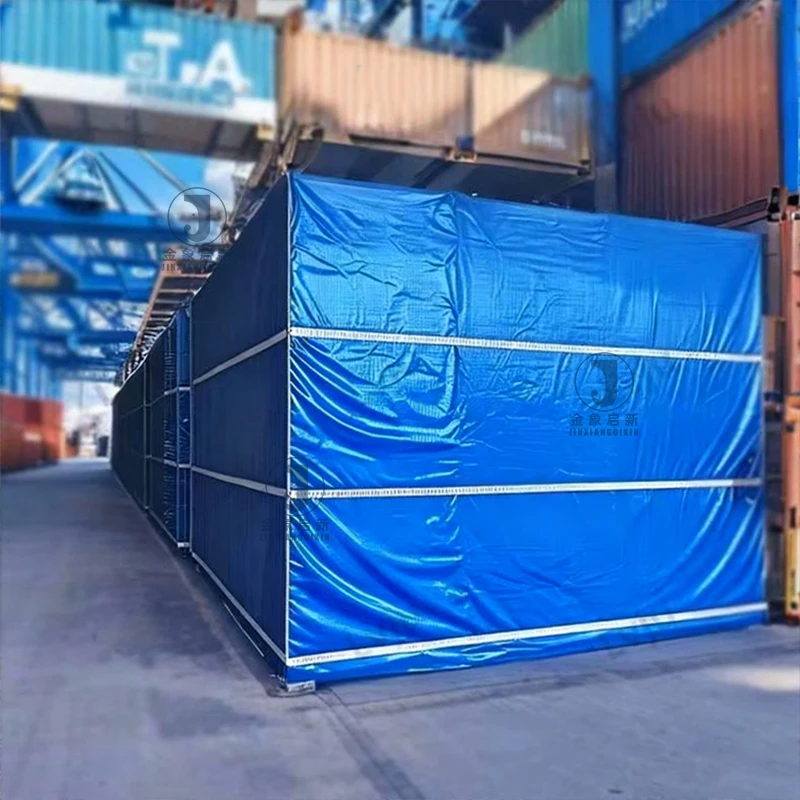
| Warehouse cover | Rain ingress, wind-driven debris, fire safety compliance for stored goods |
| Construction site protection | Scaffold wrapping, dust containment, flame retardant certification for site audits |
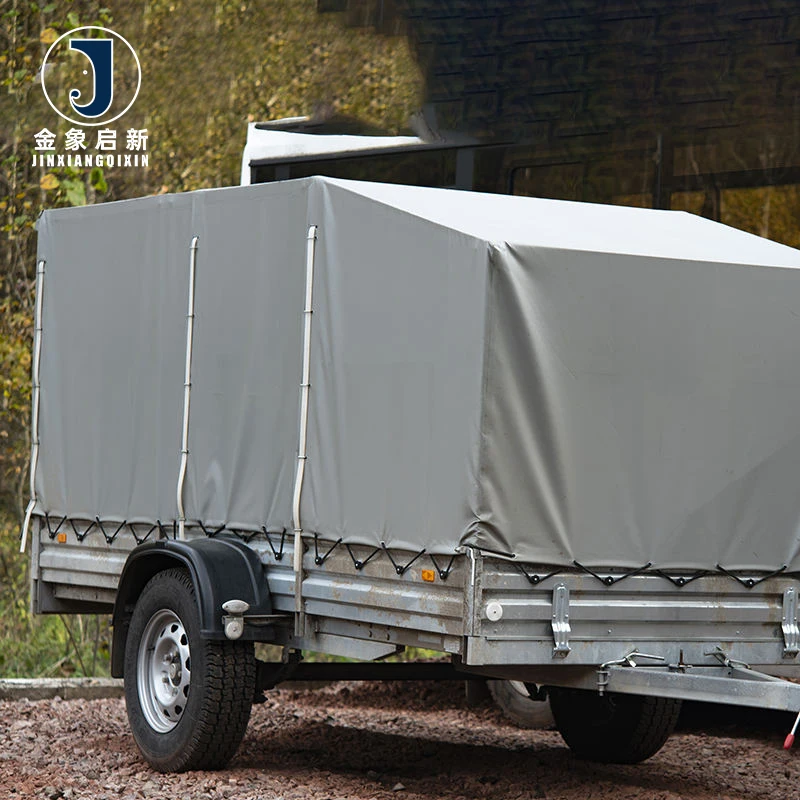
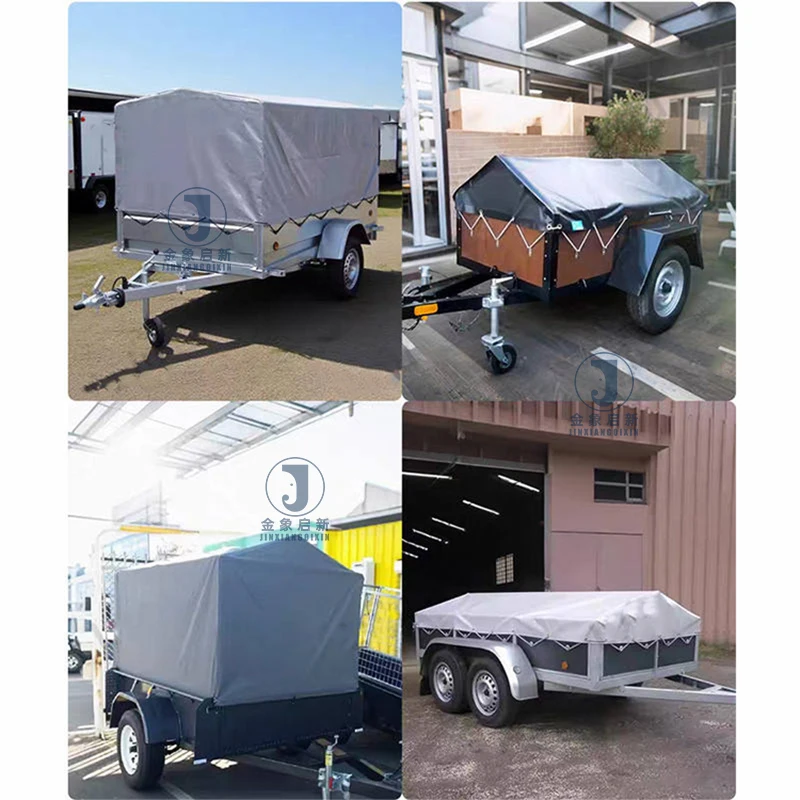
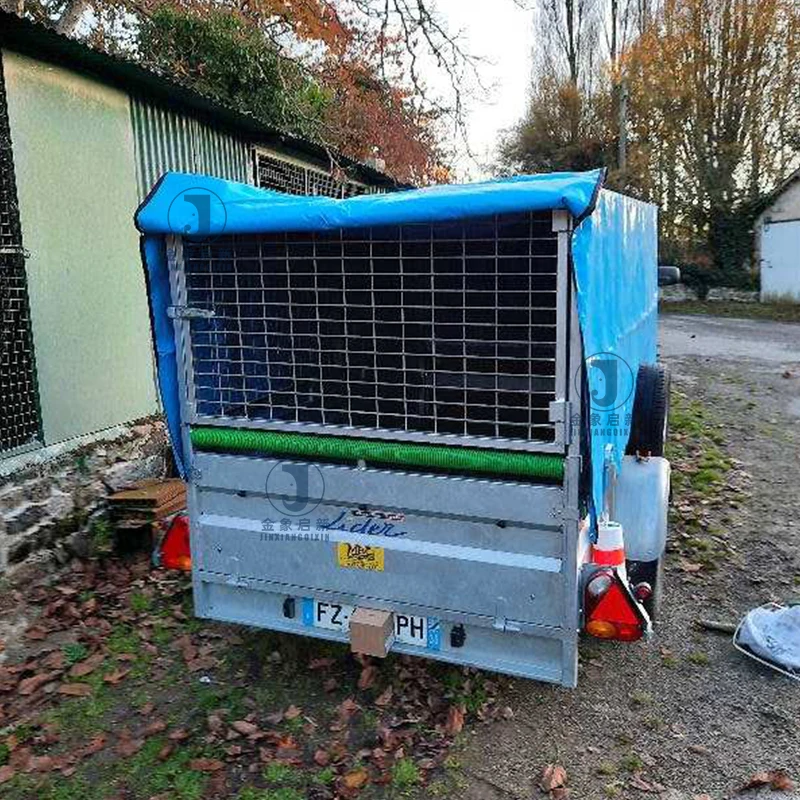
| Truck tarpaulin | Road abrasion, constant flexing at load points, UV exposure during transit |
| Tensioned structural fabric | High wind loading, sustained tension, seam integrity under stress |
| Industrial pipe canopy | Chemical-laden atmosphere, thermal variation, long-span unsupported coverage |
What Flame Retardant Means When the Grade Is Missing
A fire retardant claim without a test standard is a liability, not a protection.
Many buyers receive PVC coated tarpaulin with "flame retardant" printed on the invoice, only to discover at site inspection that the local fire authority requires documentation tied to a specific classification such as DIN 4102 B1 or NFPA 701. The PVC coated tarpaulin manufacturer custom approach at Jinxiang addresses this by pairing every fire retardant order with a test report matched to the buyer’s destination market. Without that paperwork, a warehouse cover can fail a safety audit before it is ever unrolled [NEED_CITE: DIN 4102 fire classification for building materials].
Full Product Range Under One Specification Sheet
Buyers sourcing for mixed applications — warehouse covers at one site, truck tarps at another — often face fragmented supply chains where each product comes from a different mill with a different colour palette. This PVC coated fabric family spans three weight tiers from 400-500 g/m² up to 1100-1500 g/m², letting a single PVC coated tarpaulin manufacturer custom order cover multiple project requirements while maintaining batch-to-batch colour consistency across all rolls shipped in the same container.
Coating Technology and the Weld Line
Hot melt coating technology bonds the PVC layers to the high-toughness polyester base fabric under heat and pressure, producing adhesion that holds through repeated thermal cycling. This matters most at the weld line — the point where two panels are joined by high-frequency or hot-air welding to form a truck cover or tensioned structure. When coating adhesion is weak, the weld peels before the fabric itself fails, leaving a seam that splits under load [NEED_CITE: tensile and tear test methods for coated fabrics per ISO 1421]. Lamination technology used in the lighter grades offers a cost-effective alternative for applications where extreme welding strength is not the primary concern.
Reading the Numbers Behind the Roll
GSM alone does not predict how a tarpaulin will perform in the field. A 700 g/m² fabric woven from 1000D yarn with a tight weave can outperform a 900 g/m² fabric built on a looser 500D base, because tensile and tear strength are functions of yarn denier and knitting density working together with coating weight. The hot melt coating process adds structural rigidity and contributes to the overall thickness — 0.70-1.0 mm in the heavy-duty tier — which in turn affects how the material handles when fabricated into covers with multiple folds and reinforced hems. Buyers comparing quotations should request the base fabric denier alongside the stated GSM to make a like-for-like assessment.
The Cost of Getting the Specification Wrong
A construction contractor who accepts a generic fire retardant PVC tarpaulin without verifying the test standard may pass initial delivery inspection but fail the site safety audit weeks later, triggering full replacement at the contractor’s expense. Similarly, ordering a medium-duty 400-500 g/m² grade for a tensioned canopy that requires sustained wind loading leads to premature stretching at the anchor points, because the 500D base fabric lacks the tear propagation resistance of the 1000D or higher constructions. Colour variation between rolls — visible when panels are installed side by side on a warehouse facade — is another failure mode traced to inconsistent pigment dosing during coating, which pre-shipment inspection is designed to catch before dispatch [NEED_CITE: batch colour consistency in coated fabric production].
Why Source This PVC Coated Fabric Here
Three dedicated production lines and 36 sets of professional equipment provide the capacity to hold lead times on bulk orders without sacrificing the in-process quality checks that catch GSM deviation mid-run. The 10-person R&D team handles material selection, custom width development, and sample production within days — critical when a project specification changes after the initial inquiry. A dedicated QA/QC protocol inspects every roll against the agreed material specification sheet before packing, which is the reason weight and colour discrepancies are caught internally rather than at the buyer’s dock.
Documentation & Verification
- Material specification sheet stating exact GSM, base fabric denier, and coating weight per roll
- Test report for flame retardant grade matched to buyer’s target market standard
- Pre-shipment inspection record confirming weight and colour against order specification
- ISO and CE certificates with certificate of origin and customs support documentation
- Roll packing list with individual roll numbers traceable to production batch
Fabrication, Handling & Storage
- Hot-air welding temperature should be calibrated to the specific coating thickness — 0.70-1.0 mm heavy-duty grades require higher dwell time than medium grades
- Store rolls upright on pallets in a dry, shaded area to prevent flat-spot deformation on the outer PVC layers
- Allow cold-stored rolls to reach ambient temperature before unrolling to prevent cracking in cold resistant treated grades
- Use PVC-compatible cleaners only; solvent-based products can degrade the hot melt coating bond
- When cutting super heavy 1100-1500 g/m² rolls, use rotary blades rated for coated industrial fabric to avoid fraying the polyester base
Preparing Your Inquiry
To receive an accurate specification and lead time, share your end-use application, the fire safety standard required in your destination market, and the total roll quantity or square meterage needed. Indicate whether you require the material in stock widths or a custom width, and whether finished cut sizes with eyelets and reinforced hems are needed or if roll stock is sufficient for your fabrication line. Colour references or Pantone codes help the R&D team prepare samples for approval before production begins.
Frequently Asked Questions
Q: How is the GSM verified on arrival and what documentation accompanies each shipment?
A: Every roll is weighed during the pre-shipment inspection and recorded against the agreed specification. The shipment includes a material specification sheet stating exact GSM, base fabric denier, and coating weight, along with a roll packing list traceable to the production batch. This means you can cross-check the documentation against physical rolls on arrival without needing third-party testing.
Q: What flame retardant grade is available and does it meet my target market’s fire safety standard?
A: The fabric is available in flame retardant grades including B1 classification. However, fire safety standards vary by country and application — some markets require DIN 4102, others NFPA 701 or local equivalents. Provide your destination market and end-use application so the correct test standard can be confirmed and the matching test report included with your documentation.
Q: How is batch colour consistency controlled across multiple rolls in the same order?
A: Colour consistency is managed through controlled pigment dosing during the hot melt coating process and verified during the 100% pre-shipment inspection. Rolls in the same order are compared side by side before packing to catch any visible variation. This prevents the situation where installed panels show noticeable shade differences on a warehouse or construction facade.
Q: What custom widths, lengths, and finishes are available and what are the minimums?
A: Custom widths and lengths are produced on the three full production lines, with minimums depending on the specific grade and treatment combination required. Available options include anti-static treatment, anti-mildew treatment, and cold resistant formulations. Share your required dimensions and annual volume to receive a lead time and minimum order assessment tailored to your project.
Q: What are the hot-melt welding recommendations for fabricated covers and structures?
A: Welding parameters depend on the coating thickness and method — hot melt coated heavy-duty grades at 0.70-1.0 mm thickness require different temperature and speed settings than laminated medium grades. The excellent welding tear strength is a result of strong coating-to-fabric adhesion. Request the fabrication guide for your specific grade to set correct hot-air or high-frequency welding parameters on your equipment.
Related products
-
Secure Green PVC Coated Blackout Tarpaulin Truck Tent Cover Anti-Aging Waterproof Folding Design Breathable Woven Technics
¥0.83 Select options This product has multiple variants. The options may be chosen on the product page -
Heavy Duty Truck Tarpaulin 1000d Pvc Tarp Waterproof Pvc Canvas
¥1.20 Add to cart -
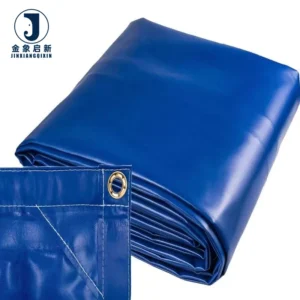
Heavy Duty Outdoor Tarpaulin Thickened for Outdoor Waterproof Large Tarpaulin with 3 Meter Width
¥7.78 Add to cart -
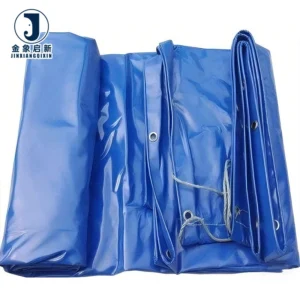
PVC Fabric Material Woven Tarpaulin Waterproof Woven Fabric Tarpaulin
¥0.50 Add to cart