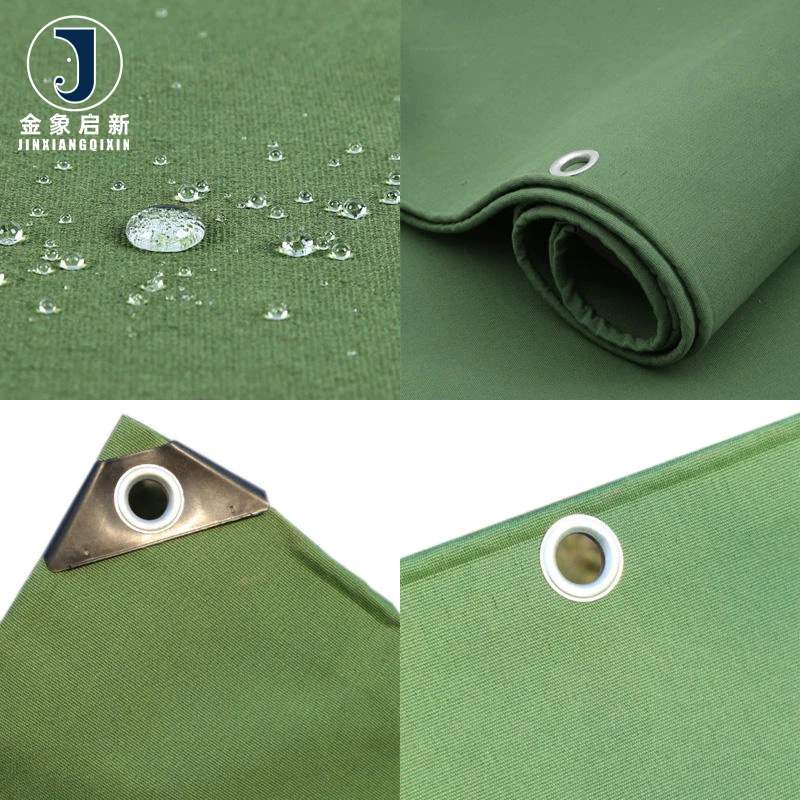

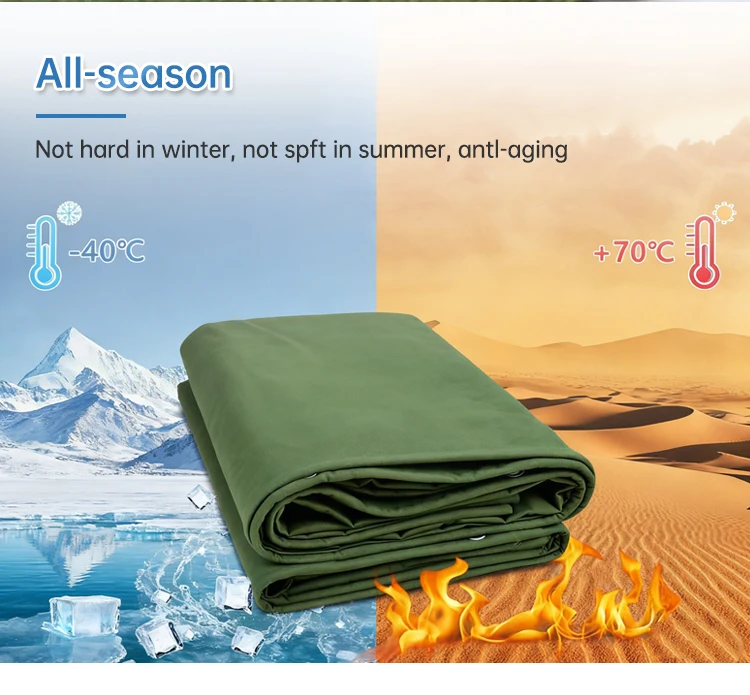
Heavy Duty Canvas Tarpaulin 600gsm, 0.5–0.7mm Thickness, 2m × 100m Roll Stock — polyester cotton base with silicone waterproof coating, rustproof aluminum grommets every 1 meter, and welded poly-rope reinforced hems.
- Engineered for canopy tents, truck covers, and site shelters where breathability and weather resistance matter — silicone-coated canvas reduces condensation buildup under tent roofs while blocking rain penetration.
- Custom cut sizes and roll stock available; every order ships with pre-shipment inspection records, material spec sheets, and full documentation.
Description
Coated and woven fabric expertise — nearly three decades of process control over coating weight and adhesion, applied to 600gsm polyester cotton canvas with silicone waterproof treatment for custom canopy, transport, and site cover applications.
Technical Specifications
| Parameter | Value |
|---|---|
| Product Type | Canvas Tarpaulin |
| Material | Polyester cotton industrial textile, 8–12 strands fine cotton yarn |
| Weight | 600gsm |
| Thickness | 0.5mm / 0.6mm / 0.7mm |
| Roll Size | 2m width × 100m length |
| Finished Size | Custom cut to buyer dimensions or sold from inventory |
| Color | Army Green Camouflage / Custom |
| Waterproofing | Silicone canvas coating |
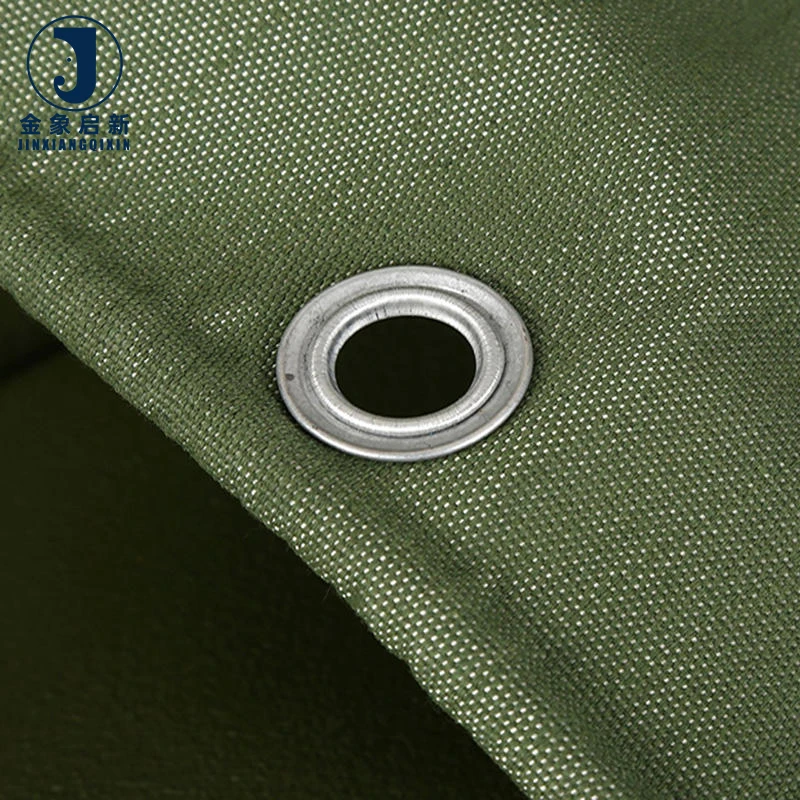
| Grommets | Rustproof aluminum, every 1 meter at corners and hem |
| Edge Construction | Folded seams, welded and sewn with poly ropes |
| Key Features | Wear-resistant, corrosion-resistant, tensile-resistant, high- and low-temperature resistant |
| Standards | CE, ISO |
Application Suitability
| Application | Exposure & Requirement |
|---|---|
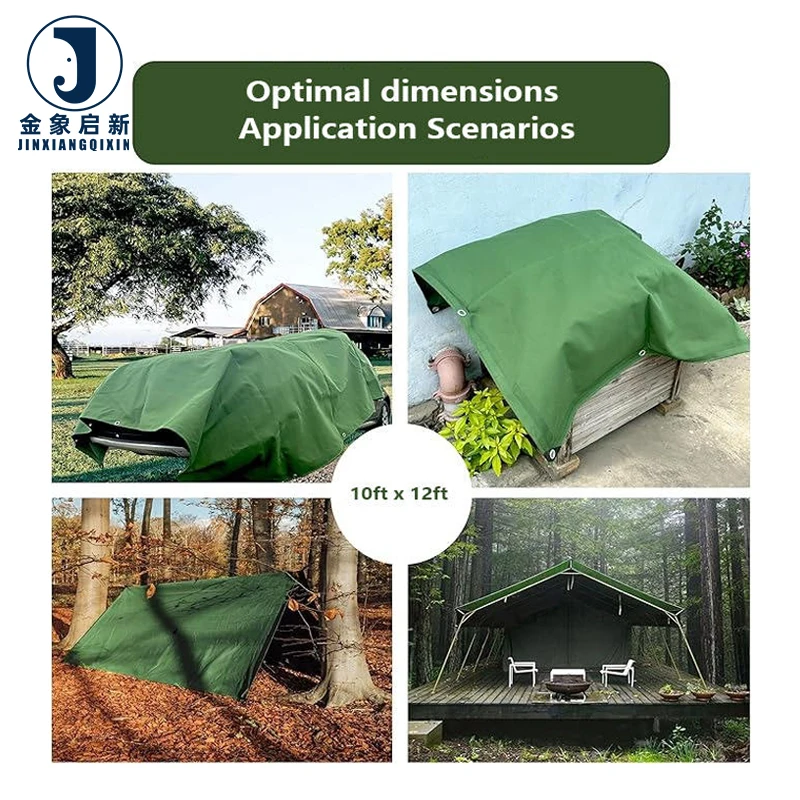
| Canopy tent roof and camping shelter | Sustained sun exposure, rainfall, need for breathability to limit condensation beneath the roof panel |
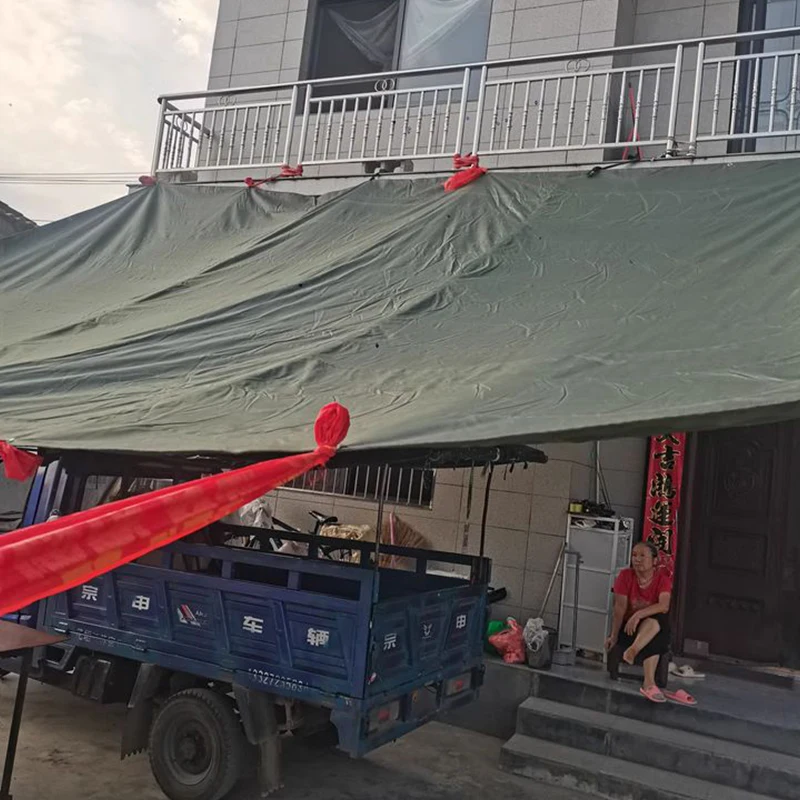
| Truck and trailer open-air load cover | Road vibration, wind flap, abrasion at tie-down contact points, weather during transit |
| Woodpile and construction site cover | Long-term outdoor storage, moisture ingress prevention, repeated handling and repositioning |
| Equipment weather protection | Dust and rain exposure in yard or depot environments, periodic uncovering and re-covering |
| Agricultural open-air stock cover | UV and rain resistance over extended seasons, resistance to organic debris accumulation |
Why a Generic Cut Size Costs More Than the Fabric Itself
A canvas tarpaulin ordered to a stock dimension rarely fits the frame, truck bed, or pile it is meant to protect. Confirm every finished dimension against the actual structure before production starts — not after the rolls have been cut.
I worked through a batch of 10ft × 12ft tarps shipped on a generic pattern. The buyer was fitting them to a canopy frame with slightly different corner geometry. Every grommet sat under diagonal tension, and the aluminum holes tore through the hem within weeks. The cost of return freight and re-cutting exceeded the original order value. [NEED_CITE: field failure patterns in canvas tarpaulin installations tied to dimensional mismatch]
This is the reason I now ask for frame drawings or load dimensions before any canvas tarpaulin aftermarket supplier quotes a finished size. The fabric itself may perform well; the failure point is almost always where the geometry does not match the structure.
Custom Sizing from Frame Drawing to Finished Panel
Every canopy frame, truck bed, and woodpile has dimensions that deviate from standard cuts. This canvas tarpaulin aftermarket supplier works from buyer-provided measurements or engineering drawings, mapping grommet positions to the actual tie-down points on the structure. The result is a panel that sits under even tension rather than pulling at isolated corners, which is where most hem failures originate.
Edge Construction That Carries the Tie-Down Load
The hem is the structural edge of any tarpaulin. On this 600gsm canvas, edges are folded, then welded and sewn around a poly rope core. The rope distributes tie-down force along the seam rather than concentrating it at a single stitch line. Combined with rustproof aluminum grommets spaced every 1 meter, the edge holds through repeated tensioning in wind and storm conditions without the grommet pulling through the fabric body.
What 600gsm Polyester Cotton Means in Practice
The 600gsm weight sits in the heavy-duty range for canvas, and the polyester cotton blend balances tensile strength with the flexibility needed for folding and draping over irregular loads. The 8–12 strand fine cotton yarn construction gives a dense weave that supports the silicone waterproof coating without making the fabric stiff in cold conditions. The three available thickness options — 0.5mm, 0.6mm, and 0.7mm — allow buyers to match material stiffness to the application: thinner for canopy roofs that need to drape, thicker for flat covers that must bridge gaps without sagging.
Weight alone does not determine performance; weave density and yarn count control how load transfers through the fabric. A tightly woven 600gsm base will resist tear propagation better than a looser weave at the same weight, which matters when a puncture or cut occurs in field use. [NEED_CITE: tensile and tear test methods for coated fabrics per ISO 1421]
The silicone coating adds water repellency while preserving the breathability that distinguishes canvas from fully coated PVC. Under a tent roof, this breathability limits condensation build-up on the underside — a persistent problem with non-breathable membranes in humid climates.
When Specification Assumptions Lead to Field Failures
A canvas cover specified only by weight and colour, without confirming grommet spacing against the buyer’s tie-down hardware, arrives on site and the spacing does not align with the ratchet straps or bungee cords in use. The installer improvises with fewer attachment points, overloading each one. Hem tearing follows within a single season. [NEED_CITE: common tarpaulin failure modes linked to grommet spacing mismatch]
Similarly, assuming all canvas tarps handle low temperatures equally leads to cracked hems in winter deployments. The silicone coating on this 600gsm material maintains flexibility across a broad temperature range, but the specific low-temperature threshold should be confirmed against the deployment climate before committing to a production run.
Colour inconsistency between rolls is another recurring issue when multiple panels are installed side by side on a large canopy. Requesting colour reference confirmation and batch consistency checks before dispatch avoids visible panel-to-panel variation after installation.
Why Source This Canvas Through Jinxiang
Process control over coating weight and adhesion has been refined across nearly 30 years of coated and woven fabric production, meaning the silicone coating on this canvas is applied to consistent thickness across the full 2m × 100m roll.
Three full production lines and 36 sets of professional equipment support bulk roll output alongside custom cut-to-size orders, keeping lead times manageable for both fabricators buying by the roll and end users ordering finished panels.
A 10-person R&D team handles pattern layout, custom sizing, colour matching, and sample development, producing a physical sample within days so buyers can verify hand feel, drape, and colour before authorising full production.
Dedicated QA/QC runs at every production stage with full pre-shipment inspection, so grommet spacing, hem construction, and coating consistency are checked panel by panel rather than sampled from the batch.
ISO and CE certified production with documentation support for customs clearance across North American, European, and Asian import markets.
Documentation & Verification
- Material specification sheet stating 600gsm weight, polyester cotton base fabric, and silicone coating type
- Pre-shipment inspection record confirming grommet count, spacing, and edge construction per panel
- Roll packing list detailing dimensions, weight, and roll count for container loading planning
- Certificate of origin and customs documentation for destination-country import clearance
- Colour reference and batch consistency record for multi-panel canopy installations
Fabrication, Handling & Storage
- Weld and sew the 600gsm polyester cotton hem using poly-rope reinforcement; test seam peel strength before full production runs
- Position rustproof aluminum grommets to match the buyer’s tie-down layout, verifying 1-meter spacing aligns with strap hardware
- Store 2m × 100m rolls upright on end caps to prevent permanent creasing across the silicone-coated surface
- Allow cold-stored canvas rolls to reach ambient temperature before unrolling to avoid coating micro-cracking at fold lines
- Use mild detergent for cleaning; avoid solvent-based products that may degrade the silicone waterproof coating
- Plan cut patterns on 2m width rolls to minimise off-cuts and maximise panel yield per roll for large canopy orders
What to Include in Your Enquiry
To move from general specification to an accurate quotation, share the finished dimensions or frame drawings for the canopy, truck bed, or cover you are building. Specify whether you need roll stock at 2m × 100m for your own fabrication line or finished cut panels with grommets installed. If your market requires specific fire classification or UV treatment, state the grade or standard so the material can be confirmed or adjusted before sampling begins.
Frequently Asked Questions
Q: Can the tarpaulin be cut to my exact canopy or truck bed dimensions?
A: Yes. Provide frame drawings or measured dimensions including grommet positions. We develop a sample panel for fit verification before full production, ensuring every corner and tie-down point matches your structure rather than a generic template.
Q: What is the grommet spacing and can it be changed for my tie-down layout?
A: Standard spacing is rustproof aluminum grommets every 1 meter along corners and hem. This can be adjusted to match your strap or bungee configuration. Share your tie-down hardware layout so we position each grommet at the correct load-bearing point.
Q: Is the fabric breathable enough to prevent condensation under a tent roof?
A: The silicone-coated polyester cotton canvas allows moisture vapour to pass through while blocking liquid water, reducing condensation build-up beneath canopy roofs compared to fully coated PVC membranes. Breathability performance varies with humidity and ventilation design.
Q: Do you supply roll stock for fabricators or only finished cut sizes?
A: Both. Rolls are supplied at 2m width × 100m length for fabricators running their own cutting and finishing operations. Finished cut-to-size panels with welded hems and installed grommets are available for buyers who need ready-to-install covers.
Q: What documentation ships with the order?
A: Each order includes a material specification sheet, pre-shipment inspection record, roll packing list, and certificate of origin. Additional test reports or compliance documentation can be arranged based on your destination market import requirements.
Related products
-
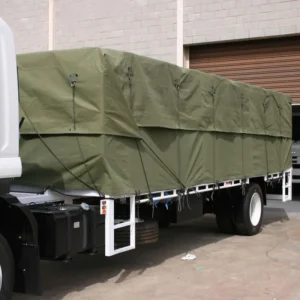
Commercial Custom Plain Boys 4 Foot Retractable Vinyl Canvas Truck Tarps Cover Heavy Duty Trailer Cargo Tarp for Sale
¥1.10 Select options This product has multiple variants. The options may be chosen on the product page -
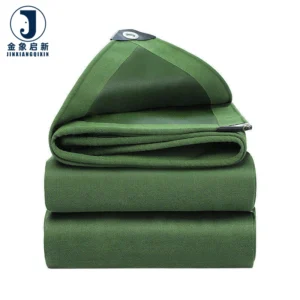
Canvas Tarpaulin for Truck Cover – Custom Made
Read more -
Custom PVC Coated Tarpaulin for Truck Trailer – Full Range
Read more -
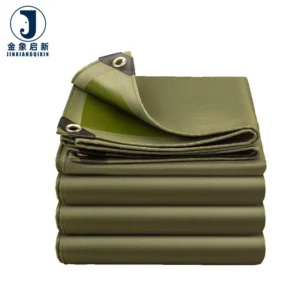
Custom Made PVC Laminated Canvas Tarpaulin for Truck Cover – Full Range
Read more