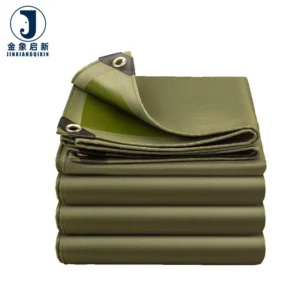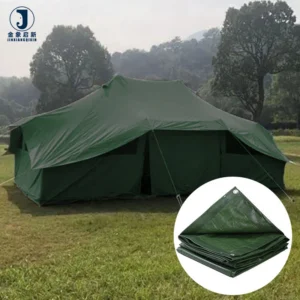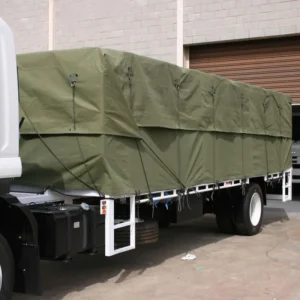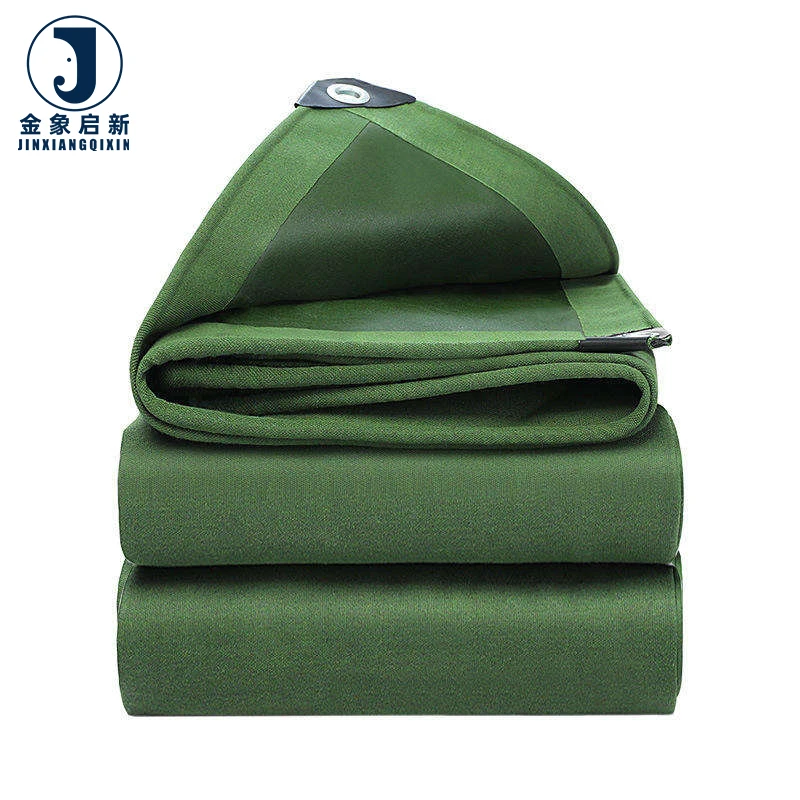
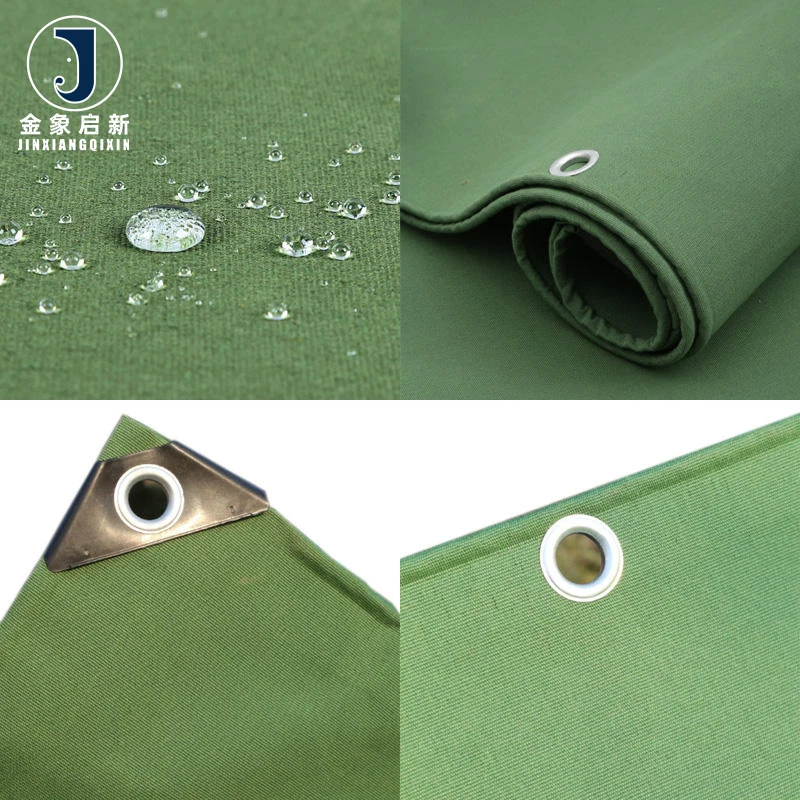
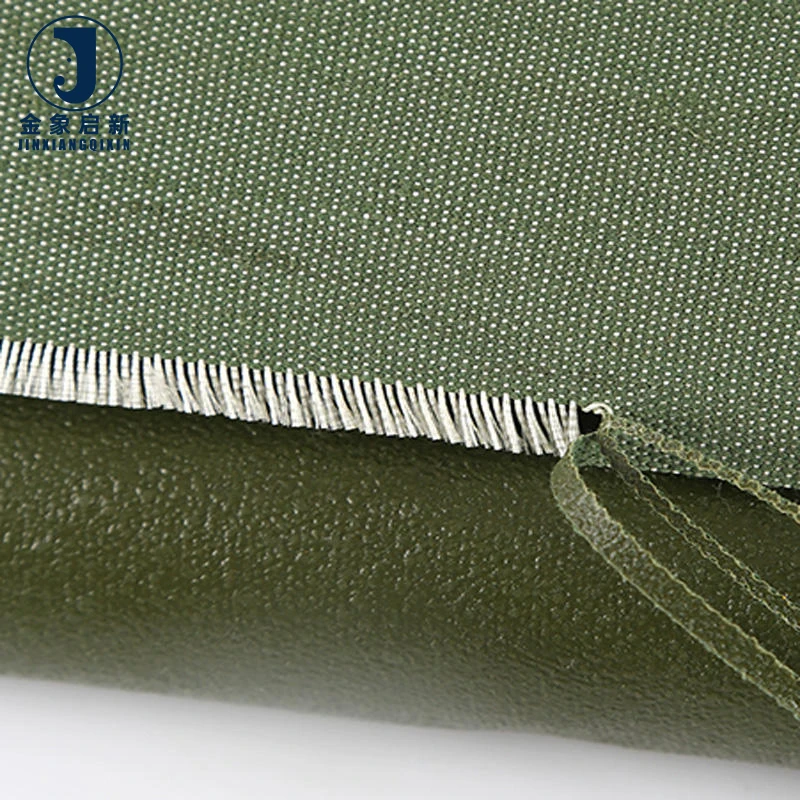
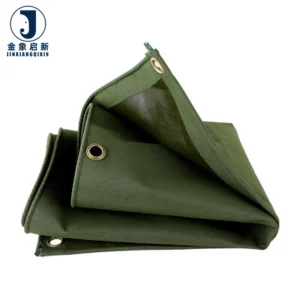
Heavy Duty Canvas Tarpaulin 600gsm, 0.5-0.7mm Thickness, 2m Width — polyester cotton base with PVC lamination, rust-proof aluminum eyelets every 1 meter at corners and hem, folded and welded seams sewn with poly ropes.
- Coating weight and adhesion controlled in-house to ensure stated 600gsm is verified on arrival, with GSM directly tied to tensile performance and abrasion resistance at flex points.
- Custom cut-to-size or roll stock at 2m × 100m, supporting transport fleets and construction coverage with consistent colour and weight across batches.
Backed by 100% pre-shipment inspection and a 10-person R&D team handling custom sizing, eyelet spacing and reinforced hem fabrication within days of sample approval.
Description
Precision Coating Weight Control — Every 600gsm canvas tarpaulin roll ships with a pre-shipment weight verification record so the GSM you specify matches the material on your dock, backed by nearly three decades of coated-fabric process control.
Technical Specifications
| Parameter | Value |
|---|---|
| Product Type | Canvas Tarpaulin |
| Weight | 600gsm |
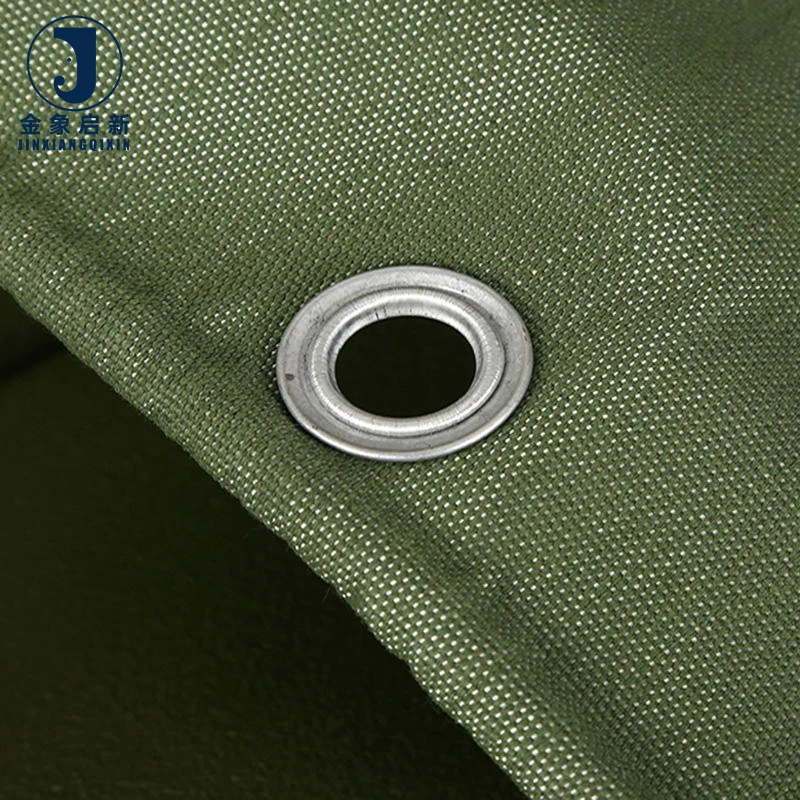
| Base Fabric | Polyester cotton industrial textile, 8-12 strands fine cotton yarn |
| Coating Material | PVC Laminated (silicone finish noted in source — verify with supplier) |
| Total Thickness | 0.5mm / 0.6mm / 0.7mm |
| Width | 2m |
| Roll Length | 100m |
| Colour Options | Army Green Camouflage / Custom colours available |
| Finish | Woven plain with low-density reinforced laminated backing |
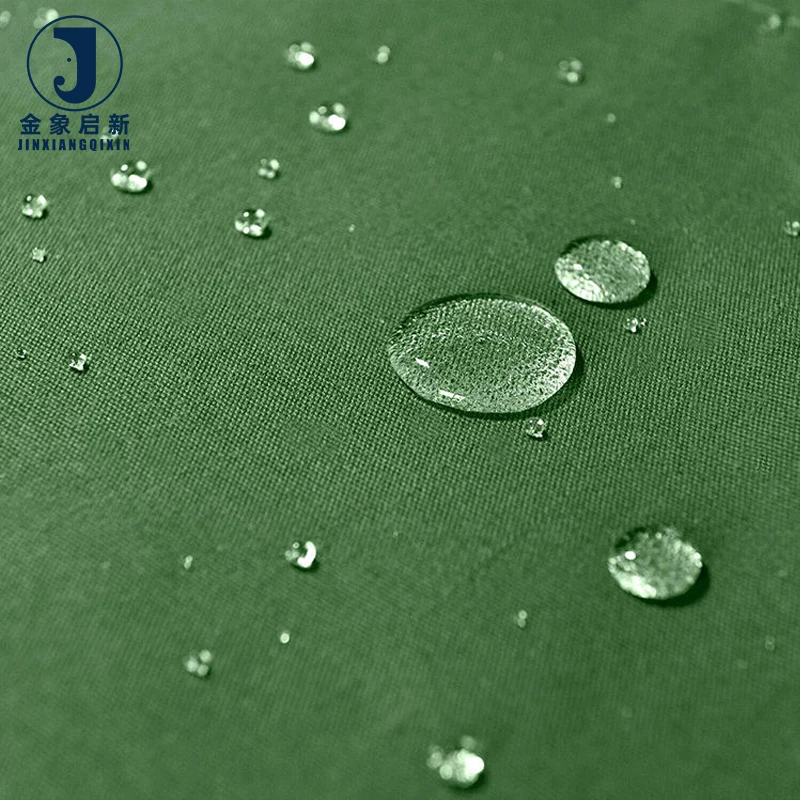
| Waterproof Rating | Waterproof (grade not stated in source) |
| Anti-Mildew | Anti-mildew treated (test basis not stated in source) |
| UV Treatment | UV resistant (test basis not stated in source) |
| Eyelet Configuration | Rust-proof aluminium eyelets every 1m at corners and hem |
| Seam Construction | Folded and welded seams sewn with poly ropes |
| Temperature Resistance | High- and low-temperature resistant (specific range not stated in source) |
| Service Life | 5-8 years stated (verify against manufacturer catalog) |
| Certifications | CE, ISO (specific standard numbers not stated in source) |
Application Suitability
| Application | Exposure & Requirement |
|---|---|
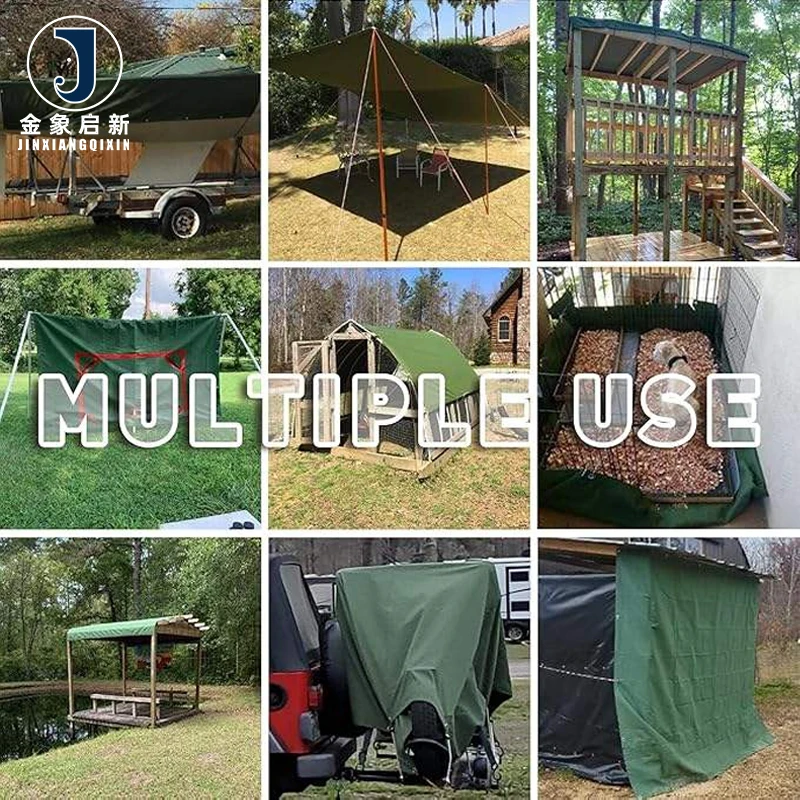
| Truck and trailer load covers | Constant road vibration, flexing at tie-down points, weather and UV exposure, abrasion from cargo shifting |
| Construction site equipment covers | Outdoor weathering, dust and debris impact, repeated handling and folding on site |
| Asphalt and hot-material covers | Elevated surface temperatures, prolonged sun exposure, mechanical stress from dragging |
| Tent and awning fabrication | Roll-stock cutting and welding, dimensional stability under tension, colour consistency across panels |
| Outdoor equipment protection | Long-term static exposure, moisture ingress risk, mildew in humid storage conditions |
Why 600gsm Canvas Tarpaulin Fails When the Coating Adhesion Is Not Controlled
GSM tells you the weight on the scale — it does not tell you whether the coating will stay bonded to the base fabric when the material flexes under load.
A heavy-duty canvas tarpaulin can read 600gsm on the specification sheet and still delaminate at the seam or crack at the fold within the first season if the coating adhesion was not controlled during lamination. I have seen rolls arrive on the dock that meet the weight requirement but fail the peel test because the PVC layer was applied too fast or at inconsistent temperature. The base fabric — polyester cotton with 8-12 strands of fine cotton yarn — provides the tensile backbone, but the coating bond is what determines whether that strength translates into real-world durability under truck tie-downs or construction-site dragging [NEED_CITE: peel strength test methods for PVC laminated fabrics per ISO 2411].
Coating Adhesion and the Polyester-Cotton Base Fabric
The 600gsm canvas tarpaulin in this range uses a polyester cotton industrial textile woven with 8-12 strands of fine cotton yarn. This base fabric gives the material dimensional stability — meaning it resists stretching and distortion when tensioned over a truck load or pulled tight on a tent frame. The PVC lamination process must penetrate the woven structure sufficiently to lock into the yarn intersections without over-saturating and adding dead weight. When adhesion is correct, the coating and base fabric act as a single composite layer rather than two surfaces that can separate under stress.
Roll-to-Roll Colour Consistency Across Batch Orders
Army Green Camouflage is the stock colour for this canvas tarpaulin, but custom colours are available for buyers ordering multiple rolls. Colour drift between batches is a common complaint in tarpaulin procurement — one roll arrives slightly darker, and the difference becomes visible once panels are installed side by side on a structure or stitched into a multi-panel truck cover [NEED_CITE: colour fastness and batch consistency standards for coated technical textiles]. The production process includes in-line colour checks so that each roll in a bulk order matches the approved sample reference before it leaves the line.
How GSM, Base Fabric Density, and Coating Thickness Interact
The 600gsm weight is a combined figure — it includes both the polyester-cotton base fabric and the PVC laminate layer. Total thickness options of 0.5mm, 0.6mm, and 0.7mm reflect different coating build-ups on the same or similar base cloth. A thicker coating increases surface abrasion resistance and waterproofing but adds stiffness, which affects how the material behaves when folded or welded into finished covers. The 8-12 strand cotton yarn count determines how tightly the base fabric is woven, and this directly affects tear propagation — a denser weave arrests a tear before it runs across the panel. Buyers specifying canvas tarpaulin for high-stress applications like truck side curtains should consider both GSM and thickness together rather than selecting on weight alone [NEED_CITE: relationship between GSM, fabric density and tear strength per ISO 1421].
The Hidden Cost of Specifying GSM Without Verifying Coating Quality
When a buyer orders 600gsm canvas tarpaulin and receives material that technically weighs 600gsm but has a thin coating over a heavier base fabric, the waterproof barrier is compromised. Coating that is too thin wears through at high-abrasion zones — corners, eyelet areas, fold lines — exposing the cotton component of the base fabric to moisture and mildew. Conversely, coating that is too thick relative to the base fabric creates a stiff panel that cracks at low temperatures or when folded repeatedly during transport and storage. The consequence is not an immediate failure but an accelerated one: the cover degrades within the first year rather than lasting through multiple seasons [NEED_CITE: field failure analysis of laminated tarpaulin fabrics].
Why Procurement Teams Source This Canvas Tarpaulin Here
The 10-person R&D team handles material selection, custom sizing, pattern printing, and sample development in-house, meaning custom canvas tarpaulin specifications move from inquiry to sample approval without outsourcing delays.
Dedicated QA/QC operates at every production stage, with 100% inspection before shipment — not a spot-check sampling system that leaves defective rolls in the batch.
Three full production lines and 36 sets of professional equipment provide the capacity to deliver bulk roll orders on time without rushing the lamination cycle and compromising coating adhesion.
Sample development is completed within days for custom colour, width, and print requirements, so buyers can approve material before committing to a full container order.
Deep process control over coating weight ensures the 600gsm stated on the quotation is verified against the finished roll before it is packed.
Documentation & Verification
- Material specification sheet stating 600gsm, polyester-cotton base fabric, and PVC laminate type per line item
- Pre-shipment inspection record confirming roll weight, width, and eyelet placement against order
- Roll packing list detailing roll count, net weight, and dimensions for container loading
- Certificate of origin and customs documentation for export clearance
- Test reports for UV resistance and anti-mildew treatment where applicable — confirm grade required for your market
Fabrication, Handling & Storage
- Weld seams at 600gsm require controlled heat input to avoid melting through the PVC laminate into the cotton yarn base
- Aluminium eyelets spaced at 1m intervals distribute tie-down load across the reinforced hem on 2m-wide panels
- Store 100m rolls upright on pallets to prevent compression marks on the laminated surface
- Unroll at ambient temperature — cold-stiffened PVC laminate can crack if forced open in freezing conditions
- Cut panels with a minimum 50mm hem allowance to accommodate folded and welded seam construction with poly rope reinforcement
What We Need From Your Enquiry
Provide the application type, exposure conditions, and whether you need roll stock or finished cut-to-size panels. If your market requires specific fire-retardant or UV-treatment grades, state the standard your end user or local regulation demands. Confirm the required width, colour or print, annual volume, and whether you need samples approved before bulk production begins.
Frequently Asked Questions
Q: How is the 600gsm verified on arrival and can I request a third-party weight test?
A: Every roll is weighed during the 100% pre-shipment inspection, and the inspection record ships with the documentation package. You can request a third-party weight test — we provide roll samples cut to standard test dimensions so your nominated laboratory can verify GSM independently before the bulk order is dispatched.
Q: Can you cut finished truck or equipment covers to my exact trailer or machine model?
A: Yes. Provide the vehicle model or machine dimensions, and our R&D team develops a cutting pattern with eyelet placement and hem reinforcement matched to the tie-down configuration. The 600gsm canvas tarpaulin is fabricated with folded and welded seams sewn with poly rope for load-bearing edges.
Q: What is your batch-to-batch colour consistency process when I order multiple rolls?
A: Each production run is checked against the approved sample reference using in-line colour comparison. The inspection record documents the colour reference for every roll in the batch. If your project requires panels installed side by side, we recommend ordering the full project volume in a single production run.
Q: Which eyelet spacing, hem reinforcement, and tie-down options are available?
A: Standard configuration is rust-proof aluminium eyelets at 1m intervals along corners and hem. Custom spacing, additional reinforcement patches at high-stress points, and alternative tie-down hardware can be specified. The 2m width and 100m roll length allow efficient panel layout with minimal waste.
Q: What is the lead time for custom width, colour, or printed canvas tarpaulin?
A: Custom specifications require sample development and approval before bulk production begins. Typical lead times vary depending on the customisation scope and order volume — confirm your required delivery date at the enquiry stage so we can align the production schedule.
Related products
-
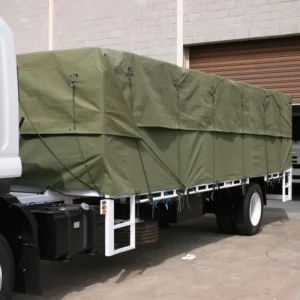
Factory Direct Sales Organic Coated Blackout Tarpaulin Garage Car Truck Container Cover for Boys & Girls
¥0.87 Select options This product has multiple variants. The options may be chosen on the product page -
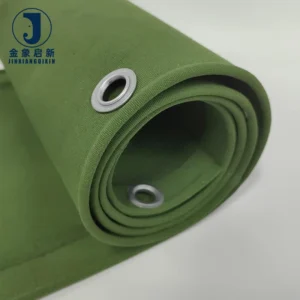
Canvas Tarps for Truck Cover – Custom Made
Read more -
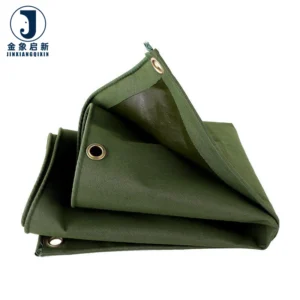
Heavy Duty Canvas Tarpaulin 600 GSM | Custom Made
Read more -
Heavy Duty Canvas Tarpaulin for Truck Cover – Custom Made
Read more