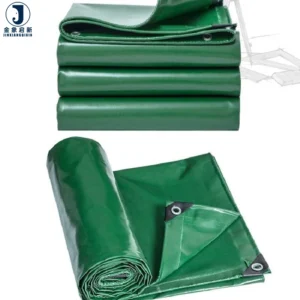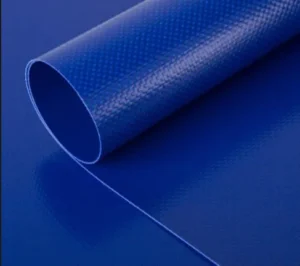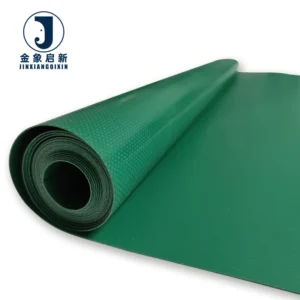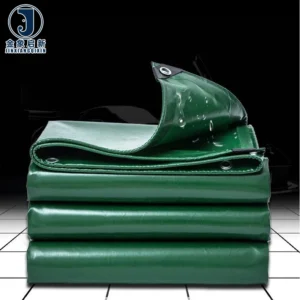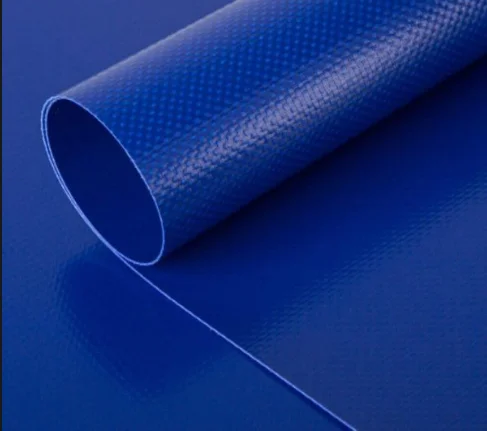
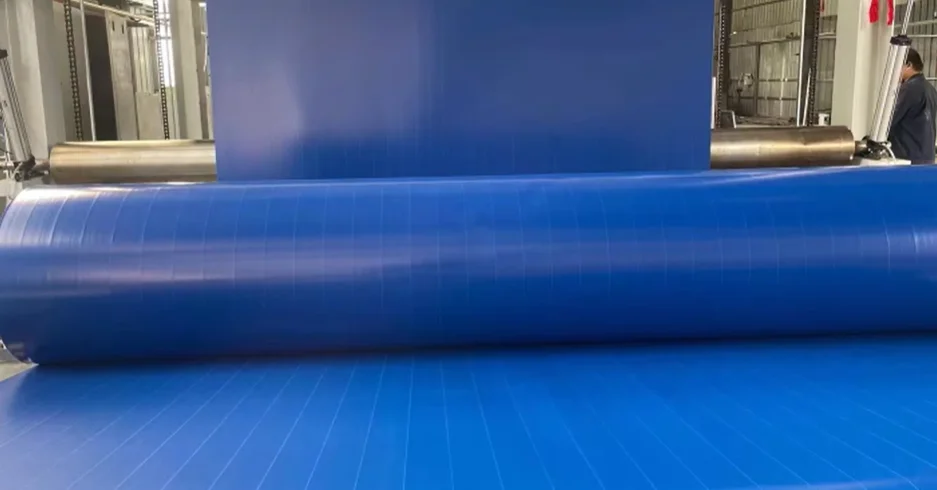
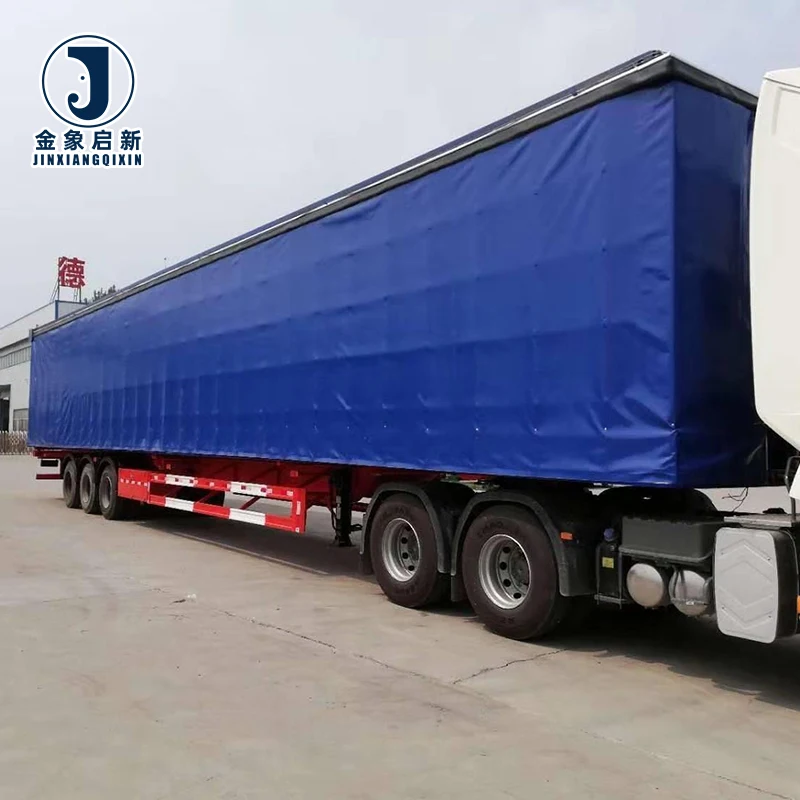
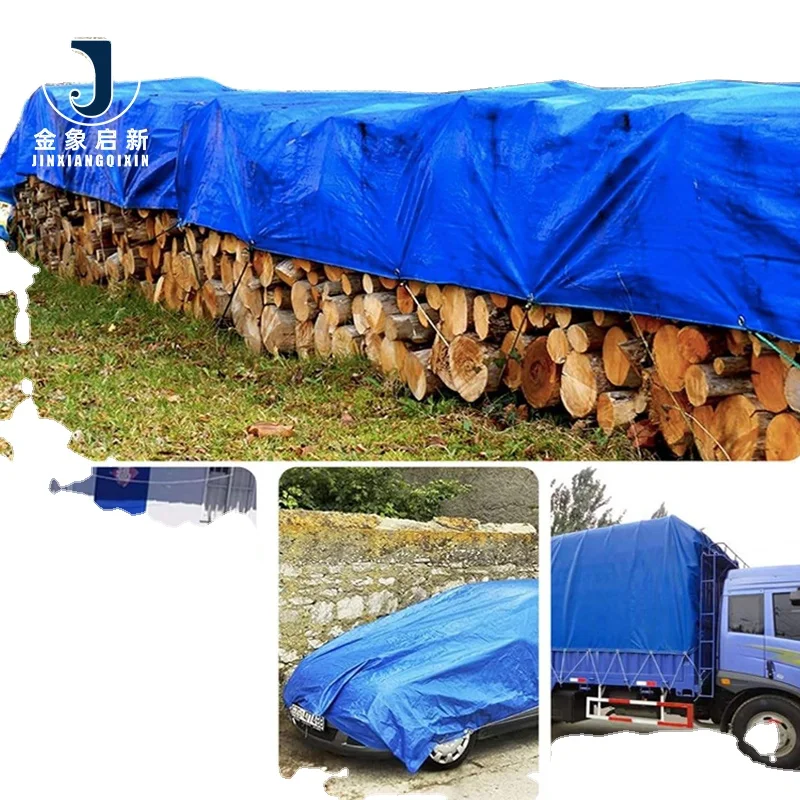
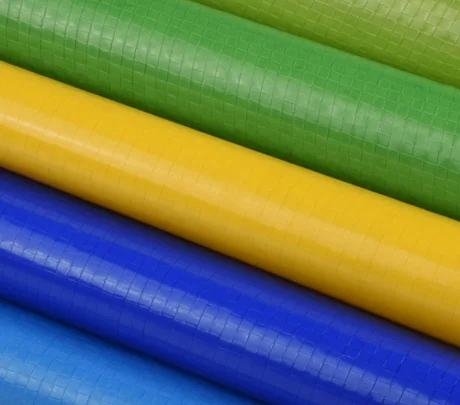
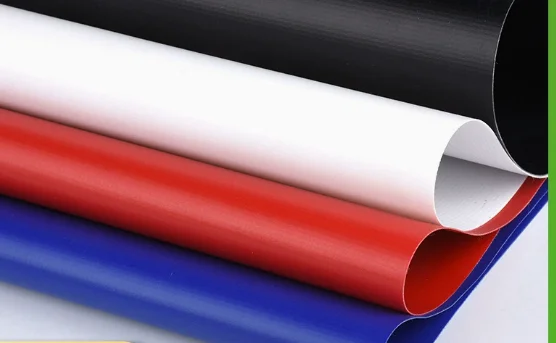
PVC Coated Tarpaulin — knife coated fabric with UV, fire retardant and mildew proof treatments for technical textile projects
- Full range from rolls to cut sizes and fabricated covers in one supply chain
- Knife coating ensures consistent adhesion across the roll; HF, hot air and sewing compatible
- Custom width, colour and pattern printing available with sample development
Backed by 30 years of coating expertise, 100% pre-shipment inspection and 10-person R&D support for your specifications.
Description
Complete Customization Range — Knife coated PVC tarpaulin rolls available in custom width, colour, finish and welding specification, produced under controlled coating processes for tensile and architectural membrane applications.
Technical Specifications
| Parameter | Value |
|---|---|
| Product Type | PVC Coated Tarpaulin |
| Coating Method | Knife coated |
| Coating Material | PVC |
| Welding Compatibility | HF, Hot Air, Sewing |
| UV Treatment | Available with UV stabilisation — confirm grade required for your market |
| Flame Retardant Grade | Available in flame retardant grades — confirm the grade required for your market |
| Anti-Mildew | Antibacterial and mildew proof treatment available |
| Chemical Resistance | Oil, stain, acid and alkali resistance |
| Temperature Resistance | High temperature and cold resistance |
| Surface Properties | Self-cleaning, anti-oxidation, weather resistant |
| Flexibility | Highly flexible, resistant to cracking |
| Width | Custom widths available |
| Roll Length | Custom lengths available |
Application Suitability
| Application | Exposure & Requirement |
|---|---|
| Tensile membrane structures | Continuous UV exposure, wind load flexing, dimensional stability across large spans |
| Stadium architectural canopies | High-profile public visibility, fire code compliance, long-term colour consistency across panels |
| Airport hangar enclosures | Fuel and hydraulic fluid exposure, wide temperature swings, flame retardant requirements |
| Portable storage structures | Frequent assembly and disassembly, abrasion at fold lines, weather sealing |
| Shade systems and shadings | Sustained sun exposure, colour fading concerns, lightweight yet tear-resistant fabric needs |
Why Colour Drift Across Rolls Can Ruin a Tensile Structure Project
Colour consistency is controlled at the coating stage, not fixed at the warehouse.
When a stadium canopy or tensile roof requires dozens of rolls installed side by side, even a slight shade difference between production batches becomes visible from the ground. The problem is not that individual rolls are wrong — both may fall within a supplier’s standard tolerance — but that the human eye detects variation once panels are joined in direct sunlight. A PVC knife coated tarpaulin manufacturer custom approach addresses this by locking colour reference standards before production begins and verifying shade match at multiple points during the coating run [NEED_CITE: colour measurement standards for architectural membrane fabrics].
Knife Coating Process and Coating Adhesion
The knife coated method deposits PVC compound onto the base fabric under controlled pressure, forcing the coating into the weave structure rather than sitting on top. This penetration creates a mechanical bond between coating and yarn that resists delamination under repeated flexing. For tensile structure fabricators, coating adhesion directly determines whether seams hold at panel junctions where wind load concentrates stress. Every PVC knife coated tarpaulin manufacturer custom order from this line undergoes controlled coating weight application across the full roll length.
Welding Compatibility for Membrane Fabrication
Tensile and architectural membrane structures rely on welded seams to transfer load between fabric panels. This material supports high-frequency welding, hot air welding, and sewing, giving fabricators the flexibility to select the joining method based on seam geometry and structural demand. HF welding produces a homogeneous bond suited to curved and three-dimensional seams, while hot air welding accommodates straight runs on flat panels [NEED_CITE: welding methods and seam strength for PVC coated architectural fabrics]. The availability of all three methods means fabricators can match the seam technique to the structural engineering requirement without switching material suppliers.
Understanding the Specification Parameters That Matter
Coating method defines the relationship between the PVC compound and the base fabric. Knife coating pushes material into the textile structure, building adhesion from within rather than relying on surface lamination. This matters for tensile applications because membrane structures experience constant cyclic loading — wind uplift, thermal expansion, snow accumulation — and the coating must stay bonded through thousands of stress cycles. Chemical resistance to acids, alkalis and oils protects the fabric in airport hangar and industrial environments where fluid contact occurs. The self-cleaning surface property reduces maintenance burden on installed structures, as rain washes away surface particulate rather than allowing it to bond to the coating. Temperature resistance across both high and cold ranges ensures the fabric remains flexible during winter installation and does not soften or sag during peak summer heat.
What Happens When Specification Choices Are Made on Price Alone
Selecting fabric based on the lowest quoted cost per square metre often means accepting lighter coating weight or reduced base fabric density. In tensile structures, the result appears months after installation: the coating begins to separate from the base fabric at high-stress points, or the membrane develops permanent deformation under sustained load. Fire retardant grades specified without documented test standards create compliance risk — a building inspector requesting certification documentation can halt a project if the supplied material cannot demonstrate the grade claimed [NEED_CITE: fire classification requirements for tensile membrane structures in public buildings]. Colour inconsistency across rolls forces fabricators to sort and redistribute panels, adding labour cost and delaying project timelines.
Production Capability Behind the Product
Three full production lines with dedicated coating stations support volume orders without compromising roll-to-roll consistency. A ten-person R&D team handles material selection and custom specification development, producing samples within days for project-specific requirements. Every roll passes through quality checkpoints at each production stage, with inspection records generated before dispatch. The coating process controls weight application and adhesion uniformity, ensuring that the specification stated on the quotation matches the material received. Custom width, colour and finish options are produced in-house rather than outsourced, maintaining accountability across the entire supply chain.
Documentation & Verification
- Material specification sheet stating coating method, base fabric and colour reference per roll
- Test reports for UV and flame retardant grades matched to the specification confirmed at order stage
- Pre-shipment inspection record documenting quality check results before dispatch
- Roll packing list with individual roll identification for traceability on site
- Certificate of origin supporting customs clearance and import compliance
Fabrication, Handling & Storage
- HF welding parameters should be calibrated to the knife coated PVC thickness for consistent seam strength
- Hot air welding temperature must match coating compound to avoid scorching or incomplete bonding
- Store rolls upright on a flat surface to prevent creasing and permanent coating deformation
- Avoid dragging roll surfaces during unloading to protect the self-cleaning finish layer
- Clean with mild detergent only — harsh solvents may degrade the PVC coating compound
- Allow fabric to acclimatise to site temperature before unfolding in cold conditions to prevent cracking
What to Include in Your Specification Request
Provide the intended application, expected structural load conditions and the environmental exposure the membrane will face. Specify the target market and any fire code or building regulation grade your project must satisfy. Confirm the required roll width, colour reference and whether you need flat stock or fabricated panels with welded seams. If batch colour consistency is critical — as with large visible canopy installations — state this requirement at inquiry stage so production can be planned as a single controlled run.
Frequently Asked Questions
Q: How is colour consistency controlled across multiple rolls for one project?
A: Colour reference is locked before production, and shade verification occurs at multiple stages during the coating run. For projects requiring visual uniformity across installed panels, all rolls are produced in a single controlled batch. A pre-shipment inspection confirms colour match before dispatch, and the inspection record accompanies the shipment.
Q: What flame retardant grades can be supplied and how are they verified?
A: Flame retardant treatments are available in grades suited to different market requirements. The specific grade needed depends on your project’s building code and the authority having jurisdiction. Confirm the required test standard at inquiry stage, and the corresponding test report is supplied with documentation to support site compliance and inspection.
Q: Which welding method works best for tensile structure seams?
A: HF welding suits curved and three-dimensional seams where a homogeneous bond is required. Hot air welding is efficient for straight panel joins. Sewing provides mechanical reinforcement at high-load attachment points. The choice depends on seam geometry and the structural engineering specification for the membrane structure.
Q: What custom widths and minimum order quantities apply?
A: Custom widths are available based on your fabrication requirements and the production line capability. Minimum order quantities depend on whether the specification matches a stock grade or requires a dedicated production run. Provide your width, colour and treatment requirements at inquiry stage for a confirmed lead time and minimum.
Q: How is the coating adhesion verified before shipment?
A: The knife coating process is monitored for coating weight uniformity throughout production. Quality checkpoints at each stage verify adhesion between the PVC compound and base fabric. A pre-shipment inspection record documents these checks, ensuring that the coating performance stated in the specification is met before rolls are released for dispatch.
Related products
-
PVC Tarpaulin Glossy 650GSM 1000D*1000D 23*23 1.50*50M/R for Multi-purpose Cover SAMPLE FREE
¥2.70 Add to cart -
Stock PVC Tarpaulin Fabric Rolls 500D*500D 18*17 Hot Selling Colors in Stock China Manufacture Wholesale Fabrics Best Price
¥1.26 Select options This product has multiple variants. The options may be chosen on the product page -
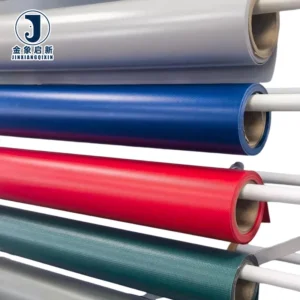
PVC Tent Fabric Shelter Blackout Anti-UV PVC Tarpaulins 1000D for Tent Fabric for Event Exhibition Shade Tents
¥1.45 Select options This product has multiple variants. The options may be chosen on the product page -
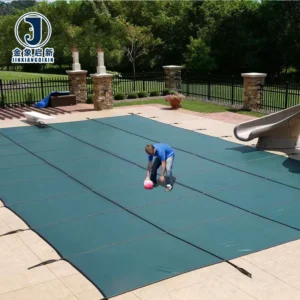
JX Manufacturer Direct Sales PVC Coated Swimming Pool Cover. Durable Waterproof and UV Resistant Floor Swimming Pool Cover Cloth
¥1.78 Select options This product has multiple variants. The options may be chosen on the product page