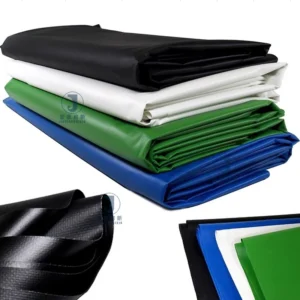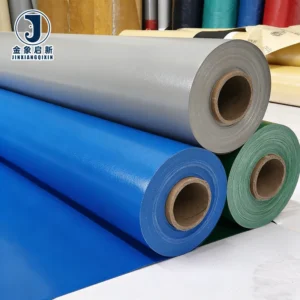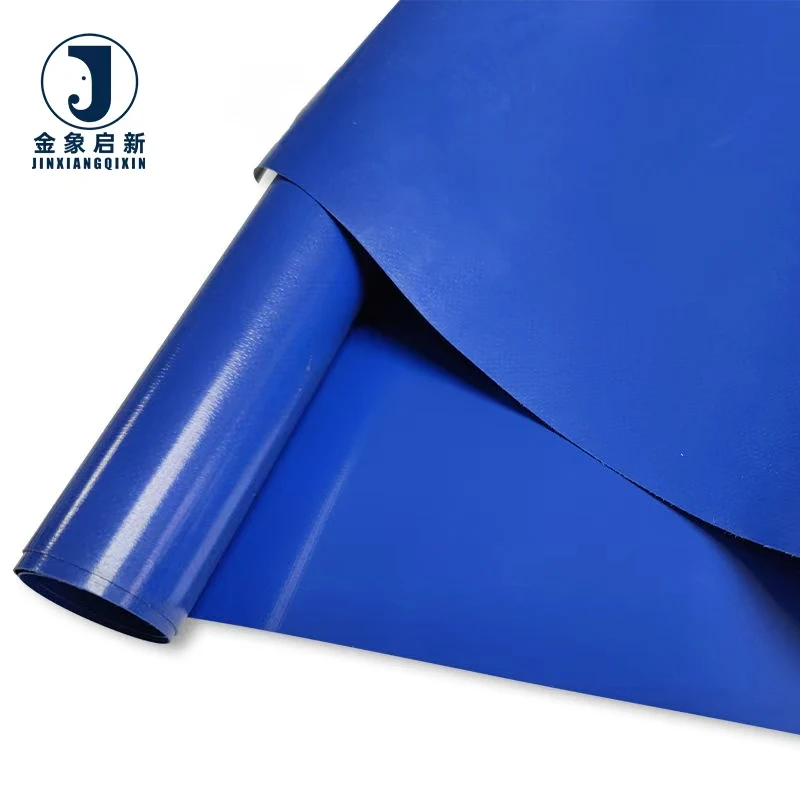
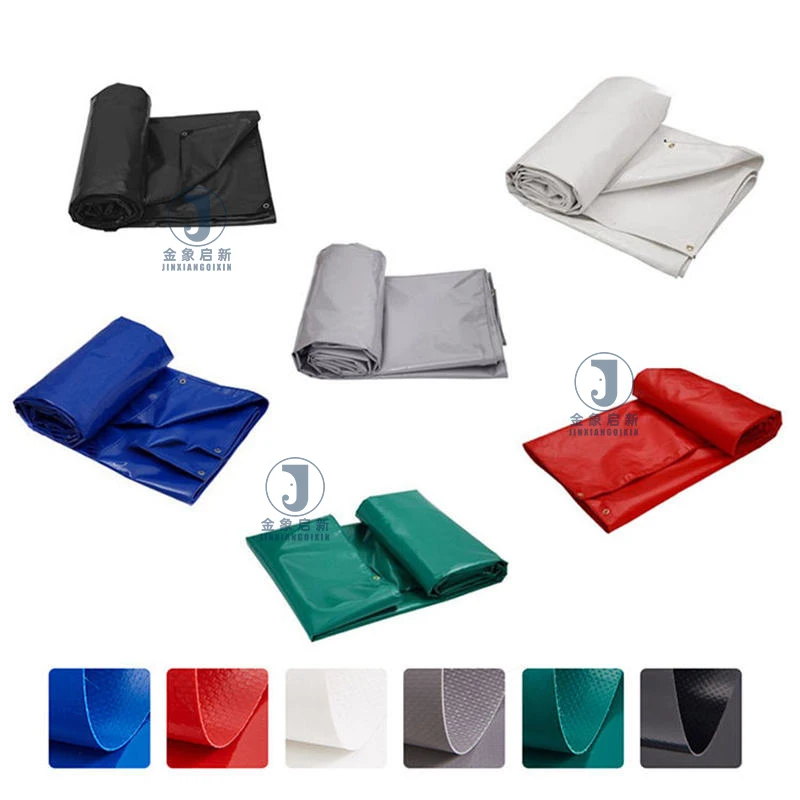
PVC Tarpaulin Roll, 350–750gsm, PVC + High-Strength Polyester Mesh — available in 2m and 2.1m widths with laminated and hot-melt coating technology.
- Laminated hot-melt bonding delivers strong coating adhesion and reliable weld integrity at seams, critical where the load flexes most
- Multiple GSM grades cover light to heavy-duty requirements; special treatments include flame retardant, anti-static and anti-mildew options with test documentation
36 sets of professional equipment ensure batch-to-batch roll consistency across your order, with 100% pre-shipment inspection on every roll.
Description
Coating Process Control — Every roll is coated under monitored weight and adhesion parameters, ensuring the GSM on the quotation is the GSM that arrives at your warehouse.
Technical Specifications
| Parameter | Value |
|---|---|
| Product Type | PVC Coated Tarpaulin Roll |
| Base Fabric | High-strength polyester mesh fabric |
| Coating Material | PVC |
| Coating Method | Laminated technology & Hot-melt Coating technology |
| Weight (GSM) | 350gsm / 420g / 500gsm / 550gsm / 600gsm / 750gsm (multiple grades — confirm the grade for your application) |
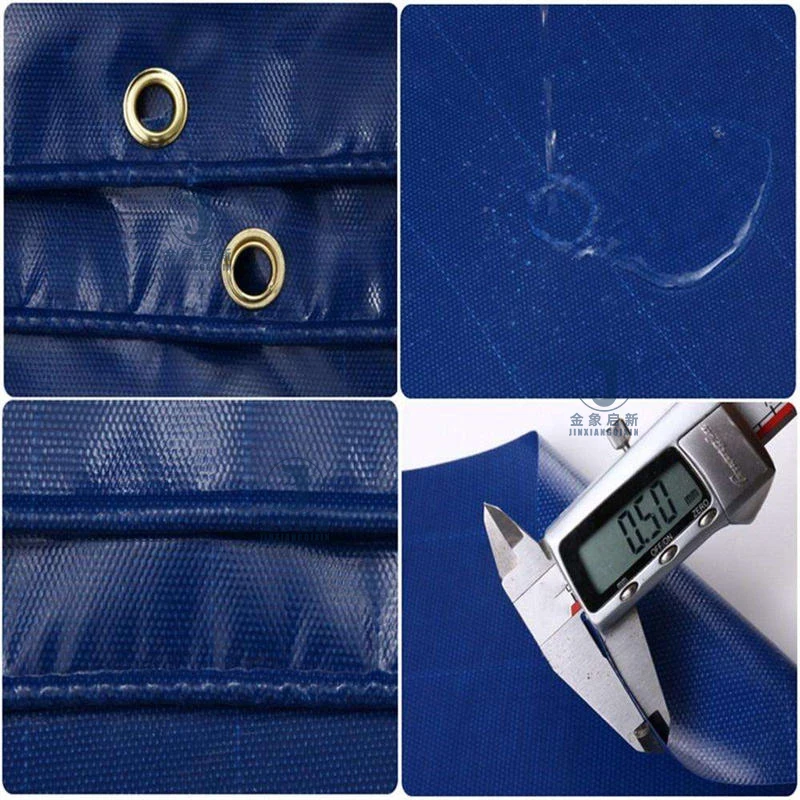
| Total Thickness | 0.32mm / 0.35mm / 0.4mm / 0.45mm / 0.5mm / 0.65mm |
| Width | 2m / 2.1m |
| Roll Length | 75m (for 2m width) / 50m (for 2.1m width) |
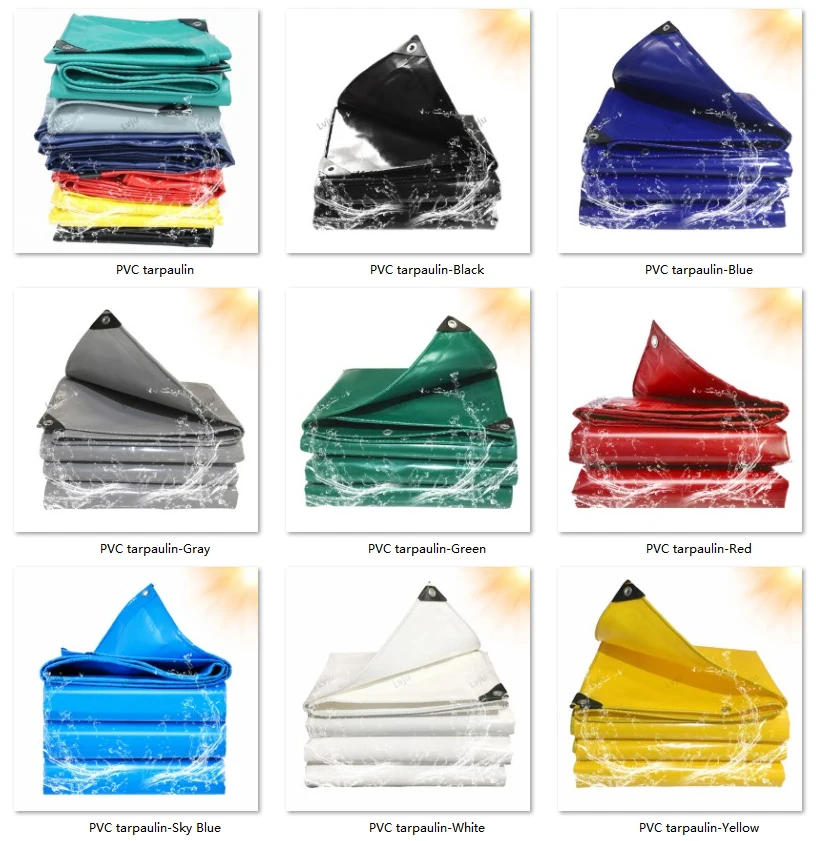
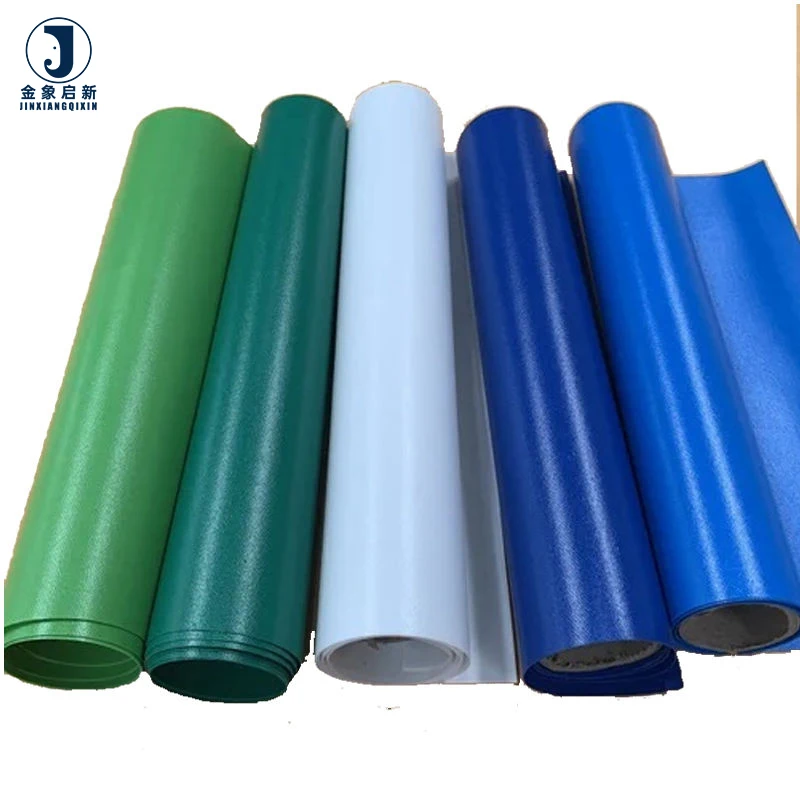
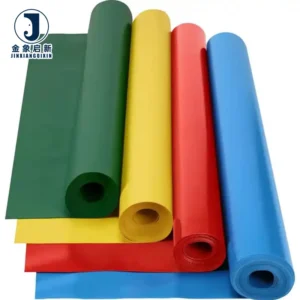
| Colour | Blue / Red / Yellow / Light blue / Grey (Customized) |
| Finish | Glossy or matte (confirm availability per grade) |
| Key Features | Cold crack resistance, anti-mildew, waterproof, sunproof (test basis not stated), color fastness |
| Special Treatments Available | Flame retardant (grade not stated — confirm the grade required for your market), anti-static (grade not stated) |
| Standards | ISO, CE |
Application Suitability
| Application | Exposure & Requirement |
|---|---|
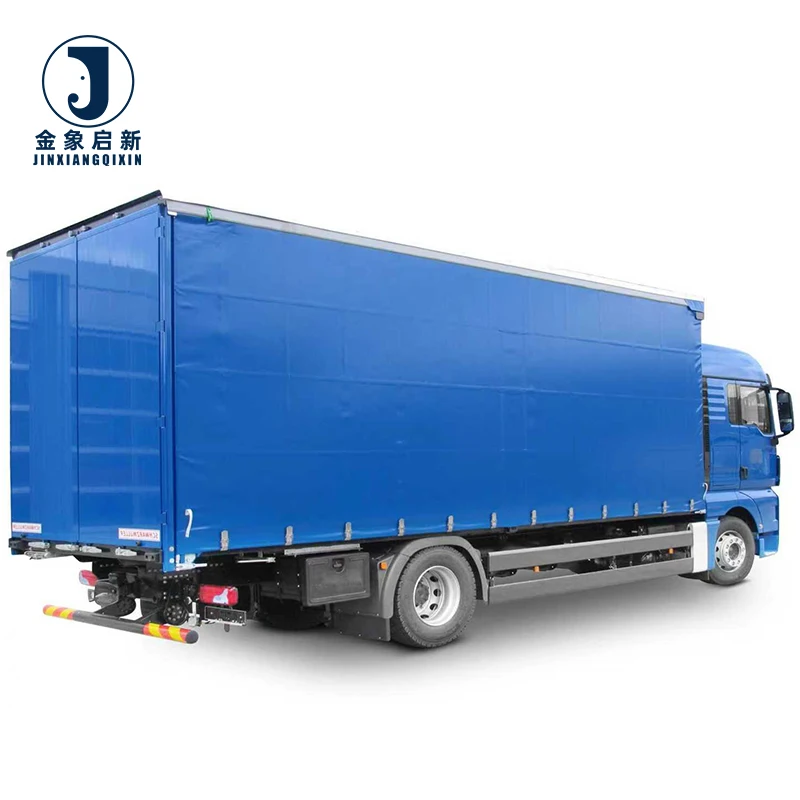
| Truck awning and side curtain fabric | Continuous road vibration, flex stress at tie-down points, weather and UV exposure |
| Tent and awning covers | Tension loading at pole and frame contact, wind uplift, seasonal temperature swings |
| Construction and scaffolding enclosure | Abrasion from scaffolding tubes, wind-driven rain, dust containment, site safety compliance |
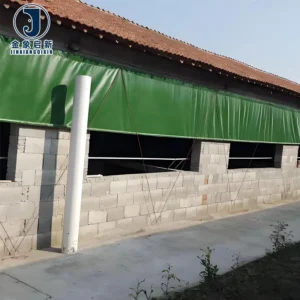
| Agricultural and aquaculture covers | Prolonged moisture contact, organic chemical exposure, mildew risk in humid storage |
| Temporary industrial equipment covers | Outdoor storage exposure, handling abrasion during repeated deployment |
| Inflatable and membrane structure fabric | Internal air pressure loading, weld integrity at curved seams, dimensional stability |
What Separates a Reliable PVC Tarpaulin Roll from a Quoted One
A quoted GSM means nothing if the coating weight drifts across the production run.
Buyers who have sourced PVC coated tarpaulin roll fabric from multiple mills know the pattern: the sample passes, the first container arrives, and the fabric feels lighter at the edges. Coating weight variation is not always intentional — it often stems from uneven temperature control across the coating head or inconsistent line speed during lamination. When the base fabric is polyester mesh, even a small drop in PVC pickup reduces the coating’s ability to bridge the weave gaps, and water finds its way through at the first heavy rain. [NEED_CITE: coating weight uniformity test methods for PVC-coated polyester fabrics]
Product Family Breadth for Specification Matching
Selecting the right PVC coated tarpaulin roll starts with matching weight grade to end use. The range spans 350gsm through 750gsm, with corresponding thickness from 0.32mm to 0.65mm. Lighter grades suit temporary covers and short-term agricultural use where handling weight and cost per square metre matter more than long-term abrasion resistance. Heavier grades are specified for truck side curtains, permanent scaffolding wraps, and inflatable structures where the fabric must resist sustained mechanical stress and environmental exposure over multiple seasons.
Coating Technology and Its Effect on Weld Integrity
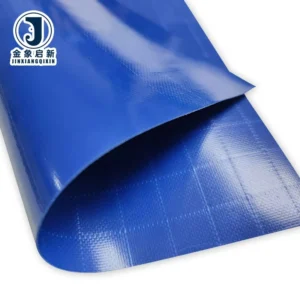
The two coating methods available — laminated technology and hot-melt coating — produce different internal structures in the finished PVC tarpaulin roll. Laminated construction bonds the PVC film to the polyester mesh under heat and pressure, creating a distinct coating-to-yarn interface. Hot-melt coating forces molten PVC into the mesh gaps, producing a more integrated bond. For buyers whose finished products rely on hot-air or high-frequency welding, the coating method influences the temperature window and dwell time needed to achieve a weld that matches or exceeds the fabric’s tear strength. [NEED_CITE: high-frequency welding parameters for PVC-coated polyester tarpaulins]
Decoding GSM, Thickness, and Base Fabric Together
Weight in GSM and total thickness are often treated as interchangeable indicators of strength, but they describe different things. GSM measures the mass of coating and base fabric per square metre, while thickness reflects the caliper distance between the top and bottom coating surfaces. A 550gsm roll with a dense, high-tenacity polyester base may outperform a 600gsm roll built on a lighter mesh if the yarn denier and weave density differ. The base fabric carries the tensile and tear load; the PVC coating protects the yarns from moisture, abrasion, and chemical exposure. Both coating methods offered — laminated and hot-melt — affect how evenly the PVC encapsulates individual yarns, which in turn determines cold crack resistance and long-term flexibility in sub-zero handling. Width options of 2m and 2.1m with roll lengths up to 75m influence cutting layout efficiency: a wider roll reduces the number of horizontal weld seams in large-format covers, while longer rolls reduce splice joints in continuous runs such as truck side curtains.
The Hidden Cost of Underspecifying Your Roll Grade
Choosing a lighter GSM to save on material cost per square metre often shifts the expense downstream. A 350gsm roll used for a construction enclosure that should have specified 550gsm will show coating wear at scaffolding contact points within weeks, forcing replacement mid-project. Colour inconsistency between rolls in the same order is equally costly — when two rolls installed side by side on a tent or awning show visible shade variation, the entire installation looks unprofessional and may be rejected by the end client. Flame retardant treatment claimed without a supporting test certificate creates a different risk: the site engineer rejects the material at inspection, the project stalls, and the buyer absorbs both delay penalties and re-supply freight. [NEED_CITE: common causes of coated fabric failure in construction and transport applications]
Why Buyers Source Their PVC Tarpaulin Roll Here
Three full production lines and 36 sets of professional equipment allow the mill to run multiple GSM grades simultaneously without cross-contamination of colour or coating formulation between runs. The 10-person R&D team handles material selection, custom width development, and pattern printing samples, typically producing trial rolls within days rather than weeks. Dedicated QA/QC operates at every production stage — coating weight is checked during the run, not only at final inspection, and 100% pre-shipment inspection verifies each roll against the purchase specification before it leaves the loading dock. This PVC coated tarpaulin roll range ships with complete documentation: material specification sheets, roll packing lists, and certificates of origin to support customs clearance in destination markets.
Documentation & Verification
- Material specification sheet stating exact GSM, base fabric type, and coating method for each roll
- Pre-shipment inspection record with roll-by-roll weight and colour verification
- Test reports for UV and flame retardant grades where applicable — confirm grade required
- Roll packing list with batch numbers for traceability across your inventory
- Certificate of origin and customs documentation for smooth port clearance
Fabrication, Handling & Storage
- Hot-air welding temperature should be adjusted between laminated and hot-melt coating types to achieve full bond strength
- Store rolls horizontally on pallets to prevent permanent creasing in the 0.32mm to 0.65mm thickness range
- Allow cold-stored rolls to acclimatise before unrolling to protect cold crack resistance performance
- Use polyester-compatible thread and needle size matched to GSM when sewing seams on heavier grades
- Cut layout planning should account for 2m or 2.1m standard widths to minimise off-cuts and weld seams
- Clean with mild detergent only; avoid solvent-based cleaners that can soften the PVC coating surface
Before You Request a Quotation
To receive an accurate specification and sample for your PVC coated tarpaulin roll requirement, provide your target application, the environmental exposure conditions, and the GSM or thickness range you are considering. Specify whether you need standard width rolls or custom sizing, and indicate if colour matching to a Pantone or RAL reference is required. If your end market mandates flame retardant or anti-static compliance, state the regulation or standard your finished product must meet so the correct treatment grade can be included in the sample.
Frequently Asked Questions
Q: How is GSM verified before shipment, and what should I check on arrival?
A: Each roll is weighed and measured during 100% pre-shipment inspection, and the verified GSM is recorded on the inspection report. On arrival, cut a known-area sample from the roll, weigh it on a calibrated scale, and compare against the specification sheet. Any discrepancy beyond normal tolerance should be reported immediately with the batch number from the packing list.
Q: What roll widths and lengths are available, and what are the minimums for custom sizes?
A: Standard widths are 2m and 2.1m, with roll lengths of 75m and 50m respectively. Custom widths and lengths are available subject to minimum order quantities that vary by GSM grade and coating method. Request a quotation with your required dimensions and annual volume to confirm production feasibility and lead time.
Q: How do you ensure colour consistency across multiple rolls in one order?
A: All rolls within a single order are produced from the same coating batch using matched colour formulations. The pre-shipment inspection includes a visual colour comparison between rolls before packing. For critical applications where shade uniformity is essential, specify your Pantone or RAL reference at inquiry stage so the formulation is locked before production begins.
Q: What is the difference between laminated and hot-melt coating, and which suits my application?
A: Laminated coating bonds a PVC film to the polyester mesh under heat and pressure, producing a smooth surface suited to printing and general covers. Hot-melt coating forces molten PVC into the mesh gaps for stronger yarn encapsulation, benefiting applications requiring repeated welding or high flex fatigue. Share your end-use details so the appropriate method is recommended.
Q: Can I get custom pattern printing and branding on rolls, and what is the sampling process?
A: Pattern printing and branding are available on rolls, with the R&D team developing printed samples within days of artwork approval. Submit your design files, specify the GSM grade and colour base, and confirm the repeat length. A sample roll is produced for your review before bulk production is scheduled.
Related products
-
JX PVC Coated Tarpaulin/Cover for Farm Waterproof Warp Knitted Tent Pig Broiler Sheep Chicken Farm Plain Style
¥1.40 Add to cart -
Awning and Tents Waterproof Fabric PVC Tarpaulin
¥1.50 Add to cart -
Stock PVC Tarpaulin Fabric Rolls 500D*500D 18*17 Hot Selling Colors in Stock China Manufacture Wholesale Fabrics Best Price
¥1.26 Select options This product has multiple variants. The options may be chosen on the product page -
Tarp Factory 610gsm 650gsm 800gsm Awnings Tent PVC Coated Fabric Waterproof Bache Lona PVC Tarpaulin Roll
¥1.45 Select options This product has multiple variants. The options may be chosen on the product page