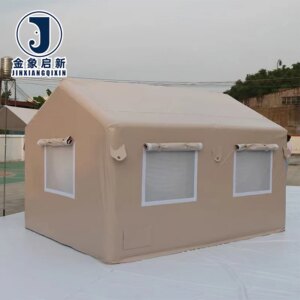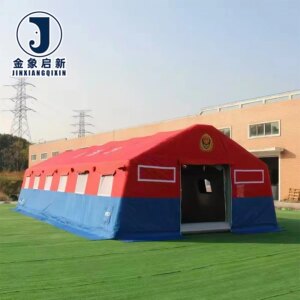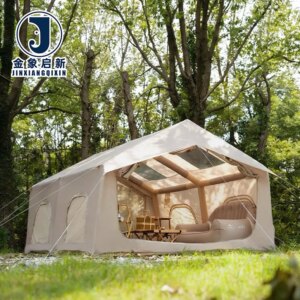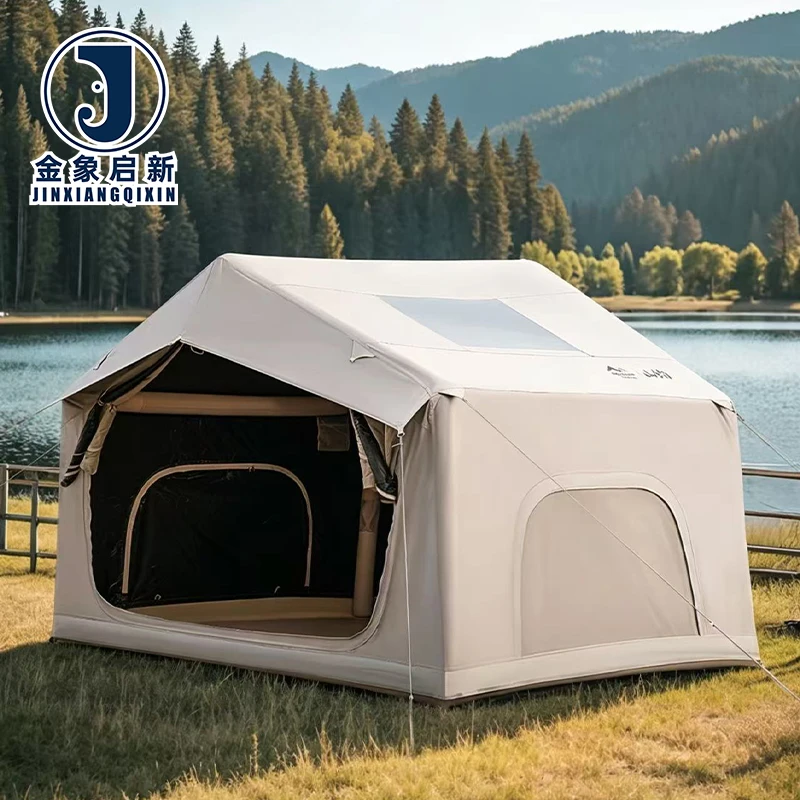
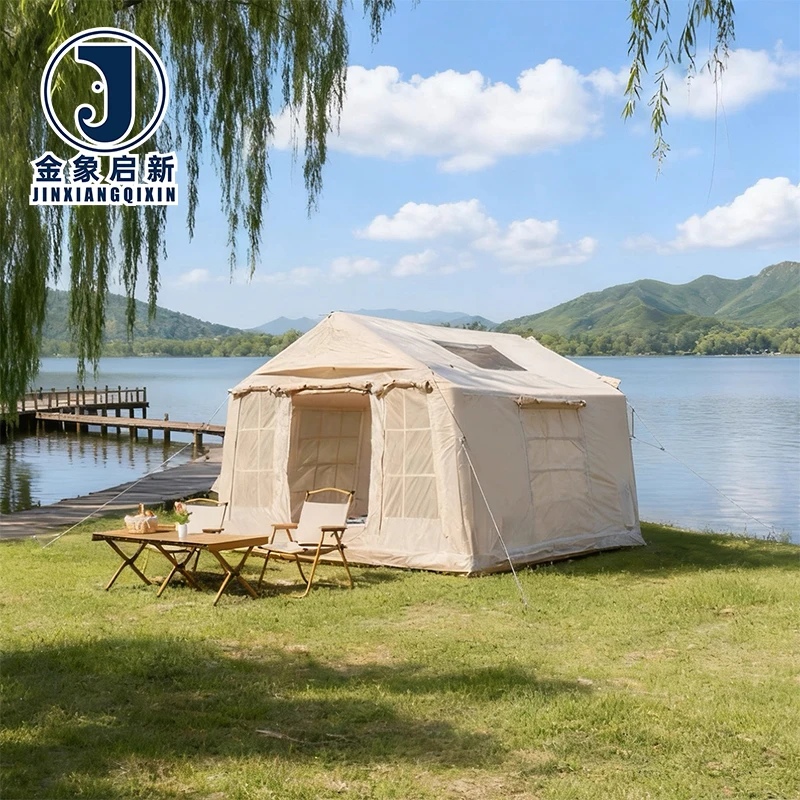
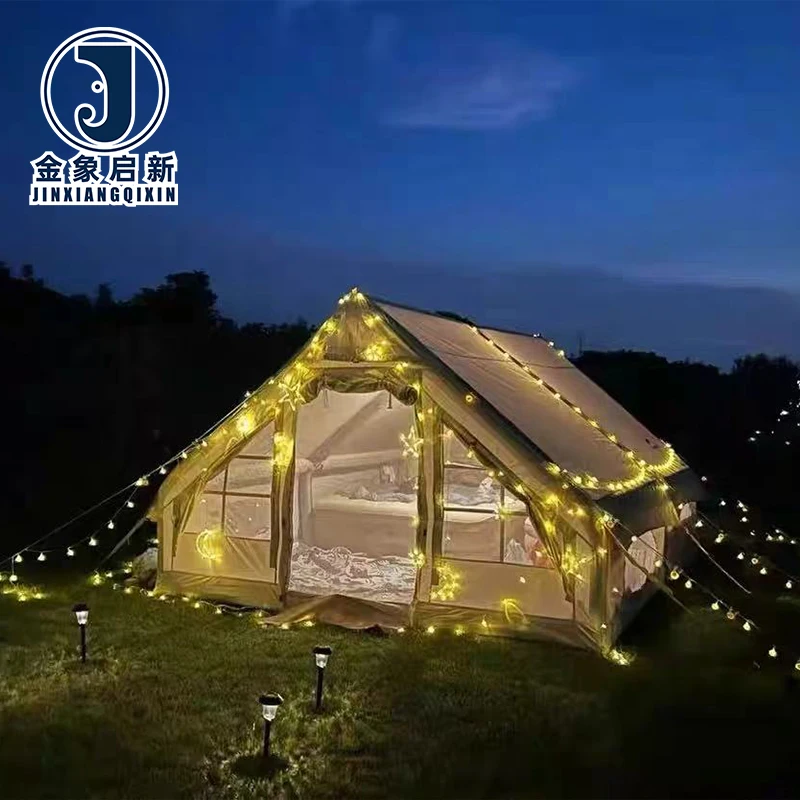
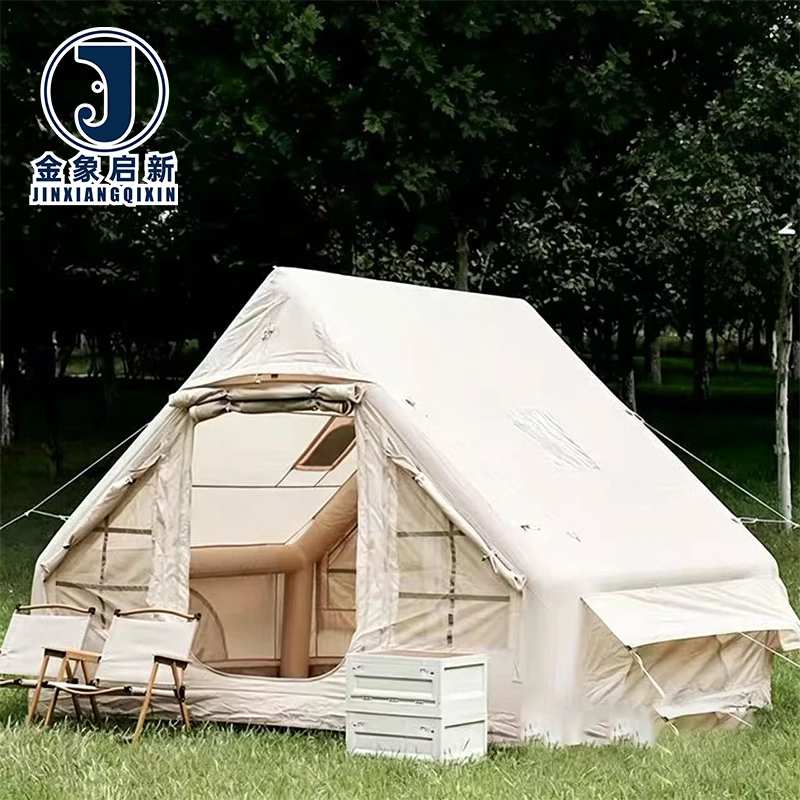
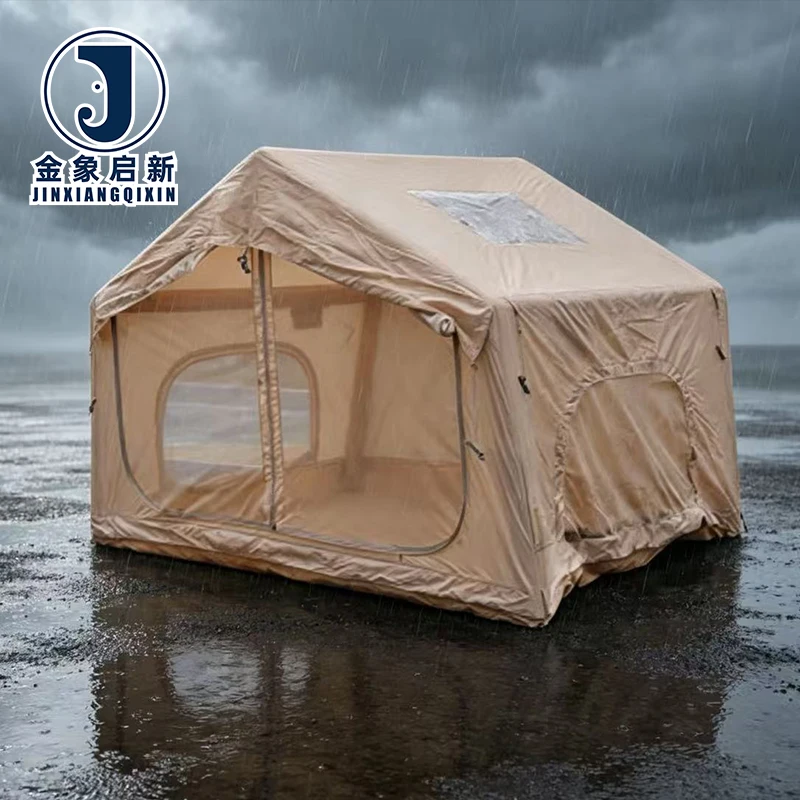
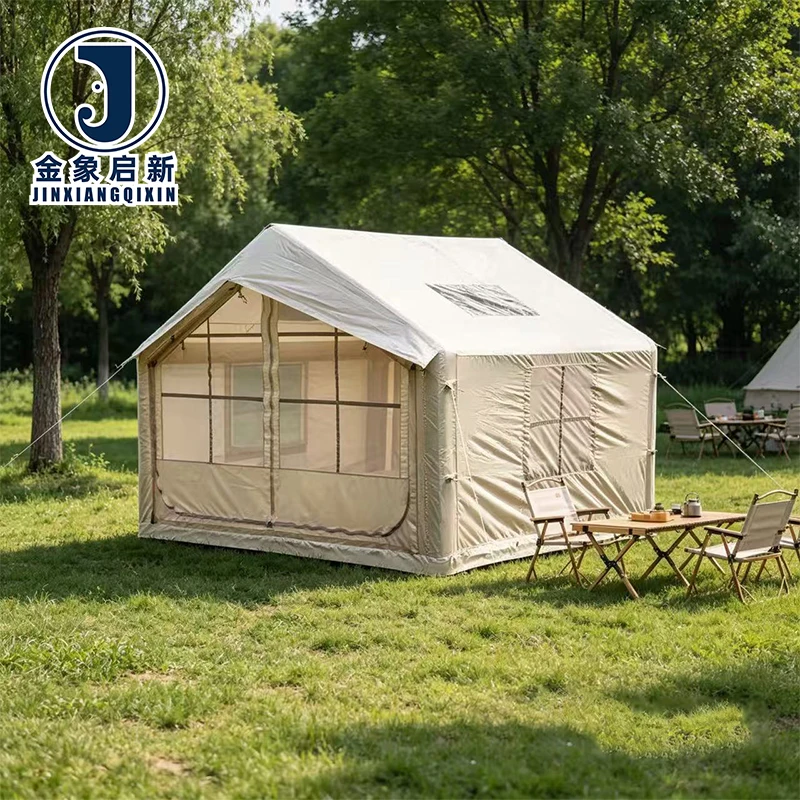
Inflatable Tent Fabric — waterproof PVC tarpaulin with UV-resistant, tear-resistant, and fire-retardant treatments for commercial glamping structures.
- Custom width and GSM selection to minimize weld seams on large inflatable panels
- Coating weight and adhesion process control ensuring stated specs match delivered rolls
- Roll-to-roll colour consistency verified before shipment for seamless panel appearance
Three full production lines support bulk capacity with reliable on-time delivery, backed by dedicated QA at every stage and 100% pre-shipment inspection.
Description
Process Control Over Coating Weight — Our three full production lines maintain strict GSM adherence on every roll of inflatable tent fabric, ensuring the material you test on arrival matches the specification you approved at sample stage.
Technical Specifications
| Parameter | Value |
|---|---|
| Product Type | Inflatable Tent |
| Core Material | PVC tarpaulin |
| Capacity | 6-8 Person |
| Feature | Skylight |
| Key Features | Waterproof, UV-resistant, tear-resistant, fire-retardant, anti-static |
| Customization Service | OEM & ODM, sample customization, pattern printing |
| Standards | ISO 9001, ISO 14001, ISO 45001, CE |
Note: UV-resistance, fire-retardant grade, and anti-static standard are available on request — confirm the grade required for your market before ordering.
Application Suitability
| Application | Exposure & Requirement |
|---|---|
| Commercial outdoor glamping operations | Continuous UV and rain exposure, guest safety compliance, fire-retardant certification for temporary structures |
| Adventure tourism companies | Remote deployment, rapid inflation and deflation cycles, abrasion from ground contact |
| Event organizers and festival campsites | High guest turnover, frequent assembly and storage, branded exterior surfaces |
| Outdoor resorts and corporate retreat facilities | Long-term seasonal installation, aesthetic consistency across multiple units, weather resistance |
Why Batch Consistency Matters More Than Quoted GSM for Inflatable Tent Fabric
A fabric roll that measures lighter than its quotation is only the first problem — colour drift and inconsistent coating adhesion across the same batch can force an entire tent panel batch into rework.
When sourcing PVC tarpaulin for inflatable tent manufacturing, buyers often focus on the stated GSM as the primary quality gate. Yet in practice, inflatable tent fabric failures frequently originate from uneven coating weight distribution, which weakens weld seams long before the base fabric reaches its tensile limit. Panels welded side by side from different rolls in the same shipment can show visible colour variation once assembled — a defect that only reveals itself after fabrication is complete [NEED_CITE: common causes of coated fabric batch inconsistency].
For an Inflatable Tent Fabric manufacturer, controlling adhesion between the PVC coating and the base polyester scrim is as critical as achieving the target weight. A lighter coating may pass a GSM check on a small sample swatch but fail to provide adequate weld strength when heat-sealed at production speed.
Coating Adhesion and Weld Integrity in Inflatable Structures
Inflatable tents depend entirely on heat-welded seams to maintain air pressure across large panel areas. The bond between the PVC coating layer and the base fabric determines whether a weld line holds under continuous internal pressure or delaminates at the flex points where the structure bends during inflation. Our Inflatable Tent Fabric manufacturer process controls coating weight at each stage, with in-process QA checks verifying adhesion strength before rolls move to finishing.
Colour Matching Across Multi-Roll Orders
Commercial glamping operators ordering multiple inflatable tents require panels that match when installed side by side at a festival or resort site. Even slight pigment variation between production batches becomes visible under natural daylight across large tent surfaces. Our R&D team manages colour formulation against reference standards, and each batch is verified before dispatch to maintain consistency across roll lots.
How PVC Coating Weight and Base Fabric Interact
The relationship between coating GSM and base fabric denier directly shapes how an inflatable tent panel behaves under load. A heavier coating adds waterproof mass but increases stiffness, which can stress weld seams during inflation cycles. The base polyester scrim provides tensile and tear strength, while the PVC coating contributes waterproofing and surface durability. Specifying one without the other leads to material that either lacks structural rigidity or becomes too rigid to fold and pack efficiently [NEED_CITE: relationship between coating weight and tensile performance in PVC tarpaulins]. Surface finish — glossy or matte — further affects how the material responds to cleaning, UV exposure, and printed branding adhesion.
The Hidden Cost of Specifying on Price Per Kilogram Alone
Choosing an inflatable tent fabric supplier based solely on unit cost frequently leads to downstream expenses that exceed any initial savings. Rolls arriving below quoted GSM produce thinner weld zones, where seams separate under the cyclic pressure loads that inflatable structures experience daily. Fire-retardant grades supplied without verifiable test reports can result in failed site inspections, forcing event operators to replace entire tent inventories mid-season. Colour inconsistency discovered after cutting and welding means the fabric is already fabricated — return logistics are impractical and rework costs compound quickly [NEED_CITE: financial impact of coated fabric specification mismatches in commercial tent production].
Why Production Depth Reduces Supply Risk for Tent Buyers
Our facility runs three full production lines with 36 sets of professional processing equipment, which allows us to schedule custom inflatable camping tent orders without displacing standard stock production. A 10-technician R&D team handles material selection, pattern printing layout, and sample development within days rather than weeks. Every roll undergoes 100% pre-shipment inspection — QA checks coating weight, surface finish, and colour reference against your approved sample before packing. With nearly 30 years of focused PVC coated fabric experience, our process controls are built on production data rather than supplier promises.
Documentation & Verification
- Material specification sheet stating PVC coating composition, base fabric denier, and colour reference per batch
- Test reports for UV and flame-retardant grades matched to production batch where applicable
- Pre-shipment inspection record confirming GSM and visual consistency before dispatch
- ISO and CE certificates supporting commercial compliance for glamping and event structure markets
- Roll packing list with batch traceability for multi-roll inflatable tent fabric orders
Fabrication, Handling & Storage
- Heat-weld temperature and dwell time must be calibrated to the specific PVC coating weight of this inflatable tent fabric
- Store rolls horizontally on racking to prevent flat spots that distort panel geometry during cutting
- Avoid folding finished inflatable tent panels at welded seam lines to prevent coating crack initiation
- Use PVC-compatible cleaners only — solvent-based products may degrade the coating surface
- Allow material to reach ambient temperature before unrolling in cold conditions to prevent stiff-handling damage
- Plan panel cutting layout to minimize offcuts, particularly when working with custom-width rolls
What We Need to Quote Your Custom Inflatable Tent Fabric Accurately
To provide a specification that matches your production requirements, share your target GSM range, required fire-retardant or anti-static grade for your destination market, and the roll width that fits your welding table. If you need pattern printing or custom colour matching, provide Pantone or RAL references and your annual volume estimate so we can plan batch scheduling. Let us know whether you require raw rolls or sample panels for weld testing before committing to a production order.
Frequently Asked Questions
Q: How is flame-retardant grade verified for inflatable tent fabric and which standards apply?
A: Flame-retardant grades are available across different classification systems depending on your market — European, North American, or Australian standards each specify different test methods. We supply test reports matched to the production batch, but you should confirm the exact grade your local fire authority requires for temporary structures before placing an order.
Q: What UV-resistance test basis is used and how does it relate to outdoor exposure?
A: UV-resistance treatment is available with test documentation on request. The appropriate test basis depends on your expected climate zone and installation duration. We recommend sharing your deployment environment so our R&D team can recommend the suitable treatment level for your commercial glamping application.
Q: Can custom sizes, colours, and pattern printing be done with low minimums?
A: Yes. Our 10-technician R&D team develops custom colour samples and pattern printing proofs within days. Minimum order quantities vary by customization complexity — standard colours and widths typically carry lower minimums than fully custom Pantone matches or branded print layouts.
Q: How do you ensure batch-to-batch colour consistency across multiple inflatable tent orders?
A: Each production batch is formulated against stored colour reference standards and verified during pre-shipment inspection. Rolls destined for the same order are grouped and checked side by side before packing, reducing the risk of visible variation when panels are assembled at the installation site.
Q: What documentation ships with each order to support commercial compliance?
A: Every shipment includes a material specification sheet, batch-matched test reports where applicable, a pre-shipment inspection record, roll packing list, and certificate of origin. ISO and CE certificates are available to support regulatory submissions for glamping sites and commercial event venues.
Related products
-
Camping Tent Inflatable UV Resistant Customizable Four-season Waterproof PVC Eco-Friendly Windproof Foldable Quick Automatic
Read more -
خيمة قابلة للنفخ لأربعة مواسم طبقة واحدة >3000 مم مقاومة للماء ومقاومة للرياح فتح تلقائي سريع قماش PVC صديق للبيئة
Read more -
Inflatable Camping Tent Waterproof PVC Outdoor Air Tent Easy Setup Family Camping Shelter
Read more -
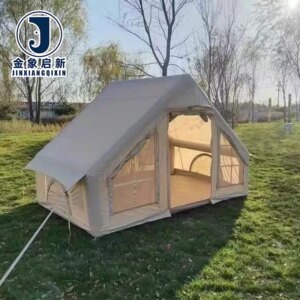
Outdoor Portable Camping Inflatable Tent Luxury All-Season Use Overnight Large Space Rainproof Insulated Quick Automatic Opening
Read more