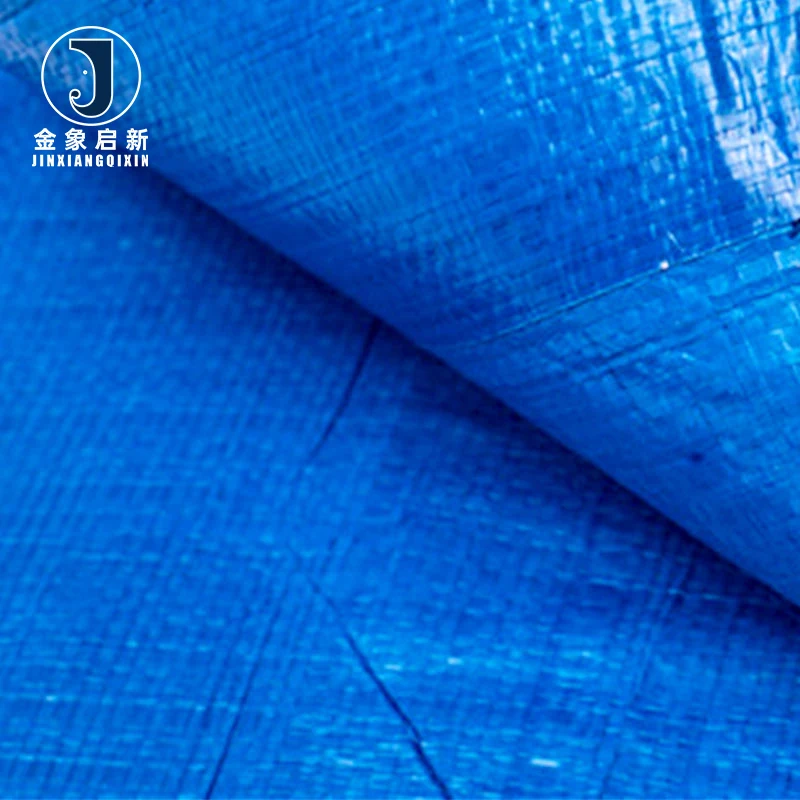
Backed by nearly 30 years of coated fabric process control, 100% pre-shipment inspection, and a 10-person R&D team handling custom sizing and sample development within days.
Description
Proven Process Control — three full production lines and 36 sets of equipment ensure batch-to-batch consistency across every roll of PE tarpaulin leaving the facility.
Technical Specifications
| Parameter | Value |
|---|---|
| Product Type | PE Tarpaulin |
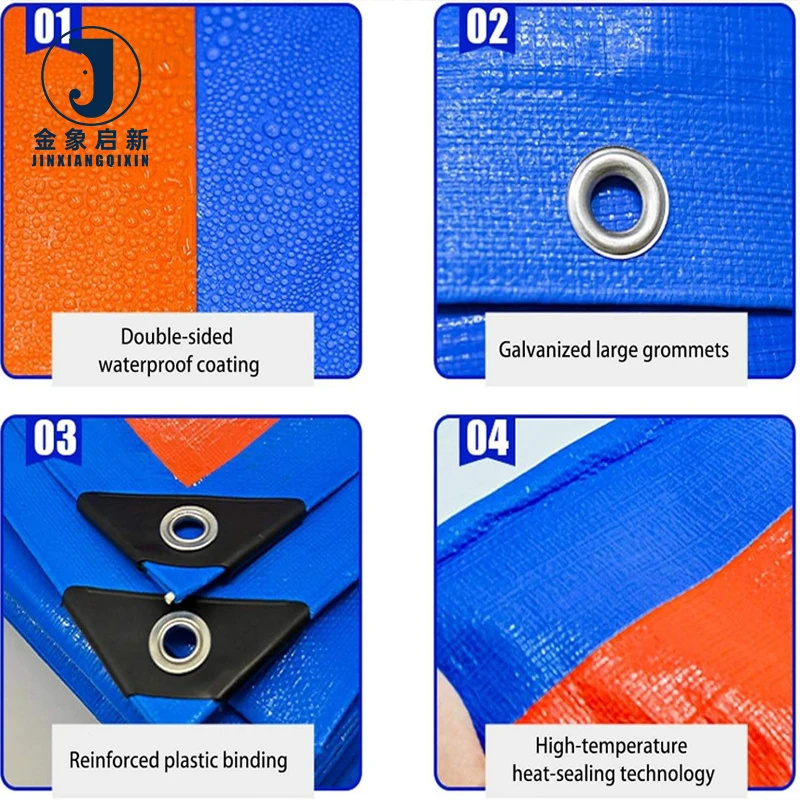
| Coating Material | HDPE weaving with LDPE lamination on both sides |
| Weight (GSM) | 50gr/m2 ~ 220gr/m2 available (range covers product family — confirm the grade for this item) |
| Total Thickness | 0.18-0.22 mm (lightweight), 0.22-0.28 mm (medium), 0.30-0.35 mm (heavy-duty), 0.2-0.4 mm / 8 mil-16 mil (overall) |
| Mesh Count | 8×8 (lightweight), 10×10 (medium), 12×12 (heavy-duty) |
| Tensile Strength | Meridian 300-500 / Latitude 250-450 N/5cm (lightweight); Meridian 500-800 / Latitude 400-700 N/5cm (medium); Meridian 900-1200 / Latitude 700-1000 N/5cm (heavy-duty) (test basis not stated in source) |
| Roll Width | 6ft, 8ft, 10ft, 12ft, 2m, 4m, 6m |
| Roll Length | 100 yards, 100 meters, or custom |
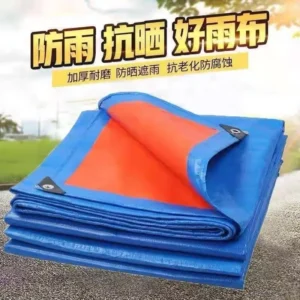
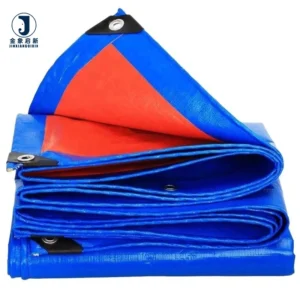
| Color Options | Blue, Blue/Orange, Green, Grey, Black, Clear, Grey/Green, Orange, or custom |
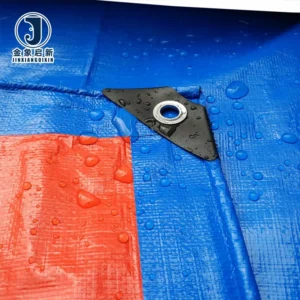
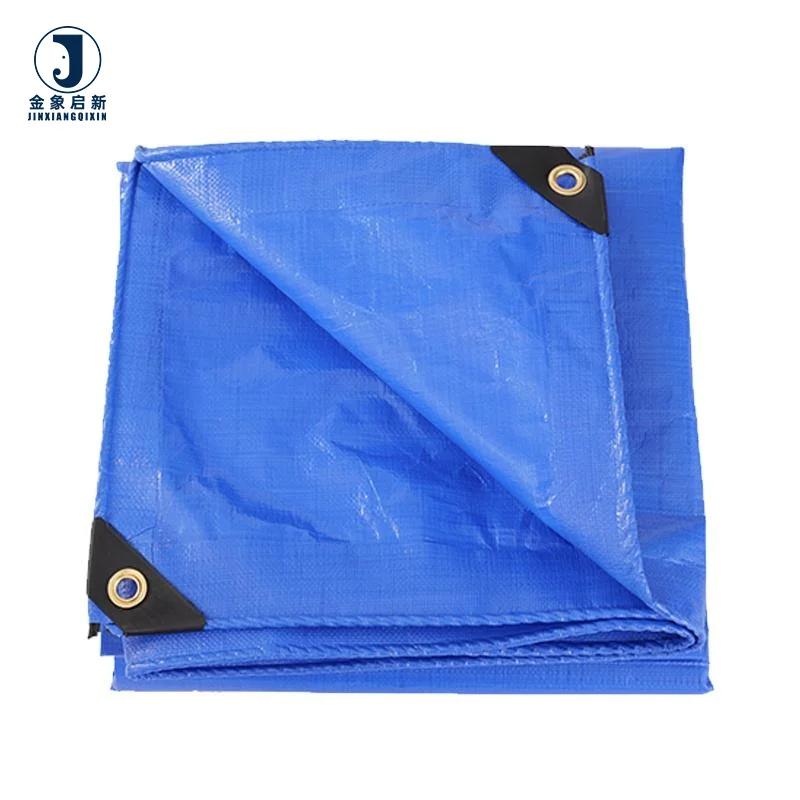
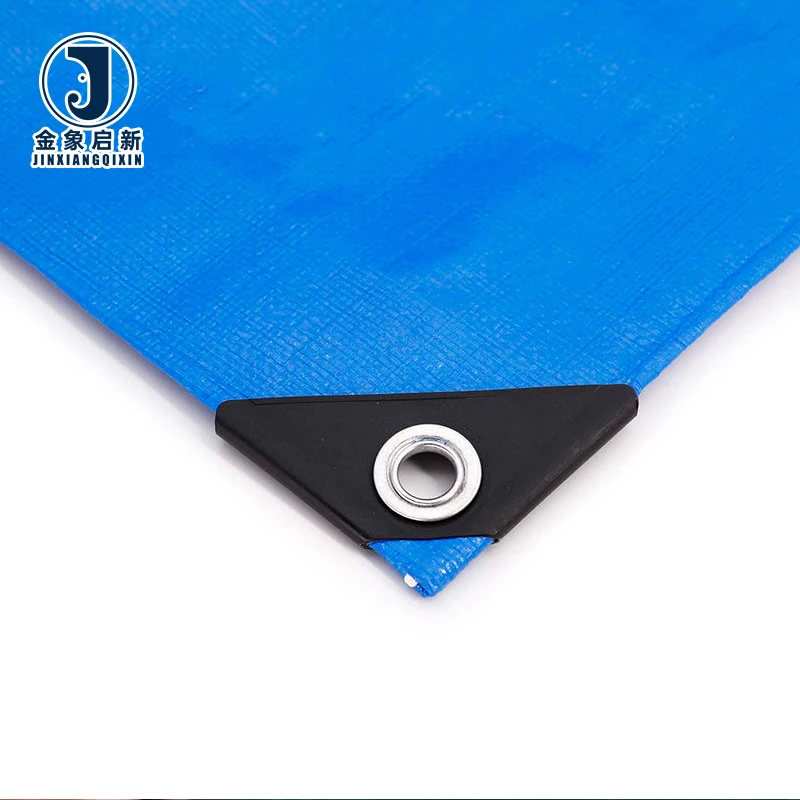
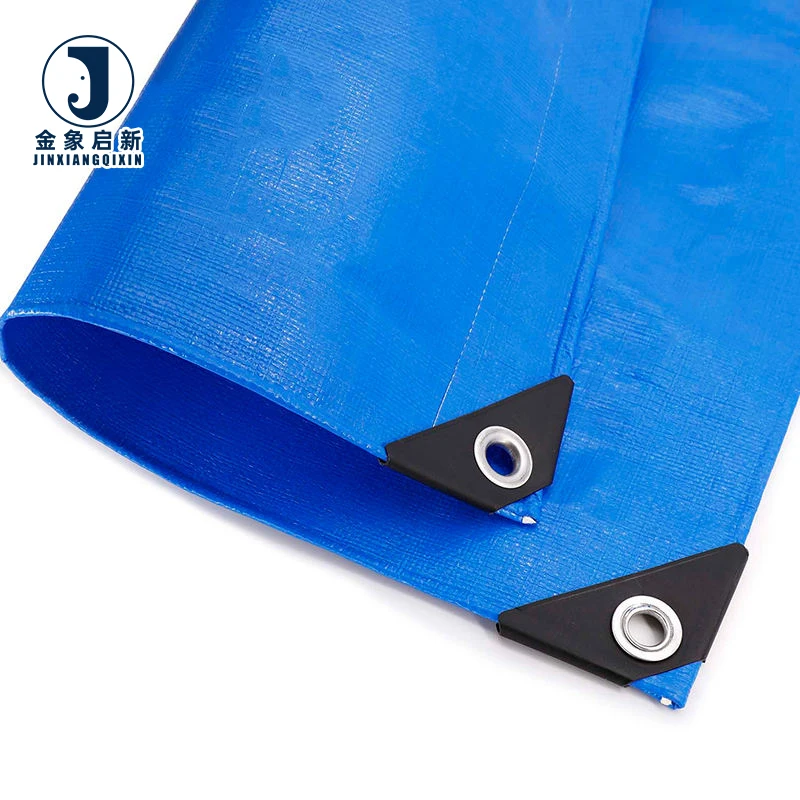
| Edge Reinforcement | All four edges reinforced with PP rope in hem; galvanized eyelets every 3ft or 1 meter interval; reinforced plastic corners |
| UV Treatment | Available (test basis not stated in source) |
| Waterproof & Mildew Proof | Yes |
| Custom Printing | Brand customization available |
| Standards | ISO and CE certified facility |
Application Suitability
| Application | Exposure & Requirement |
|---|---|
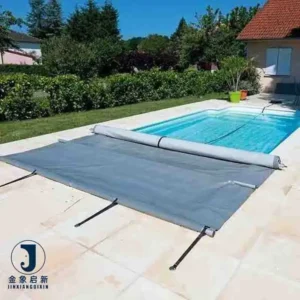
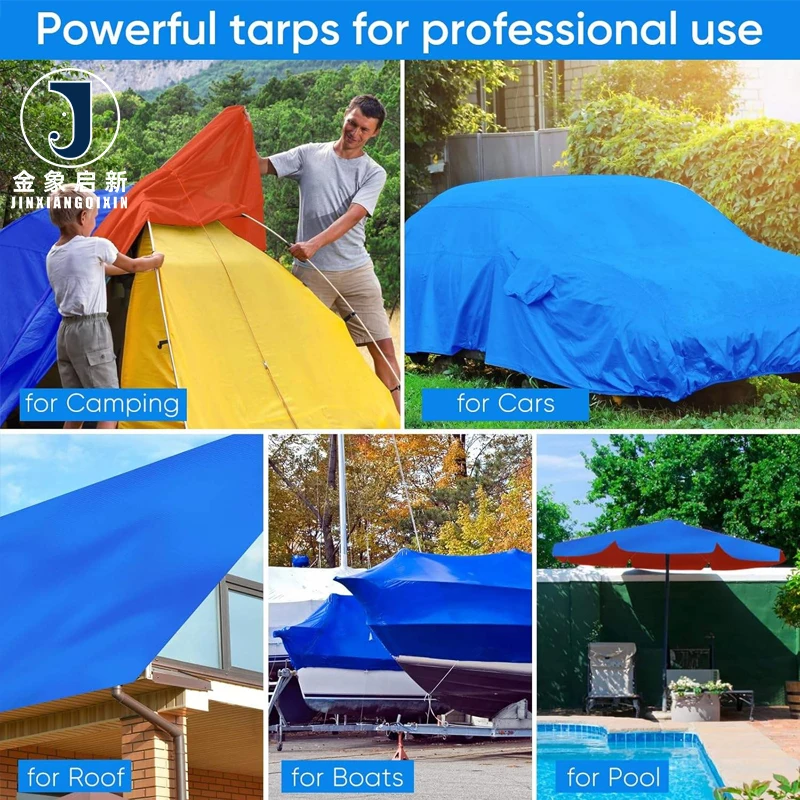
| Truck and trailer load covering | Constant tie-down tension, road debris abrasion, UV and rain exposure, frequent folding and unfolding at flex points |
| Construction site and equipment covers | Prolonged outdoor weathering, dust and moisture ingress, contact with alkaline construction materials, mechanical puncture risk |
| Agricultural and aquaculture stock protection | Direct sunlight, standing water contact, organic contamination, need for lightweight handling over large areas |
| Warehouse temporary coverage | Indoor-outdoor transitions, stacking pressure, forklift snag risk, dust containment |
Why Roll-to-Roll Consistency Matters More Than Quoted GSM
Batch uniformity in coating weight and weaving density is the real determinant of field performance, not the number on the quotation.
A PE Tarpaulin manufacturer that quotes a specific GSM but cannot guarantee it across every roll in a container load creates downstream problems that only surface after installation. Slight variations in HDPE weave tension or LDPE lamination thickness from one roll to the next produce visible colour shifts when panels are joined side by side on a truck curtain or construction enclosure [NEED_CITE: tensile and tear test methods for coated fabrics per ISO 1421]. Buyers who source from suppliers without dedicated in-process QA frequently discover that later rolls in the same shipment feel noticeably lighter and tear more easily during eyelet installation.
HDPE Base Fabric and LDPE Lamination Integrity
The structural backbone of this PE tarpaulin is the HDPE woven base fabric, which carries the tensile and tear loads during use. The LDPE lamination applied to both sides seals the weave openings, creating a fully waterproof barrier that prevents moisture ingress even under sustained rain exposure. This dual-side coating approach means that neither surface is left as exposed weave, which is a common failure point in single-sided laminated products where water channels through the uncoated face.
Finished Cover Reinforcement at Stress Points
Every finished tarpaulin in this range features PP rope threaded through a folded hem on all four edges, distributing tie-down loads across a broader fabric area rather than concentrating stress at individual eyelets. Galvanized eyelets are inserted at regular intervals — every 3ft or 1 meter depending on the cut size — and reinforced plastic corners protect the points most prone to tearing during installation and removal. This reinforcement system addresses the reality that custom PE Tarpaulin covers fail most often at edges and corners, not in the body of the fabric.
Mesh Count and Weight Tier Selection
The relationship between mesh count and GSM determines how the fabric behaves under load, and selecting the wrong combination leads to premature failure. Lightweight grades at 8×8 mesh with lower GSM suit temporary agricultural covers where handling ease matters more than puncture resistance. Medium grades at 10×10 mesh balance weight and strength for warehouse and general-purpose construction covers. Heavy-duty grades at 12×12 mesh with the highest GSM in the range deliver the tensile and tear values needed for transport applications where tie-down straps exert continuous point loads [NEED_CITE: ISO 1421 test methods for coated fabric tensile and tear strength]. GSM alone does not predict performance — a tightly woven lower-GSM fabric can outperform a loosely woven higher-GSM one in tear propagation resistance.
The Cost of Specifying on GSM Without Verification
When procurement decisions rest solely on a quoted GSM figure without pre-shipment verification, the consequences compound across an entire order. A roll that arrives lighter than specified means the HDPE base fabric has fewer yarns per centimetre or the LDPE coating layer is thinner than agreed — both reduce tensile strength and accelerate UV degradation. Buyers who install underspecification material on construction sites or transport fleets then face warranty claims and replacement costs that far exceed the marginal saving from accepting unverified stock [NEED_CITE: DIN 4102 fire classification for building materials as an example of documentation-backed specification]. Colour variation between rolls in the same shipment forces contractors to sort and match panels on site, adding labour hours and delaying project handovers.
Why Procurement Teams Consolidate PE Tarpaulin Sourcing Here
Three full production lines with 36 sets of professional equipment provide the capacity to fulfil container-load orders without splitting production across external workshops where process control is lost. A 10-person R&D team handles material selection, custom sizing, pattern printing and sample development in-house, so specification changes do not require re-quoting from a third party. Dedicated QA/QC at every production stage with 100% inspection before shipment means each roll is weighed and measured against the material specification sheet before packing. Samples for custom width, colour or printing requirements are developed within days, allowing buyers to confirm appearance and hand feel before committing to bulk production.
Documentation & Verification
- Material specification sheet stating exact GSM, base fabric denier and LDPE coating weight for every roll shipped
- Pre-shipment inspection record confirming colour consistency and dimensional accuracy across the entire order
- Roll packing list detailing net weight, roll count and dimensions for container loading verification
- Certificate of origin and customs documentation support for cross-border clearance
- UV treatment test report provided where applicable — confirm the test standard required for your market
Fabrication, Handling & Storage
- Hot-air welding temperature should match the LDPE lamination grade to prevent seam delamination under load
- Galvanized eyelets must be set through the PP rope hem to distribute tension and prevent tear-out at tie-down points
- Store rolls upright on pallets to avoid flat-spotting the HDPE weave, which causes creasing when unrolled on site
- Unfold finished covers at ambient temperature; cold PE tarpaulin becomes brittle and cracks at fold lines if forced open below freezing
- Clean with mild detergent only — solvent-based cleaners degrade the LDPE lamination surface over repeated use
- Overlap panels by at least 200mm and secure with bungee cords rather than adhesive tape for temporary weather enclosures
Before You Request a Quote
Provide the application scenario and the specific exposure conditions — whether the cover will face continuous UV, mechanical abrasion from tie-downs, or chemical contact on a construction site. Specify whether you need roll stock in a particular width and length, or finished cut sizes with eyelets and reinforced hems. If your market requires UV treatment or flame-retardant certification, state the test standard your end user demands so the correct grade is selected from the range.
Frequently Asked Questions
Q: How do I choose the right GSM and mesh count for my application?
A: Selection depends on the mechanical loads and exposure conditions. Lightweight 8×8 mesh grades suit temporary agricultural covers where ease of handling over large areas is the priority. Medium 10×10 mesh balances strength and weight for general construction and warehouse use. Heavy-duty 12×12 mesh with the highest GSM values in the range is specified for transport applications where tie-down straps and road debris create sustained point loads and abrasion.
Q: Can the tarpaulin be supplied in custom widths and lengths by the roll?
A: Standard roll widths include 6ft, 8ft, 10ft, 12ft, 2m, 4m and 6m, with roll lengths of 100 yards or 100 meters. Custom widths and lengths are available subject to production line capability and minimum order quantities. The 10-person R&D team develops samples for non-standard specifications within days so buyers can verify coating weight, colour and hand feel before confirming bulk production.
Q: Are UV treatment options backed by test reports?
A: UV treatment is available across the PE tarpaulin range. However, the specific test basis and exposure rating depend on the grade selected and the treatment formulation applied. Buyers should state the test standard required by their end market — such as accelerated weathering hours per ISO 4892 or equivalent — so the correct treatment is applied and documented with a test report before shipment.
Q: How is colour consistency maintained across multiple rolls in one order?
A: Colour consistency is controlled through dedicated QA/QC at every production stage, with 100% inspection before shipment. Each roll is checked against the approved colour reference, and the pre-shipment inspection record documents compliance across the entire order. This prevents the situation where rolls from the same shipment show visible colour variation once installed side by side on a truck curtain or site enclosure.
Q: What reinforcement options are available for finished covers?
A: Finished tarpaulins feature PP rope reinforcement threaded through folded hems on all four edges, with galvanized eyelets spaced every 3ft or 1 meter and reinforced plastic corners at high-stress points. Custom eyelet spacing, additional corner patches and specific hem constructions can be discussed during the sample development stage to match the tie-down method and load profile of the intended application.
Related products
-
France Hot Sales Blue Color Polyethylene PE Tarpaulin Waterproof Sheet for Truck Canopy and Outdoor Awning
¥0.66 Select options This product has multiple variants. The options may be chosen on the product page -
Hot Selling Heavy Duty PVC Coated Tarpaulin Covers Waterproof Plastic for Truck Tent Outdoor
¥3.10 Select options This product has multiple variants. The options may be chosen on the product page -
Waterproof Coated Organic Blackout Polyethylene Tarpaulin Sheets for Outdoor Garden Greenhouses and Tents
¥0.59 Select options This product has multiple variants. The options may be chosen on the product page -
Tarpaulin Manufacture Scaffolding Heavy Duty Camping Waterproof Cover Sheet Coated Plastic Roll Pe Tarp
¥1.80 Select options This product has multiple variants. The options may be chosen on the product page