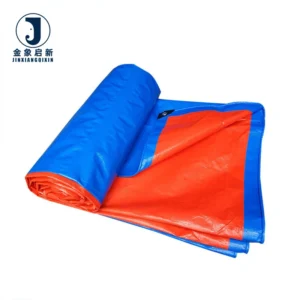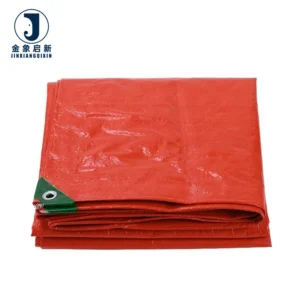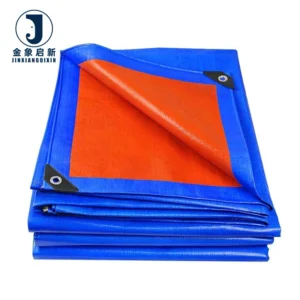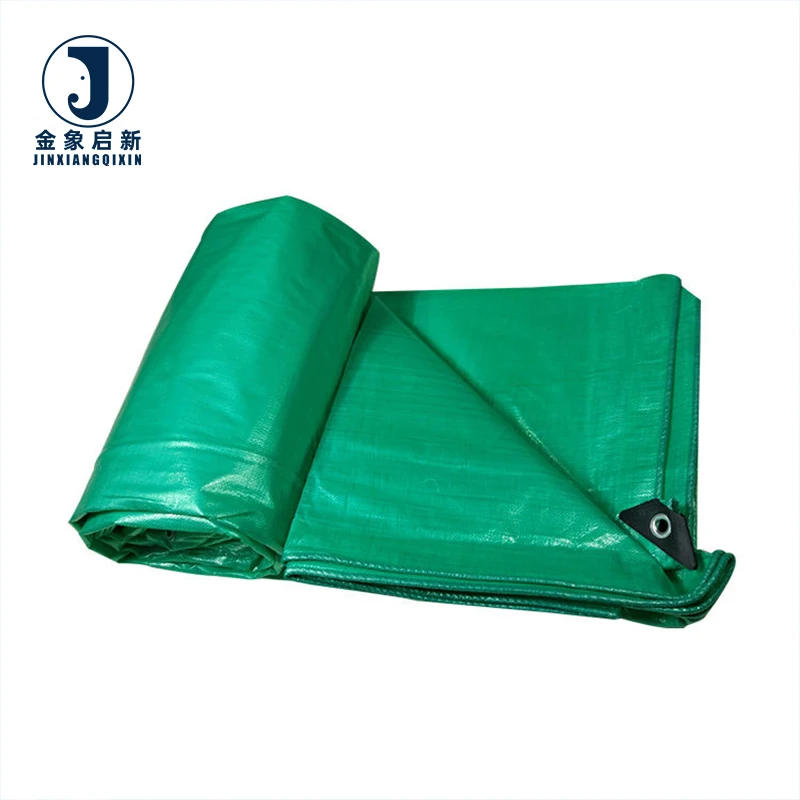
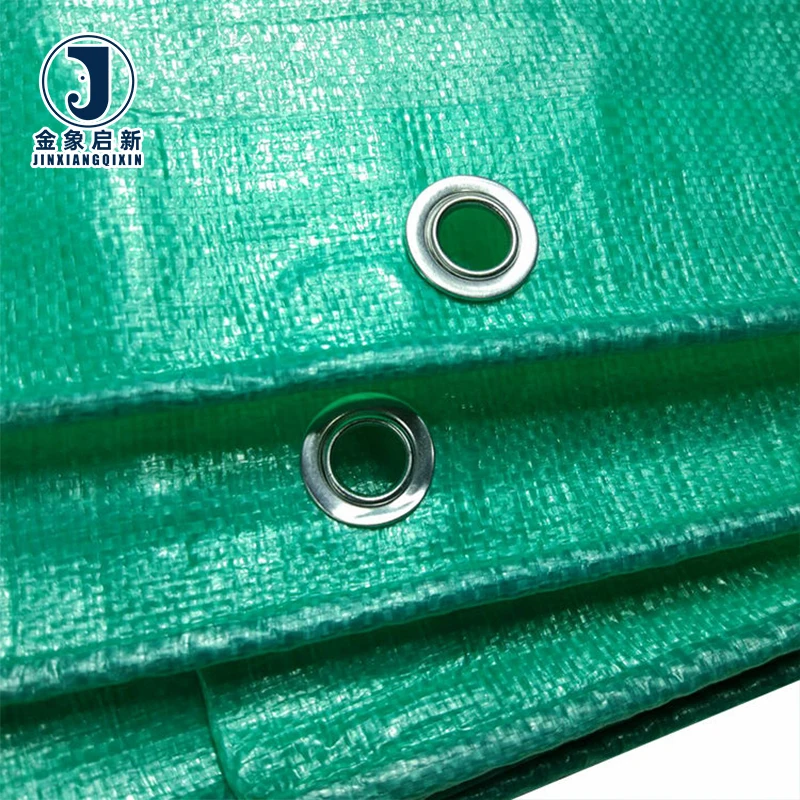
Waterproof PE Tarpaulin with HDPE woven base, LDPE double-sided lamination, 50–300 g/m² range
- Weave densities from 6×6 to 14×16 paired with matched GSM grades, so tensile and tear performance align with actual load and exposure conditions
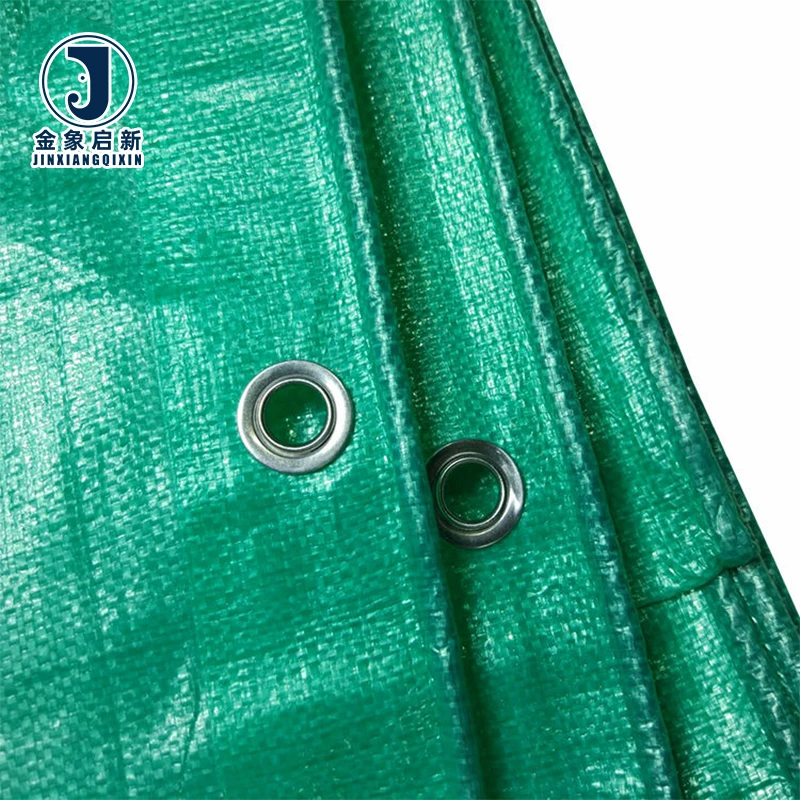
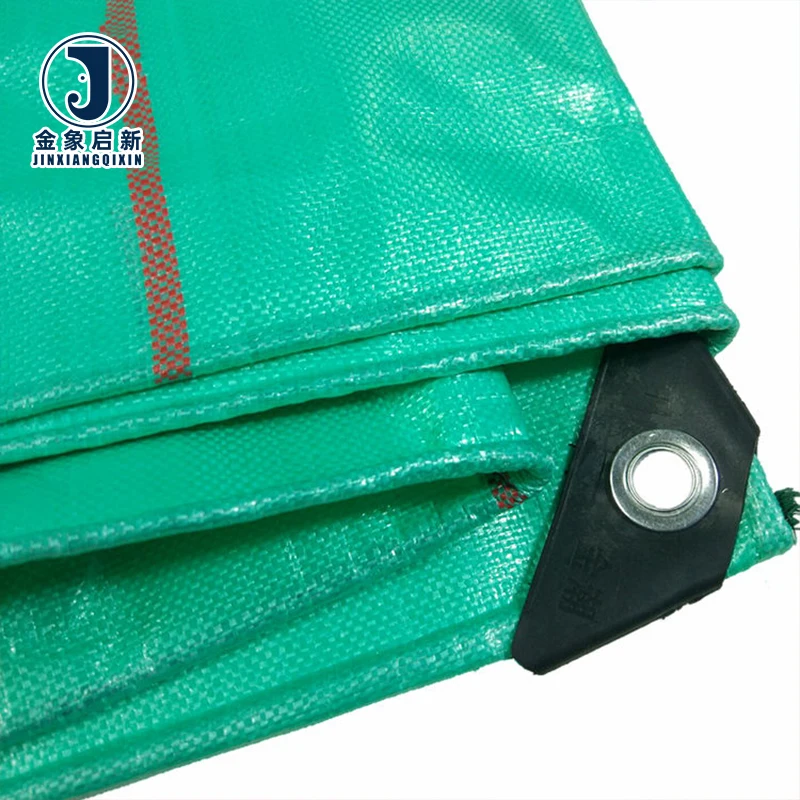
- PP rope reinforced hems on all four edges with galvanized eyelets every 3 ft or 1 meter, distributing tie-down stress evenly across the panel
- Roll stock or finished cut-to-size sheets in widths up to 6 m, reducing seam count on wide truck beds and scaffolding wraps
- UV treatment available with test report on request
Nearly 30 years of coated fabric process control ensures verified GSM on every roll before dispatch.
Description
Proven Coating Control — Every roll of PE tarpaulin passes through dedicated QA/QC with 100% pre-shipment weight verification, ensuring the GSM on the invoice matches the material on the pallet.
Technical Specifications
| Parameter | Value |
|---|---|
| Product Type | PE Tarpaulin |
| Material | HDPE weaving with LDPE lamination on both sides |
| Weight (GSM) | 50 g/m² ~ 300 g/m² |
| Total Thickness | 0.2 mm ~ 0.4 mm (8 mil ~ 16 mil) |
| Weave Density | 6×6, 6×7, 7×7, 7×8, 8×8, 9×9, 8×10, 10×10, 12×12, 14×14, 14×16 |
| Roll Width | 6 ft, 8 ft, 10 ft, 12 ft, 2 m, 4 m, 6 m |
| Roll Length | 100 yards, 100 meters, or custom |
| Finished Tarpaulin Sizes | 2×2 m to 8×10 m (custom sizes available) |
| Edge Reinforcement | PP rope in hem on all four edges |
| Eyelets | Galvanized, spaced every 3 ft or 1 meter |
| Corner Reinforcement | Reinforced plastic corners |
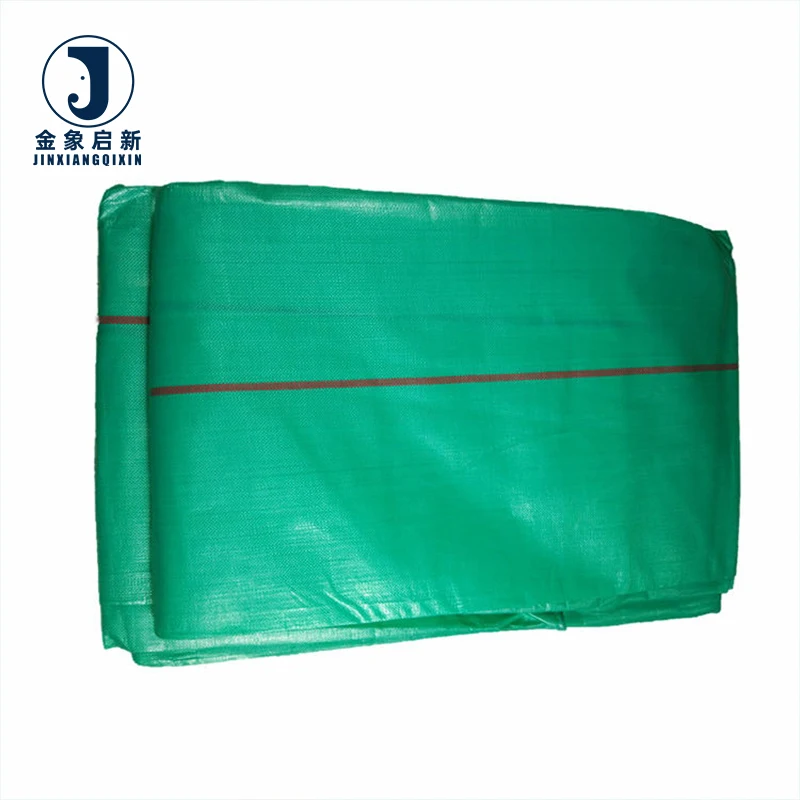
| Color Options | Blue, Blue/Orange, Green, Grey, Black, Clear, Grey/Green, Orange, custom colors available |
| UV Treatment | Available (test basis not stated in source — confirm grade for your market) |
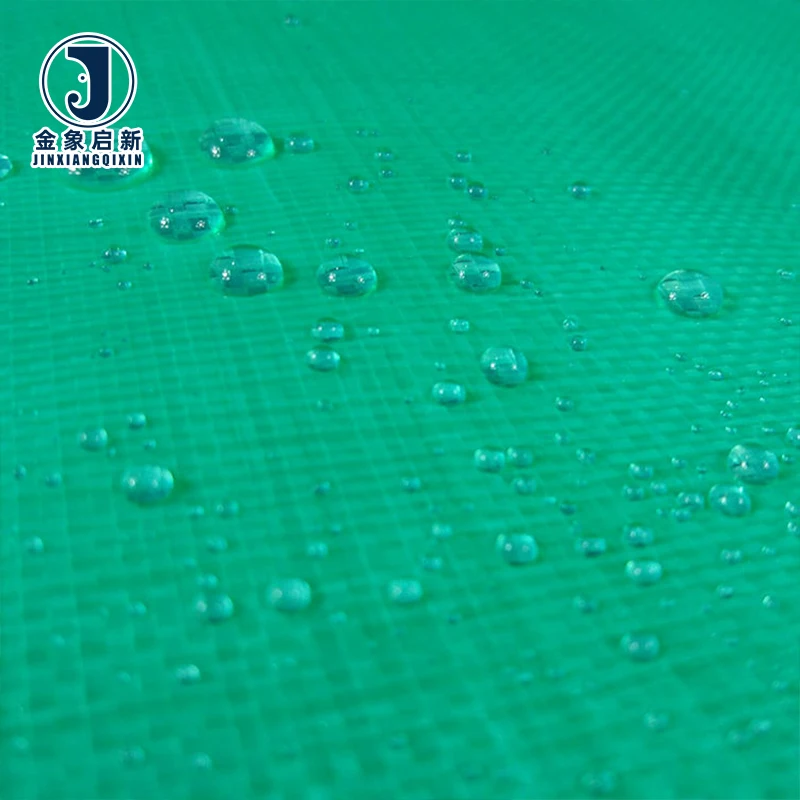
| Key Features | Waterproof, washable, tear resistant, mildew proof, anti-aging |
| Standards | ISO, CE |
Application Suitability
| Application | Exposure & Requirement |
|---|---|
| Truck and trailer load covers | Road abrasion, constant wind flap, UV exposure, tie-down tension at eyelets |
| Boat and container covers | Saltwater proximity, prolonged sun exposure, pooling water on flat surfaces |
| Construction site scaffolding wraps | Wind-driven rain, puncture from tools and debris, repeated installation and removal |
| Agricultural crop and hay covers | Ground moisture wicking, fungal growth risk, thermal cycling across seasons |
| Timber and lumber yard covers | Heavy stacked loads pressing fabric against sharp edges, long-term outdoor storage |
| Swimming pool and garden furniture covers | Chlorine vapour contact, mildew in humid storage, frequent folding and unfolding |
Why GSM Discrepancies Ruin a Tarpaulin Order Before It Reaches the Site
The weight printed on the quotation means nothing unless the roll is weighed again before it leaves the factory.
Buyers across transport and construction sectors report receiving PE tarpaulin that feels noticeably lighter than the sample approved weeks earlier. A roll quoted at 150 g/m² can arrive at 130 g/m² when coating weight and lamination thickness are not monitored at each production stage. The fabric still looks the same, it still unrolls the same, but the tensile margin that was supposed to absorb wind gusts on a highway or abrasion against a trailer rail is quietly gone. [NEED_CITE: industry tolerance standards for coated fabric weight variation per ISO 3801] This is why our dedicated QA/QC protocol weighs and records every roll against the material specification sheet before it enters the container.
Lamination Integrity Across the Full GSM Band
PE tarpaulin in this range spans from lightweight 50 g/m² grades used for short-term dust and debris covers up to heavy-duty 300 g/m² sheets specified for multi-season outdoor protection. The HDPE woven base provides the structural skeleton, while the double-sided LDPE lamination delivers waterproof continuity. When lamination adhesion is inconsistent, the film layer can delaminate at fold lines or where the fabric drapes over sharp edges — a failure mode that appears as bubbling or peeling long before the base fabric itself breaks down. Our three full production lines and 36 sets of professional equipment maintain lamination temperature and pressure within controlled bands so that adhesion stays uniform from the first meter of a run to the last.
Mesh Density and Its Role in Real-World Tear Behaviour
The weave options available — from open 6×6 through to tight 14×16 — are not simply cosmetic differences. A tighter mesh locks more yarn intersections per square inch, distributing point loads across a wider area when a corner eyelet takes the full force of a tie-down strap in crosswind. For buyers specifying PE tarpaulin for transport fleets or scaffolding wraps, the mesh count should be matched to the expected mechanical stress, not chosen on cost alone. [NEED_CITE: relationship between mesh count and tear propagation in woven coated fabrics per ISO 1421] Our 10-person R&D team can recommend the weave density that aligns with your specific loading and exposure conditions before a sample is produced.
Reading GSM and Weave Together — Why One Number Is Never Enough
A 200 g/m² PE tarpaulin woven at 8×8 behaves very differently from a 200 g/m² fabric woven at 12×12. The higher mesh count uses finer yarns packed more tightly, trading individual yarn thickness for a greater number of load-bearing intersections — this shifts the balance between tensile strength and tear resistance. Coating weight also plays a role: a heavier LDPE layer adds to the total GSM reading but contributes little to structural strength. When evaluating a material specification sheet, buyers should cross-reference GSM, mesh count, and base fabric denier together rather than treating any single figure as the performance indicator. The thickness range of 0.2 mm to 0.4 mm offered across this product line reflects how different combinations of weave and lamination produce fabrics of similar weight but markedly different hand-feel and flexibility — important when the tarpaulin must be folded and deployed by hand on a job site.
What Happens When Roll Consistency Breaks Down Mid-Project
A fleet operator ordering fifty finished truck covers expects every unit to match in weight, colour, and stiffness. If roll-to-roll GSM drifts by even a small margin, some covers will be stiffer and harder to fold while others feel flimsy, and drivers notice the difference immediately. Colour variation between rolls in the same shipment becomes visible the moment two covers are installed on adjacent trailers — a cosmetic failure that triggers a full rejection even though the material may be functionally adequate. [NEED_CITE: acceptable colour variance tolerances for batch-dyed industrial fabrics] Our 100% pre-shipment inspection addresses both dimensions: every roll is weighed and visually compared under controlled lighting before packing, so that what arrives on site matches what was approved in the sample.
Why Sourcing PE Tarpaulin from a Single Production Source Matters
Splitting an order between a roll-stock trader and a finished-tarp converter introduces variables that no amount of incoming inspection can fully control. The roll supplier and the converter may source base fabric from different mills, apply LDPE at different temperatures, or use different PP rope for hem reinforcement — all of which affect how the finished product performs under identical conditions. By keeping weaving, lamination, cutting, hemming, and eyelet installation under one roof, we eliminate the batch-mismatch risk. Our production facility at Jinan runs three full lines with professional equipment dedicated to coated fabric, supported by a 10-person R&D team that develops custom samples within days when a new width, colour, or print specification is required.
Documentation & Verification
- Material specification sheet listing GSM, mesh count, HDPE base, and LDPE coating weight per roll
- Pre-shipment inspection record with verified weight measurement against the quoted grade
- UV treatment test report provided where the grade has been specified and confirmed for your market
- ISO and CE certificates available to accompany the shipment documentation package
- Roll packing list with individual roll IDs for traceability from production to container loading
- Certificate of origin and customs documentation prepared in parallel with dispatch
Fabrication, Handling & Storage
- Heat-seal LDPE laminated panels using temperature settings matched to the specific GSM grade to avoid burn-through on lighter weights
- Galvanized eyelets should be set with reinforced plastic corners to distribute pull-out forces across the PP rope hem
- Store rolls upright on hard paper tubes to prevent flat-spot creases that weaken the lamination bond over time
- Unfold finished tarps in temperatures above freezing to avoid cold-cracking the LDPE layer at fold lines
- Clean mildew-proof treated surfaces with mild detergent; avoid solvents that degrade the LDPE lamination
- Repair minor punctures with LDPE-compatible adhesive patches applied to both the inner and outer laminate faces
Before You Request a Quote
To move from inquiry to sample as efficiently as possible, provide the application scenario and expected exposure conditions — highway wind loads, agricultural ground moisture, or construction-site abrasion — so that we can recommend the correct GSM and mesh density. Specify whether you need roll stock in standard widths or finished covers with eyelets and hem reinforcement, along with any custom colour or printed branding requirements. If your market mandates UV treatment or other performance treatments, state the test standard your end customer requires so that we can match the specification from the outset.
Frequently Asked Questions
Q: What GSM grade do I need for my specific application?
A: Lighter grades around 50–90 g/m² suit short-term dust covers and indoor protection. Medium weights in the 100–180 g/m² range handle agricultural hay and crop covers or light truck tarps. Heavy-duty 200–300 g/m² grades are specified for long-term outdoor exposure on construction scaffolding, container covers, and transport fleet side curtains where wind load and abrasion are constant. Our R&D team can confirm the right grade once we know your application and exposure conditions.
Q: Can I order custom width, colour, or printed branding by the roll?
A: Yes. We produce PE tarpaulin in roll widths from 2 m to 6 m and can develop custom colours and brand printing on the LDPE surface. Roll lengths are standard at 100 yards or 100 meters but can be adjusted. Minimum order quantities and lead times depend on the customisation scope — provide your target width, Pantone reference, and print artwork so we can prepare a sample and quotation.
Q: How do you guarantee GSM and colour consistency across multiple rolls in one order?
A: Every roll is weighed and visually inspected under controlled lighting during our 100% pre-shipment inspection. The measured GSM is recorded against the material specification sheet, and rolls showing visible colour drift are flagged before packing. This process catches variation that would otherwise only become apparent when covers are installed side by side on site.
Q: Do you supply finished tarps with eyelets, or only roll stock?
A: Both. Finished PE tarpaulin is available in standard cut sizes from 2×2 m up to 8×10 m, with all four edges reinforced by PP rope in hem and galvanized eyelets at 3 ft or 1 meter intervals. Custom cut sizes and eyelet spacing can be specified. Roll stock is also supplied on hard paper tubes, wrapped in tarpaulin sheet, for buyers who prefer to fabricate in-house.
Q: What UV treatment options are available, and on what test basis?
A: UV treatment is available for PE tarpaulin across the full GSM range. The specific test basis and performance grade depend on the additive package used during lamination and should be confirmed against your market’s regulatory or end-customer requirements. Request the UV test report for the grade you are considering so that you can verify compliance before placing a production order.
Related products
-
France Hot Sales Blue Color Polyethylene PE Tarpaulin Waterproof Sheet for Truck Canopy and Outdoor Awning
¥0.66 Select options This product has multiple variants. The options may be chosen on the product page -
Sunshade Awning Waterproof Cloth. 7X8 Waterproof Polyurethane Waterproof Cloth – Multi-purpose Cover Water tank Waterproof Cloth
¥0.18 Select options This product has multiple variants. The options may be chosen on the product page -
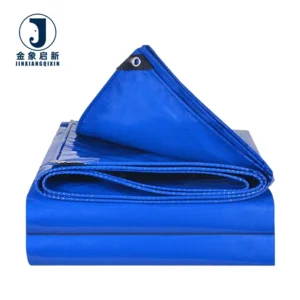
Hot Selling Heavy Duty PVC Coated Tarpaulin Covers Waterproof Plastic for Truck Tent Outdoor
¥3.10 Select options This product has multiple variants. The options may be chosen on the product page -
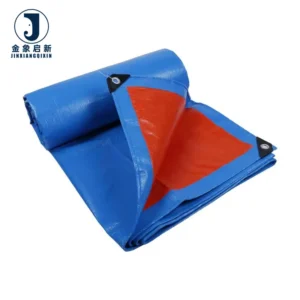
Woven Coated Plain Anti-UV Waterproof PE Tarpaulin Roll Customized for Car Outdoor Tent Awning Truck & Industrial Cover
¥0.29 Select options This product has multiple variants. The options may be chosen on the product page