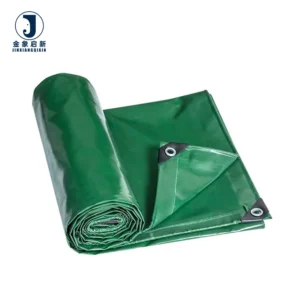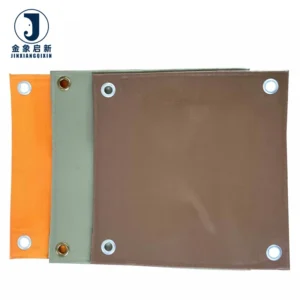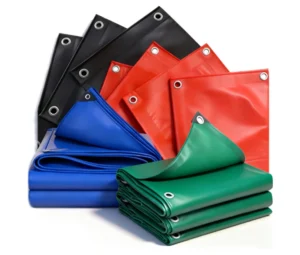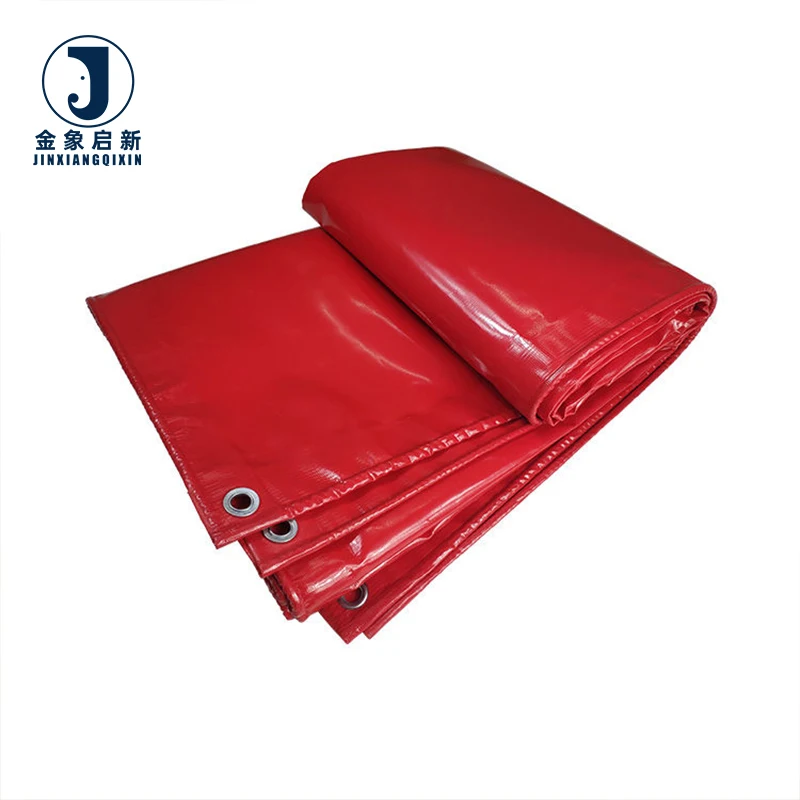
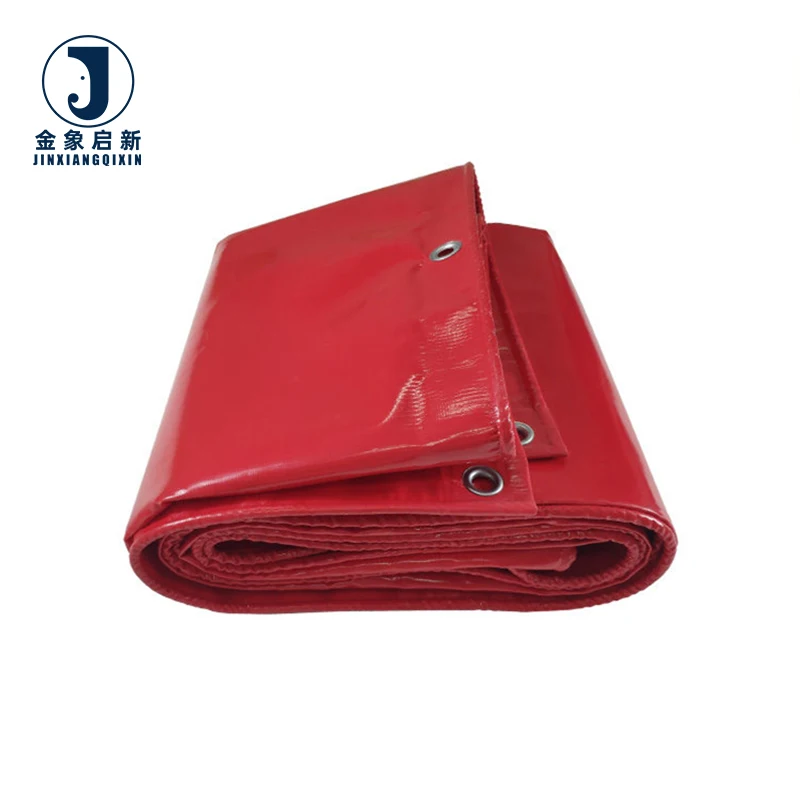
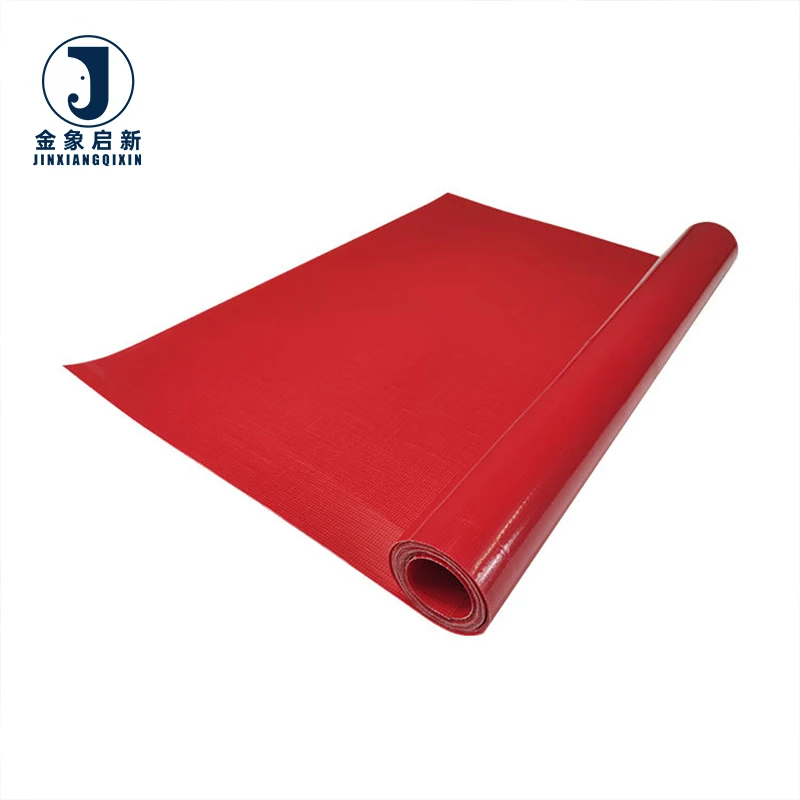
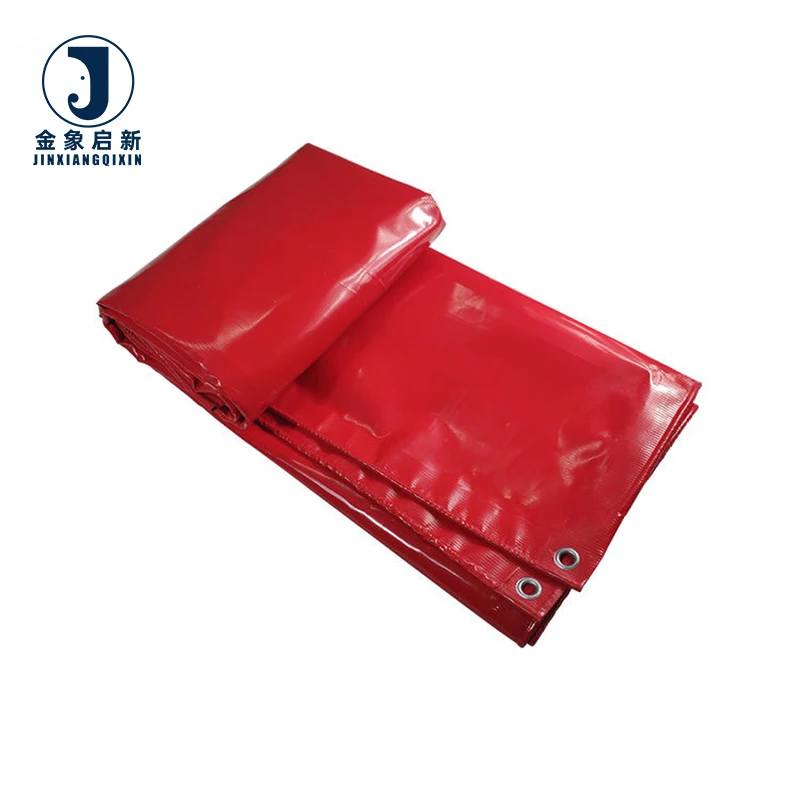
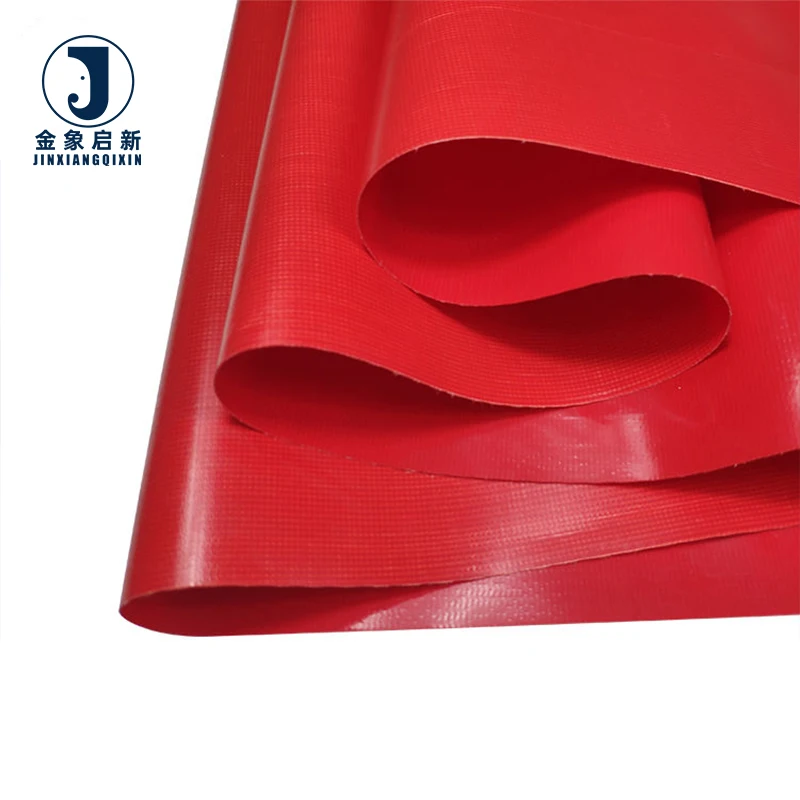
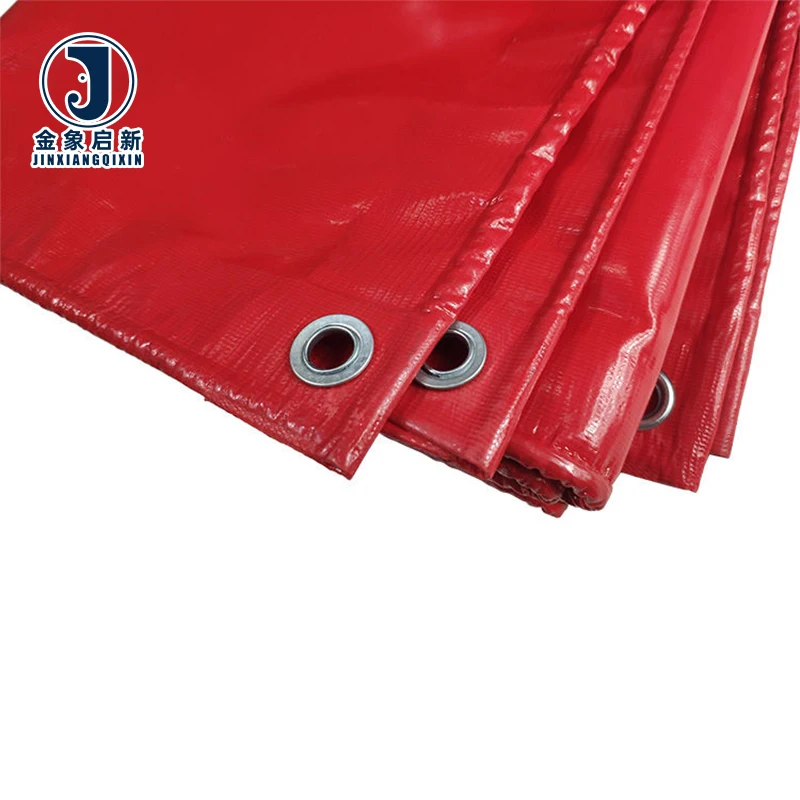
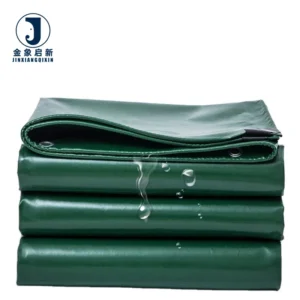
PVC Coated Tarpaulin 30M X 30M — 500gsm-1000gsm, polyester base fabric with double-sided PVC coating, reinforced with 5mm rope hem and 3cm aluminum alloy eyelets.
- Covers farming stock, pond lining and equipment protection with waterproof, anti-UV and anti-mildew performance
- Edge construction uses high-temperature heat-sealed seamless wrapping to prevent seam failure at high-stress flex points
Backed by nearly 30 years of coating process expertise, 100% pre-shipment inspection and in-house sample development within days.
Description
Verified GSM Assurance — Every roll of this 30M X 30M PVC coated tarpaulin is weighed and logged at production exit so the specification you sign off is the material that arrives on site.
Technical Specifications
| Parameter | Value |
|---|---|
| Product Type | PVC Coated Tarpaulin |
| Identifier | 30M X 30M |
| Base Fabric | Polyester woven substrate |
| Coating Material | PVC (polyvinyl chloride) |
| Weight Range (Family) | 500gsm–1000gsm — confirm grade for this item |
| Yarn Count Options | 500D×840D / 500D×1000D / 1000D×1000D / 1000D×1300D / 1300D×1300D / 1000D×2000D |
| Mesh Count Options | 30×19 / 20×20 / 30×15 |
| Total Thickness Range | 0.29mm / 0.32mm / 0.38mm / 0.44mm / 0.46mm / 0.55mm / 0.65mm |
| Tensile Strength (Warp) | 1650–3900 N (varies by grade) |
| Tensile Strength (Weft) | 1600–3500 N (varies by grade) |
| Brittle Temperature | ≤ -50 to -60°C |
| Softening Temperature | ≥ 80°C |
| Melting Point | 212°C |
| Finish | Glossy or matte |
| Color | Customizable |
| Flame Retardant Grade | Available in flame retardant grades — confirm the grade required for your market |
| UV Treatment | Available with anti-UV treatment — confirm test basis for your climate zone |
| Edge Construction | 5mm rope edge, high-temperature heat-sealed seamless wrapping |
| Eyelet Specification | 3cm enlarged aluminum alloy buttonhole with reinforced corners |
| Density | 1.15–2.00 g/cm³ |
| Company Standards | ISO, CE |
Application Suitability
| Application | Exposure & Requirement |
|---|---|
| Farming stockpile and hay cover | Continuous UV exposure, rain ingress risk, abrasion from loading equipment |
| Greenhouse and tunnel roof membrane | High solar load, thermal cycling, condensation contact |
| Pond and reservoir liner | Permanent water immersion, soil chemistry, puncture from substrate |
| Truck and pallet tarpaulin (cut size) | Wind flutter, road debris, tie-down tension at eyelets |
| Construction site shelter | Mechanical impact, wind uplift, flame-retardant compliance depending on jurisdiction |
| Outdoor event tent and awning panel | UV degradation, crease-whitening at fold lines, appearance consistency across panels |
Why Quoted Weight and Delivered Weight Often Disagree
A PVC coated tarpaulin that arrives lighter than specified fails not because of bad luck but because of missing in-line verification.
Buyers frequently see quotation documents that list a target GSM, only for the delivered material to fall short when spot-weighed on arrival. The gap between what is ordered and what ships is rarely intentional deception — it more often stems from coating-weight drift across a long production run that was never caught before dispatch. [NEED_CITE: coating weight variance in PVC calendering and knife-over-roll processes] When a custom PVC coated tarpaulin is purchased for a farming or industrial shelter, that weight shortfall translates directly into reduced tensile reserve, faster UV breakdown, and premature seam failure at high-stress tie-down points.
How Coating Weight Drives Real-World Tarpaulin Behaviour
In PVC coated tarpaulin construction, total GSM is the sum of base-fabric weight and applied coating on both faces. The coating does not simply add mass; it fills the inter-yarn voids, locks the weave structure, and provides the waterproofing and chemical resistance the fabric relies on in service. A roll that measures lighter than specified often has a thinner coating film, leaving yarn crossover points exposed to moisture ingress and flex-fatigue cracking. Our QA team checks coating weight at multiple stages across the line, not only at final winding, so drift is corrected before it accumulates.
The Link Between GSM Consistency and Panel Flatness
When multiple rolls of a PVC coated tarpaulin custom order are welded side by side to cover a large farm shelter or construction enclosure, even small GSM differences between rolls become visible as tension mismatch across the finished panel. The heavier roll pulls tighter; the lighter roll sags. This is one reason batch-to-batch weight control is not just a quality metric but an installation requirement. [NEED_CITE: relationship between coating weight uniformity and seam behaviour in PVC welded panels]
What Base Fabric Denier and Mesh Count Actually Mean for Your Cover
The denier (e.g., 1000D×1000D) describes yarn thickness in warp and weft, while mesh count (e.g., 30×19) describes how many yarns sit in a given area. A high-denier, low-mesh fabric relies on thick individual yarns for tensile resistance but may allow coating to penetrate less uniformly between widely spaced yarns. A finer mesh with moderate denier gives more yarn crossovers per square centimetre, improving tear propagation resistance because the load is distributed across more intersection points before the next yarn must take the full force. Thickness alone does not predict strength — a 0.44mm fabric with tight mesh and balanced coating can outperform a thicker 0.55mm material with an open weave and heavy filler loading. Understanding this interaction is how buyers move past GSM as a single-number spec and evaluate true mechanical suitability for applications like tensioned truck side curtains or wind-loaded farm shelters.
The Cost of Overlooking Edge and Eyelet Engineering
A 30M × 30M finished panel carries enormous wind load across its surface, and that load concentrates at the perimeter every time a gust lifts the cover. When standard small-diameter eyelets are punched into thin hem material, the grommet tears through under cyclic loading long before the body fabric reaches its tensile limit. The 3cm enlarged aluminum alloy buttonhole specified here, paired with reinforced corners and a 5mm rope edge sealed by high-temperature heat wrapping, is designed so the failure point shifts away from the fixing and into the body fabric where the full panel shares the load. [NEED_CITE: perimeter stress concentration in large-format tensioned tarpaulin installations] Skipping this reinforcement detail on large panels is a common source of field failures that buyers then attribute to fabric quality when the root cause was edge construction.
Why Sourcing from a Dedicated Coating Line Matters for This Product
Our production facility runs three full coating lines with 36 sets of dedicated equipment, meaning this PVC coated tarpaulin is made on machinery configured for coated technical fabric rather than adapted from general-purpose extrusion. The 10-person R&D team handles material selection, sizing, pattern printing and sample development in-house, so custom width, colour, and printing requests are processed through the same line that runs standard stock — not outsourced to a secondary converter. QA inspection covers every production stage, and pre-shipment checks verify weight, colour consistency, and coating adhesion before dispatch. [NEED_CITE: quality control stages in PVC coated fabric manufacturing] This structure lets us develop samples within days for custom requirements and maintain batch control across multi-roll orders.
Documentation & Verification
- Material specification sheet listing confirmed GSM, base fabric denier, and coating weight per roll
- UV and flame-retardant test reports supplied where treatments are specified on the purchase order
- Pre-shipment inspection record with weight verification and colour-consistency check across all rolls
- Roll packing list detailing net weight, dimensions, and roll count for freight and customs clearance
- Certificate of origin and export documentation prepared for destination-country import requirements
Fabrication, Handling & Storage
- Heat-seal the 5mm rope edge at temperatures matched to the confirmed PVC coating thickness to avoid adhesive cracking
- Space 3cm aluminum alloy eyelets at intervals suited to the wind-load category of the installation site
- Store rolls upright on pallets to prevent flat-spotting that creates permanent crease lines in heavy GSM grades
- Unfold panels above 5°C to prevent low-temperature stiffening and coating micro-cracking at fold lines
- Clean glossy-finish surfaces with neutral pH detergent only to preserve the coating film integrity
- Patch field damage with same-grade PVC material heat-welded over the tear rather than adhesive-only repair
How to Scope Your Enquiry
To move from initial enquiry to sample approval efficiently, share the end-use environment (UV exposure level, wind zone, contact with chemicals or standing water), the target flame-retardant or anti-static standard required by your local building or safety code, and the panel sizes or roll widths you need. If colour matching across multiple rolls or custom pattern printing is part of the specification, provide reference samples or Pantone codes so the R&D team can develop a lab-dip for your sign-off before bulk coating begins.
Frequently Asked Questions
Q: How is GSM verified before shipment and what documentation accompanies the order?
A: Each roll is weighed at multiple in-line stages and again during final pre-shipment inspection. A signed inspection record listing verified GSM, base denier, and coating weight ships with the packing list. This documentation package also includes the certificate of origin and any treatment test reports specified on the purchase order, so you can cross-check delivered material against your original requirement at the receiving dock.
Q: What flame-retardant grades are available and which test standards do they meet?
A: We supply PVC coated tarpaulin in flame-retardant grades aligned to standards such as DIN 4102, NFPA 701, or other regional classifications. Because regulatory requirements vary by market and application — construction shelters, mining ventilation, public event tents — please confirm the specific grade and test method your project requires so we formulate the coating compound and test batch accordingly before production begins.
Q: How is batch-to-batch colour consistency controlled across multiple rolls in one order?
A: All rolls in a single order are coated from the same compounded batch of PVC, and colour is checked spectrophotometrically at line start, mid-run, and end-of-run. The pre-shipment inspection record documents this check, and any roll falling outside the agreed tolerance is held back before dispatch, ensuring panels installed side by side show no visible colour variation.
Q: What custom sizing, hole spacing, and printing options are available?
A: The 30M × 30M panel is cut and finished to your specified dimensions, with eyelet spacing, corner reinforcement layout, and rope-hem configuration set to match the tie-down pattern of your structure. Pattern printing and logo application are handled in-house by the R&D team, and samples are developed within days so you can approve colour, registration, and adhesion before the full production run commences.
Q: How is anti-UV treatment validated and what test data can be provided?
A: Anti-UV additives are compounded into the PVC coating at concentrations matched to the target climate zone and service exposure. Where specified on the order, we supply a test report documenting UV resistance measured against the agreed standard. Buyers in high-irradiance regions should share their geographic location and expected exposure duration so the R&D team can recommend the appropriate stabiliser package and validate it before bulk production.
Related products
-
Waterproof Heavy Duty Tarpaulin Water Proof Cover Tarpaulin Manufacturer
¥1.48 Add to cart -
JX Fireproof 500gsm 600gsm Customizable PVC Tarpaulin Waterproof Truck Cargo Cover
¥0.79 Select options This product has multiple variants. The options may be chosen on the product page -
630 Gsm Blue/Grey/Orange Pvc Tarpaulin Roll Pvc Tarpaulin Truck Tarpaulin Pvc Coated Tarpaulin
¥1.66 Add to cart -
Factory Direct Sale Flatbed Trailer Tarps Black Heavy Duty Lumber Pe Tarp Flatbed Truck Transportation Tarpaulin Roll Sheet
¥1.25 Select options This product has multiple variants. The options may be chosen on the product page