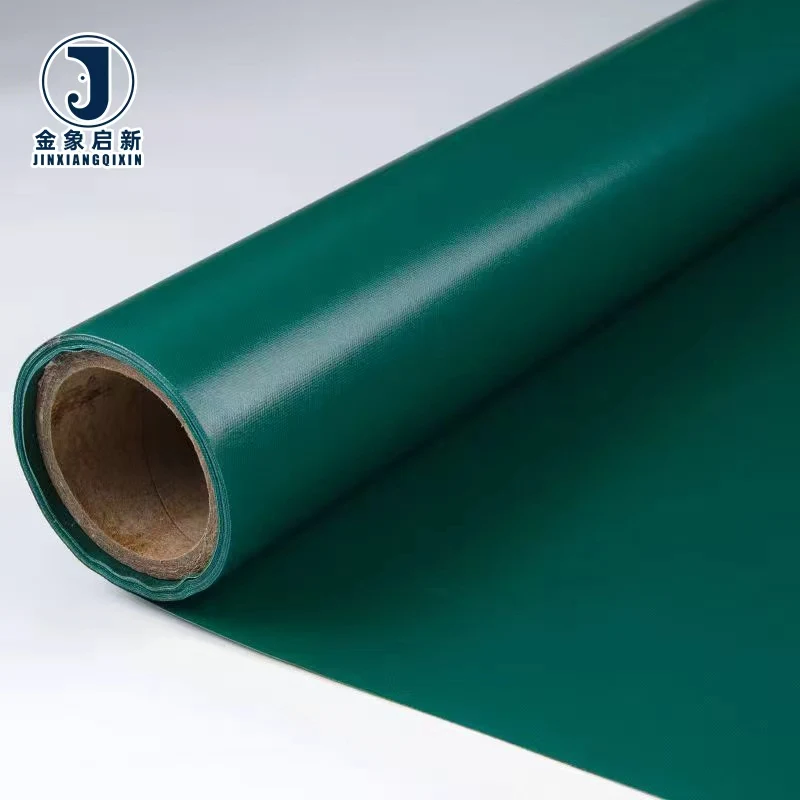
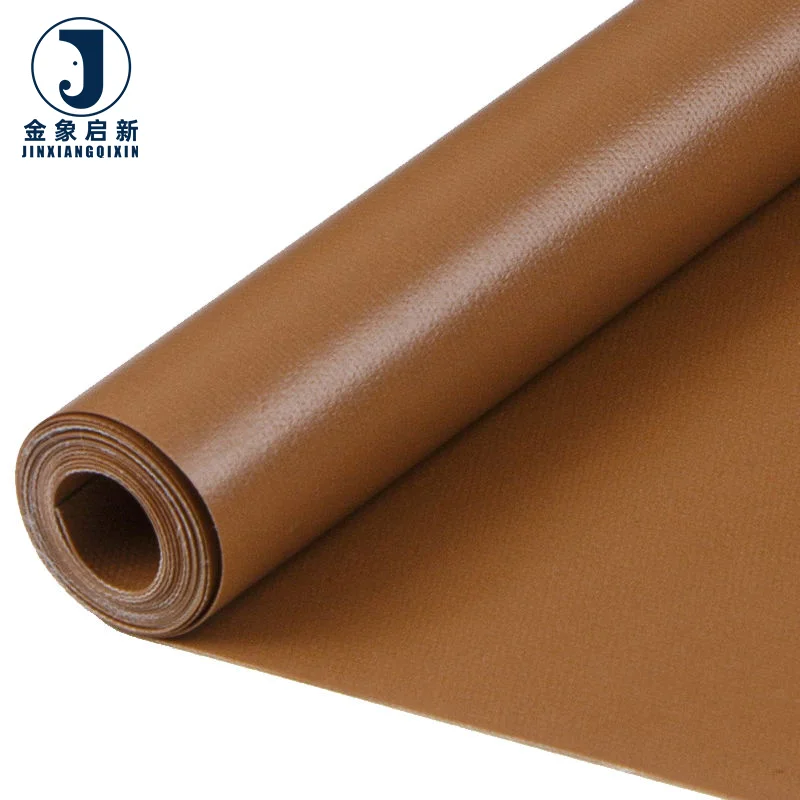
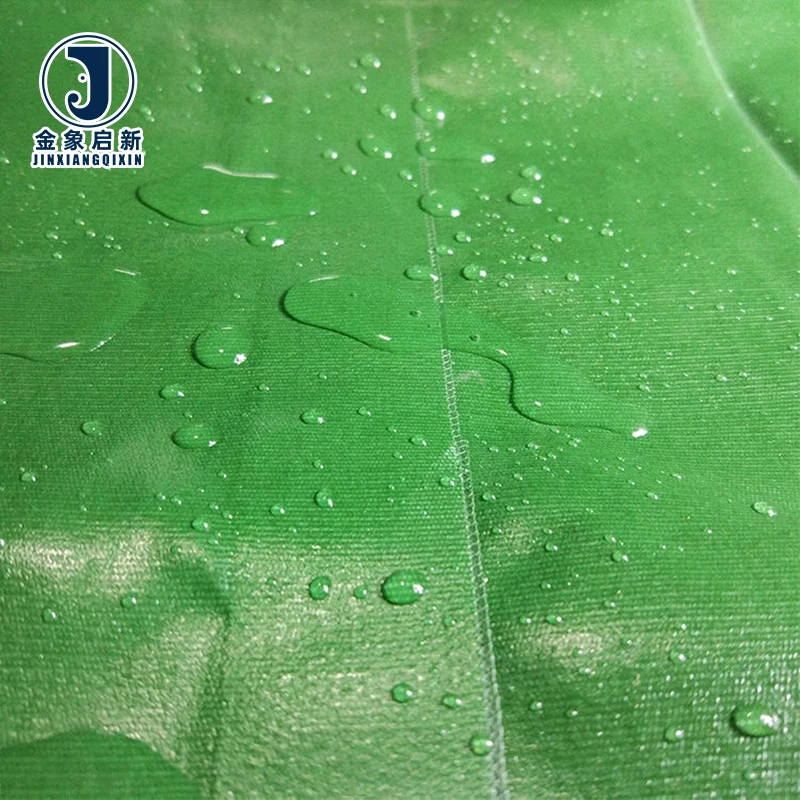
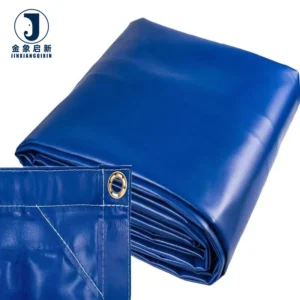
PVC Coated Tarpaulin Roll — 350–900 g/m² range, polyester base fabric, double-sided PVC coating with heat-sealed edge wrapping and reinforced corners.
Covers the full specification spectrum for industrial shelter, transport and construction applications. Weight selection pairs with yarn count and weave density to match tensile demand at flex points, not simply the highest GSM available.
- Yarn counts from 500D×840D to 1000D×2000D
- Waterproof, flame retardant and anti-UV options with test documentation on request
- Custom width, length, colour and eyelet spacing supported by in-house R&D
Backed by 100% pre-shipment inspection and dedicated QA at every production stage.
Description
Precision-Coated Fabric Authority — Every roll of PVC Coated Tarpaulin is measured for actual coating weight and verified against the quoted GSM before leaving the production floor, ensuring the material you specify is the material you receive.
Technical Specifications
| Parameter | Value |
|---|---|
| Product Type | PVC Coated Tarpaulin |
| Base Fabric Yarn Count | 500D840D / 500D1000D / 1000D1000D / 1000D1300D / 1300D1300D / 1000D2000D |
| Weight (GSM) | 350 / 400 / 420 / 500 / 600 / 650 / 750 / 900 |
| Total Thickness | 0.29mm / 0.32mm / 0.38mm / 0.44mm / 0.46mm / 0.55mm / 0.65mm |
| Mesh Density | 3019 / 2020 / 30*15 |
| Tensile Strength Warp | 1650N / 1800N / 1850N / 2050N / 2500N / 2550N / 2750N / 3900N (test standard not stated) |
| Tensile Strength Weft | 1600N / 1700N / 1750N / 1900N / 2200N / 2250N / 2850N / 3500N (test standard not stated) |
| Coating Material | Double-Sided PVC on Polyester Base |
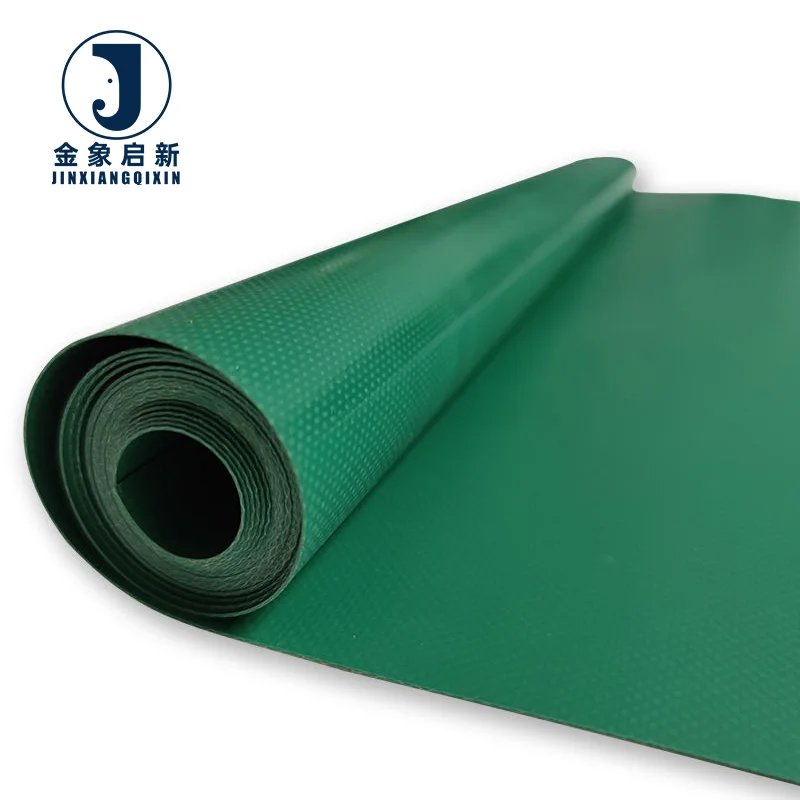
| Surface Finish | Smooth Leather-like Texture |
| Flame Retardant | Available in flame retardant grades — confirm the grade required for your market |
| UV Treatment | Available with anti-UV treatment — request test documentation for your climate zone |
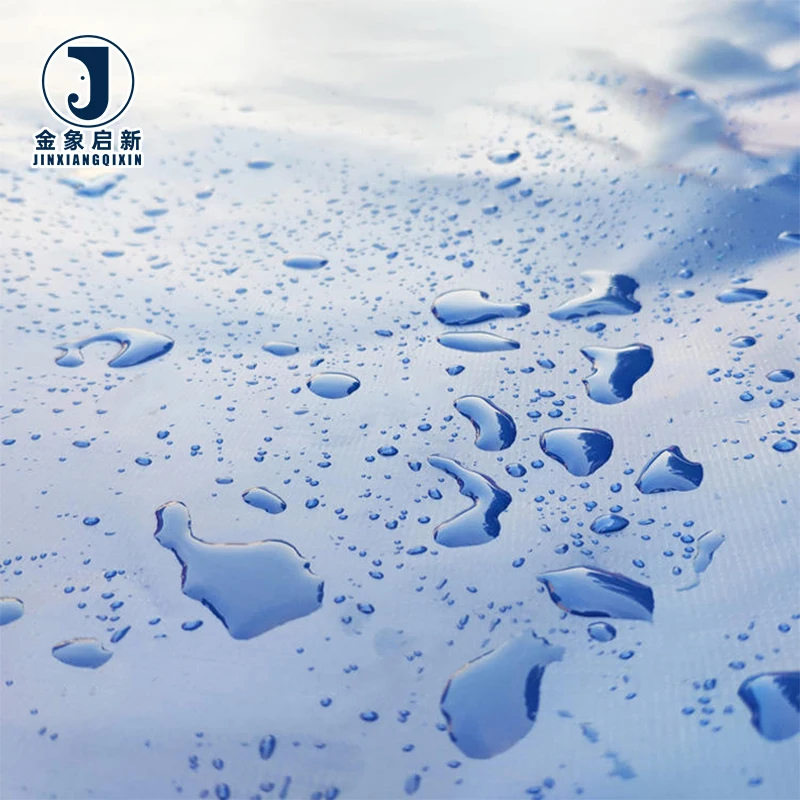
| Waterproof Rating | Water Resistant (rating not stated) |
| Edge Finishing | High Temperature Heat Sealed Seamless Edge Wrapping |
| Eyelet Options | 3cm Enlarged Aluminum Alloy Buttonhole |
| Corner Reinforcement | Reinforced Corners on All Sides |
| Temperature Range | Brittle ≤ -50~-60°C / Softening ≥ 80°C / Melting Point 212°C |
| PVC Density | 1.15-2.00 g/cm³ |
| PVC Tensile Strength | 50-80 MPa |
| Repair Method | Hot Air Welding |
| Standards | ISO, CE |
Application Suitability
| Application | Exposure & Requirement |
|---|---|
| Industrial Shelter | Permanent outdoor exposure, wind loading, structural tension, UV degradation risk |
| Truck & Trailer Cover | Road abrasion, constant flex at tie-down points, weather and chemical splash |
| Construction Site Cover | Heavy equipment contact, puncture risk, dust and debris containment |
| Tent & Awning Fabric | Repeated folding and unfolding, sun exposure, rain pooling on horizontal spans |
| Machine & Equipment Cover | Oil and grease contact, thermal cycling, outdoor storage protection |
| Outdoor Furniture Cover | Daily UV exposure, moisture, seasonal temperature swings |
Why Your PVC Coated Tarpaulin Roll Fails Before the Fabric Does
Seam and edge failure accounts for the majority of early tarpaulin returns — not the body of the fabric itself.
When a PVC coated tarpaulin tears, it rarely splits across the middle of the panel. The failure starts where the material has been cut, welded, or punched for eyelets. I have reviewed field reports where heavy-grade coated rolls performed well for months, only to delaminate at the heat-sealed edge or tear outward from an eyelet under sustained tie-down tension. The weak link is almost always the finishing, not the base fabric. [NEED_CITE: seam strength testing protocols for coated polyester fabrics]
A PVC Coated Tarpaulin manufacturer custom finishing approach addresses this by heat-sealing edges at high temperature to fuse the PVC coating around the cut perimeter, preventing moisture ingress and peel-back. Reinforced corners and 3cm enlarged aluminum alloy eyelets distribute load across a wider area of the base fabric rather than concentrating stress on a single yarn cluster.
Full Catalogue Coverage From Lightweight to Heavy-Duty
Specifying the right weight grade is not a matter of choosing "thicker is better." A 350 GSM roll suits indoor door curtains and light garden furniture covers where flexibility and low pack weight matter. Moving to 600 or 650 GSM provides the tensile base needed for truck side curtains that flex daily under highway wind loads. At the top end, 900 GSM delivers the mass and puncture resistance required for industrial shelter panels under sustained structural tension.
Each grade in this PVC coated tarpaulin range is built on a specific yarn count and mesh density combination. The 500D840D base at 350 GSM prioritises drape and handling, while the 1300D1300D construction at 900 GSM provides the warp and weft density needed to resist tear propagation under point loads. Selecting the correct tier eliminates over-specifying on applications where weight and cost efficiency are priorities.
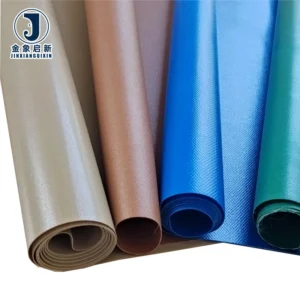
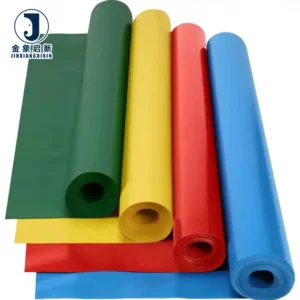
Colour, Width and Print Customisation on Roll Stock
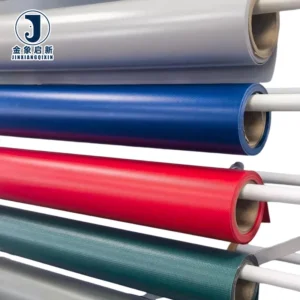
Buying by the roll does not mean accepting stock colour and standard width. This PVC Coated Tarpaulin manufacturer custom production supports custom width cutting, Pantone-matched colour runs, and pattern printing or logo branding directly onto the PVC surface. The 10-person R&D team develops samples for approval before bulk production begins, allowing you to verify colour accuracy, print adhesion, and surface finish against your project specification.
Batch-to-batch colour consistency is controlled through managed coating runs rather than mixed from separate batches. When your order requires multiple rolls installed side by side — on a tent roof, a series of truck curtains, or a continuous awning span — the colour must match across every panel. [NEED_CITE: colour measurement standards for coated textile surfaces] This level of consistency is built into the production schedule, not left to chance at the coating head.
How Base Fabric Density and Coating Weight Work Together
The GSM figure alone tells you how much material is present per square metre, but it does not tell you where that weight is distributed. A roll with a heavy PVC coating on a low-density base fabric will feel substantial in hand but may tear easily along the warp or weft when a point load is applied. Conversely, a tightly woven 1000D*1000D base with a moderate coating weight can deliver higher tensile and tear strength than a heavier-coated but loosely woven alternative.
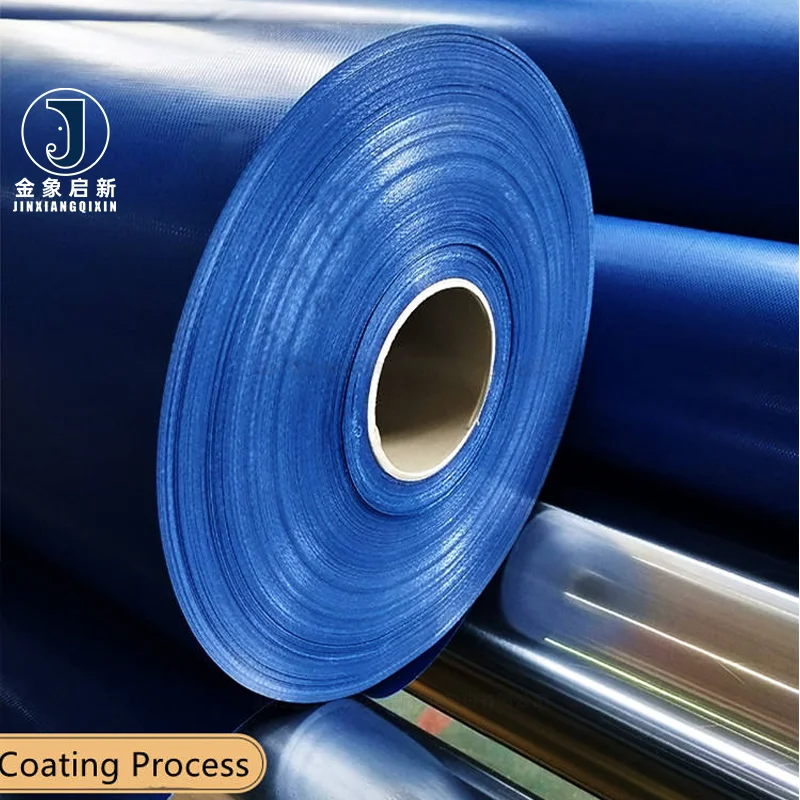
The double-sided PVC coating on this range is applied at high temperature to achieve full adhesion to the polyester base, which directly affects peel strength and how the material responds to hot air welding during fabrication. When the coating bonds completely to the yarn structure, welded seams approach the tensile strength of the body fabric. Poor adhesion, by contrast, causes the coating to separate from the base at the weld line — a failure that looks like a manufacturing defect but originates in the coating process. [NEED_CITE: peel strength and adhesion testing for PVC coated polyester]
The temperature range — brittle at ≤ -50~-60°C and softening at ≥ 80°C — defines the operational boundary. In cold storage or winter transport applications, the PVC must remain flexible well below freezing to avoid cracking when folded or tensioned. The 212°C melting point provides a wide processing window for hot air welding without risk of burning through the base fabric.
The Cost of Specifying the Wrong Grade for the Application
Specifying a 420 GSM roll for a construction site equipment cover may pass the quotation review, but the lighter base fabric will not resist puncture from steel edges or aggregate contact on site. The cover fails within weeks, the contractor files a claim, and the distributor loses a repeat account. The material was not defective — it was simply assigned to an exposure condition beyond its design envelope.
Flame retardant requirements create a similar trap. A buyer specifies "flame retardant" on the purchase order without stating the grade or test standard required by the local fire authority. The material arrives with a treatment that does not satisfy the site inspector, and the entire installation must be replaced. Always confirm the fire classification your end market demands before approving the production run. [NEED_CITE: fire classification standards for temporary structures and building site materials]
Batch colour variation is another hidden cost. When rolls from different coating runs are installed side by side on an awning or tent canopy, even slight shade differences become visible under daylight. The rework cost — removing, replacing, and re-installing — far exceeds the price difference of sourcing from a single controlled production batch.
Why Source This PVC Coated Tarpaulin Here
Three full production lines and 36 sets of professional equipment provide the capacity to hold delivery schedules on large roll orders without sacrificing coating quality for speed. Every roll passes through dedicated QA/QC inspection before shipment, with coating weight measured and recorded — not sampled from a single roll and assumed across the batch.
The 10-person R&D team handles material selection, sample development, and print proofing in-house, reducing the time between inquiry and approved sample from weeks to days. Custom width, colour, eyelet spacing, and branding are managed as standard production variants rather than special projects requiring separate quotations and extended minimums.
Nearly 30 years of focused production on coated fabric has produced a process control discipline that shows in the consistency of coating adhesion, edge finishing quality, and roll-to-roll colour matching. This depth of experience is applied to every order, from a single sample roll to a full container load.
Documentation & Verification
- Material specification sheet stating GSM, yarn count, coating type and colour reference per roll
- Pre-shipment inspection record confirming 100% QC check with coating weight verification
- UV and flame retardant test reports provided for treated grades upon order confirmation
- Roll packing list with batch traceability for colour consistency verification
- Certificate of origin and full customs documentation included with every export shipment
Fabrication, Handling & Storage
- Hot air weld temperature must match the PVC coating thickness — 0.29mm and 0.65mm rolls require different heat settings to achieve full bond without base fabric damage
- 3cm aluminum alloy eyelets should be set with reinforced corner patches to distribute tie-down load across the 1000D base yarn structure
- Store rolls upright on pallets in a dry, shaded area to prevent flat-spot deformation and UV degradation before fabrication
- Clean the smooth leather-like PVC surface with mild detergent only — solvents will soften the coating and reduce water resistance
- Offcuts and field damage on any GSM grade are repairable by hot air welding using matching PVC scrap from the same roll batch
What to Include With Your Enquiry
When requesting a quotation for PVC Coated Tarpaulin Roll stock, provide the intended application and the specific exposure conditions the material will face — including temperature range, UV intensity, wind loading, and any fire classification your local authority requires. State the roll width and length you need, along with the annual volume to support production planning. If your project requires custom colour or printed branding, include the Pantone reference and artwork file so the R&D team can develop an accurate sample for your approval before the bulk run is scheduled.
Frequently Asked Questions
Q: What GSM grade should I specify for my application?
A: Light applications such as furniture covers and indoor curtains suit 350 to 420 GSM. Truck side curtains and construction covers typically require 500 to 650 GSM for adequate tensile strength. Industrial shelter and heavy equipment enclosures perform best at 750 to 900 GSM. Share your specific use case and we will recommend the appropriate yarn count and coating weight combination.
Q: How do you verify flame retardant and anti-UV treatments?
A: Treated grades are produced with the specified additive package during coating, and test reports are generated to document performance. The exact test standard depends on your market — confirm the classification your local fire authority or end user requires, and we will match the treatment and provide supporting documentation with your shipment.
Q: Can I order custom width, colour, and printed branding?
A: Yes. Custom width, Pantone-matched colour, and pattern or logo printing are available across the full GSM range. The R&D team produces samples for your approval before bulk production begins, allowing you to verify colour accuracy, print quality, and surface finish against your project specification.
Q: How is batch-to-batch colour consistency maintained?
A: Multiple rolls for a single order are scheduled within the same coating run to ensure colour uniformity across every panel. Each batch is traceable through the packing list, so if you reorder later, the production team can reference your original run parameters to maintain consistency across shipments.
Q: What documentation ships with my roll order?
A: Every dispatch includes a material specification sheet per roll, a pre-shipment inspection record, a detailed packing list with batch references, and a certificate of origin. UV and flame retardant test reports are included for treated grades. All documents support customs clearance and end-user compliance verification.
Related products
-
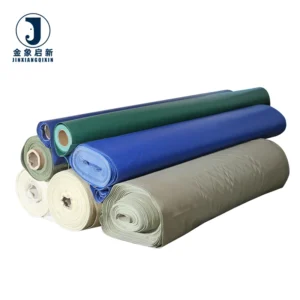
Awning and Tents Waterproof Fabric PVC Tarpaulin
¥1.50 Add to cart -
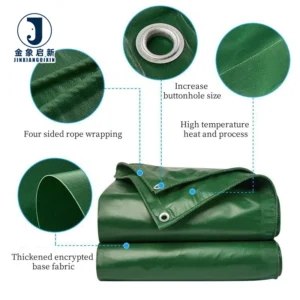
New Design Waterproof Coated Heavy Duty Pool Cover Cargo Covers Tarp for Truck
¥1.15 Add to cart -
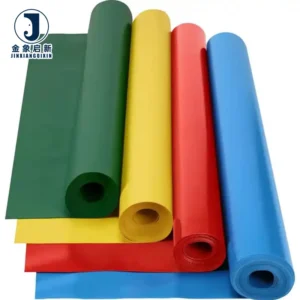
Stock PVC Tarpaulin Fabric Rolls 500D*500D 18*17 Hot Selling Colors in Stock China Manufacture Wholesale Fabrics Best Price
¥1.26 Select options This product has multiple variants. The options may be chosen on the product page -
Custom Reinforced Edges Rip-Stop Rubberized PVC Tarpaulin Industry Covering Vinyl Coated Polyester Tarps for Trucks
¥8.00 Select options This product has multiple variants. The options may be chosen on the product page