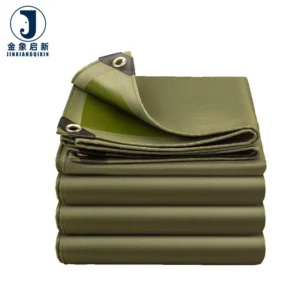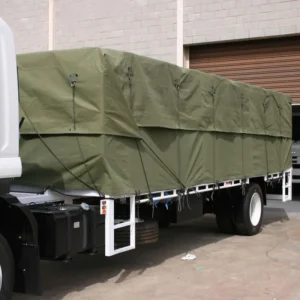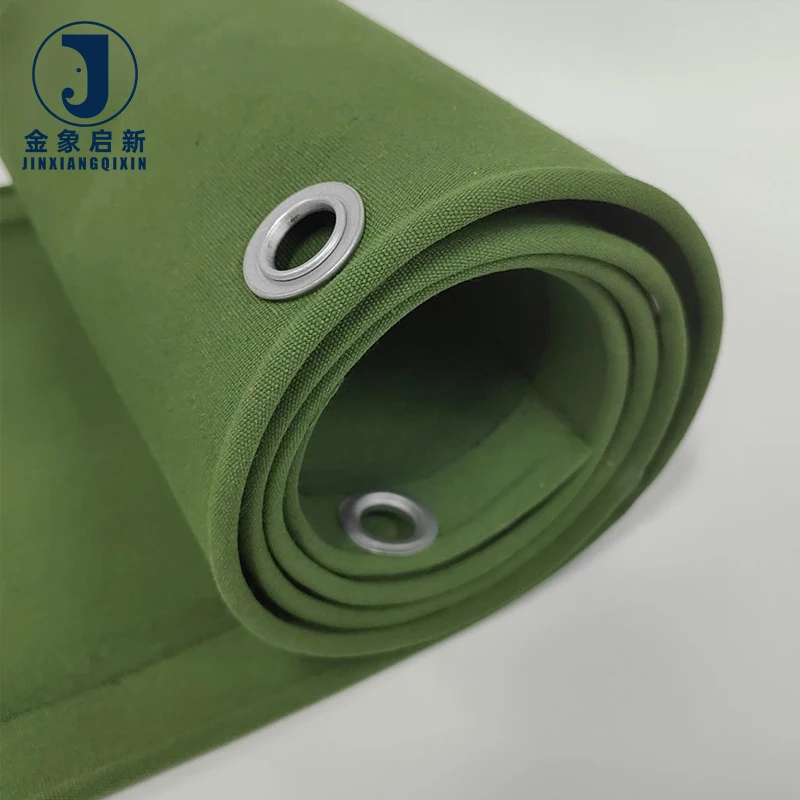
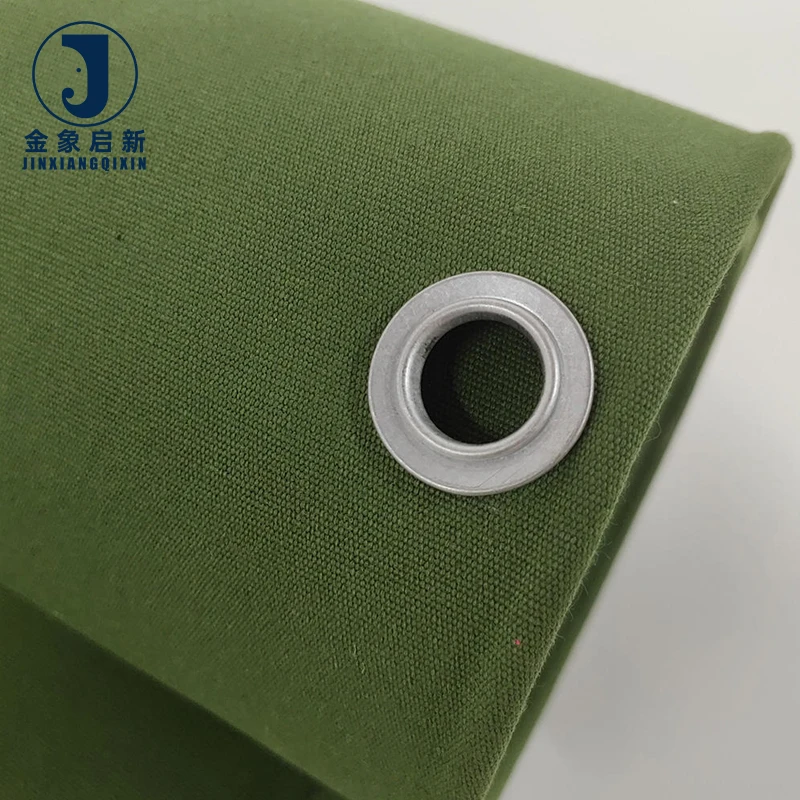
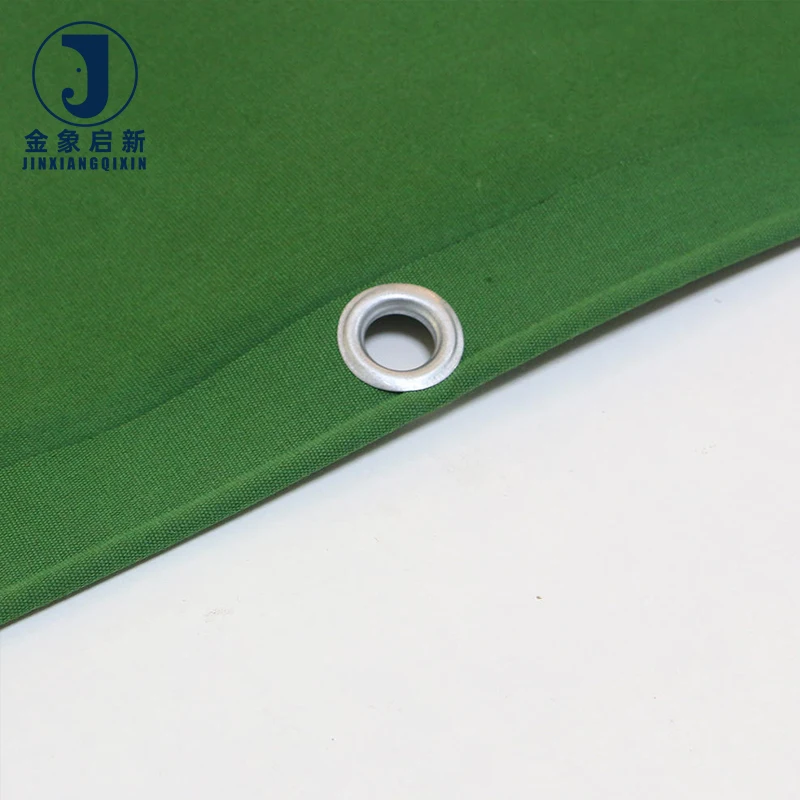
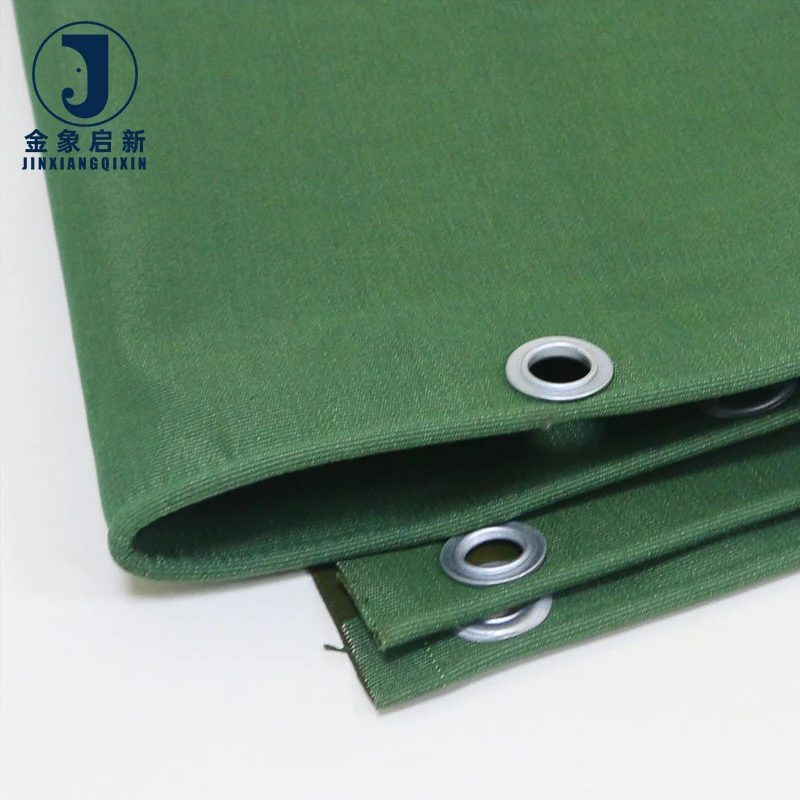
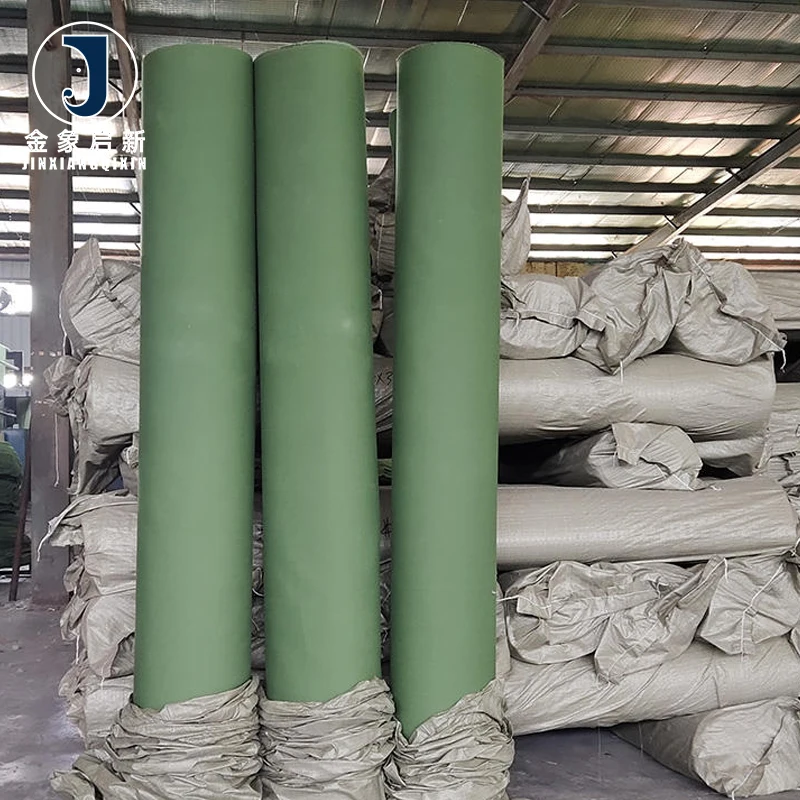
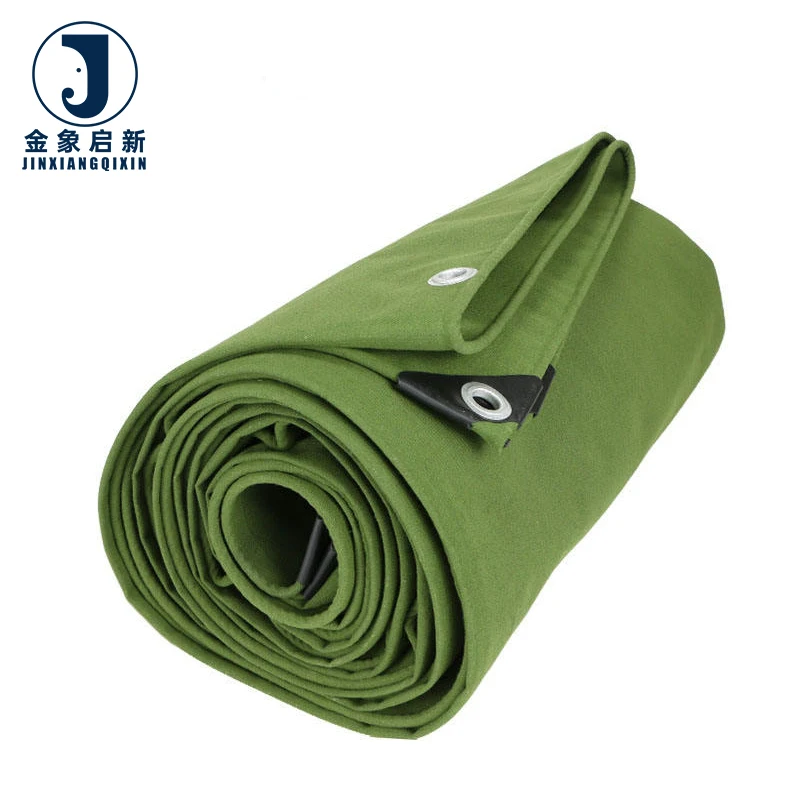
Canvas Tarps 600gsm, 0.5–0.7mm Thickness, 2m Roll Width — polyester cotton industrial textile with fine cotton yarn, army green camouflage or custom colour. Rust-proof aluminium eyelets every 1 meter, welded and sewn hems with poly rope reinforcement.
- Full customisation on size, colour, treatment and branding across the complete tarpaulin range — one-stop capability from design to delivery
- GSM, base fabric and coating stated on material spec sheet with colour reference, so what you order is what arrives on site
Supported by nearly 30 years of coated fabric process control, 100% pre-shipment inspection, and an R&D team delivering samples within days.
Description
Deep Coating Control — Nearly three decades of coated fabric production give us process-level command over coating weight, adhesion and roll consistency, which matters most when a Canvas Tarps aftermarket supplier must deliver identical GSM and colour across hundreds of rolls.
Technical Specifications
| Parameter | Value |
|---|---|
| Product Type | Canvas Tarps |
| Material | Polyester cotton industrial textile, 8-12 strands of fine cotton yarn |
| Weight | 600gsm |
| Thickness Options | 0.5mm / 0.6mm / 0.7mm |
| Roll Size | 2m width × 100m length |
| Colour Options | Army Green Camouflage / Custom |
| Key Features | Wear-resistant, corrosion-resistant, tensile-resistant, high- and low-temperature resistant, waterproof, UV resistant, mold resistant, shrink proof |
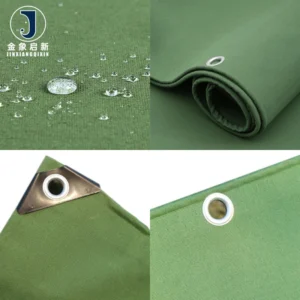
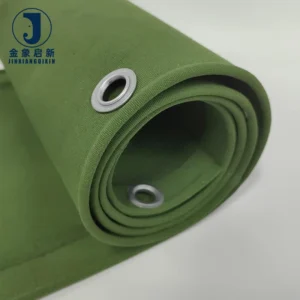
| Reinforcement | Rust proof aluminum eyelets every 1 meter at corners and hem; folding and seams welded and sewn with poly ropes |
| Certification | ISO, CE |
Application Suitability
| Application | Exposure & Requirement |
|---|---|
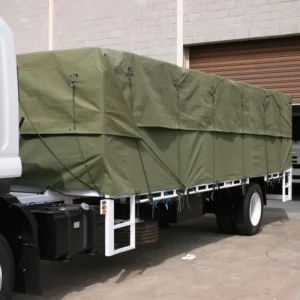
| Truck side curtain cover | Constant flexing at load points, road debris abrasion, UV and weather exposure, repeated tie-down stress at eyelets |
| Construction site and equipment cover | Prolonged outdoor UV exposure, wind-driven rain, contact with mortar and alkaline dust, heavy handling |
| Asphalt cover | High surface temperatures, bitumen contact, chemical staining, requirement for heat tolerance |
| Open-air cargo protection | Sustained rain and wind load, tension from ratchet straps, UV degradation over extended deployment |
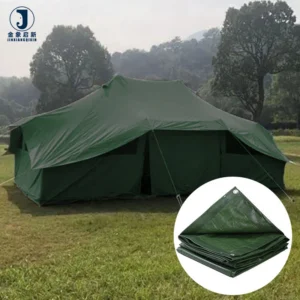
| Tent and awning structures | Tensile loading from frame tension, UV exposure, water runoff, fold creasing during storage |
Why GSM Alone Will Not Tell You Whether the Canvas Tarps Will Hold Up on a Truck
The number on the quotation means nothing if the weave density and coating adhesion are not verified roll by roll before dispatch.
I have watched rolls arrive on a loading dock where the stated GSM matched the paperwork, yet the fabric tore at the first hem fold because the base weave was loose and the coating sat on top rather than locking into the yarn. The weight was right but the structure was wrong [NEED_CITE: tensile and tear test methods for coated fabrics per ISO 1421]. When a logistics fleet specifies a Canvas Tarps aftermarket supplier, they need the GSM confirmed against the actual base fabric denier and the coating penetration, not just a certificate printout. Without that, a 600gsm canvas can behave like a much lighter material at the stress points that matter most — the eyelets, the welded corners and the flex zone above the trailer axle.
What the Base Weave Actually Controls
The 8-12 strand fine cotton yarn construction in this polyester cotton industrial textile determines how well the 600gsm coating bonds to the substrate. A tighter yarn count means the PVC locks around each fibre rather than sitting on the surface, which directly affects peel strength at welded seams. This is why canvas tarps built on a loose weave can delaminate at the fold line even when the overall weight is correct.
Why Rust Proof Aluminum Eyelets Matter at the Hem
Every meter spacing with poly rope sewn into the hem distributes tie-down tension across the fabric edge rather than concentrating it at a single grommet. On a truck side curtain, that edge sees the highest cyclic loading during transit. The Canvas Tarps aftermarket supplier you choose should confirm eyelet pull-out resistance relative to the fabric weight and hem construction, not just list eyelet diameter.
How Thickness Selection Changes Field Performance
The three available thicknesses — 0.5mm, 0.6mm and 0.7mm — let buyers match the canvas tarp to the severity of the environment. A construction equipment cover exposed to sharp aggregate contact benefits from the 0.7mm option, while a tent manufacturer buying roll stock for awning frames may prefer 0.5mm for easier folding and lighter shipping weight per roll.
Coating Penetration and Long Term Water Resistance
Waterproofing in a coated canvas depends on how thoroughly the coating saturates the base textile, not just the surface layer. The polyester cotton blend used here allows the coating to penetrate between yarn strands, reducing the risk of water tracking through pinholes that open up after repeated flex cycles [NEED_CITE: coating adhesion test methods for PVC coated textiles].
The Hidden Cost of Specifying Canvas Tarps on Weight Alone
A buyer who selects material only on GSM and price often discovers the problem at the fabrication stage. Rolls that are under-coated or loosely woven will fail at the weld line before the fabric body shows any wear. I have seen batches where the seams opened within the first deployment because the heat sealing parameters were calibrated for a denser weave than what was actually supplied [NEED_CITE: weld strength testing standards for coated technical textiles]. The rework cost — stripping eyelets, re-cutting panels, re-welding and re-shipping — far exceeds the per-metre savings on the original order. Colour inconsistency between rolls in the same shipment is another frequent issue; panels installed side by side on a truck show visible banding when dye lots are not controlled at the coating stage.
Why Sourcing Canvas Tarps Through This Facility Works
Three full production lines and 36 sets of professional equipment provide the capacity to run large roll orders without splitting production across separate batches that might vary in colour or coating weight. The 10-person R&D team handles custom width, pattern printing and sample development, delivering test samples within days so buyers can verify weld compatibility before committing to bulk. Dedicated QA/QC at every production stage means each roll of this polyester cotton canvas is checked for GSM and coating consistency before it leaves the coating line. ISO and CE certified processes ensure that the documentation package — from material specification sheets to pre-shipment inspection records — is complete for import clearance at destination.
Documentation & Verification
- Material specification sheet stating 600gsm weight, polyester cotton base fabric and coating type with colour reference
- Pre-shipment inspection record confirming GSM and coating weight per roll before dispatch
- Test reports for UV and mold resistant treatments where applicable to the order
- Roll packing list with individual roll dimensions and net weight for container loading
- ISO and CE certificates and certificate of origin included with every shipment
Fabrication, Handling & Storage
- Heat seal parameters must be adjusted to the specific 0.5mm to 0.7mm thickness to avoid burn-through or weak welds
- Poly rope reinforcement at hems should be sewn before eyelet insertion to maintain edge tension distribution
- Rolls stored upright on pallets to prevent flat-spot creasing that weakens the coating at fold lines
- Allow cold-stored rolls to reach ambient temperature before unrolling to prevent coating micro-cracking
- Clean with mild detergent only; solvent-based cleaners can degrade the PVC coating surface on the 600gsm canvas
- Cut panels should be welded rather than stitched alone to maintain waterproof integrity at seams
What to Include in Your Canvas Tarps Inquiry
Send us the specific application, the environmental exposure conditions your covers will face, and the target compliance requirements for your market — whether that involves UV stability, fire classification or anti-static treatment. Specify the roll width, colour references and whether you need finished cut-to-size panels with eyelets or roll stock only. If you require custom pattern printing or branding, provide the artwork file and print placement so we can confirm feasibility and sample turnaround.
Frequently Asked Questions
Q: Can I get a sample before committing to a bulk order?
A: Yes. The R&D team develops samples within days based on your specified thickness, colour and treatment requirements. You can test weld compatibility and eyelet pull-out on the sample before we schedule full production, ensuring the 600gsm polyester cotton canvas meets your fabrication process.
Q: How do you verify GSM and coating weight on delivery?
A: Every roll undergoes dedicated QA/QC checks at each production stage. Pre-shipment inspection records confirm actual GSM against the stated 600gsm specification, and these records travel with the shipment documentation so you can verify weight on receipt.
Q: What custom widths, colours and print options are available?
A: Beyond the standard 2m roll width and Army Green Camouflage, we produce custom widths, colour matches and pattern printing. The 10-person R&D team handles material selection and branding, with sample confirmation required before bulk production begins.
Q: What is the minimum order for custom sizing or treatment?
A: Minimums vary based on the specific custom requirement — whether it is a non-standard width, a custom colour dye lot or a specific treatment such as flame retardant grades. Share your specifications and we will confirm the minimum and lead time for your order.
Q: How long does sample development and production take?
A: Sample development typically takes days once specifications are confirmed. Production lead times depend on order volume and the level of customisation required, including any custom colour runs or finished panel fabrication with eyelet and hem reinforcement.
Related products
-
Factory Direct Sales Organic Coated Blackout Tarpaulin Garage Car Truck Container Cover for Boys & Girls
¥0.87 Select options This product has multiple variants. The options may be chosen on the product page -
13oz 10ftx12ft Woven Plain Heavy Duty Canvas Tarpaulin with Rustproof Grommets for Canopy Tent Roof Camping Woodpile
¥10.59 Add to cart -
Custom PE Tarpaulin for Commercial Protection – Full Range
Read more -
Customized Waterproof Woven Heavy Duty Truck Tarps Side Curtain Cover PVC Laminated Canvas Plain Very Heavyweight Accessories
¥1.50 Add to cart