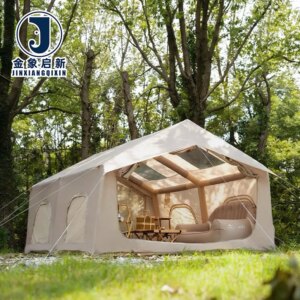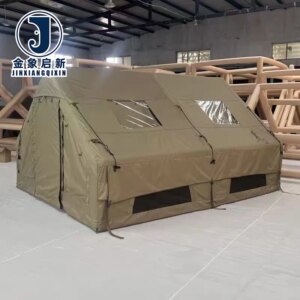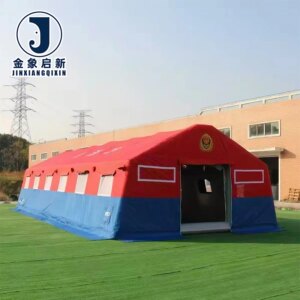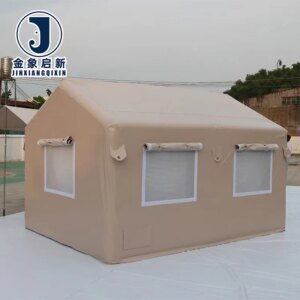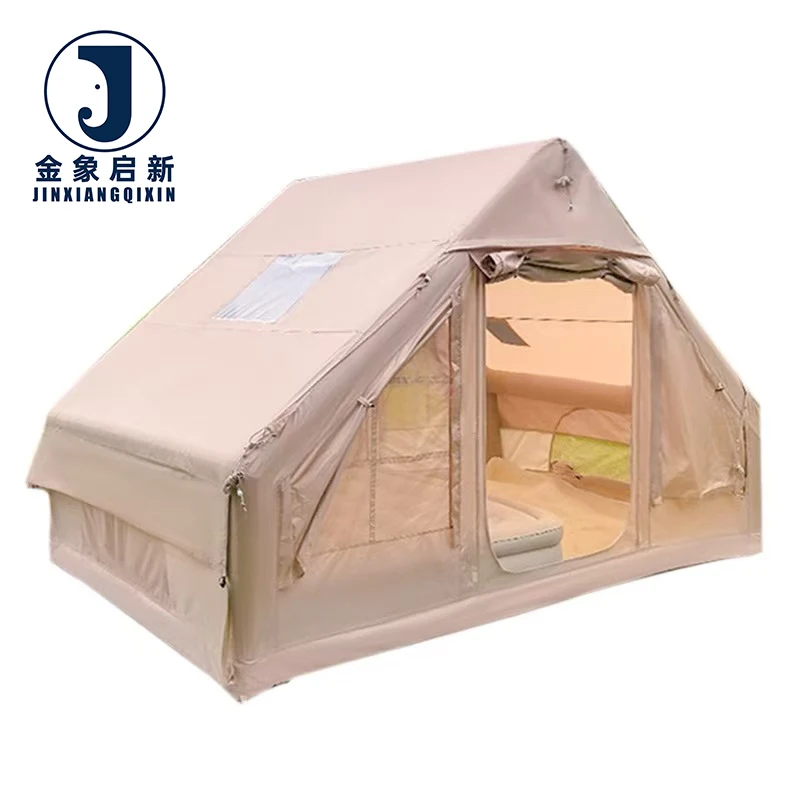
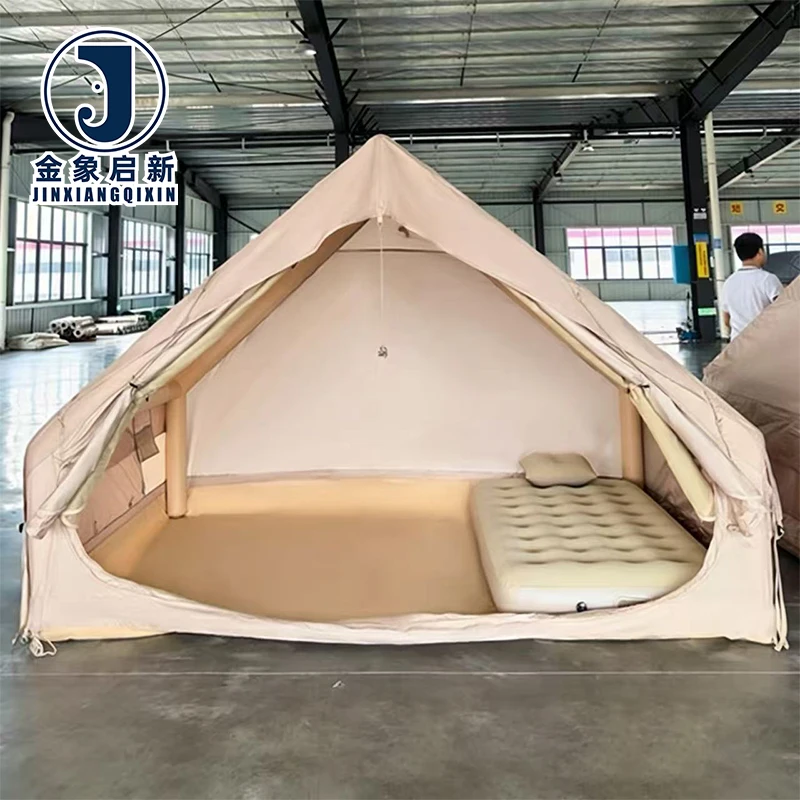
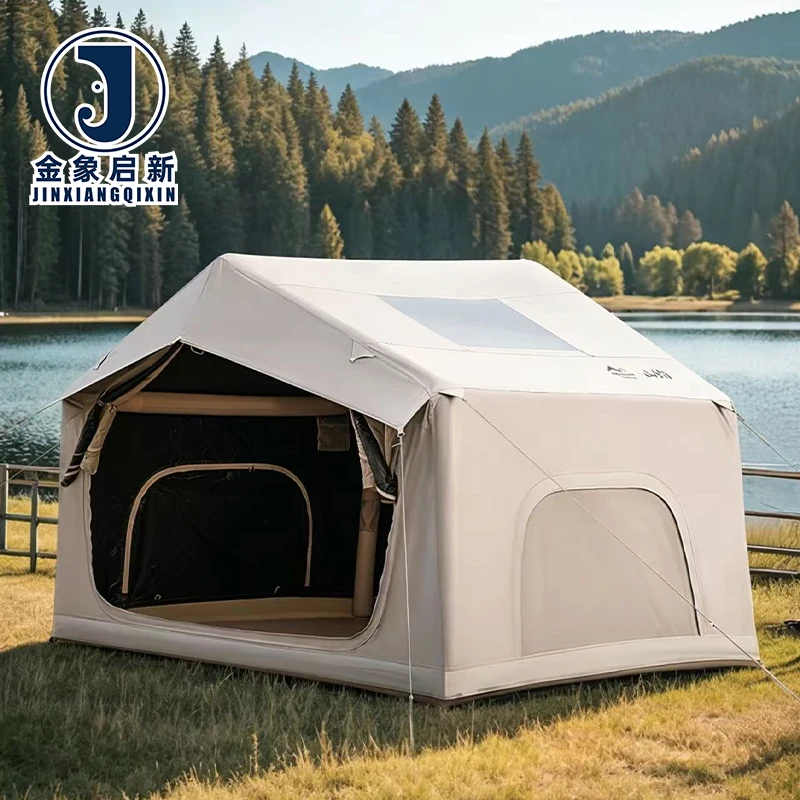
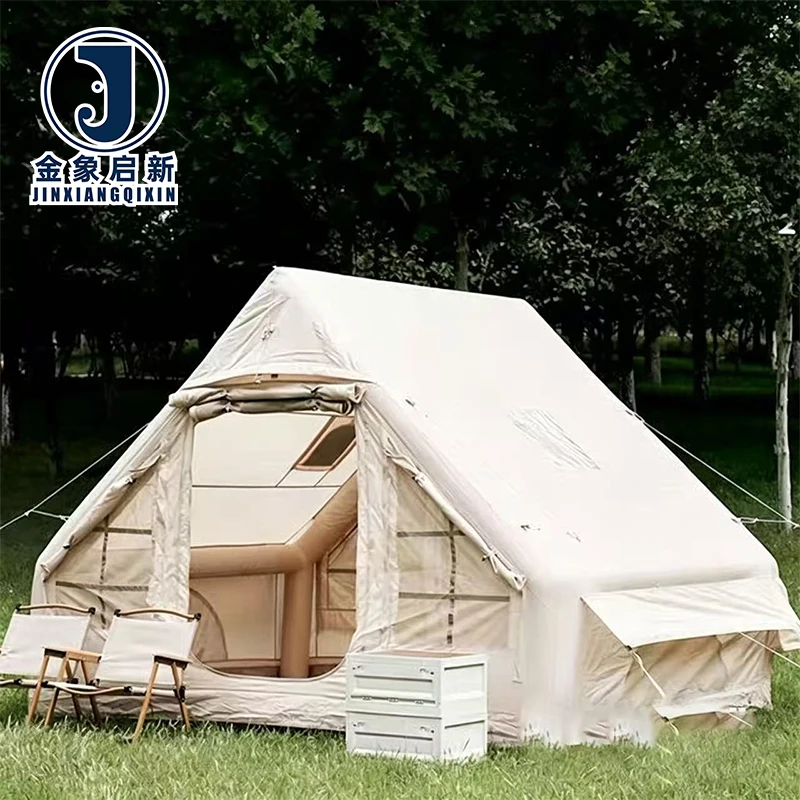
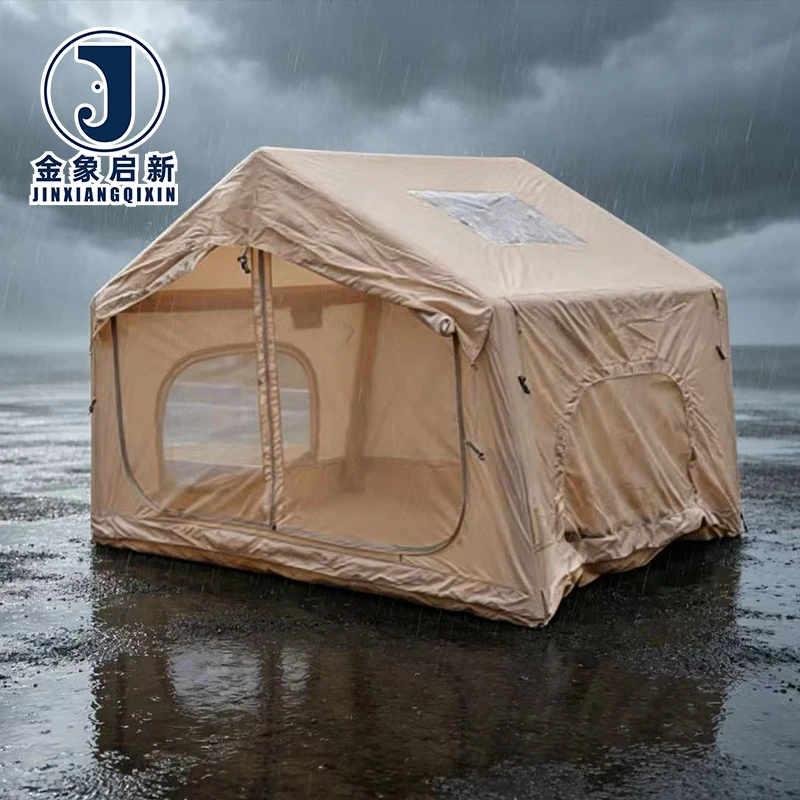
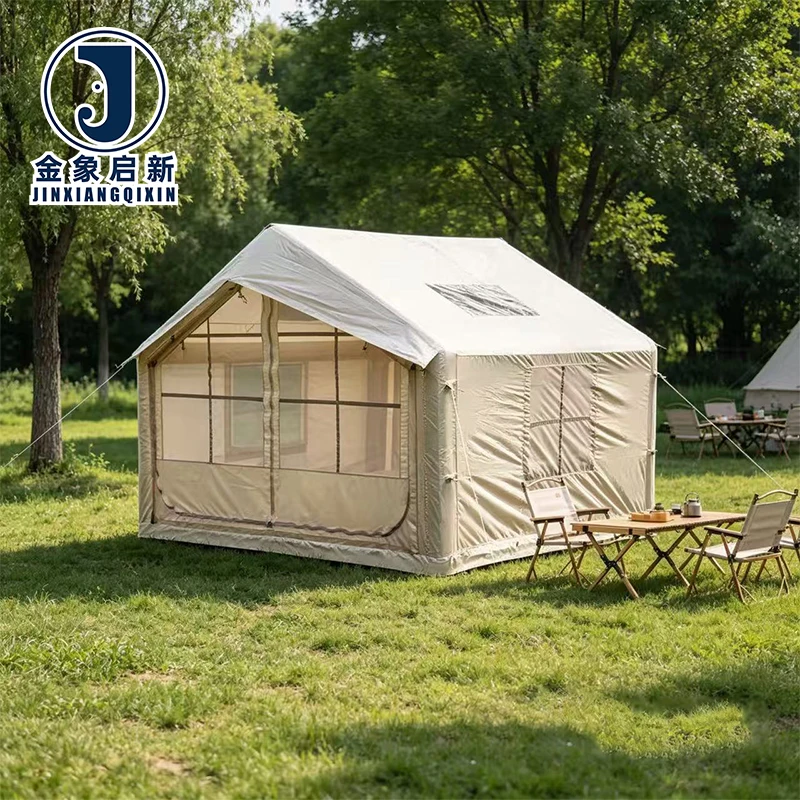
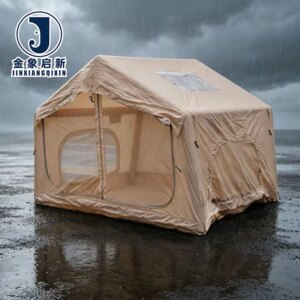
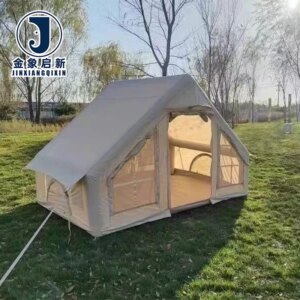
Inflatable Camping Tent, PVC Tarpaulin, Waterproof & UV-Resistant — built for commercial outdoor events and temporary shelter applications.
- Coated PVC tarpaulin delivers reliable waterproof and UV-resistant performance, with single-layer construction balancing portability and industrial durability for repeated commercial deployment.
- Full OEM & ODM support covers pattern printing, sizing, and sample development with dedicated QA/QC at each production stage.
Backed by three full production lines and nearly 30 years of coated fabric process control, every order includes a pre-shipment inspection record and material specification sheet.
Description
Full Custom Capability — Nearly 30 years of PVC coating process control applied to inflatable tent fabric, from material selection and pattern printing to cut-to-size delivery with full OEM/ODM support.
Technical Specifications
| Parameter | Value |
|---|---|
| Product Type | Inflatable Camping Tent |
| Core Material | PVC Tarpaulin |
| Construction | Single-layer |
| Key Performance | Waterproof, UV-Resistant (test basis not stated) |
| Customization Service | OEM & ODM (sample customization, pattern printing) |
| Production Facility Area | 9,180 m² |
| Production Lines | 3 full production lines |
| Processing Equipment | 36 sets |
| R&D Team Scale | 10 technicians |
| Quality Control | Full-process inspection with dedicated QA & QC staff |
| Standards | ISO9001, ISO14001, ISO45001, CE |
Application Suitability
| Application | Exposure & Requirement |
|---|---|
| Commercial outdoor trip operations | Extended outdoor weather exposure, waterproofing, repeated inflation/deflation cycles |
| Temporary shelter for outdoor commercial events | UV exposure, wind load stress, custom branding and pattern printing requirements |
| Industrial team outing camping equipment | High-frequency handling, transport abrasion, rapid deployment durability |
| Outdoor gear manufacturing for commercial use | Material consistency across production batches, weld seam integrity, specification traceability |
When "Waterproof" Isn’t Enough Without Verified Coating Weight
Fabric waterproofing fails at the seams and stress points long before the field itself lets water through.
An Inflatable Camping Tent undergoes constant pressure from internal air beams and external wind loads. If the coating weight is lighter than stated on the quotation, the material stretches beyond its elastic limit at flex points. The waterproof barrier cracks microscopically, and water ingress follows within the first season of heavy use. [NEED_CITE: tensile and tear test methods for coated fabrics per ISO 1421] I have seen coated fabrics arrive with a GSM reading that simply does not match the supplier invoice, leaving manufacturers with a batch that cannot hold structural air pressure reliably.
What Separates Commercial-Grade Inflatable Tent Material from General Tarpaulin
Inflatable structures demand fabric that holds air pressure continuously while flexing under wind load and internal beam tension. This Inflatable Tent Fabric manufacturer produces PVC tarpaulin engineered for these cyclic stress conditions, where single-layer construction must balance structural rigidity with manageable packed weight for transport and deployment.
The Customization Depth That Event Producers Actually Need
Outdoor commercial events require branded inflatable shells where colour matching and print registration stay consistent from the first panel to the last. The OEM and ODM capability here covers sample development, pattern printing, and branding alignment so that your custom inflatable tent material arrives ready for fabrication without rework or rejection on the cutting table. [NEED_CITE: colour fastness and print adhesion standards for coated PVC fabrics]
Reading Between the Specs: Coating, Base Fabric, and Structural Integrity
PVC tarpaulin performance depends on the relationship between base fabric denier, weave density, and coating weight applied during production. A heavier GSM reading does not automatically mean higher tear strength if the base fabric uses a loose weave that allows coating penetration without mechanical interlock. The coating method — whether knife-over-roll, lamination, or calendering — determines peel strength at welded seams, which is typically where inflatable structures fail under sustained internal pressure. Surface finish, whether glossy or matte, affects both dirt resistance during outdoor deployment and the adhesion quality of printed branding patterns. Single-layer construction reduces packed volume and weight for transport but places the entire structural load on one coated fabric layer, making base fabric selection critical. Available in flame retardant grades — confirm the grade required for your market and event venue regulations.
The Hidden Cost of Roll-to-Roll Colour Variation
When multiple rolls of inflatable tent fabric arrive with visible colour differences, the entire branded shell looks mismatched once assembled on site. Buyers who specify a Pantone reference on paper sometimes receive rolls that drift noticeably under daylight inspection, forcing manufacturers to cull panels and reorder material at project cost. This failure traces back to inconsistent pigment dispersion during the coating stage, where process control determines whether batch consistency holds across a full container order. [NEED_CITE: pigment dispersion consistency in PVC coating production lines]
Why Procurement Teams Source Inflatable Tent Fabric Here
Three full production lines and 36 sets of professional equipment support bulk order capacity with reliable delivery scheduling for commercial inflatable tent projects. A dedicated 10-person R&D team handles material selection, pattern printing development, and cut-to-size sample production within days rather than weeks. Every production stage includes dedicated QA and QC inspection, with 100% pre-shipment coverage so that GSM, colour reference, and coating integrity are verified before rolls leave the facility. Nearly 30 years of focused PVC coating experience translates into process control over adhesion strength and coating weight consistency. ISO9001, ISO14001, ISO45001, and CE certifications are maintained and provided as standard order documentation.
Documentation & Verification
- Material specification sheet stating GSM, base fabric type, coating composition, and colour reference per batch
- UV-resistant treatment test report available upon request linked to your order number
- Pre-shipment inspection record confirming 100% QA/QC coverage across all rolls before dispatch
- ISO9001, ISO14001, ISO45001, and CE certificates included in shipment documentation package
- Roll packing list with individual roll identification for traceability through your fabrication process
Fabrication, Handling & Storage
- Heat welding temperature and dwell time must be calibrated to the PVC coating thickness to achieve full peel strength at seam joints
- Store rolls vertically on padded racks to prevent compression creasing that weakens the coating at fold lines
- Use PVC-compatible cleaners only, as solvent-based products degrade the plasticizer in the coating layer
- Allow cold-stored rolls to acclimatize to workshop temperature before unrolling to prevent coating micro-cracking
- Pattern cutting layout should account for single-layer construction grain direction to maximize panel yield per roll
Specifying Your Inflatable Tent Fabric Order
Provide your target application, expected outdoor exposure conditions, and any fire safety classification required by the event venue or local authority. Specify required roll widths, annual volume estimates, and whether you need raw rolls or cut-to-size panels with hemming and eyelet reinforcement. If custom colour or printed branding is required, request sample development early to confirm print registration and colour match before committing to full production volume.
Frequently Asked Questions
Q: What test basis supports the UV-resistant claim, and what outdoor exposure duration can be expected?
A: UV-resistant treatment is applied during the coating process for extended outdoor exposure. The specific test basis and exposure duration depend on the treatment grade selected for your order. Request the UV test report with your order number to verify the treatment level matches your application requirements and local climate conditions.
Q: How is fabric GSM verified before shipment, and what re-inspection protocol is recommended on arrival?
A: Every roll undergoes weight verification against the stated GSM during the pre-shipment inspection process. On arrival, we recommend spot-checking sample cuts from multiple rolls using a calibrated scale and standardized sample area to confirm the delivered weight matches your purchase specification and quotation documentation.
Q: What custom widths, lengths, and MOQs apply to inflatable tent fabric orders?
A: Custom widths and cut lengths are available through the OEM and ODM service, with MOQs varying by colour, finish, and printing requirements. Submit your target dimensions and annual volume to receive a quotation specifying minimum order quantities and production lead times for your specific material configuration.
Q: How is colour matching handled for printed branding, and what is the sample approval workflow?
A: Pattern printing and colour matching begin with your supplied artwork and Pantone references. The 10-person R&D team produces printed samples for your approval before mass production proceeds, ensuring registration accuracy and colour consistency across the full order batch.
Q: What controls ensure roll-to-roll colour consistency across a single inflatable tent fabric order?
A: Full-process QA inspection covers pigment dispersion, coating weight, and colour reference verification at every production stage. The pre-shipment inspection compares all rolls in an order side by side under controlled lighting to identify and reject any rolls showing visible colour deviation before dispatch.
Related products
-
Inflatable Four-season Camping Tent-PVC Coated Waterproof Eco-Friendly Quick Inflation CE Certified ODM/OEM Accepted
Read more -
Premium Four-season PVC Inflatable Tents for Camping Easy-to-Use Spacious Portable Waterproof Outdoor Tent with Pump
Read more -
Inflatable Camping Tent Waterproof Outdoor Air Tent for Camping Inflatable Tent Shelter
Read more -
Outdoor Portable Camping Inflatable Tent Luxury All-Season Use Overnight Large Space Rainproof Insulated Quick Automatic Opening
Read more