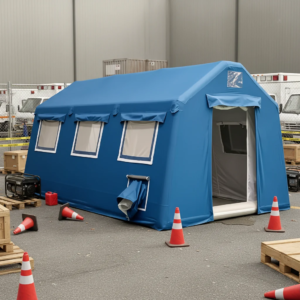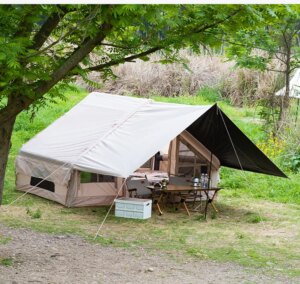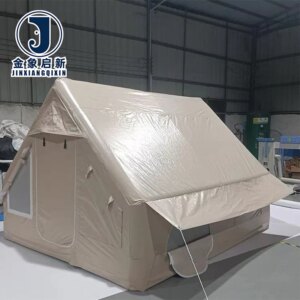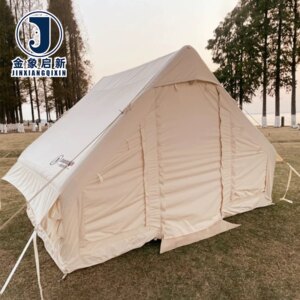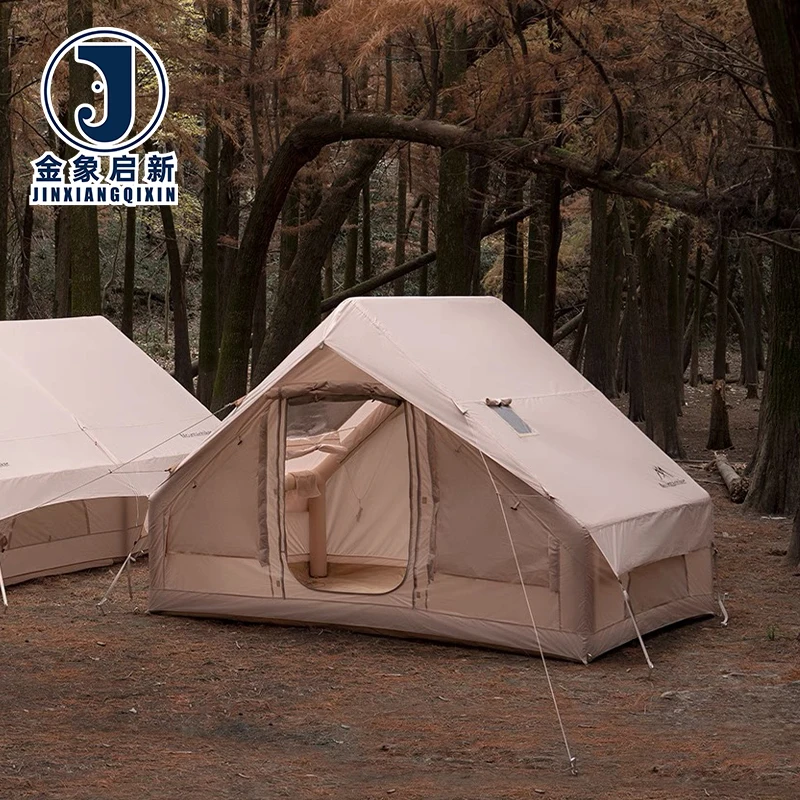
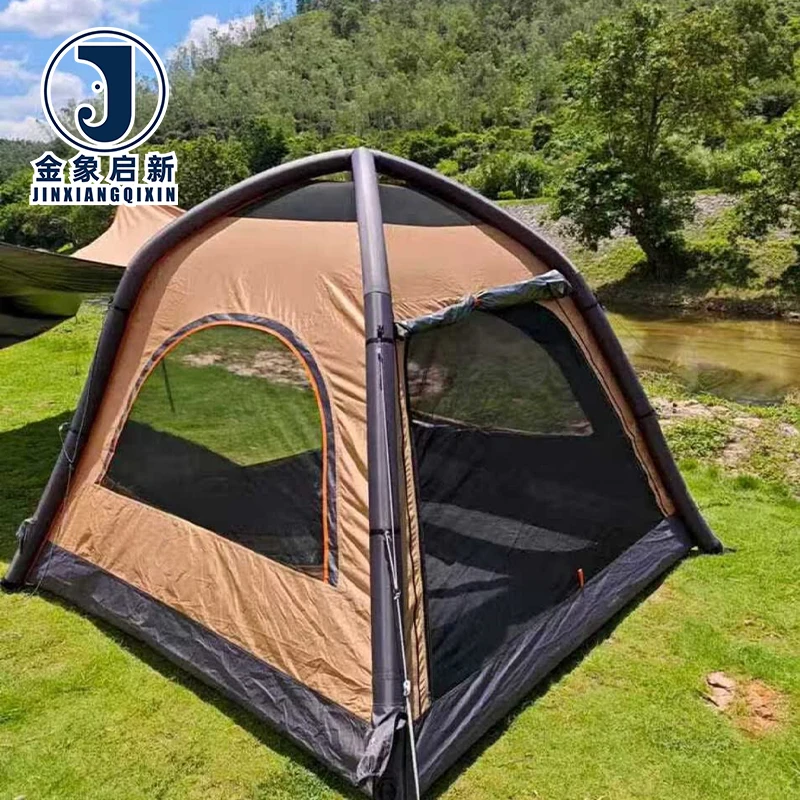
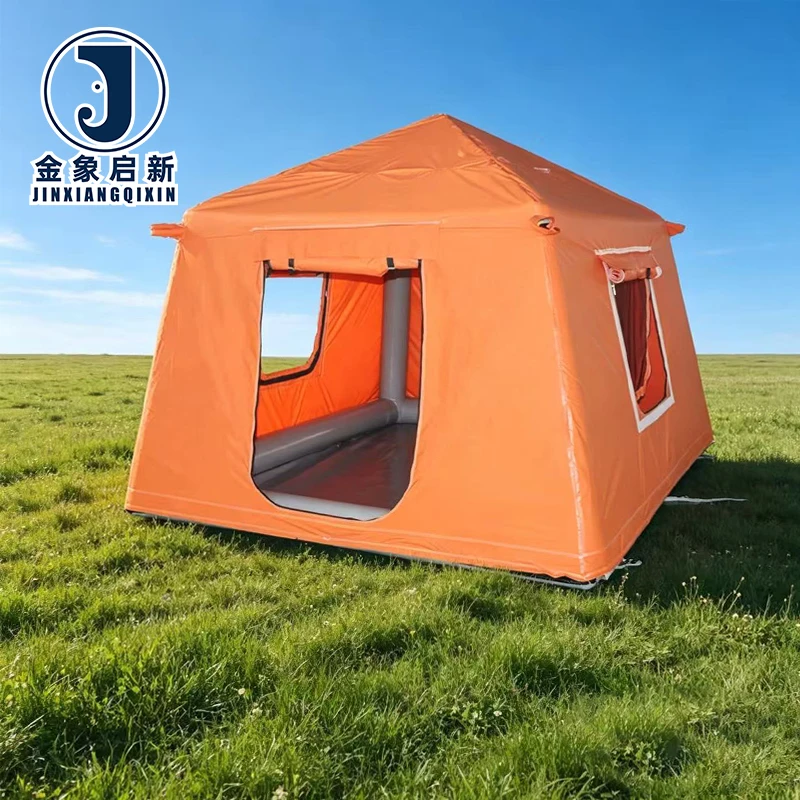

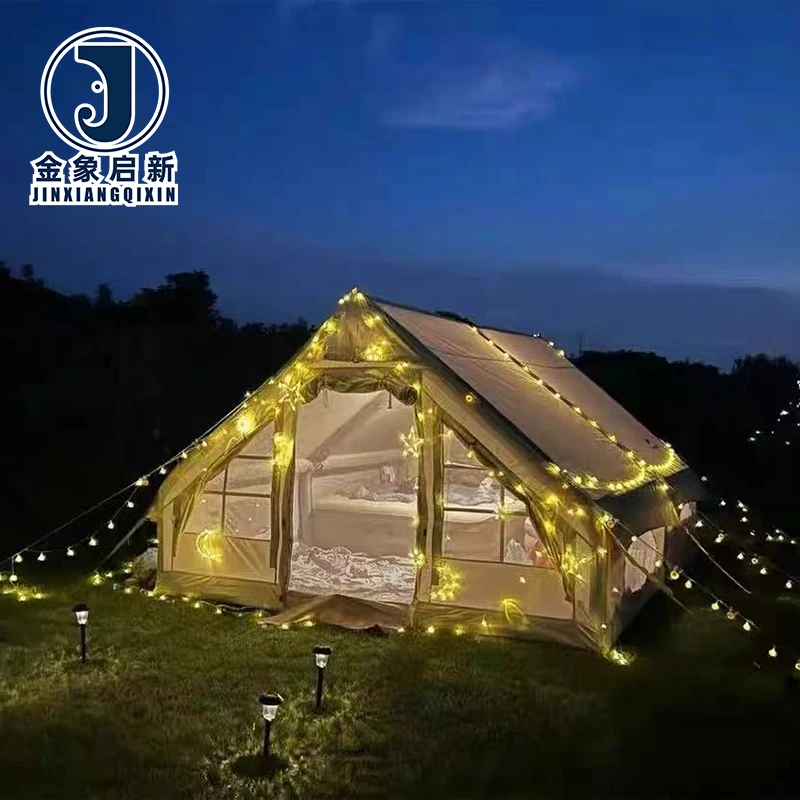
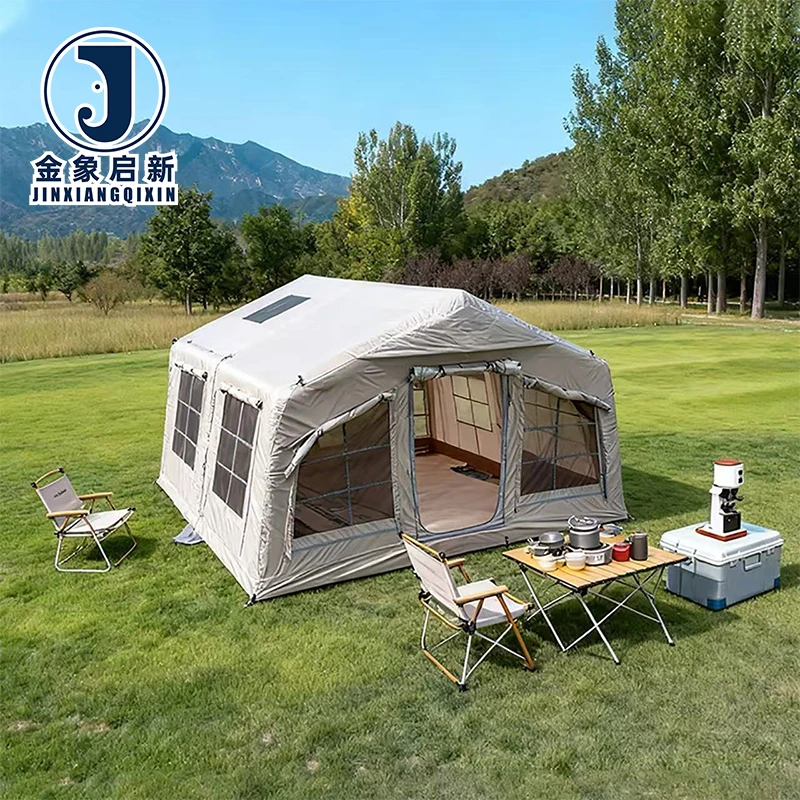
Inflatable Camping Tent, 4-6 Persons, PVC Coated Oxford Fabric — quick automatic opening with single-layer waterproof construction for commercial outdoor deployment.
- Coating adhesion and base fabric denier jointly determine long-term waterproof integrity at flex points
- Batch-to-batch consistency controlled across color, PVC coating weight and seam welding performance
Backed by 3 full production lines with dedicated QA inspection at every stage, plus a 10-person R&D team supporting full OEM and ODM customization from sample to bulk delivery.
Description
Process-Controlled Coating — Every roll of Oxford fabric for this inflatable camping tent is produced on one of three full lines with dedicated QA checkpoints verifying PVC adhesion and coating weight before it leaves the facility.
Technical Specifications
| Parameter | Value |
|---|---|
| Product Type | Inflatable Camping Tent |
| Core Material | Oxford Fabric with PVC Coating |
| Capacity | 4-6 Persons |
| Construction | Single Layer |
| Opening Mechanism | Quick Automatic Opening |
| Key Performance | Waterproof, UV-Resistant, Tear-Resistant |
| Customization | OEM & ODM — Sample, Pattern Printing |
| Quality Control | Full-Process Inspection with Dedicated QA & QC Staff |
| Standards | ISO 9001, ISO 14001, ISO 45001, CE |
Application Suitability
| Application | Exposure & Requirement |
|---|---|
| Commercial outdoor equipment manufacturing | Repeated deployment cycles, UV exposure, abrasion at inflation seams |
| Wholesale distribution | Batch-to-batch colour consistency, shelf-life stability in storage |
| Industrial temporary shelter projects | Prolonged outdoor siting, wind load on inflatable frame, rain ingress |
| Commercial rental services | High-frequency packing and unpacking, surface soiling, cleaning chemical exposure |
| Commercial outdoor activities | Rapid deployment, ground contact abrasion, solar heat buildup |
Why Test Reports Matter More Than Claims on an Inflatable Camping Tent Aftermarket Supplier Datasheet
If you cannot hold a batch-specific test report in your hand, the performance claim is only a hope.
I spent years watching coated fabric leave the factory with verbal assurances about UV stabiliser loading, only to see tents crack and chalk in desert conditions within a single season. The problem was never the base Oxford weave — it was the missing data linking the additive package to an accelerated aging result. When an Inflatable Camping Tent aftermarket supplier states "UV-resistant" without an accompanying hours figure or test method, procurement teams have no basis to compare lots or hold a vendor accountable. [NEED_CITE: ISO 4892 accelerated weathering methods for plastics and coated textiles]
How the Oxford Substrate Influences Air-Frame Behaviour
The Oxford fabric used here forms both the living shell and the inflatable air-beam sleeve. Because the single-layer construction carries structural and weatherproofing duties simultaneously, the PVC coating must bond tightly enough to prevent delamination at the heat-welded seam lines where inflation pressure concentrates. A well-coated Oxford substrate maintains dimensional stability as internal air pressure fluctuates with ambient temperature changes, reducing the risk of sagging panels during cold nights. The Inflatable Camping Tent aftermarket supplier must control coating weight per square metre so that the fabric stays flexible for packing yet rigid enough to hold beam geometry.
Deployment Speed as a Commercial Advantage
Rental operators and event contractors evaluate inflatable shelters on how quickly a two-person crew can go from bag to standing structure. The quick automatic opening mechanism relies on consistent air-beam diameter and low-friction inner surfaces — both governed by coating uniformity on the Oxford substrate. Uneven coating builds ridges that catch during inflation, slowing deployment and risking asymmetric loading. [NEED_CITE: tensile and tear test methods for coated fabrics per ISO 1421]
Reading the Specs That Actually Predict Field Life
Waterproof rating, UV resistance hours and tear strength are the three figures buyers scrutinise first, yet each one tells only part of the story. Waterproof pressure resistance depends on coating continuity and seam-weld integrity; a pinhole at an inflation valve flange defeats a high hydrostatic head number on the main panel. UV accelerated aging data must reference the specific test cycle — xenon arc versus fluorescent UV — because the spectral output changes which stabilisers are consumed first. Tear strength measured on the coated composite will differ from the base Oxford alone, so confirming that the test was run on the finished, coated fabric is essential before comparing lots.
The Hidden Cost of Ignoring Batch Traceability
When a rental company orders fifty tents and the PVC coating weight drifts between production runs, the first sign is often inconsistent inflation behaviour — some units stand firm while others soften faster. This variance traces back to coating-weight drift that went undetected because the buyer accepted a single pre-production sample as proof of the entire batch. Without lot-by-lot inspection records linking each roll to its coating line and shift, troubleshooting field failures becomes guesswork. [NEED_CITE: coating adhesion test standards for PVC on textile substrates per ISO 2411]
Why Procurement Teams Source This Fabric Here
Three full production lines allow parallel runs so that custom-colour orders do not wait behind standard stock. The ten-person R&D team develops samples within days, letting buyers verify inflatable beam geometry and seam-weld strength before committing to volume. Dedicated QA and QC staff inspect every production stage, and a 100% pre-shipment inspection catches coating defects that in-process checks might miss. ISO 9001 and CE certification underpin documentation that international markets demand.
Documentation & Verification
- Material specification sheet stating PVC coating weight and Oxford base fabric reference for each order
- UV and waterproof test reports matched to the batch number on your shipment
- ISO and CE certificates included with customs paperwork for destination-market compliance
- Pre-shipment inspection record with photographic evidence of seam welds and surface finish
- Roll packing list detailing quantity, gross weight and pallet configuration
Fabrication, Handling & Storage
- Heat-weld inflation seams at temperatures matched to PVC coating thickness to avoid burn-through on Oxford base
- Store rolled tent fabric upright on pallets to prevent permanent creasing in the PVC coating layer
- Use mild detergent for cleaning — avoid solvents that attack the plasticiser in the PVC coating
- Inspect air-beam valve flanges after each rental cycle for coating delamination at the bond line
- Allow fabric to reach ambient temperature before unfolding in cold weather to prevent PVC cracking
Before You Place the Order
Tell us the deployment environment — desert UV, coastal salt spray, or alpine cold — so we select the correct stabiliser package for the PVC coating on Oxford. Specify your target market so we align test reports with regional compliance requirements. Confirm whether you need finished tent units or roll stock for your own fabrication line.
Frequently Asked Questions
Q: What test reports accompany each shipment for waterproof and UV performance?
A: Every batch ships with a test report covering waterproof pressure resistance and UV accelerated aging results. Reports reference the specific test method and cycle used, so you can compare data across shipments. We issue these against the batch number printed on your packing list, ensuring full traceability from roll to finished tent.
Q: Can dimensions, capacity and branding be fully customised for OEM projects?
A: Yes. Our R&D team develops samples for custom sizing, capacity adjustments and pattern printing on the PVC-coated Oxford surface. Once you approve the sample, production runs follow the same specification. OEM and ODM projects are supported from design review through to final pre-shipment inspection.
Q: What is the lead time and minimum order for custom-printed inflatable tents?
A: Lead time depends on the complexity of printing, custom sizing and current line scheduling. We provide a confirmed timeline with your quotation after reviewing artwork and dimensional requirements. Minimum order quantities are set to balance coating-line efficiency with your commercial volume needs.
Q: How is batch-to-batch colour and coating consistency controlled?
A: Each production run is monitored by dedicated QA and QC staff who verify PVC coating weight and colour reference against the approved sample. In-process checks catch drift early, and 100% pre-shipment inspection ensures that every tent or roll meets the same standard before it leaves the facility.
Q: Which certifications are available for international market compliance?
A: Our facility holds ISO 9001, ISO 14001, ISO 45001 and CE certification. Certificates are included with shipment documentation. If your destination market requires additional test standards or declarations, raise this during the inquiry stage so we prepare the correct paperwork before production starts.
Related products
-

Luxury Inflatable Tent for Glamping Outdoor Waterproof Air Tent with Pump
Read more -
Luxus PVC Aufblasbares Zelt für Glamping Outdoor, wasserdicht, mit schnellem automatischem Aufbau, vierjahreszeitentauglichem faltbarem Design und Pumpe
Read more -
Outdoor Camping Inflatable Tent Luxury All-Season Use PVC Waterproof Quick Automatic Opening Rainproof Insulated
Read more -
Outdoor Portable Camping Inflatable Tent Luxury All-Season Use Overnight Large Space Rainproof Insulated Quick Automatic Opening
Read more