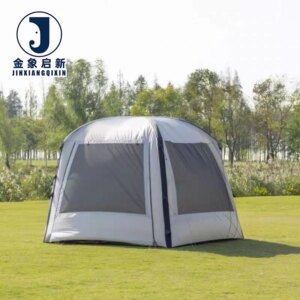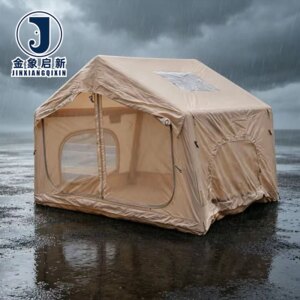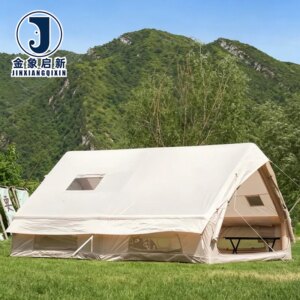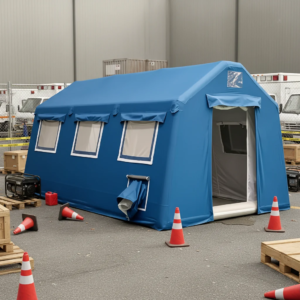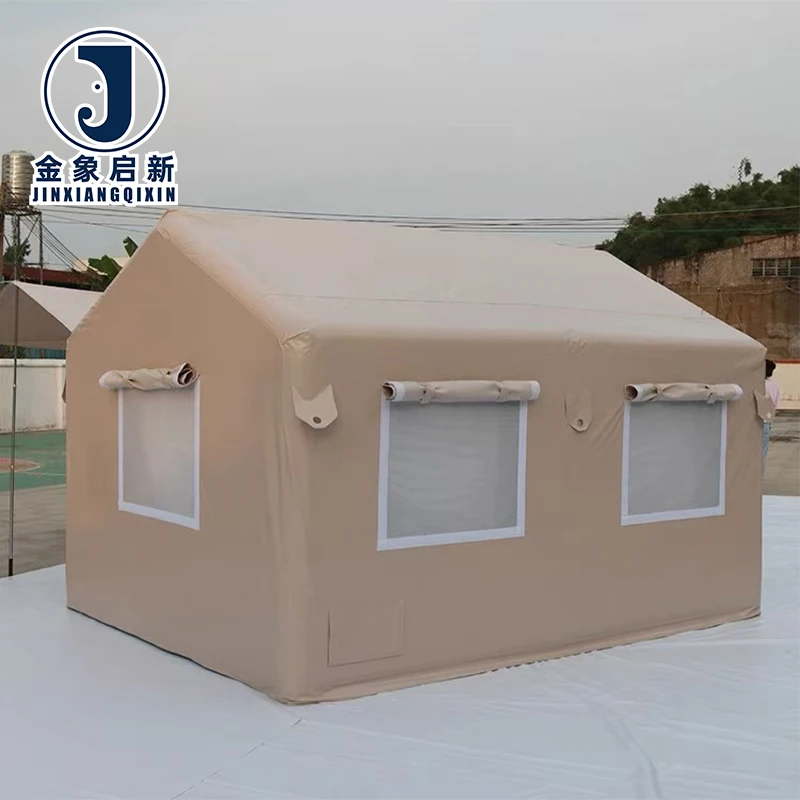
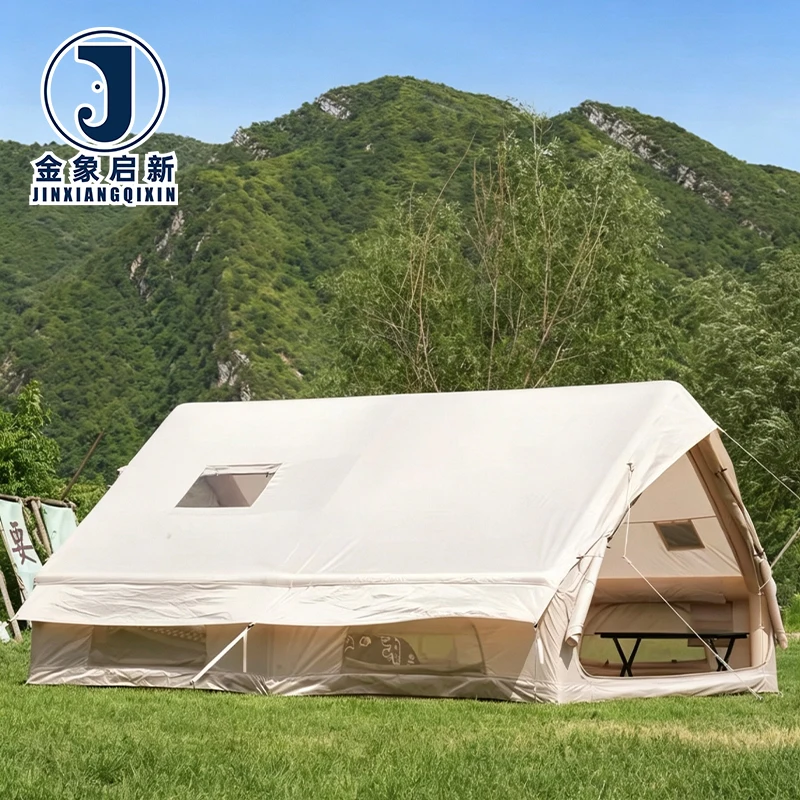
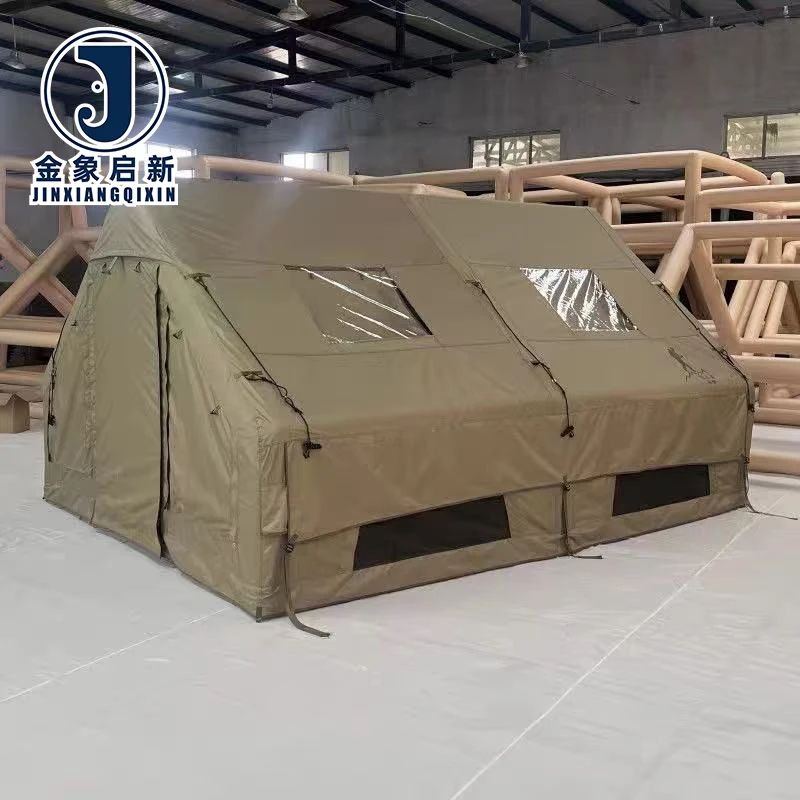
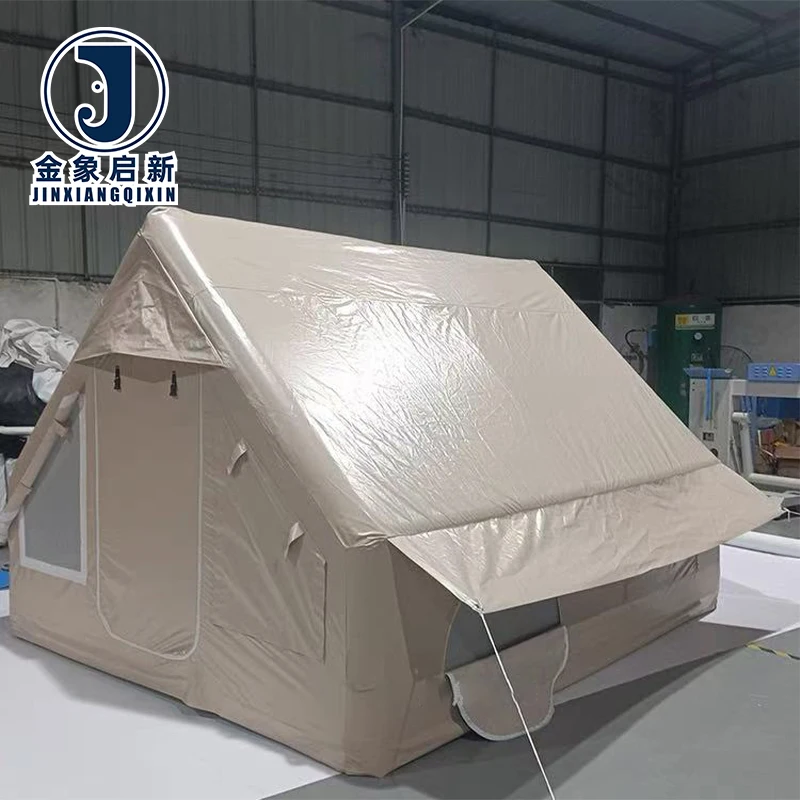
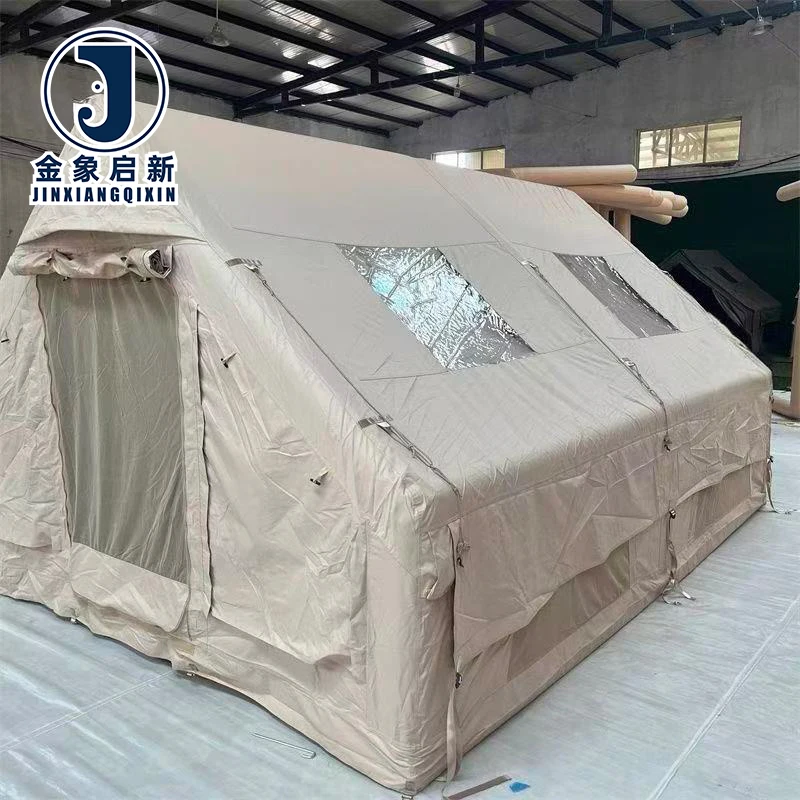
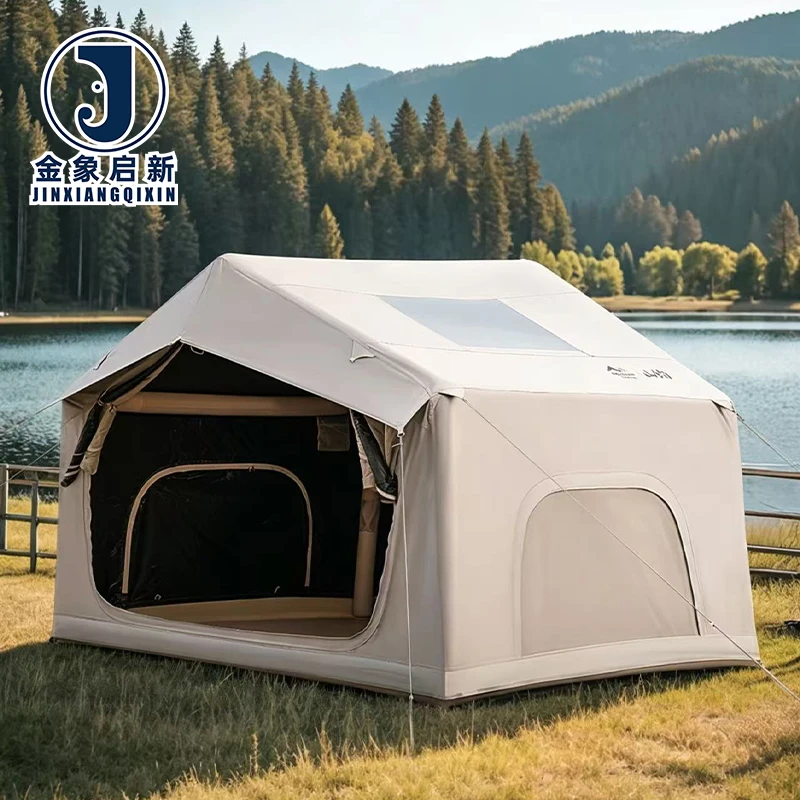
Inflatable Four-Season Event Tent — PVC knife-coated fabric with ≥300N tear resistance and ≥2000mm H₂O waterproof rating, quick automatic opening for rapid deployment.
- Four-season design engineered for frequent commercial setup cycles, with specialized door and window configurations matching event-specific requirements
- Custom Pantone color matching and logo printing within ±10% dimensional tolerance across batch runs
Supported by 10-person R&D team handling material selection and sample development, with 72-hour pressure retention testing documented at 16 checkpoints before dispatch.
Description
Custom-Engineered Inflation Chambers — nearly 30 years of PVC knife-coating expertise applied to inflatable event structures, with full process control from base fabric weaving through final pressure testing.
Technical Specifications
| Parameter | Value |
|---|---|
| Product Type | Inflatable Event Tent |
| Core Material | PVC Tarpaulin (knife-coated fabric) |
| Construction | Single Layer |
| Design Rating | Four-Season |
| Capacity | 6-8 Persons |
| Opening Mechanism | Quick Automatic Opening |
| Tensile Strength | ≥2500 N/5cm |
| Tear Strength | ≥300 N |
| Waterproof Rating | ≥2000 mm H₂O |
| UV Resistance | Rated for 500+ hours direct sunlight exposure |
| Customization | Logo printing (Pantone color matching), OEM & ODM, size adjustments within ±10% |
| Quality Control | 12-point production checks, 72-hour pressure retention test, 16 critical QA checkpoints |
| Certifications | ISO9001, ISO14001, ISO45001, CE |
Application Suitability
| Application | Exposure & Requirement |
|---|---|
| Outdoor festival and exhibition shelters | Repeated inflation/deflation cycles, wind load on seams, UV exposure during multi-day events |
| Trade show branded booth structures | Custom Pantone logo fidelity, frequent transport and redeployment, indoor fire classification compliance |
| Industrial site temporary shelters | Equipment protection from rain and dust, staff break areas requiring weather sealing, prolonged outdoor standing |
| Commercial promotional activations | Brand color consistency across multiple units, rapid deployment timelines, public safety documentation for venue approval |
| Construction site equipment storage | Abrasion from ground contact, waterproof integrity under continuous rain, tear resistance during relocation |
When Inflatable Chambers Fail Before the Event Starts
An inflatable event tent collapses not because the fabric tore, but because the welded seams holding the air chambers together could not survive repeated pressurization cycles.
Event operators discover mid-festival that the inflation tubes soften at the heat-welded joints, losing structural rigidity while the base fabric itself remains intact. The failure pattern is consistent: seam delamination concentrated at the bending radius where the chamber wall meets the floor panel, precisely where inflation pressure and mechanical flex overlap. Generic inflatable structures built from standard tarpaulin grades without engineered seam allowances show this weakness within the first few setup and teardown cycles. The cost is never just the tent — it is the disrupted event timeline, the relocated exhibitors, and the reputational damage that follows a public structure failure. [NEED_CITE: tensile and tear test methods for coated fabrics per ISO 1421]
Knife-Coated Fabric Selection for Pressurized Structures
The knife-coating process applied to this PVC tarpaulin drives liquid plastisol directly into the base fabric weave, filling interstitial gaps that would otherwise allow air migration through the chamber walls. For an inflatable event tent operating under continuous internal pressure, this coating penetration determines whether the structure holds shape over multi-day deployments or gradually sags between blower intervals. The single-layer construction reduces packed transport weight significantly compared to double-wall alternatives, while the ≥2000 mm H₂O waterproof rating keeps interior spaces dry during rain events common at outdoor festivals and trade shows.
Pantone-Matched Branding That Survives Transport and Storage
Custom logo printing on inflatable event structures faces a challenge that static signage never encounters: the printed surface flexes, folds, and compresses every time the unit deflates for storage. Pantone color matching at the pre-production sample stage ensures brand accuracy before the full production run begins, but the print adhesion to the PVC surface must withstand repeated mechanical stress without cracking or delamination. Size adjustments within ±10% of standard dimensions allow event organizers to fit structures into specific venue footprints, while specialized door and window configurations address ventilation and access requirements that vary between indoor exhibition halls and open-air festival grounds. [NEED_CITE: adhesion testing protocols for printed PVC coated fabrics]
Understanding the Strength Numbers Behind Inflation Integrity
Tensile strength rated at ≥2500 N/5cm and tear strength at ≥300 N define how the base fabric resists two fundamentally different failure modes under inflation pressure. Tensile strength governs the fabric’s behavior when the entire chamber wall is under uniform biaxial tension — the steady-state load during normal operation. Tear strength determines what happens when a localized puncture or cut initiates a propagating rip, which is the more common failure scenario on active event sites where ground debris and handling equipment contact the structure base. The knife-coated construction contributes to both values by bonding the PVC layer to individual yarns rather than sitting on the surface, distributing point loads across the woven base fabric rather than concentrating stress at the coating-to-fabric interface.
The Hidden Cost of Skipping Pre-Shipment Pressure Verification
Inflatable structures that leave the factory without extended pressure retention testing reveal chamber leaks only when the blower is connected on-site, hours before an event opens to the public. A 72-hour continuous inflation test catches slow leaks at welded seams, valve interfaces, and floor-to-wall junctions that a brief factory check would miss entirely. Event operators who accept inflatable tents without documented pressure test records assume the risk of discovering chamber failures during setup rather than during production, when corrections still cost days instead of lost revenue. Batch-specific quality inspection reports covering tensile, tear, and waterproof performance provide the verification layer that separates engineered inflatable structures from commodity products assembled without measurable quality gates. [NEED_CITE: field failure rates for inflatable temporary structures without pre-shipment testing]
Why Procurement Teams Source Inflatable Event Structures Here
Three full production lines and 36 sets of professional equipment support the volume and scheduling reliability that event procurement cycles demand, particularly when multiple branded units are needed for touring activations across regions. A 10-person R&D team handles material selection, Pantone color formulation, and custom door or window configurations, producing pre-production samples within seven business days for buyer approval before the bulk run commits. Dedicated QA and QC staff execute 12-point production inspections and 16 documented checkpoints, ensuring the 72-hour pressure retention test is performed on every unit rather than sampled from a batch. The ISO9001, ISO14001, ISO45001, and CE certification framework provides venue compliance documentation that event safety officers require before approving temporary structures for public access.
Documentation & Verification
- Material specification sheet stating base fabric type, coating method, and weight verification per unit
- Tensile and tear strength test results from batch-specific quality inspection included with every shipment
- Waterproof rating test record confirming ≥2000 mm H₂O performance for venue safety submissions
- Pre-production sample approval document covering Pantone color match and custom dimension sign-off
- ISO9001, ISO14001, ISO45001, and CE certificates available for regulatory and venue compliance packages
- 72-hour pressure retention test log documenting chamber integrity verification before dispatch
Fabrication, Handling & Storage
- Heat-weld seams using temperature and dwell settings matched to the knife-coated PVC thickness for consistent peel strength
- Store deflated units flat or loosely rolled to prevent permanent crease marks on the single-layer PVC surface
- Clean with neutral pH detergents only; solvents degrade the PVC coating and compromise waterproof integrity
- Allow full drying before long-term storage to prevent mildew formation between folded PVC layers
- Inspect welded chamber seams before each redeployment for early signs of delamination at high-flex junctions
- Repair minor punctures with PVC-compatible adhesive patches applied to clean, dry fabric surfaces
Before You Request a Quote
Provide the intended deployment environment — outdoor festival ground, indoor exhibition hall, or industrial site — along with expected inflation frequency and transport cycle counts. Specify Pantone color references and logo placement requirements if branded units are needed, and confirm whether venue fire classification documentation will be required for local authority approval. Share target dimensions and any specialized door, window, or partition configurations so the pre-production sample reflects the final production specification accurately.
Frequently Asked Questions
Q: How accurate is Pantone color matching for custom logo printing on inflatable tents?
A: Color formulation is prepared against the specified Pantone reference and applied to a pre-production sample for buyer approval before bulk production begins. This sample stage confirms both the printed logo accuracy and the base fabric color under the lighting conditions representative of the event environment, eliminating batch-to-batch variation across multiple units.
Q: What size tolerance applies to custom inflatable event tent dimensions?
A: Size adjustments are available within ±10% of standard dimensions, with specialized door and window configurations engineered to the specified layout. The pre-production sample confirms dimensional accuracy and chamber geometry before the full order enters production, ensuring the delivered units match the venue footprint requirements.
Q: How is UV resistance verified for prolonged outdoor event deployments?
A: The PVC tarpaulin is rated for 500+ hours of direct sunlight exposure based on the material specification. For events requiring extended outdoor standing across multiple seasons, confirm the specific UV test basis applicable to your regional market and request the corresponding test documentation with your shipment.
Q: What documentation supports venue safety approval for inflatable structures?
A: ISO9001, ISO14001, ISO45001, and CE certification documents are available alongside batch-specific quality inspection reports covering tensile strength, tear resistance, and waterproof performance. These records satisfy the documentation requirements that venue safety officers and local authorities typically request before approving temporary inflatable structures for public use.
Q: What are the lead times for custom inflatable event tent orders?
A: Pre-production samples are developed within seven business days for material, color, and dimension approval. Custom production orders carry a 45-day lead time from sample sign-off, with weekly production updates provided by a dedicated account manager through to pre-dispatch coordination and third-party inspection arrangement if required.
Related products
-
Inflatable PVC Camping Tent Four-Season Waterproof CE Certified Quick Automatic Opening 3000mm+ Factory Direct Sale
Read more -
Inflatable Tent Four-Season Quick Automatic Opening PVC 3000mm Waterproof Foldable Eco-Friendly 2-3/3-4/6-8 Person Outdoor Use
Read more -
Luxus PVC Aufblasbares Zelt für Glamping Outdoor, wasserdicht, mit schnellem automatischem Aufbau, vierjahreszeitentauglichem faltbarem Design und Pumpe
Read more -
Outdoor Portable Camping Inflatable Tent Luxury All-Season Use Overnight Large Space Rainproof Insulated Quick Automatic Opening
Read more