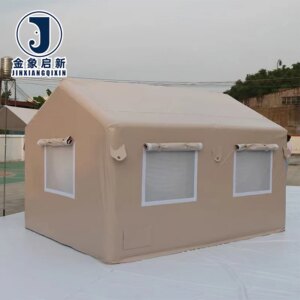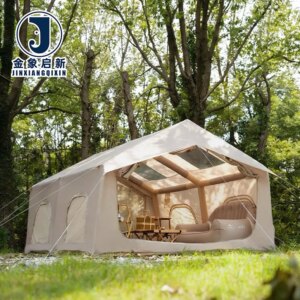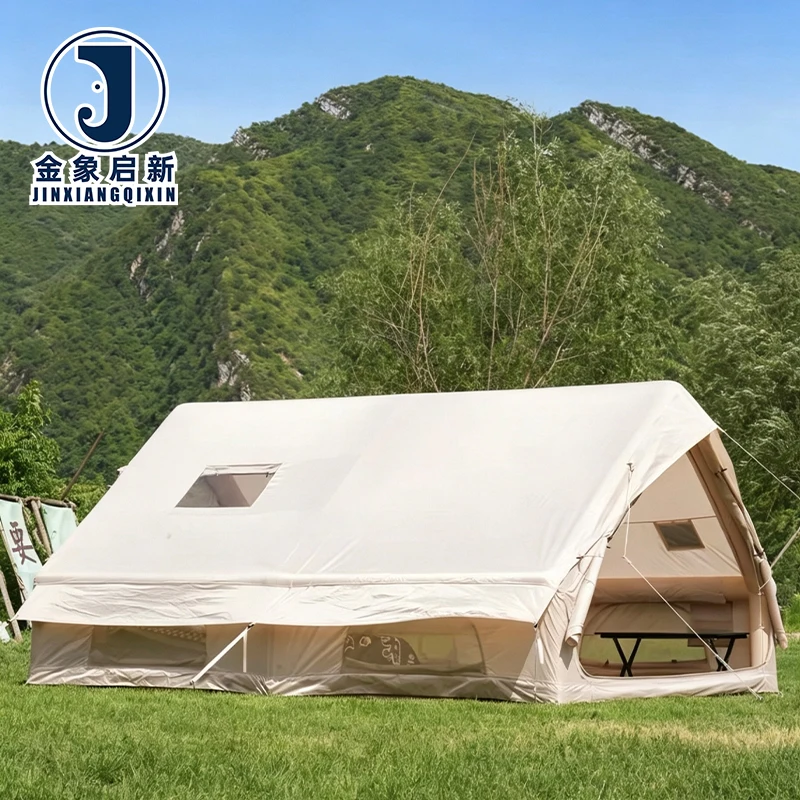
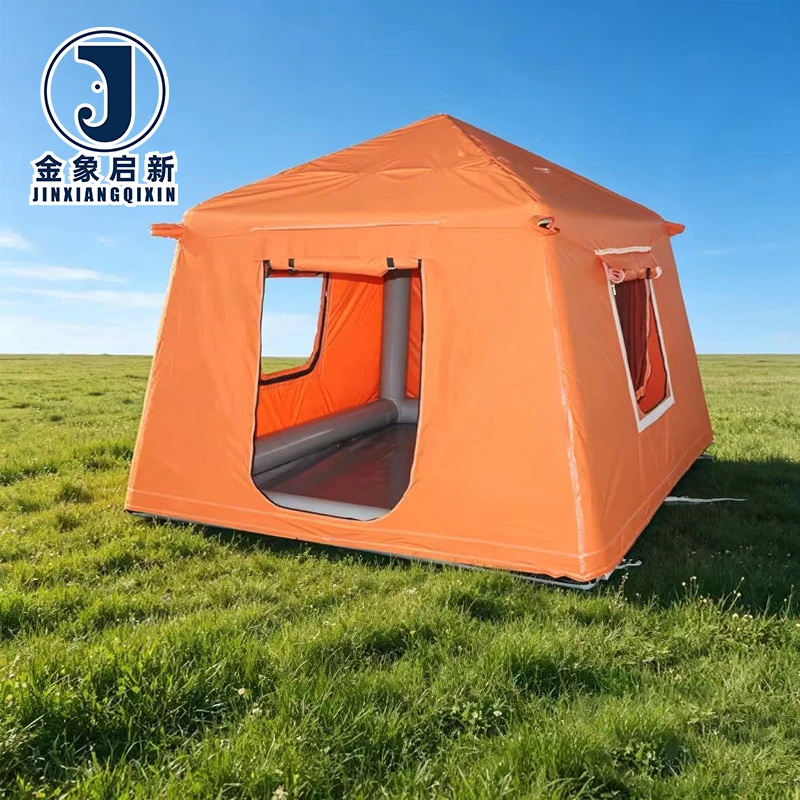
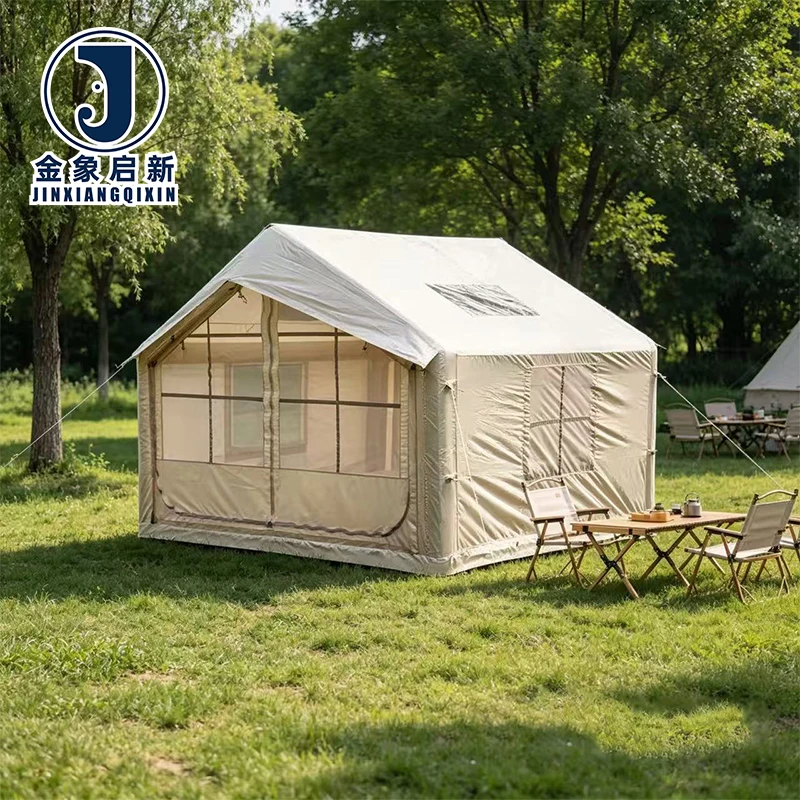
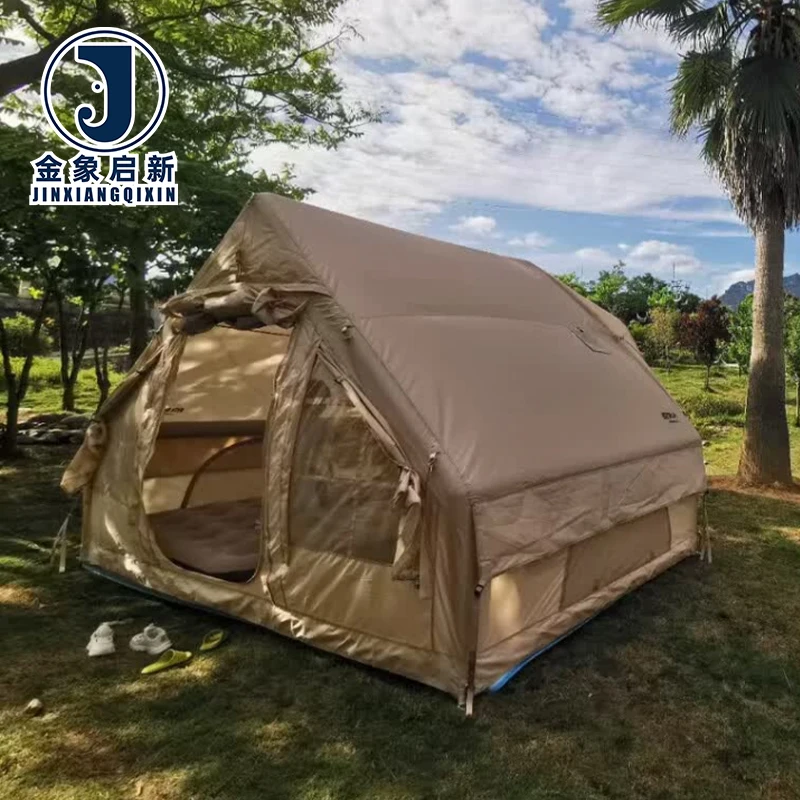
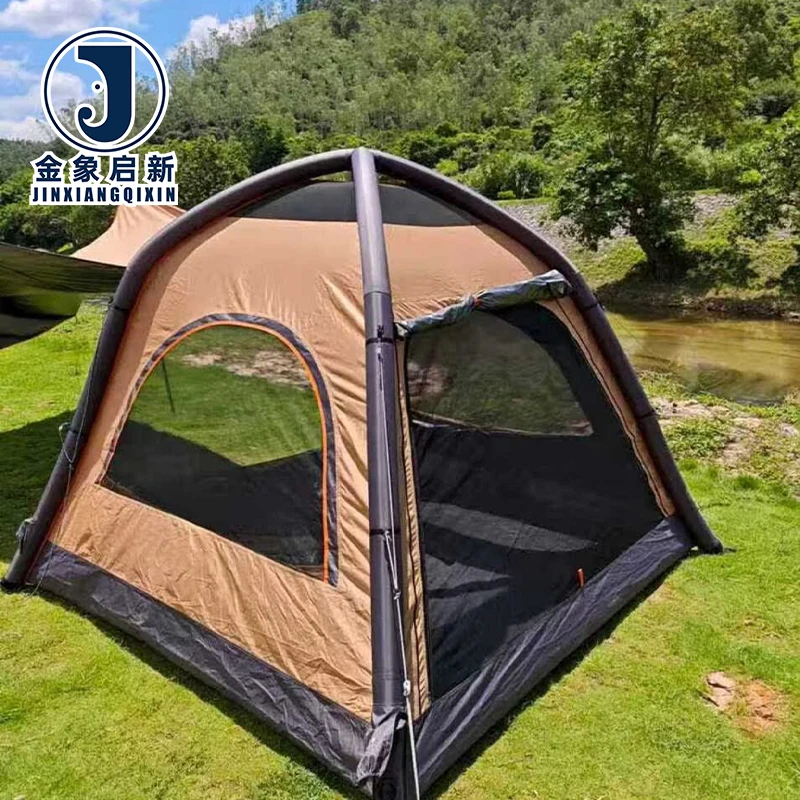
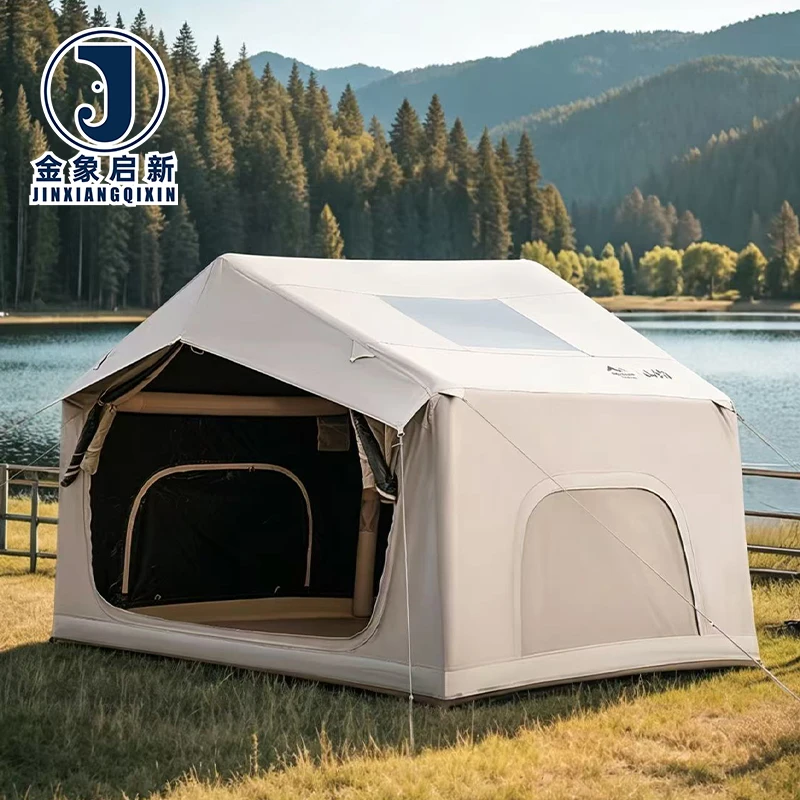
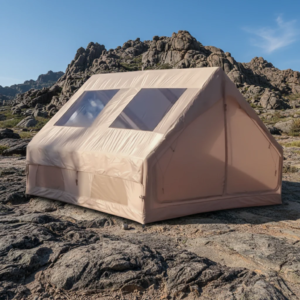
Inflatable Camping Tent — PVC knife-coated tarpaulin, four-season, heat-sealed seams. Engineered for commercial outdoor equipment manufacturers seeking verified fabric performance. Knife-coated construction delivers superior peel strength and reliable heat-welding at seams, maintaining air-tight integrity under prolonged inflation. Fire-retardant treatment to EN 13501-1 ensures site safety compliance. Supported by a 10-person R&D team, 100% pre-shipment inspection, and rapid sample development for custom sizing and pattern printing.
Description
Specialist coating process control — Three full production lines and 36 sets of processing equipment deliver verified batch consistency for inflatable tent fabric orders, with dedicated QA at every coating and finishing stage.
Technical Specifications
| Parameter | Value |
|---|---|
| Product Type | Inflatable Tent |
| Core Material | PVC Tarpaulin (knife-coated fabric) |
| Product Category | PVC Tent |
| Key Performance | Waterproof, UV-resistant, Tear-resistant, Fire-retardant, Anti-static |
| Product Forms | Inflatable structure, 2-3 person capacity |
| Waterproof Rating | ≥5000mm H₂O (source value — verify against manufacturer catalog) |
| Tensile Strength | ≥2000N/5cm (source value — verify against manufacturer catalog) |
| Seam Construction | Heat-sealed seams |
| Fire-retardant Standard | EN 13501-1 (source value — verify against manufacturer catalog) |
| Deployment Mechanism | Quick automatic opening |
| Season Rating | Four-season |
| Customization Service | OEM & ODM (sample customization, pattern printing) |
| Quality Control | 100% inflation test for 72 hours; 0.5% destructive testing per batch; 24-point pre-shipment inspection |
| Thickness Tolerance | ±5% (source value — verify against manufacturer catalog) |
| Certifications | ISO 9001, ISO 14001, ISO 45001, CE |
Application Suitability
| Application | Exposure & Requirement |
|---|---|
| Commercial outdoor equipment manufacturing | Branded product lines demanding batch-to-batch colour consistency, repeatable seam integrity under inflation pressure, and verified fire-retardant compliance for retail distribution |
| Industrial event and site accommodation | Rapid deployment in variable weather, sustained inflation loads, wind-driven rain, abrasion from ground contact and repeated pack/unpack cycles |
| Emergency response training scenarios | All-weather reliability under field conditions, certified fire performance for enclosed occupied spaces, quick setup and teardown across multiple deployment sites |
Why Fabric Consistency Determines Inflatable Tent Reliability
Batch-to-batch variation in coating weight and seam adhesion is the primary cause of field failures in inflatable tent structures.
When sourcing custom Inflatable Camping Tent PVC, buyers routinely encounter material that meets the quoted GSM on paper but arrives lighter, with seams that fail under sustained inflation pressure before the fabric itself shows wear. Colour shifts between production rolls become visible once panels are joined side by side on a finished inflatable tent. These inconsistencies do not surface in sample approvals — they emerge during bulk production or, worse, after the product reaches the end user. An Inflatable Tent Fabric manufacturer must demonstrate process control at the coating, lamination, and heat-sealing stages, not merely quote a specification sheet. [NEED_CITE: tensile and tear test methods for coated fabrics per ISO 1421]
Knife-Coated PVC Construction for Inflatable Structures
The knife-coated PVC fabric used in this Inflatable Camping Tent PVC delivers a continuous coating layer bonded directly to the base fabric, producing a uniform surface that supports consistent heat-sealed seams across the entire inflatable structure. This coating method ensures the material maintains dimensional stability under inflation pressure, which is critical for maintaining the geometry of air-beam tent designs.
Heat-Sealed Seam Integrity Under Inflation Load
Heat-sealed seams on this inflatable tent fabric are engineered to match or exceed the base material strength, addressing a common failure point where welded joints separate under cyclic inflation and deflation. The 100% inflation test over 72 hours verifies seam continuity before any unit ships, catching potential leak paths that shorter spot checks would miss. Commercial outdoor equipment manufacturers require this level of verification to protect brand reputation in retail channels. [NEED_CITE: EN 13501-1 fire classification requirements for temporary structures]
Reading the Specification Sheet Beyond Surface Numbers
Tensile strength and tear resistance in PVC-coated fabrics depend on the interaction between base fabric denier, weave density, and coating adhesion — not on GSM alone. A heavier coating does not automatically produce a stronger material if the base fabric is loosely woven. Knife coating produces higher peel strength than lamination methods, which directly influences how well heat-sealed seams hold under the sustained internal pressure of an inflatable tent. The EN 13501-1 fire-retardant classification available on this material aligns with building material safety codes required for occupied temporary structures in many European and international markets. Anti-static treatment reduces dust accumulation on the fabric surface, which matters for inflatable tents deployed in dry or industrial environments where particulate buildup affects appearance and cleaning frequency. Thickness tolerance of ±5% ensures predictable behaviour during heat-sealing operations, where inconsistent material thickness leads to uneven weld quality.
What Happens When Specifications Are Not Verified
An inflatable tent fabric that tests within tolerance on a sample roll can behave differently across a bulk order if coating weight and base fabric sourcing are not controlled at every production stage. Seams that pass initial pressure testing may degrade after repeated inflation cycles when the coating adhesion is marginal. Colour inconsistency across rolls forces fabricators to sort and match panels manually, adding labour cost and delaying production schedules. Fire-retardant claims unsupported by a batch-specific test report create compliance risk when the finished inflatable tent is inspected at an event site or commercial venue. These consequences compound when the fabricator has already committed to tooling and production timelines based on sample approval. [NEED_CITE: ISO 1421 test methods for coated fabric tensile and tear properties]
Production Capability Behind Every Roll
Nearly 30 years of focus on coated fabric gives this Inflatable Tent Fabric manufacturer deep process knowledge in controlling coating weight and adhesion for inflatable structure applications. Three full production lines and 36 sets of professional equipment support the volume requirements of commercial outdoor equipment manufacturers without sacrificing batch-to-batch consistency. A 10-person R&D team handles material selection, custom sizing, pattern printing, and sample development — enabling OEM and ODM projects to move from specification to approved sample within days. The 24-point pre-shipment inspection and 0.5% destructive testing per batch catch defects that visual inspection alone cannot identify. Dedicated QA at every production stage, from base fabric intake through coating, finishing, and packing, ensures the inflatable tent fabric you receive matches the specification you approved.
Documentation & Verification
- Material specification sheet stating base fabric, PVC coating method, and waterproof rating for each inflatable tent order
- Batch-specific quality inspection report with tensile strength and flame retardancy results per EN 13501-1
- Pre-shipment inspection record covering seam integrity, valve functionality, and surface finish
- ISO 9001, ISO 14001, ISO 45001, and CE certificates confirming manufacturing compliance
- Roll packing list with weight and dimension data supporting container load planning
Fabrication, Handling & Storage
- Heat-seal temperature and dwell time must be calibrated to the knife-coated PVC thickness tolerance of ±5% to ensure consistent weld quality across all seams
- Store rolls upright in a climate-controlled environment to prevent permanent creasing in the PVC coating that transfers to finished inflatable tent panels
- Use compatible PVC adhesives for field repairs, matching the knife-coated surface chemistry for reliable bond strength
- Clean the anti-static treated surface with mild detergent only — solvent-based cleaners may degrade the treatment and fire-retardant finish
- Plan cutting layouts to maximize yield from the supplied roll width, minimizing heat-sealed joints in high-stress areas of the inflatable structure
Preparing Your Inflatable Tent Fabric Inquiry
Share the inflation pressure requirements, expected deployment frequency, and target market fire safety codes so we can recommend the correct material grade and fire-retardant specification. Specify any custom sizing, colour matching, or pattern printing requirements for your branded inflatable tent product line. Indicate whether you need finished inflatable structures or roll stock for your own fabrication facility, along with estimated annual volume to support production planning.
Frequently Asked Questions
Q: What GSM and fabric weight options are available for custom inflatable tent production?
A: This inflatable tent fabric is produced in multiple weight grades suited to different inflation pressures and structural demands. The appropriate GSM depends on your tent design, air-beam diameter, and expected wind loading. Submit your design specifications and we will recommend the optimal weight grade with a sample roll for your seam testing and validation.
Q: Can fire-retardant and anti-static treatments be combined on the same material?
A: Yes, fire-retardant treatment to EN 13501-1 and anti-static surface treatment can be applied together on the same PVC inflatable tent fabric. Confirm the specific fire safety code required by your target market so we can verify grade compliance and provide the corresponding batch test report with your shipment documentation.
Q: What certification documentation ships with each inflatable tent fabric batch?
A: Every batch ships with ISO 9001, ISO 14001, ISO 45001, and CE certificates, along with a batch-specific quality inspection report covering tensile strength, fire-retardant performance, and seam integrity results. A pre-shipment inspection record and material specification sheet are included for your records and compliance submissions.
Q: How are custom sizes, colours and pattern printing handled for bulk inflatable tent orders?
A: OEM and ODM customization includes custom sizing, colour matching, and pattern printing applied during production. Batch colour consistency is controlled across the entire order quantity. Sample development is completed within days for your approval before bulk production begins, ensuring the finished inflatable tent fabric matches your brand specifications.
Q: What is the sample development timeline before bulk production begins?
A: Sample development for custom inflatable tent specifications — including material grade, colour, sizing, and printing — is completed rapidly by the 10-person R&D team. Once you confirm application requirements and target market compliance needs, samples are produced for your evaluation and seam testing prior to full production commitment.
Related products
-
Camping Tent Inflatable UV Resistant Customizable Four-season Waterproof PVC Eco-Friendly Windproof Foldable Quick Automatic
Read more -
Luxury Inflatable Tent for Glamping Outdoor Waterproof Air Tent with Pump
Read more -
Outdoor Portable Camping Inflatable Tent Luxury All-Season Use Overnight Large Space Rainproof Insulated Quick Automatic Opening
Read more -
High Quality Four-Season Inflatable Tent for Camping Durable PVC Material All-Weather Resistance Quick Automatic Opening
Read more