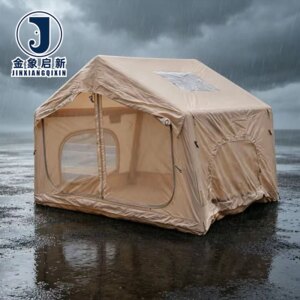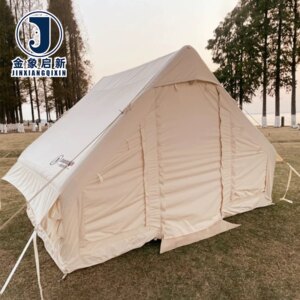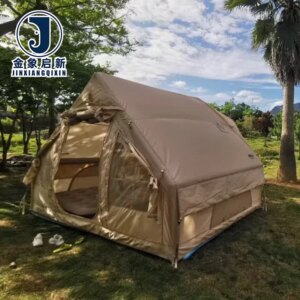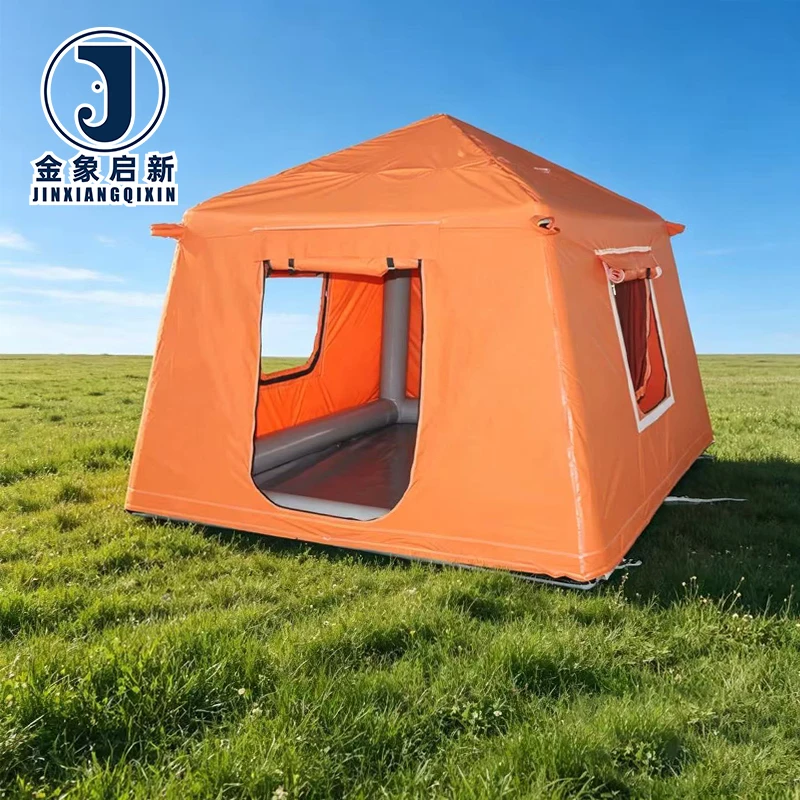
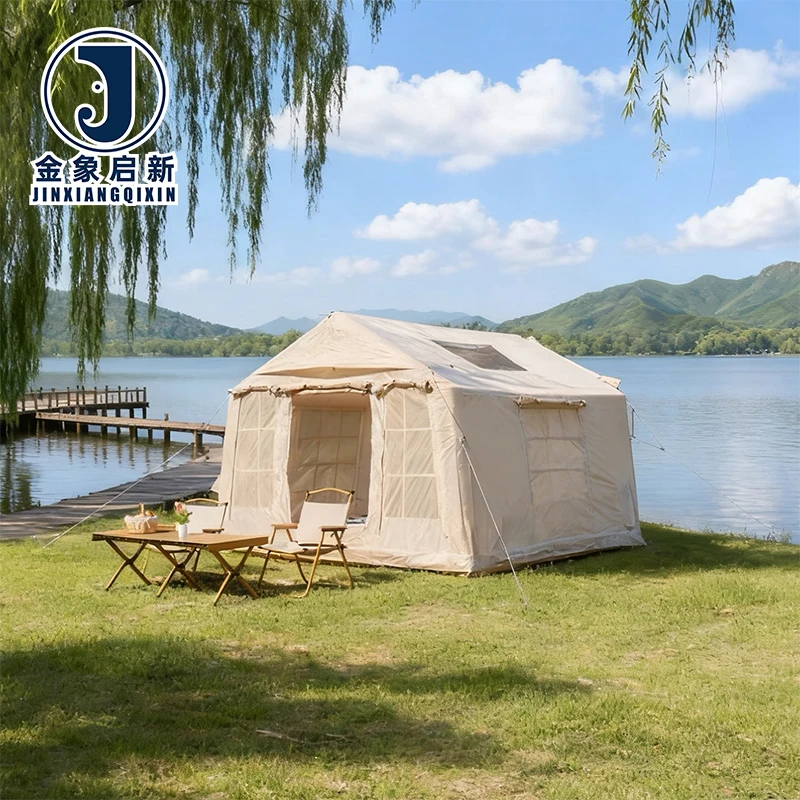
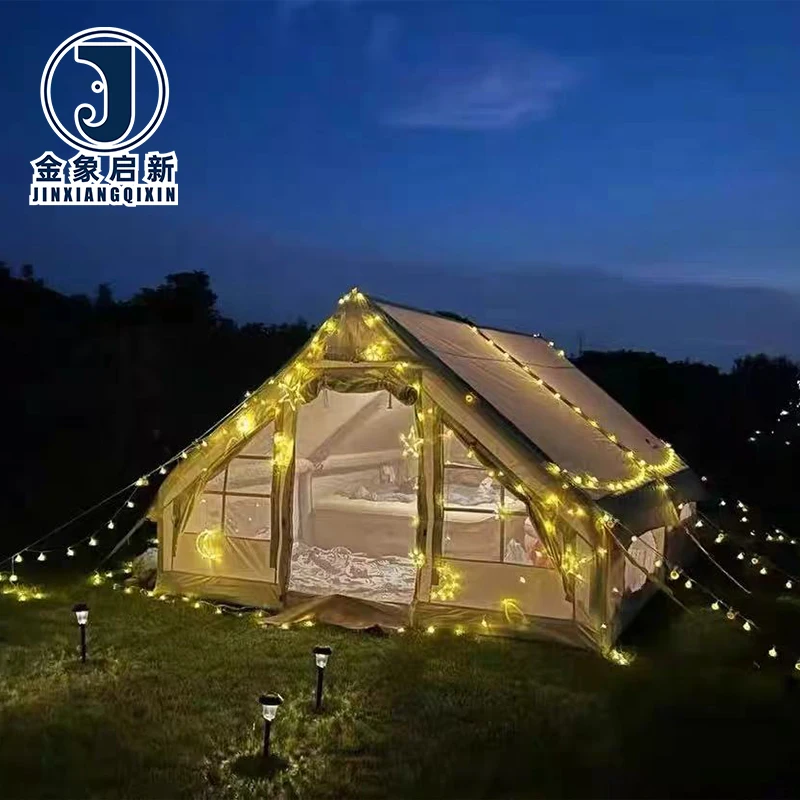
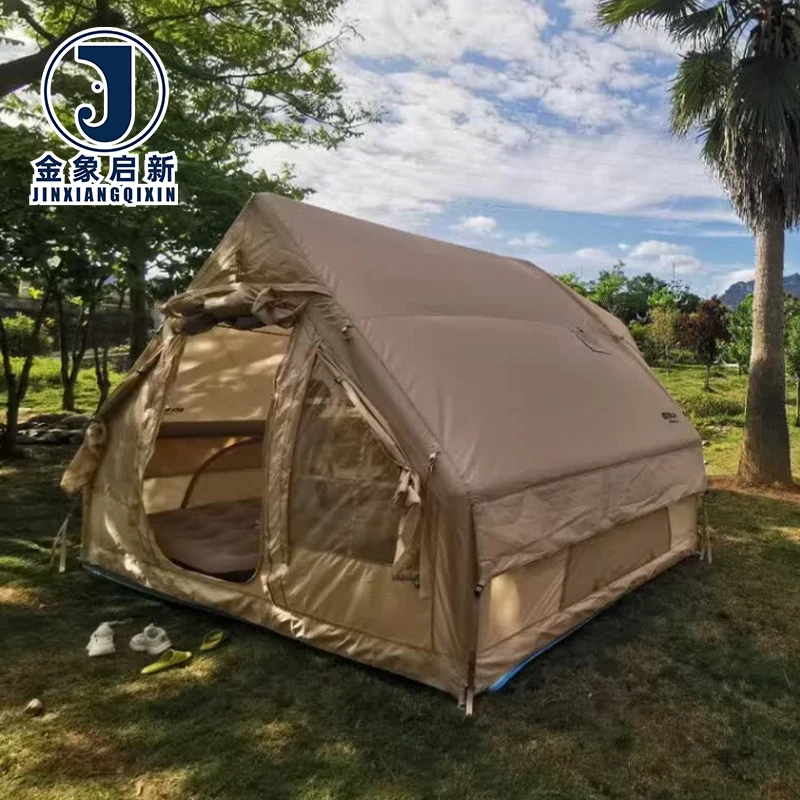
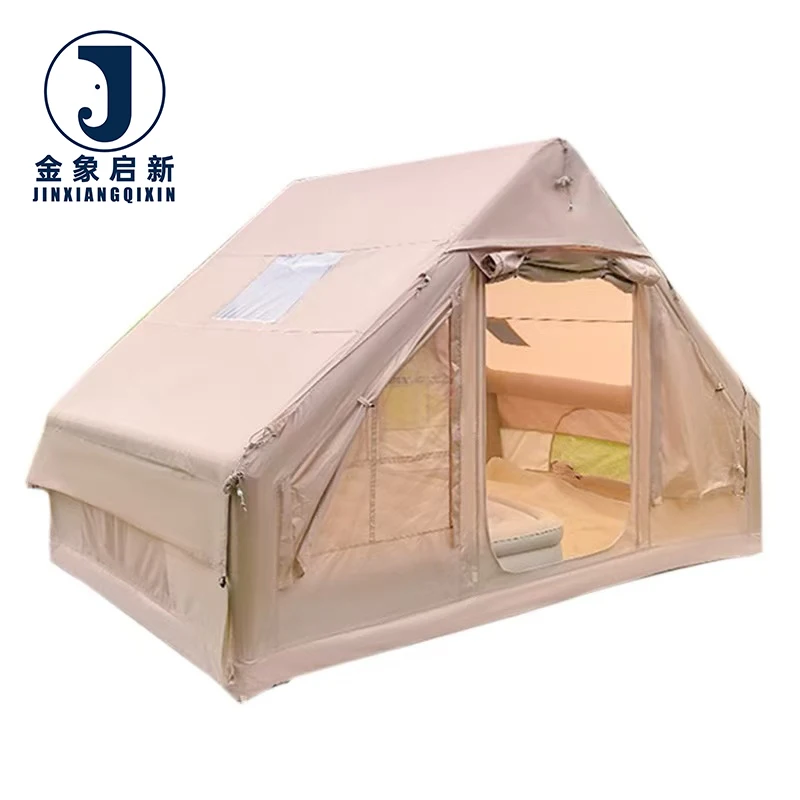
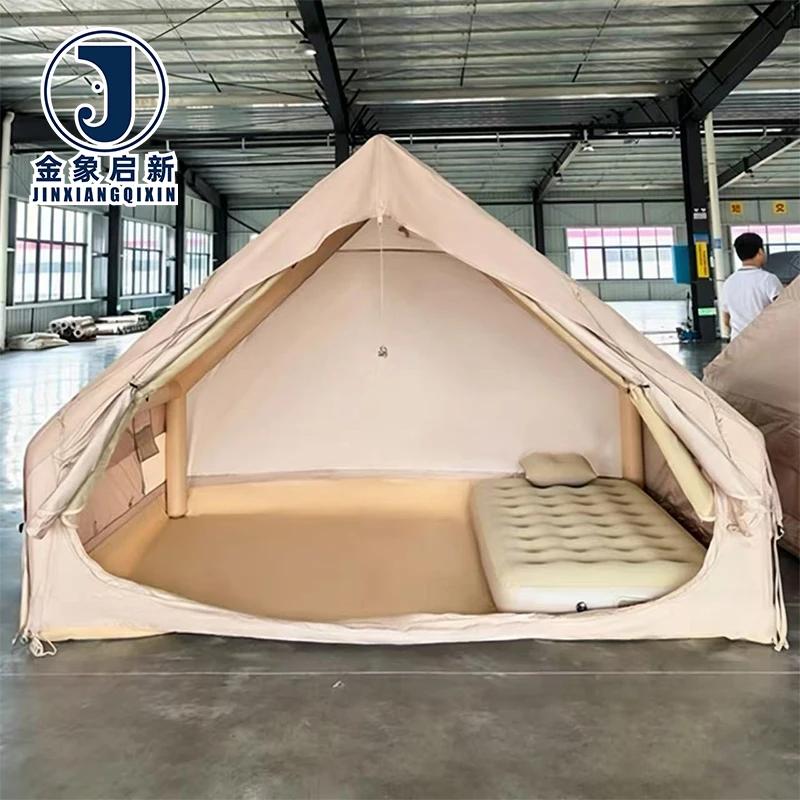
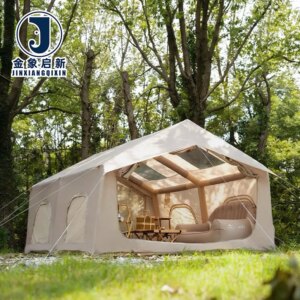
Portable Inflatable Camping Tent, 5-8 Person, 420D Oxford Cloth — quick automatic opening with airtight inflatable frame for stable pressure retention and rapid commercial setup.
- Waterproof and UV-resistant coating supports prolonged outdoor deployment
- Full OEM/ODM customisation on size, colour, pattern printing and branding
- Designed for event shelters, crew accommodation and mobile exhibition spaces
Material spec sheet, batch test reports and pre-shipment pressure inspection records ship with every order, backed by 36 sets of professional processing equipment ensuring consistent output.
Description
Deep Process Control — Nearly 30 years of coating expertise ensures every roll of inflatable tent fabric meets exacting material specs before dispatch.
Technical Specifications
| Parameter | Value |
|---|---|
| Product Type | Inflatable Tent Fabric |
| Base Fabric | 420D Oxford Cloth |
| Capacity | 5-8 Person |
| Waterproof Rating | ≥2000mm water pressure resistance |
| UV Treatment | Anti-UV additives (test basis not stated in source) |
| Airtightness | ≤0.2bar pressure loss per 24 hours |
| Tensile Strength | ≥300N/5cm (test standard not stated in source) |
| Key Features | Quick automatic opening, full custom sizing, pattern printing |
| Certifications | ISO 9001, ISO 14001, ISO 45001, CE |
Application Suitability
| Application | Exposure & Requirement |
|---|---|
| Outdoor event management | Rapid deployment, high-visibility branding, frequent packing/unpacking |
| Temporary site accommodation | Continuous occupation, weather exposure, ground moisture |
| Mobile exhibition spaces | Frequent transport, indoor/outdoor transitions, corporate branding |
| Emergency response shelters | Rapid inflation, harsh weather, rugged terrain abrasion |
| Industrial fieldwork bases | Remote logistics, dust and debris exposure, multi-week deployment |
When the Fabric Fails Before the Frame Does
An inflatable structure is only as reliable as the seams holding its air chambers together. Coated fabric that lacks consistent adhesion will delaminate at the weld line long before the base cloth reaches its tensile limit.
Buyers often focus on base fabric denier and assume that a higher number guarantees structural integrity. In practice, coating weight distribution, surface preparation, and thermal bonding parameters determine whether a welded seam survives repeated inflation cycles [NEED_CITE: tensile and tear test methods for coated fabrics per ISO 1421]. I have seen heavy-grade coated rolls fail at the weld line while lighter, more evenly coated fabrics hold pressure through hundreds of setup cycles. For an Inflatable Tent manufacturer, controlling the interface between coating and base yarn is where product life is won or lost.
Coating Adhesion Determines Inflatable Lifespan
The 420D Oxford Cloth base provides the tensile skeleton, but the coating is what makes it an airtight, waterproof membrane. When coating penetration into the weave is uneven, hot-air welding creates pockets of incomplete fusion. These micro-gaps become leak paths under sustained chamber pressure. Our Inflatable Tent manufacturer process controls coating weight at every stage, ensuring uniform thickness that supports consistent thermal bonding across the entire roll.
Airtightness Is a System, Not a Single Number
A specification of ≤0.2bar pressure loss per 24 hours tells you the chamber holds air, but it does not tell you where that loss occurs. Is it the valve, the zipper seal, or a slow weep through a poorly welded cross-seam? We test inflated structures continuously and log pressure readings at intervals, mapping loss to specific seam junctions [NEED_CITE: airtightness testing protocols for inflatable structures]. This diagnostic approach means corrective action happens during production, not after the tent reaches your site.
How Base Fabric Denier and Coating Weight Interact
The 420D denier rating describes the linear mass of the yarn, not the finished fabric strength in isolation. Tensile performance emerges from the combination of yarn count, weave density, and coating penetration depth. A tightly woven 420D base with insufficient coating will show high bare-fabric tensile numbers but poor tear propagation resistance once a nick occurs in the field. Conversely, a heavily coated lighter base may resist puncture but lack the structural stiffness an inflatable chamber needs to hold its geometry under wind load. Buyers should evaluate both values together rather than treating denier as a standalone ranking.
The Hidden Cost of Batch-to-Batch Colour Drift
Ordering inflatable tents for a branded event series or a fleet of emergency shelters means every unit may be deployed side by side. When colour varies between rolls in the same shipment, the mismatch becomes obvious once the structures are inflated and photographed [NEED_CITE: colour consistency standards for coated textile batches]. Rework is expensive and time-pressure on event schedules leaves no room for re-delivery. Controlling pigment dosing and coating temperature within tight tolerances across every production run is the only way to ensure visual uniformity at scale.
Why Procurement Teams Source Inflatable Tent Fabric Here
Our three full production lines and 36 sets of professional equipment support volume runs without sacrificing coating consistency across batches. A dedicated 10-person R&D team handles material selection, pattern printing layouts, and custom chamber geometry for OEM projects. Every roll undergoes in-process quality checks, and 100% pre-shipment inspection includes inflated pressure testing on finished structures. ISO 9001, ISO 14001, ISO 45001, and CE certification underpin our production documentation, and sample development for custom requirements is completed within days rather than weeks.
Documentation & Verification
- Material specification sheet stating 420D base fabric, coating type, and waterproof rating
- Batch-specific test record for water pressure resistance at ≥2000mm
- Pre-shipment 24-hour inflated pressure test log for each finished unit
- ISO 9001, ISO 14001, ISO 45001, and CE certificates included with every dispatch
- Complete production traceability records stored for five years post-shipment
Fabrication, Handling & Storage
- Hot-air welding temperature must match 420D Oxford Cloth coating formulation to prevent delamination at chamber seams
- Store rolled fabric vertically on pallets to avoid permanent crease marks that weaken the coating layer
- Allow cold-stored rolls to reach ambient temperature before unrolling to prevent coating micro-cracking
- Use mild detergent for field cleaning; abrasive solvents degrade the waterproof coating surface over time
- Field repairs require compatible PVC or PU patch adhesive matched to the original coating chemistry
Specify Your Inflatable Tent Requirements
To move from inquiry to sample, share your deployment environment, expected wind and weather exposure, and any branding or colour matching requirements. Let us know the target dimensions, chamber layout preferences, and whether you need finished structures or fabric rolls for your own fabrication line. If your market requires specific fire safety or compliance documentation, state the applicable standard so we confirm availability before sampling.
Frequently Asked Questions
Q: What material specifications can be customised for inflatable tents?
A: We accommodate custom sizing, chamber geometry, colour matching, and pattern printing on 420D Oxford Cloth. OEM and ODM projects begin with a specification review and sample development phase, allowing you to confirm fabric hand-feel, coating finish, and print clarity before committing to a production run.
Q: How is batch colour and coating consistency controlled across a large order?
A: Pigment dosing and coating temperature are held within tight tolerances for every production run. Pre-shipment inspection includes visual comparison against approved reference samples under standardised lighting, ensuring rolls and finished units match across your entire order quantity.
Q: What documentation ships with each batch for compliance?
A: Every shipment includes a material specification sheet, batch test records, 24-hour inflated pressure test results, and ISO and CE certificates. These documents support customs clearance and on-site compliance verification without requiring follow-up requests after delivery.
Q: What is the sample development lead time for custom size or print?
A: Sample development for custom dimensions, colours, or printed branding is typically completed within days once specifications are confirmed. This allows buyers to validate material performance and visual appearance before authorising full production quantities.
Q: How are welded seams tested before shipment?
A: Finished inflatable structures undergo a continuous 24-hour inflation test with pressure readings logged at intervals. Any seam showing pressure loss beyond acceptable thresholds is identified, reworked, and retested before the unit is cleared for packing and dispatch.
Related products
-
Inflatable Camping Tent Waterproof PVC Outdoor Air Tent Easy Setup Family Camping Shelter
Read more -
Premium Four-season PVC Inflatable Tents for Camping Easy-to-Use Spacious Portable Waterproof Outdoor Tent with Pump
Read more -
Aufblasbares Vier-Jahreszeiten-Event-Zelt Outdoor Wasserdicht PVC Schnelles automatisches Öffnen 6-8 Personen Individuelles Logo
Read more -
Camping Tent Inflatable UV Resistant Customizable Four-season Waterproof PVC Quick Automatic Opening 2-3 Person Outdoor
Read more