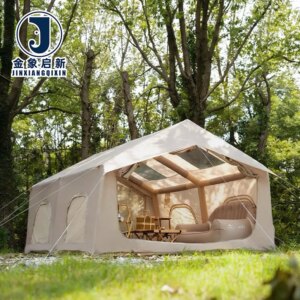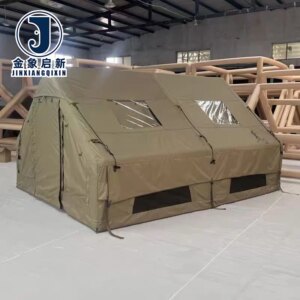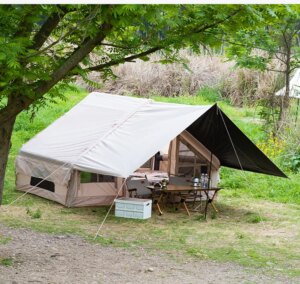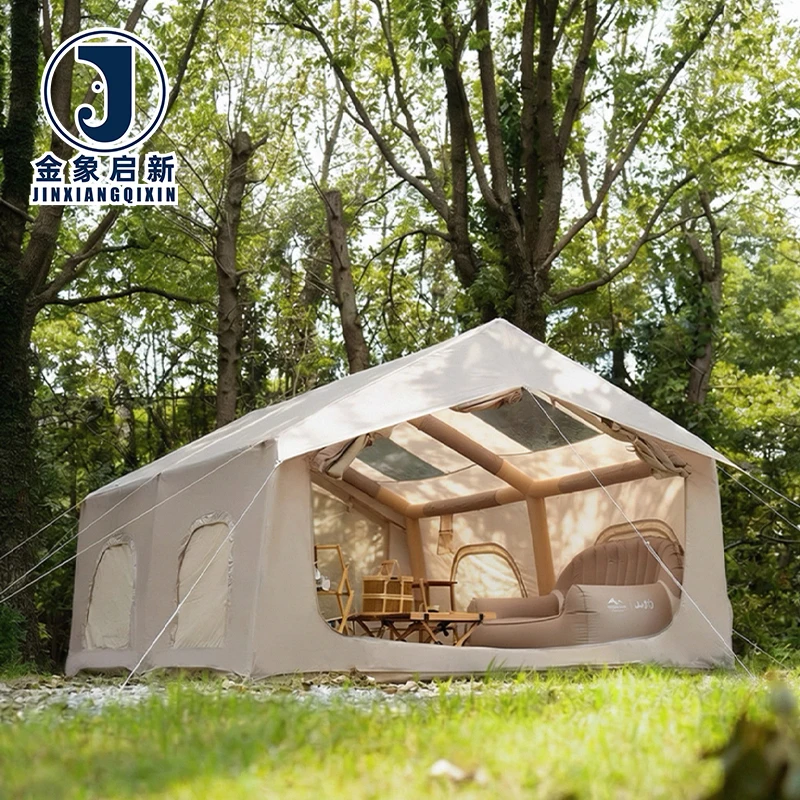
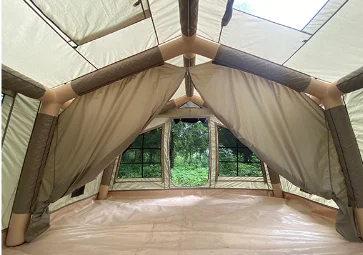
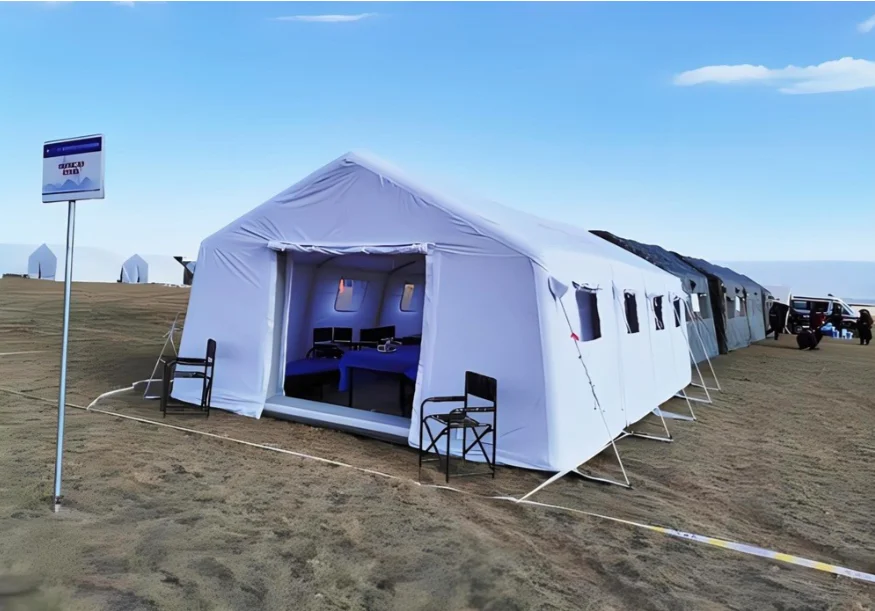
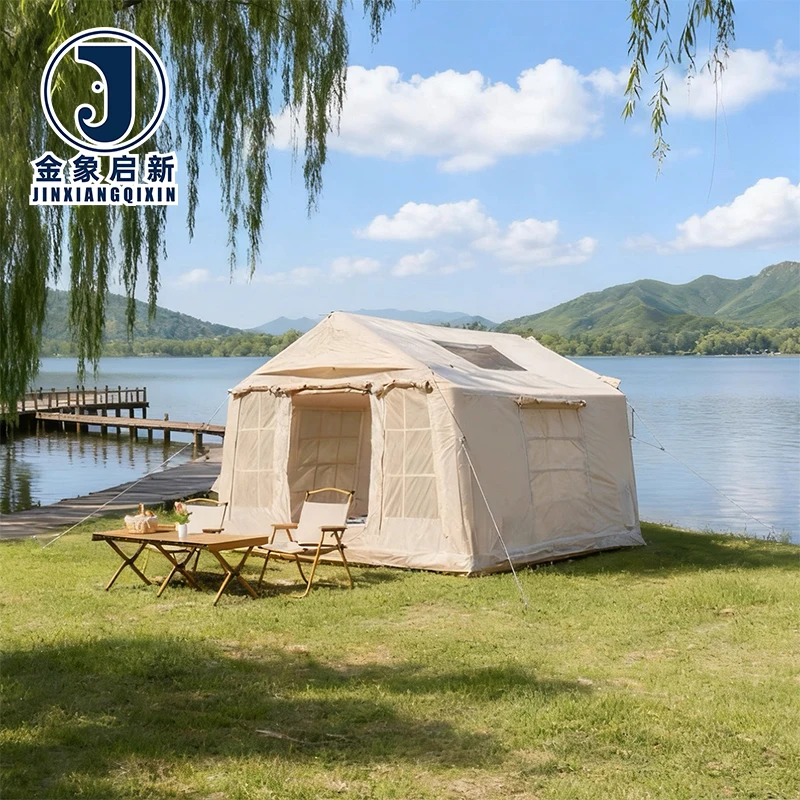
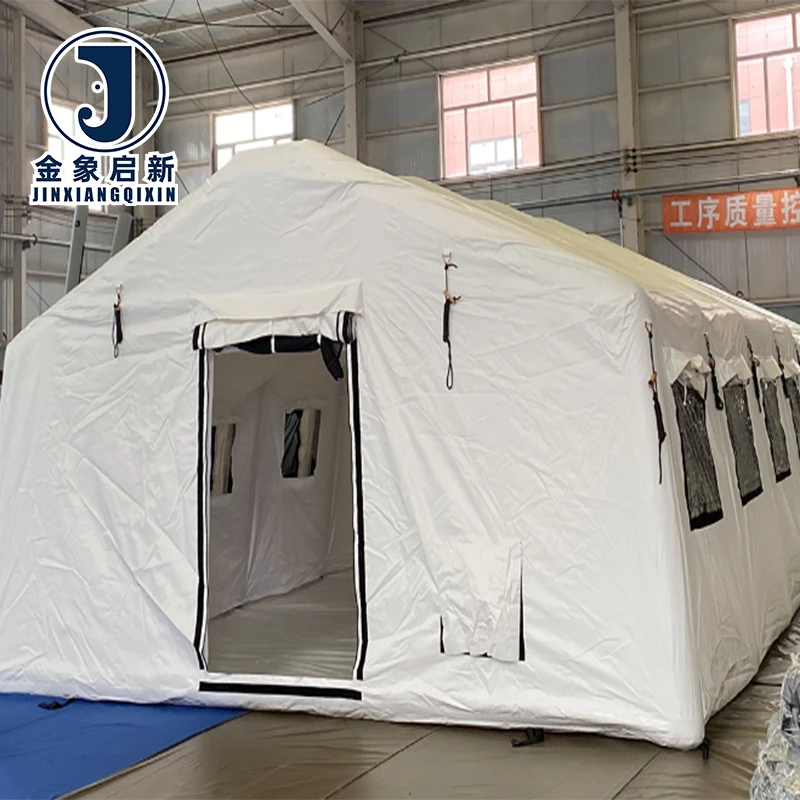
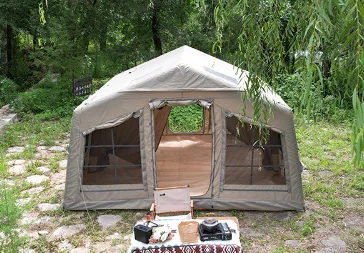
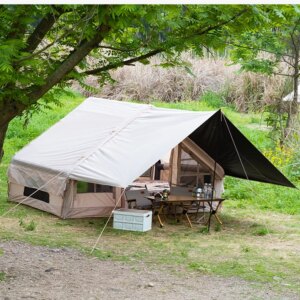
Inflatable Camping Tent, Four-Season, 1-12 Person Capacity — built from heavy-duty PVC tarpaulin with waterproof, UV-resistant and tear-resistant performance for commercial and industrial deployment.
- Engineered for rapid inflation and reliable air retention, with seams heat-sealed to withstand repeated setup cycles and load flex stress.
- Coating adhesion and base fabric density are controlled to ensure structural integrity across prolonged sun and weather exposure.
- Full QA & QC inspection at every stage, 24-hour pressure retention test on each unit, and sample approval before bulk production.
Description
Coating weight consistency — every roll of PVC tarpaulin used in our inflatable camping tent production is weighed and verified against the stated GSM before it enters the cutting room, eliminating the material variance that causes field failures.
Technical Specifications
| Parameter | Value |
|---|---|
| Product Type | Inflatable Tent |
| Core Material | PVC Tarpaulin |
| Construction | Single Layer |
| Key Performance | Waterproof, UV-resistant, Tear-resistant |
| Capacity | 1-12 Person |
| Season Rating | Four-Season |
| Product Forms | Inflatable Camping Tent |
| Certifications | ISO9001, ISO14001, ISO45001, CE |
| Customization Service | OEM & ODM (sample customization, pattern printing) |
| Quality Control | 24-hour pressure retention test, full-process QA & QC inspection |
| Production Facility | 9,180 m² with 3 full production lines |
| Processing Equipment | 36 sets of professional processing equipment |
| R&D Team | 10 technicians |
Application Suitability
| Application | Exposure & Requirement |
|---|---|
| Construction site crew accommodation | Prolonged sun exposure, wind loading, repeated inflation cycles, ground moisture contact |
| Mobile field operations base | Rapid deployment and teardown, transport abrasion, variable terrain anchoring |
| Emergency response staging area | All-weather deployment, quick inflation under pressure, high occupant turnover |
| Outdoor event infrastructure | UV exposure over multi-day events, crowd proximity, aesthetic consistency across units |
| Commercial glamping and group camping (1-12 person) | Repeated seasonal setup, guest comfort expectations, waterproof integrity across seams |
Why Material Consistency Matters More Than Stated Weight in Inflatable Tents
A verified GSM on the test bench means nothing if the coating adhesion fails at the heat-welded seam under inflation pressure.
When you source inflatable camping tents at commercial volume, the gap between a quoted specification and what arrives on site widens fast. A fabric that reads the right weight per square metre can still delaminate at the seam if the coating formulation shifts between batches or if the heat-seal parameters were set for a different grade. We have seen heavy-grade coated rolls fail at the weld line while the fabric body remained intact — the air tube splits, the structure deflates, and an entire unit is pulled from service. [NEED_CITE: heat-weld seam strength testing for PVC coated fabrics per ISO 1421]
Coating Adhesion and Heat-Weld Integrity for Inflatable Structures
An inflatable camping tent lives and dies by its seams. The air tubes must hold constant internal pressure, and every weld joint is a potential failure point if the coating does not bond properly to the base fabric. Our PVC tarpaulin goes through a controlled coating process where adhesion is monitored at every production stage, ensuring that when the fabric is heat-welded into tube sections, the seam strength matches or exceeds the body material. This is critical for tents rated for four-season use where temperature swings cause the material to expand and contract repeatedly.
Batch-to-Batch Colour and Weight Consistency Across Commercial Orders
When a glamping operator orders twenty identical units, a half-shade colour shift between production runs is immediately visible once the tents are pitched side by side. Our three full production lines and 36 sets of processing equipment allow us to run complete commercial orders in a single batch cycle. The 10-person R&D team locks colour references and GSM targets at the sample stage, then QA staff verify each roll against those benchmarks before cutting begins. An inflatable camping tent aftermarket supplier must deliver this level of repeatability to protect the buyer’s brand presentation. [NEED_CITE: colour consistency standards for coated technical textiles]
Reading the Specification Sheet Beyond Surface Numbers
The PVC tarpaulin used in these tents relies on the interplay between base fabric denier, weave density, and coating weight to achieve its tear-resistant and waterproof performance. A higher GSM reading can come from a heavier coating layer alone, but if the underlying yarn denier is low, the fabric will tear easily once punctured. Coating method also matters: knife-coated fabrics typically show higher peel strength at welded seams compared to laminated alternatives, which is why the coating process directly affects how well an inflatable structure holds pressure over time. UV-resistant formulation is integrated into the compound, but buyers should confirm the specific UV treatment grade required for their regional climate and end-use duration before placing a bulk order.
The Hidden Cost of Specifying by Weight Alone
A tent manufacturer who sources fabric based solely on a GSM figure may receive material that meets the weight target but fails at the seams during inflation testing. Coating that is too thick relative to the base fabric creates a stiff panel that cracks at fold points during packing and transport. Conversely, coating that is too thin leaves the base yarn exposed to moisture ingress and UV degradation. We have watched entire production runs of inflatable structures get scrapped because the heat-weld parameters were calibrated for a different coating thickness than what was actually delivered. [NEED_CITE: PVC tarpaulin coating weight and base fabric compatibility]
Why Procurement Teams Consolidate Inflatable Tent Supply Here
Nearly 30 years of focused coated fabric production means our process control over coating weight and adhesion has been refined across thousands of production cycles. The 10-person R&D team develops samples within days for custom inflatable camping tent configurations, including sizing adjustments and pattern printing, so you validate the material before committing to volume. Every unit undergoes a 24-hour pressure retention test to confirm airtightness, backed by full-process QA and QC inspection from raw material receipt through final packing. ISO9001, ISO14001, ISO45001, and CE certifications are maintained across the facility, and pre-shipment inspection records travel with every batch so you can verify what was tested and when.
Documentation & Verification
- Material specification sheet stating GSM, base fabric denier, and coating type for each tent batch
- UV resistance and tear strength test reports supplied with qualifying commercial orders
- 24-hour pressure retention test record included in pre-shipment inspection documentation
- Roll-by-roll weight verification log confirming stated GSM before cutting and assembly
- ISO9001, ISO14001, ISO45001, and CE certificates available for compliance submissions
- Packing list with roll count, batch reference, and customs support documentation
Fabrication, Handling & Storage
- Heat-weld temperature and dwell time must match the specific PVC tarpaulin coating weight to prevent seam delamination under inflation
- Store rolled tent fabric upright on pallets in dry conditions to avoid permanent creasing that weakens the coating layer
- Use compatible PVC adhesive for field repairs on the single-layer construction, testing bond strength on a scrap section first
- Avoid dragging inflated units across abrasive ground surfaces that can score the waterproof coating at contact points
- Clean with mild detergent and soft brush — solvents can degrade the UV-resistant surface treatment over repeated use
- Allow adequate slack when folding for storage to prevent stress whitening at repeated crease lines
What We Need to Quotation Your Project
Send us your target tent capacity, intended deployment environment, and any regional compliance requirements such as fire classification or UV treatment standards. Specify whether you need finished units or cut-and-sewn panels, along with colour references and any pattern printing requirements. Confirm your annual volume so we can plan production scheduling and batch consistency accordingly.
Frequently Asked Questions
Q: What PVC material specifications are used in the inflatable tent fabric?
A: The tent fabric uses PVC tarpaulin with controlled coating weight and base fabric construction. We provide a material specification sheet stating GSM, base fabric denier, and coating type for each batch. Buyers should confirm the specific grade required for their application, and we supply test reports for UV resistance and tear strength with qualifying orders.
Q: Can the inflatable camping tent be customized in size, capacity, or branding?
A: Yes. Our 10-person R&D team handles sample customization, sizing adjustments, and pattern printing. We develop samples within days so you can validate the configuration before bulk commitment. OEM and ODM services are available, and we lock colour references and dimensional tolerances at the approval stage to ensure consistency across the full order.
Q: What certifications and quality documentation ship with a commercial order?
A: Each order is supported by ISO9001, ISO14001, ISO45001, and CE certifications. We include pre-shipment inspection records covering the 24-hour pressure retention test and visual QC results. Test reports for UV and tear performance accompany qualifying batches, along with a detailed packing list and certificate of origin for customs clearance.
Q: How is airtightness verified before shipment?
A: Every completed inflatable unit undergoes a 24-hour pressure retention test to confirm that all heat-welded seams and valve fittings hold air without leakage. Full-process QA and QC inspection covers raw material verification, cutting accuracy, weld integrity, and final inflation performance. The test record is documented and ships with the batch inspection report.
Q: What is the sample development process and lead time for custom configurations?
A: Submit your size, capacity, colour, and any printing requirements. Our R&D team produces a sample for your review, typically within days depending on complexity. Once you approve the sample, we lock the specification for production. This ensures the bulk order matches the validated material weight, colour, and construction details exactly.
Related products
-
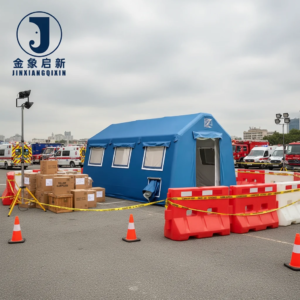
Aufblasbares Campingzelt Wasserdicht PVC Outdoor Luftzelt Einfacher Aufbau Familiencamping Schutz Vier-Jahreszeiten >3000mm Wasserdicht Schnell
Read more -
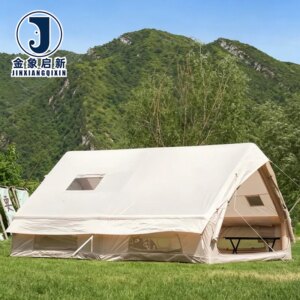
Inflatable Camping Tent PVC Four-Season Waterproof Outdoor Air Tent with Quick Automatic Opening for 2-3 Person
Read more -
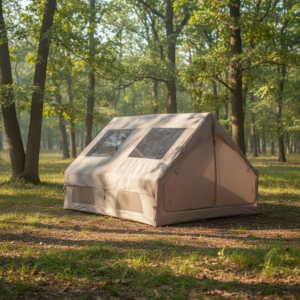
Inflatable Tent Four-Season Quick Automatic Opening PVC 3000mm Waterproof Foldable Eco-Friendly 2-3/3-4/6-8 Person Outdoor Use
Read more -
Campingzelt aufblasbar PVC wasserdicht UV-beständig Vier-Jahreszeiten schnell automatisch öffnend anpassbar 2-3 Personen
Read more