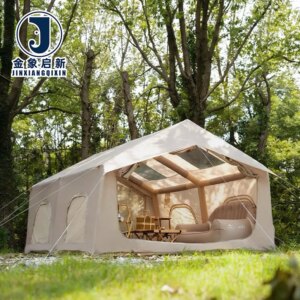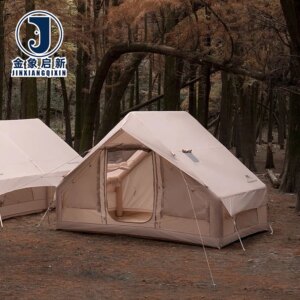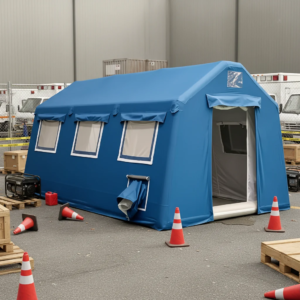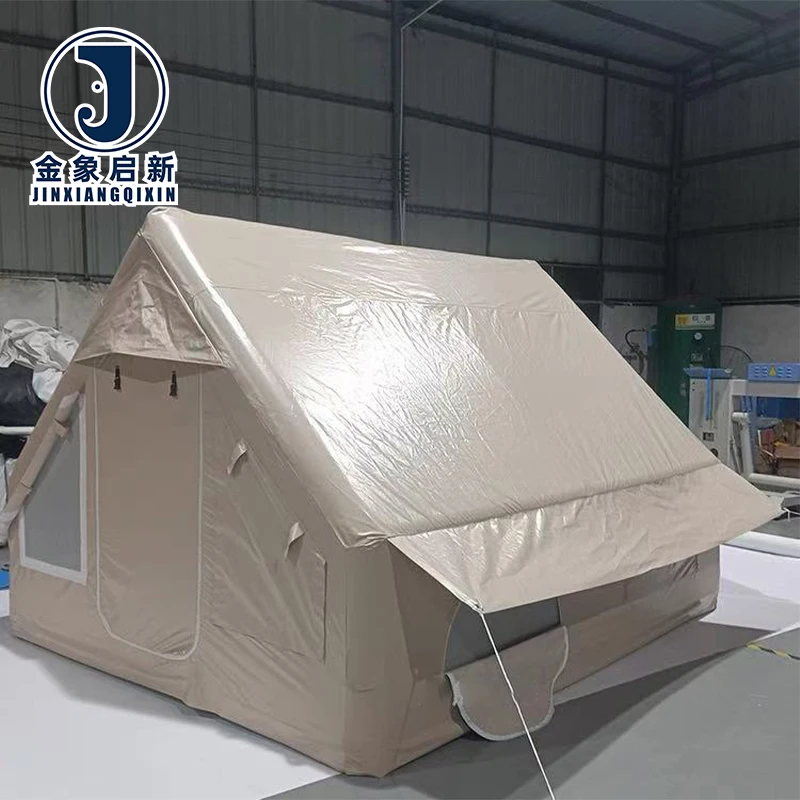
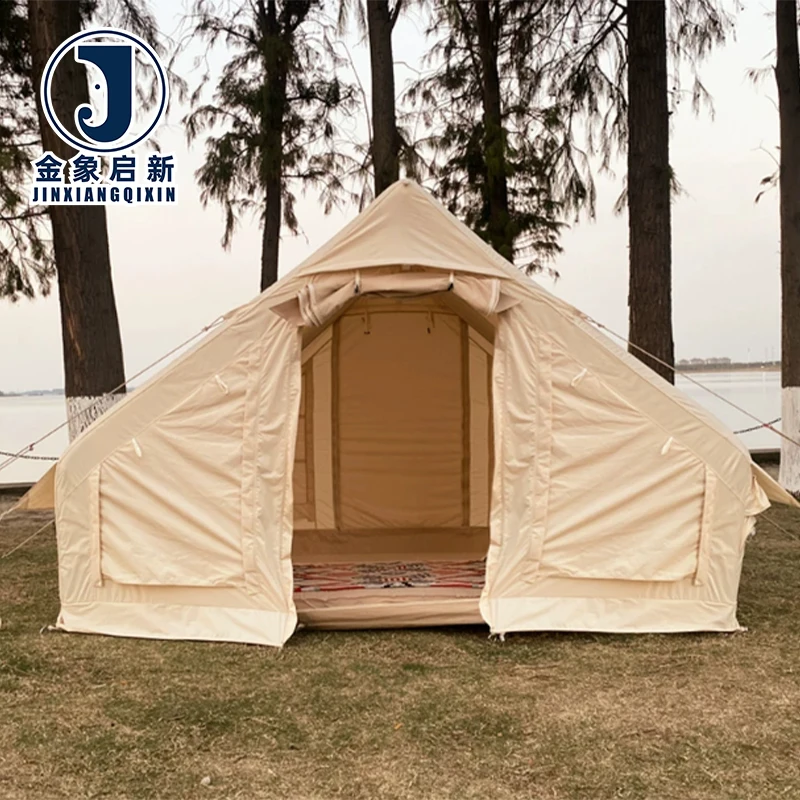
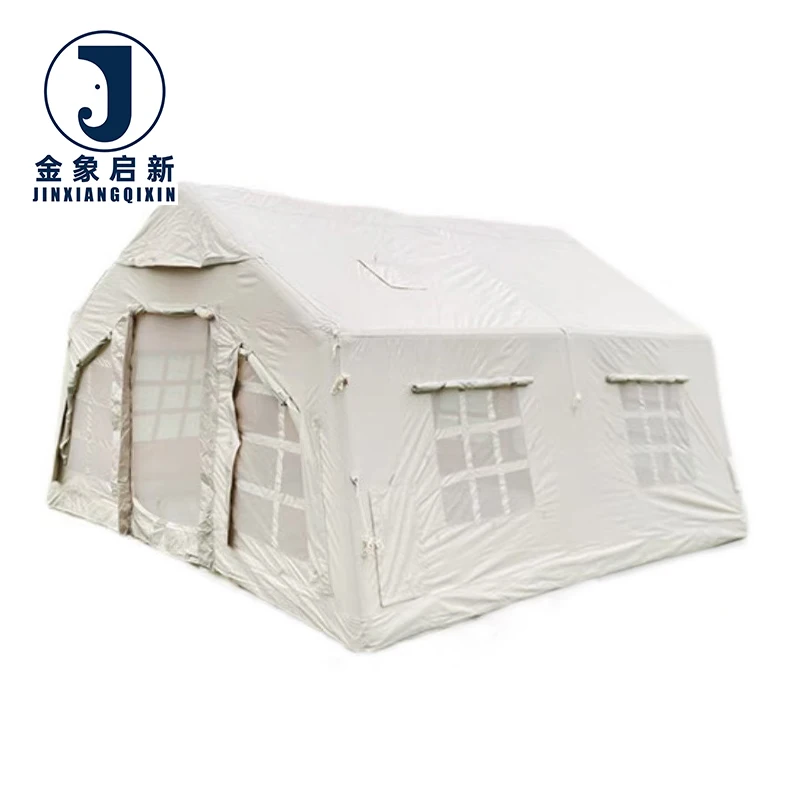
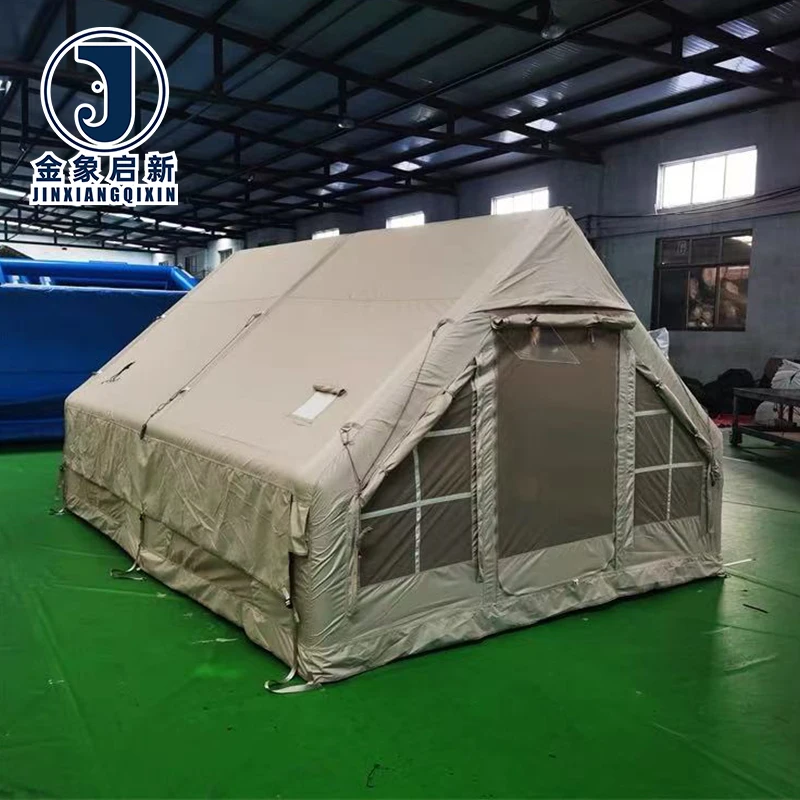
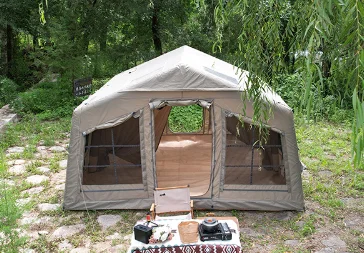
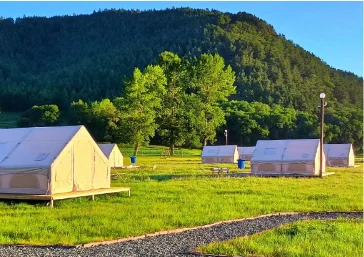
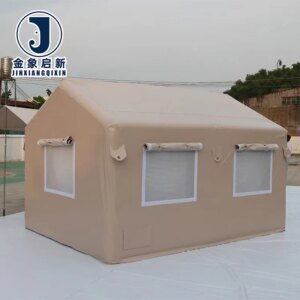
PVC Inflatable Camping Tent, 5-8 Person, Waterproof & UV-Resistant — four-season design with quick automatic opening, built from durable PVC tarpaulin for reliable field performance.
- Engineered for commercial outdoor events, workforce housing, and base camp deployments where structural integrity matters
- Tarpaulin manufacturers and event contractors specify fabric weight and coating method to balance tensile strength with weld seam reliability at stress points
Full-process QA with dedicated inspection staff, 36 sets of professional equipment supporting rapid sample turnaround, and complete documentation including material specification sheets provided with every shipment.
Description
Custom Capability from Material to Delivery — Thirty years of coated fabric process control backing every custom inflatable tent order, from base fabric selection through final inspection.
Technical Specifications
| Parameter | Value |
|---|---|
| Product Type | Inflatable Tent |
| Core Material | PVC Tarpaulin |
| Key Performance | Waterproof, UV-Resistant, Tear-Resistant |
| Capacity | 5-8 Person |
| Design | Four-Season, Single Layer, Quick Automatic Opening |
| Customization Service | OEM & ODM (Material Selection, Product Design) |
| Standards | ISO9001, ISO14001, ISO45001, CE |
Application Suitability
| Application | Exposure & Requirement |
|---|---|
| Industrial workforce housing | Prolonged weather exposure, high occupant turnover, demand for rapid deployment and reliable waterproofing |
| Field operation base camps | Remote site logistics, wind and rain loads, need for structural integrity of inflated columns under continuous pressure |
| Commercial outdoor event facilities | Public safety compliance, frequent assembly and teardown cycles, UV and moisture exposure across seasons |
| Tent and awning manufacturers sourcing roll stock | Batch-to-batch colour consistency, weld seam reliability at stress points, GSM verification on receipt |
Why Welded Seams Fail Before the Fabric Does on Inflatable Tents
Seam integrity under cyclic flex load is the single most common failure point in inflatable tent structures.
When an inflatable tent is pressurised, the air columns bend and flex continuously with wind gusts and temperature changes. I have seen heavy-grade coated rolls fail at the weld line on a 5-8 person camping tent — the fabric body held fine, but the heat-welded seam at the base of an inflatable column split after repeated inflation cycles. The root cause was not the PVC itself but the welding temperature and dwell time set too low for that specific coating formulation. When the weld does not fully fuse the coating layers, the joint becomes the weakest link [NEED_CITE: tensile and tear test methods for coated fabrics per ISO 1421]. An aftermarket supplier that controls its own coating line can adjust weld parameters to match the exact material being joined, rather than relying on generic heat-seal settings.
Matching Coating Formulation to Weld Process Parameters
Every PVC tarpaulin coating carries a specific plasticiser ratio that determines the temperature window for successful heat welding. If the weld temperature falls below the coating’s fusion point, the seam appears bonded on the surface but separates under flex stress. For an inflatable tent where air columns maintain structural rigidity, this failure mode is unacceptable. Our production team adjusts thermal welding profiles for each coating batch, ensuring the weld strength matches or exceeds the parent fabric strength. This is particularly critical when producing an inflatable tent for commercial applications where public safety is a consideration.
UV and Waterproof Performance Verification
UV resistance and waterproof claims need supporting test documentation before a buyer can rely on them. We supply material test reports for the treatments applied to each production run, so you can verify that the PVC tarpaulin meets the environmental exposure demands of your target market. For an inflatable tent deployed in high-sun or heavy-rain climates, this documentation is essential for end-user confidence and regulatory acceptance. Custom UV-resistant treatments are available — confirm the grade required for your market and we will provide the corresponding test data [NEED_CITE: DIN 4102 fire classification for building materials].
Reading the Specification Sheet Beyond GSM
GSM alone tells you how much the fabric weighs per square metre, but it does not tell you how strong it is under tension or how well the coating adheres to the base fabric. Two PVC tarpaulin rolls can carry the same GSM yet perform very differently depending on the base fabric denier, weave density, and coating method. A knife-over-roll coated fabric typically delivers higher peel strength between coating and base yarn compared to a laminated construction, which matters when the air columns of an inflatable tent flex repeatedly. Base fabric denier and thread count determine how a tear propagates once initiated — a high-density weave arrests tear spread more effectively. Understanding these relationships helps buyers specify on performance rather than weight alone, reducing the risk of early field failures.
The Hidden Cost of Specifying on Price Alone
When a buyer selects material based purely on quoted GSM and price, the shortcuts show up later. Coating weight may be lower than stated on the specification sheet, leaving the base fabric under-protected against moisture penetration. Colour may vary between rolls within the same shipment, which is immediately visible once multiple inflatable tent units are erected side by side at an event site. Heat-welded seams on under-spec material degrade faster because the coating formulation was not designed for structural welding [NEED_CITE: peel strength testing for coated fabric welds per ISO 2411]. These failures cost far more in returns and reputational damage than the initial savings on material.
Why Source Your Inflatable Tent Material Here
Our three full production lines and 36 sets of professional processing equipment support bulk roll output with consistent coating weight across every metre. The 10-person R&D team handles material selection, custom sizing, and sample development, so a buyer can evaluate fabric performance before committing to a production run. We run dedicated QA and QC checks at every production stage, with 100% inspection before shipment, meaning GSM, colour, and weld quality are verified against the specification sheet rather than assumed. Custom widths, colours, and branding options are available with reasonable minimums. ISO9001, ISO14001, ISO45001 and CE certifications are maintained across our production and quality systems.
Documentation & Verification
- Material specification sheet confirming GSM, base fabric denier, and coating type for each inflatable tent order
- UV and waterproof test reports issued per production batch with traceable results
- Pre-shipment inspection record covering roll weight, colour consistency, and weld seam checks
- ISO9001, ISO14001, ISO45001, and CE certificates available with every shipment
- Certificate of origin and customs documentation prepared for cross-border delivery
Fabrication, Handling & Storage
- Heat-weld seams at manufacturer-recommended temperature for the specific PVC tarpaulin coating batch to maintain full peel strength
- Store rolls vertically in a dry, shaded area to prevent coating transfer marks and permanent creasing on the PVC surface
- Allow cold-stored rolls to reach ambient temperature before unrolling to prevent coating cracking on the tarpaulin surface
- Use compatible PVC adhesive for field repairs on the tarpaulin coating to maintain waterproof continuity at patched areas
- Plan cutting layout to minimise cross-direction waste and reduce the number of welded joints in high-stress inflatable column zones
What We Need to Move Your Inquiry Forward
Tell us the intended deployment environment for your inflatable tent — climate zone, expected wind loads, and whether the structure will be semi-permanent or cycled through repeated setup and teardown. Let us know if your target market requires specific fire-retardant grades or UV performance levels so we can match the coating formulation and provide supporting test reports. If you need custom dimensions, colour matching, or printed branding, share your design files or Pantone references and we will develop a sample for your approval before production begins.
Frequently Asked Questions
Q: What customization options are available for size, color, and printing?
A: We offer OEM and ODM services covering material selection, product design, custom dimensions, colour matching to Pantone references, and printed branding. Our R&D team develops samples within days so you can verify appearance and performance before committing to a full production run. Specify your requirements and we will provide a tailored specification sheet.
Q: How do you verify UV and waterproof performance claims?
A: Each production run is accompanied by test reports documenting the UV-resistant and waterproof treatments applied. These reports reference recognised test methods and are traceable to specific batch numbers. Buyers can request documentation before shipment to confirm the PVC tarpaulin meets their target market requirements.
Q: Can I get samples before placing a bulk order?
A: Yes. Our sample development process produces custom material samples within days, allowing you to test weld compatibility, colour accuracy, and physical properties. Approving a sample before production ensures the final inflatable tent fabric meets your exact specification.
Q: What is the typical lead time for custom inflatable tent orders?
A: Lead times depend on order volume, customisation complexity, and material availability. Standard specifications move through production faster, while custom colours, widths, or printed designs require additional setup. We confirm the timeline at quotation stage so buyers can plan their project schedules.
Q: Do you provide material certifications and test reports?
A: Every shipment includes material specification sheets, applicable test reports for UV and waterproof performance, pre-shipment inspection records, and our ISO9001, ISO14001, ISO45001, and CE certificates. Additional documentation such as certificates of origin is provided to support customs clearance in your destination market.
Related products
-
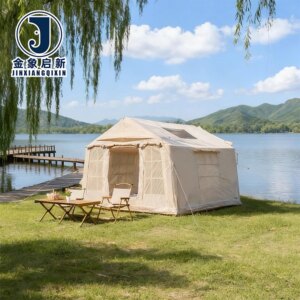
Luxury Inflatable Tent for Glamping Outdoor Waterproof Air Tent with Pump
Read more -
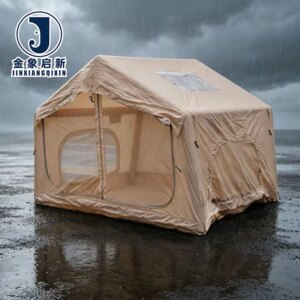
Inflatable Camping Tent Waterproof Outdoor Air Tent for Camping Inflatable Tent Shelter
Read more -
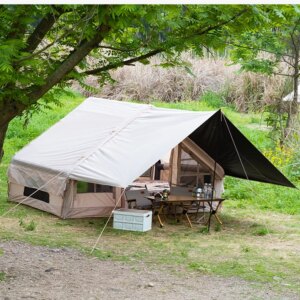
Campingzelt aufblasbar PVC wasserdicht UV-beständig Vier-Jahreszeiten schnell automatisch öffnend anpassbar 2-3 Personen
Read more -
Inflatable Camping Tent PVC Waterproof Four-Season Outdoor Air Tent with Quick Automatic Opening for 3-4 Person
Read more