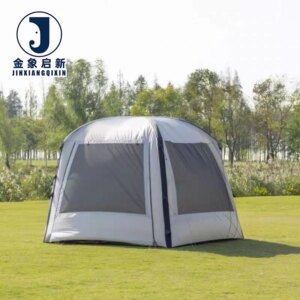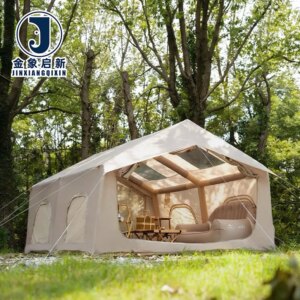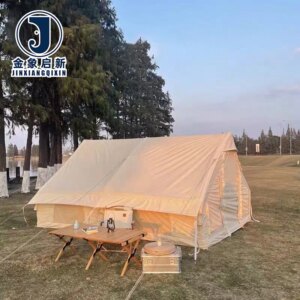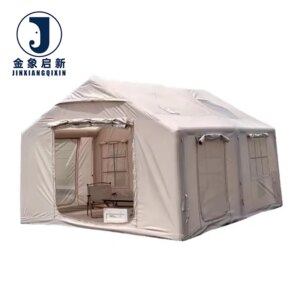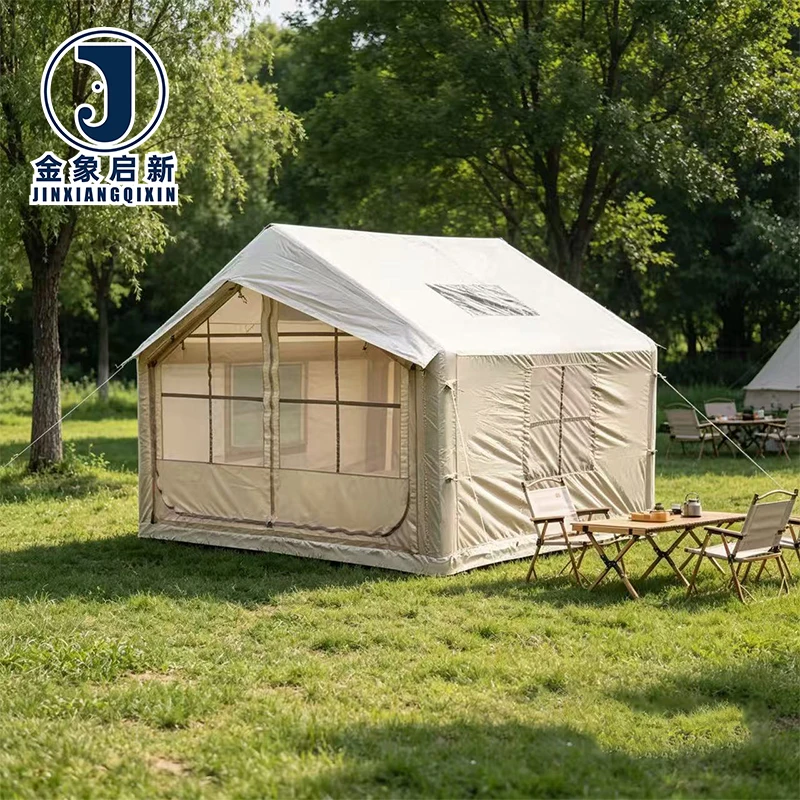
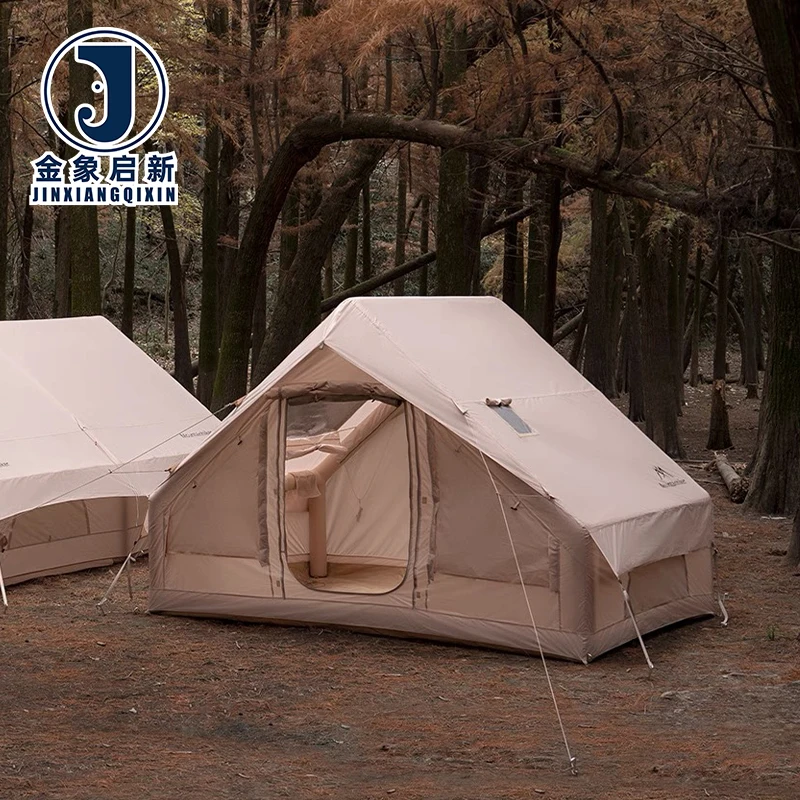
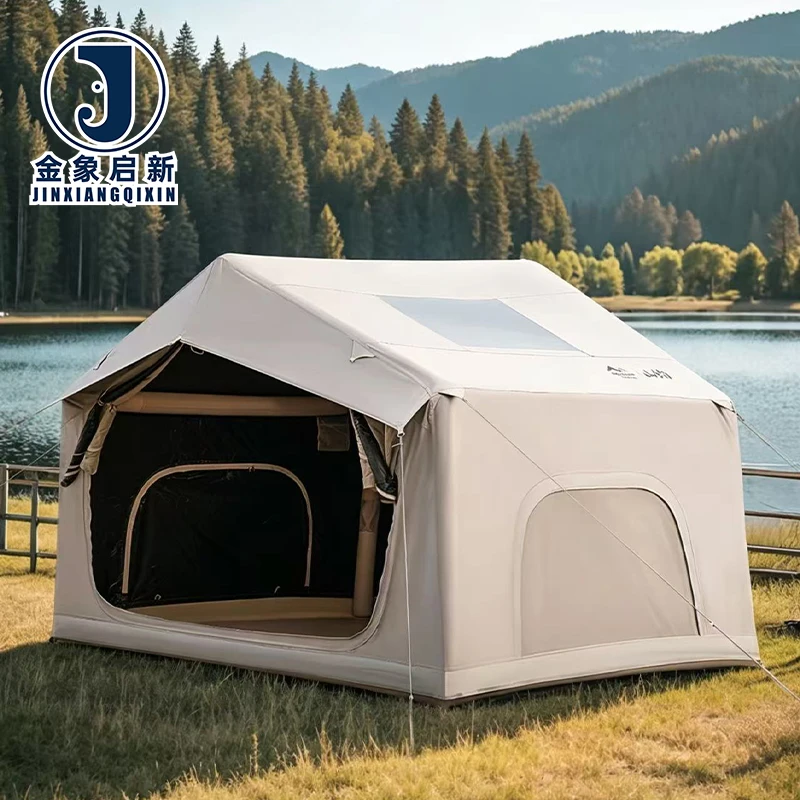
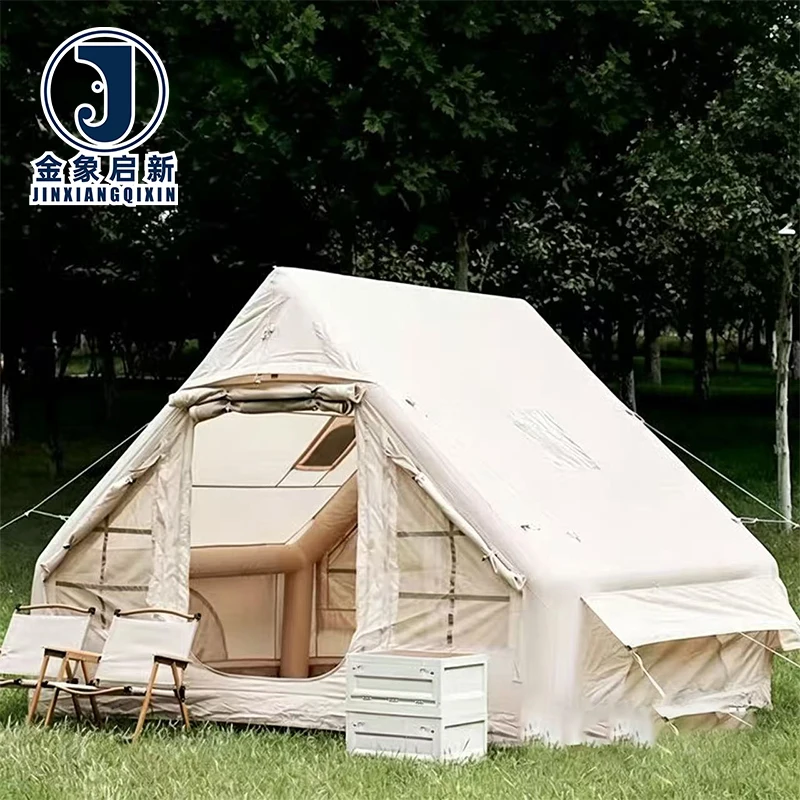
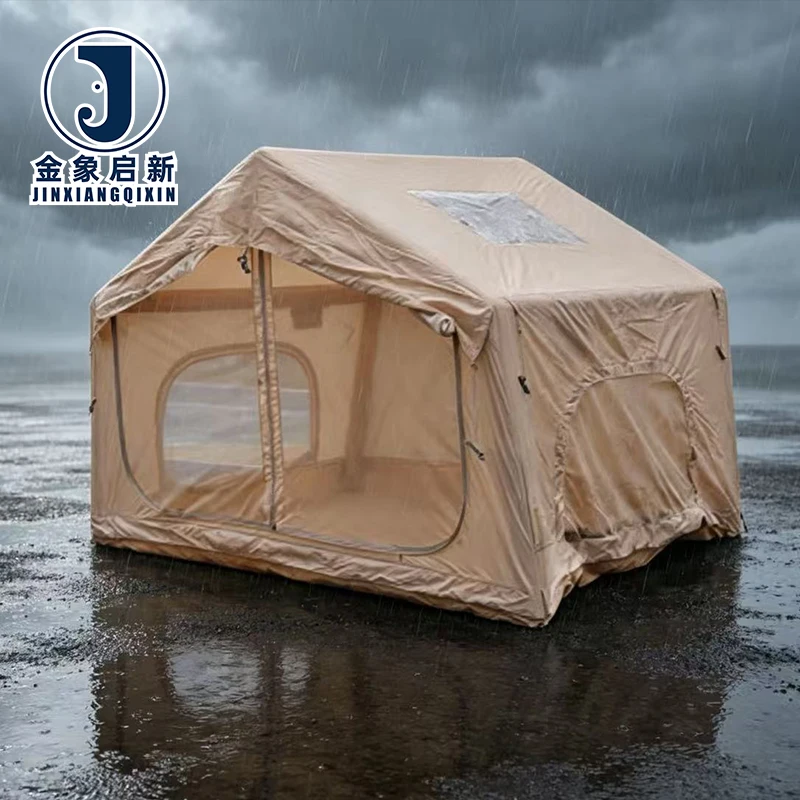
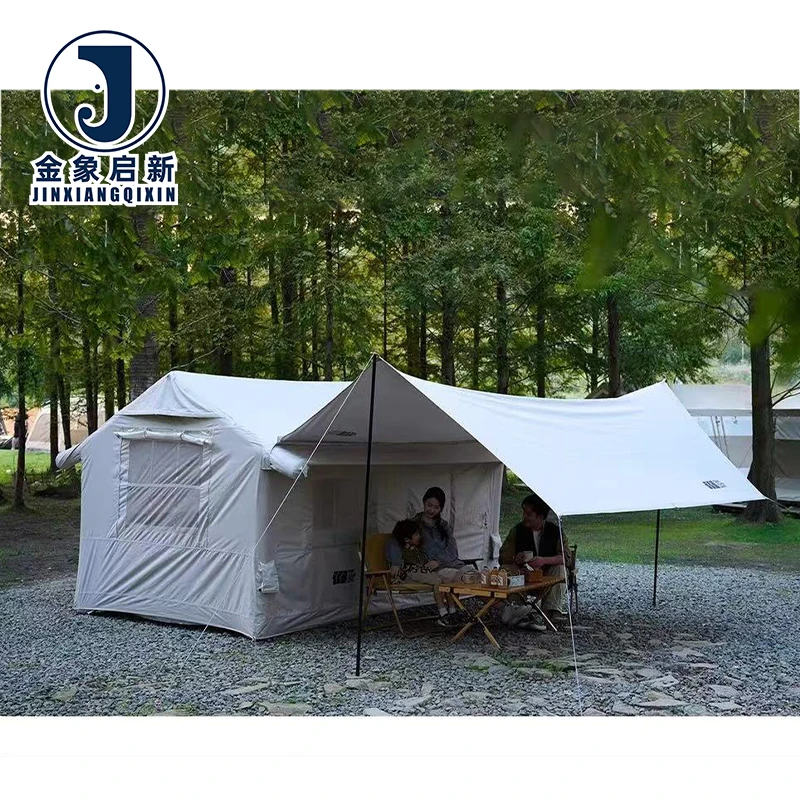
PVC Inflatable Camping Tent, 0.45mm Knife-Coated Fabric, 4-6 Person, 1000mm Waterproof — heat-sealed seams rated to the same lifecycle as the base fabric, with UPF 50+ and anti-static surface resistance <10^9Ω verified by ISO 4892-3 and ASTM testing.
- Batch-to-batch colour consistency held to ΔE <2 across full production runs
- Custom capacity, Pantone matching, pattern printing and climate-specific PVC formulations
- Samples within 7 days, 100% pre-shipment inspection, full test documentation with every order
Description
Precision Coated Fabric Control — Three full production lines and 36 sets of professional equipment deliver batch-to-batch colour consistency within ΔE <2 across every custom Pantone inflatable tent order.
Technical Specifications
| Parameter | Value |
|---|---|
| Product Type | Inflatable Tent |
| Core Material | 0.45mm PVC knife-coated fabric |
| Capacity | 4–6 person |
| Unit Weight | 12 kg/pc |
| Tear Resistance | 280 N/5cm |
| Waterproof Rating | 1000mm water column, 100% heat-sealed seams |
| UV Protection | UPF 50+, tested 500+ hours sunlight exposure (ISO 4892-3) |
| Anti-Static Surface Resistance | <10⁹ Ω |
| Inflation Time | 60 seconds automatic opening |
| Operating Temperature Range | -20 ℃ to 60 ℃ |
| Colour Consistency | ΔE <2 batch-to-batch |
| Certifications | ISO 9001, ISO 14001, ISO 45001, CE |
Application Suitability
| Application | Exposure & Requirement |
|---|---|
| Commercial camping equipment lines | Repeated inflation cycles, UV exposure, retail colour consistency across SKU batches |
| Adventure tourism rental fleets | Four-season deployment, high-frequency packing and unpacking, abrasion from ground contact |
| Industrial field accommodation | Extended outdoor standing, compliance documentation for site audits, temperature extremes |
| Outdoor gear brand OEM components | Pattern printing adhesion, Pantone colour matching, brand logo reproduction on coated surface |
Why Batch Colour Drift Destroys an Inflatable Tent Brand Before the First Season Ends
Colour variance across rolls in the same production run is the single most visible defect once inflatable tents are displayed side by side at trade shows or retail floors.
When an outdoor gear brand specifies a Pantone reference for its inflatable tent range, the expectation is uniform colour across every unit shipped. What often arrives is a spread of tones — one roll slightly warmer, another shifted toward blue — caused by inconsistent pigment dosing or coating temperature fluctuation during production. For an inflatable tent manufacturer sourcing fabric in volume, this means rejected batches, delayed launches, and damaged relationships with retail buyers who photograph product lines for catalogue shoots. I have seen entire container loads held at quality inspection because two rolls sitting next to each other on the cutting table were visibly different shades [NEED_CITE: colour measurement standards for coated textiles per ISO 105-J03]. The inflatable tent manufacturer must confirm with the fabric supplier that ΔE values are logged per roll, not just stated as a catalogue average.
From Roll Stock to Finished Inflatable Structure — The Coating Advantage
The 0.45mm PVC knife-coated fabric used in this inflatable tent range starts with a woven polyester base fabric that receives a controlled coating application on both sides. Knife coating forces PVC paste into the weave interstices under a precisely gapped blade, producing a surface that holds printed patterns and resists delamination at heat-sealed seams. For an inflatable tent manufacturer building products that must withstand repeated inflation and deflation, this coating method delivers the peel strength necessary to keep seams intact at flex points where the structure bends under wind load. The 10-person R&D team develops custom formulations matched to the buyer’s target climate, adjusting plasticiser ratios for cold-weather flexibility or heat resistance for tropical deployment.
Heat-Sealed Seams That Match the Fabric Lifespan
Every seam on this inflatable tent is 100% heat-sealed rather than stitched, eliminating needle holes that would otherwise become water ingress paths under the 1000mm water column rating. The heat-sealing process fuses the PVC coating layers across the joint, creating a bond whose strength tracks with the base fabric tear resistance of 280 N/5cm. This matters because the highest stress concentrations in an inflatable structure occur precisely at the seam intersections where air beams meet the canopy panel. An inflatable tent manufacturer sourcing this fabric can specify custom seam widths and reinforcement patches during the sample development phase, ensuring the welded joint survives the flex cycles that rental fleets impose [NEED_CITE: heat-seal strength testing methods for PVC coated fabrics]. The UPF 50+ treatment, verified at 500+ hours of sunlight exposure per ISO 4892-3, extends protection to the seam zone where UV degradation typically accelerates.
Reading the Specification Sheet — What the Numbers Actually Mean
The 280 N/5cm tear resistance value reflects how the fabric resists propagation of a cut once initiated — critical for inflatable tent panels that encounter sharp ground debris or packing hardware. Tear strength depends on both the base fabric denier and the PVC coating adhesion; a heavier coating does not automatically improve tear performance if the bond to the yarns is weak. The 0.45mm thickness indicates total coated fabric caliper, which directly influences air beam rigidity and the structure’s ability to maintain shape under wind load without excessive internal pressure. Operating temperature range of -20 ℃ to 60 ℃ defines the window where the PVC compound retains flexibility without becoming brittle in cold conditions or overly soft in direct summer sun. Anti-static surface resistance below 10⁹ Ω prevents dust accumulation on the tent exterior, reducing cleaning frequency for rental fleet operators who turn over units between guest groups.
The Hidden Cost of Underspecified Inflatable Fabric
When a buyer selects inflatable tent fabric based on price per metre without verifying coating adhesion, the consequence surfaces months later at the heat-sealed seams. The coating peels away from the base fabric at the flex zone, the seam opens, and the air beam deflates — typically during a customer’s use, not in the warehouse. I have encountered situations where the fabric passed initial tensile testing but failed the peel strength requirement because the knife-coating gap was set too wide, leaving insufficient paste penetration into the weave [NEED_CITE: peel adhesion test methods for coated textiles per ISO 2411]. For an inflatable tent manufacturer, this means warranty claims, replacement shipments, and eroded confidence from distribution partners. Similarly, specifying a UV treatment without a documented test basis leaves the product exposed to colour fading and surface embrittlement that renders the tent unsellable after a single season of outdoor display.
Why Source This Inflatable Fabric Here
Three full production lines and 36 sets of professional equipment provide the bulk capacity that inflatable tent manufacturers need when scaling from sample approval to container-load orders. The 10-person R&D team handles material formulation, pattern printing development, and custom sizing from 3-person to 8-person capacities within the same facility, eliminating the coordination gap between a fabric mill and a separate printing house. Dedicated QA/QC at every production stage — including the 8-point pre-shipment inspection covering material thickness, seam strength, air pressure retention, zipper functionality, UV resistance, flame retardancy, anti-static performance, and packaging integrity — catches defects before they reach the buyer’s cutting table. Samples are developed within days for custom Pantone colours and printed patterns, allowing the inflatable tent manufacturer to validate appearance and performance before committing to a bulk production run.
Documentation & Verification
- Material specification sheet confirming 0.45mm thickness and PVC knife-coated construction per roll
- Batch-specific test certificates for tensile strength (ASTM D638) and tear resistance (ASTM D1004)
- UV stability report per ISO 4892-3 covering 500+ hours exposure validation
- Water resistance certificate per ISO 811 confirming 1000mm water column at heat-sealed seams
- Pre-shipment inspection record documenting 8-point quality check results per order
- Certificate of origin and REACH / RoHS / Proposition 65 compliance documents for Western market import
Fabrication, Handling & Storage
- Heat-seal temperature and dwell time must match the 0.45mm PVC coating thickness to achieve full seam fusion
- Reinforce air beam junction points with additional PVC patches to distribute stress beyond the base 280 N/5cm tear zone
- Store rolls upright on pallets in shaded, ventilated areas to prevent permanent creasing of the knife-coated surface
- Avoid folding the PVC coated fabric below -20 ℃ during cold-climate transport to prevent coating micro-cracking
- Clean finished inflatable tent surfaces with mild detergent only; solvent-based cleaners degrade the UPF 50+ treatment layer
What We Need to Quote Your Inflatable Tent Fabric Accurately
Provide the target capacity range (3-person through 8-person), annual volume estimate, and any Pantone colour references or printed pattern files required for your brand line. Confirm the compliance standards your destination market demands — REACH, RoHS, Proposition 65, or CE — so the correct test reports are included with your shipment. Specify whether you require raw roll stock for your own fabrication or finished inflatable tent units with heat-sealed seams and hardware installed.
Frequently Asked Questions
Q: What customisation options are available for inflatable tent fabric, and what are the minimums?
A: We support OEM and ODM development including Pantone colour matching, pattern printing, and capacity adjustments from 3 to 8 person configurations. Pre-production samples with complete test reports are delivered within days for your approval before bulk commitment. Minimum quantities depend on the customisation scope — contact us with your specification to receive the applicable threshold and lead time for your inflatable tent order.
Q: How is GSM and material thickness verified against the quotation upon delivery?
A: Every roll undergoes thickness measurement as part of the 8-point pre-shipment inspection protocol, with results logged in the inspection record accompanying your shipment. The 0.45mm PVC knife-coated fabric is sampled at multiple points across the roll width to confirm uniformity. Buyers may also arrange third-party inspection through SGS, BV, or Intertek at our facility before dispatch.
Q: What test reports and compliance documents support Western market import?
A: Each shipment includes batch-specific certificates for tensile strength per ASTM D638, tear resistance per ASTM D1004, water resistance per ISO 811, and UV stability per ISO 4892-3. Compliance documentation covering REACH, RoHS, Proposition 65, and CE marking is provided as applicable to your destination market. All inflatable tent fabric orders ship with a certificate of origin and detailed packing list.
Q: How is batch-to-batch colour consistency controlled across multiple production runs?
A: Colour consistency is maintained within ΔE <2 across all rolls in a single order and across repeat orders using the same Pantone reference. Pigment dosing is controlled per batch formulation, and colour readings are taken at multiple roll positions before packing. This ensures your inflatable tent product line presents uniform colour whether displayed at retail or photographed for catalogue use.
Q: What are the differences in fabric formulation for different climate regions?
A: The 10-person R&D team adjusts the PVC plasticiser system based on your target deployment climate. Cold-region formulations prioritise low-temperature flexibility down to -20 ℃ without coating embrittlement, while tropical formulations increase heat stabiliser content to maintain structural rigidity near 60 ℃. Samples reflecting your specified climate formulation are provided for validation before bulk production of your inflatable tent fabric begins.
Related products
-
High Quality Four-Season Inflatable Tent for Camping Durable PVC Material All-Weather Resistance Quick Automatic Opening
Read more -
Premium Four-season Inflatable Tents for Camping Easy-to-Use Spacious Portable Waterproof Outdoor Tent Quick
Read more -
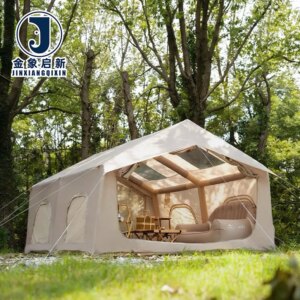
High Quality Four-Season Inflatable Tent for Camping Durable PVC Waterproof All-Weather Resistance Quick Automatic Opening
Read more -
Luxus PVC Aufblasbares Zelt für Glamping Outdoor, wasserdicht, mit schnellem automatischem Aufbau, vierjahreszeitentauglichem faltbarem Design und Pumpe
Read more