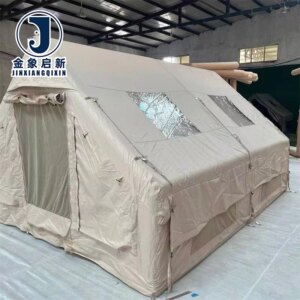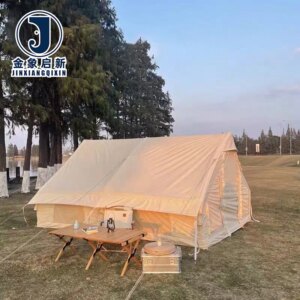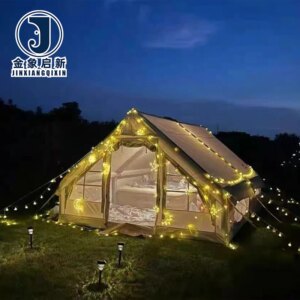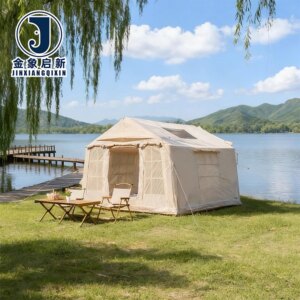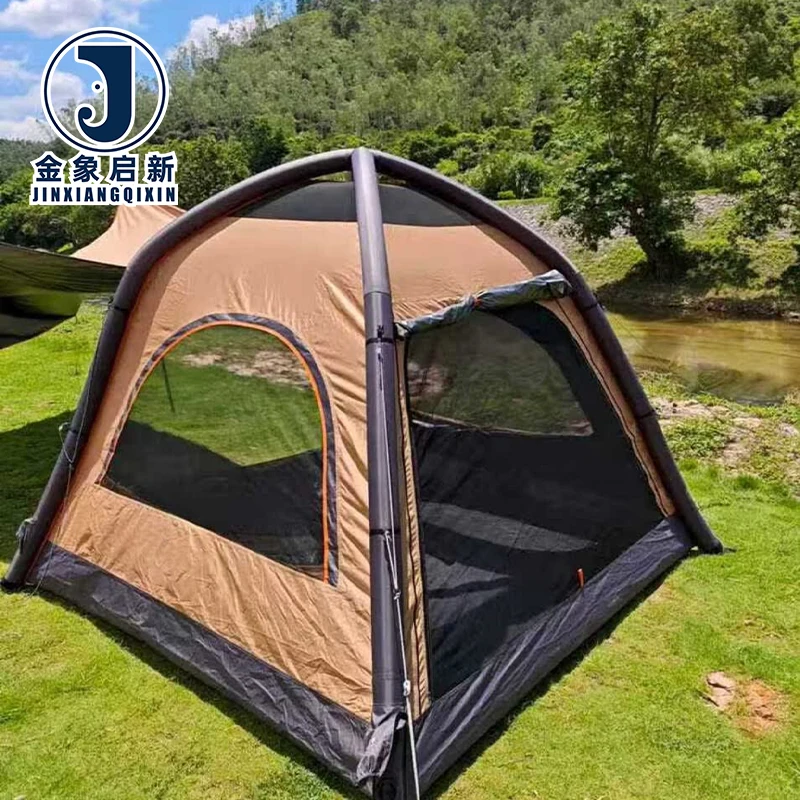
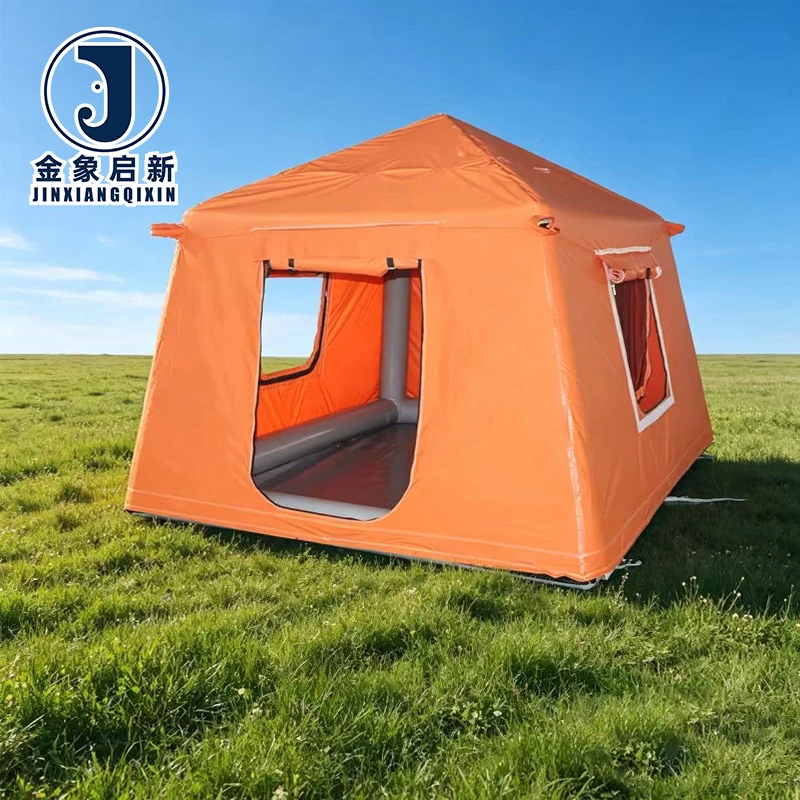
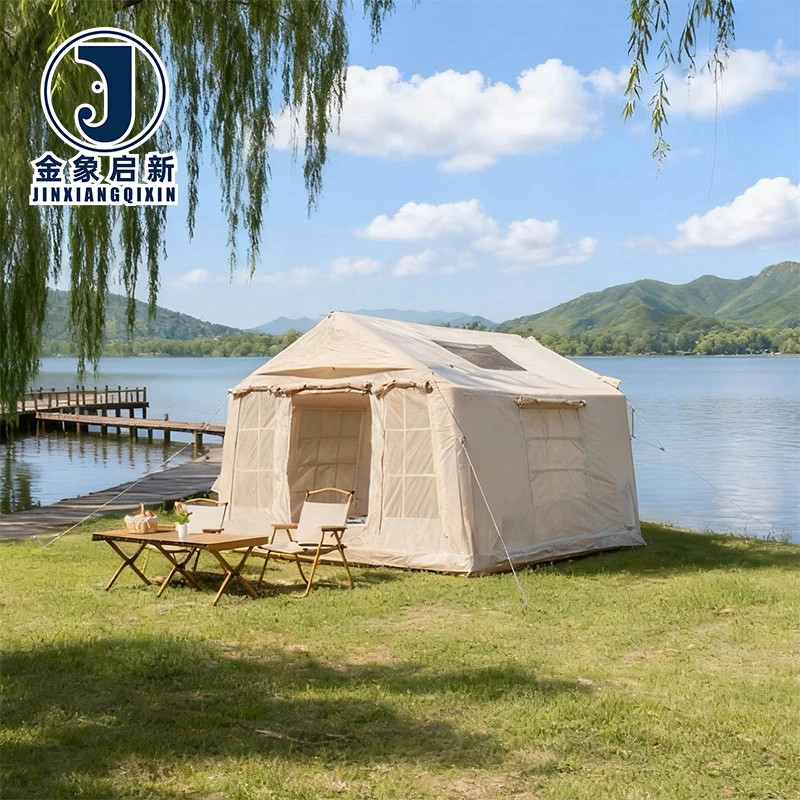
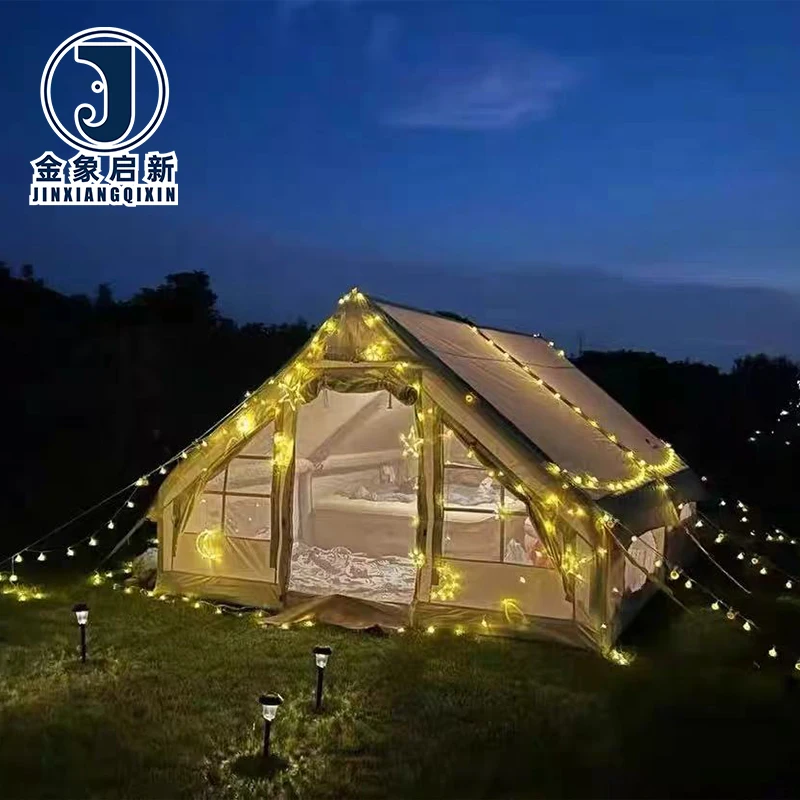
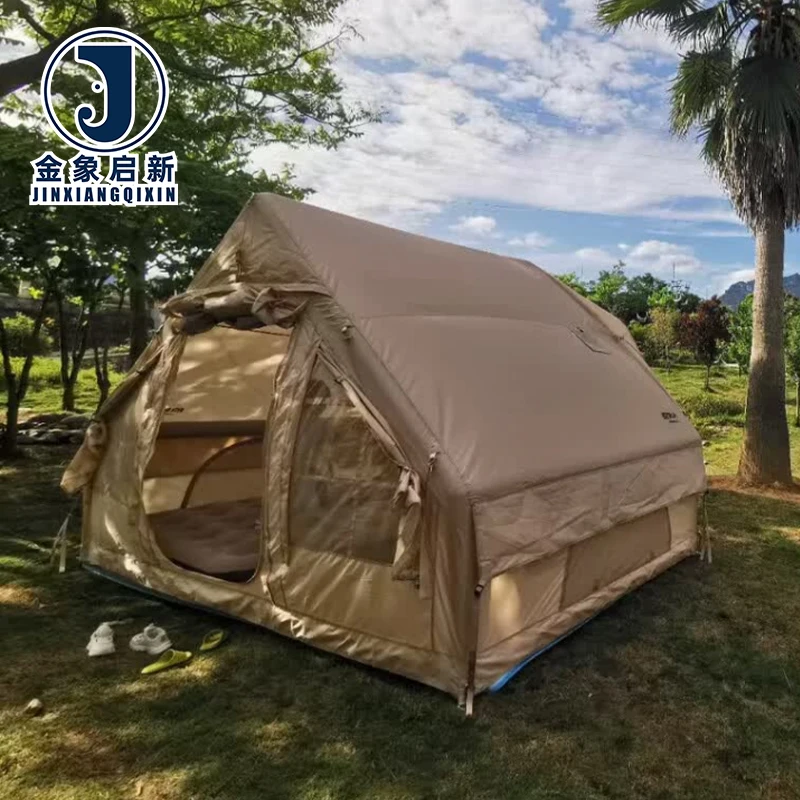
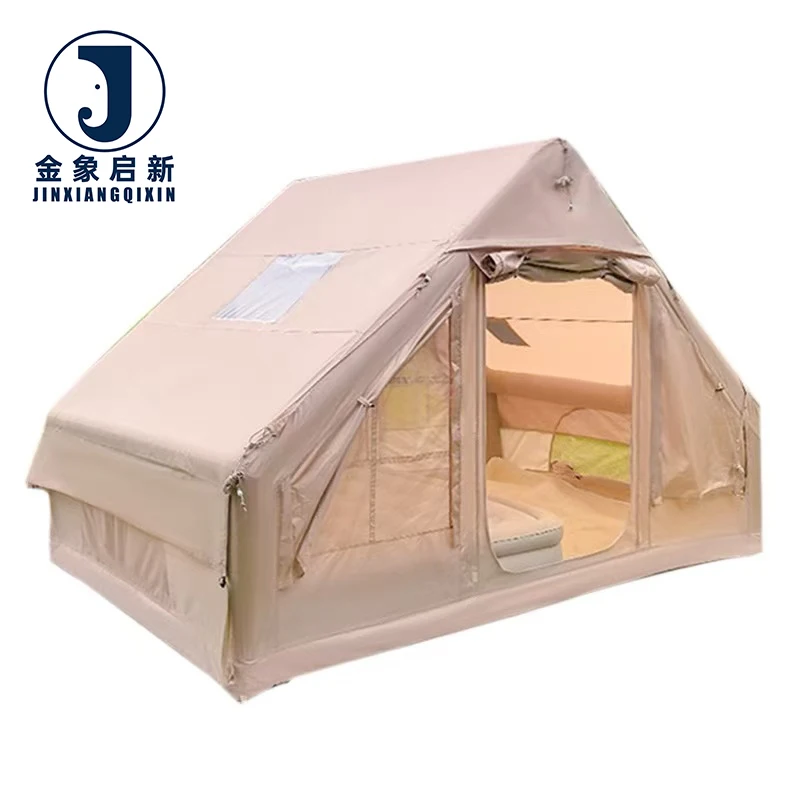
Inflatable Camping Tent — PVC Tarpaulin, 8-10 Person Capacity, 4 Season Rating, waterproof and tear-resistant single-layer construction with automatic inflatable deployment.
Built on nearly 30 years of coated fabric expertise, this tent supports full OEM/ODM customization from material thickness and GSM weight selection to pattern printing and structural sizing, with samples developed within days for fast project validation.
- Fire-retardant and anti-static treatment available with test reports for compliance-sensitive sites
- 100% pre-shipment inspection with batch-specific quality records, certificate of origin and packing list included
- 10-person R&D team handling end-to-end design, ensuring roll-to-roll colour consistency across large orders
Description
Coated Fabric Process Control — Every roll of inflatable tent fabric is produced under dedicated QA and QC oversight, with coating weight and adhesion verified at each stage to ensure the material performs as specified upon deployment.
Technical Specifications
| Parameter | Value |
|---|---|
| Product Type | Inflatable Tent Fabric |
| Core Material | PVC Tarpaulin |
| Construction | Single layer |
| Key Performance | Waterproof, UV-resistant (test basis not stated in source), Tear-resistant, Fire-retardant (grade not stated in source), Anti-static (standard not stated in source) |
| Customization Service | OEM & ODM — sample customization, pattern printing, material selection, product design |
| Production Facility | 9,180 m² with 3 full production lines |
| Processing Equipment | 36 sets of professional equipment |
| R&D Team | 10 technicians |
| Quality Control | Full-process inspection with dedicated QA & QC staff |
| Certifications | ISO 9001, ISO 14001, ISO 45001, CE |
Application Suitability
| Application | Exposure & Requirement |
|---|---|
| Outdoor event pavilions | Continuous UV exposure, wind loading on inflated frames, crowd proximity requiring fire-retardant compliance |
| Temporary site offices at construction projects | Dust, mechanical abrasion, repeated inflation cycles, weather sealing across seasons |
| Mobile equipment storage facilities | Water ingress prevention, anti-static environments for sensitive machinery, extended static-load deployment |
| Emergency response shelters for industrial operations | Rapid deployment, certified flame retardant and anti-static performance, all-weather waterproof integrity |
Why Claimed Performance Without Test Reports Puts Your Project at Risk
Buy the documentation, not the promise — every shipment of our inflatable tent fabric arrives with verifiable test data attached.
Purchasing coated fabric for commercial inflatable structures involves more than reviewing a quotation line for UV or flame-retardant treatment. I have seen procurement teams specify fire-retardant inflatable tent fabric only to discover at site inspection that the shipment carried no test certificate matching the grade their local authority requires [NEED_CITE: fire classification standards for temporary structures]. When a batch arrives lighter than quoted or with anti-static claims unsupported by a recognised standard, the tent may pass visual inspection but fail the compliance audit — forcing costly replacement mid-project. The inflatable tent fabric manufacturer you choose must ship evidence, not assurances.
Matching Coating Weight to Structural Demands
Inflatable tent structures rely on internal air pressure to maintain shape, which means the fabric must resist both tensile stress at the seams and point loads where the frame contacts the ground. Selecting the correct PVC tarpaulin grade for your inflatable tent fabric requires matching the base fabric denier and coating weight to the expected inflation pressure and wind load. Our custom inflatable tent fabric is available across a range of GSM grades so buyers can specify the balance between structural rigidity and pack weight that their deployment scenario demands.
Fire-Retardant and Anti-Static Options for Regulated Environments
Industrial sites, mining camps, and aviation facilities often mandate specific fire-retardant grades and anti-static thresholds for any temporary structure on their premises. We offer inflatable tent fabric in fire-retardant and anti-static formulations — buyers should confirm the exact grade required by their site safety protocol or local authority before placing a production order. Test reports documenting the applicable grade ship with each qualified batch, giving site managers the paperwork needed for permit approval [NEED_CITE: anti-static test standards for temporary industrial shelters].
How Base Fabric and Coating Interact to Define Real-World Durability
The performance of PVC tarpaulin used in inflatable tent fabric depends on the interaction between the woven base fabric and the applied coating layer. A heavier base fabric with a high denier count provides the tensile backbone that resists tearing when the inflated structure flexes under wind load, while the coating determines waterproof integrity and surface characteristics such as gloss or matte finish. Coating adhesion directly affects heat-weld strength — if the coating separates from the base fabric at a welded seam, the failure point becomes the weakest link in the entire structure. Surface treatment choices also influence how well pattern printing adheres over repeated inflation and deflation cycles, and whether the material resists soiling during extended outdoor deployment. Buyers specifying inflatable tent fabric should evaluate base fabric and coating as a system rather than focusing on GSM alone.
The Hidden Cost of Specifying on Price per Kilogram Alone
When procurement decisions prioritise the lowest quoted price per kilogram, the resulting inflatable tent fabric often arrives with a coating weight that falls short of the agreed specification. The deficit may not be visible on the roll, but it surfaces as premature seam failure, accelerated UV degradation, or colour inconsistency across panels once the tent is inflated and viewed in direct sunlight. Batch-to-batch colour variation is a particular risk when coating formulation is adjusted to reduce material cost — panels cut from different rolls show visible shade differences once installed side by side on the same structure [NEED_CITE: colour consistency measurement methods for coated fabrics]. Welded seams on underweight fabric tend to fail before the body of the material does, precisely at the flex points where the inflatable frame bends most during wind events.
What Our Production Capability Means for Your Inflatable Tent Fabric Order
Three full production lines and 36 sets of professional processing equipment give us the capacity to fulfil bulk inflatable tent fabric orders while maintaining roll-to-roll consistency across an entire container shipment. A dedicated 10-person R&D team handles material selection, custom sizing, and pattern printing development, producing samples within days so buyers can validate colour, finish, and weld behaviour before committing to production. Full-process quality inspection with QA and QC staff stationed at every production stage means coating weight, adhesion, and surface finish are verified continuously — not sampled after the fact. The OEM and ODM workflow covers everything from GSM grade selection through custom width and length, branding, and packing configuration aligned to your container loading plan.
Documentation & Verification
- Material specification sheet stating coating weight, base fabric type, and colour reference per order
- Test reports for UV and flame-retardant grades provided where applicable to the specified grade
- Pre-shipment inspection record documenting batch-specific quality checks before dispatch
- ISO 9001, ISO 14001, ISO 45001, and CE certification documentation supporting cross-border procurement
- Roll packing list with net weight, dimensions, and roll count for customs and warehouse planning
- Certificate of origin included for preferential tariff treatment where trade agreements apply
Fabrication, Handling & Storage
- Heat-weld temperature and dwell time must be matched to the PVC coating formulation used on your inflatable tent fabric grade
- Store rolls upright on pallets in a dry, shaded area to prevent compression marks on the single-layer PVC surface
- Use compatible PVC adhesive for field repairs on inflatable tent fabric to maintain waterproof continuity at patch edges
- Allow cold-stored rolls to reach ambient temperature before unrolling to prevent coating crack at low temperatures
- Clean with mild detergent and soft cloth — avoid solvents that may soften the PVC coating and compromise waterproof integrity
- Plan panel cutting layout to minimise offcut waste and reduce the number of welded seams in high-stress frame zones
How to Scope Your Inflatable Tent Fabric Inquiry
Provide your target deployment environment, expected inflation cycle frequency, and any fire-retardant or anti-static grades mandated by your site safety authority. Share the required fabric width, colour references or branding artwork, and estimated annual volume so we can align production scheduling and batch consistency. Confirm whether you need finished panels with welded seams and reinforcement, or roll stock for your own fabrication line, and indicate if sample approval is required before bulk production begins.
Frequently Asked Questions
Q: What fire-retardant grades are available and how do I confirm the right one for my market?
A: Our inflatable tent fabric is available in fire-retardant formulations, with the specific grade matched to your regional compliance requirement. Before production, share the fire classification standard your local authority or site safety protocol mandates. We then align the coating formulation accordingly and provide a test report documenting the achieved grade with each qualified shipment.
Q: How is UV resistance validated and what should I expect for outdoor exposure?
A: UV-resistant treatment is applied during the coating process for inflatable tent fabric intended for extended outdoor deployment. The specific test basis depends on the grade selected. We recommend requesting the UV test report applicable to your chosen formulation so you can assess suitability against your project’s expected sun exposure and replacement cycle.
Q: How does the OEM/ODM customization process work from inquiry to delivery?
A: The process begins with your application details, dimensions, GSM preference, and treatment requirements. Our R&D team develops material recommendations and produces samples within days. Once you approve the sample, production proceeds with in-process QA checks at every stage, followed by 100% pre-shipment inspection before dispatch with full documentation.
Q: What documentation ships with my inflatable tent fabric order?
A: Each order includes a material specification sheet, roll packing list, pre-shipment inspection record, certificate of origin, and relevant ISO or CE certification documents. Test reports for UV and flame-retardant grades are included where applicable to your specified grade. All documents support customs clearance and on-site compliance verification.
Q: How do you control colour consistency across multiple rolls in one order?
A: Colour is managed through controlled pigment dosing and verified against the confirmed colour reference during production. Each batch undergoes visual and instrumental comparison to the approved standard. Rolls destined for the same project are grouped in production scheduling to minimise variation, and the pre-shipment inspection record documents the colour check result.
Related products
-
Outdoor Camping Inflatable Tent Luxury All-Season Use PVC Waterproof Quick Automatic Opening Rainproof Insulated
Read more -
Outdoor Waterproof Inflatable Tent for Camping Portable Air Camping Tent Shelter
Read more -
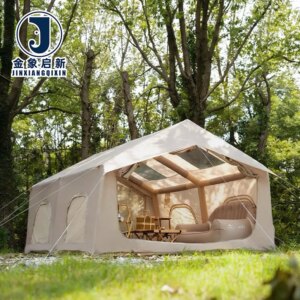
Camping Tent Inflatable UV Resistant Customizable Four-season Waterproof PVC Quick Automatic Opening 2-3 Person Outdoor
Read more -
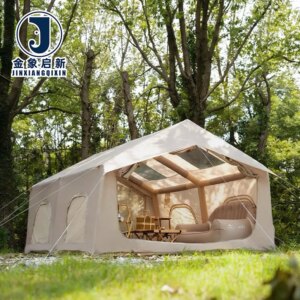
High Quality Four-Season Inflatable Tent for Camping Durable PVC Waterproof All-Weather Resistance Quick Automatic Opening
Read more