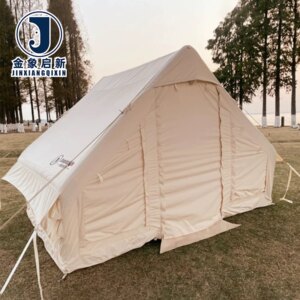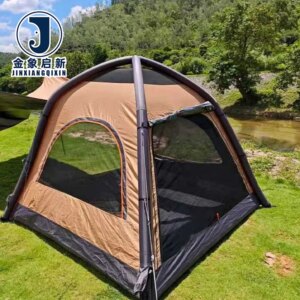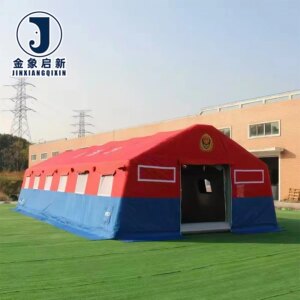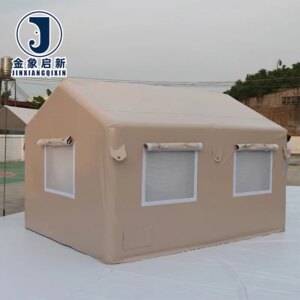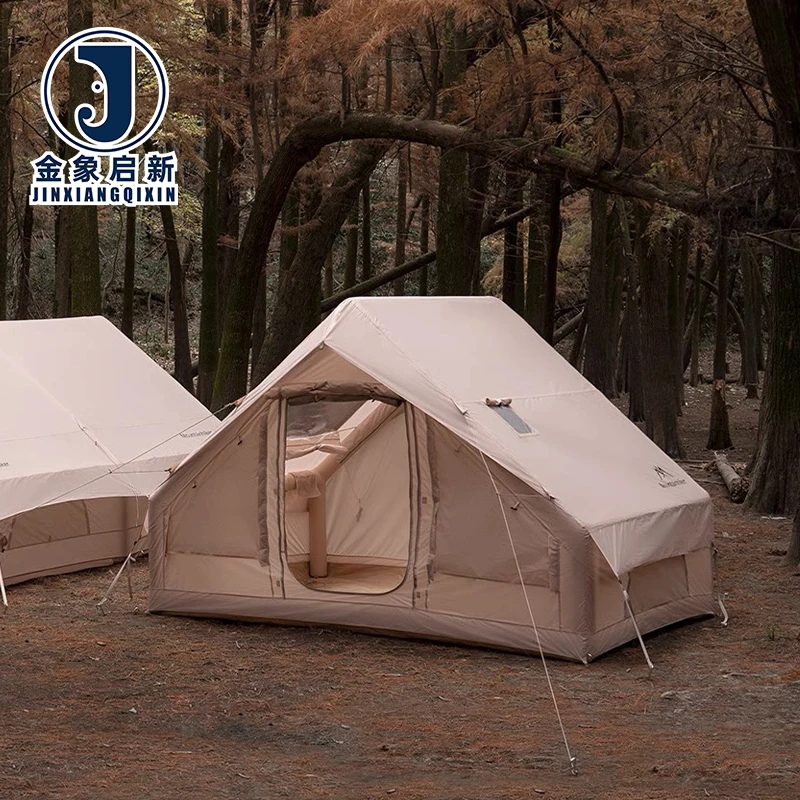
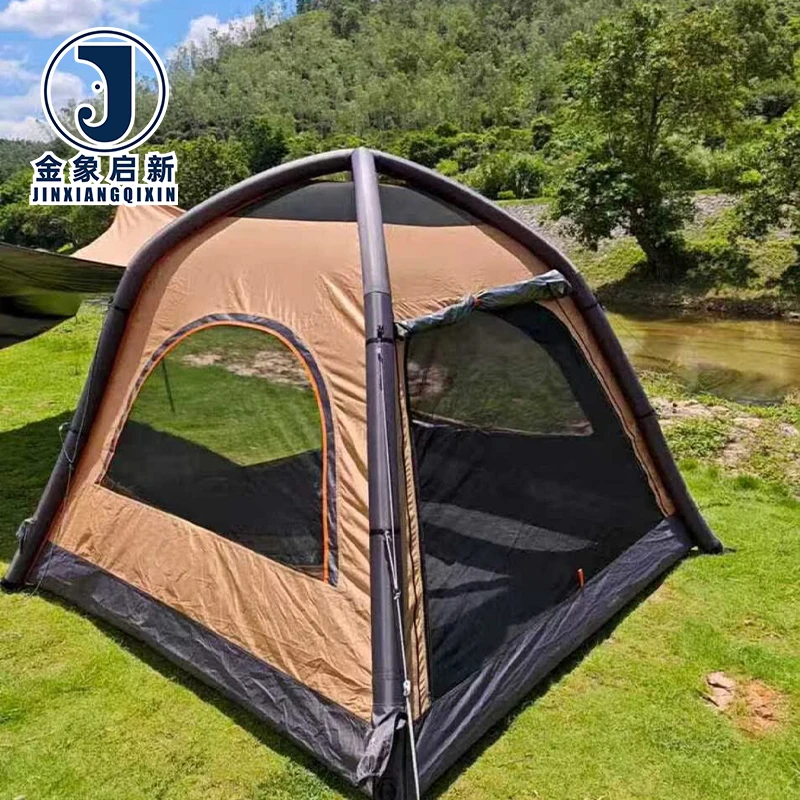
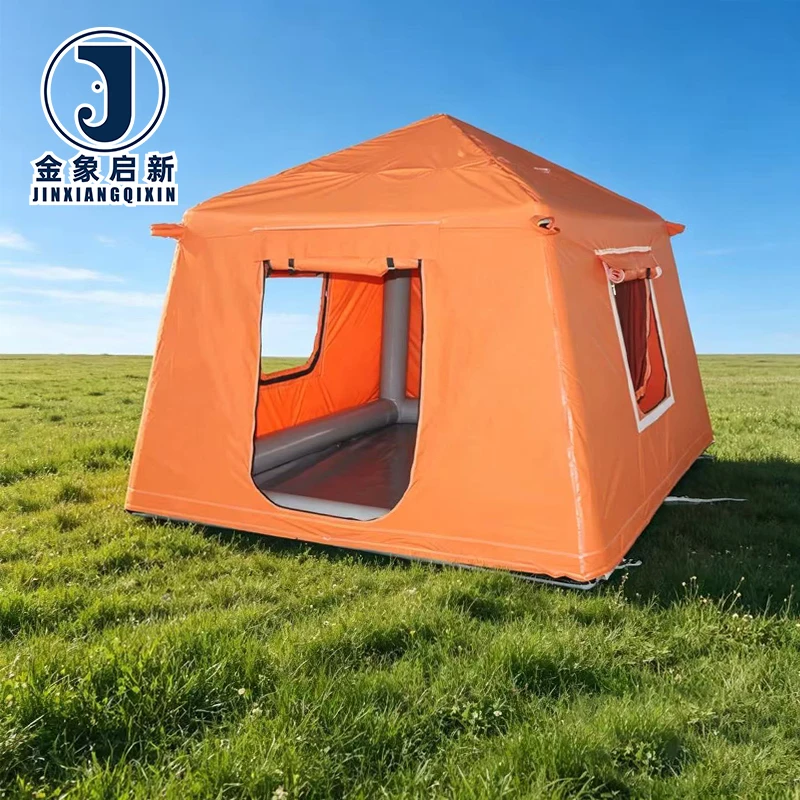
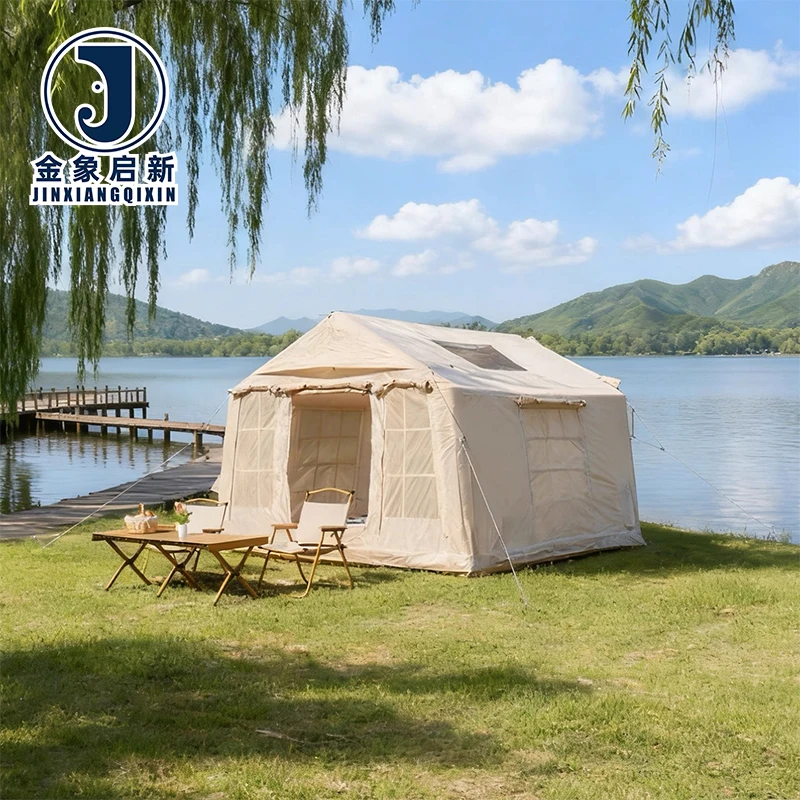
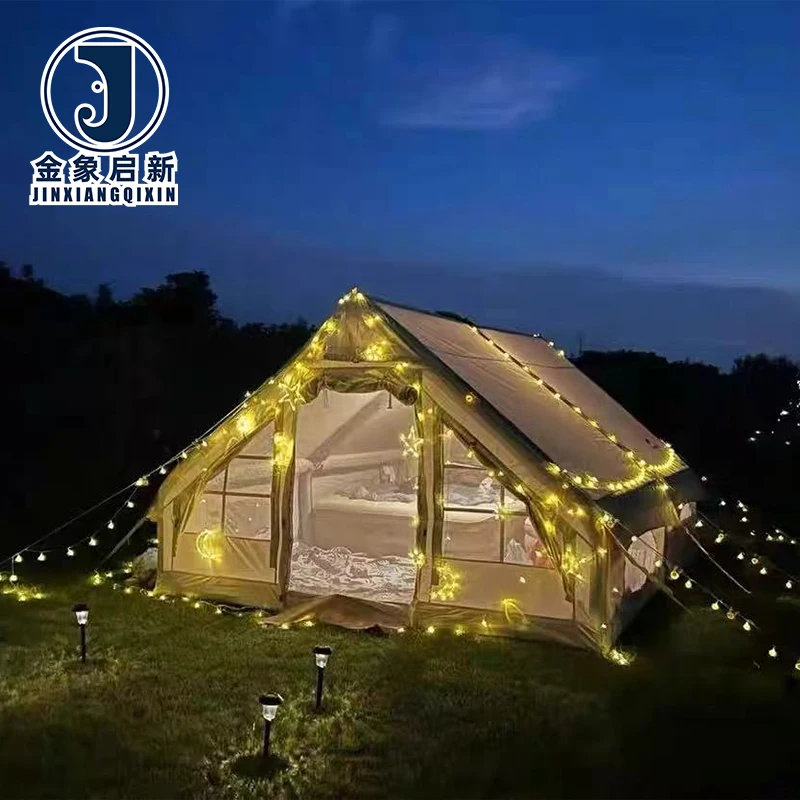
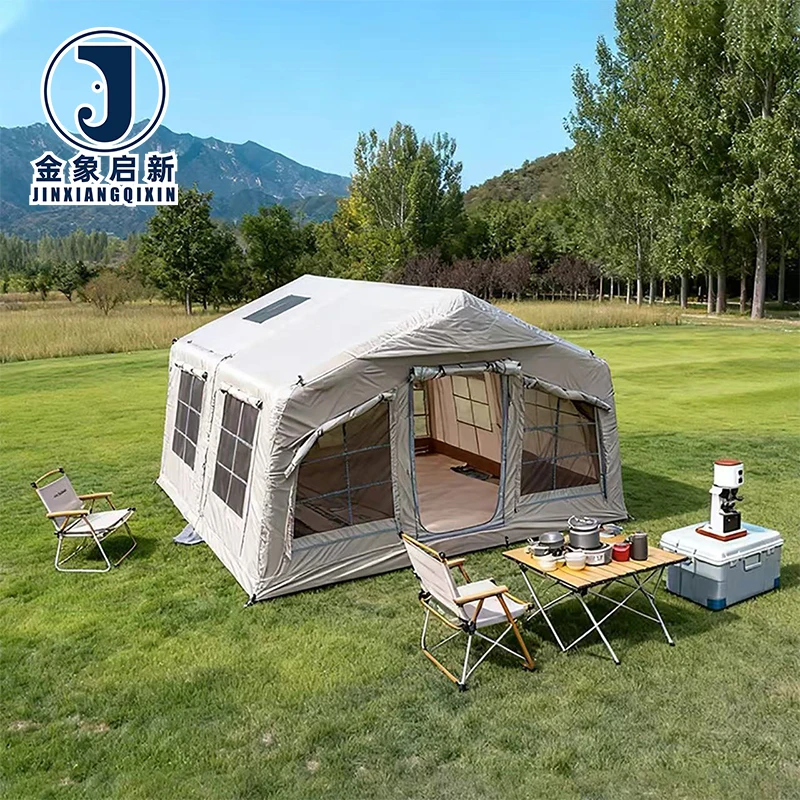
Inflatable Tent, PVC Coated Oxford Fabric, 4-6 Person Capacity — waterproof and UV-resistant with quick automatic opening for rapid deployment. Single-layer construction supports repeated setup and teardown cycles across commercial rental fleets and event operations. Batch-specific inspection records covering waterproof, UV and tear performance are provided before shipment, alongside 10-person R&D support for OEM customization and full pre-shipment QA.
Description
Complete Custom Fabric Range — we supply inflatable tent fabric in your exact width, colour and print specification, with batch-tested performance data rather than unverified claims.
Technical Specifications
| Parameter | Value |
|---|---|
| Product Type | Inflatable Tent |
| Core Material | Oxford Fabric with PVC Coating |
| Key Features | Waterproof, UV-Resistant, Tear-Resistant |
| Construction | Single Layer |
| Opening Mechanism | Quick Automatic Opening |
| Waterproof Performance | 2000mm water pressure (source value — verify against manufacturer catalog) |
| UV Resistance | 400 hours accelerated aging test (test basis not stated in source) |
| Tear Strength | ≥300N (test standard not stated in source) |
| Customization Service | OEM & ODM (Sample, Pattern Printing) |
| Standards | ISO9001, ISO14001, ISO45001, CE |
Application Suitability
| Application | Exposure & Requirement |
|---|---|
| Commercial inflatable camping tent manufacturing | Repeated inflation and deflation cycles, flex stress at seam joints, prolonged UV exposure in open terrain |
| Branded outdoor gear product lines | Colour and print consistency across production runs, OEM pattern reproduction, batch-to-batch weight uniformity |
| Commercial rental fleet deployment | High-frequency setup and teardown, abrasion from ground contact, rapid automatic opening reliability |
| Industrial temporary shelter projects | Wind load on inflated structure, puncture risk from site debris, weather protection over multi-week deployments |
| Event and exhibition inflatable structures | Large-format visual branding, public safety compliance, fast erection under time-constrained schedules |
When "UV-Resistant" Has No Test Behind It
Buyers regularly receive inflatable tent fabric invoiced as UV-stable, only to find the material discolours and loses tensile strength within a single season of rental or event use. The label alone carries no weight without a documented aging protocol. We treat UV performance as a measured output, not a marketing claim. Every batch of our Inflatable Tent Fabric custom manufacturer output ships with a traceable inspection record referencing the accelerated aging hours completed. [NEED_CITE: accelerated weathering test methods for coated textiles per ISO 4892]
Commercial operators deploying inflatable camping shelters across summer festival circuits or long-term rental programmes cannot afford mid-season fabric degradation. When coating breakdown accelerates under solar load, the structure loses inflation integrity and the operator faces replacement costs far exceeding the original material saving. Specifying the required aging duration before order placement ensures the additive package matches the actual exposure window.
Coated Oxford Base Built for Inflation Load
Inflatable tent structures depend on fabric that holds dimensional stability under continuous internal pressure. The Oxford base fabric provides a balanced weave that distributes pneumatic load evenly across the surface, preventing localised stress concentrations at panel junctions. PVC coating locks the yarn intersections in place, adding body and preventing the fabric from stretching out of shape during sustained inflation periods.
Rapid Deployment Without Compromising Durability
The quick automatic opening mechanism demands fabric that unfolds cleanly without crease memory or coating tack. Our Inflatable Tent Fabric custom manufacturer production controls coating weight and surface finish to ensure the material releases from packed storage without sticking or surface damage. This matters for rental operators who deploy and strike structures multiple times per week. [NEED_CITE: coated fabric fold and crease recovery testing protocols]
Reading the Specification Sheet Beyond the Headline Numbers
Tear strength rated at ≥300N indicates the force required to propagate a tear once initiated, which directly affects how the fabric behaves when a puncture occurs during site installation. On an inflated structure, a small cut from sharp ground debris can rapidly extend under pneumatic tension if the base fabric lacks adequate tear resistance. The Oxford weave construction works alongside the PVC coating to arrest tear propagation, buying time for field repair before structural failure.
Waterproof performance stated at 2000mm water pressure relates to hydrostatic head — the column of water the coated surface can withstand before leakage occurs. For inflatable camping tents used in heavy rainfall, this rating determines whether internal dryness is maintained during sustained downpours. The PVC coating on the Oxford substrate provides a continuous barrier, though seam construction and weld integrity ultimately determine real-world waterproofing at panel joints.
UV resistance validated through a 400-hour accelerated aging test indicates the coating’s ability to resist photodegradation under intensified ultraviolet exposure. This test basis should be confirmed against the specific standard required by your target market before final specification. [NEED_CITE: UV aging test standards for outdoor textile materials]
What Inconsistent Rolls Cost After the Container Arrives
Colour variation between rolls in the same order becomes immediately visible once panels are cut and joined on the production floor. For inflatable tent manufacturers running branded product lines, a visible shade difference across adjacent panels triggers customer rejection and warranty claims. Batch inconsistency in coating weight produces the same problem in reverse — some panels feel stiffer, others softer, and the finished structure inflates unevenly. [NEED_CITE: batch colour consistency standards for coated fabrics in production environments]
When weld strength falls below fabric strength, the seam becomes the first failure point under inflation pressure. This typically occurs at the flex zones where the structure bends most during deployment, and the result is a repair return that damages the brand reputation of the finished product manufacturer.
Sourcing Advantages Specific to This Fabric
Our R&D team develops inflatable tent fabric samples within days of receiving your colour, pattern and sizing requirements, allowing you to validate material behaviour before committing to bulk production.
Three full production lines handle simultaneous custom orders, meaning your Inflatable Tent Fabric custom manufacturer requirements do not queue behind standard stock runs.
Dedicated QA and QC staff inspect every roll at each coating and finishing stage, catching GSM deviation or colour drift before the material reaches packing.
Full-process inspection generates digital records per batch, stored for multi-year traceability that supports your own quality audits and client documentation requests.
Pattern printing capability extends beyond solid colours — branded inflatable tent lines can carry logo panels and colour blocking directly on the fabric, reducing post-production application steps.
Documentation & Verification
- Material specification sheet stating Oxford base fabric type, PVC coating method, and colour reference per roll
- Batch-specific inspection report covering waterproof pressure, UV aging, and tear strength data
- ISO and CE certificates included with every shipment for market compliance
- Pre-shipment inspection record with roll-by-roll weight verification against stated specification
- Certificate of origin and customs documentation package prepared per destination country
Fabrication, Handling & Storage
- Heat welding temperature should be matched to PVC coating thickness to avoid seam failure at inflation stress points
- Store rolls horizontally on padded racks to prevent permanent crease marks in the PVC-coated Oxford surface
- Allow cold-transported rolls to reach ambient temperature before unrolling to prevent coating crack damage
- Use mild detergent cleaners only — solvent-based products will degrade the PVC coating surface finish
- Pattern layout should account for roll width to minimise offcut waste on large inflatable panel cutting
- Field repair kits should use compatible PVC adhesive matched to the Oxford fabric coating chemistry
Starting Your Specification Conversation
Provide your target deployment environment and expected UV exposure duration so we can recommend the appropriate additive package and confirm the relevant aging test standard. Share your required roll widths, colour references or Pantone codes, and annual volume to receive a production schedule with realistic lead times. If your inflatable tent line requires branded panel printing, send artwork files early so we can develop printed samples alongside plain material for side-by-side approval.
Frequently Asked Questions
Q: How is anti-UV performance tested and what report do I receive with my order?
A: UV resistance is validated through accelerated aging testing, with the specific duration and standard confirmed per batch. Every shipment includes an inspection report documenting the test hours completed and the method referenced. We recommend you specify the aging standard required by your target market so we align the test protocol before production begins.
Q: What custom sizing and pattern printing options are available for inflatable tent fabric?
A: Rolls can be produced in custom widths and lengths to match your cutting layout and minimise waste. Pattern printing covers logo panels, colour blocking, and full branding reproduction on the PVC surface. Our Inflatable Tent Fabric custom manufacturer team develops printed samples within days so you can approve colour accuracy and registration before bulk production.
Q: How do you control colour consistency across rolls in the same order?
A: Every production run uses a single pigment batch, and dedicated QA staff check shade against the approved reference at each coating stage. Digital inspection records capture any deviation, and rolls falling outside tolerance are held before packing. This prevents the visible panel mismatch that causes rejection on the cutting floor.
Q: What is the sample development process and lead time before bulk production?
A: Send your colour references, sizing requirements, and any pattern artwork to initiate sample development. Our R&D team produces material samples within days for your evaluation of hand feel, colour accuracy, and weld performance. Once you approve the sample, bulk production follows with the same formulation and process parameters locked in.
Q: How are welded seams tested to ensure they hold under inflation and flex stress?
A: Seam samples from each production batch undergo peel and shear testing to verify weld strength relative to the base fabric strength. We adjust welding parameters to the specific PVC coating weight on your Oxford fabric, ensuring the joint does not become the weak point at flex zones during repeated inflation cycles. Test data is included in the batch inspection documentation.
Related products
-
Inflatable Tent Family Size Four-Season Quick Automatic Opening Waterproof 2-8 Person Factory Direct Sale
Read more -
Outdoor Waterproof Inflatable Tent for Camping Portable Air Camping Tent Shelter
Read more -
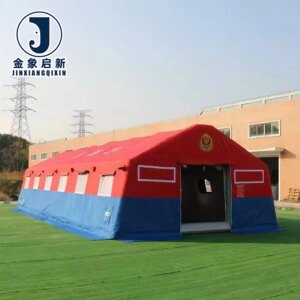
Inflatable PVC Camping Tent Four-Season Waterproof CE Certified Quick Automatic Opening 3000mm+ Factory Direct Sale
Read more -
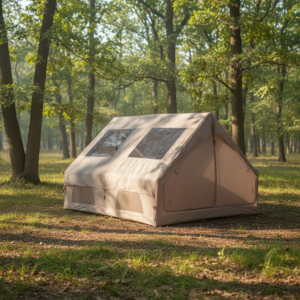
Inflatable Tent Four-Season Quick Automatic Opening PVC 3000mm Waterproof Foldable Eco-Friendly 2-3/3-4/6-8 Person Outdoor Use
Read more