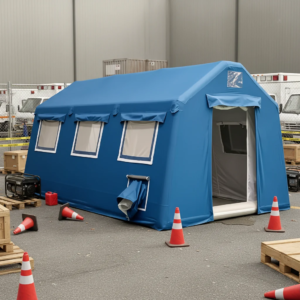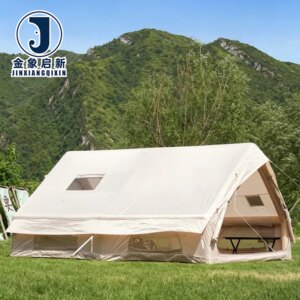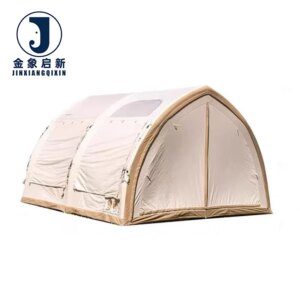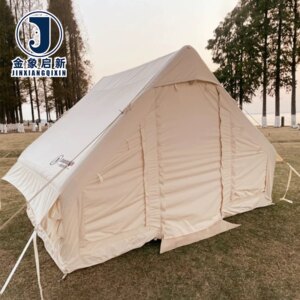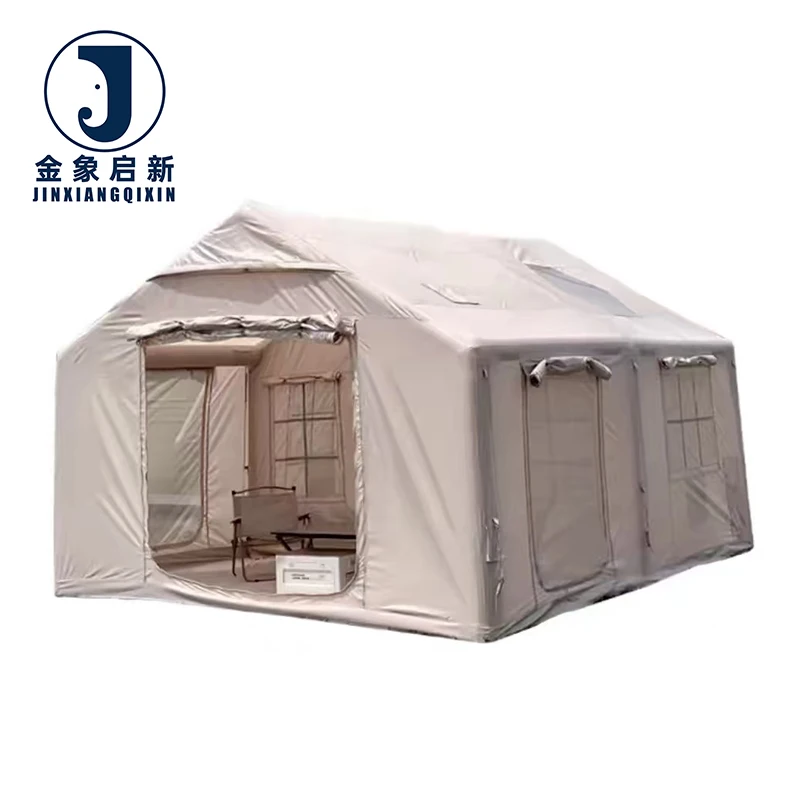
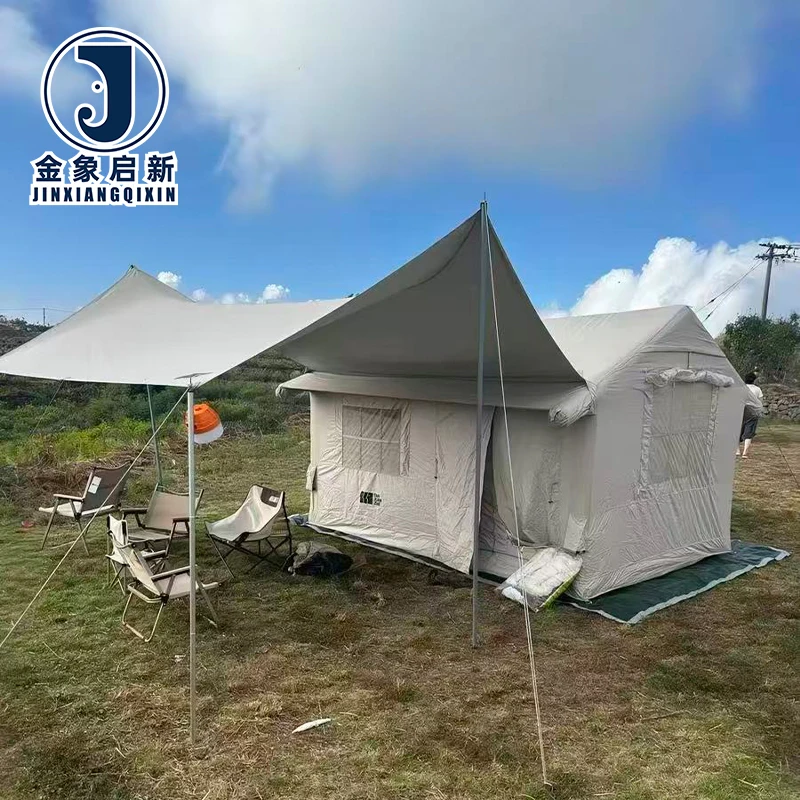
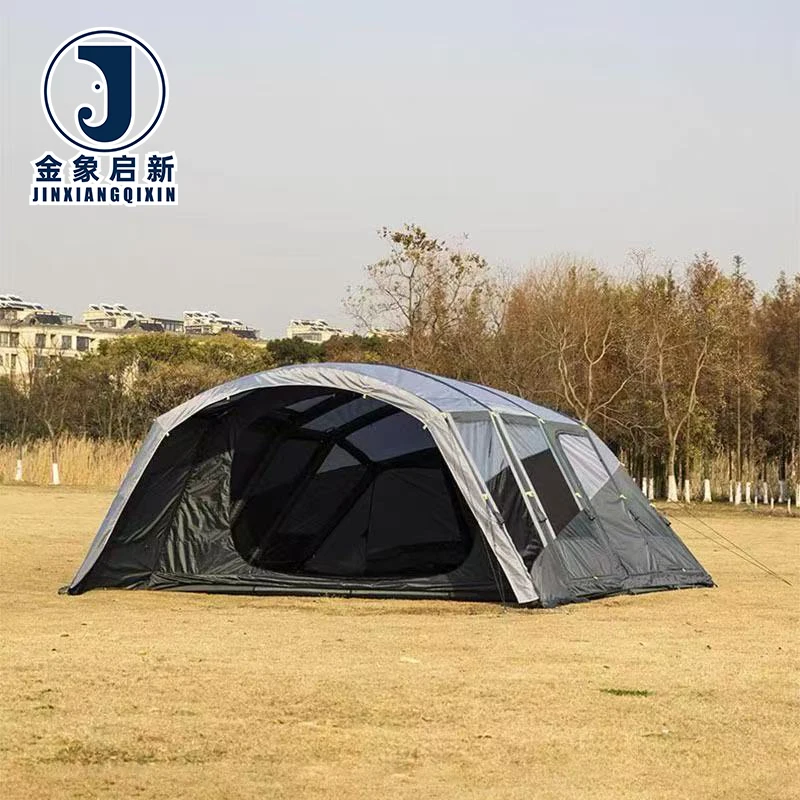
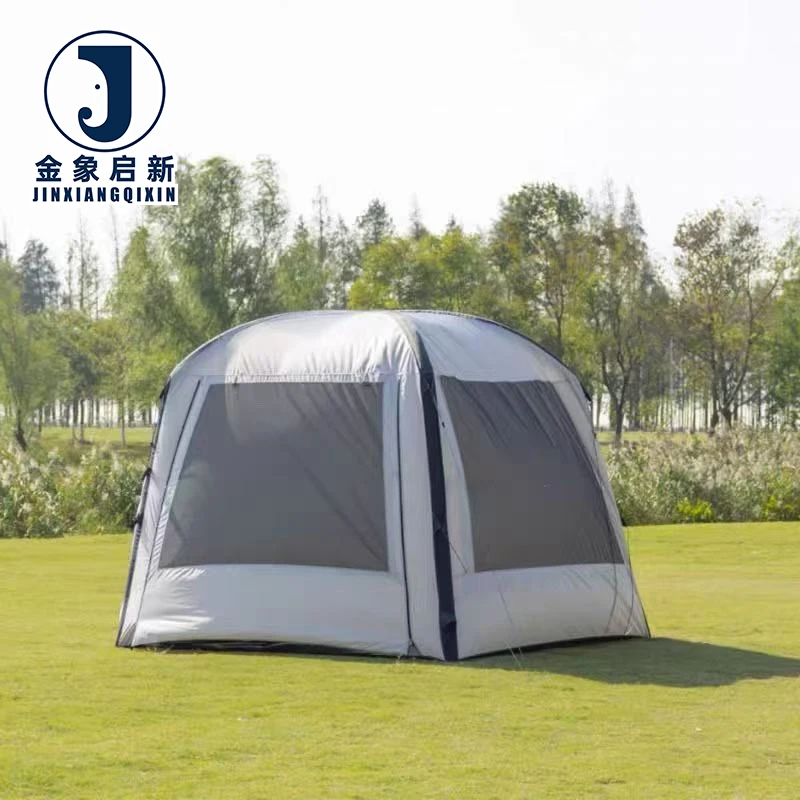
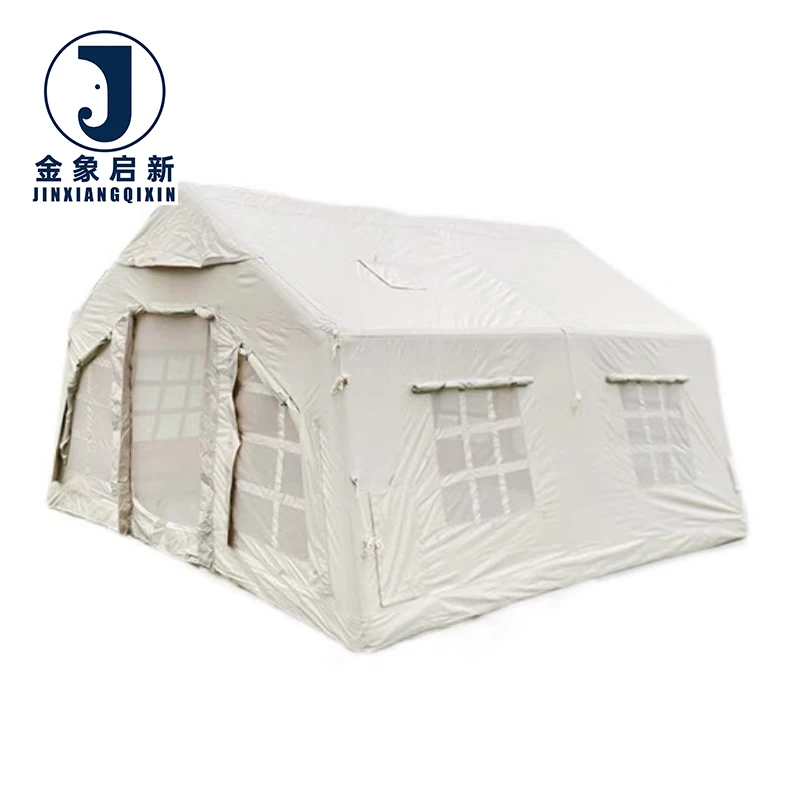
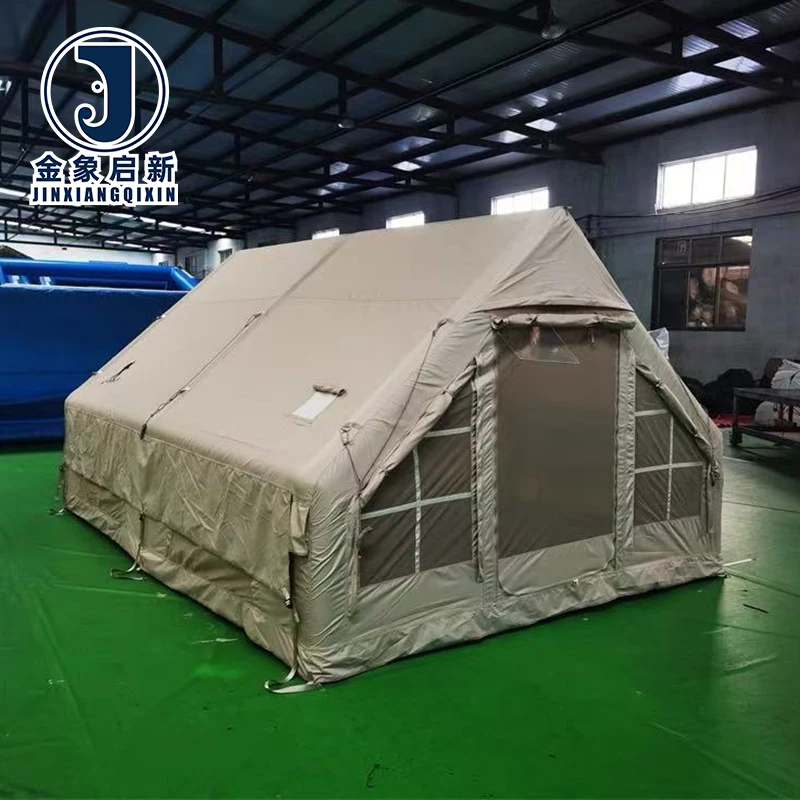
Luxury Automatic Inflatable Four-season PVC Tent — 0.4mm to 1.2mm material thickness, ≥3000mmH₂O hydrostatic pressure, UL94 V-2 flame retardancy. UV protection and waterproof treatment ensure reliable four-season durability across -20°C to 60°C operating conditions. Hot-welded seams maintain airtight integrity, validated by 24-hour inflation pressure testing before dispatch.
- Tear resistance: 200N/5cm
- Capacity: 3-5 person, single layer construction
- Full customization: size, valve type, color, and pattern printing
Every unit undergoes 100% pre-shipment inspection by dedicated QA/QC staff across three full production lines.
Description
Coated Fabric Process Control — Every inflatable shelter is built on PVC tarpaulin we coat, weld, and test in-house across three dedicated lines, giving you a single point of accountability from material selection to final inflation test.
Technical Specifications
| Parameter | Value |
|---|---|
| Product Type | Inflatable Tent Fabric |
| Core Material | PVC Tarpaulin |
| Product Form | Automatic Inflatable, Single Layer Construction |
| Capacity | 3–5 Person |
| Operating Temperature Range | -20°C to 60°C |
| Hydrostatic Pressure Rating | ≥3000mmH₂O |
| Flame Retardancy | UL94 V-2 |
| Tear Strength | 200N/5cm |
| Material Thickness Range | 0.4mm to 1.2mm (available across range — confirm grade for your application) |
| Dimensional Tolerance | ±2cm across production batches |
| Color and Finish | Custom color and pattern printing available |
| UV Treatment | Available — confirm test basis required for your market |
| Standards and Certification | ISO9001, ISO14001, ISO45001, CE, RoHS (on request) |
Application Suitability
| Application | Exposure & Requirement |
|---|---|
| Disaster relief shelters | Rapid deployment, multi-climate exposure, repeated inflation cycles, crew safety |
| Emergency response command posts | Extended outdoor occupation, equipment protection from rain and wind, high visibility |
| Construction site temporary shelters | Equipment storage under UV and rain, abrasion from site traffic, dust ingress prevention |
| Logistics coordination centers | Frequent relocation, ground moisture, forklift and pallet contact at base |
| Municipal emergency preparedness stockpiles | Long-term storage compressed, reliable inflation after extended standby periods |
Why Inflatable Shelter Seams Fail Before the Fabric Does
Weld integrity — not fabric strength — determines how long an inflatable structure holds air under load.
I have seen heavy-grade coated fabrics perform well on tensile tests yet lose pressure within weeks because the heat-welded seams could not match the base material’s peel strength. When an inflatable tent flexes in wind or settles under snow load, stress concentrates at every welded joint. If the welding temperature, dwell time, or pressure is not calibrated to the specific PVC formulation and thickness in use, the seam becomes the weakest link [NEED_CITE: tensile and tear test methods for coated fabrics per ISO 1421]. Sourcing a custom inflatable tent from a supplier that controls coating formulation and welding parameters under one roof removes the finger-pointing that happens when fabric and fabrication come from different vendors.
Single-Source PVC Formulation and Welding Calibration
When the same facility that coats the PVC tarpaulin also welds it into finished inflatable structures, the thermal profile for every seam is matched to the exact plasticizer content and coating weight of that batch. This eliminates the trial-and-error that outside fabricators face when they receive unfamiliar roll stock. Our R&D team of 10 technicians adjusts welding parameters whenever material thickness moves within the 0.4mm to 1.2mm range, ensuring each custom inflatable tent variant maintains consistent peel strength at every joint.
Batch-to-Batch Color and Dimensional Consistency
Color variation between production runs is a frequent source of rejection when inflatable shelters from different batches are deployed side by side at a single site. By managing pigment dosing at the coating stage rather than relying on pre-colored stock, we hold color within a tight delta-E tolerance across rolls destined for the same order. Dimensional tolerance is held to ±2cm, which matters when interchangeable tent units must connect or when replacement units must fit existing anchoring layouts [NEED_CITE: color consistency standards for coated technical textiles].
Reading the Specification Sheet Beyond Thickness
Material thickness alone — say 0.6mm versus 1.0mm — does not tell you how the fabric will behave under inflation pressure or sustained wind load. The base fabric denier, weave density, and coating adhesion together determine tear propagation resistance and long-term air retention. A 0.6mm PVC tarpaulin with a high-density polyester base and strong coating bond can outperform a thicker material built on a loosely woven scrim. The hydrostatic pressure rating of ≥3000mmH₂O reflects the complete composite structure, not just the coating layer. Temperature range from -20°C to 60°C is governed by the plasticizer system: at the cold end, the PVC must resist embrittlement that causes cracking at fold lines; at the hot end, it must resist softening that reduces structural rigidity under full inflation pressure. The UL94 V-2 flame retardant rating indicates the material self-extinguishes after flame removal — verify whether your local jurisdiction accepts this grade or requires a different classification for occupied temporary structures.
The Hidden Cost of Specifying Without Verification
Buyers who approve a sample but do not verify production-batch material often discover that the delivered inflatable shelters are lighter, thinner, or less UV-stable than the prototype. When PVC coating weight is reduced to cut cost, the result is not immediately visible — it shows up as premature surface chalking, loss of air-holding capacity in cold weather, or seams that peel after a few inflation cycles. Similarly, accepting a generic flame retardant claim without a test report tied to the specific batch can lead to site inspection failures and costly replacement orders [NEED_CITE: UL94 flame classification testing protocol for plastics]. These problems compound when the tents are already deployed at emergency sites or active construction projects, where swap-out logistics are far more expensive than the material savings that caused them.
Why Procurement Teams Source This Inflatable Tent Fabric Here
Deep PVC coating expertise developed over nearly three decades means formulation adjustments for cold-climate flexibility or enhanced flame retardancy are handled at the compounding stage, not patched on afterward. Three full production lines and 36 sets of processing equipment support parallel runs of different thickness grades without cross-contamination. A dedicated 10-person R&D team develops custom samples — including valve system modifications, pattern printing, and non-standard dimensions — within days rather than weeks. Full-process QA and QC inspection with 16 quality checkpoints catches coating defects, dimensional drift, and weld weaknesses before they reach the packing stage. Every custom inflatable tent undergoes a 24-hour inflation test before shipment, verifying structural integrity under sustained air pressure rather than relying on spot checks alone.
Documentation & Verification
- Material specification sheet stating PVC tarpaulin type, coating weight, and thickness grade per roll
- Hydrostatic pressure test results confirming ≥3000mmH₂O rating for the production batch
- UL94 V-2 flame retardant test report issued against the specific material lot shipped
- Pre-shipment inspection record including 24-hour inflation test outcome for each tent unit
- ISO9001, ISO14001, and CE certificates covering the manufacturing facility and process
- RoHS compliance documentation provided on request for markets requiring restricted substance declarations
Fabrication, Handling & Storage
- Heat-weld seams using temperature profiles matched to the selected PVC tarpaulin thickness within the 0.4mm–1.2mm range
- Store folded units in dry, shaded conditions to prevent plasticizer migration and surface tackiness at the fold lines
- Inflate to full operating pressure before first field deployment to verify valve and seam integrity after transit
- Clean PVC surfaces with mild, non-solvent detergents to preserve the coating finish and UV treatment layer
- Repair minor punctures using compatible PVC adhesive patches matched to the base material thickness grade
- Avoid dragging units across abrasive ground surfaces to protect the single-layer PVC tarpaulin base
What to Include in Your Inquiry
To specify the right custom inflatable tent for your operation, share the deployment environment — temperature extremes, wind exposure, and expected duration of continuous inflation. Confirm the flame retardant classification your local regulations require, as UL94 V-2 may need supplementation. Provide target dimensions, quantity, and any pattern printing or color requirements so the R&D team can prepare accurate samples.
Frequently Asked Questions
Q: What customization options are available for thickness, dimensions, valve types, and printing?
A: Material thickness is selectable across the 0.4mm to 1.2mm range. Tent dimensions can be adjusted with a ±2cm production tolerance. Valve types and positions are configurable, and custom color matching along with pattern printing is available. The R&D team prepares samples for your approval before bulk production begins.
Q: How is batch-to-batch consistency maintained on color and dimensions?
A: Pigment is dosed at the coating stage under controlled conditions, and dimensional checks occur at multiple production checkpoints. Every roll and finished unit is measured against the order specification. Inspection records for your specific batch ship with the order, giving you traceable verification.
Q: What flame retardant and UV test standards support the performance claims?
A: The PVC tarpaulin carries a UL94 V-2 flame retardant rating, with test reports issued per production batch. UV treatment is available — confirm the specific test method your market or application requires so the correct verification documentation can be prepared and supplied with your shipment.
Q: How do I verify material thickness and coating weight on receipt?
A: Each shipment includes a material specification sheet stating coating weight and thickness grade. You can cross-check with a calibrated micrometer at multiple points on the fabric. Any discrepancy against the stated specification should be reported before fabrication or deployment proceeds.
Q: What documentation ships with each order for compliance review?
A: Standard documentation includes the material specification sheet, batch-specific hydrostatic pressure and flame retardant test reports, pre-shipment inspection records with 24-hour inflation test results, ISO and CE certificates, and a packing list. RoHS compliance documentation is available on request for applicable markets.
Related products
-
Luxus PVC Aufblasbares Zelt für Glamping Outdoor, wasserdicht, mit schnellem automatischem Aufbau, vierjahreszeitentauglichem faltbarem Design und Pumpe
Read more -
Inflatable Camping Tent PVC Waterproof Four-Season Outdoor Air Tent with Quick Automatic Opening for 3-4 Person
Read more -
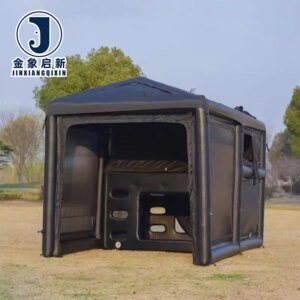
Premium Four-season Inflatable Tents for Camping Easy-to-Use Spacious Portable Waterproof Outdoor Tent Quick
Read more -
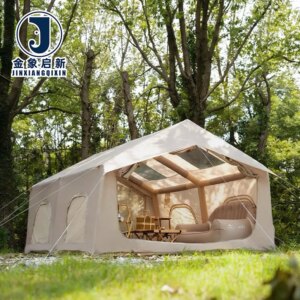
High Quality Four-Season Inflatable Tent for Camping Durable PVC Waterproof All-Weather Resistance Quick Automatic Opening
Read more