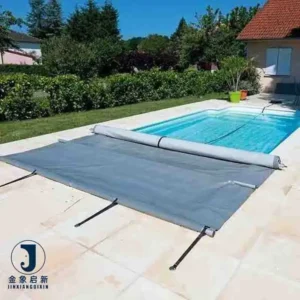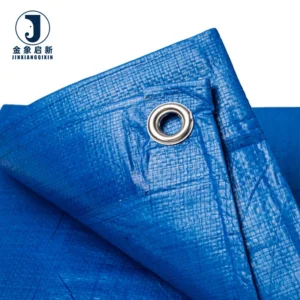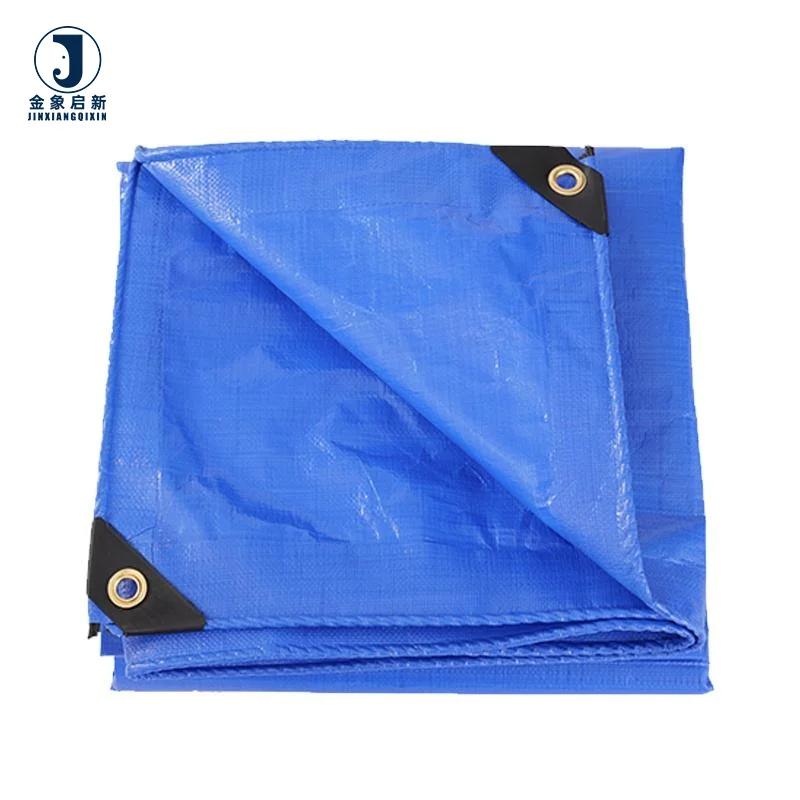
Custom Made PE Tarpaulin for Construction and Transportation Cover — HDPE woven base with LDPE lamination, 50–220 gr/m² GSM range, 8×8 to 12×12 knitting density tiers. Available in roll stock or finished cut sizes with PP rope hemmed edges and galvanized eyelets at 1 m intervals.
- Match knitting density to application: 8×8 for agricultural covers, 10×10 for warehouse and general transport, 12×12 for heavy-duty industrial and long-haul protection
- UV treatment available with supporting test documentation for on-site verification
- Request pre-shipment GSM verification records per roll to confirm quoted grade matches material on arrival
Three full production lines with 36 sets of equipment ensure bulk capacity and reliable on-time delivery for consolidated roll and cut-size orders.
Description
Three full production lines — supported by dedicated QA/QC at every stage with 100% pre-shipment inspection, covering the full PE tarpaulin range from agricultural to heavy-duty transport grades.
Technical Specifications
| Parameter | Value |
|---|---|
| Product Type | PE Tarpaulin |
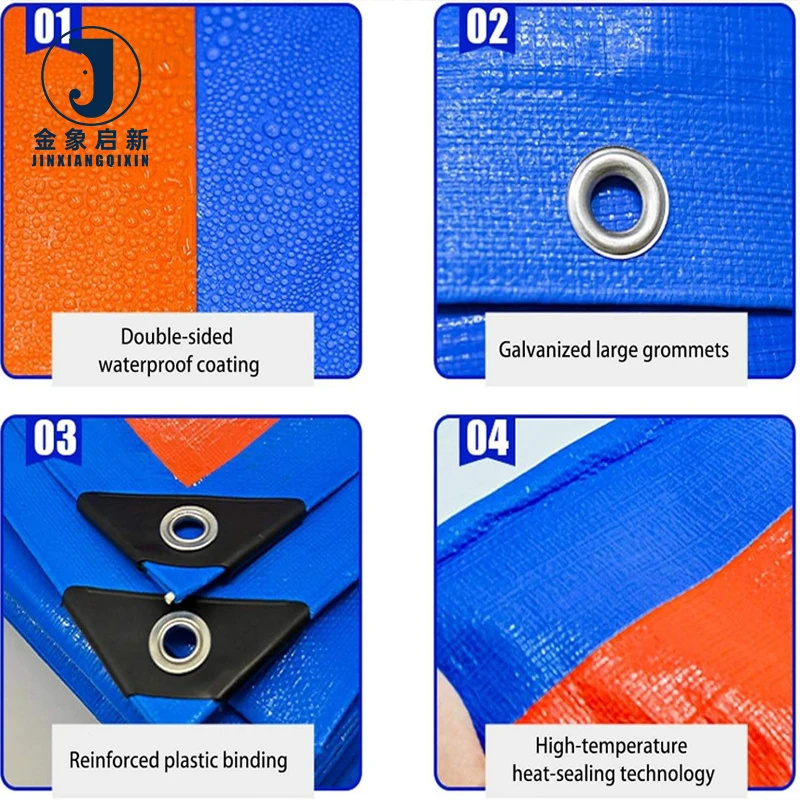
| Coating Material | HDPE weaving with LDPE lamination on both sides |
| Weight (GSM) | 50 gr/m² – 220 gr/m² (confirm the grade for this item) |
| Thickness | 0.2 – 0.4 mm / 8 mil – 16 mil |
| Mesh Count | 8×8 (lightweight) / 10×10 (medium) / 12×12 (heavy-duty) |
| Tensile Strength | Lightweight: Meridian 300–500 / Latitude 250–450 N/5cm; Medium: Meridian 500–800 / Latitude 400–700 N/5cm; Heavy-duty: Meridian 900–1200 / Latitude 700–1000 N/5cm (test basis not stated) |
| UV Treatment | Available (test basis not stated) |
| Waterproof & Anti-Mildew | Yes |
| Color Options | Blue, Blue/Orange, Green, Grey, Black, Clear, Grey/Green, Orange, or custom color |
| Roll Width | 6 ft, 8 ft, 10 ft, 12 ft / 2 m, 4 m, 6 m or custom |
| Roll Length | 100 yards, 100 meters, or as required |
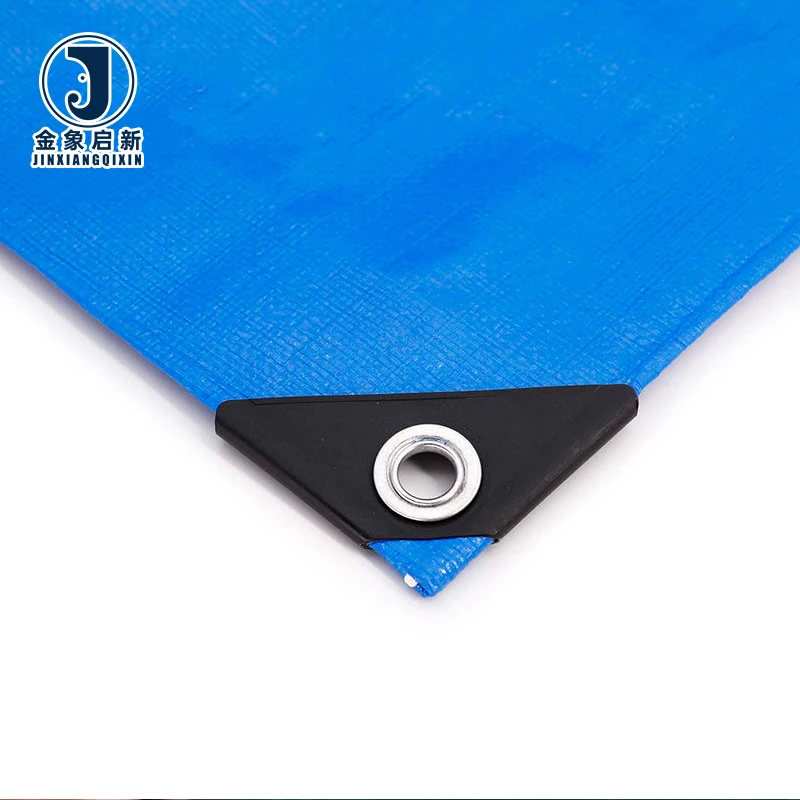
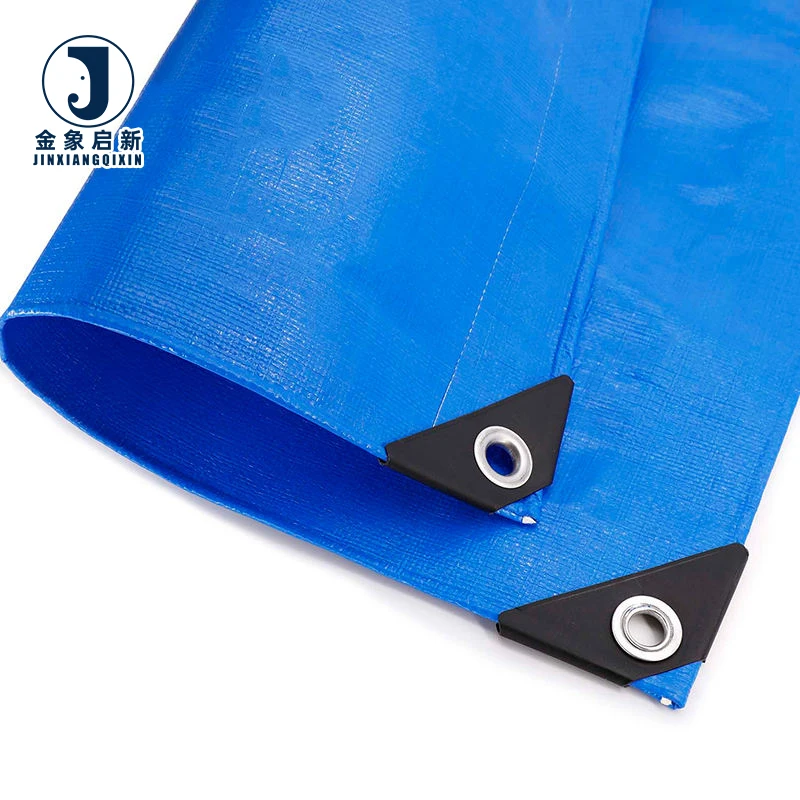
| Finished Edge & Eyelets | PP rope reinforced hem on all four edges; galvanized eyelets every 3 ft or 1 m; reinforced plastic corners |
| Finished Size Examples | 2×2 m, 3×3 m, 4×5 m, 5×8 m, 6×10 m, 8×10 m (or custom) |
Application Suitability
| Application | Exposure & Requirement |
|---|---|
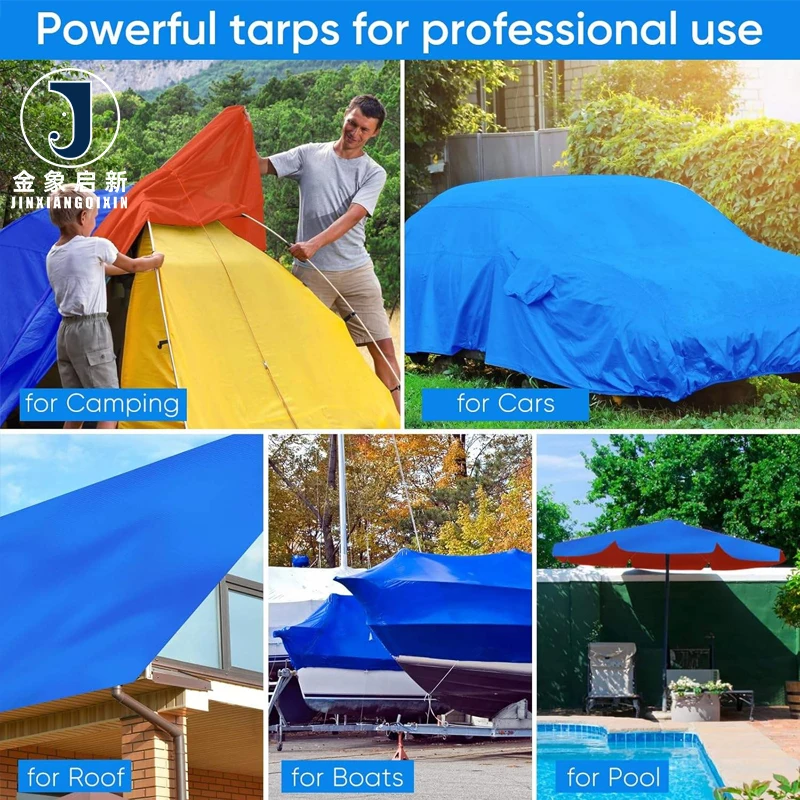
| Construction site covers | Constant weather exposure, wind uplift on large spans, puncture risk from sharp building materials |
| Truck and trailer load protection | Road abrasion, vibration at tie-down points, high-speed wind flutter, repeated folding and unfolding |
| Agricultural and aquaculture covers | Prolonged sun exposure, soil chemistry, standing water contact, seasonal handling and repositioning |
| Warehouse and industrial equipment covers | Dust accumulation, occasional moisture, abrasion against equipment edges during installation and removal |
Why Stated GSM Is Not Enough to Judge Tarpaulin Durability
Weight per square metre confirms mass, not performance — mesh density and lamination adhesion determine whether the fabric holds under load.
When PE Tarpaulin custom orders arrive lighter than the agreed specification, the immediate problem is not the missing grams — it is the reduced tensile capacity and tear propagation resistance that those grams represented. Buyers who specify only on GSM without requiring mesh count and lamination verification leave a gap that gets exploited in production [NEED_CITE: tensile and tear test methods for coated fabrics]. A roll that weighs 150 gr/m² on an 8×8 weave behaves very differently from the same weight on a 12×12 weave, particularly at tie-down points where concentrated stress meets flexing loads.
Product Range Across Three Weight Tiers
This PE Tarpaulin custom family spans three knitting-density tiers, each matched to a distinct application class. Lightweight grades at 80–110 gr/m² with 8×8 mesh serve agricultural stock covers and seasonal pond protection where handling weight and cost matter more than sustained mechanical load. Medium grades at 120–150 gr/m² with 10×10 mesh address warehouse coverage and general transport where moderate abrasion and wind exposure are routine. Heavy-duty grades at 160–240 gr/m² with 12×12 mesh cover industrial and long-haul transport applications where tie-down tension and road-induced vibration demand the highest tear resistance available in the range.
Finished Versus Roll-Stock Supply
Buyers can source this range as roll stock in standard widths up to 6 m and lengths of 100 m or 100 yards, or as finished cut-to-size tarps with PP rope hemmed on all four sides, galvanized eyelets spaced at 1 m intervals, and reinforced plastic corners. Consolidating both formats into one PE Tarpaulin custom order eliminates colour mismatch between light agricultural covers and heavy transport sheets on the same project, and removes the coordination cost of dealing with multiple suppliers across one container shipment.
Reading the Specification Sheet Correctly
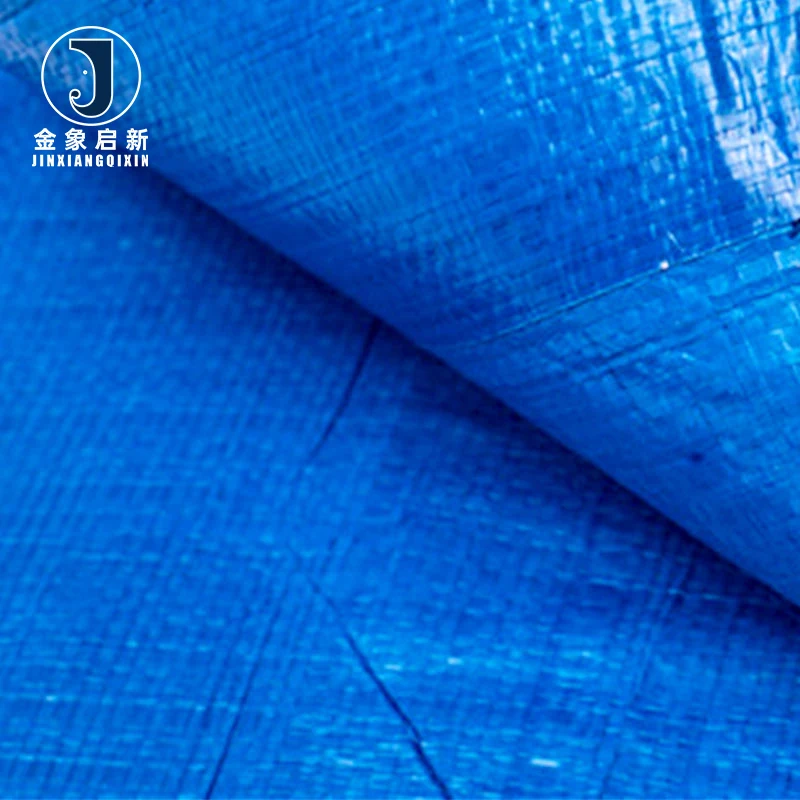
GSM alone does not predict how the fabric will perform once installed. The HDPE woven base provides the structural skeleton — its mesh count determines how many yarns share any given load, and therefore how a puncture or cut propagates through the material. LDPE lamination on both sides seals the weave and provides waterproof performance, but its adhesion to the base fabric determines whether the coating delaminates before the yarns themselves fail. Tensile strength varies significantly across the three weight tiers: lightweight grades deliver Meridian 300–500 N/5cm while heavy-duty grades reach Meridian 900–1200 N/5cm, a range that directly correlates with the mesh density increase from 8×8 to 12×12. Buyers comparing quotes should always request the mesh count alongside the GSM to understand what the weight actually represents structurally.
The Cost of Wrong Grade Selection
Choosing a medium-grade tarp for a heavy-duty transport application does not simply shorten service life — it shifts the failure mode. Lighter mesh densities fail first at the eyelet reinforcement zone where tie-down straps concentrate load, often pulling through the hem before the fabric body shows visible wear. Conversely, specifying heavy-duty grades for agricultural covers adds unnecessary cost and handling weight without proportional benefit [NEED_CITE: tarpaulin failure modes at tie-down and hem points]. Colour inconsistency across rolls in a single order becomes visible once multiple sheets are installed side by side on a construction hoarding or warehouse partition, forcing selective rework. These are not material defects — they are specification errors that become apparent only after installation.
Sourcing From a Dedicated PE Tarpaulin Production Line
This product comes from a facility with nearly 30 years of focused coated fabric production, where process control over coating weight and lamination adhesion is established practice rather than a project-specific effort. Three full production lines and 36 sets of professional equipment support bulk roll-stock capacity with reliable on-time delivery for consolidated orders. A 10-person R&D team handles custom width, colour matching, pattern printing, and sample development, typically turning around samples within days for custom PE Tarpaulin requirements. Dedicated QA/QC operates at every production stage, with 100% inspection coverage before shipment — each roll is verified against the stated GSM and colour reference before it leaves the facility.
Documentation & Verification
- Material specification sheet stating exact GSM, HDPE mesh count and LDPE lamination method for each roll
- Pre-shipment inspection record with weight verification per roll against the quoted grade
- Colour reference and batch consistency record across all rolls in the same order
- Roll packing list with individual roll dimensions, net weight and identification number
- UV treatment test report where applicable — confirm the standard required for your market
Fabrication, Handling & Storage
- Heat-seal finished tarps using temperature settings matched to the LDPE lamination layer to avoid delamination
- Position galvanized eyelets at 1 m intervals within the PP rope hem to distribute tie-down load evenly
- Store PE Tarpaulin rolls vertically on a flat surface to prevent permanent creasing across the LDPE coating
- Allow cold-stored rolls to reach ambient temperature before unrolling to avoid lamination cracking at low flex
- Clean with mild detergent and soft brush — avoid solvent-based cleaners that attack the LDPE surface
- Plan cutting layout from 2 m, 4 m or 6 m roll widths to minimise offcuts and welded seam count
Before You Request a Quote
Provide the application environment and exposure conditions — whether the tarp will face sustained UV, road abrasion, standing water, or construction-site puncture risk. Specify the required roll width, finished dimensions, and whether you need roll stock, finished cut-to-size tarps, or a mixed container load. If your project requires colour consistency across multiple rolls or printed branding, include the colour reference and print artwork so samples can be developed for approval before production commitment.
Frequently Asked Questions
Q: How do I choose between lightweight, medium and heavy-duty GSM for my application?
A: Match the grade to the mechanical load, not just the environment. Lightweight 8×8 mesh suits static agricultural covers. Medium 10×10 mesh handles warehouse and general transport. Heavy-duty 12×12 mesh is specified for long-haul truck loads and construction sites where tie-down tension and puncture risk are constant. We recommend requesting samples across adjacent grades to compare handling and strength before committing to a full order.
Q: Can rolls and finished cut-size tarps be combined in one container shipment?
A: Yes. Consolidating roll stock and finished tarps into one order eliminates colour mismatch between product forms and simplifies logistics. Provide the roll width, roll length, and finished tarp dimensions with eyelet spacing requirements. We confirm container loading by roll count, weight and cubic volume before production begins.
Q: What test documentation supports the UV treatment claims?
A: UV treatment is available across the range, and we supply test reports where applicable. Confirm the specific UV standard required for your market and application — different regions and end uses reference different test methods. We develop UV-treated samples within days so performance can be verified independently before bulk production.
Q: How is colour consistency maintained across multiple rolls in a single order?
A: Every roll in a batch order is produced against the same confirmed colour reference, with QA/QC checks at each production stage. A pre-shipment inspection record documents colour consistency alongside GSM verification. For large orders spanning multiple production runs, we recommend requesting batch samples for side-by-side approval before dispatch.
Q: What is the lead time for custom widths, colours or printed branding on PE tarpaulin rolls?
A: Custom requirements are handled by our 10-person R&D team, with samples typically developed within days for weight, colour and printing specifications. Lead times for full production depend on order volume and the complexity of the custom specification. Provide your target delivery date and we confirm the production schedule with the quotation.
Related products
-
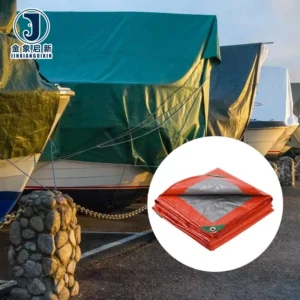
PE Coated Blackout Tarpaulin Poly Tarp with UV Protection Standard Size Fabric Sheet for Agriculture & Industrial Use
¥0.35 Select options This product has multiple variants. The options may be chosen on the product page -
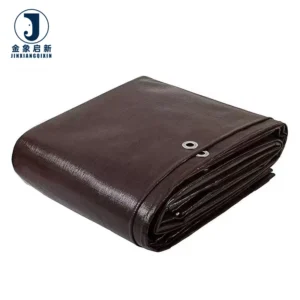
Custom PE Tarpaulin for Industrial Use – Full Range
Read more -
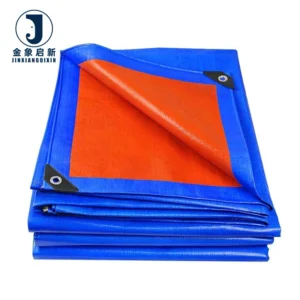
160gms Organic Coated Polyethylene Tarpaulin Trucking Covering Roll Waterproof Blackout Eco-Friendly Fabric Blue Orange Outdoor
¥0.71 Select options This product has multiple variants. The options may be chosen on the product page -
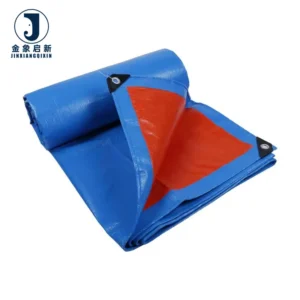
Woven Coated Plain Anti-UV Waterproof PE Tarpaulin Roll Customized for Car Outdoor Tent Awning Truck & Industrial Cover
¥0.29 Select options This product has multiple variants. The options may be chosen on the product page